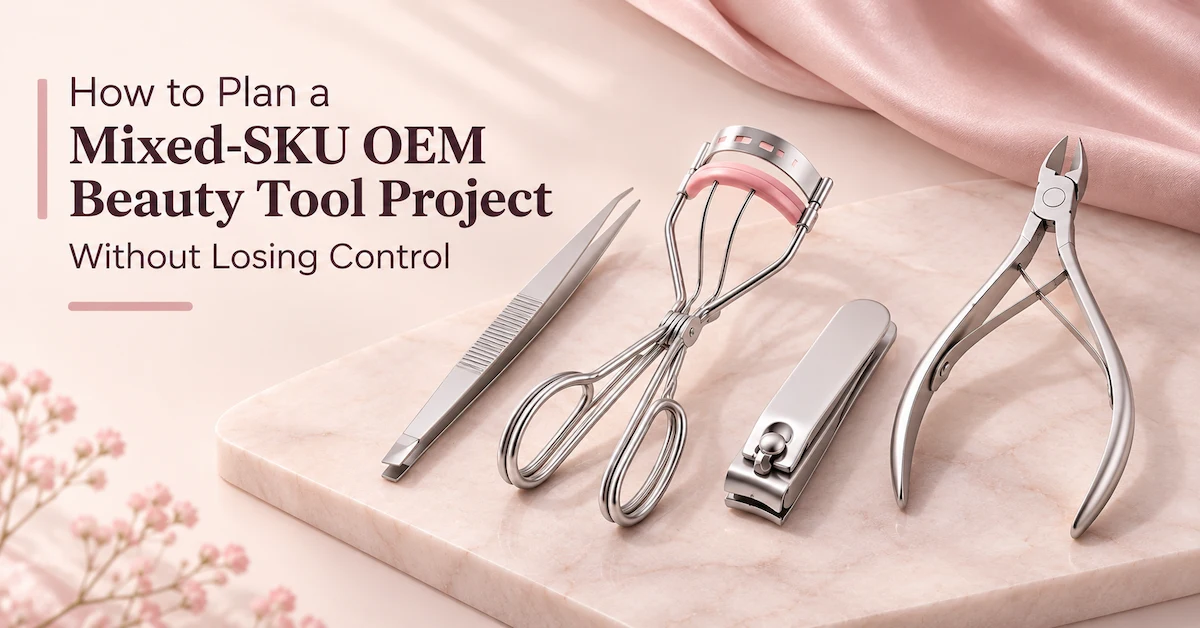
A mixed-SKU OEM project can look simple in a range presentation: one brand, one visual direction and several beauty tools prepared for the same launch. In production, however, every SKU can have its own model reference, working detail, finish, logo position, packaging file, quantity and approval status. Mixed-SKU OEM project planning is therefore less about putting many products on one purchase order and more about keeping every product decision traceable from the first quotation to the approved shipment.
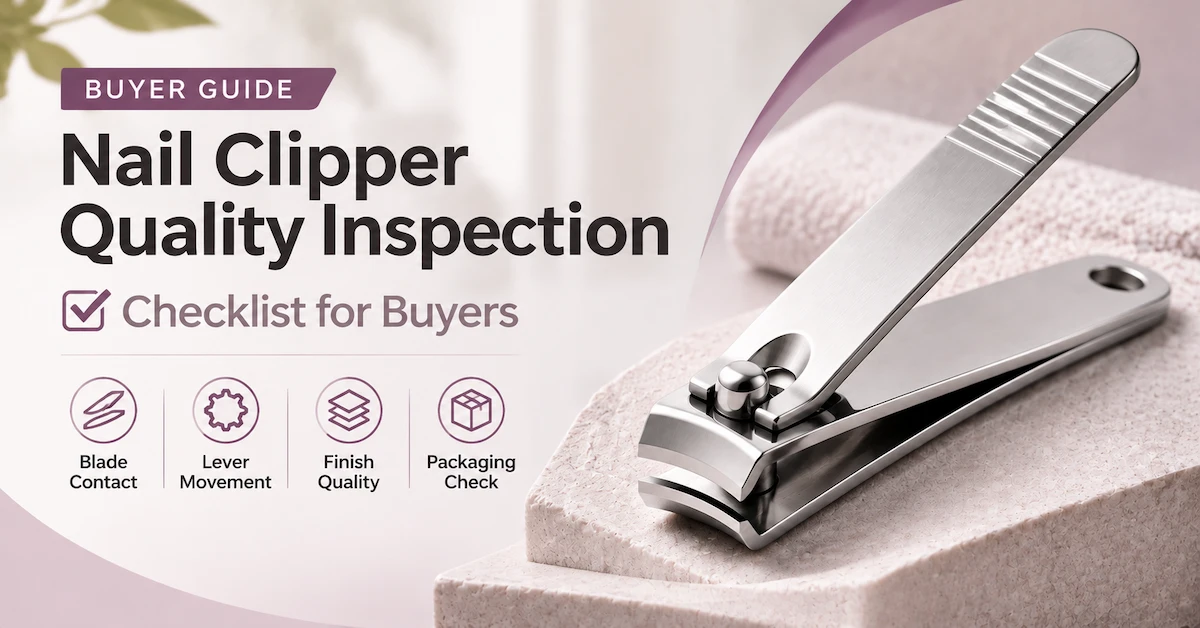
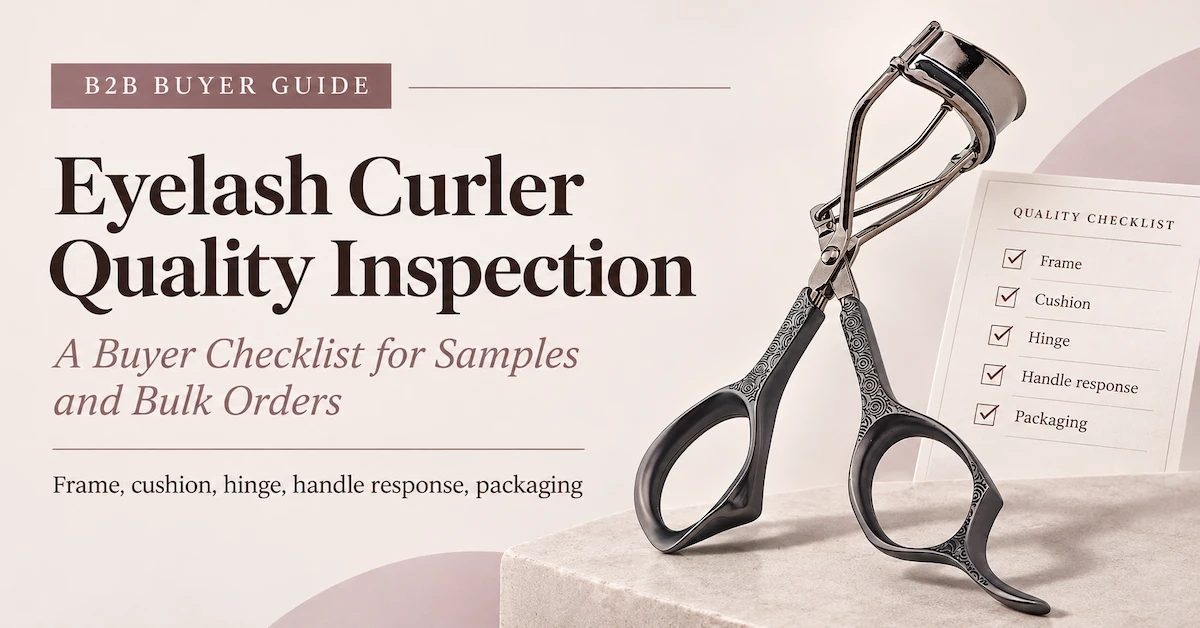
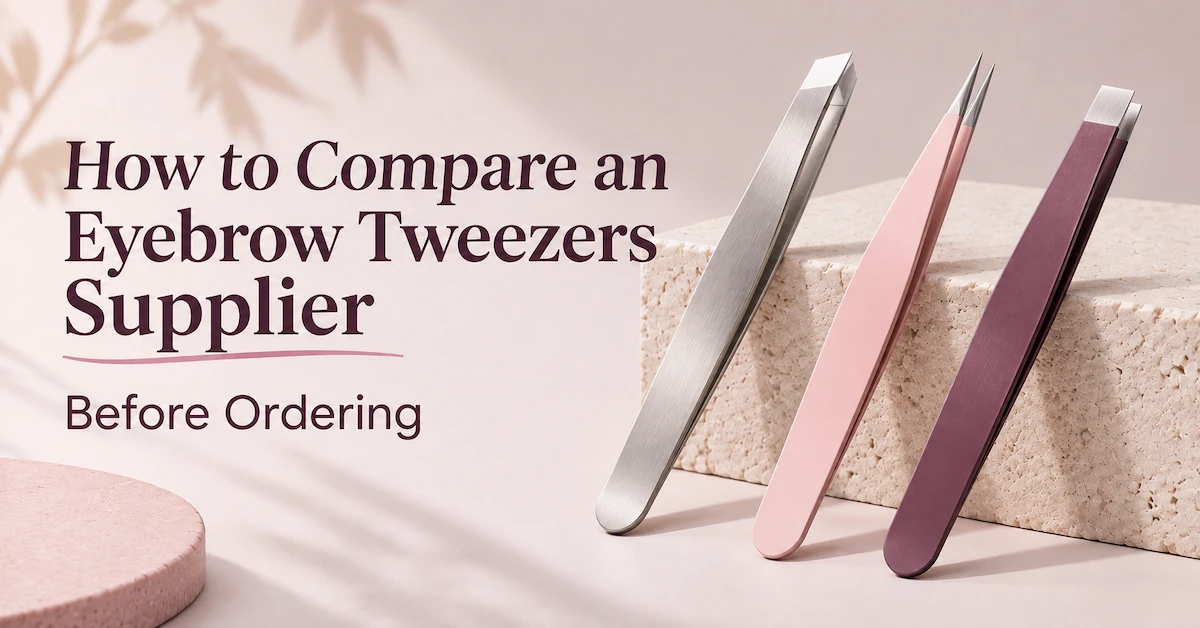
This matters when a brand is combining products such as tweezers, eyelash curlers, nail clippers, cuticle nippers, nail files or other personal-care tools. A shared logo and colour direction do not make the products interchangeable. Each SKU still needs a defined product reference, sample decision, packaging relationship and release status.
How to build a mixed-SKU OEM project plan
Short answer: a mixed-SKU project has one commercial programme but several technical approval paths. The range can share a brand system, target market and launch window, while the products differ in structure, working end, material statement, finish, packaging fit and inspection method. The project is ready to quote only when those shared and SKU-specific decisions are visible.
A single-SKU order can sometimes be managed around one sample and one pack file. A multi-product range needs a control document that answers five questions for every line:
- What is the exact product? Use a model, product link, reference sample, drawing or a clear product description.
- What is shared? Record the brand rules, finish direction, logo treatment, language, pack style and target market that apply across the range.
- What is different? Record the working part, component construction, dimensions, colour, packaging size and inspection points that apply only to one SKU.
- What is approved? Separate product sample, decorated sample, packaging sample and packed master approval.
- What can change? Identify substitutions or artwork changes that require a new sample, revised document or fresh approval.
OLIMOR's public beauty-tool product range can help a brand identify product families for a starting assortment. It does not establish one universal MOQ, material, finish, packaging format or lead time for every product. Those details must be confirmed for the selected models and order plan.
How should a brand design the range before requesting a quote?
Start with the job each SKU performs in the collection, not with a long catalogue list. A range plan should show why the item exists, who will buy it, how it will be presented and whether it is expected to become a replenishment product. This keeps the first quotation focused and prevents a supplier from treating every item as an unqualified “custom” request.
| Range role | What to define | Why it changes the project |
|---|---|---|
| Hero SKU | The product that carries the clearest brand story or is expected to lead the launch. | It may need the most detailed sample, finish and packaging review before the range is released. |
| Core replenishment SKU | A repeat item with stable specifications and a likely reorder pattern. | The approval record and change-control rule need to support repeat production, not only the launch sample. |
| Cross-sell SKU | A complementary tool that uses the same customer, visual direction or retail destination. | Shared branding may be useful, but product-specific function and pack fit still need separate approval. |
| Market-test SKU | An item included to test demand, channel fit or a new product direction. | The brand may prefer a simpler pack or staged commitment, subject to supplier confirmation. |
These range roles are planning labels, not manufacturing promises. They help the brand decide where to spend review time and how to describe the request. The final order basis, minimums, packaging and schedule remain project-specific.
What should a mixed-SKU project master contain?
Create one SKU master before asking for a consolidated quotation. It should be readable by the brand team, supplier, packaging designer and quality reviewer. A row should represent one sellable SKU, not only one product family. When the same tool has two colours, two finishes or two pack designs, decide whether those are separate commercial SKUs and record the answer explicitly.
| SKU master field | What the brand should enter | Open point to confirm |
|---|---|---|
| Internal SKU code | The brand's permanent code, working name and range position. | Whether the supplier will use a separate model or reference code. |
| Product reference | Product-page URL, catalogue image, drawing or reference sample. | Whether the reference is standard, adapted or a new development. |
| Quantity by SKU | First-order quantity, possible repeat quantity and launch allocation. | MOQ basis by model, finish, logo, packaging or production batch. |
| Product specification | Working end, size, shape, material wording, finish, colour and functional requirement. | Exact dimensions, material grade, treatment and inspection criteria for the selected model. |
| Branding | Logo file, location, colour, marking direction and artwork owner. | Marking feasibility, setup, surface compatibility and approved decorated sample. |
| Packaging | Card, box, sleeve, pouch, set or other presentation; language and label needs. | Insert fit, protector, barcode, carton quantity and packed sample status. |
| Approval owner | The person who can approve product, artwork, pack and quality decisions. | What happens when product and packaging approvals are not completed together. |
The master should use a status such as briefing, quotation requested, product sample, branding sample, packed sample, approved, on hold or cancelled. Do not use “approved” for the whole range when one SKU is still waiting for a finish, document or packaging decision.
Organize Your SKU and Approval Brief
Which rules can be shared across SKUs, and which cannot?
A coordinated collection needs common rules, but over-sharing a specification creates quality gaps. A brand can standardize the visual and commercial system while keeping functional requirements specific to each product family.
| Decision area | Can often be shared | Must remain SKU-specific |
|---|---|---|
| Brand system | Logo artwork rules, typography, colour direction, language and brand tone. | Logo location, usable marking area and contrast on each tool. |
| Surface direction | A preferred polished, satin, coloured or other visual direction. | Actual finish boundaries, working-end treatment and approval sample for each model. |
| Retail presentation | Card style, box language, icon system, colour palette and pack hierarchy. | Insert size, tool retention, protector clearance, barcode placement and carton data. |
| Quality language | A shared definition of visual consistency and approval status. | Alignment, edge, spring, movement, grip, pad, blade or other working checks. |
A shared colour name is not a shared finish specification. A common quality phrase such as “professional quality” is not a functional acceptance criterion. For each SKU, write the actual check that a sample reviewer can perform and the result that would trigger approval, correction, re-sampling or a hold.
How should quantities and MOQ be planned for mixed SKUs?
Do not assume that the total quantity of a range automatically satisfies every SKU's minimum. Ask how the supplier calculates quantity for the selected product, finish, logo, packaging version, component or production batch. A mixed order may be commercially useful, but its basis must be stated before the brand compares quotations.
| Quantity question | Why it matters | What to request in the quote |
|---|---|---|
| Per model | Different working structures may need separate production or inspection planning. | Quantity and minimum for each model reference. |
| Per finish or colour | A shared tool shape may still require separate surface preparation or colour work. | Whether quantities can be combined and under what conditions. |
| Per logo or artwork | Different marks can change setup, approval and packaging requirements. | One-time charges, artwork basis and quantity condition. |
| Per package version | Cards, boxes, inserts and labels may use different files or suppliers. | Pack minimum, setup, surplus assumptions and carton basis. |
| Combined range order | The total may be easier to ship while individual SKUs remain separately controlled. | A SKU-by-SKU cost, quantity and packing breakdown rather than one blended line. |
Use three scenarios when planning the first request: the launch quantity, a lower market-test allocation and a potential repeat allocation. This does not ask the supplier to promise a universal price or MOQ. It gives the supplier enough information to explain which variables change the quotation and which products could share a practical production or packing arrangement.
What is the right sample sequence for a multi-product range?
A range should not wait for every detail to be perfect before any sample is useful, but a brand should also avoid approving a product photograph before the product and pack are connected. Use staged samples with a clear purpose for each stage.
Stage 1: product direction
Use an existing model, reference sample or early development piece to confirm the product family, working purpose, size direction and basic handling. Record what this sample proves and what it does not prove. A stock tool may settle the general form while leaving finish, logo, pack and final material wording open.
Stage 2: branded product
Review the actual finish, logo position, marking contrast, colour direction and product-specific functional details. Approve each SKU separately, even when the same artwork or finish direction is intended across the range.
Stage 3: packed unit
Place the approved product in the intended card, sleeve, box, pouch or set. Check retention, protector clearance, printed information, barcode space, visible finish and any movement inside the pack. A packed sample should be linked to the SKU code and the artwork revision.
Stage 4: release reference
Freeze the approved product and packed unit as the reference for production and repeat orders. Record accepted exceptions rather than relying on memory or a chat message. OLIMOR's sampling route is the relevant place to discuss the sample scope for the selected products.
How should a mixed-SKU quality plan be written?
Use two layers: common range checks and product-specific checks. Common checks protect visual and packaging consistency. Product-specific checks protect the function of each tool. A single generic “QC passed” statement is not enough for a collection containing different working ends.
| Check layer | Examples of what to record | Release decision |
|---|---|---|
| Common appearance | Finish direction, visible colour, logo position, burrs, scratches and surface transitions. | Accept, correct or hold by SKU and approved finish reference. |
| Product function | Tip alignment, jaw meeting, spring action, curvature, cutting action, pad position or edge condition, according to the tool. | Use the relevant functional criterion; do not substitute a visual check for a working check. |
| Component and material | Component statement, finish scope, material record and any approved claim. | Hold a claim or request evidence when the record does not match the SKU. |
| Packaging and carton | Unit protection, insert fit, labels, barcode, inner count, master-carton identity and mixed-SKU separation. | Repack, relabel or re-sample before shipment when the packed reference is not met. |
The public OLIMOR quality route is a starting point for discussing inspection scope. It should not be read as a model-specific inspection report. The inspection points, sampling basis, acceptance criteria and records for a mixed-SKU order must be confirmed for the actual products and order.
How do packaging and logistics change the range plan?
Packaging is where a visually consistent range often exposes its hidden differences. A tweezer, nail clipper and eyelash curler may share a card style, but their working ends, dimensions, protectors and insert requirements can be different. Treat product-to-pack coordination as a separate approval gate instead of assuming that one layout will fit every SKU.
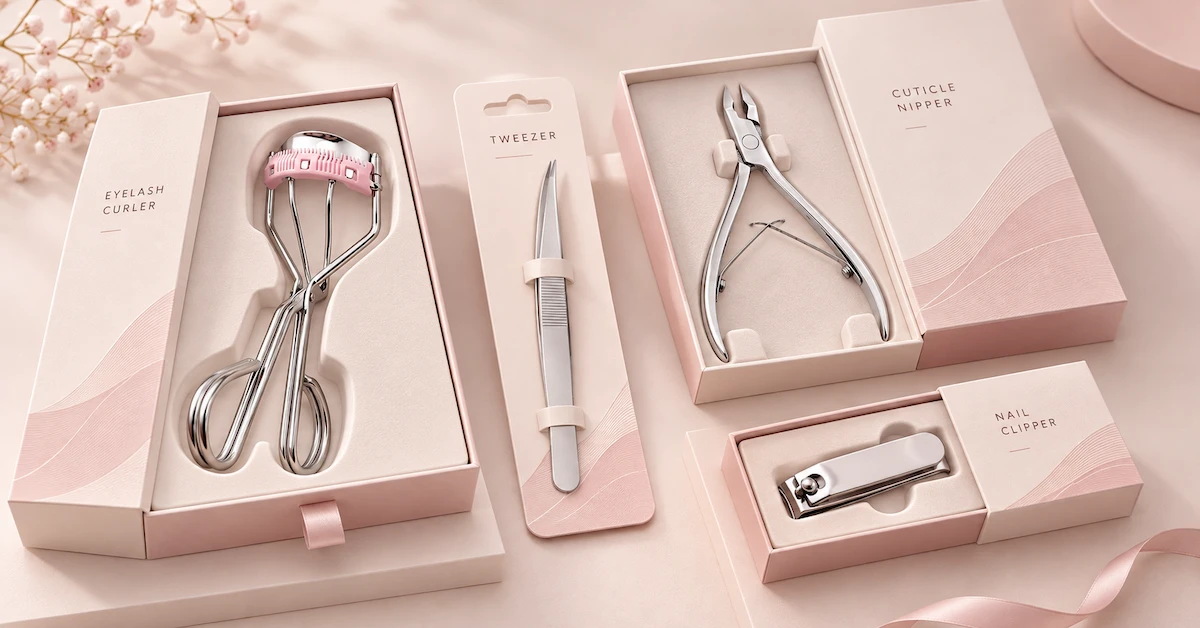
- Record the pack format and dimensions for each SKU, even if the outside artwork is shared.
- Confirm whether the working end needs a protector, cavity, sleeve or other retention method.
- Keep product code, barcode, language, warnings and usage information linked to the correct SKU.
- Define whether inner cartons or master cartons are separated by SKU or can contain a controlled mixed assortment.
- Review the packed units for rubbing, movement, moisture exposure and finish damage before approving the final carton plan.
The packaging and logistics route is relevant when the range needs product-to-pack coordination. The final packaging configuration, carton quantity, shipment basis and delivery assumptions remain subject to confirmation for the selected SKU mix.
For a packaging-led range discussion, review OLIMOR's custom packaging route together with the product-to-pack requirements listed above. The final insert, protection and carton configuration should be confirmed for each selected SKU.
How should the project schedule be built?
Build the schedule around decision gates rather than promising one calendar duration for the whole range. A mixed-SKU project can move at different speeds because one product may use an existing platform while another needs a revised sample, new branding or a different pack.
| Gate | Decision required | What can delay the next gate |
|---|---|---|
| Range brief | SKU list, quantity scenarios, market, brand rules and target presentation are visible. | Unclear product references or no quantity allocation by SKU. |
| Supplier proposal | Product scope, quantity basis, open variables and quotation assumptions are returned. | One blended price hides different models, packs or minimums. |
| Product samples | Each SKU has a defined product decision and open-point list. | Brand review is delayed or one SKU is used as a proxy for another. |
| Artwork and pack | Decorated samples, pack files and SKU labels are matched. | Insert fit, copy, barcode or product dimensions change after artwork. |
| Release | Approved product, finish, pack and quality references are frozen by SKU. | Open claims, missing documents, unresolved substitutions or mixed carton ambiguity. |
Keep production time separate from transport time, and ask which event starts each stage. The final MOQ, lead time, material specification, packaging details and shipping assumptions should be confirmed according to the product models, quantity allocation and order requirements.
How can a brand compare supplier responses for a mixed-SKU project?
Compare the completeness of the range plan, not only the total quotation. The hypothetical responses below show why a lower blended number may still leave the brand with more unresolved work.
| Supplier response | What is clear | Decision | Next step |
|---|---|---|---|
| A: one total price for eight SKUs | The supplier has seen the range count, but model, packaging and quantity assumptions are not separated. | Hold comparison | Request SKU-by-SKU quantity, scope, pack and cost lines. |
| B: model and quantity by SKU, shared card assumed | The product mix is clearer, but insert fit, artwork revision and carton basis remain open. | Request evidence | Confirm which SKUs can share the pack and request a packed sample or layout review. |
| C: SKU matrix, quantity basis, sample stages and pack assumptions listed | The brand can compare open decisions, dependencies and the next approval gate. | Proceed to sample review | Confirm model-specific specifications, sample scope and final commercial terms before release. |
This is not a ranking of suppliers based on marketing language. It is a test of whether the response lets the brand make a controlled decision. A capable supplier may still need project clarification; the important point is that the open items are visible and assigned.
What should a mixed-SKU OEM RFQ say?
Send the range as a structured brief rather than an email containing a catalogue screenshot and a total quantity. The supplier should be able to return the same structure with confirmed, recommended, sample-dependent and to-be-confirmed fields.
Mixed-SKU OEM project brief
Brand and market: [brand name, target countries, sales channel and launch window]
SKU list: [internal code, product family, supplier reference, image/drawing or sample for each line]
Quantity scenarios: [launch quantity by SKU, lower test quantity and possible repeat quantity]
Product requirements: [working details, material wording, finish, colour and functional points by SKU]
Shared brand rules: [logo file, marking direction, colour system, language and visual references]
Packaging: [card, box, sleeve, pouch or set; protection, labels, barcode and carton requirements]
Sample stages: [product sample, decorated sample, packed sample and approver for each stage]
Quality and documents: [SKU-specific checks, material wording, claim review and required records]
Please return: [SKU-by-SKU quotation, quantity basis, open assumptions, sample scope, stage-based schedule, packaging plan and change-control points]
This brief is a buyer-side working format, not an OLIMOR quotation or published commercial policy. The final order requirements, product options, MOQ, price, lead time, packaging and documentation must be confirmed for the selected range.
Which OLIMOR route fits a mixed-SKU brand project?
The right starting route depends on how much of the range is already defined. A brand does not need to label every SKU as fully custom before the supplier can review it.
| Project position | Useful discussion | What still needs confirmation |
|---|---|---|
| Existing products, new brand | Private-label product selection, logo, finish, packaging and sample approval. | Available models, branding scope, pack options and order requirements. |
| Existing platform with changes | Product development and sample review for selected modifications. | Feasibility, sample revision, tooling or component implications. |
| New product direction | OEM/ODM discussion around the product brief, development path and range priorities. | Design scope, engineering decisions, samples, documents and commercial assumptions. |
OLIMOR's private-label route and product-development route can be used as different starting points for a range discussion. The OEM/ODM page is the relevant commercial route when the brief combines several products, branding, packaging and development decisions.
How should a brand protect repeat orders?
A mixed-SKU project is not complete when the first cartons leave the factory. The brand needs a repeat-order reference that makes it possible to identify what was approved and what would require reapproval.
- Assign a revision to each SKU's product specification, finish reference, logo artwork and packaging file.
- Keep one approved product sample and one approved packed reference when a physical master is required.
- Record accepted deviations rather than allowing a production team to infer them from photographs.
- Define which material, component, finish, logo, insert or carton substitutions require written approval.
- Review the entire range when a shared brand rule changes, but review only the affected SKU when a product-specific detail changes.
The quality and inspection discussion should therefore include repeat-order control, not only the first sample. The exact records and change process depend on the selected products and order arrangement.
Mixed-SKU OEM project planning FAQ
Can different beauty tools be combined in one OEM project?
They can be discussed as one brand programme, but each product still needs its own specification, quantity, sample decision, packaging relationship and quality points. A shared logo or launch date does not make the SKUs technically identical.
Does one total quantity automatically satisfy the MOQ for every SKU?
No universal rule should be assumed. Ask whether the quantity basis is per model, finish, logo, packaging version, component or production batch. The final MOQ must be confirmed for the selected range and order requirements.
Should a brand approve one sample for the whole range?
No. One sample may demonstrate a shared finish or logo direction, but it cannot prove the function, dimensions, fit or working details of another product. Approve each SKU, then approve the packed range presentation.
Can all products use the same retail packaging?
They may share an artwork system or outer style, but the insert, protector, product information, barcode and dimensions may differ. Confirm the physical fit and packed sample for each SKU before printing a range of packaging.
How should a brand compare a mixed-SKU quotation?
Compare SKU-by-SKU scope, quantity basis, product assumptions, finish, logo, packaging, sample stages, inspection, schedule and shipment assumptions. A single blended price is not comparable when the supplier responses define different products or pack formats.
When should a mixed-SKU project use private label rather than OEM development?
Private label may fit a range based on existing products with branding and packaging requirements. OEM or ODM discussion becomes more relevant when the brief includes new structures, substantial modifications or coordinated product development. The appropriate route depends on the selected products and requirements.
What should be included in the first inquiry?
Send the SKU list, product references, quantity by item, target market, shared brand rules, product-specific requirements, finish and logo direction, packaging plan, sample stages and requested documents. This gives the supplier a usable basis for a range proposal.
What information should be confirmed before production?
Confirm the product reference, quantity basis, material and finish wording, logo and artwork revision, packaging and carton scope, sample approval status, quality points, change-control rules and stage-based schedule for every SKU.
Conclusion
A mixed-SKU OEM project becomes manageable when the brand treats the range as one commercial programme made up of several controlled product decisions. Start with the role of each SKU, create a SKU master, separate shared brand rules from product-specific requirements, ask how quantity and MOQ are calculated, stage the samples and connect every product to its own packaging and quality reference.
The result is a better basis for quotation comparison and a clearer path from product selection to branding, packaging, sample approval, production and repeat orders. In practical terms, mixed-SKU OEM project planning gives the brand one traceable decision record for a range without treating different tools as if they shared the same technical requirements. OLIMOR's product range, private-label, product-development, OEM/ODM, sampling, quality and packaging routes can support the next discussion. Final product specifications, MOQ, pricing, lead time, packaging configuration, documents and delivery assumptions should be confirmed for the selected mixed-SKU project.