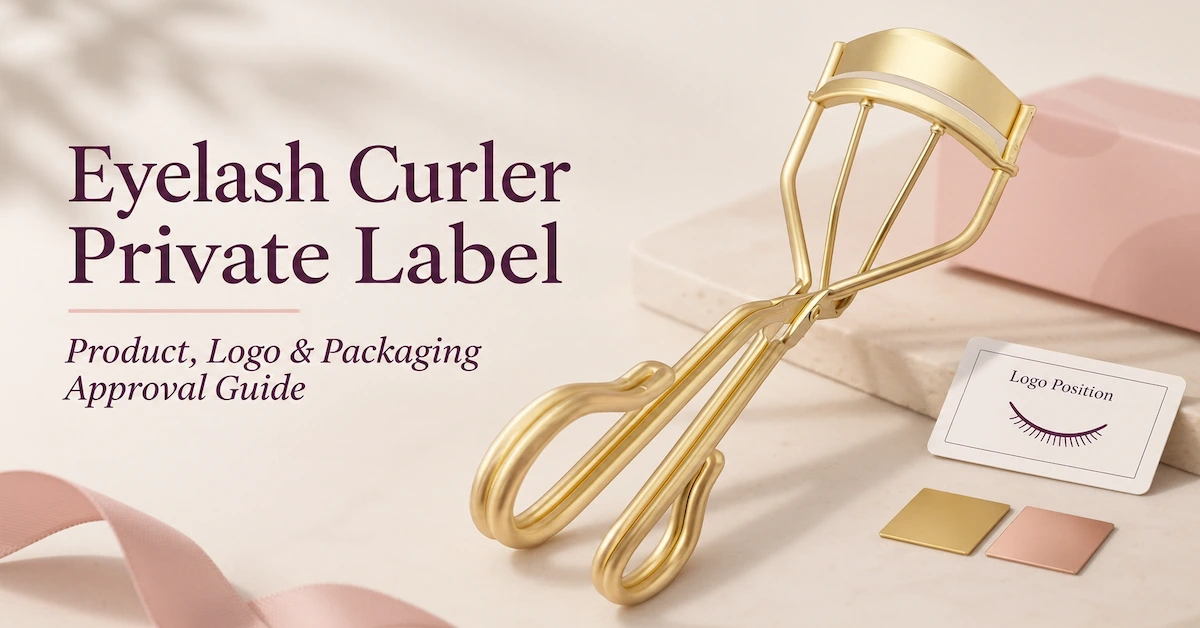
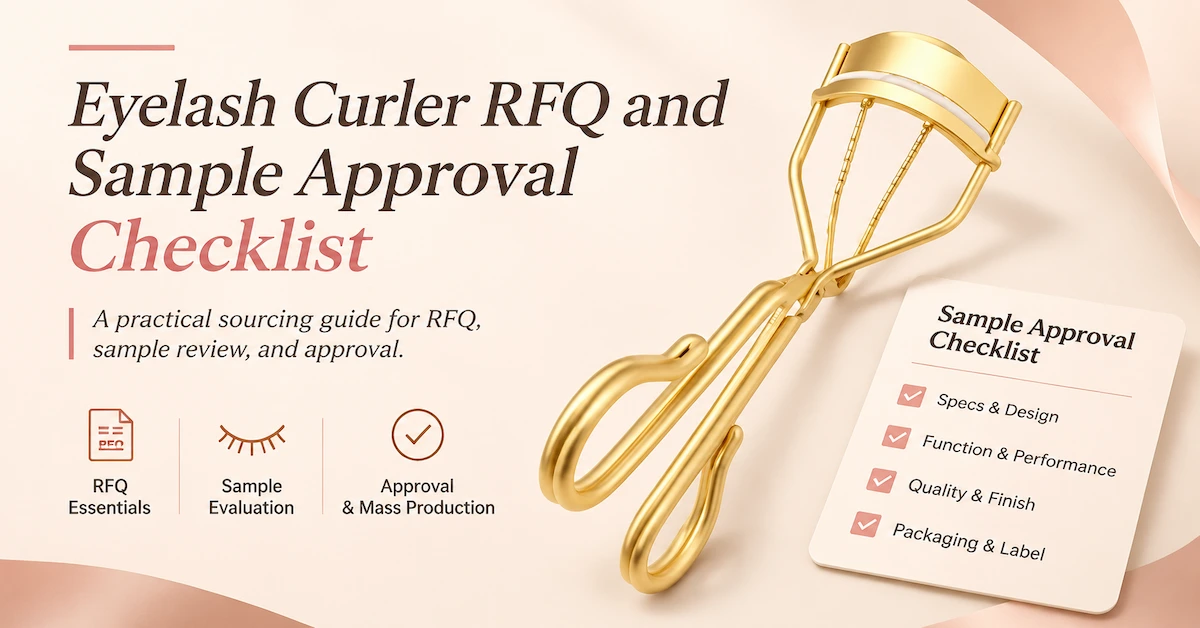
When a beauty brand contacts an eyelash curler supplier, the first useful document is not a long catalogue request. It is a focused RFQ that tells the supplier which product, branding, packaging and commercial decisions must be answered. Buyers can use the eyelash curler product family as a starting reference, then define the exact version they want sampled. The second useful document is a sample approval checklist that tells both sides what must be reviewed before the retail unit is released for production.
This guide is built around that two-document workflow. It shows what to put in an eyelash curler RFQ, how to separate confirmed specifications from open questions, how to inspect the sample in approval gates, and how to carry the approved reference into packaging, quality checks and repeat orders. The framework is written for beauty brands and retailers; it does not turn unconfirmed factory information into a promise.
Discuss an Eyelash Curler Project
What should an eyelash curler RFQ ask a supplier to confirm?
Short answer: an eyelash curler RFQ should identify the product direction, working parts, material and finish fields, branding, packaging, target quantity, sample requirements, quality checkpoints and delivery assumptions. It should also mark which items are fixed, which are recommendations and which remain to be confirmed.
For a beauty brand, the RFQ should answer five practical questions before a quote is treated as comparable:
- Which exact product reference and working direction is being quoted?
- Which product fields will be resolved by sample rather than by catalogue image?
- Are the pad, logo, finish and retail package included in the same scope?
- Which checks will be used to approve the sample and packed product?
- What reference will control a repeat order or a proposed change?
OLIMOR's public service route connects product development, OEM/ODM, private label, materials and finishes, logo finishing, custom packaging, sampling, quality and packaging logistics. Those pages establish a useful project path. They do not publish a universal eyelash-curler material, tolerance, MOQ, price, capacity or lead time. Those details should be confirmed for the selected model and order.
Which eyelash curler details belong in the first supplier brief?
A supplier can give a more useful response when the first brief describes the intended product rather than only saying “send your eyelash curler catalogue.” The brief should identify what is already decided, what can be recommended and what must be approved by sample.
| Product field | What the buyer should describe | What remains to confirm |
|---|---|---|
| Working purpose | Home beauty, retail accessory, professional channel, gift set or another defined use. | The final use instructions, claims and market-specific requirements. |
| Curve and working head | Reference shape, preferred curve, visible profile and any fit concern from an existing product. | Model-specific dimensions, curve relationship and sample acceptance wording. |
| Contact surface and pad | Pad position, visible contact area, replacement expectation and protection needs. | Exact pad material, dimensions, hardness, attachment and spare-part terms. |
| Handle and hinge | Grip style, handle appearance, action preference and reference product. | Component construction, movement criteria and final dimensions. |
| Surface and branding | Colour direction, gloss or visual finish, logo location and retail style. | Exact material, treatment, marking method and artwork approval. |
| Pack format | Individual card, box, sleeve, pouch, set or another retail presentation. | Internal retention, pad clearance, labels, barcode, carton quantity and logistics. |
This format prevents a common sourcing error: asking for an exact quote before the supplier knows which parts are fixed. It also gives the buyer a cleaner basis for comparing responses. A quotation that lists a unit price but leaves the pad, finish, logo method and package scope undefined is not yet a comparable offer. Treat the RFQ as a control document, not as an administrative email.
Copy-ready eyelash curler supplier RFQ template
Copy the template below into an email or procurement form. Replace the bracketed fields with the information already known, and leave unresolved items as “to be confirmed.” The supplier should return the same headings with a status such as confirmed, recommended, sample-dependent or to be confirmed.
Subject: RFQ for [eyelash curler model or product direction] - [quantity or launch plan]
Product reference: [model, image, drawing or sample]
Intended use and market: [retail, professional, gift set, target market]
Working head: [curve direction, pad position, fit or clearance requirements]
Pad and hinge: [included pad, replacement expectation, retention, movement questions]
Material and finish: [colour, gloss, surface direction; composition and treatment to confirm]
Branding: [logo file, marking location, artwork format and marked-sample request]
Packaging: [card, box, sleeve, pouch or set; protection, labels and carton needs]
Quantity and delivery: [first order, range size, destination and target window]
Sample approval: [product-only, branded, package sample and review checkpoints]
Please confirm: [MOQ, sample terms, price scope, stage-based lead time, quality checks, documentation and change-control process]
This template is a buyer framework, not an OLIMOR quotation form or a published commercial policy. The final MOQ, price, lead time, material specification, packaging configuration and documentation should be confirmed for the selected product and order.
Which RFQ fields must be resolved on the sample?
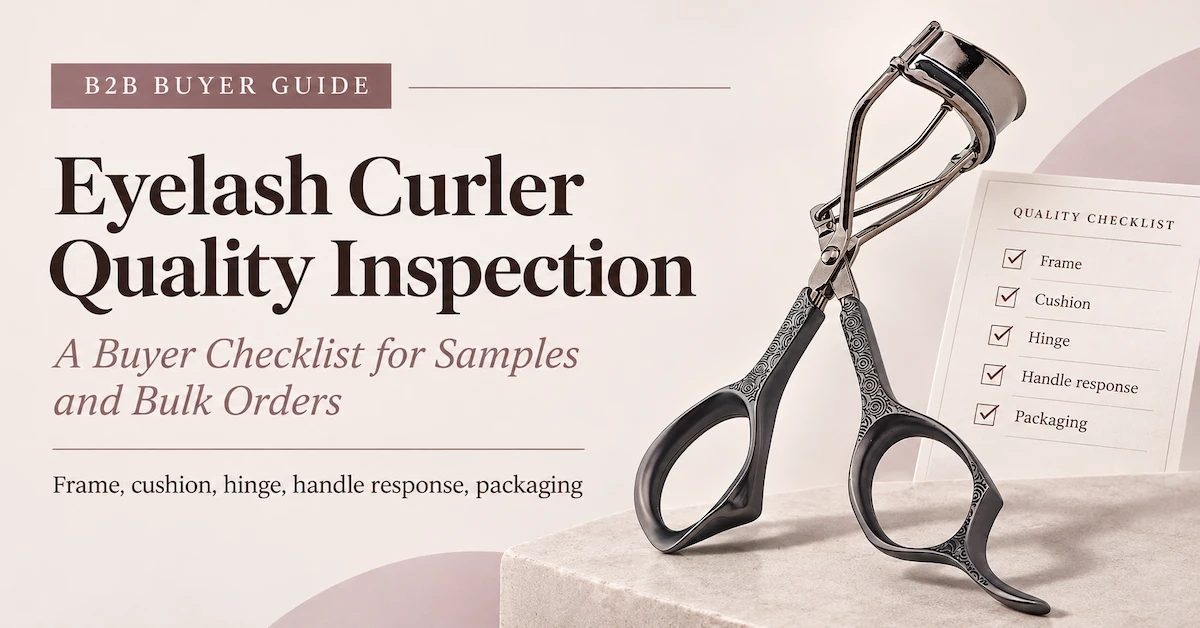
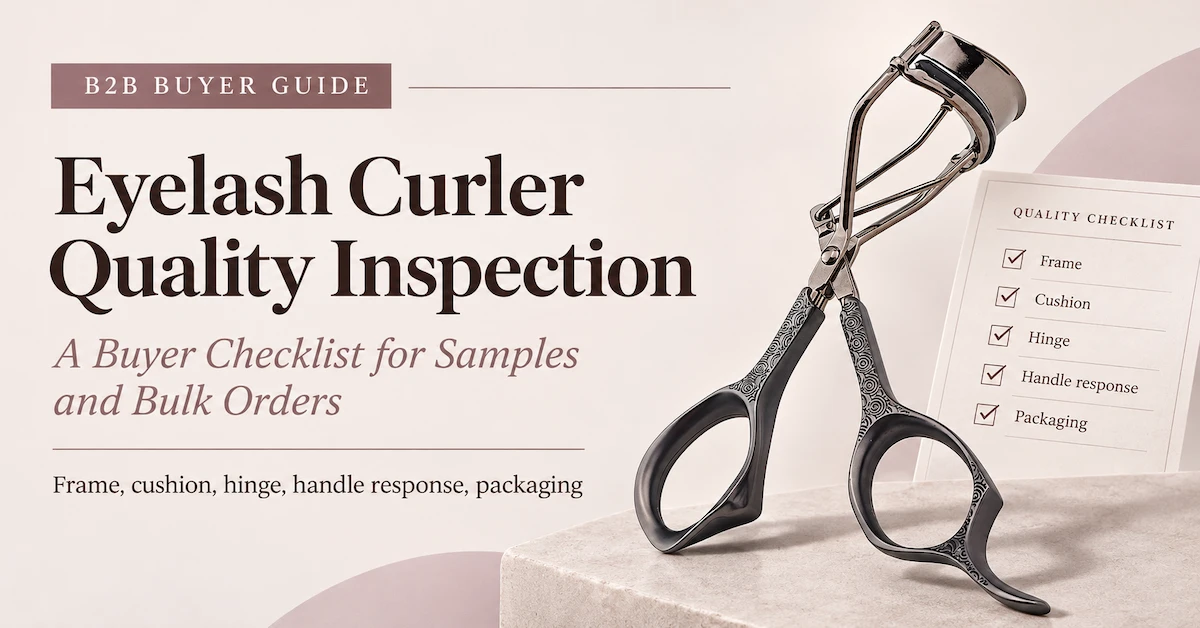
The working structure should be evaluated as a group of related parts, not as a single curved metal shape. The buyer's goal is to understand how the head, pad, hinge and handles work together in the selected model.
Curve profile and contact area
Ask the supplier to identify the intended curve profile and how the pad sits in relation to the working head. A catalogue photograph may make two curlers look similar while their contact areas or clearances differ. During sample review, look for a pad that sits consistently across the intended working zone and a head that is not visibly twisted relative to the handles. Do not claim a universal fit for every eye shape unless that claim is supported by the approved product evidence.
Pad position and replacement logic
The pad is a product component and a retail risk point. Confirm whether it is included, how it is retained, whether a replacement part is available, and whether the package keeps it from being compressed or displaced. The exact pad compound, hardness, dimensions and replacement policy are model-specific; they should not be inferred from colour or appearance.
Hinge movement and handle action
Open and close the sample with controlled movement. Note whether the hinge feels stable, whether the handles return consistently and whether the action creates an unexpected scrape or side movement. Buyers should record what they observe rather than assign an unverified force value. If a specific operating force or cycle test is important to the target market, state it in the brief and ask the supplier how it can be evaluated.
Working head and pad clearance
Check the relationship between the upper working surface, pad and lower support when the tool is closed. The pad should not appear visibly displaced by the package or by normal handling. Any clearance, pressure or replacement requirement must be evaluated against the selected design; the guide does not define a fixed gap or safety tolerance.
What evidence should an eyelash curler supplier return with the quote?
A useful RFQ response should return evidence at the same decision points for every candidate. Evidence does not need to mean a large technical file. It can be a clearly identified product reference, a sample route, a packaging scope, agreed check points and a quotation that separates confirmed information from open fields.
| Decision stage | Evidence to request | Buyer decision |
|---|---|---|
| Product direction | Named model or reference, intended use, visible product details and open specification fields. | Is this the right starting product for the brand or retail channel? |
| Sample review | Physical sample reviewed for structure, pad, movement, appearance and intended presentation. | What must be approved, revised or confirmed before packaging artwork? |
| Branding | Logo artwork, marking position, finish direction and a sample or visual proof. | Does the mark suit the surface and remain clear of working parts? |
| Packaging | Pack sample, insert or retention method, pad clearance, labels and carton information. | Will the approved curler reach the retail or fulfillment channel protected? |
| Quality | Agreed appearance, working, marking and packaging checkpoints for the selected order. | Can the buyer and supplier review the same reference before shipment? |
| Repeat order | Approved model, finish, artwork, package version and change record. | What must remain unchanged, and what requires a new sample? |
This evidence-based approach is especially useful when comparing a specialist beauty-tool supplier with a general trading response. The buyer is not trying to guess the supplier's internal organization. The buyer is checking whether the project has a visible path from brief to approved sample to packed product.
How should an eyelash curler supplier handle materials and finishes?
Material and finish discussions should begin with the selected product and intended use, not with a generic claim such as “premium metal.” Ask which material fields are confirmed, which surface treatment creates the visible finish, and which documentation or care guidance is available for the actual model.
For a retailer, the important questions include:
- What is the confirmed material composition of the working head, handle, hinge and other components?
- Is the visible colour the base material, a coating, plating, paint or another surface treatment?
- Which parts touch the pad, the package or the user's hand?
- What finish consistency should be reviewed on the sample and bulk product?
- Are cleaning, storage or care instructions needed for the target market?
OLIMOR's public materials and finishes route supports a discussion of material, colour, surface and product-use considerations. It does not mean a particular alloy, coating or compliance document is automatically included in every eyelash curler project. Keep those fields open until the supplier confirms them for the selected model.
Do not use appearance alone to claim corrosion resistance, hypoallergenic performance, sterilization suitability, chemical compatibility or a fixed service life. Such claims require product-specific evidence and, where relevant, market review. A careful supplier conversation protects the retailer from publishing a claim that the production documents do not support.
What should a sample approval process include?
The sample should answer the decisions that a catalogue image cannot answer. A practical approval process can use five gates, with the exact number and criteria agreed for the project.
Gate 1: identify the exact version
Record the model reference, colour or finish, pad version, logo status and packaging status. Keep photographs and notes with the same reference. This avoids approving a sample whose working head is later matched with a different pad or finish.
Gate 2: review structure and operation
Inspect the curve, working head, pad position, hinge, handle movement and visible assembly. Open and close the sample in a controlled way and note any unexpected rubbing, looseness, side movement or inconsistent return. If the retailer needs a defined cycle or force requirement, put it into the project brief rather than assuming a universal method.
Gate 3: review finish and branding
Check the surface under consistent lighting, then compare the logo position and marking quality with the approved artwork. OLIMOR's public logo-finishing route describes the need to consider marking method, placement and compatibility with the product surface. The exact result must still be approved for the selected finish.
Gate 4: review the product and package together
Check pad clearance, retention, package movement, display orientation and the information printed on the retail pack. A package should not press the working head or make the pad appear displaced. Confirm that the model reference, barcode area and artwork version match the buyer's records.
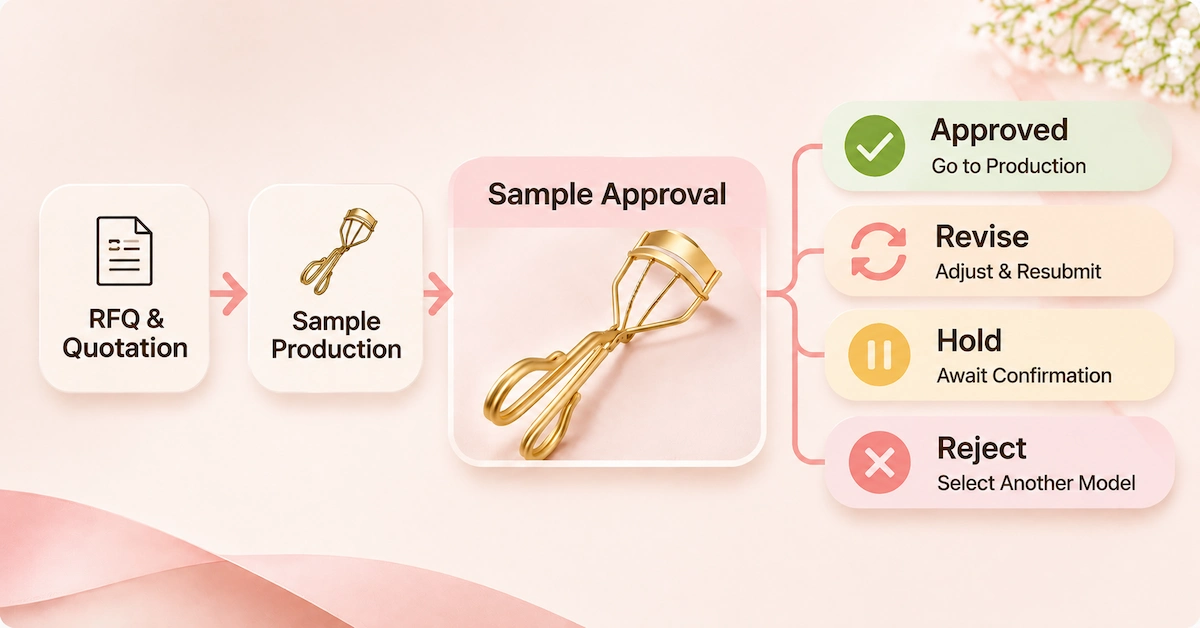
Gate 5: record approval or revision
Write down what was accepted, what remains open and what must change. An approval should identify the product, finish, branding, packaging and quality points covered. If a revision is needed, describe the observation without guessing the manufacturing cause. This gives the supplier room to review the forming, assembly or finishing process while keeping the buyer's requirement precise.
Use the following decision language in the approval record:
| Status | Use when | Next action |
|---|---|---|
| Approved | The product, working parts, finish, branding and package match the agreed direction. | Freeze the reference and move to project-specific production planning. |
| Revise | A working, appearance, branding or packaging point conflicts with the brief. | Describe the observation, request the change and review a new version. |
| Hold | A material, pad, label, market or commercial field remains unresolved. | Keep production or artwork approval open until the missing evidence is confirmed. |
| Reject | The version cannot meet the intended product direction or creates an unacceptable retail risk. | Return to product selection or request an alternative model. |
What packaging checks belong in the sample approval checklist?
Packaging is part of supplier selection when the product will be sold through retail, e-commerce or a branded kit. The buyer should ask whether the supplier can coordinate the tool, pad protection, internal retention, artwork and outer-carton information as one project discussion.
For an eyelash curler, packaging review should cover:
- Protection of the working head and pad from pressure, abrasion and movement.
- Clear retention of the handles and any replacement pad or accessory.
- Retail display orientation and visibility of the product.
- Correct model reference, barcode area, artwork version and required market information.
- Inner-pack and outer-carton quantities that match the order documents.
- A review method for opened cartons or sampled retail units before shipment.
The exact box, card, insert, pouch, carton and shipping configuration should be confirmed for the selected product and destination. OLIMOR's public custom packaging and packaging and logistics pages provide relevant routes for that discussion, but they do not establish a standard pack for every buyer.
A supplier that can discuss product-to-pack coordination reduces a specific retail risk: the sample is approved as a loose tool, but the packed unit arrives with pressure on the pad, a damaged finish or an unreadable product reference. Packaging should be sampled early enough for the retailer to review the complete selling unit.
How should the RFQ define quality checks for the eyelash curler?
Compare the quality conversation, not just the supplier's quality vocabulary. “Quality control” has value only when the buyer knows which product details will be checked and how the approved reference will be used.
| Quality area | Buyer questions | Evidence to retain |
|---|---|---|
| Working parts | Which movement, pad, curve and assembly details are checked on this model? | Approved sample and review notes. |
| Appearance | What finish differences are acceptable, and under which lighting or reference? | Finish reference, sample images and agreed wording. |
| Brand marking | How are logo position, clarity and surface compatibility reviewed? | Artwork approval and marked sample. |
| Packaging | How are pad protection, retention, labels and carton details checked? | Pack sample and shipment check record. |
| Change control | What happens if a component, finish or packaging detail changes? | Updated reference and new sample decision where needed. |
OLIMOR's public quality route identifies working alignment, appearance, marking and packaging as practical review points for a selected tool. Use those points to structure questions, then agree the model-specific criteria. Do not assume that a public process description is the same as a completed inspection report for your order.
How should buyers compare eyelash curler RFQ responses?
A quote is comparable only when the product and service scope are comparable. Ask every candidate supplier to separate confirmed numbers from variables that depend on the final model, quantity, packaging or destination.
| Quote field | Why it changes the comparison | Buyer action |
|---|---|---|
| Product reference | Different curves, pads or finishes may be quoted under similar product names. | Request a named reference and sample link or image. |
| MOQ | Minimums may vary by model, colour, logo, package or mixed-SKU plan. | Ask for project-specific MOQ and any setup quantities. |
| Lead time | Sampling, artwork approval, tooling, production, packing and transport are different stages. | Request a stage-based schedule for the selected order. |
| Packaging scope | A unit price may exclude card, box, insert, pad protection, labels or carton work. | Ask what is included and request a pack sample. |
| Change terms | A finish, pad or logo change can affect sampling, tooling and repeat orders. | Record which changes require new approval. |
| Delivery plan | Production completion and transport time are separate planning variables. | Confirm destination, shipping basis and timing in the project discussion. |
The final MOQ, price, lead time, material specification, packaging configuration, certification scope and production capacity should be confirmed according to the product model and order requirements. This is not a weakness in the buying process; it is the information needed to avoid comparing a fully specified package with a product-only estimate.
How should the approved sample control a private-label order?
Private label should be treated as a coordinated product decision rather than a logo-only service. The selected eyelash curler, surface, logo, pad, package and listing information need to describe the same product version.
A practical brand sequence is:
- Define the customer, sales channel and intended use.
- Choose or develop the curler direction and identify open product fields.
- Review the sample for working details, appearance and handling.
- Approve the logo method, location, surface and colour direction.
- Review the retail pack, pad protection, labels and carton information.
- Record the approved reference and the changes that require a new sample.
OLIMOR's public private-label route describes coordinating product selection, branding, finish and retail presentation. Its logo-finishing route addresses the relationship between marking method, placement and surface. These are useful starting points for a brand brief; the exact marking result, package and commercial terms remain project-specific.
For e-commerce listings, keep the approved sample, product name, images, packaging copy and care information aligned. A supplier should not be asked to support a claim that has not been confirmed for the final product. This is especially important for statements about material, comfort, professional use, durability or replacement parts.
Eyelash curler RFQ and sample approval FAQ
What should an eyelash curler RFQ include?
Include the product reference or direction, intended use, working head and pad requirements, handle and hinge preferences, material and finish fields, logo, packaging, quantity, sample needs, quality checkpoints and delivery context. Mark unknown information as to be confirmed.
Should I compare the lowest unit price first?
No. Compare the same product reference, pad scope, finish, logo work, packaging, sample stage, quality discussion and delivery assumptions. A lower product-only price may not include the same retail-ready requirements.
What should I check before approving an eyelash curler sample?
Check the curve, working head, pad position, hinge movement, handle action, finish, logo, package retention and printed information. Record the model reference and separate observations from claims that require supplier confirmation.
Can a supplier guarantee a universal fit for all users?
A universal fit claim should not be assumed from product shape. Fit depends on the selected geometry, intended use and supporting evidence. Request product-specific information before publishing broad fit or comfort claims.
Does the pad material need to be listed in the quotation?
Yes, at least as an open field if it has not yet been confirmed. Ask about pad composition, dimensions, attachment, replacement and packaging protection. Do not infer the material from the pad's colour.
How do MOQ and lead time work for private-label curlers?
MOQ and lead time depend on the selected model, quantity, finish, logo, packaging, sampling and delivery plan. They should be quoted for the actual project rather than copied from a general product page.
Can the packaging be reviewed with the product sample?
It should be whenever the product is intended for retail or e-commerce. Review pad clearance, retention, display orientation, labels, barcode area and carton information together with the approved curler.
What quality checks should an eyelash curler supplier discuss?
The discussion can include working structure and movement, appearance, branding and packaging. The exact checkpoints and acceptance criteria should be agreed for the selected model and order.
How do I protect a repeat order from silent changes?
Keep a controlled record of the approved model, pad, finish, logo, artwork, package and quality notes. Ask the supplier to identify any proposed component or process change and decide whether a new sample is required.
What information should I send to OLIMOR for an eyelash curler supplier discussion?
Share the product direction, intended use, target market, reference product or image, approximate quantity, finish, logo and packaging requirements. The public product development route and OEM/ODM page can help organize the next discussion. Exact material, MOQ, lead time, packaging and quality requirements should then be confirmed for the selected project.
Conclusion
The right eyelash curler supplier is the one that makes the buyer's decisions visible. Compare the working head, curve, pad, hinge, handles, material fields, finish, logo, package and quality checkpoints as one product route. Use a physical sample to resolve what images cannot show, and record the approved version before production or replenishment.
For a beauty brand or retailer, a clear brief improves more than the first quote. It gives the supplier a better basis for product development, sampling, branding, packaging and delivery planning, while giving the buyer a reference for future orders. OLIMOR's public OEM/ODM, product development, sampling, quality and packaging routes provide starting points for that project conversation. Prices, MOQ, materials, certifications, capacity, lead times and final packaging remain subject to confirmation for the selected product and order.