Eyelash Curler Retail Packaging: Why Product Protection Comes First
Eyelash curler retail packaging does more than present a beauty accessory. It protects the product, communicates brand information, supports retail display, and prepares the finished unit for storage and distribution. For beauty brands, importers, retailers, and e-commerce sellers, the packaging must protect the curler's frame, hinge, handles, and lash pad while keeping the product correctly positioned throughout the supply chain.
An eyelash curler has several components that create specific packaging challenges. Its curved metal frame can be affected by unwanted pressure. The hinge and handles may move if the product is not retained properly. The lash pad needs sufficient clearance, while replacement pads and other accessories must remain in their designated positions. These requirements make the internal insert just as important as the printed outer box.
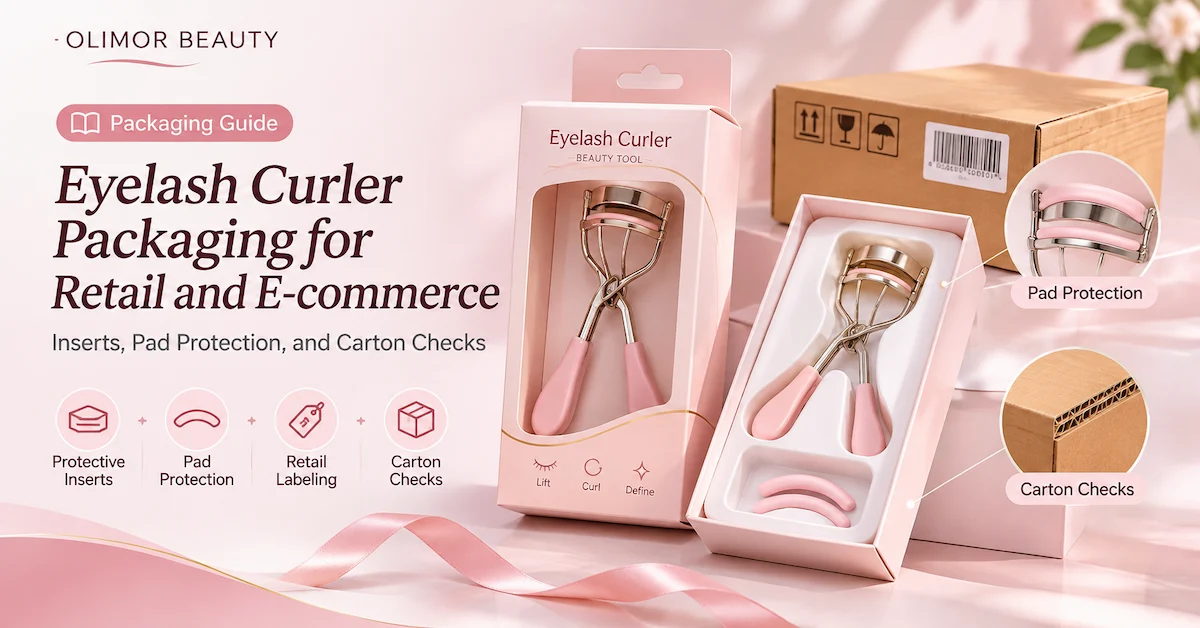
Effective eyelash curler retail packaging should secure the frame without distorting its shape, protect the lash pad from unwanted pressure, retain accessories, provide accurate retail information, and keep individual units stable inside the shipping carton. Buyers should approve a complete packed sample before releasing bulk packaging production.
1. Who Needs Custom Eyelash Curler Packaging?
Different buyers have different packaging priorities. A beauty brand may prioritize visual identity, while a distributor may focus on carton quantity and product identification. An e-commerce seller must also consider parcel handling and the condition of the package when it reaches the customer.
1.1 Beauty Brands and Private Label Buyers
Beauty brands usually need packaging that matches their wider product collection. This may involve coordinated colors, logo placement, a branded retail box, a product information card, and a fitted insert. The packaging should make the curler recognizable while protecting the components that influence the customer's experience.
Private label buyers should also consider future replenishment. If a brand plans to offer several curler finishes or related lash accessories, the packaging system should distinguish each SKU clearly. Artwork, product names, pad configurations, and included accessories must match the approved product version.
1.2 Retailers and Distributors
Retailers need packaging that works on shelves, hanging displays, or beauty-accessory fixtures. Visibility, barcode placement, product identification, and package dimensions are important. Distributors need additional control over the number of units per carton, SKU separation, carton labels, and receiving information.
A retail box that looks attractive on a shelf is not necessarily suitable for wholesale transportation. Buyers should review the individual package and master-carton arrangement together.
1.3 E-commerce Sellers
E-commerce sellers need to consider warehouse handling, parcel sorting, delivery movement, and customer unboxing. A retail box may need to be placed inside an additional shipping carton or mailer. The correct configuration depends on the product, package strength, distribution route, and acceptable damage risk.
For these buyers, packaging performance should be evaluated through the complete delivery configuration rather than the individual retail box alone.
2. Identify the Main Eyelash Curler Packaging Risks
Before selecting a box or insert, buyers should identify the parts of the curler that need protection. The frame, hinge, handles, pad, and accessories have different contact and movement requirements.
2.1 Frame Pressure and Deformation
The frame determines the shape and relationship between the working surfaces of the curler. If the insert is too tight or the package is compressed, unwanted pressure may be transferred to the frame. The result may be visible deformation, uneven positioning, or a product that no longer matches the approved reference.
The insert should support the product at appropriate contact points. It should not force the curved frame into a different position simply to make the curler fit inside the box.
2.2 Pad Compression
The lash pad requires particular attention. The box lid, insert, or another accessory should not press directly against the pad. Buyers should check the clearance with the package fully closed because an open tray may appear suitable while the completed box creates pressure from above.
If replacement pads are included, they should be retained separately. Loose pads can move around the package, become separated from the product, or create unwanted contact with the frame.
2.3 Hinge and Handle Movement
The hinge is a moving component, and the handles can shift when the product is not properly secured. Excessive movement may cause repeated contact with the insert or other components. However, an insert that grips too tightly may make the curler difficult to remove or apply unnecessary force around the joint.
Buyers should check both retention and removal. The product should stay in position during normal handling but should not require excessive force to take out.
2.4 Surface Scratches and Packaging Damage
Polished, plated, or colored surfaces may show scratches or rubbing marks if the curler moves against a rough insert or another component. Packaging should prevent unnecessary friction, especially on visible branded surfaces.
Other risks include crushed corners, torn hanging cards, loose seals, damaged windows, and inaccurate printed information. These issues can reduce retail presentation even when the product itself remains functional.
3. Build a Complete Packaging System
A practical eyelash curler packaging specification should cover the entire journey from the product surface to the shipping carton. Each layer has a different responsibility.
3.1 Product Contact Protection
The closest protective layer may include a sleeve, film, separator, or shaped support. Its purpose is to reduce direct rubbing and prevent unnecessary contact with sensitive areas. The material should be compatible with the product finish and should not leave residue or interfere with the hinge or pad.
3.2 Internal Insert
The insert holds the curler in its intended position. It may use a shaped cavity, folded paperboard, retention tabs, or a molded tray. The design should support the frame and handles while leaving clearance around the pad and moving joint.
3.3 Individual Retail Package
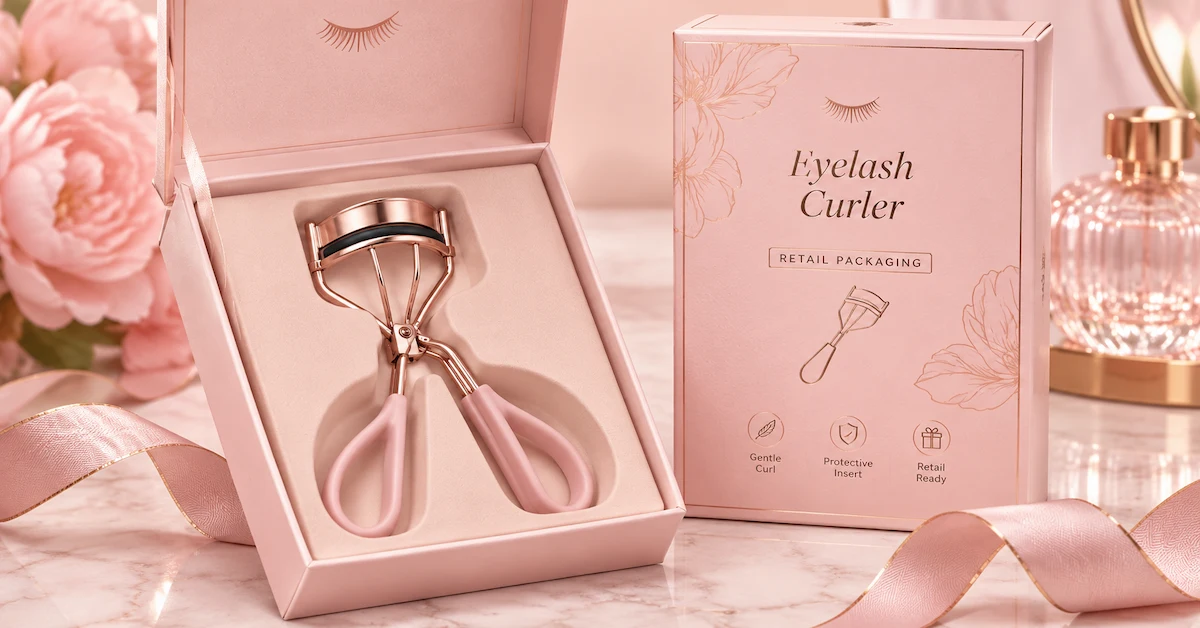
The retail package communicates the brand, product identity, and relevant information. Common formats include paperboard boxes, hanging cards, sleeves, pouches, window boxes, and gift packaging. The format should be selected according to the sales channel and required protection.
3.4 Inner Packaging and Master Carton
Several retail units may be grouped inside an inner carton or divider arrangement before being placed in the master carton. This helps organize quantities and separate different SKUs. The outer carton must be sized around the finished retail unit, not the loose curler.
For direct-to-consumer orders, an additional shipper may be required. Retail presentation and parcel protection should be treated as related but separate design requirements.
4. How to Choose Inserts for Eyelash Curler Custom Packaging
Insert selection should begin with the actual product dimensions and contact points. Buyers should not select a tray only because it looks premium or is commonly used for other beauty accessories.
4.1 Folded Paperboard Inserts
Folded paperboard can be suitable for compact retail boxes where the product can be retained by shaped slots or tabs. It can help separate the frame and handles from the outer box without requiring a complicated tray structure.
Buyers should check board stiffness, fold accuracy, slot width, edge finish, and product movement. A slot that is too wide may allow the curler to shift. A slot that is too narrow may create pressure on the finish or make removal difficult.
4.2 Thermoformed Trays
A thermoformed tray can provide defined cavities for the curler and replacement accessories. It may be useful when the package requires a clear product layout or when several components need separate positions.
Review the cavity dimensions, depth, contact points, and clearance. The product should fit securely without being compressed. The tray should also allow the customer to remove the curler without pulling against the pad or hinge.
4.3 Molded Pulp Inserts
Molded pulp may be considered for projects that prefer paper-based packaging structures. Its suitability depends on surface texture, dimensional consistency, structural support, and the appearance required by the brand.
Buyers should inspect the contact surface carefully. A rough or inconsistent surface may create friction against a polished or coated curler. If necessary, a suitable separator may be considered.
4.4 Foam Inserts and Soft Components
Foam can provide cushioning and separation in selected configurations, but softness alone does not guarantee secure retention. A loose cavity may allow movement, while an overly tight cavity may compress the frame or pad.
Check the fit, recovery behavior, surface compatibility, and removal experience. The selected material should be evaluated together with the actual curler and finished box.
4.5 Insert Selection Comparison
| Insert Type | Potential Application | Important Checks |
|---|---|---|
| Folded paperboard | Compact retail boxes | Slot fit, folding accuracy, retention |
| Thermoformed tray | Defined product cavities and accessory separation | Depth, contact points, clearance |
| Molded pulp | Paper-based packaging concepts | Surface texture, consistency, support |
| Foam insert | Selected cushioning applications | Compression, recovery, fit |
| Protective sleeve | Surface separation | Friction, removal, compatibility |
These are general packaging options for buyer evaluation. Availability and suitability must be confirmed for the selected OLIMOR product and project.
Develop the Right Eyelash Curler Packaging
Planning a retail or private-label eyelash curler? Discuss insert structure, frame retention, pad clearance, and custom packaging requirements with OLIMOR BEAUTY.
Discuss Custom Packaging →5. How to Protect the Eyelash Curler Pad
The lash pad is a functional component, not simply a decorative accessory. Its position and condition should remain consistent with the approved product reference. Packaging should prevent unnecessary pressure and keep the pad away from unsuitable contact points.
5.1 Maintain Pad Clearance
The insert and box lid should not use the pad as a support point. Buyers should check clearance from the top and sides with the package fully closed. If the product can move inside the tray, the pad may contact the lid even when the initial fit appears correct.
5.2 Retain Replacement Pads
If replacement pads are included, provide a defined compartment, sleeve, or other suitable retention method. Confirm that the number of replacement pads matches the printed package description and purchase specification.
5.3 Avoid Adhesive Contact
Adhesive labels and temporary fixing materials should not be applied directly to the pad unless compatibility and removal have been confirmed. Residue may affect appearance or create an additional cleaning requirement.
5.4 Inspect After Packing
Inspect the pad before packing, after closing the box, and after the packed sample has been handled. Check for displacement, compression, visible damage, contamination, or contact marks. Compare the result with the approved reference sample.
6. Choose Retail Packaging for the Intended Sales Channel
Different retail formats create different requirements for visibility, hanging, shelf placement, and protection. The package should support the intended sales environment without compromising product retention.
6.1 Hanging Cards
Hanging cards can suit beauty accessories displayed on hooks or pegboards. They provide space for a brand logo, product name, barcode, and short product information.
Check the hanging hole, card stiffness, attachment points, product balance, and frame clearance. The curler should not swing excessively or contact the card in a way that damages the finish.
6.2 Paperboard Retail Boxes
Paperboard boxes provide an enclosed presentation and can accommodate a fitted insert, printed instructions, and brand information. They may be appropriate for premium products or gift-oriented programs.
Check the internal layout using the actual product. The box should close without forcing the frame or compressing the pad. Also inspect the corners, folds, closure, and print alignment.
6.3 Window Packaging
Window packaging allows customers to see the curler before purchase. However, the opening may reduce the available space for structural support. The product must remain positioned behind the window without rubbing against the film.
Review the window size, bonding, product visibility, and distance from the working components. If the curler moves forward inside the package, the window may become an unwanted contact surface.
6.4 Gift and Beauty Set Packaging
Gift sets may combine an eyelash curler with replacement pads, tweezers, eyebrow tools, or other accessories. Each item should have a defined position to prevent movement and direct contact.
Approve the complete set rather than reviewing each product separately. Confirm the accessory count, insert layout, package dimensions, and final appearance.
7. E-commerce Packaging and Parcel Protection
E-commerce packaging must work beyond the retail shelf. The package may pass through warehouse picking, packing stations, sorting facilities, parcel vehicles, and customer opening. The product should remain secure throughout the expected distribution route.
7.1 Retail Box Versus Shipping Box
A retail box is designed around product presentation and customer information. A shipping box is designed around delivery protection. One package may serve both functions, but buyers should not assume that a retail box is automatically suitable for direct parcel shipment.
Depending on the route, the retail box may need an additional outer shipper. The decision should consider package strength, product movement, shipping method, and the buyer's damage tolerance.
7.2 Control Empty Space
Excessive empty space allows the retail package to move inside the outer shipper. Too little clearance may transfer compression to the box. Both conditions can damage presentation or affect the product.
Buyers should review the complete shipping configuration and determine whether dividers, cushioning, or a fitted arrangement are necessary.
7.3 Consider Handling Orientation
Parcels may be handled in different orientations during sorting and delivery. Packaging should not depend on the product remaining upright at all times. The packed sample should be checked in different orientations to identify obvious movement or contact.
7.4 Protect the Unboxing Experience
Customers should be able to open the package without pulling against the curler, bending the insert, or disturbing the pad. The product and any included accessories should be easy to identify and remove.
For e-commerce brands, a useful balance is required between protection, package dimensions, material use, and the customer's first impression.
8. Eyelash Curler Carton Packaging: Wholesale Inspection Points
Individual packaging protects the product, while the master carton protects the packaged units as a shipment. Carton configuration should be based on the actual finished retail package rather than the loose curler dimensions.
8.1 Confirm Finished Package Dimensions
Measure the retail unit after the product, insert, printed card, accessories, and closure have been assembled. Include any hanging tabs, windows, or protruding features. These details affect carton arrangement and the number of units that can be packed safely.
8.2 Confirm Quantity Per Carton
The number of retail units per carton should be agreed before production. The arrangement should avoid excessive movement and prevent the weight of upper units from damaging lower retail packages.
For mixed-SKU orders, different models or finishes should be separated and identified. The internal arrangement must match the packing list and order requirements.
8.3 Master Carton Inspection Checklist
| Inspection Area | What to Verify | Evidence |
|---|---|---|
| Dimensions | Carton size matches the approved packing plan | Measurement record |
| Quantity | Actual units match the carton label and packing list | Count record |
| Arrangement | No excessive movement or mixed SKU placement | Pack-out photographs |
| Closure | Carton is closed securely | Closure inspection |
| Identification | SKU, carton number, and destination are correct | Label verification |
| Condition | No visible crushing, puncture, or moisture damage | Final photographs |
8.4 Carton Marks and Shipment Identification
Depending on the buyer's requirements, carton identification may include product name, SKU, carton number, quantity, destination, weight, and handling instructions. These details should match the purchase order and packing list.
If a buyer uses a warehouse management system, the supplier should follow the specified label format. Do not create an unrelated carton-marking system that makes receiving more difficult.
9. Retail Labels, Barcodes, and Artwork Approval
Retail packaging must identify the product accurately and support the scanning and receiving processes used by the target channel. Label content should be prepared before the final artwork is approved.
9.1 Product Identity and SKU Information
The product name, model reference, included quantity, and accessory description should match the approved product. If several curler models or pad configurations are offered, the label should distinguish them clearly.
For international orders, the package may also require market-specific language, importer details, country-of-origin information, warnings, or other statements. The applicable requirements depend on the destination market and product classification. Buyers should obtain appropriate regulatory review rather than assume one label works everywhere.
9.2 Barcode Placement
Barcode placement should be considered during package design. Avoid placing the symbol across folds, seams, curved surfaces, or areas that may be covered by another label or protective film.
GS1's General Specifications provide guidance for barcode placement and identification. Buyers should test the actual printed package rather than approve only a digital artwork file.
Check symbol clarity, contrast, quiet zones, size, and scanning performance. If the package uses lamination or a window film, confirm that these materials do not interfere with scanning.
9.3 Artwork Version Control
Each approved artwork file should have a clear version reference. Confirm the logo, product name, model, barcode, language, and accessory information before printing. A late product change may require corresponding artwork changes.
Keep the approved artwork and physical packaging sample together as the reference for repeat orders. This helps prevent differences between the first order and later replenishment orders.
10. Packaging Materials and Workmanship
Packaging materials should be selected according to product protection, presentation, target market, and shipping route. No single board, tray, film, or cushioning material is automatically suitable for every curler.
10.1 Paperboard and Printed Components
Paperboard boxes and cards should be checked for stiffness, folding behavior, print quality, edge finish, and closure. The structure should support the intended package shape without applying pressure to the curler.
10.2 Plastic Trays and Protective Films
Where plastic trays or films are used, confirm the material specification, fit, surface contact, and applicable market requirements. The tray should not have rough edges that can scratch the product. Protective films should be removable without leaving visible residue.
10.3 Adhesives and Closures
Adhesive points and seals should hold the package closed without damaging the printed surface or making product removal difficult. A weak seal may open during handling, while excessive adhesive may tear the card or leave residue.
10.4 Finished Package Workmanship
Inspect the assembled package rather than only its individual materials. Check fold alignment, insert position, glue control, print accuracy, product centering, and closure. The curler should fit without force, and the final package should match the approved sample.
11. Quality Control and Transport Testing
Packaging quality should be checked at several stages. Waiting until the finished cartons are ready may make corrections expensive because the insert, artwork, and printed materials may already have been produced.
11.1 Packaging Brief Review
Before sampling, confirm the product model, target channel, packaging format, insert, pad protection, artwork, barcode, accessories, carton quantity, and destination. Identify which requirements are fixed and which need supplier recommendations.
11.2 Complete Packed-Sample Approval
The first packaging sample should use the actual or representative curler, intended insert, and proposed retail box. Inspect the frame, hinge, pad clearance, handle retention, logo visibility, accessory placement, and removal experience.
A loose product sample cannot demonstrate that the finished package works. Approve the complete packed configuration before bulk packaging production.
11.3 In-Process and Finished-Pack Inspection
During packing, check that the correct insert and protective components are used, the pad is not compressed, accessories are included, and the package is closed consistently.
Finished units should be checked against the approved sample. The master carton should then be reviewed for quantity, arrangement, identification, closure, and visible condition. Retain photographs and inspection records for future reference.
11.4 When Should Transport Testing Be Considered?
Formal transport testing may be useful for parcel shipments, long-distance distribution, or higher-risk packaging configurations. The correct method depends on package weight, distribution route, product fragility, and buyer requirements.
The International Safe Transit Association provides different test procedures for different distribution environments. Its test procedure information includes parcel-delivery testing guidance. ASTM D4169 is another framework for evaluating shipping containers and systems under anticipated distribution hazards. See the ASTM D4169 standard information.
These references do not mean that every eyelash curler package must pass the same procedure. They also do not prove that an OLIMOR package has been tested or certified. Buyers should define the test objective with a qualified packaging specialist or laboratory.
Plan Packaging for Your Distribution Channel
Share your target market, e-commerce shipping route, carton arrangement, and inspection requirements to discuss a suitable packaging configuration.
Discuss Your Packaging Requirements →12. Packaging Cost, MOQ, and Lead-Time Considerations
Packaging cost should be compared as part of the complete order. A low quotation may exclude the insert, protective components, artwork preparation, assembly, or inspection required for a retail-ready product.
12.1 Main Packaging Cost Factors
- Package format: Cards, sleeves, boxes, gift boxes, and fitted trays have different material and assembly requirements.
- Insert structure: Custom cavities, die-cut slots, and accessory compartments may require additional development or tooling.
- Printing: Colors, finishes, revisions, barcode requirements, and order quantity can affect the quotation.
- Protection: Sleeves, films, separators, and cushioning add material and handling requirements.
- Pack-out: Manual placement, accessory inclusion, assembly, and inspection influence the project scope.
- Carton configuration: Finished package dimensions and quantity per carton affect storage and transportation.
12.2 Compare Equivalent Quotations
Buyers should compare suppliers using the same product model, finish, branding, insert, retail format, order quantity, carton configuration, and inspection scope. Otherwise, a lower quotation may simply exclude important components.
| Quotation Item | Question to Confirm |
|---|---|
| Retail packaging | Does the quotation include the box, card, or pouch? |
| Insert | Are frame retention and pad clearance included? |
| Artwork | Are printing and proofing included? |
| Accessories | Are replacement pads and other components included? |
| Carton | Are carton quantity and dimensions specified? |
| Inspection | Which product and packaging checks are included? |
12.3 Confirm Lead-Time Milestones
Packaging projects may involve product approval, insert development, artwork proofing, printed-material preparation, packed-sample approval, production, inspection, and shipment preparation.
Buyers should ask which approvals are required before production begins. A late change to the curler model, pad configuration, insert, or barcode may require a revised sample or artwork review.
MOQ, sample timing, packaging lead time, and production schedules must be confirmed for the exact model, customization level, and order quantity. There is no universal MOQ or delivery period that applies to every packaging project.
13. OEM, ODM, and Private Label Packaging Approval
Packaging should be included in the product brief from the beginning. If the product and packaging are developed separately, the final project may require avoidable changes to the insert, retail box, label, or carton.
13.1 OEM Projects
For an OEM project, buyers may provide a product reference, approved model, packaging drawing, artwork, or detailed requirements. The supplier and buyer should identify which parts are fixed and which can be adjusted.
13.2 ODM Projects
For an ODM project, packaging can be discussed alongside product design and development. The buyer should explain the intended sales channel, customer expectations, package format, and protection requirements before the final product configuration is approved.
13.3 Private Label Projects
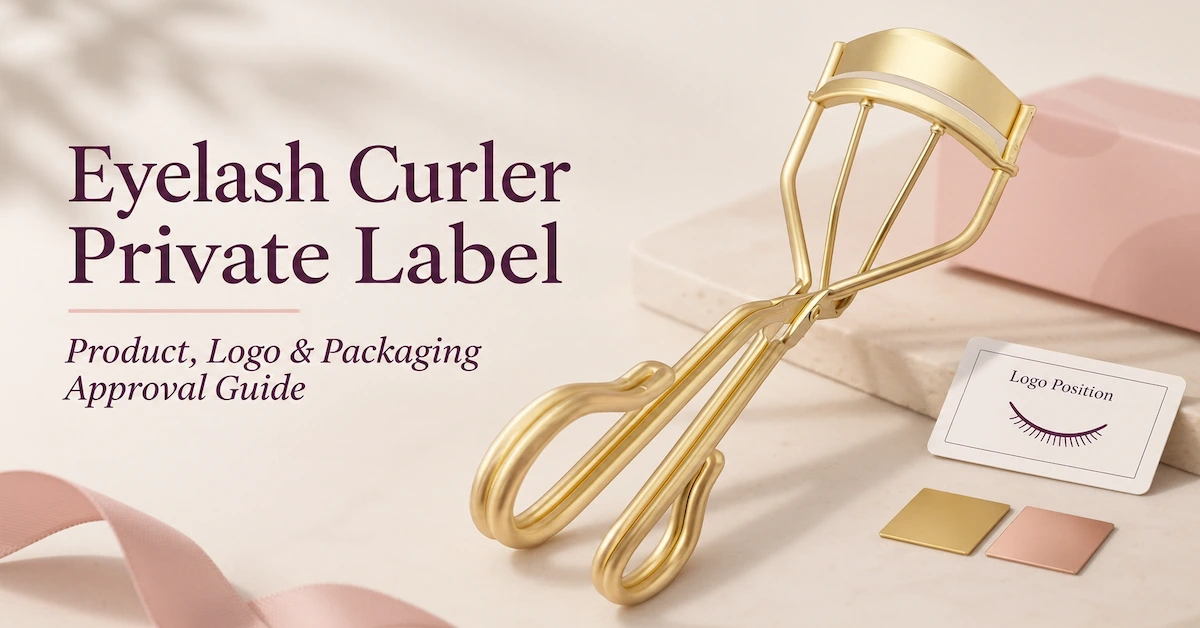
Private label buyers should coordinate product appearance, logo placement, retail artwork, pad configuration, insert design, and carton information. The approved sample should represent the actual branded product and its packaging, not simply a generic curler in a temporary box.
Buyers can also review OLIMOR's existing Private Label Eyelash Curler Guide for product development and branding considerations, and the eyelash curler supplier evaluation guide for functional sample approval. This article complements those topics by focusing specifically on packaging structure and distribution protection.
14. Eyelash Curler Packaging RFQ: What Buyers Should Provide
A useful RFQ does not require a complete packaging engineering drawing. It should provide enough information for the supplier to understand the product, sales channel, protection needs, and expected order scope.
14.1 Product Information
- Selected eyelash curler model or product reference.
- Product dimensions and relevant component details, if available.
- Pad material, profile, and replacement-pad requirements, where applicable.
- Finish, color, and logo requirements.
- Included accessories and expected package contents.
14.2 Packaging Requirements
- Target market and sales channel.
- Preferred retail box, card, sleeve, pouch, or gift package.
- Insert and product-retention requirements.
- Pad and frame protection expectations.
- Barcode, SKU, label, language, and artwork requirements.
- Whether an additional shipping carton is required.
14.3 Commercial and Shipping Information
- Estimated order quantity by model and finish.
- Destination and shipping route.
- Expected quantity per master carton, if defined.
- Required sample stages and inspection checkpoints.
- Any formal transport-test requirements.
14.4 Example Packaging RFQ
| RFQ Field | Example Buyer Input |
|---|---|
| Product | Eyelash curler, selected model to be confirmed |
| Market | North American retail and e-commerce |
| Packaging | Branded retail box with fitted insert |
| Protection | Frame retention, pad clearance, hinge protection |
| Branding | Custom logo and approved artwork |
| Quantity | To be confirmed by SKU |
| Sample | Complete packed sample before bulk approval |
| QC Focus | Frame, pad, insert fit, barcode, carton quantity |
| Delivery | Destination and shipping method to be confirmed |
This is a planning example, not an OLIMOR quotation or confirmed packaging specification. Buyers should replace the example information with their actual requirements before requesting a project-specific proposal.
15. Final Pre-Production and Pre-Shipment Checklist
Before approving a bulk order, buyers should confirm that the product, retail package, and master carton have been checked against the same approved reference.
15.1 Product and Insert
- The correct curler model and finish are used.
- The frame remains in the approved position.
- The hinge and handles are not forced by the insert.
- The pad has sufficient clearance and remains correctly positioned.
- Replacement pads and accessories are retained separately where applicable.
- The product can be removed without unnecessary force or damage.
15.2 Retail Packaging and Artwork
- The approved package format and dimensions are used.
- The logo, product name, and model information are correct.
- The barcode is readable and correctly positioned.
- The printed content matches the actual package contents.
- The package closes correctly without applying pressure to the product.
- The insert and protective components match the approved sample.
15.3 Carton and Shipment
- Carton dimensions and quantity match the agreed packing plan.
- Mixed SKUs are separated and clearly identified.
- Individual packs do not move excessively inside the carton.
- Carton marks match the packing list and order requirements.
- The carton closure and visible condition are acceptable.
- Required photographs and inspection records are retained.
For repeat orders, confirm that the product model, pad configuration, insert, artwork, carton arrangement, and inspection requirements have not changed. Any material change may require a new review or packed-sample approval.
16. Frequently Asked Questions About Eyelash Curler Retail Packaging
1. What is the best packaging for an eyelash curler?
There is no single best format for every curler. Hanging cards may suit pegboard displays, fitted paperboard boxes may support premium presentation, and tray-based structures may provide more controlled positioning. The choice should depend on the product geometry, pad clearance, sales channel, and shipping route.
2. How do you protect the lash pad during shipping?
Maintain clearance around the pad and prevent the insert or box lid from pressing directly against it. Replacement pads should be retained in a defined compartment or protective pouch. Inspect the pad before packing and after handling.
3. Do eyelash curlers need custom packaging inserts?
Not every model requires a complex insert, but the package should provide reliable retention and protection. Folded paperboard, shaped trays, or fitted inserts may be suitable depending on the product dimensions and package format.
4. What should an eyelash curler retail box include?
Depending on the target market, it may include the curler, protective insert, product name, model or SKU information, logo, barcode, product information, and required market-specific labeling. Accessories should be accurately listed.
5. What is the difference between retail and e-commerce packaging?
Retail packaging focuses on product presentation, identification, display, and customer access. E-commerce packaging must also consider parcel handling, movement, compression, and delivery condition. A separate shipping carton may be required.
6. How can buyers prevent a curler from moving inside its box?
Use defined retention points that support the frame or handles without pressing against the pad or hinge. Check the package in different orientations and approve the retention method using a complete packed sample.
7. What should be checked on an eyelash curler shipping carton?
Check carton dimensions, quantity, internal arrangement, SKU separation, closure, carton marks, and visible condition. Confirm that the packing list and carton labels match the actual contents.
8. Can eyelash curler packaging include a custom logo and barcode?
Branding and barcode placement can be discussed as part of a custom packaging project. Buyers should provide approved artwork and barcode information, then check the printed sample for accuracy and scanning performance.
9. Should e-commerce packaging be tested using ISTA or ASTM procedures?
Formal transport testing may be appropriate for certain distribution environments. The correct procedure depends on the package, route, and risk level. Buyers should define the test objective with a qualified packaging specialist or laboratory.
10. What information should I provide when requesting a packaging quotation?
Provide the curler model, target market, sales channel, estimated quantity, preferred package format, insert requirements, pad protection expectations, logo artwork, barcode needs, accessories, destination, and inspection requirements.
Conclusion
Successful eyelash curler retail packaging must protect the product while supporting the way it is displayed, handled, shipped, and received. The most important decisions are not limited to the outer box. Buyers need to consider frame retention, hinge clearance, pad protection, insert structure, accessory placement, retail information, barcode readability, and master-carton configuration as one connected packaging system.
For beauty brands, private label buyers, retailers, and e-commerce businesses, the most reliable process is to define the packaging brief early, select the insert around the actual curler, approve a complete packed sample, and inspect the final carton arrangement before shipment.
OLIMOR BEAUTY can discuss beauty tool product selection, branding, packaging, sampling, and project-specific requirements. The exact packaging configuration, available materials, MOQ, lead time, and inspection scope should be confirmed for the selected model and order.
Ready to Develop Your Eyelash Curler Packaging?
Share your product reference, target market, expected quantity, branding direction, and packaging requirements with OLIMOR BEAUTY to discuss your next retail or e-commerce project.
Request a Packaging Quote →