A beauty tools private label supplier should be evaluated by whether an e-commerce brand can actually launch, sell and reorder the product with controlled information. A catalogue image and a low unit price are not enough. The supplier must help the brand connect the selected tool, product specifications, material information, logo, packaging, sample approval, quality checks and repeat-order reference.
For an online brand, the customer does not experience the factory directly. The customer experiences a product page, a set of images, a product name, a few specifications, the package that arrives, the tool in hand and the result after use. Every one of those touchpoints depends on decisions made before production. If the dimensions are unclear, the listing may be inaccurate. If the material statement is not confirmed, the product copy may overclaim. If the package does not hold the tool correctly, fulfillment can create damage. If the approved sample is not controlled, the next order may not match the first one.
This guide is written for e-commerce beauty brands, private-label teams, online retailers, importers and product managers. It focuses on a transaction question: which beauty tools private label supplier can support a controlled launch from product brief to repeat order? It does not repeat a general explanation of private label, nor does it make unsupported promises about MOQ, lead time, certification, production capacity or material grades. Final commercial and technical terms must be confirmed for the selected product and order.
Review the Private-Label Route
What is the real buying decision for an e-commerce beauty brand?
The real decision is not simply whether a supplier can make a beauty tool. It is whether the supplier can make the product definition visible enough for the brand to approve, list, ship and reorder it. A private-label project becomes commercially usable when product, brand, package and quality decisions refer to the same model and the same revision.
An online brand normally has four internal teams or responsibilities involved in the purchase:
- Product: decides what the tool should do and which product features matter.
- Brand and content: decides the name, visual direction, claims, images and packaging copy.
- Operations: decides quantities, packaging, inventory, fulfillment and replenishment.
- Quality or sourcing: decides what evidence is required before production and shipment.
The supplier does not need to replace every internal role. The supplier does need to provide enough product and process information for the roles to work from one reference. If the product team approves one version, the design team prepares artwork for another version and the quotation describes a third, the brand has a coordination problem before the first shipment.
Core decision rule
A suitable beauty tools private label supplier should make it possible to connect the product reference, specification, sample, logo artwork, packaging version, inspection points and commercial quotation to one controlled project record.
Which supplier questions should be answered before a quote is compared?
Before comparing prices, an e-commerce brand should test whether the supplier understands the project. The first communication should not be judged by how many products appear in a catalogue. It should be judged by whether the response separates confirmed facts, supplier recommendations and open questions.
| Buyer question | A useful supplier response should identify | Risk when the answer is vague |
|---|---|---|
| Which model fits the intended customer? | Product family, intended use, relevant working feature and the fields requiring sample confirmation. | The brand chooses from appearance alone and later discovers a use or performance mismatch. |
| What exactly can be branded? | Logo area, marking method, finish compatibility, colour direction and packaging options. | The logo is approved digitally but cannot be reproduced clearly on the selected surface. |
| What will the sample prove? | Whether the sample covers function, finish, logo, retail pack, protection and product information. | The brand approves a loose tool and assumes the final retail experience will be the same. |
| How will quality be checked? | Model-specific functional, appearance, branding and packaging checks. | “High quality” becomes the only acceptance criterion. |
| How will the product be reordered? | Model code, specification revision, packaging version, change record and quantity basis. | The second order is based on old photographs or incomplete messages. |
This is a buyer-recommended screening framework, not an OLIMOR commercial policy. Its purpose is to help a brand decide whether a supplier conversation is detailed enough to continue. The final scope should always be confirmed with the selected supplier and product.
How should the product be specified before it becomes a private-label SKU?
A private-label SKU should start with an intended customer task, not only a product name. “Tweezers,” “nail file” or “beauty tool set” is too broad to control a purchase. The brief should explain who will use the tool, where it will be used, what the customer expects it to do and which feature must be consistent from sample to production.
Start with the use case and the product family
A brow grooming tool may be purchased for home use, a professional beauty service, a compact travel kit or a broader personal-care collection. Those contexts influence the product language, packaging, grip expectations and the level of protection required. A nail file may be positioned around compact travel, home manicure or professional use, but each position needs a product description that matches the actual structure and working surface.
OLIMOR's beauty tools product range presents product families and directs buyers to consider intended use, finish, branding and packaging requirements. The category pages are a starting point for product discussion, not a substitute for a final order specification.
Record the working structure
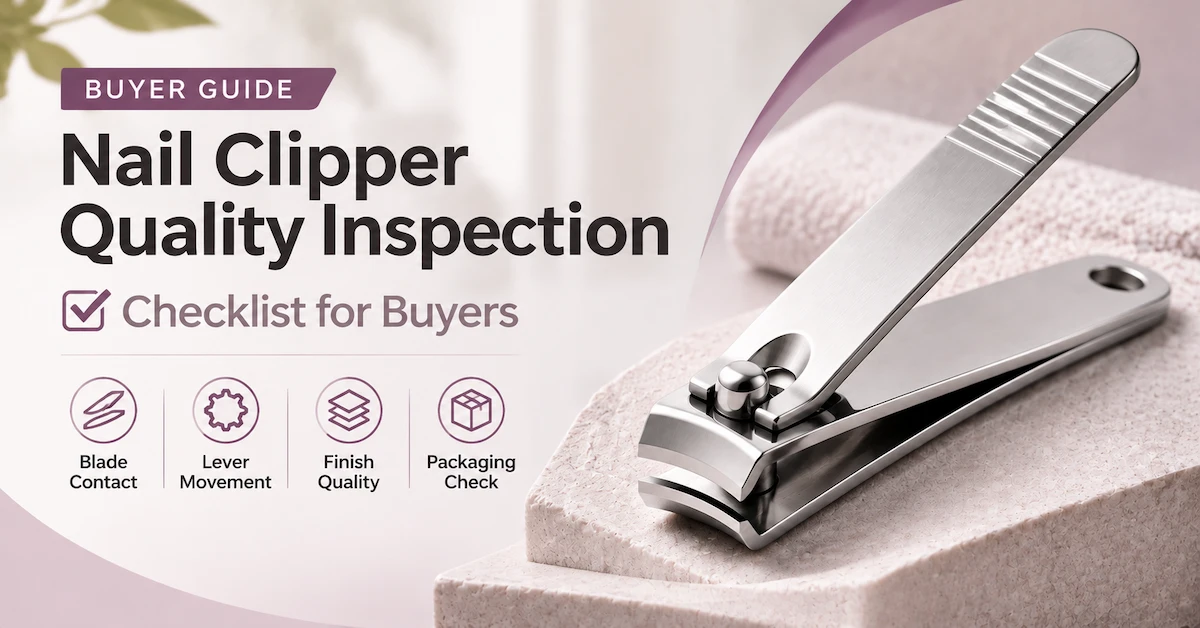
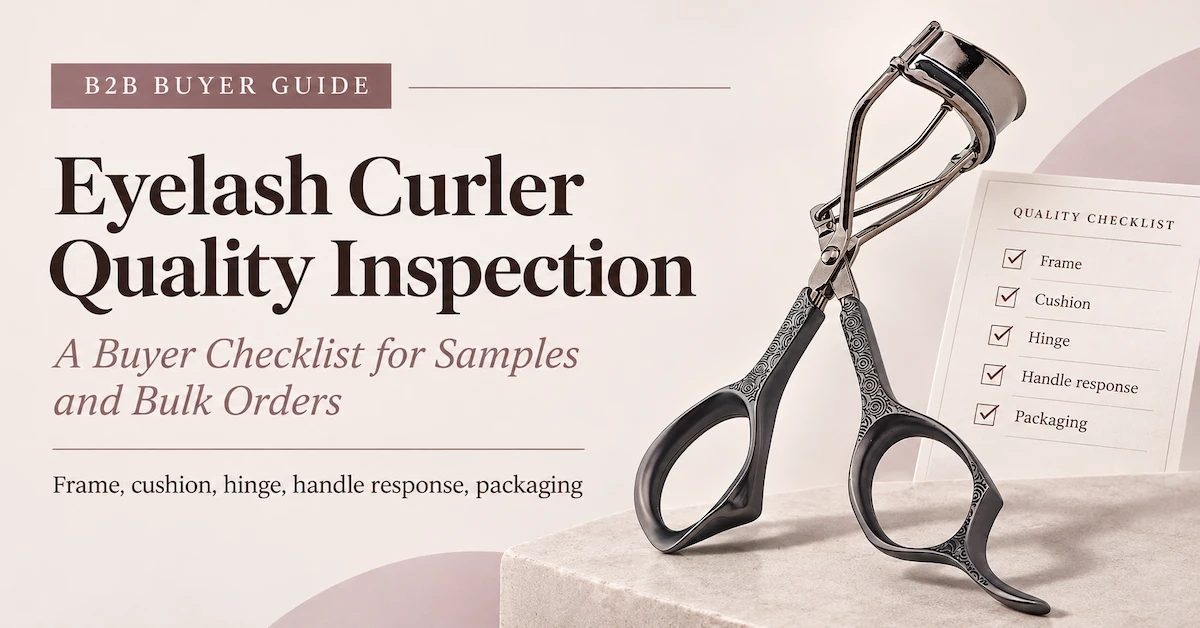
The specification should name the features that affect customer handling and inspection. For tweezers, those features may include tip shape, tip alignment, closing contact, body tension, grip area and overall dimensions. For eyelash curlers, the relevant discussion may include curve, pad position, contact area and handle movement. For nail clippers or nippers, the buyer may need to review blade or jaw alignment, lever action, pivot movement and edge condition. For nail files, the brief should identify length, working surface, tip, handle, edge safety and intended application.
These are product-specific questions, not universal specifications. The selected model may require a different set of fields. The important point is that the brand should be able to translate the selected product into a product page and a quality checklist without relying on a vague adjective such as “premium,” “professional” or “high precision.”
Separate confirmed specifications from open fields
Use three labels in the brief: confirmed, preferred and open. A confirmed field is a requirement the supplier must meet. A preferred field describes the brand's direction but may be adjusted. An open field requires a recommendation, sample or document before it can be approved.
This distinction is especially important for material, finish, weight, packaging, care information and claims. A product photograph or colour description does not establish a material grade. A metallic appearance does not prove a specific alloy. A digital packaging mockup does not prove that the product fits or remains protected. Keep these fields open until the exact product and order configuration are confirmed.
What material and quality evidence should a supplier provide?
A supplier's quality response should be connected to the product being purchased. It should explain what is checked, when it is checked and which reference is used. A general statement about factory quality does not prove that a selected tool meets the brand's functional or cosmetic expectations.
| Evidence area | What the buyer should ask | How it affects the listing or launch |
|---|---|---|
| Material | What material statement applies to the exact model and component? Which fields still require confirmation? | Keeps product claims and care language aligned with the actual item. |
| Working function | What repeatable check covers alignment, contact, tension, cutting, movement or working-surface performance? | Reduces the gap between online promise and customer experience. |
| Appearance | How are burrs, scratches, uneven polishing, coating variation or surface marks reviewed? | Supports consistent product photography and reduces avoidable cosmetic complaints. |
| Brand marking | How are logo position, clarity, contrast and approved artwork version checked? | Keeps the delivered tool consistent with product photography and packaging. |
| Pack-out | How are protection, retention, printed information, quantity and carton marks checked? | Helps reduce receiving errors and damage during fulfillment. |
OLIMOR's public quality discussion route identifies working alignment, appearance, marking and packaging as practical review areas. For a brand project, those broad areas should be translated into checks for the selected product rather than copied as generic language.
Do not publish a precise material grade, certification, performance claim or safety statement unless the exact product and applicable evidence support it. This protects both the customer and the brand. Neutral, accurate copy is commercially safer than an attractive claim that the supplier cannot verify.
How can an online brand judge whether the product is listing-ready?
A product is listing-ready when the content team can describe it accurately, the image team can photograph the correct version, the operations team can identify the saleable unit and the quality team can compare the shipment with an approved reference.
The following checklist is a buyer-recommended framework. It is not a statement that every supplier or every OLIMOR project includes all items automatically.
- Product name and model reference are fixed.
- Overall dimensions and relevant working dimensions are confirmed or clearly marked as pending.
- Material and finish language matches the confirmed product information.
- Included quantity and accessories are recorded.
- Intended use and basic handling instructions are clear.
- Logo method, logo position and artwork revision are approved.
- Retail package format and internal protection are approved.
- Barcode, item code or other required identification has been checked.
- Product images represent the approved model, finish and package.
- Open claims and unresolved specification fields are excluded from public copy.
This checklist directly connects procurement with e-commerce operations. It also creates a better conversation with the supplier because the brand is not asking only for “content.” It is asking for the product information required to sell and support the item accurately.
How should branding be approved on the actual product?
Logo approval should happen on the actual product surface and finish. A digital mockup can show general placement, but it cannot prove scale, contrast, edge definition, curvature, surface interaction or visual balance.
Check the usable logo area
The usable area may be limited by the tool's width, curve, grip, moving parts or working end. Define the position and orientation before artwork is finalised. For a collection, use a consistent brand rule where the product geometry allows it. If different tools require different logo positions, record those differences so the inconsistency is intentional rather than accidental.
Check the marking method against the finish
The suitable marking method depends on the material, surface and project requirement. OLIMOR presents logo finishing as a connected part of the product and brand discussion. The exact method, appearance and acceptance criteria should be confirmed through the selected product and sample.
Keep artwork and product references aligned
The product name, model code, finish, included quantity and package copy should refer to the same approved version. If a product changes after the artwork is prepared, the artwork should be rechecked. This simple control prevents a common e-commerce problem: a product page, card and delivered item that each describe a slightly different product.
What packaging checks matter most for e-commerce fulfillment?
Online fulfillment exposes packaging to a different sequence of handling from a controlled retail display. The individual pack must present the product, protect the working area, control movement and remain identifiable when it is received, stored, picked and shipped.
For a pointed tweezer, the package should prevent the working tip from contacting the card, insert or another product. For a nail file, the working surface and edges should be protected from rubbing and contamination. For a moving tool, the package should prevent the working parts from shifting or pressing against the pack. For a multi-tool set, every component should remain in its intended position.
| Packaging layer | Buyer requirement | Packed-sample check |
|---|---|---|
| Tip, edge or working-end protection | The guard, sleeve or insert should fit the actual model and prevent damaging contact. | Turn and handle the pack. Check for movement, exposed points and rubbing. |
| Internal retention | The product should remain in the intended orientation without excessive pressure on the finish. | Move the package through normal handling and inspect the product position. |
| Retail information | Product name, quantity, use information, barcode or item code should match the approved reference. | Compare printed information with the product page and packing record. |
| Master carton | Carton quantity, SKU identification, internal arrangement and closure should be defined. | Verify pack count, carton marks and visible compression or empty movement space. |
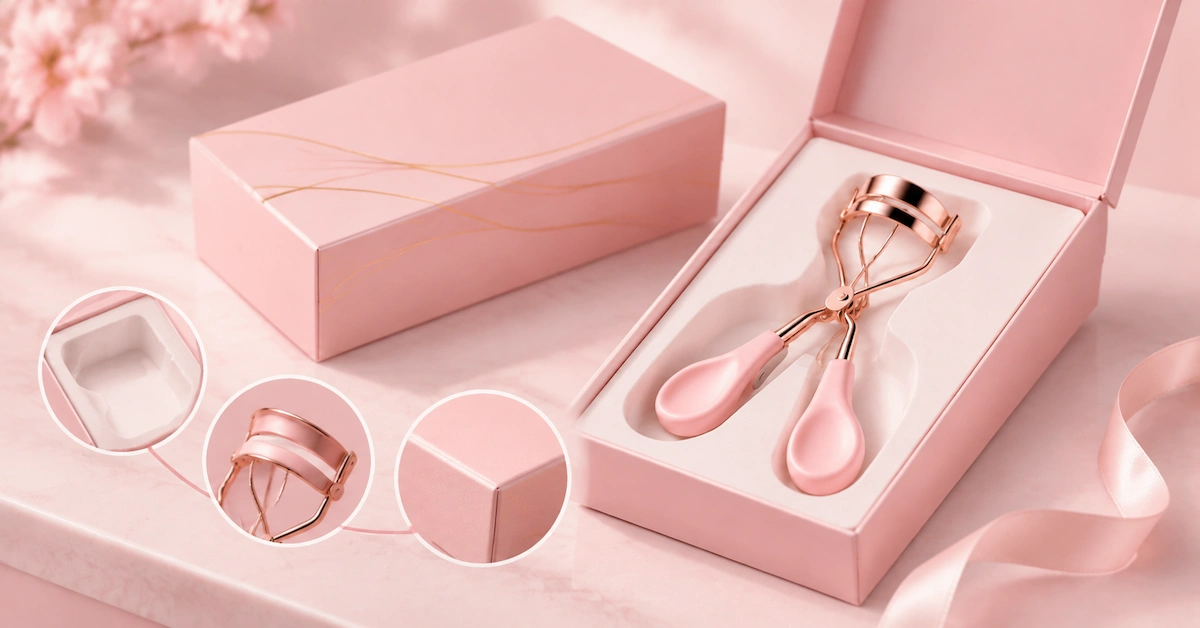
OLIMOR's custom packaging route connects the tool, protection, layout and retail presentation. The appropriate package format depends on the selected product, target channel and order requirements. Do not assume that a card, box, pouch or tray is suitable until it has been reviewed with the actual product.
Approve a packed sample rather than a package dieline alone. The sample should show how the product sits, how the customer accesses it, whether the logo remains visible and whether the working area is protected. If the final printed packaging is not yet available, label the sample as structural or artwork approval rather than final production approval.
Which sample gates should an online brand use?
Sampling should answer decisions in sequence. A single sample rarely proves product function, branding, packaging and shipment readiness at the same time. Use separate gates so the team knows what has been approved and what remains open.
| Gate | Decision to make | Reference to retain |
|---|---|---|
| Gate 1: Product direction | Does the proposed product solve the target customer's task? | Brief, product reference, intended use and open questions. |
| Gate 2: Functional sample | Does the tool perform and feel as required? | Sample version, dimensions, test notes and revision comments. |
| Gate 3: Brand sample | Is the logo, finish and product appearance acceptable on the real item? | Artwork revision, marking method and approval notes. |
| Gate 4: Packed sample | Does the product remain protected, identifiable and presentable inside the final format? | Packaging version, fit notes, product position and printed information. |
| Gate 5: Production release | Are the product, package, inspection and commercial assumptions clear enough to place the order? | Approved sample, specification, artwork, quotation and schedule assumptions. |
This gate structure is a recommended buyer control, not a claim about a fixed OLIMOR approval system. OLIMOR's public sampling route presents sampling as a way to resolve product details before the next project stage. The exact sample sequence, timing and commercial terms should be confirmed for the selected project.
How should MOQ, lead time and project economics be compared?
An e-commerce brand should compare the basis of a quotation, not only the headline price. The quantity may be calculated by model, finish, colour, logo method, packaging version or combined assortment. The final MOQ must be confirmed for the selected product and project; there is no universal MOQ that can safely be applied to every beauty tool or private-label configuration.
Lead time should also be divided into stages. Product clarification, sample preparation, artwork approval, package preparation, production, inspection, packing and transport are not the same event. A buyer should ask what starts each stage and which approvals are required. A sample revision or packaging change may affect timing even when the base product remains unchanged.
A practical buyer comparison should include:
- Product unit and selected configuration.
- Sample and revision assumptions.
- Logo or marking setup.
- Retail packaging, insert, card, pouch or box.
- Assembly and pack-out scope.
- Inspection responsibility and evidence.
- Master-carton basis and shipment information.
- One-time versus recurring project costs.
This is not a request for the supplier to promise every item in advance. It is a way to prevent two quotations from appearing comparable when they cover different levels of product development, branding, packaging or inspection.
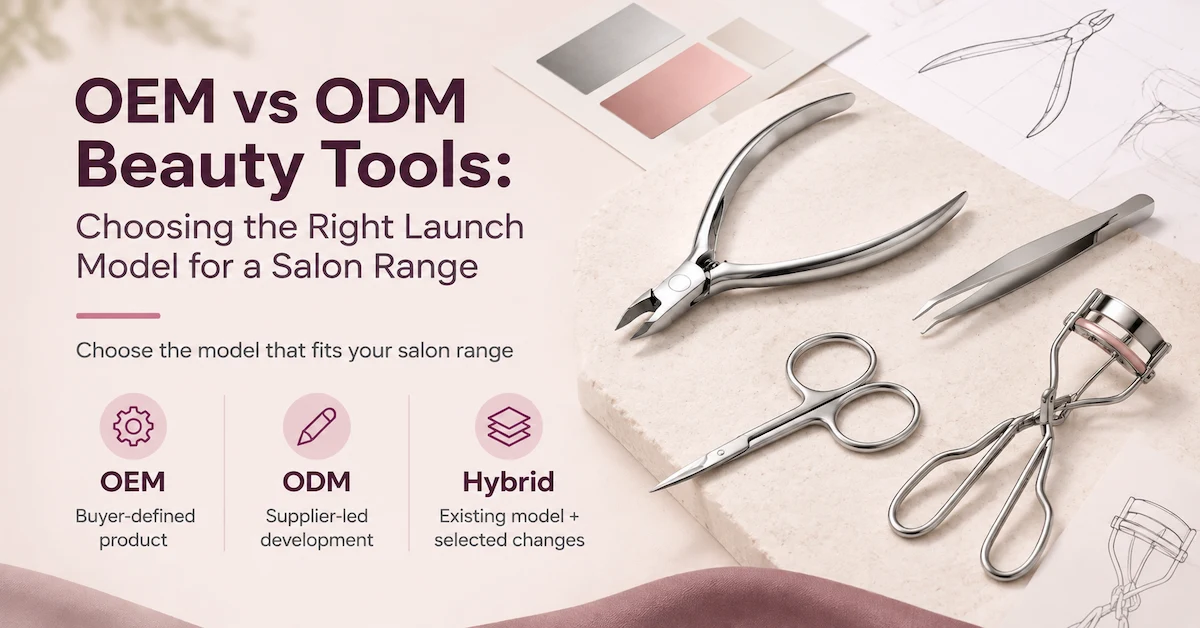
When should a brand choose private label, OEM or ODM?
The route should be selected according to the amount of product change required. The terms can overlap in commercial conversations, so the buyer should describe the actual decisions rather than rely on the label alone.
| Route | Typical project starting point | Questions to clarify |
|---|---|---|
| Private label | An existing or adaptable product with controlled brand, finish, naming and packaging decisions. | Which changes are available on the selected model and what must be sampled? |
| OEM | A clearer buyer requirement, reference product or defined modification scope. | Which dimensions, working details, materials and tests are mandatory? |
| ODM | A product concept requiring more manufacturer input on structure, engineering or development. | Which design decisions, tooling questions and sample stages must be resolved? |
An online brand can begin with an existing private-label model and later move toward deeper OEM or ODM work after learning which customer problem deserves a more distinctive product. That sequence can reduce early uncertainty, but the suitability of the route depends on the model, required changes and order requirements.
Use OLIMOR's OEM / ODM project route to frame the conversation around the need, scope, output and next stage. Use the procurement toolkit to organise the product, market, brand, packaging and sampling information before sending the brief.
What should be included in an e-commerce private-label brief?
The best brief is not the longest document. It is the document that makes the supplier's next response more specific. Mark each field as confirmed, preferred or open.
Buyer-recommended brief structure
- Brand and target customer.
- Destination market and online sales channel.
- Hero SKU, supporting products or set direction.
- Intended use and critical working feature.
- Product reference, dimensions and open specification fields.
- Material, finish and colour direction.
- Logo artwork, marking preference and approval owner.
- Retail package, protection, inserts, labels and carton requirements.
- Estimated quantity by SKU and replenishment expectation.
- Sample gates and functional or cosmetic review points.
- Quality evidence and documentation requirements.
- Commercial questions that require supplier confirmation.
A brand should also explain what it does not yet know. For example, the team may know the target customer and package direction but not the best internal insert. It may know the required product length but not the most practical logo method. Open questions give the supplier a legitimate place to recommend a solution without turning an assumption into a commitment.
How can a brand control repeat orders after launch?
Repeat-order control begins before the first order ships. Keep the approved sample, specification, artwork, packaging version, inspection points and commercial reference together. A second order should be placed against a controlled revision, not against a memory of what the first product looked like.
Create a change record for any update to:
- Product model or working structure.
- Material statement or component.
- Surface finish or colour.
- Logo position or marking method.
- Retail card, box, pouch, insert or protective guard.
- Quantity per pack or master carton.
- Product-page claims, instructions or included accessories.
When a change affects the product or customer experience, ask whether a new sample or additional approval is needed. The correct action depends on the selected model and order. The principle is to make change visible before it reaches the next production lot.
Receiving feedback should be recorded in specific terms. “Customers dislike the quality” is difficult to investigate. “The tweezer tips did not meet on one side,” “the package arrived with the card bent,” or “the printed model name did not match the product page” gives the supplier a starting point for review. This is how an e-commerce brand turns customer feedback into a better purchasing reference.
FAQ: Beauty Tools Private Label Supplier for E-commerce Brands
What should an e-commerce brand ask a beauty tools private label supplier first?
Send the product family, target customer, destination market, online sales channel, estimated quantity, branding direction and packaging requirement. Ask which model fits the intended use, which specifications are confirmed, which fields require sampling and how MOQ and timing are calculated for the selected project.
Can a private-label project start with an existing beauty tool?
Yes. An existing or adaptable model may be a practical starting point for a focused launch. Confirm the exact model, working details, material statement, available branding changes, packaging route, sample process and order requirements before treating the product as launch-ready.
What makes a supplier suitable for an online beauty brand?
The supplier should make the product, brand, packaging, quality and commercial assumptions clear enough for the brand to approve and operate the SKU. Evidence should be connected to the selected model and order rather than presented only as a general factory statement.
What product information is needed for an e-commerce listing?
The brand normally needs an accurate product name, model reference, relevant dimensions, confirmed material and finish language, intended use, included quantity, care or handling information where applicable, packaging details and any approved item identification. Exact fields depend on the product and market.
Should a brand approve the product and packaging separately?
They can be reviewed in stages, but the final decision should connect them. A loose tool sample cannot prove package fit, protection, product orientation or customer access. A packed sample should be reviewed before the production configuration is released.
Does private-label packaging always increase MOQ?
It may affect quantity requirements because printed cards, boxes, inserts, pouches, special finishes or other components can have their own production conditions. The actual MOQ must be confirmed by model, branding scope, packaging format and order requirements.
How can a brand verify material claims?
Request the material statement for the exact selected model and component. Do not identify an alloy or grade from colour, a photograph or a broad category description. Keep the product page, packaging copy and quotation aligned with what has actually been confirmed.
What quality checks should be included?
The checks depend on the tool. They may include alignment, closing contact, tension, cutting or moving action, working-surface consistency, edge safety, surface condition, logo clarity, packaging retention, product identity and carton quantity. Agree the method and acceptance reference before production.
How can an online brand protect repeat-order consistency?
Keep a controlled product and packaging reference containing the model, specification, finish, logo artwork, package version, inspection points and approval date. Record changes as revisions and ask whether a new sample is required before the next order.
Where should a brand send its project requirements?
Send the product family, target market, quantities, finish, branding and packaging requirements through the official OLIMOR contact page. A concise brief helps the team identify the relevant product, service and sampling discussion.
Conclusion
The right beauty tools private label supplier for an e-commerce brand is not defined by catalogue size or a single unit-price comparison. The supplier should help the brand move through a controlled sequence: define the customer task, select the product family, record the working structure, separate confirmed facts from open fields, approve the brand treatment, review the packed sample, compare the complete quotation and preserve a reference for repeat orders.
The most important buyer discipline is to connect every public promise to an approved product detail. Product pages, package copy, photographs, quotations, inspection records and replenishment instructions should refer to the same model and revision. When material, finish, packaging, MOQ, timing or quality evidence remains open, it should be treated as a project question rather than presented as a fixed supplier commitment.
OLIMOR's public route connects private-label projects with product selection, OEM / ODM, product development, logo finishing, custom packaging, sampling, quality review and packaging logistics. Share the target customer, product direction, quantity assumptions, brand requirements and open questions so the next conversation can focus on a real e-commerce project.