For beauty brands, importers, salon distributors, retailers and e-commerce businesses, a useful RFQ should connect product requirements with production and commercial decisions. For a beauty tools OEM project, this connection is what turns an initial inquiry into a quotation that can be reviewed and acted on. This guide sets out 12 inputs to prepare before requesting a beauty tools quotation. It also explains which details are essential for an initial estimate, which are needed before sample approval, and which must be frozen before bulk production.
A quote-ready beauty tools OEM RFQ should identify the buyer and target market, product family and SKU mix, reference model, technical requirements, materials and finish, logo and branding, packaging, quantity by SKU, sample plan, quality and documentation requirements, production responsibilities, and delivery terms. Mark each field as confirmed, preferred, or open so the supplier can distinguish firm requirements from questions that need review.
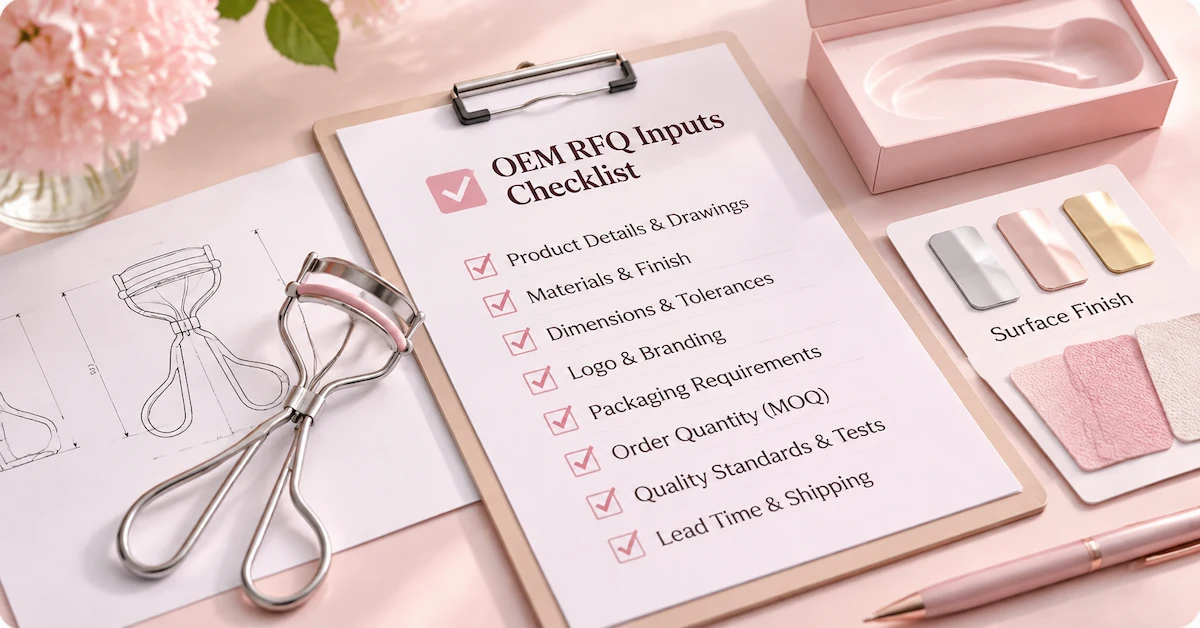
The 12 inputs at a glance:
| Input | What to Prepare |
|---|---|
| Buyer and project | Company, decision owner and OEM/ODM route |
| Market and channel | Destination, target customer, use and sales channel |
| Product family and SKUs | Product categories, model codes and quantity split |
| Reference and change scope | Product link, image, drawing or physical sample |
| Technical requirements | Critical dimensions, working details and acceptance points |
| Materials and finish | Confirmed grade, finish, colour and supporting evidence |
| Branding | Logo file, marking method, location and artwork revision |
| Packaging | Retail format, accessories, labels and carton needs |
| Quantity and MOQ | First order, forecast, SKU split and MOQ calculation basis |
| Sample plan | Sample stage, quantity, review criteria and revisions |
| Quality and documents | Inspection scope, acceptance criteria and market documents |
| Production and delivery | Responsibilities, milestones, destination and trade terms |
1. Start with the Buyer, Project and Sourcing Route
The first input is not a technical drawing. It is a short description of who is buying, what the project is intended to achieve, and what kind of manufacturing relationship is being requested. A beauty brand launching its first manicure collection may need an existing product with a logo and retail package. A distributor replenishing an established assortment may need a stable model and repeatable specifications. A brand developing a differentiated tool may need product changes, engineering review or new tooling.
State whether the request is for an existing catalogue product, an existing product with selected modifications, a private-label adaptation, or a new OEM development. A beauty tools OEM supplier needs this distinction before estimating development work, sampling and recurring production. These routes can involve different sample work, setup charges, approvals and minimum quantities. Do not use "full OEM" as a substitute for describing the actual changes. List what must remain unchanged, what may be selected from available options, and what needs development.
Include the buyer company, contact person, project owner and intended purchasing role. If an agent or design agency is involved, identify who approves the specification, artwork, sample and purchase order.
For an overview of how OLIMOR coordinates product, branding, packaging and sample discussions, review its OEM/ODM project route.
2. Define the Target Market, Customer and Sales Channel
A product brief becomes more useful when it explains where the tool will be sold and who will use it. The target market can influence the product configuration, retail presentation, language, warnings, packaging and documents that need to be reviewed. The sales channel can also change priorities. A salon-supply distributor may prioritize durability and replenishment consistency; a beauty retailer may need shelf presentation and barcode space; an e-commerce brand may pay more attention to compact packaging and parcel protection.
Provide the destination country or region, target customer, channel, intended use and approximate retail positioning. If the product will be sold in several markets, list them separately rather than assuming one package or label suits all.
Separate market information from legal conclusions. The buyer should identify applicable customer or market requirements and ask what supporting product information is available. Do not assume that a supplier's general statement about compliance proves that a specific SKU meets every rule in every destination. Confirm who is responsible for checking claims, labels, importer details and market-specific documents.
For example, a beauty brand selling through professional salons may require different product presentation and assortment information from a retailer selling individual tools online. These are project inputs, not universal product specifications.
3. Identify the Product Family and SKU Structure
"Beauty tools" is too broad to quote as one product. Name each product family and create a separate line for every model or SKU that has a different specification, finish, logo, package or quantity. This matters when an order includes tweezers, eyelash curlers, nail clippers, cuticle nippers, nail files, scissors or other tools. Their working details and quality checks are not interchangeable.
For a multi-product range, prepare a simple SKU matrix with product name, model or temporary code, target use, finish or colour, logo version, packaging version and quantity. If a product is not yet assigned a model code, create a temporary reference such as TW-01 or NC-02 and use it consistently in the RFQ, sample labels, quotation and artwork files. A temporary code is safer than referring to "the silver one" or "the second photo."
Do not combine different models into one quantity line unless the supplier confirms that the MOQ and price basis can be combined. A 1,000-piece request split across four models may not be commercially equivalent to 1,000 pieces of one model. The supplier should state whether minimums apply per model, per finish, per logo version, per package or to the total order.
Start with the OLIMOR beauty tools product range to identify the relevant product family before preparing the project brief.
4. Provide a Reference Model and Define What Is Open to Change
A product link, catalogue code, drawing, photograph or physical sample gives the supplier a starting point. It does not automatically define every production requirement. Tell the supplier what the reference is intended to communicate: overall shape, dimensions, working function, handle style, finish, colour, package format or a combination of these.
If you provide photographs, use clear views and add dimensions or a drawing where available. Identify a physical reference by name, date and code, and state whether it is a visual reference, functional benchmark or product to be matched. A visual sample does not automatically define material, tolerances or performance.
Create a change list. For example, "keep the existing body shape; review a different handle finish; add our logo; propose a retail sleeve" is much clearer than "customize this model." Ask the supplier to separate standard options from modifications that may require engineering, tooling, new components or another sample round. If the supplier recommends an alternative, request that it be quoted as a separate option rather than replacing the original specification without notice.
For projects involving product changes, OLIMOR's product development route provides a relevant starting point for discussing references, working details and approval criteria.
5. Specify the Product Details That Affect Function and Acceptance
The technical specification in a beauty tools OEM quotation should focus on characteristics that affect product use, fit, appearance or repeatability. Not every buyer needs a full engineering drawing at the first inquiry, but critical dimensions and working features should be recorded before final sample approval. A photograph cannot reliably communicate a tolerance, contact relationship, closing action or surface requirement.
Use product-family-specific fields rather than one generic "specification" line. For example:
| Product Family | Useful RFQ Details to Identify | Questions to Resolve on the Sample |
|---|---|---|
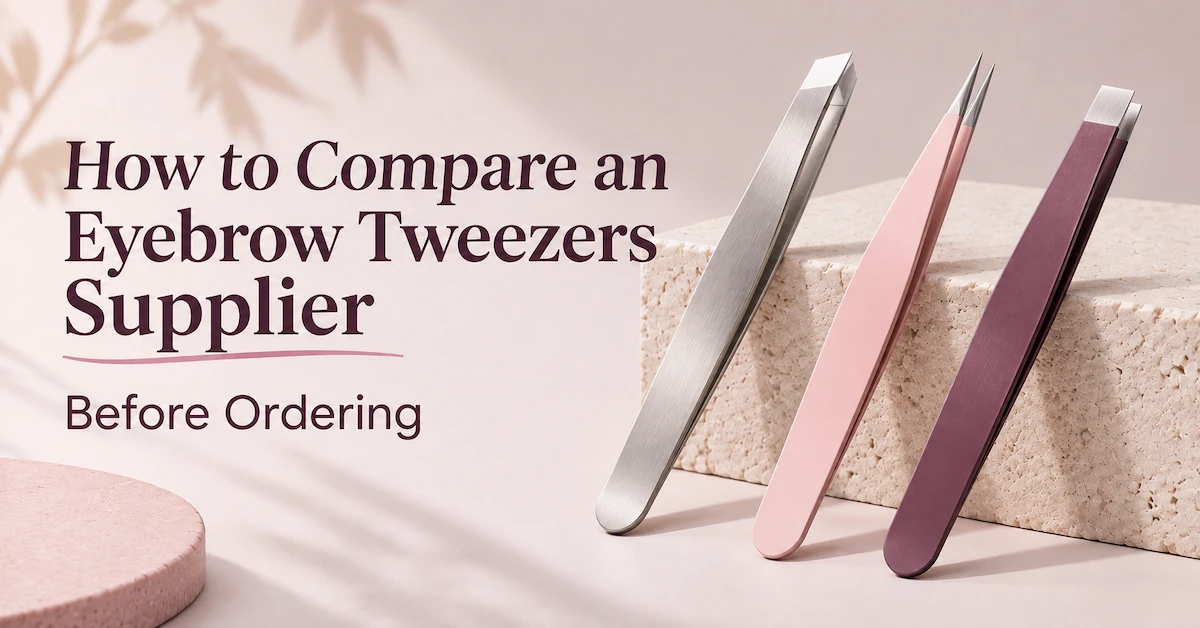
| Tweezers | Tip style, tip alignment, body length, handle shape, material statement and finish | Do the tips meet as intended? Is the grip and handling suitable for the target use? |
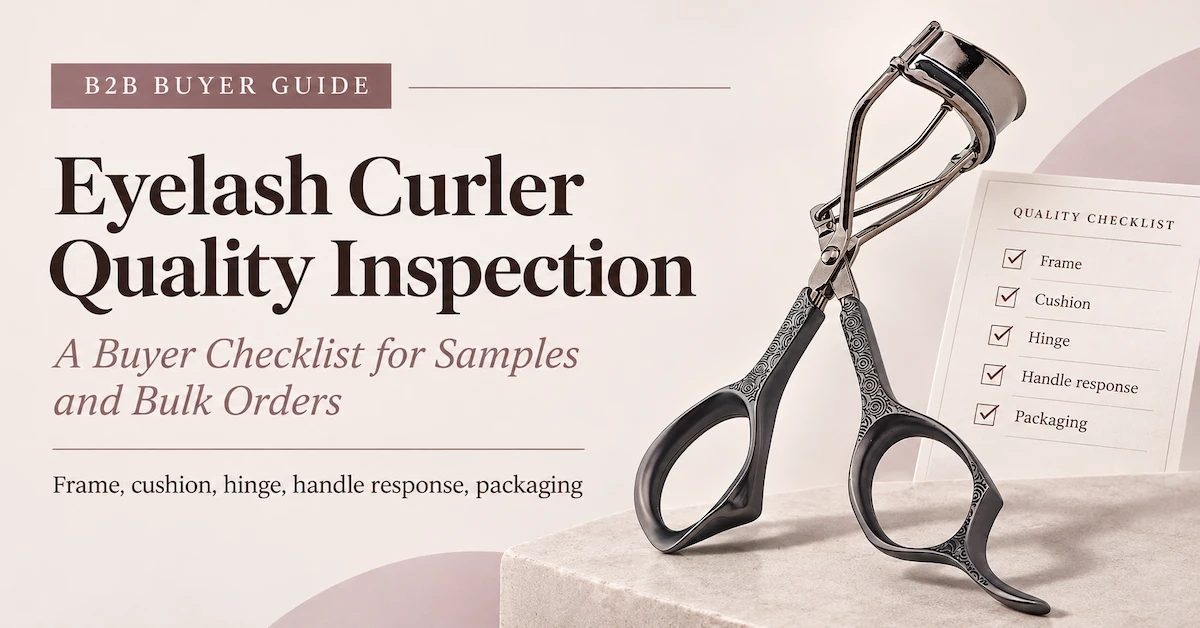
| Eyelash curlers | Frame profile, curve, handle action, pad arrangement, replacement parts and dimensions | Does the frame and pad configuration match the brief? Is the action and fit acceptable? |
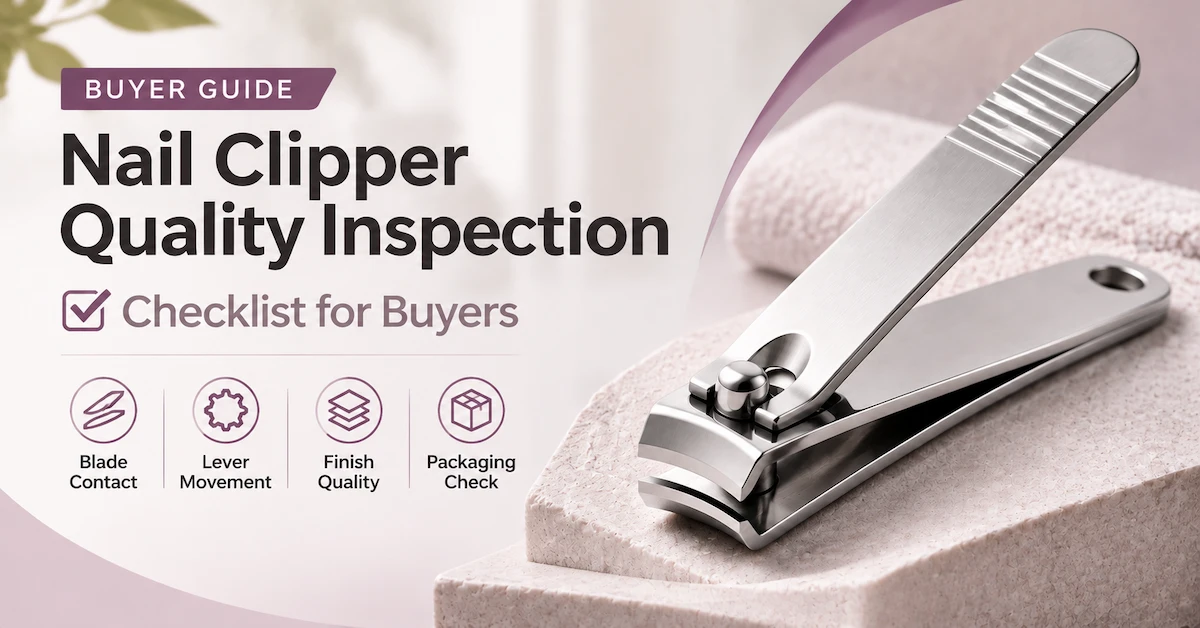
| Nail clippers | Model, overall size, cutting geometry, lever arrangement, file or catcher if included, finish | Does the tool operate as expected? Are the working edges and assembly consistent with the approved sample? |
| Cuticle nippers | Model, jaw configuration, dimensions, handle and spring arrangement where applicable | Does the selected model match the intended use and agreed review criteria? |
| Nail files | Length, shape, core or body, working surfaces, grit or grade information if specified, and sleeve | Are the two working sides, shape and finish correctly identified and protected? |
| Beauty scissors or razors | Working end, blade or edge configuration, handle, guard or cover, and intended use | Are the working parts, safety cover and handling details suitable for the brief? |
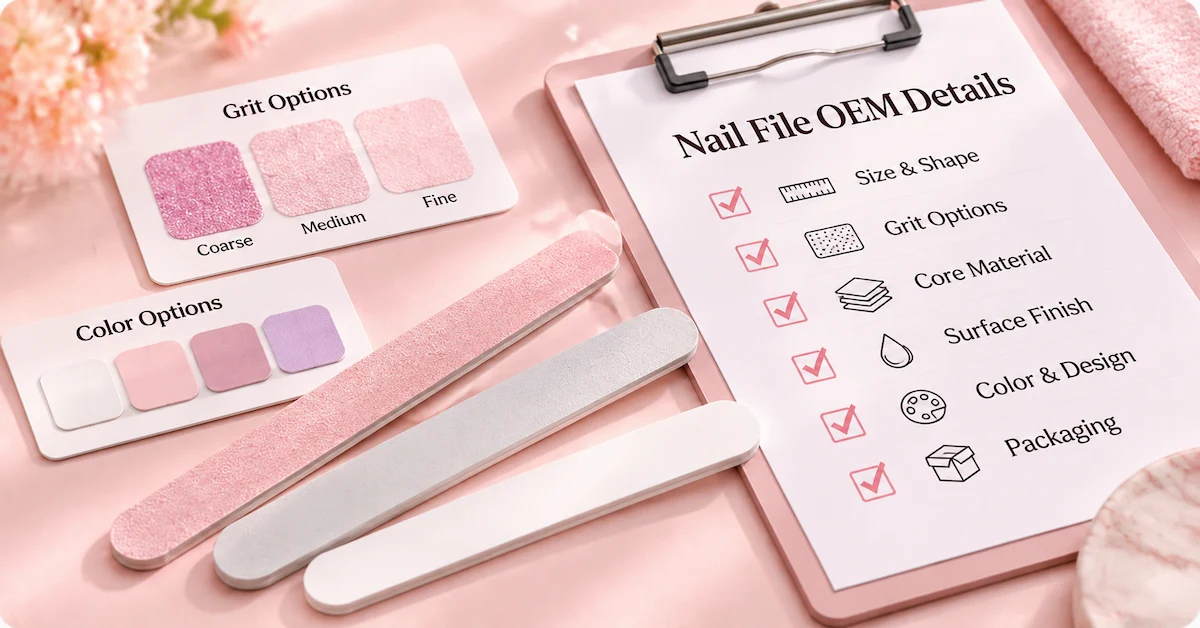
These are examples of fields buyers may need to discuss, not a claim that every option is available from OLIMOR for every product. Use the selected product's actual specification and ask the supplier to confirm the details that apply. Avoid inventing a material grade, dimension, grit value or tolerance because it appears on another supplier's listing.
For each critical characteristic, identify the requirement, check method and approver. "Good quality" is not an acceptance criterion; define the dimensions, working alignment, finish or logo position that must match the approved reference.
6. State Material, Finish and Colour Requirements Separately
Material and finish are related but different quotation inputs. A material statement identifies what the product or component is made from. Finish describes the visible or treated surface. A metallic appearance in a photograph does not establish a stainless-steel grade, and a colour reference does not prove a particular coating or treatment.
If a material grade or test requirement is mandatory, state the exact requirement and ask the supplier to confirm whether it can be supported for the selected model. If the buyer is unsure, mark the material as open and request the supplier's available options and relevant documentation. The final product page, packaging copy and quotation should use only claims that have been confirmed for that product.
For finish and colour, provide a physical reference, colour code or approved visual sample where possible. State whether the reference is exact or approximate and identify the areas where appearance matters most. Brushed, polished, matte, plated, coated or coloured surfaces may have different visual effects and process implications. Review the actual sample under consistent lighting rather than approving a finish from a compressed photograph alone.
OLIMOR's materials and finishes information is a useful starting point for discussing these requirements.
7. Prepare Logo and Branding Artwork Before the Final Quotation
Branding should be described as a production requirement, not simply "add our logo." Provide the vector artwork if available, the brand name, preferred marking area, approximate size, colour, method preference and any restrictions. If the method is unknown, ask the supplier to recommend options for the product surface and geometry.
A logo placed on a curved handle, a narrow metal surface or a moving component may need a different method or size from a logo on a flat area. Ask for the proposed position and method to be shown on an artwork proof or sample. Confirm whether logo setup, colour matching, printing plates, fixtures or other preparation costs are one-time charges or recurring unit costs.
Identify the artwork revision and approval owner. A logo file supplied after the sample has been approved can change the schedule and may require a new sample. If different SKUs use different logo versions, list each version separately in the SKU matrix and quotation request.
For logo method and surface coordination, buyers can review OLIMOR's logo and finishing solutions.
8. Define Packaging and the Complete Sellable Unit
Packaging affects more than appearance. It can change product protection, retail presentation, assembly work, order quantity, carton dimensions and shipping cost. State whether the quotation is for a bulk-packed tool, an individual retail unit, a gift set or a product with custom packaging.
Describe the required components: protector, sleeve, card, pouch, box, insert, instruction leaflet, barcode label, set tray, inner carton and master carton as applicable. If the package is not decided, provide a reference image or target format and ask for options. State whether the buyer supplies artwork and dielines or needs the supplier to coordinate the layout.
For each SKU, clarify pack quantity and accessory count. For a kit, list every component and arrangement. Ask which packaging elements are included in the unit price, who supplies barcode and label content, and whether a packed sample is required.
If the channel requires a GS1 barcode, identify who supplies the GTIN and approves the artwork; the relevant GS1 General Specifications provide the technical reference for barcode symbol use and placement.
OLIMOR's custom packaging route can be used to discuss product protection and retail presentation.
9. Give Quantity by SKU, Forecast and MOQ Assumptions
Quantity is one of the most important pricing inputs, but a single total number can hide the real production structure. Provide the initial order quantity by model, finish, colour, logo version and packaging configuration. For a mixed assortment, show the split clearly. Add a reorder range or annual forecast if known, labelled as an estimate rather than a firm commitment.
Ask the supplier to state the MOQ basis. It may be per product model, per colour, per finish, per logo method, per packaging design or per complete set. These bases should not be assumed to be interchangeable. A buyer who wants 2,000 pieces across four different products should ask whether each product has its own minimum and whether any common packaging or branding work can be combined.
Request price tiers at realistic quantities, such as the initial order and one or two plausible higher volumes. Ask for unit price and any setup, tooling, sample, decoration, packaging or inspection charges as separate lines. This makes it possible to understand whether a lower unit price depends on a larger commitment or a simpler configuration.
Do not ask for a universal MOQ before identifying the model and customization scope. The useful answer is the MOQ for the exact configuration being quoted, with any assumptions stated.
10. Define the Sample Plan and What Each Sample Must Prove
A sample request should state the decision it supports. A catalogue sample compares models; a functional sample reviews working details; a customized sample confirms finish or logo; a pre-production sample represents the agreed production version; a packed sample approves the complete retail unit.
Not every project requires every stage. A standard product with no changes may need fewer steps than a new development with custom branding and packaging. Agree the sample stages with the supplier and list the checks for each one. Avoid approving a sample with a vague message such as "looks good." Record which model, dimensions, material statement, finish, logo artwork, package and accessories were actually reviewed.
Ask the supplier to quote sample charges, sample quantity, courier basis, expected preparation time, revision charges and the event that starts the sample schedule. If a sample needs changes, send consolidated feedback with photographs, marked-up drawings or a revision list. Identify which changes are mandatory and which are preferences.
Keep the approved sample or controlled reference identifiable by model code, revision and date. Approval of one finish, logo or package version should not automatically be treated as approval of a different version.
OLIMOR's sampling service describes the review of appearance, alignment, handling, finish, branding and package presentation before production.
11. Set Quality, Inspection and Documentation Requirements
Quality requirements should be connected to the product and its intended use. Identify the characteristics that matter most and how they should be reviewed. Depending on the tool, these may include working alignment, operation, appearance, dimensions, assembly, finish, logo, packaging and included components. The quality discussion should be specific to the selected product, not a generic promise that everything is inspected.
Separate product acceptance from market documentation. If the buyer needs a material statement, test report, declaration, audit document or other evidence, name the document and explain which product, material, market or claim it must support. Ask whether the document is available for the exact configuration or whether testing or review would need to be arranged. Do not assume that a supplier-level certificate automatically covers every product.
Agree the inspection stage and reporting expectation: sample review, first-piece check, in-process check, final inspection, packed-unit check or pre-shipment review. If a sampling plan or AQL is required, specify the standard, inspection level, defect classification and acceptance criteria to be agreed. Do not insert a default AQL value without confirming that it is appropriate for the order.
OLIMOR's quality review route identifies working alignment, appearance, marking and packaging as practical checkpoints for the selected tool.
12. Clarify Production Responsibility, Schedule and Delivery Terms
The final RFQ input should explain how the project is expected to move from approved brief to shipment. Ask the supplier to identify which operations and services are included, which are coordinated with other parties, and which remain the buyer's responsibility. For example, product development, logo application, packaging preparation, assembly, inspection, export packing and freight may have different owners. A general phrase such as "one-stop service" does not replace a responsibility list.
Request a milestone schedule rather than one unexplained lead-time number. Relevant stages may include brief review, feasibility confirmation, sample preparation, buyer review, artwork approval, packaging preparation, bulk production, inspection, packing and dispatch. Ask what event starts each stage and which buyer approvals can affect the schedule. Distinguish the target launch date from a confirmed delivery commitment.
For delivery, state the destination country or port, preferred shipping method if known, and requested Incoterms rule with the named place. Ask whether freight, insurance, export handling, duties or destination charges are included or excluded. The ICC Incoterms rules allocate defined costs, obligations and risks between buyer and seller; they do not replace the product specification or sales contract. Confirm the applicable rule and named place in the quotation and purchase order.
How to Use the 12 Inputs Without Delaying the First Quotation
A complete RFQ does not mean every technical decision must be final before contacting a supplier. Separate the information into three status groups:
- Confirmed: Information that must be followed, such as target market, product family, reference model, quantity range or a mandatory logo file.
- Preferred: The buyer's current direction, such as a preferred finish, packaging format or sample timing, where the supplier may suggest an alternative.
- Open: Information that needs supplier input, such as available material options, model recommendation, feasible logo method or suitable packaging structure.
Ask the supplier to quote the confirmed scope and list assumptions for the preferred or open fields. If two options are possible, request separate alternatives. This prevents an unconfirmed suggestion from being treated as an approved specification and makes the quotation easier to revise.
A practical RFQ file set may contain a product brief, SKU matrix, reference images or drawing, logo artwork, packaging reference, quantity forecast, sample review criteria and quality/document request list. Not every project needs every attachment. Include the files that help define the actual product and clearly name their revisions.
Copy-Ready Beauty Tools OEM RFQ Template
Use this template as a starting point. Replace the fields with confirmed information, and mark unknown details as open for supplier review.
Subject: RFQ – [Product Family / Project Name] – [Initial Quantity Range]
Buyer and Project
- Company:
- Brand:
- Contact person:
- Target market:
- Sales channel:
- Project route: Existing model / Modified model / OEM development / Private label
- Target launch or delivery window:
Product and SKU Details
- Product family:
- Model or temporary SKU code:
- Reference link, image, drawing or sample:
- Intended use:
- Required product features:
- Critical dimensions or working details:
- Material requirement or open question:
- Finish and colour:
- Logo method and artwork status:
Packaging and Quantity
- Packaging format:
- Accessories or set contents:
- Barcode or label requirements:
- Quantity by SKU:
- Quantity by finish or colour:
- Expected reorder range:
- MOQ basis to confirm:
Sample and Quality
- Sample type required:
- Sample quantity:
- What the sample must prove:
- Review criteria:
- Required documents or test information:
- Inspection stages:
- Acceptance criteria or customer standard:
Production and Delivery
- Required customization:
- Tooling or development questions:
- Production responsibility to confirm:
- Destination:
- Requested Incoterms rule and named place:
- Requested shipping method:
- Quotation currency:
- Requested quantity price tiers:
- Please separate unit price, sample cost, tooling/setup, logo, packaging, inspection and freight where applicable.
- Please list assumptions, exclusions and open questions.
How to Compare Beauty Tools Supplier Quotations Fairly
A supplier comparison should be based on the same project scope. This is the most reliable way to compare a beauty tools quotation without confusing different product or service assumptions. Use one row per supplier and compare the following items:
| Comparison Point | Supplier A | Supplier B | What the Buyer Should Verify |
|---|---|---|---|
| Model and SKU | Confirmed / open | Confirmed / open | Same product reference and version? |
| Specification | Included / excluded | Included / excluded | Are dimensions, materials and working details stated? |
| Customization | Itemized / unclear | Itemized / unclear | Same logo, finish, colour and development scope? |
| Packaging | Included / excluded | Included / excluded | Same components and pack quantity? |
| MOQ | Per SKU / other basis | Per SKU / other basis | Same calculation unit and quantity tier? |
| Sample | Fee, scope and timing | Fee, scope and timing | Does the sample prove the same requirements? |
| Quality | Checks and records | Checks and records | Same inspection stages and acceptance criteria? |
| Delivery | Rule and named place | Rule and named place | Same freight and risk assumptions? |
| Commercial | Currency, payment, validity | Currency, payment, validity | Same payment and quotation conditions? |
Keep any supplier-proposed alternative separate from the requested configuration. A standard product with simpler packaging should not replace a custom configuration in the comparison table; ask what changes and how the price differs.
Common RFQ Mistakes That Create Avoidable Revisions
A product name without a reference is not enough when several models exist. A beauty tools supplier should not be expected to infer a buyer's exact SKU from a broad category name. A total quantity without SKU breakdown can produce the wrong MOQ assumption. A logo file without size or placement leaves decoration open. A packaging photograph without dimensions may be unsuitable for estimating fit or carton configuration. A target delivery date without a destination or shipping basis is not a confirmed schedule.
Another common mistake is mixing supplier qualification with product quotation. Company registration, factory information and audit documents help evaluate a supplier. Product specifications, sample approval, packaging and quantity define the order being quoted. They are related, but one file does not replace the other.
Do not ask a supplier to confirm undefined claims. Name any required material, finish, test, label or certification and request applicable evidence; if it is unknown, mark it open rather than treating a general statement as proof.
Frequently Asked Questions About Beauty Tools OEM RFQs
1. What should I send first when requesting a beauty tools quotation?
Send the product family, reference model or image, target market, intended use, approximate quantity by SKU, logo and packaging direction, and target delivery window. Mark undecided fields as open. This gives the supplier enough context to identify the next questions without pretending that every technical detail is already confirmed.
2. Do I need a technical drawing before asking for a beauty tools OEM quote?
Not always. An existing model may be identified through a product code, link, clear images or physical sample. A drawing becomes more important when dimensions, geometry or custom structural changes are critical. Ask the supplier which reference is sufficient for an initial estimate and which documents are needed before final approval.
3. What is the difference between OEM and private label in an RFQ?
OEM describes manufacturing to an agreed buyer requirement or specification. Private label describes selling a product under the buyer's brand. A private-label project may use an existing model with logo and packaging changes, while an OEM project may involve more product-specific requirements. State the actual changes rather than relying only on the label.
4. Should I request one quotation for several beauty tool categories?
You can submit one project brief for a range, but list each product family and SKU separately. Different tools have different specifications, materials, customization and MOQ bases. Ask the supplier to provide separate line items so the buyer can see the cost and quantity assumptions for each product.
5. How should I ask about MOQ?
Ask for MOQ for the exact model and configuration. Clarify whether it applies per SKU, finish, colour, logo version, packaging format or combined order. Provide the quantity split and ask for price tiers at realistic volumes. Do not assume that different models can automatically share one minimum.
6. What should be included in a sample request?
Identify the sample type, model, quantity, finish, logo, packaging and the decision the sample must support. State the review criteria and ask for sample cost, courier basis, preparation time and revision policy. A sample request should make clear whether it is for model selection, function, customization or pre-production approval.
7. Can I request logo and packaging costs separately?
Yes. Ask the supplier to itemize logo setup or application, packaging components, artwork preparation, assembly and any one-time tooling or setup costs where relevant. This makes it easier to compare a standard product with a fully branded retail-ready configuration.
8. What quality documents should a beauty tools supplier provide?
The documents depend on the selected product, material, target market and buyer requirements. Specify what evidence is needed, such as a material statement, applicable test record, inspection report or supplier documentation. Confirm that each document applies to the actual model and configuration being quoted.
9. How do I prevent a sample from differing from bulk production?
Record the approved model, specification revision, sample version, finish, logo artwork, packaging and acceptance criteria. Require written approval for changes after the sample is accepted. Link the approved reference to the purchase order and bulk inspection plan.
10. What should I do if some RFQ details are still undecided?
Mark them as preferred or open and ask the supplier to identify feasible options. Request separate quotations when different choices materially affect cost, MOQ or timing. A clear list of open questions is better than allowing the supplier to make silent assumptions.
Conclusion
A strong beauty tools OEM RFQ gives the supplier a clear product and commercial scope without forcing the buyer to invent technical details they do not yet know. The 12 inputs in this guide connect the buyer, market, product family, specification, materials, branding, packaging, quantity, sample, quality, production responsibility and delivery into one usable brief.
The most important discipline in a beauty tools OEM project is to distinguish confirmed requirements from preferences and open questions. Use a separate SKU line for each configuration, compare quotations on the same basis, approve a representative sample, and carry the final specification and artwork into the purchase order. This reduces avoidable assumptions and gives purchasing, product, quality and production teams a shared reference.
OLIMOR's public OEM/ODM route connects product requirements, branding, packaging and sample review. For a project-specific discussion, share the product family, target market, reference model, quantity range and customization direction. Exact product options, materials, MOQ, quotation, sample cost, lead time and production scope should be confirmed for the selected model and order.