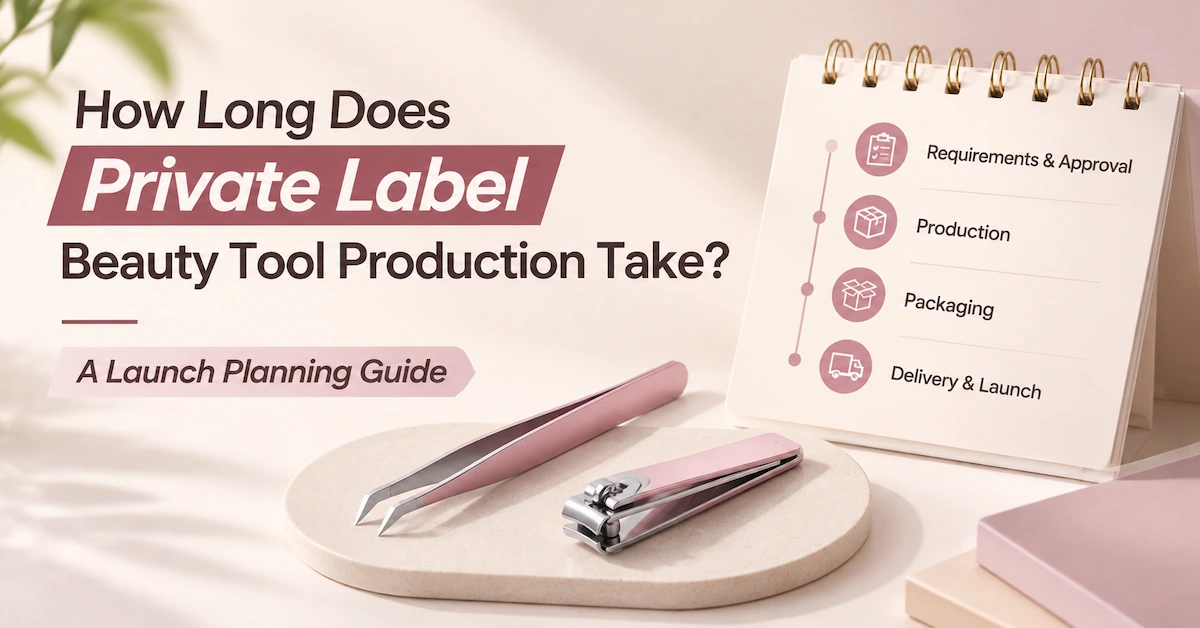
What should a private-label team expect from a beauty tools OEM manufacturer?
Short answer: a beauty tools OEM manufacturer should help a brand move from a defined product brief to an approved sample, coordinated branding and packaging, repeatable quality checks, and a production plan. The work is more than placing a logo on a catalogue item. It connects the tool's working details, the target customer, the retail presentation and the requirements that must be confirmed before mass production.
For a private-label team, the useful partner makes open decisions visible: available product families, adjustable working details, material and finish fields still requiring confirmation, sample-review steps, and the assumptions behind packaging and delivery. That turns a supplier conversation into a controlled product-development route.
OLIMOR's public website presents beauty tools, product development, OEM / ODM, private label, materials and finishes, logo and printing, custom packaging, sampling, quality and packaging logistics as connected parts of the same project. Those public pages are useful evidence of the route. Exact alloy, abrasive grade, MOQ, lead time, certification scope, packaging configuration and production capacity remain model- and order-specific items to confirm in the project discussion.
OEM, ODM and private label: which route fits the project?
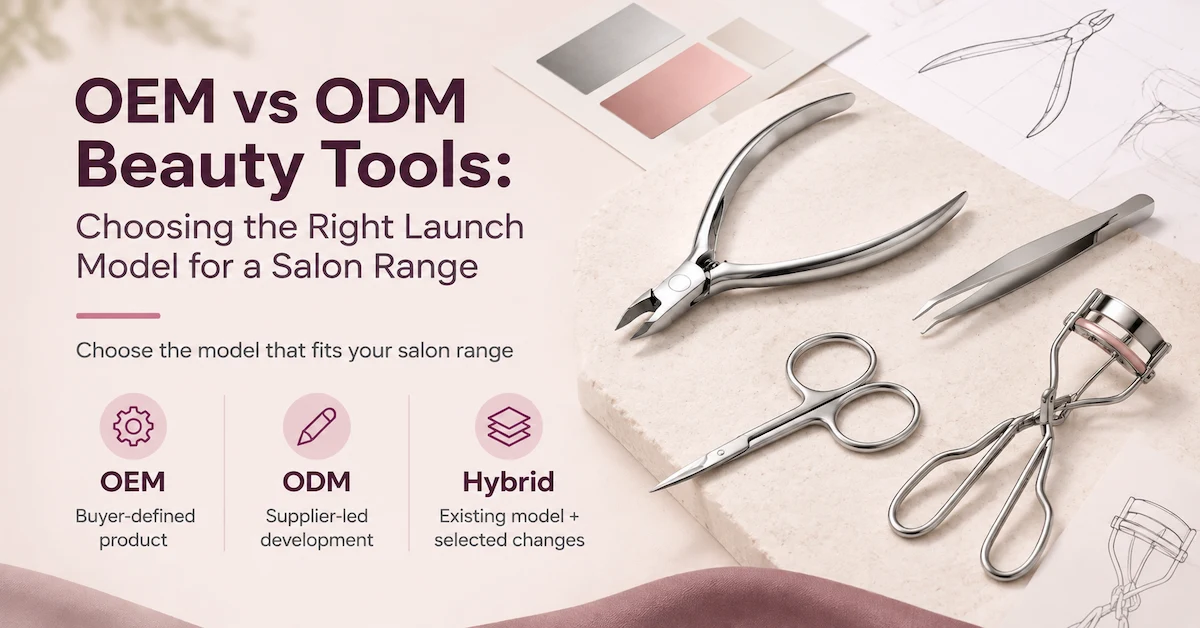
The correct route depends on how much of the product is already defined. OEM usually begins with the buyer's requirements and asks the manufacturer to produce a product to an agreed specification. ODM usually starts from an existing product direction that can be adapted for the buyer's brand or market. Private label usually describes the commercial presentation of a product under the buyer's brand, but the actual project may include existing models, modifications, custom finishes, logo work and packaging.
A brand team should therefore describe the route in decisions, not only in labels. State what must remain unchanged, what can be recommended, what must be developed, and what needs approval before the first order. This prevents a team from asking for a fully custom tool while providing only a product name and a logo file.
| Route | Typical starting point | Questions for the brand team |
|---|---|---|
| OEM project | A defined tool, drawing, reference product or technical brief | Which dimensions, working details, material fields and tests are mandatory? |
| ODM discussion | An existing family or manufacturer recommendation | Which product features can be adapted for the target customer and channel? |
| Private-label launch | A brand concept, assortment and retail presentation | How should product selection, logo, finish, packaging and sampling be coordinated? |
Which beauty tool families can an OEM manufacturer support?
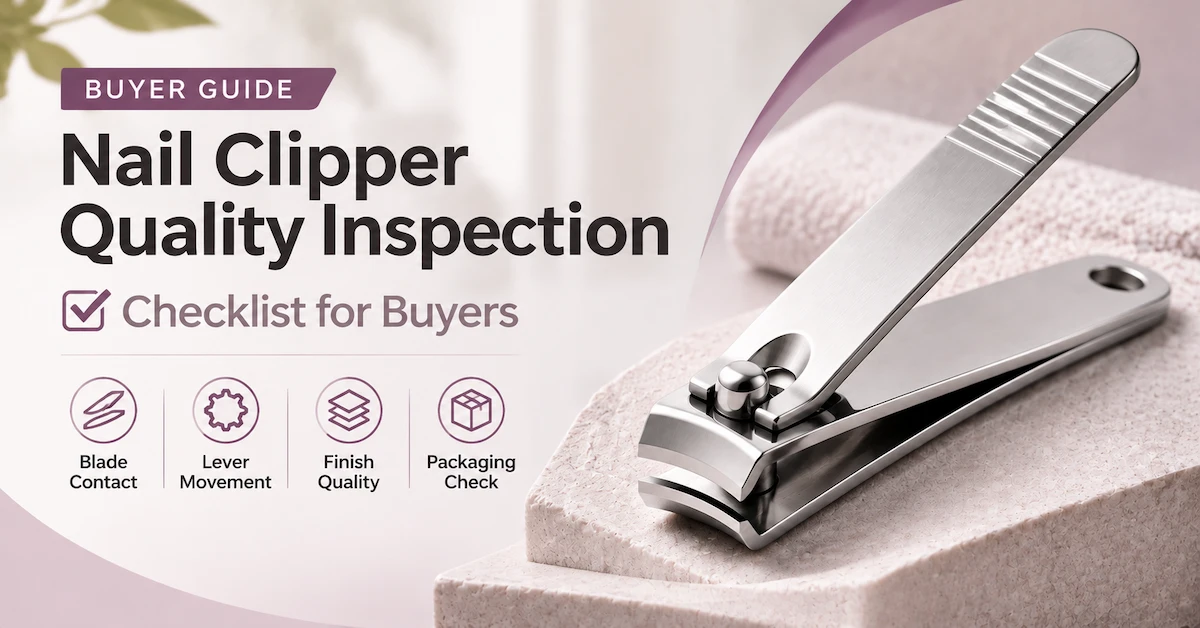
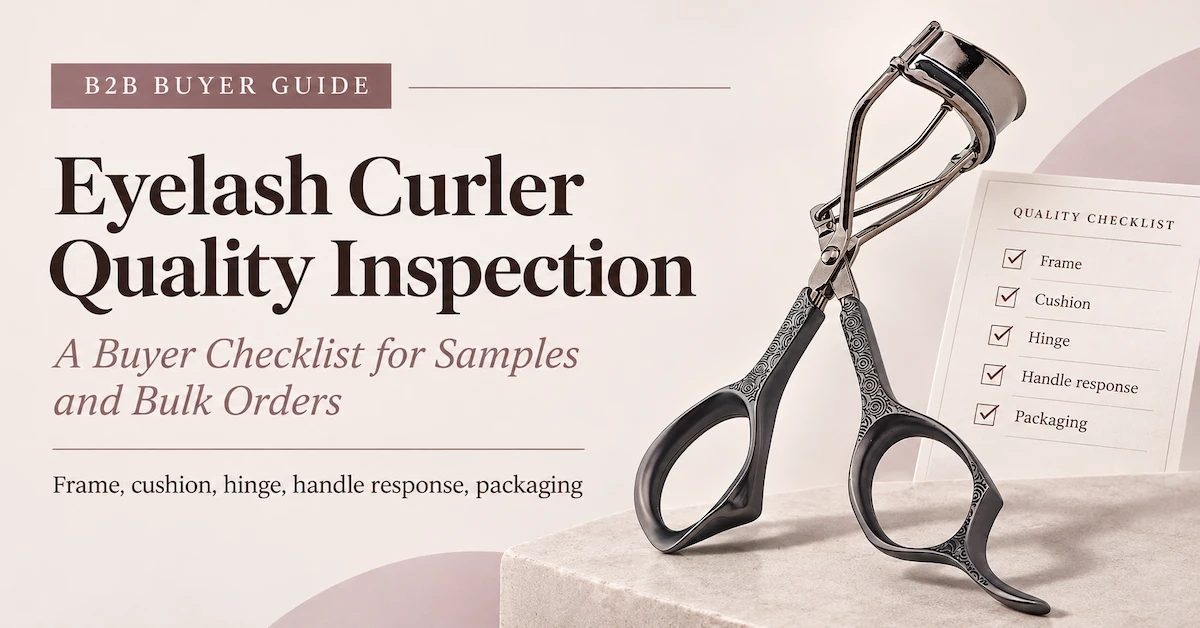
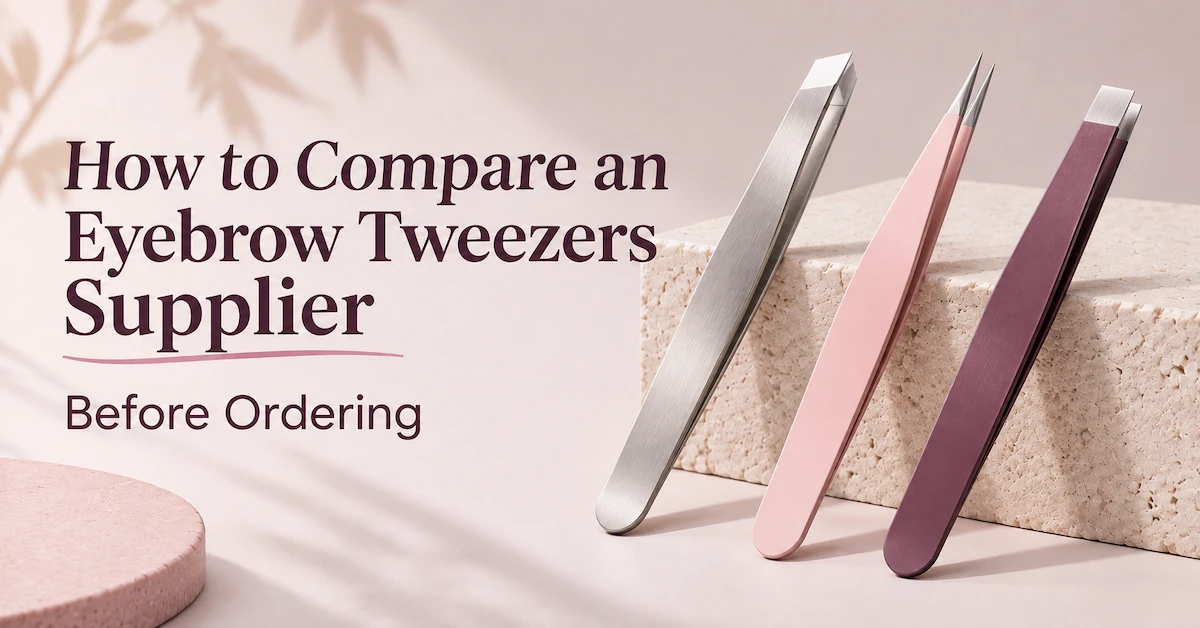
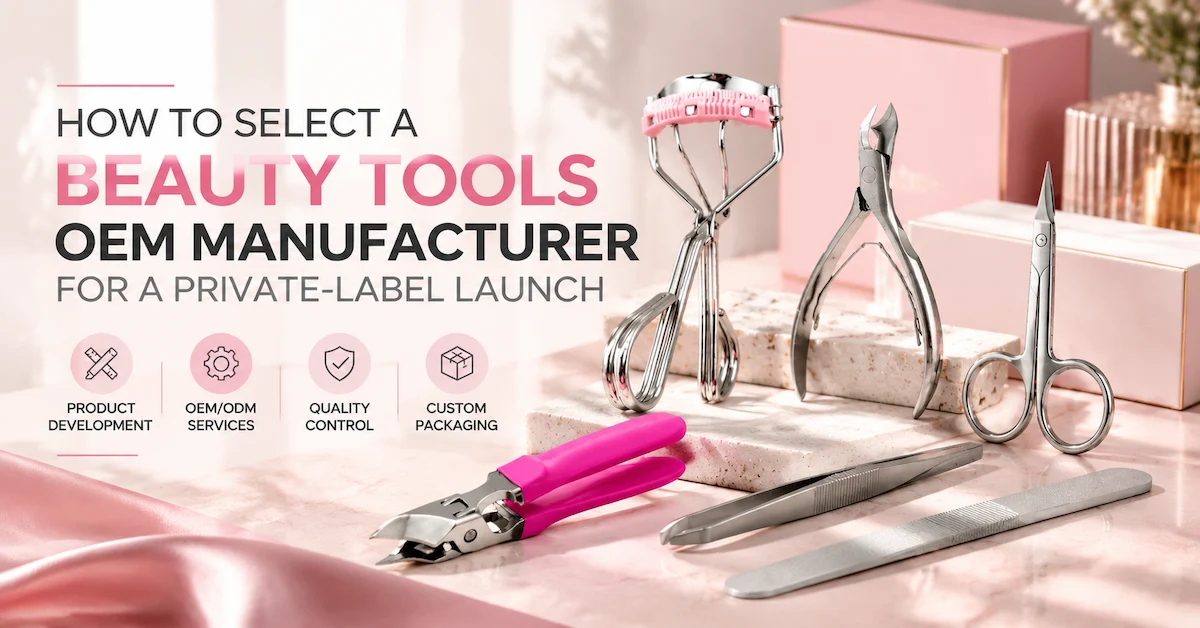
A private-label team should choose a product family before requesting a factory-wide catalogue. The public OLIMOR product range identifies core categories including tweezers, eyelash curlers, nail clippers, cuticle nippers, beauty scissors, eyebrow razors, nail files and nail care tools. Each family has different working details, sample checks, packaging risks and customer expectations.
The product family changes the first RFQ. Describe tweezer tip alignment and pressure; eyelash-curler curve, contact surface and handle action; clipper or nipper cutting alignment and protection; and nail-file surface, handle, tip, length and use. These are starting questions, not final specifications.
| Product family | First product questions | Brand and packaging questions |
|---|---|---|
| Tweezers | Tip shape, alignment, closing pressure, grip and working purpose | Marking area, surface finish, protective cap and retail format |
| Eyelash curlers | Curve profile, contact surface, handle action and replacement parts | Brand marking, insert protection, pad presentation and set compatibility |
| Nail clippers and cuticle nippers | Cutting action, edge meeting, handle movement and safety during use | Protective packaging, logo durability and kit placement |
| Beauty scissors and eyebrow razors | Working edge, guard or cover, handle comfort and intended use | Tip protection, warning copy, finish and display format |
| Nail files and nail care tools | Length, working surface, tip, handle, material and intended application | Sleeve or tray fit, surface protection, logo zone and collection consistency |
If you are still deciding between families, review the OLIMOR beauty tools product range first, then bring the customer, market and packaging context into the OEM discussion.
What should a brand team include in an OEM RFQ?
A useful RFQ gives the beauty tools OEM manufacturer enough context to recommend the right route and identify the fields that require confirmation. It does not need to be a finished engineering drawing. It does need to explain the customer, application, selling channel, target assortment, quantity assumptions and packaging environment.
Send the product name and reference images, then add the reason it exists. A salon distributor may need repeatability; an e-commerce brand may need a compact, parcel-efficient tool; a retailer may need a hanging hole, barcode area and protective pack; a private-label team may need a core SKU plus a visually matched variation.
| RFQ field | What to provide | Why it changes the recommendation |
|---|---|---|
| Customer and market | Target buyer, country or region, sales channel and price position | Use, claims, packaging and product complexity depend on the market context. |
| Product direction | Family, reference model, dimensions, working features and must-have constraints | The manufacturer can separate fixed requirements from open design choices. |
| Branding and finish | Logo artwork, marking preference, colour direction, gloss or brushed reference | The surface and marking method must work together on the actual tool. |
| Quantity and assortment | Estimated quantity by SKU, launch quantity, repeat-order expectation and mixed-SKU question | MOQ and quotation assumptions may be different for each model, finish and package. |
| Packaging | Sleeve, card, box, pouch or fitted tray; dimensions, barcode, warning copy and carton needs | Protection, customer access and shipping efficiency should be checked with the product. |
| Approval evidence | Required sample checks, material documents, performance expectations and acceptable variation | A golden sample and written criteria protect repeat-order consistency. |
Before contacting a beauty tools OEM manufacturer, buyers should prepare a clear product brief covering specifications, target quantities, materials, branding, packaging, sample requirements, and quality expectations. To make this process easier, use our 12-input beauty tools OEM RFQ checklist to organize the essential information before requesting a quotation and comparing suppliers.
How does an OEM project move from concept to mass production?
A beauty tools OEM manufacturer should explain the handoffs between requirements, engineering review, sample evaluation, component decisions, customization, packaging, quality checks and delivery planning. OLIMOR's OEM / ODM project route organizes this work into four buyer-facing actions: share the need, map the scope, review the output and plan the next stage. Each action should produce a reviewable handoff rather than a broad capability claim.
1. Clarify the customer, application and product brief
The first output is a usable brief, not a price. Define the tool's function, user, market, package context, fixed dimensions and areas where the manufacturer can recommend changes.
2. Review the product route and engineering constraints
Review working edges, alignment, components, moving parts, handle geometry, tip protection and assembly tolerances. For a new product, identify tooling decisions; for an existing model, define changes that preserve its intended use.
3. Evaluate a production-representative sample
Review the sample in its sales context: measure it, inspect working parts, test the intended use, compare the finish, check the logo and fit the proposed package. Record revisions and identify the approved sample version.
4. Close branding, packaging and quality decisions
Review branding and packaging with the selected tool. Surface shape affects logo methods; points, abrasive faces and cutting edges affect package clearance. Define checks that can be repeated on production samples.
5. Confirm production, inspection and delivery assumptions
Before production, confirm specifications, artwork, packaging files, inspection responsibility, quantity by SKU and destination. Separate production, freight and customs timing. Confirm final MOQ, lead time, material and packaging by model and order.
What evidence should a beauty tools OEM manufacturer provide?
The strongest evidence is specific to the product and the decision being made. A catalogue image can show a silhouette, but it cannot by itself prove alloy grade, grit, tolerance, cutting performance, certification, MOQ or delivery timing. Ask for evidence that can be connected to the selected model, sample version and order configuration.
OLIMOR product-family pages show categories and selection routes; product pages show model descriptions and images; manufacturing pages explain process, quality and packaging topics; service pages show development, branding, packaging and sampling stages. Use those pages to frame questions, then request order-specific documents or samples.
Buyer answer
A buyer should not approve an OEM order from a catalogue image or a generic factory claim alone. Approval should connect the exact model, specification, production-representative sample, packaging artwork, inspection criteria and quotation to the same order reference.
| Evidence to request | What buyers should verify | Decision before approval |
|---|---|---|
| Approved product sample | Model code, dimensions, working action, finish, logo area and intended use | Keep the approved version as the physical reference for production |
| Product specification sheet | Confirmed dimensions, material statement, finish, working surface and open fields | Do not publish or print claims that remain unconfirmed |
| Material or applicable test record | The report or statement applies to the selected model, material, finish and order | Ask what was tested, when, by whom and against which requirement |
| Packaging sample and approved artwork | Fit, protection, barcode or warning area, print version and pack-out | Approve product and package together before production release |
| Quotation and production schedule | MOQ unit, sample cost, logo and packaging basis, production stages and destination | Confirm the commercial assumptions in writing before ordering |
OLIMOR's quality and inspection route identifies working alignment, appearance, marking and packaging as practical checkpoints for a selected tool. Convert those four checkpoints into model-specific acceptance criteria and ask, "Does this evidence apply to the product and order I am approving?"
What can a private-label team customize?
Customization should be divided into product, surface, branding, packaging and assortment decisions. OLIMOR's product development route asks buyers to share the need, map the scope, review the output and plan the next stage. This makes the project easier to quote, reduces late changes and distinguishes an existing model with private-label presentation from a tool that needs genuine development.
Product and working details
Depending on the family, the discussion may cover length, width, tip or edge profile, handle shape, component relationship, moving action, working surface and intended application. A change that looks small in a drawing can affect tooling, assembly, packaging clearance or user handling. Ask the manufacturer to identify which changes are development items and which are available model options.
Materials and finishes
A metallic appearance does not establish a stainless steel grade, and a photograph does not establish a coating or surface treatment. Request the applicable material statement and finish description. Compare the finish on the actual sample, including edges, curves, holes, working parts and logo areas. The final material claim should match the confirmed documentation.
Logo and printing
Confirm the usable marking area, artwork size, method, contrast and durability. The best marking method may differ between a smooth handle, a brushed surface, a curved component and a moving part. Review the mark on a production-representative sample before approving retail artwork.
Packaging and assortment
Packaging can be a card, sleeve, box, pouch or fitted tray. Define internal dimensions, retention, protection, customer access, barcode space, warning copy, quantity per pack and carton requirements. If the launch includes several tools, coordinate the visual language while checking the actual fit of each model. OLIMOR's custom packaging route is the relevant commercial page for this part of the discussion.
How should buyers compare an OEM sample and quotation?
Compare the completeness of the response, not only the unit price. A quotation that omits the model reference, packaging basis, logo method, quantity unit or approval assumptions is difficult to compare. A lower initial price can become more expensive if the sample does not fit the package, the artwork must be redone, or the product needs a late change before production.
| Comparison point | Strong response | Risk signal |
|---|---|---|
| Product fit | The proposed model is connected to the customer's use, channel and package. | A catalogue image is quoted without confirming the working requirement. |
| Specification control | Confirmed fields and open fields are listed separately. | Material, grit, thickness or tolerance is implied from a photo. |
| Sample approval | The sample version, checks and revision process are clear. | Approval is requested without measurement, use or package review. |
| Branding and package | Logo, finish, protection, artwork and pack-out are treated as one decision. | The logo or package is discussed only after production is priced. |
| Commercial terms | MOQ basis, sample cost, production stage, freight assumptions and delivery point are stated. | One headline price or one lead-time number is given without assumptions. |
How are MOQ, lead time and mixed SKUs confirmed?
There is no universal MOQ or lead time for every beauty tools OEM manufacturer project. The basis may be model, finish, logo method, colour, packaging version, carton configuration or combined order. Ask whether the quantity applies to one SKU, finish, package or mixed assortment.
Lead time should be separated into clarification, sample preparation, approval, production, inspection, packing and freight. Ask what event starts each stage and what buyer approval is required. Artwork changes, package changes, material confirmation and sample revisions can move the schedule even when the base product is unchanged. A written schedule with assumptions is more useful than a single optimistic delivery date.
For the initial order, compare landed cost rather than unit price alone. Include sampling, logo setup, packaging preparation, inspection, freight, duties and the cost of holding several SKUs. The final MOQ, lead time, material specification and packaging details should be confirmed according to the product model and order requirements.
What should be approved before an OEM supplier starts production?
Use five approval gates instead of choosing a supplier on unit price alone. Each gate should have an owner, a dated reference and a clear open item. If one gate is still open, the project is not ready for an irreversible production decision.
| Approval gate | Evidence to attach | Release question |
|---|---|---|
| Gate 1: Product brief | Customer, application, market, channel, quantity assumption and product family. | Does the proposed model solve the stated customer use? |
| Gate 2: Specification | Model code, dimensions, working details, material statement and open fields. | Are the product claims supported by the current specification? |
| Gate 3: Sample | Production-representative sample, test notes, revision number and approval date. | Does the physical tool perform and feel as required? |
| Gate 4: Brand and package | Logo artwork, finish, package sample, protection, barcode and pack-out. | Can product and retail presentation be released together? |
| Gate 5: Commercial release | MOQ basis, quotation, schedule stages, inspection responsibility and destination. | Are the commercial assumptions written clearly enough to place the order? |
How to use the gates: a lower unit price does not compensate for an unapproved sample, unclear material statement or missing packaging basis. The gate method is especially useful when two suppliers quote the same product family but make different assumptions about customization, inspection or delivery.
What should be checked before mass production?
Use a written pre-production checklist tied to the approved sample. The goal is not to create paperwork for its own sake. The goal is to make the product definition stable enough for purchasing, design, quality and production teams to use the same reference.
- Confirm the final model, version, dimensions, working features and intended application.
- Record the material statement and separate confirmed facts from fields still awaiting documentation.
- Approve the surface finish, logo artwork, marking method, placement and durability expectation.
- Place the production-representative tool into the proposed retail or set packaging.
- Define checks for alignment, edges, closing action, working surface, handle, finish and package protection.
- Confirm the quantity by SKU, mixed-SKU rules, carton configuration and delivery destination.
- Separate sample approval, production, inspection and transport timing in the project schedule.
- Keep the approved sample, drawings, images, artwork and acceptance criteria as a controlled reference.
The most useful quality record is specific enough for a buyer to repeat. For example, "finish approved" is weaker than a reference image, surface description, logo position, lighting condition and sample version. For a moving or cutting tool, define how the working action will be checked. For a pointed or abrasive tool, define how the package will protect adjacent items and how the customer will access the product.
How can a brand protect repeat-order consistency?
Repeat-order consistency starts with a golden sample or controlled reference containing the model code, dimensions, material statement, finish, artwork, packaging files, inspection photos and approval date. Record every change as a new revision. Agree which changes require a new sample, artwork approval or a documented production update.
Frequently asked questions about a beauty tools OEM manufacturer
Can a private-label project start from an existing beauty tool?
Yes. A project can begin with an existing family, then define logo, finish, packaging or selected changes. Confirm the exact model, working details, material statement and approved sample version.
Does OEM include logo and retail packaging?
It can, but specify both rather than assume them. Confirm marking method, usable area, artwork, finish compatibility, package protection and carton requirements in the quotation.
What information should I send to an OEM manufacturer first?
Send the family, use, customer, market, channel, reference model, quantity, fixed dimensions, branding and packaging needs. List open fields such as material, test method and delivery assumptions.
How are material claims confirmed?
A product image or metallic appearance is not enough to establish a precise alloy or grade. Request the applicable material statement or documentation for the selected model and order. Keep the product page, package copy and quotation aligned with what has actually been confirmed.
Can a brand order mixed SKUs?
Mixed-SKU ordering may be possible, but the calculation depends on the models, finishes, logo methods and packaging versions involved. Ask the beauty tools OEM manufacturer to state the MOQ unit and whether the products can share a production or packaging route.
How long does an OEM beauty tools project take?
The timing depends on product clarification, development or model selection, sample preparation, artwork, packaging, approval, production, inspection and freight. Ask for stage-based timing and the assumptions that start each stage. Do not treat a catalogue estimate as a confirmed project schedule.
What should I check on the first sample?
Check dimensions, working action, alignment, edges, surface, grip, finish, logo, intended use and package fit. For moving tools, repeat the action several times. For cutting or abrasive tools, use a consistent test method. Record differences against the brief and request a revision when necessary.
Is private label the same as OEM?
They overlap but are not identical terms. Private label describes the brand and market presentation. OEM describes manufacturing to the buyer's requirements. A private-label project may use an existing model, while an OEM project may require product modifications or a new development route.
What quality evidence should a buyer request?
Request evidence that matches the product and order: approved sample, inspection criteria, material statement, applicable test record, packaging check or production sample review. Ask whether any certificate or report applies to the exact model, material, finish and order configuration.
How do I protect the brand's repeat order?
Keep a controlled specification and golden sample, record revisions, approve product and packaging changes, and compare repeat-order samples with the original reference. This creates a shared definition for the brand, manufacturer, quality reviewer and packaging team.
Conclusion
Choosing a beauty tools OEM manufacturer is a transaction decision, but the transaction becomes safer when the project is defined as a sequence of approvals. Start with the customer and application, select the right beauty-tool family, specify the product and brand decisions, review a production-representative sample, coordinate packaging and quality, and confirm the commercial assumptions before mass production.
OLIMOR's public route connects beauty tools, product development, OEM / ODM, private label, finishes, branding, packaging, sampling, quality and logistics. Send the product family, market, quantity, branding direction, packaging needs and fixed constraints; then confirm MOQ, lead time, material, compliance scope and packaging for the selected order.
A clear brief gives the beauty tools OEM manufacturer something that can be reviewed, sampled and quoted. It also gives the private-label team a stronger basis for approving the product and repeating it after launch.