What should salon supply distributors expect from a beauty tools OEM partner?
Short answer: a beauty tools OEM for salon supply distributors should help turn a channel plan into a controlled assortment that can be sampled, branded, packed, quoted and replenished. The distributor is not only buying individual tools. It is building a range that has to work for salon backbar use, retail counters, academies, starter kits and replacement orders at the same time.
The most useful OEM conversation starts with the distributor's customers and sales model. A wholesaler serving independent salons may need durable professional tools, compact cartons and fast add-on ordering. A regional beauty-supply chain may need retail-ready packs, barcode fields, consistent finishes and a broader opening assortment. An academy supplier may need training kits with controlled contents and a repeatable replenishment list. These are different commercial jobs, even when the catalogue product looks similar.
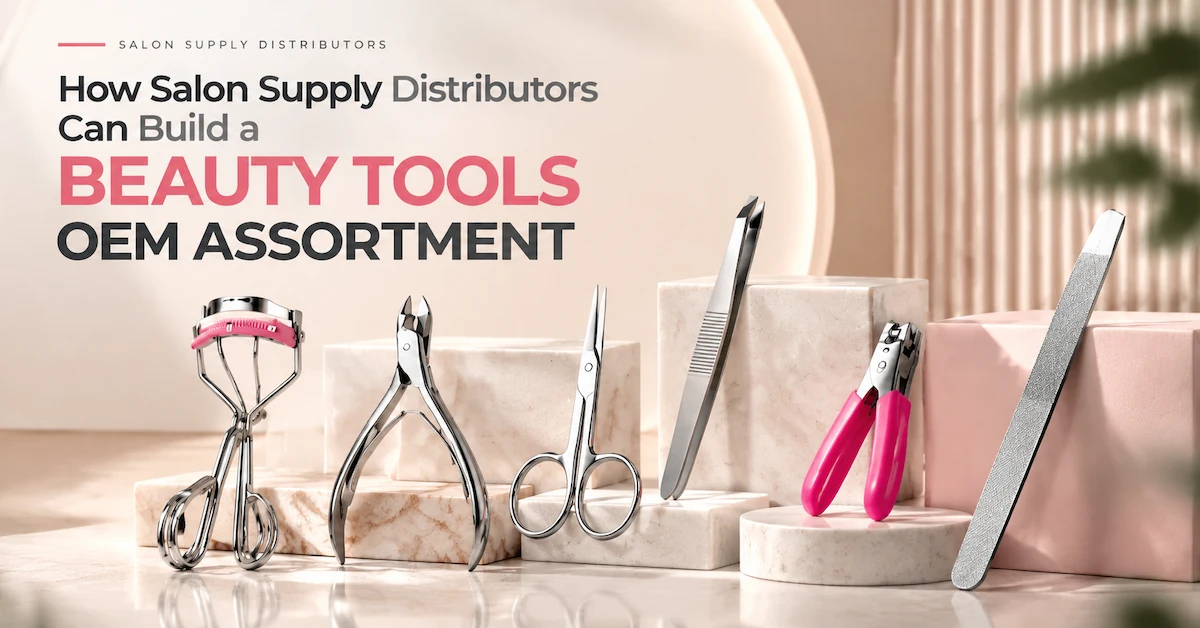
OLIMOR's public range names tweezers, eyelash curlers, nail clippers, cuticle nippers, beauty scissors, eyebrow razors, nail files and nail care tools as core product families. Its public OEM/ODM route is organized around sharing the need, mapping the scope, reviewing the output and planning the next stage. For a distributor, that sequence creates a practical way to move from a channel brief to an approved, sellable range without pretending that unconfirmed specifications are already fixed.
Plan a Distributor OEM Project
How is distributor sourcing different from a standard wholesale order?
Distributor sourcing is a portfolio decision, while a standard wholesale order is usually a product decision. The buyer has to consider how several SKUs share a customer, a price ladder, a carton, a sales representative's catalogue and a future replenishment cycle. The right beauty tools OEM partner therefore needs to discuss the range architecture and the controls around it, not only send a unit price.
| Distributor decision | Why it matters to the channel | What to confirm with the OEM |
|---|---|---|
| Range role | Defines whether a SKU is a professional core, retail add-on, kit component or replacement. | Product family, intended use, working details and suitable model options. |
| Brand system | Keeps products recognizable across sales teams and territories. | Logo location, marking method, finish compatibility and revision control. |
| Pack format | Determines shelf readiness, protection, carton handling and barcode workflow. | Retail pack, bulk pack, inner carton, master carton and labeling requirements. |
| Replenishment | Controls stock-outs and makes the first order useful beyond launch. | Repeat-order reference, mixed SKU assumptions, lead-time inputs and approval records. |
A quotation that omits these decisions may look cheaper while creating hidden work for the distributor. Artwork may need to be redone, the pack may not fit the tool, mixed SKUs may be handled differently than expected, or a repeat order may be compared against an unclear sample. Put the channel model into the RFQ before asking for a final comparison.
Which salon channels should the assortment serve?
A distributor should assign every proposed SKU to a channel job before selecting a finish or package. This prevents the common mistake of building a visually consistent range that does not match how salons actually buy and use it.
Professional backbar supply
Backbar tools are used by professionals and are judged by working action, handling, cleanability, durability and replacement availability. The distributor's brief should state the service context, expected frequency of use, preferred grip or opening action and the details that a salon educator will demonstrate. For moving tools, the sample review should include repeated operation rather than a visual check alone.
Retail counter and beauty-supply shelves
Retail-ready products need a clear front-of-pack message, reliable protection, a scannable identification system and a package that can survive handling. The product decision and pack decision should be reviewed together. OLIMOR's custom packaging route treats the tool, protection, layout and presentation as one project input; the distributor should therefore provide pack dimensions, display assumptions and labeling constraints early.
Academy and training programs
Training programs often need repeatable kits, simple identification and a stable replenishment list. A distributor can group a tweezer, nail clipper, cuticle nipper or nail file with learning materials, but each item still needs its own approved specification. Mark the kit contents, individual SKU references and replacement logic in the RFQ so a later order does not depend on memory.
Salon starter kits and add-on sales
Starter kits need a controlled price ladder and a reason for every item. Add-on products should solve a clear service or merchandising gap. A compact assortment with visible roles is easier for a sales representative to explain and easier for a salon to reorder than a catalogue containing many near-duplicates.
How should a distributor build the first beauty tools assortment?
Start with a range map, then choose products that cover the most important jobs with the fewest avoidable variants. The first range does not need every available model. It needs a documented reason for each SKU, a clear sample, a channel-ready pack and a path to replenish the winners.
| Range layer | Typical role | Distributor question | Evidence to approve |
|---|---|---|---|
| Professional core | High-frequency salon use. | Which tool must never be out of stock? | Working action, alignment, finish, pack and reorder reference. |
| Value line | Entry price or introductory account. | What is the minimum acceptable specification? | Approved sample, usage description and pack economics. |
| Specialty/add-on | Solves a specific service or merchandising need. | Which customer problem makes this item worth listing? | Use case, working detail and channel explanation. |
| Kit/bundle | Raises order value or supports training. | Are all components approved and replaceable? | Kit BOM, individual SKUs, outer pack and insert. |
For a first launch, map each item to one primary channel and one secondary opportunity. This makes sales training more precise and reduces slow-moving duplicate products. It also gives the beauty tools OEM for salon supply distributors a better brief: the manufacturer can discuss product families, branding, packaging and sample priorities in the order the channel needs them.
Which product families fit a salon supply program?
The best product family depends on the service, customer skill level, sales channel and replacement pattern. OLIMOR publicly presents eight core families. Use the following matrix as a briefing tool, not as a promise that every model has the same specification.
| Family | Channel fit to discuss | Product details to review |
|---|---|---|
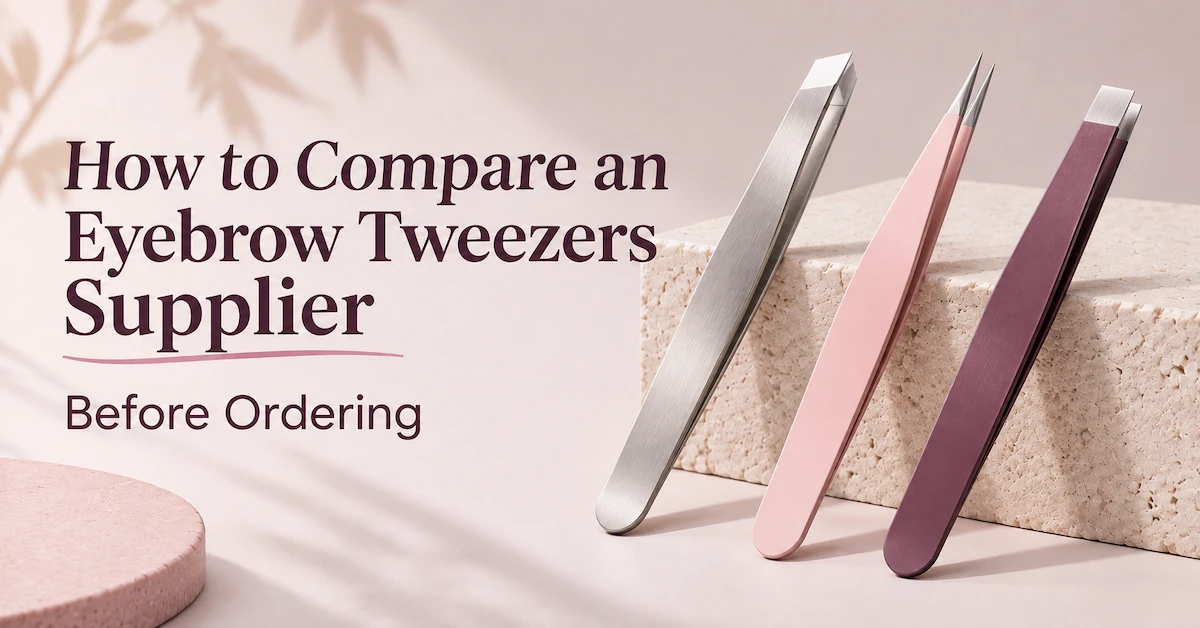
| Tweezers | Backbar, brow services, retail add-on. | Tip geometry, alignment, grip, finish and protective pack. |
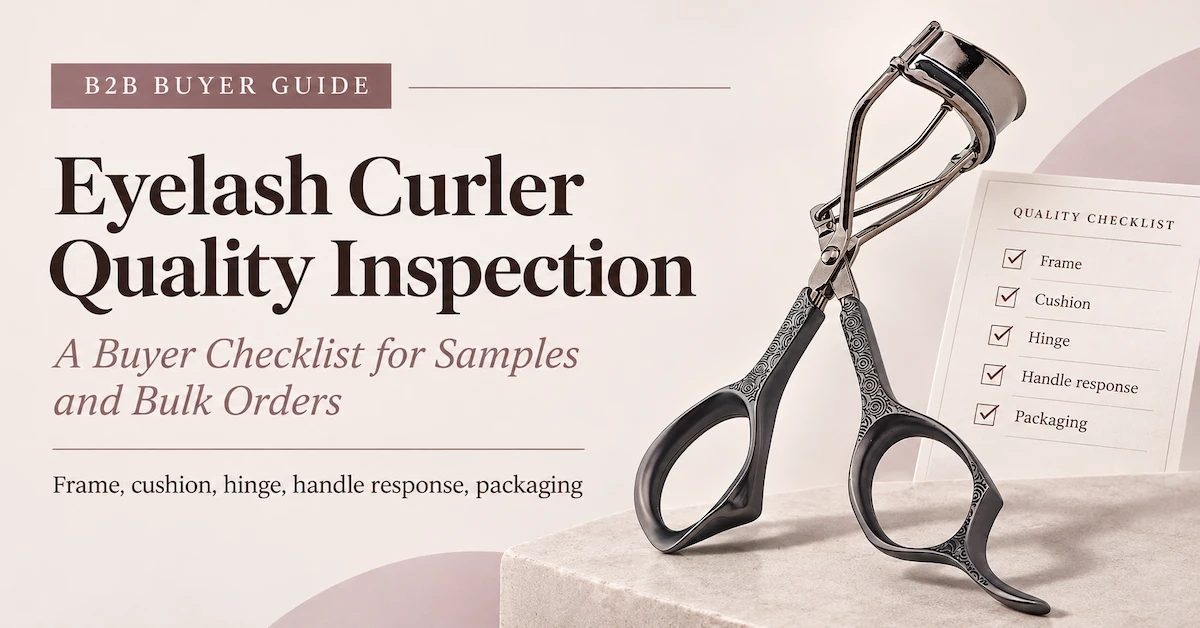
| Eyelash curlers | Retail, makeup counters, salon add-on. | Working shape, pad/interface, comfort, finish and replacement parts. |
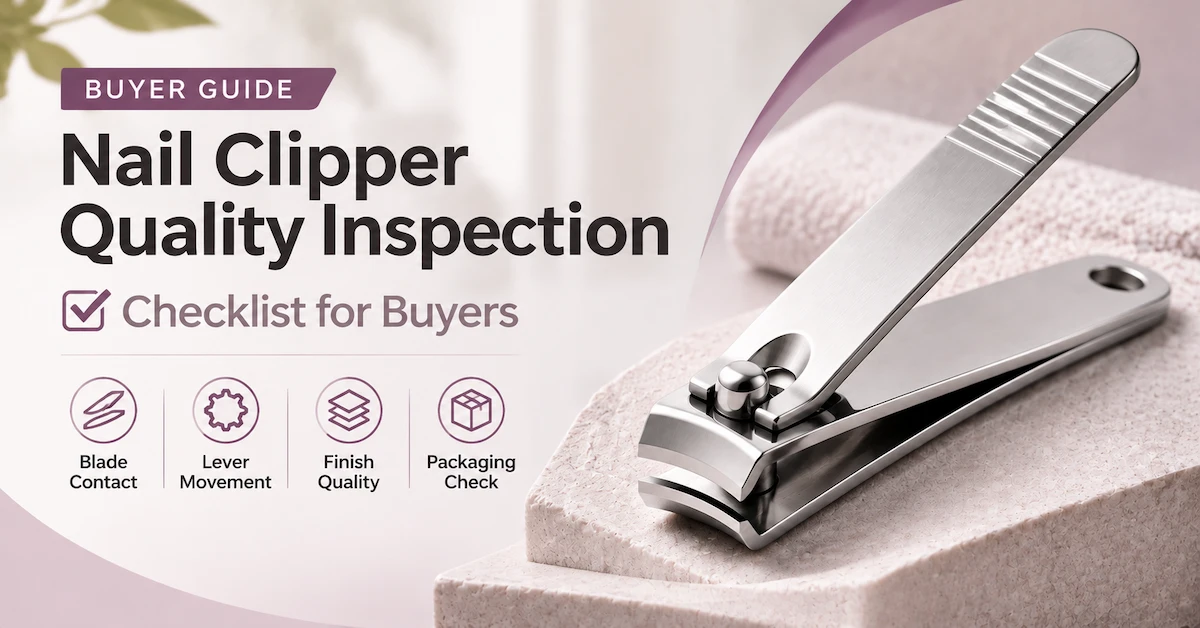
| Nail clippers | Manicure stations, retail and starter kits. | Cutting action, alignment, handle feel, finish and pack protection. |
| Cuticle nippers | Professional backbar and educator-led programs. | Jaw alignment, edge condition, movement, grip and cleaning expectations. |
| Beauty scissors | Grooming kits, retail and salon accessories. | Blade action, tip protection, handle comfort and presentation. |
| Eyebrow razors | Brow services, retail and compact kits. | Guard or edge design, handle, protection, labeling and disposal guidance. |
| Nail files | Manicure stations, retail and replenishment packs. | Abrasive surface, shape, grit description, wear expectation and pack count. |
| Nail care tools | Kits, cross-sell and professional accessory ranges. | Intended use, working parts, finish, labeling and kit compatibility. |
The final material specification, surface treatment, dimensions, MOQ, lead time and packaging details should be confirmed according to the selected model and order requirements. A distributor should not assume that two product families share the same production or inspection criteria simply because they appear in one catalogue.
What should a distributor include in an OEM RFQ?
A strong RFQ gives the manufacturer enough context to separate fixed requirements from decisions that still need development. It also lets the distributor compare suppliers on the same assumptions rather than comparing incomplete prices.
- Business model: distributor territory, salon customer type, retail or backbar route, and expected launch sequence.
- Product scope: family, intended use, preferred reference, target channel and whether the item is core, value, add-on or kit.
- Brand direction: logo artwork, marking location, finish direction, color references and any restricted claims.
- Pack requirements: retail card, box, pouch, bulk pack, inserts, barcode fields, carton labels and display assumptions.
- Order logic: opening order by SKU, mixed-SKU assumptions, repeat-order reference and acceptable substitutions, if any.
- Approval gates: sample owner, artwork approval, packaging approval, quality criteria and the person authorized to release production.
Use OLIMOR's product development route when the intended use, working details, references or approval criteria are still being clarified. The point is not to make the RFQ longer; it is to make the next response actionable for the distributor's sales, product and operations teams.
Buyer answer: the minimum useful distributor RFQ identifies the channel, product family, intended use, brand treatment, pack format, opening SKU mix, approval owner and replenishment assumption. Everything else can be marked as “to confirm by model and order.”
How should samples be evaluated before listing or bulk order?
Sample approval should reproduce the decision a customer will make, not just confirm that a sample arrived. Assign one owner, compare the sample with the RFQ and record the result by product and pack. For a multi-SKU project, approve each SKU separately even when the artwork is shared.
| Sample gate | Distributor check | Record to keep |
|---|---|---|
| Identity | Model, variant, logo and pack match the RFQ. | Sample code, revision and dated photos. |
| Function | Working action, alignment, edge or abrasive behavior suits the intended use. | Test method, observations and open questions. |
| Appearance | Surface, marking, color and visible finish are consistent with the brand direction. | Approved reference images and finish notes. |
| Pack fit | Tool is protected, legible and presented as intended. | Pack drawing, label copy and carton assumptions. |
| Release | All changes are closed or assigned before production. | Signed approval, revision number and owner. |
OLIMOR's public sampling route is relevant when the distributor needs to review product and presentation before production. The final sample count, sample charge, sample timing and revision plan should be confirmed for the selected project rather than assumed from a generic schedule.
How should packaging differ by salon channel?
Packaging should reflect how the product is sold, handled and replenished. One universal package can create unnecessary cost in a backbar program or insufficient protection in retail. Treat packaging as a commercial tool: it should make the product identifiable, protect the working parts and support the distributor's warehouse and sales process.
- Backbar: prioritize protection, compact storage, easy identification and efficient case handling.
- Retail: prioritize shelf visibility, product information, barcode placement, tamper considerations and pack consistency.
- Academy: prioritize kit contents, student identification, replacement references and clear instructions.
- Starter kits: prioritize a logical bundle, protected components, a simple value explanation and easy reordering of individual items.
Coordinate the package with the selected finish and marking method. A logo that looks correct on a loose tool may need a different presentation on a card or box. The custom packaging discussion should therefore include product dimensions, protection, layout, labeling and carton handling, not only artwork.
How should MOQ, mixed SKU and replenishment be planned?
Plan replenishment before the opening order is quoted. A distributor's working capital, warehouse space and customer service promise depend on whether the supplier can repeat the approved configuration, how mixed SKUs are handled and which packaging components must be reordered together.
| Planning item | Questions for the OEM | Why distributors should document it |
|---|---|---|
| MOQ by SKU | Is the minimum applied per model, finish, logo or pack configuration? | Prevents a range from exceeding the launch budget. |
| Mixed-SKU order | Can approved models ship together, and how are cartons organized? | Improves stock planning and reduces receiving errors. |
| Packaging components | Are cards, boxes, inserts and labels ordered with the tool or separately? | Avoids a product being ready while its pack is not. |
| Repeat reference | Which sample, drawing and artwork revision controls the reorder? | Protects consistency after the first launch. |
| Timing assumptions | What starts the production and delivery clock? | Separates production timing from freight and approval time. |
The final MOQ, lead time, material specification and packaging details should be confirmed according to the selected model and order requirements. Ask for stage-based timing: sample clarification, artwork approval, packaging approval, production, quality review and freight are different events. This is especially important when a beauty tools OEM for salon supply distributors is coordinating several product families in one program.
What quality evidence should distributors request?
Request evidence that matches the product and the order configuration. A polished catalogue image cannot confirm working alignment, edge condition, marking compatibility or pack fit. OLIMOR's public quality page identifies working alignment, appearance, marking and packaging as inspection directions; use those points to build a project-specific checklist.
A practical evidence folder should contain:
- Approved product sample and revision number.
- Working-detail notes for the selected model.
- Finish and logo reference, including location and method.
- Packaging artwork, pack drawing and carton assumptions.
- Inspection criteria for alignment, appearance, marking and packaging.
- Open issues, owner and release decision before production.
Link the evidence to a specific SKU and order revision. Do not write a generic “passed inspection” statement when the distributor needs to know what was checked. If a certificate, test report, material declaration or market-specific document is required, ask whether it applies to the exact model, finish, pack and destination market. The document should be reviewed as part of the order, not assumed from another product.
Review the OLIMOR quality control page together with the product brief. It gives the distributor a useful starting vocabulary for the quality conversation while leaving model-specific criteria open for confirmation.
How should a distributor compare two OEM quotations?
Compare the total program, not the lowest visible unit price. Normalize the quotations so that product specification, logo work, packaging, sampling, inspection, carton configuration and delivery assumptions are visible in the same row. A lower price can be misleading when one supplier has excluded pack components or quoted a different working detail.
| Comparison block | Normalize before deciding | Warning sign |
|---|---|---|
| Product | Same model, working detail, finish and approved sample. | Quotation uses a broad family name with no model reference. |
| Branding | Same logo method, placement, colors and artwork responsibility. | Marking is described as “custom” without a sample route. |
| Packaging | Same pack format, inserts, labels, cartons and protection. | Pack is priced separately or not described. |
| Quality | Same inspection points and approval responsibility. | “Quality guaranteed” appears without criteria or records. |
| Delivery | Same start event, production window, freight and destination assumption. | One date combines approval, production and shipping without assumptions. |
The best supplier comparison is often the one that reveals open decisions clearly. A distributor can then decide whether to simplify the range, revise the pack, approve a sample revision or request a different commercial structure before committing.
What should be confirmed before production release?
Production release should be a documented handoff, not a casual approval email. The distributor, brand owner and OEM should share the same version of the product, branding and packaging information.
- Product: selected model, intended use, working details, finish and any component decisions.
- Brand: logo artwork, placement, marking method, color or finish reference and approved revision.
- Packaging: final artwork, pack dimensions, insert copy, barcode fields, carton labels and protection.
- Quality: sample reference, inspection points, acceptance notes and release owner.
- Commercial: SKU quantities, MOQ assumptions, payment terms, stage dates and destination.
- Replenishment: repeat-order code, retained files, revision control and change-approval process.
If any item remains open, write it as an open item with an owner and decision date. This protects the distributor's sales launch and prevents a late packaging or specification change from being treated as a production error.
How does OLIMOR fit a distributor service model?
OLIMOR's public service structure can support a distributor that needs product selection and development decisions to stay connected. The OEM/ODM route starts with the need and maps the scope; product development helps clarify intended use and approval criteria; logo and finishing connect the brand treatment to the tool; custom packaging coordinates presentation; sampling provides an approval stage; and quality and packaging logistics keep the production discussion grounded in the packed product.
That structure is useful for distributors because the service model can be repeated across categories. A buyer can begin with a focused nail-care assortment, add tweezers or eyelash curlers after the first channel test, then retain the same approval and replenishment logic. The final scope, material, MOQ, timing and pack configuration remain project-specific, but the decision process does not need to be reinvented for every SKU.
When contacting the team, provide the product families, target salon segment, territory, opening SKU plan, logo direction, pack format, destination market and any fixed launch date. The more clearly the distributor separates fixed requirements from questions to confirm, the more useful the proposal and sample discussion can be.
Review Custom Packaging Options
FAQ for salon supply distributors
Can one OEM project include several beauty tool categories?
It can be discussed as one program when the distributor provides a clear SKU map and separate product requirements. Each family still needs its own sample, working criteria, branding decision and quality record. The final scope depends on the selected models and order requirements.
Should a distributor start with a catalogue model or request development?
Start with the route that matches the commercial need. An existing model may shorten clarification when its working details and channel role fit. Development is appropriate when the intended use, structure, finish, branding or pack requires a change. Ask the OEM to explain the assumptions for both routes.
How should a salon supply distributor handle mixed SKUs?
List each SKU, quantity, finish, logo and pack configuration in the RFQ. Confirm whether mixed models can be produced and shipped together, how cartons are labeled and whether each SKU follows the same approval and replenishment rules.
What is the most important sample check for professional tools?
Check the working action and alignment for the intended use, then check appearance, marking and pack fit. A different tool family may require a different test method. Record the method and result against the approved brief.
Can the same packaging work for backbar and retail?
Sometimes, but it should be a deliberate decision. Backbar supply often prioritizes protection and case efficiency, while retail needs shelf information and handling resilience. Confirm the channel, display and warehouse requirements before standardizing the pack.
How are MOQ and lead time confirmed?
They should be confirmed for the selected model, finish, logo, packaging and order mix. Ask when the timing starts and separate sample, approval, production and freight stages. The final MOQ, lead time, material specification and packaging details should be confirmed according to the selected model and order requirements.
What should a distributor retain for a repeat order?
Retain the approved product sample, revision number, drawings or product notes, logo artwork, packaging files, inspection criteria, carton assumptions and the order reference. Reconfirm any changes before a repeat production release.
Does private label automatically mean a new product?
No. Private label describes the brand and market presentation. A distributor may use an existing model with approved marking and packaging, or combine private-label presentation with product development. The scope should be stated in the RFQ.
What evidence should be requested for packaging?
Request the approved artwork, pack drawing, label copy, barcode fields, protection details, carton configuration and a representative packed sample. Confirm that the pack corresponds to the selected tool and revision.
Where should a distributor send the project brief?
Use the OLIMOR contact page and include product family, intended channel, target market, quantities, branding, packaging and delivery assumptions. The team can then confirm which details need a product, sample or commercial review.
Conclusion
For salon supply distributors, a beauty tools OEM project is successful when it creates a range that sales teams can explain, salons can use, warehouses can handle and customers can reorder. Begin with the channel job, map the first assortment, define the product and brand decisions, approve each SKU and pack, then document the assumptions that control MOQ, timing, quality and replenishment.
OLIMOR's public product families and service routes give distributors a practical starting point for that conversation. The final material, model, packaging, MOQ and delivery details must be confirmed against the selected order, but a structured brief makes those decisions easier to review and quote.
A distributor should choose the beauty tools OEM for salon supply distributors that can make the next decision clearer: which product to sample, which channel it serves, which pack it needs, what evidence releases production and how the approved item will be replenished after launch.