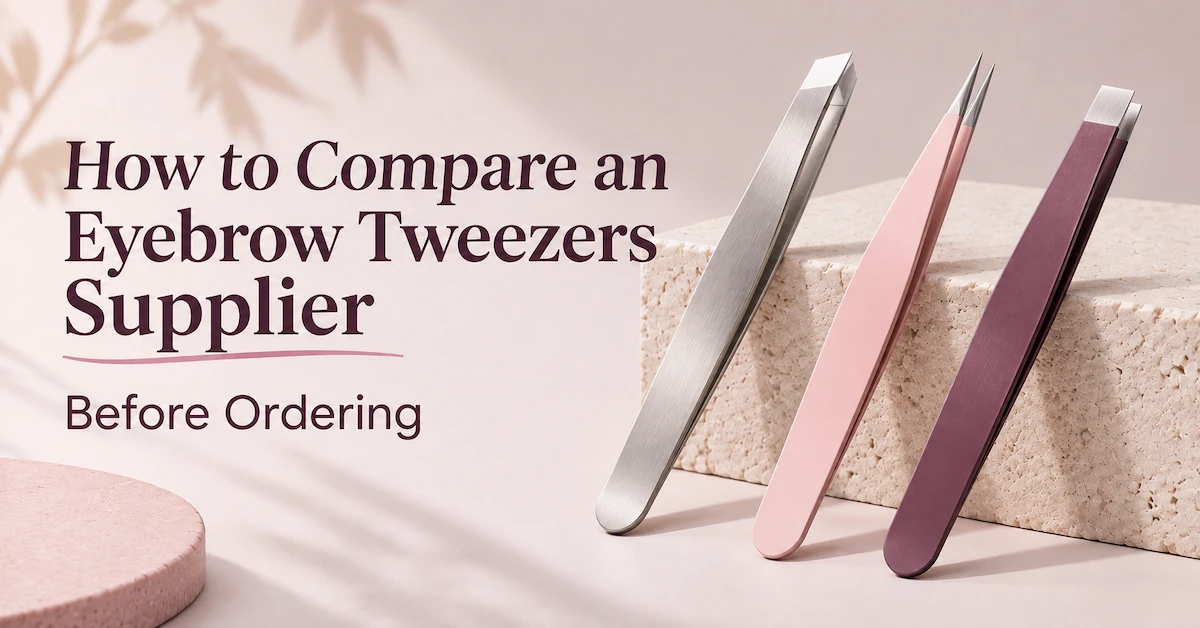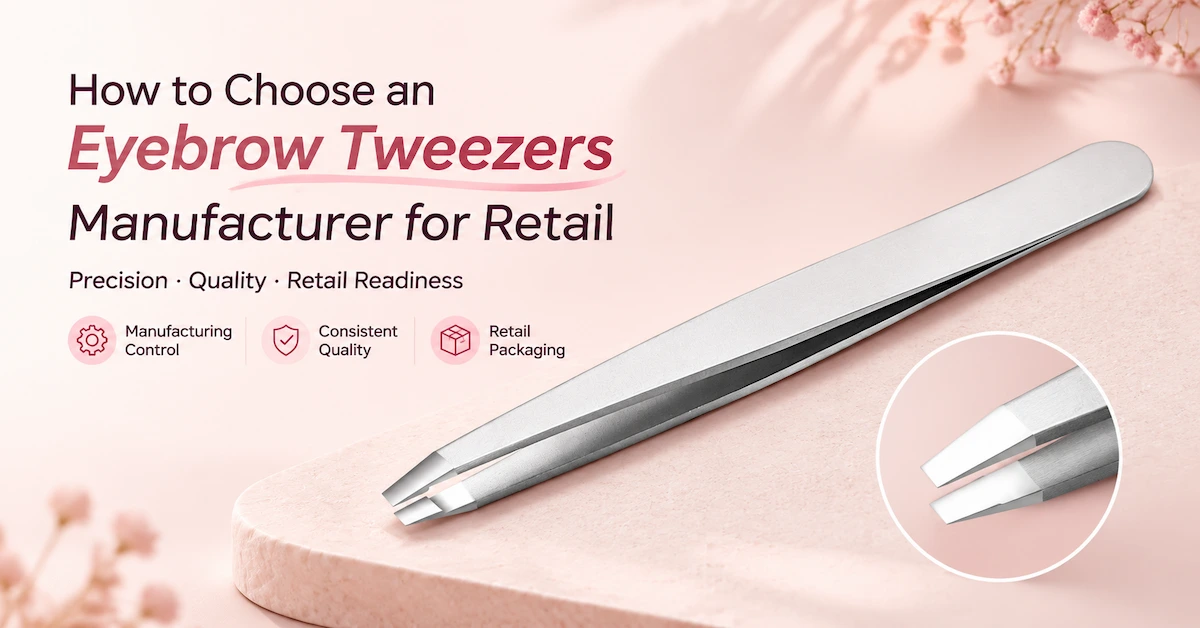
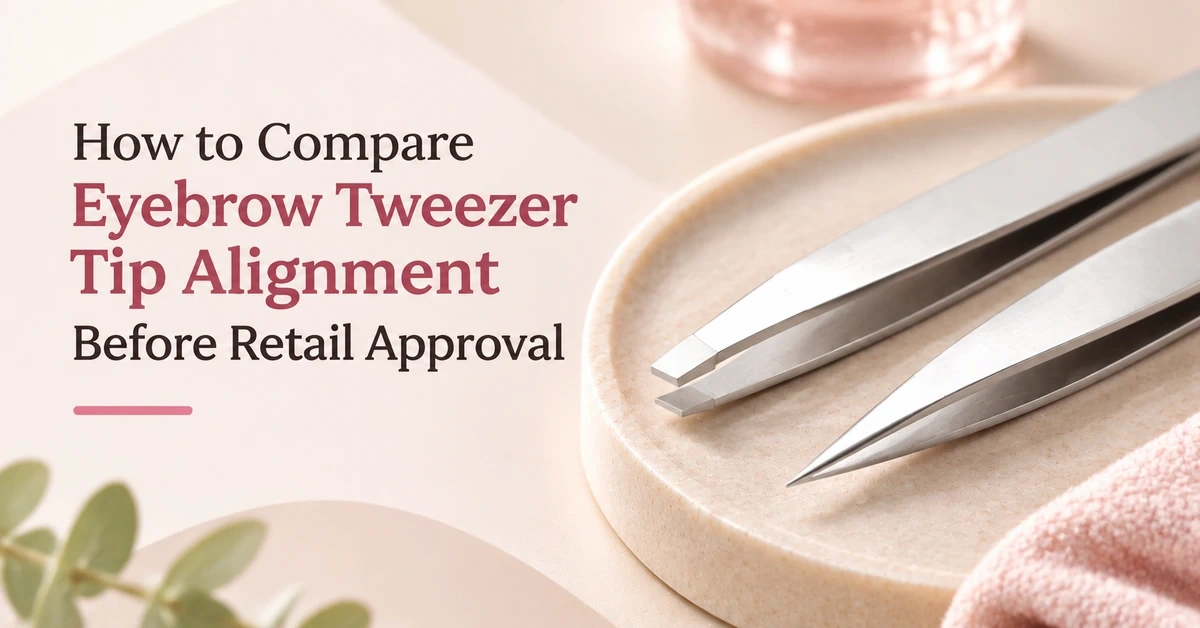
For a retailer, the question is not simply whether an eyebrow tweezer looks sharp in a catalogue image. The commercial question is whether the two tips meet in the intended working zone, repeat that contact across samples, and remain protected through packing, shipment and replenishment. This guide explains how to compare eyebrow tweezer tip alignment during product selection and sample approval, what to record, which observations are meaningful, and which claims still require supplier confirmation.
What does eyebrow tweezer tip alignment mean in a retail inspection?
Short answer: tip alignment is the degree to which the two working ends meet evenly and predictably when the tweezer is closed. A retailer should look at the contact position, the visible gap, the side-to-side offset, the shape of the meeting line and the way that contact behaves during repeated closing. The check should be made on the actual sample, under consistent lighting and with the product oriented in a repeatable way.
Alignment is not the same as “sharpness.” A pointed tweezer can have a sharp-looking profile while the tips pass each other, meet only at one corner, or leave a gap along the intended contact zone. It is also not the same as closing pressure. Pressure describes the force needed to bring the arms together; alignment describes where and how the working ends meet. Both can affect a user’s experience, so they should be recorded separately rather than reduced to one score.
For retail teams, the practical benefit of separating these observations is traceability. If one sample feels difficult to use, the team can ask whether the issue is an offset tip, a rough edge, a high closing force, an uneven surface, or a combination. That makes a supplier conversation more useful than sending a general message that the tweezer “does not feel right.”
Which alignment features should a retailer compare?
A useful comparison separates the tip into observable zones. The zones below are a buyer’s inspection framework, not a published OLIMOR tolerance or a substitute for an agreed product specification.
| Comparison zone | What to observe | Why it matters to a retailer |
|---|---|---|
| Contact point | Whether the tips meet in the intended front working area rather than only at a side corner. | A clear contact point is easier to explain, photograph and compare between samples. |
| Visible gap | Any light or open space between the working faces when the arms are closed normally. | A gap may change the usable contact area; its significance depends on the tip design and intended use. |
| Lateral offset | Whether one tip sits visibly to the left or right of the other when viewed from above. | Offset can make the tool feel inconsistent and can affect the part of the tip that contacts the hair. |
| Vertical step | Whether one working face is visibly higher or lower than the other in side view. | A step can signal a forming, assembly or finishing issue that merits sample review. |
| Meeting line | Whether the faces meet evenly along the specified length or only at one small point. | The working length should match the selected tip concept and the use case the retailer is selling. |
| Repeatability | Whether the contact looks and feels similar after several controlled open-and-close cycles. | Repeatability helps distinguish a stable sample from a one-time visual match. |
Do not turn the table into a universal pass/fail rule without first defining the product’s tip shape and intended use. A pointed, slanted and flat-tip tweezer will not create the same meeting line. The right comparison asks whether each selected model performs consistently against its own agreed reference.
How should you compare alignment on a physical sample?
The most reliable retail review is a controlled sequence, not a quick glance at a single photograph. Use the same reviewer, surface, orientation and lighting for the first comparison. If several people are involved, agree the vocabulary and record the same fields.
1. Identify the sample before touching the tips
Record the supplier reference, sample date, finish, packaging version and any model name shown on the quotation or sample label. If a retailer is comparing two tip shapes, keep each sample in a separate tray or bag. Mixing unmarked samples creates a preventable problem: the team may approve the feel of one sample while later discussing the finish or packaging of another.
2. Inspect the closed tips from three views
Start with a top view to assess lateral offset and the visible meeting line. Turn to a side view to identify a vertical step or a bent arm that changes the angle. Then use a close front view to check whether the nose is symmetrical, whether a gap is visible and whether one corner contacts before the rest. The purpose is not to create laboratory data from a phone camera. The purpose is to describe the same observation in a way another buyer or supplier can understand.
3. Close the tool with normal hand pressure
Do not force the arms together to make a poor match look acceptable. Close the tweezer using the pressure a typical user would apply, then note where the tips first contact and where they finish contact. If heavy pressure changes the contact pattern, record that as a separate observation. A retailer can request the supplier’s intended operating guidance, but should not invent a pressure specification when none has been agreed.
4. Repeat the action and inspect the return
Open and close the tool several times in a controlled way. The exact number can be set in the retailer’s own inspection plan; a small repeat sequence is useful because it reveals whether the contact shifts as the arms move. Observe whether the tips return to the same relative position, whether the closing action feels smooth, and whether the contact area changes from one cycle to the next. This is a buyer test method, not a claim about a supplier’s internal test count.
5. Examine the edge without using skin as a test surface
A clean visual inspection and a controlled handling check are safer starting points than testing an unapproved sample on skin. Look for burrs, rough transitions, visible nicks or a tip that appears damaged by packing. Any use-related claim, such as suitability for a particular hair type or professional treatment, should be supported by the approved product direction and appropriate evidence. Alignment alone does not establish a medical, cosmetic or performance claim.
What is the difference between tip alignment and tip geometry?
Tip geometry is the shape and profile of the working ends; alignment is how those ends meet when the tool is closed. The two decisions interact, but they should not be confused when comparing samples.
| Term | What it describes | Buyer question |
|---|---|---|
| Tip geometry | Pointed, slanted, flat, narrow, broad or another defined working profile. | Does the chosen shape suit the intended retail use and customer expectation? |
| Tip alignment | The relative position and contact of the two tips during closure. | Do the tips meet consistently in the intended working zone? |
| Edge finish | The smoothness and condition of the finished working surfaces and transitions. | Are there visible burrs, nicks or rough transitions that should be corrected? |
| Closing action | How the arms move and how much force a user appears to need. | Does the action feel controlled and consistent with the selected positioning? |
A retailer may prefer a particular tip type for a range, but the correct alignment review still depends on that selected geometry. A slanted tip should not be judged against the visual meeting line of a pointed tip. Put the intended shape, working length and acceptable appearance into the sample brief before asking for a final approval.
How can retailers document an alignment decision?
A good record connects the physical sample to the commercial decision. It should be short enough to use during a buying meeting and specific enough to support a revision request. The following fields are a practical buyer template; they are not an OLIMOR inspection form or a published factory tolerance.
- Sample reference, date, finish and packaging version.
- Tip type and intended working purpose.
- Top-view result: centered, left/right offset or unclear.
- Side-view result: level, stepped or unclear.
- Contact pattern: broad, partial, corner-first or no contact under normal closure.
- Visible edge condition: clean, rough, nicked or requires review.
- Closing action: smooth, stiff, uneven or not assessed.
- Photo references and the requested next action.
Avoid vague comments such as “alignment is bad.” A more useful note is: “Top view shows the right tip extending beyond the left at the nose; contact begins at the outer corner and does not remain even during repeated closure; please review the sample against the approved tip direction.” This wording describes an observation without pretending to diagnose the manufacturing cause.
When several samples are available, compare them side by side and label each one. Retail teams should distinguish a model-level issue from a single-sample issue. One sample with an offset may require a replacement sample; a repeated pattern across samples may require a broader discussion of forming, assembly, finishing or the agreed specification.
Which quality questions should go with tip alignment?
Alignment should be part of a connected quality discussion. The public OLIMOR quality route describes working alignment, appearance, marking and packaging as practical checkpoints for a selected tool. For a retailer, that means a tip review should sit beside, not replace, checks on the complete product and its presentation.
| Area | Questions to add to the sample review | Evidence to retain |
|---|---|---|
| Working details | Does the approved tip shape meet in the intended zone? Is the closing action consistent with the selected direction? | Approved sample, dated notes and agreed acceptance description. |
| Appearance | Is the finish even? Are there visible marks or damage around the tip and handle? | Sample photos and finish reference. |
| Branding | Does the logo placement avoid the working area and remain compatible with the chosen surface? | Approved artwork, placement image and finish direction. |
| Packaging | Does the pack prevent tip contact with hard surfaces or neighboring tools? | Pack sample, retention detail and carton review notes. |
Do not infer material grade, coating chemistry, corrosion resistance, sterilization suitability or certification from a tip’s appearance. Those items belong in the material and compliance discussion for the selected model and target market. The same boundary applies to durability claims: a clean sample is evidence of that sample’s condition, not proof of an unqualified lifetime claim.
How does packaging affect the alignment a retailer receives?
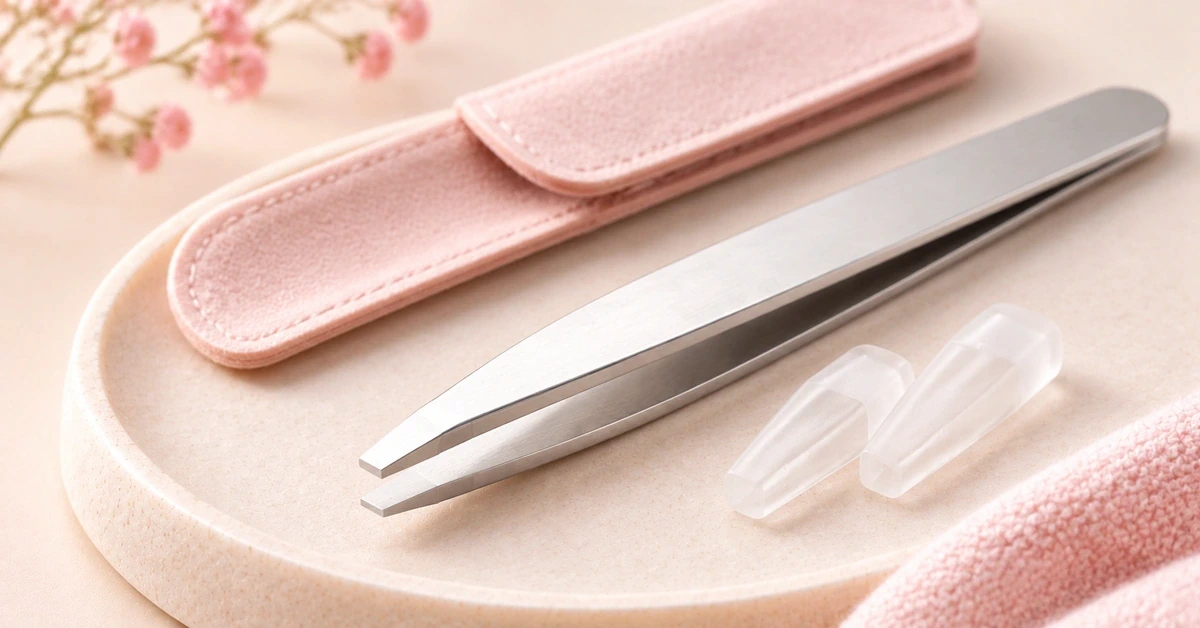
Packaging is part of the alignment risk because an unprotected tip can be bent, marked or pressed against another object after approval. The retailer should review the product and package together, especially for individual retail cards, sleeves, boxes, pouches or fitted inserts. The correct format depends on the selected tool, retail channel and project requirements; it should not be assumed from a catalogue image.
Individual retention
The package should hold the tweezer without pressing directly on the working tips. Check whether the tool can move inside the pack, whether the tip can touch a hard edge, and whether a protective cover or guard is required for the selected design. If the product is displayed on a card, confirm that the attachment method does not twist the arms or create pressure at the nose.
Retail information
A retailer should approve the product name, model reference, barcode area, country or market information and any use or care copy that will appear on the packaging. The exact information required varies by market and product. Do not publish a material, performance or safety statement until it has been confirmed for the selected model and destination.
Carton and replenishment checks
At outer-carton level, check that the quantity, SKU identification and packaging version match the order documents. A retail buyer may also request a shipment review that includes random package opening and tip inspection. The exact sampling method, quantity and acceptance criteria should be agreed for the order; the guide does not set a universal inspection level.
OLIMOR’s public manufacturing route connects product preparation, quality discussion, packaging and logistics. That public structure supports a useful buyer question: “How will the approved alignment and protective presentation be carried into the packed product?” It does not, by itself, confirm a specific carton configuration, transport test or delivery promise.
When should a retailer request a revised sample?
Request a revised sample when the observed condition conflicts with the agreed product direction or creates an unresolved retail risk. A revision request is stronger when it identifies the sample, the view used, the repeat observation and the requested decision.
- The two tips do not meet in the intended working area under normal closure.
- The contact shifts materially from one controlled cycle to the next.
- The tip has a visible burr, nick, rough transition or packing mark.
- The sample’s tip geometry differs from the approved reference or artwork.
- The package allows movement or pressure that could change the tip condition.
- The supplier quotation, sample label and retailer’s internal SKU record do not identify the same version.
A revision request should not prescribe a manufacturing cause unless the evidence supports it. Instead of demanding a particular forming adjustment, ask the supplier to review the sample against the agreed tip direction and return an updated sample or explanation. This leaves room for the supplier’s engineering and process review while keeping the buyer’s acceptance need clear.
What should be included in a retailer’s tweezer RFQ?
A supplier can compare alignment more accurately when the RFQ describes the product and the review method together. Include the information already known, and label open fields as “to be confirmed” rather than filling them with assumptions.
| RFQ field | Useful information for the supplier | What to confirm later |
|---|---|---|
| Product direction | Tip type, intended use, reference image or existing model. | Final model reference and any agreed changes. |
| Working review | How the retailer will judge contact, offset, edge finish and closing action. | Sample acceptance wording and any model-specific criteria. |
| Material and finish | Required appearance, colour, surface direction and any known material preference. | Exact composition, treatment, documentation and care guidance. |
| Branding | Logo file, preferred location, colour and retail presentation. | Marking method, artwork approval and durability expectations. |
| Packaging | Individual pack concept, tip protection, display channel and carton needs. | Final dimensions, retention, labels, quantities and logistics details. |
| Commercial plan | Target market, approximate quantity or range size and sample timing. | MOQ, price, lead time, mixed-SKU terms and delivery plan for the selected order. |
The final MOQ, lead time, material specification, packaging details and any documentation should be confirmed according to the product model and order requirements. This boundary is important for retailers comparing quotations: two suppliers may use the same words for “tweezer” while offering different product references, finishes, packaging scopes or sample conditions.
Prepare a More Complete Procurement Brief
How can a retailer connect alignment approval with branding and repeat orders?
Treat the approved sample as a controlled reference, not merely a photograph. Record the product reference, tip shape, finish, logo position, packaging version and the alignment observations that were accepted. When a new order is discussed, compare the requested version with that record and identify any proposed change before production planning.
Branding can introduce a second source of variation. A logo location that looks suitable on the handle should not interfere with the working area, tip protection or the way the tool sits in its package. OLIMOR’s public logo-finishing route describes the need to consider marking method, placement and compatibility with the product surface. Exact marking results and durability still need to be reviewed for the selected model and finish.
For replenishment, a retailer should ask whether the same reference, surface direction, packaging artwork and tip-protection approach will be used. If a supplier proposes a substitute model or component, request a new sample review rather than assuming that the change is invisible to the user. This is especially important when the product is sold through a listing whose images and description establish a specific tip appearance.
Frequently asked questions about eyebrow tweezer tip alignment
Is perfect visual alignment required for every eyebrow tweezer?
There is no single visual rule that fits every tip geometry. A retailer should define the intended working area and compare each model against an approved reference. Any tolerance or acceptance limit should be agreed for the selected product and order rather than assumed from a general guide.
Can a catalogue photograph prove tip alignment?
No. A photograph can help identify the general tip direction, but it cannot reliably establish closing action, repeatability, edge condition or the exact relationship between the two tips. Use a physical sample and keep the review conditions consistent.
Should retailers measure the gap with a gauge?
A gauge may be appropriate when the project has an agreed measurement method, but a retailer should not invent a universal gap value for every tweezer style. Start with the product’s intended geometry and ask the supplier to confirm the applicable specification or review method.
Does good alignment guarantee good eyebrow tweezing performance?
No. Alignment is one important working detail. Tip geometry, edge finish, closing action, grip, surface and the intended use also affect the buyer’s evaluation. A retailer should avoid turning one visual observation into a broad performance or safety claim.
What should I do if only one sample is misaligned?
Label the sample, record the observation and ask whether a replacement sample can be reviewed. One sample does not establish a batch trend, but it is still a reason to clarify the intended reference and the check that will apply to the order.
Does packaging really affect tip alignment?
Packaging can expose the tip to movement, pressure or contact with hard surfaces. It may not change the underlying product design, but it can change the condition that reaches the retailer or consumer. Review retention and protection with the product sample.
Can OLIMOR confirm a universal alignment tolerance?
The public OLIMOR pages describe working alignment as a quality discussion point, but they do not publish a universal eyebrow tweezer tolerance. The applicable material, finish, sample criteria, packaging and order requirements should be confirmed for the selected model through the project discussion.
How do I request an alignment-focused sample?
Share the product family, intended use, tip direction, target market, reference images or samples, approximate quantity, branding and packaging needs. Ask for the sample review to include alignment, operation, appearance, marking and package presentation. OLIMOR’s public sampling route is the relevant starting point for that discussion.
Which internal pages should a buyer review before contacting a supplier?
Start with the tweezers product family, then review the public OEM / ODM route, quality discussion and packaging/logistics information. Use those pages to prepare questions; do not treat them as a substitute for model-specific confirmation.
Conclusion
Comparing eyebrow tweezer tip alignment is a practical retail control, not a cosmetic detail to leave until the end of a purchase. Check the contact point, visible gap, lateral offset, vertical step, meeting line and repeatability. Keep tip geometry, edge finish and closing action as separate observations. Record the sample and review conditions, then connect the result to branding, protective packaging, quality checks and the repeat-order reference.
The strongest buying decision is the one that turns “this tip looks right” into an approved product direction that another person can inspect later. OLIMOR’s public product, OEM/ODM, sampling and quality pages provide starting points for discussing that route. Exact specifications, tolerances, materials, packaging, MOQ, lead time and documentation remain project-specific and should be confirmed before a retailer approves production.