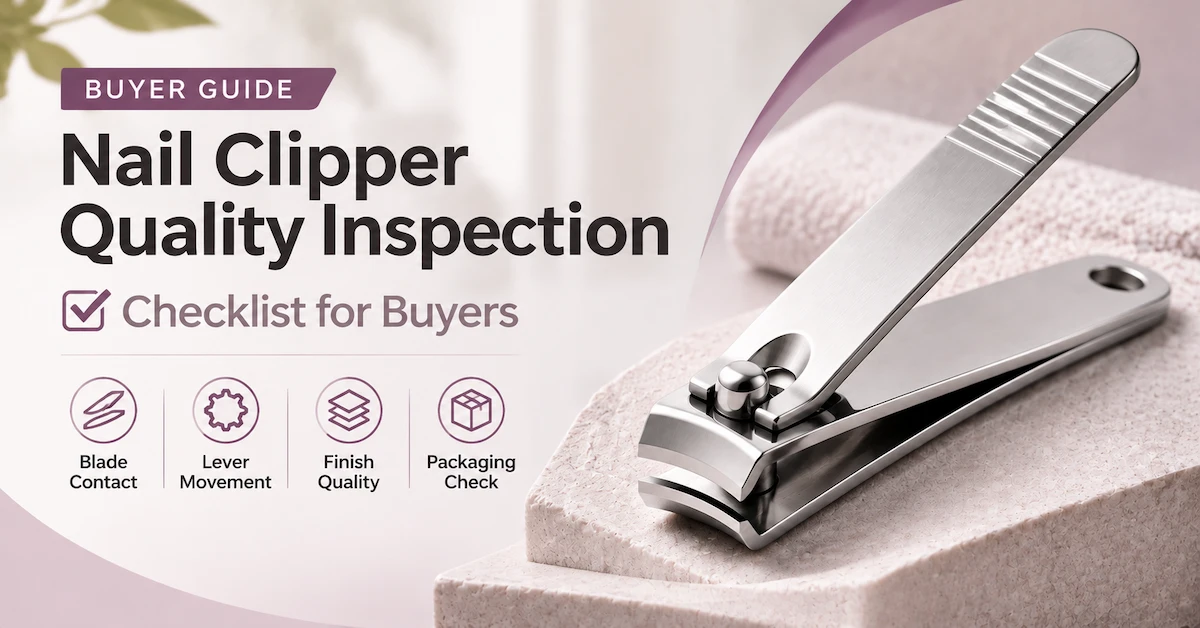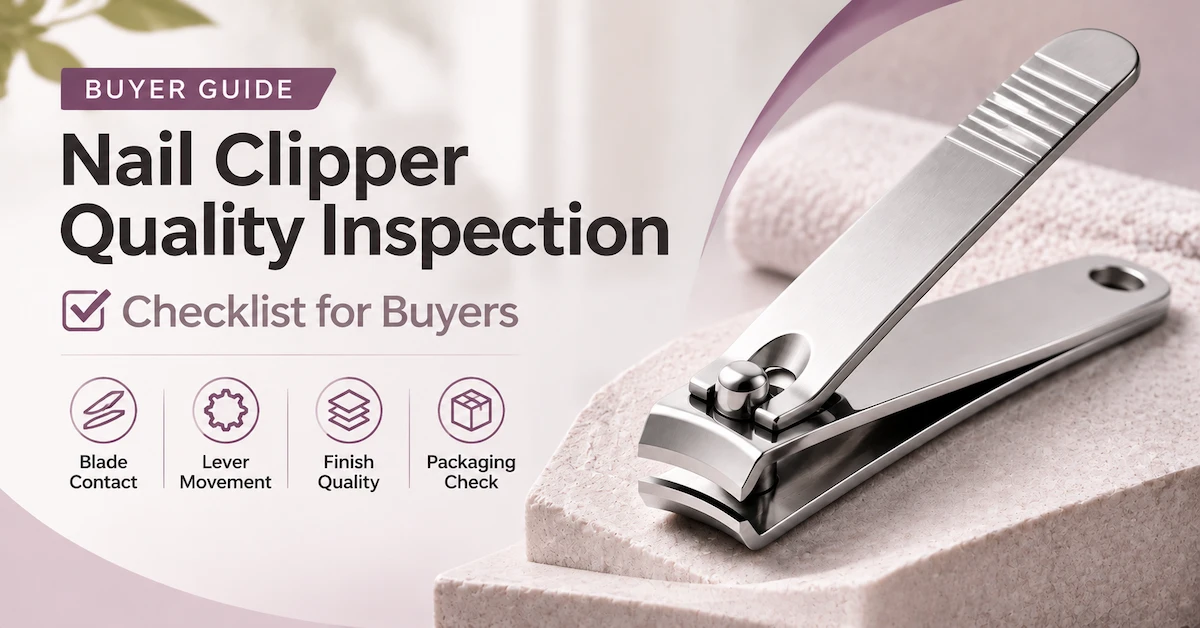
For a wholesaler or distributor, choosing a nail clipper wholesale supplier is less about finding the lowest number on a spreadsheet and more about making every quotation comparable. A nail clipper order can include several models, finishes, logo requirements, retail packs, inner cartons and delivery assumptions. If those variables are not stated, two apparently similar offers may describe different products and different levels of service.
This guide addresses a narrower procurement problem than a general nail clipper buying guide: how to prepare a distributor RFQ, compare supplier replies on an equivalent basis, approve samples, and create a reference that can control repeat orders. It is written for importers, wholesalers, e-commerce distributors and retail supply teams that need a practical purchasing record before committing to a bulk order.
Discuss a Distributor Nail Clipper Project
What should a distributor expect from a nail clipper wholesale supplier?
Short answer: the supplier should be able to identify the exact clipper reference, separate confirmed specifications from open variables, explain how the quotation is constructed, support a sample decision, and show how the approved version will be carried into packaging and repeat orders. The buyer does not need a long catalogue response; the buyer needs a controlled answer to the actual order brief.
A useful supplier response should make six items visible:
- The model, size, working-edge direction and product reference being quoted.
- The material, finish, logo and component fields that are included or still open.
- The basis of MOQ, especially when a distributor wants several models or finishes.
- The sample, artwork and packaging stages needed before production release.
- The quality points that will be reviewed against the approved reference.
- The assumptions behind packing, carton information and delivery planning.
OLIMOR's public nail clipper product page is a starting point for identifying the product family. The final model, specifications, packaging and commercial terms still need to be confirmed for the buyer's order. That distinction is important when a distributor is comparing multiple suppliers.
Why a low unit price is not enough for a wholesale comparison
A unit price is only meaningful when the scope behind it is the same. One quotation may describe a loose tool in bulk packing, while another may include individual retail packaging, logo work and a different finish. A third may use a different model that looks similar in a product photo. Comparing those numbers as if they were equivalent creates a false saving at the start of the project.
The most common comparison gaps are not dramatic. They are small omissions that become expensive later: the quotation does not state whether the price is per model or per mixed order; the “custom package” is not defined; a logo setup charge is separated from the unit price; carton data is unavailable when freight is booked; or a sample is approved without recording which finish and packaging version were reviewed.
| Quotation line | Why it changes the comparison | What the distributor should request |
|---|---|---|
| Product reference | Similar names can hide differences in size, blade geometry, lever construction or finish. | A named reference, image or sample identifier for every line. |
| Quantity basis | The same total order can produce different minimums by model, colour, logo or pack. | MOQ per model, finish, logo and packaging version. |
| Packaging scope | Retail cards, boxes, sleeves, inserts and carton work may be excluded. | A unit-pack description and a pack sample before release. |
| Sample stage | A stock sample may not represent the proposed logo, finish or retail pack. | Which version is being approved and which changes require another sample. |
| Delivery assumption | Production time and transport time are separate planning variables. | A stage-based schedule and destination-specific delivery discussion. |
A good nail clipper wholesale supplier should be comfortable answering these questions because they protect both sides from an incomplete brief. The buyer gets a fairer comparison, while the supplier has a clearer basis for preparing samples and a production plan.
Which fields belong in a distributor RFQ?
Start with a field-based RFQ rather than a message that only asks for “best price.” The goal is to tell the supplier what is fixed, what can be recommended and what must be checked by sample. The more clearly the fields are separated, the less likely the quotation is to be revised several times for avoidable reasons.
1. Product and assortment fields
List the nail clipper family, each intended model or size, the estimated quantity by item and the sales channel. If the order is part of a manicure or grooming assortment, identify the other tools that may be packed or sold alongside it. A distributor should also state whether the first order is a market test, a core replenishment item or a seasonal programme; this changes how much effort should go into pack development and reference control.
2. Working-end and handling fields
Ask the supplier to identify the cutting-edge direction, jaw relationship, lever action and any visible gap or misalignment criteria that matter to your channel. If you have an existing product, provide a reference sample or clear images and describe what you want to preserve or change. Do not turn a catalogue photograph into a specification; the sample review should resolve the points that images cannot show reliably.
3. Material and finish fields
State the required body material or ask the supplier to propose options for confirmation. Record the visible finish, colour direction, gloss level or other appearance requirement separately from the base material. A polished appearance does not prove a particular alloy, and a colour does not prove a coating system. Any material grade, treatment, compliance document or care instruction that matters to your market should be requested as a project-specific confirmation.
4. Branding and packaging fields
Describe logo location, artwork status, preferred marking direction and retail presentation. Identify whether each unit needs a card, box, sleeve, pouch, insert or another format. Include barcode space, language requirements, product code, country-of-origin information and carton labels where applicable to your market. OLIMOR's logo-finishing route and custom packaging route are relevant places to continue this discussion; the actual method and package remain dependent on the selected product and artwork.
5. Commercial and delivery fields
Provide an estimated order quantity, destination, target launch window and preferred shipment basis. Ask the supplier to distinguish sample preparation, artwork approval, production, packing and transport. The final MOQ, price, lead time, material specification, packaging configuration and capacity should be confirmed for the actual model and order requirements, not copied from a generic product statement.
How should buyers normalize quotations from different suppliers?
Use one comparison sheet and make every supplier answer the same fields. The point is not to create a complicated scoring system; it is to prevent an attractive price from hiding missing scope. A simple four-column record is enough: requirement, supplier answer, evidence or sample reference, and open action.
Before ranking price, normalize these five layers:
- Product layer: confirm the same model, dimensions, working-end direction and component scope.
- Customization layer: separate stock appearance from the proposed logo, colour or finish.
- Packaging layer: compare the same unit pack, insert, label and carton requirement.
- Quality layer: record which working, appearance, marking and packing checks are discussed.
- Delivery layer: compare the same destination, quantity basis and approval milestones.
Only after these layers are aligned should the distributor calculate a landed-cost comparison. Even then, do not imply that a lower factory quote is a lower total cost until packaging, handling, freight and any setup or artwork charges are understood. If a field is open, label it open rather than filling it with an assumption.
Ask for evidence in proportion to the decision. A product image can support an early shortlist, but a production decision needs a named reference, an approved sample and a written record of the package scope. If a supplier cannot answer a field immediately, that is not automatically a reason to reject the offer; it is a reason to mark the field as open, assign the next action and avoid treating the quote as final. This keeps the comparison honest while giving the supplier a clear opportunity to complete the technical and commercial response.
Distributor comparison rule
Do not mark a supplier as “cheaper” until the product reference, quantity basis, branding, unit packaging, carton scope, sample stage and delivery assumptions are written on the same line of the comparison sheet.
How do MOQ and mixed-SKU orders affect supplier selection?
For distributors, MOQ is often a portfolio question rather than a single-product question. A supplier may discuss minimum quantity by model, finish, logo, packaging version or combined order. Those bases are not interchangeable. A planned mix of two sizes and three finishes can be commercially attractive, but the order should not be treated as one total quantity until the supplier confirms how the minimum is calculated.
Ask the supplier to answer the following in writing:
- Does the minimum apply to each model, each finish, each logo or the total programme?
- Can several nail clipper references share one packaging concept, or does each need separate artwork?
- Does a mixed order change the sampling or production sequence?
- Which quantity is used for the quotation: units per SKU, total units or a staged release?
- Are replacement parts, spare packaging or sample units included or quoted separately?
The right answer depends on the selected product and the supplier's project process. Avoid publishing a general MOQ in a distributor listing unless it has been confirmed for the exact reference and pack. When planning a range, a clear SKU table is more useful than a single total number because it shows which lines need separate approval.
For larger assortments, discuss whether the supplier can coordinate product, logo and packaging decisions in one project route. OLIMOR's OEM/ODM service page provides the appropriate commercial starting point, while final quantities and terms remain project-specific.
What should a distributor inspect in a nail clipper sample?
A sample should answer product questions that a quotation or photograph cannot. It should also represent the version you intend to buy. If the sample is a stock item but the bulk order will use a new finish, logo and retail pack, record those differences clearly and plan a review of the customized version.
Working-end review
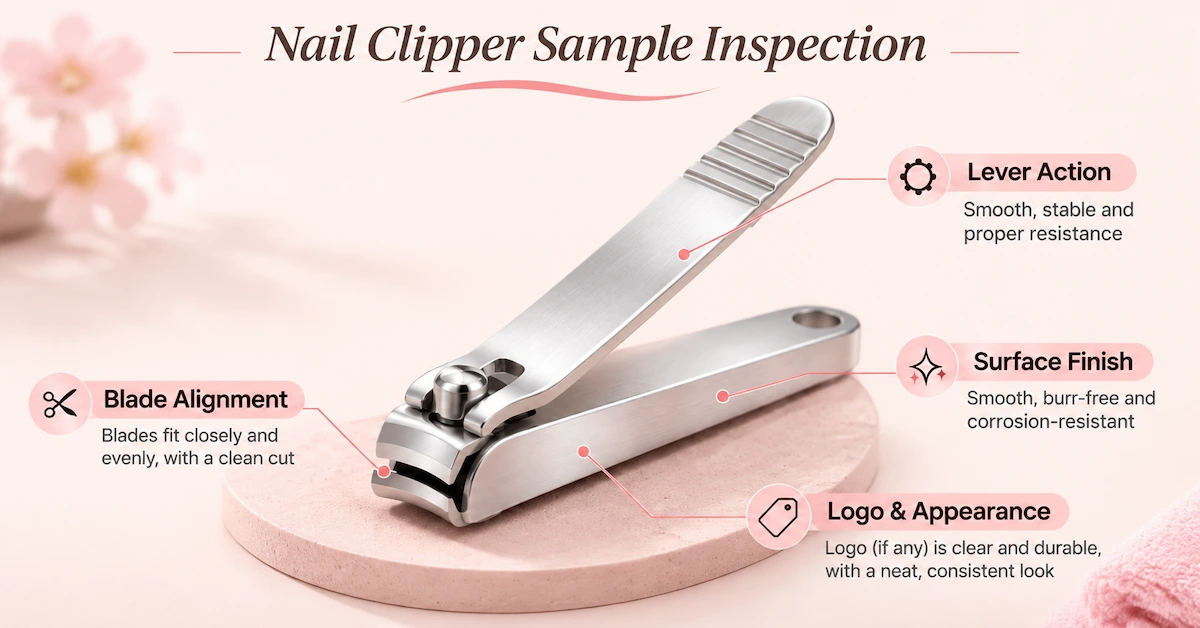
Inspect the relationship of the cutting edges, the closing action, the visible gap when closed, the lever movement and any rough or obstructed area. The purpose is not to invent a universal tolerance; it is to describe what the approved product must do for your channel. If multiple reviewers test the sample, use the same basic checklist so comments such as “edge does not meet evenly” can be compared across samples.
Body, joint and handling review
Check the body for sharp unfinished areas, visible damage, inconsistent surface appearance and a comfortable grip for the intended user. Observe the joint and lever for movement that feels loose, obstructed or inconsistent. These are observations for supplier discussion, not proof of a specific material grade or service life.
Brand and finish review
Compare the logo position, clarity, size and contrast with the approved artwork. Review the finish under the same lighting or visual reference used by your brand team. Keep a marked photograph or physical sample identifier; “approved black” or “approved logo” is not precise enough when several versions may circulate.
Sample decision record
Use one of four decisions: approved, revise, hold or reject. “Hold” is useful when the product is acceptable but a material, label, packaging or commercial field is still open. The approval record should name the model, finish, logo artwork, package version, reviewer and date. OLIMOR's sampling route can be used to organize the next project discussion.
How should packaging and cartons be included in the wholesale plan?
For a wholesaler, the packed unit is the sellable unit. Reviewing the loose nail clipper alone can miss damage, movement, display and warehouse problems. Ask to review the product inside the proposed card, box, sleeve or set configuration, then review the inner pack and outer carton as separate logistics layers.
| Packaging layer | Distributor check | Record before release |
|---|---|---|
| Retail unit | Does the clipper stay in place, remain protected and present the approved finish? | Pack format, artwork version, barcode area and product code. |
| Inner pack | Are units separated, counted correctly and protected from rubbing or movement? | Units per inner, orientation and identification. |
| Outer carton | Does the carton information support receiving, storage and shipment planning? | Carton quantity, dimensions, weight and labels when confirmed. |
| Change record | Can the supplier identify a changed insert, label, pack or carton configuration? | Revision number, approval date and change action. |
Carton dimensions, weights, quantities and shipping configuration should be confirmed for the actual order and destination. OLIMOR's packaging and logistics page is a relevant route for discussing this information. Do not treat a generic carton statement as a confirmed freight plan.
Which supplier quality questions matter before production release?
Quality language becomes useful when it is connected to the selected model and the buyer's acceptance record. Ask the supplier to discuss how the working edge, lever, appearance, logo, packaging and quantity will be checked. The exact inspection method and acceptance criteria should be agreed for the project rather than assumed from a general claim.
- Function: how the cutting action, edge relationship and lever movement are reviewed.
- Appearance: how finish, visible marks, rough areas and colour references are judged.
- Branding: how logo position, clarity and artwork version are controlled.
- Packaging: how product retention, protection, labels and carton identification are checked.
- Traceability: how the approved sample and updated specification are linked to the order.
OLIMOR's quality manufacturing page can help a buyer frame these questions around working details, appearance and product-to-pack review. It does not replace a model-specific inspection report. Ask for the evidence and record that applies to your order.
How can a distributor protect repeat orders from silent changes?
The approved sample should be treated as a controlled reference, not as a memory of what was discussed. Keep the sample identifier, product code, measurements or agreed visual references, finish, logo artwork, packaging files, carton information and quality notes in one purchasing record.
For each repeat order, ask the supplier to confirm whether any of the following has changed:
- Product model, component source or working-end construction.
- Surface treatment, colour, gloss or logo marking method.
- Retail card, box, insert, label, barcode or carton arrangement.
- Order quantity, mixed-SKU plan, destination or delivery schedule.
A proposed change does not automatically mean the order must stop. It means the buyer should decide whether the change is acceptable, whether a new sample is needed and whether the retail listing or packaging artwork must be updated. This simple change-control habit is especially valuable for distributors that replenish the same item across multiple markets.
Copy-ready RFQ checklist for a nail clipper wholesale supplier
Use this checklist in an email, procurement form or supplier comparison sheet. Replace the bracketed fields and label unknown items “to be confirmed.” Asking for the same response structure from every supplier improves the quality of the comparison.
Distributor RFQ fields
- Product: [model or reference], [size], [quantity by SKU], [intended sales channel].
- Working details: [edge direction], [lever preference], [reference sample or image], [handling concern].
- Materials and finish: [required or proposed material], [colour], [surface finish], [care or market document needs].
- Branding: [logo file status], [location], [marking direction], [artwork approval contact].
- Packaging: [retail format], [insert or protection], [barcode and language], [inner and carton requirements].
- Commercial: [estimated quantity], [MOQ basis requested], [sample request], [destination], [target timing].
- Quality: [sample checkpoints], [appearance reference], [pack inspection], [change-control requirement].
- Response format: please mark each field as [confirmed], [recommended], [sample-dependent] or [to be confirmed].
The procurement team can also use OLIMOR's procurement toolkit to organize the brief before requesting a project-specific response. Send the selected product direction, estimated quantity, target market and packaging needs together rather than asking for price in isolation.
Nail clipper wholesale supplier FAQ
What should I ask a nail clipper wholesale supplier first?
Ask for the exact product reference, working-end direction, material and finish fields, MOQ basis, sample route, packaging scope, quality checkpoints and delivery assumptions. Request that unknown items are marked as to be confirmed.
How do I compare two nail clipper quotations fairly?
Put the same product reference, quantity basis, finish, logo, retail pack, quality scope and delivery assumptions side by side. Compare the price only after the included scope is equivalent.
Can I combine several nail clipper models in one wholesale order?
Possibly, but do not assume that a combined order removes individual minimums. Ask whether MOQ applies by model, finish, logo, packaging version or total programme, and record the answer for each SKU.
What should a sample approval record include?
Include the model reference, working observations, finish, logo artwork, packaging version, reviewer, date and decision. State whether the result is approved, revise, hold or reject, and note which changes require another sample.
Does a product photograph confirm the material?
No. Appearance alone does not establish an alloy, coating or treatment. Ask the supplier to confirm the material and relevant documentation for the selected model before publishing a material claim.
Should packaging be approved with the nail clipper?
Yes, when the clipper will be sold as a retail or e-commerce unit. Check retention, protection, display orientation, printed information, barcode area and carton identification with the actual product inside.
Are MOQ and lead time fixed for every buyer?
They should not be assumed to be universal. The final MOQ and lead time depend on the selected model, quantity, finish, branding, packaging, approvals and delivery plan. Confirm them for the actual project.
What information should I send for a distributor quotation?
Send the product reference or direction, quantities by SKU, target market, finish, logo, packaging, sample needs, destination and timing. A reference product or image is helpful, but unresolved fields should still be confirmed by sample or written specification.
Conclusion
The best nail clipper wholesale supplier conversation starts with a comparable brief. Identify the model and working details, separate material and finish requirements, define the MOQ basis for each SKU, review the retail pack with the actual tool, and record the sample that controls production. Then carry the same reference into quality checks, carton planning and repeat-order change control.
For wholesalers and distributors, this process reduces quotation ambiguity and makes a supplier discussion more commercially useful. OLIMOR's product, OEM/ODM, sampling, quality, packaging and procurement resources can support the next project conversation, while the exact material, MOQ, price, capacity, lead time and final packaging remain subject to confirmation for the selected order.