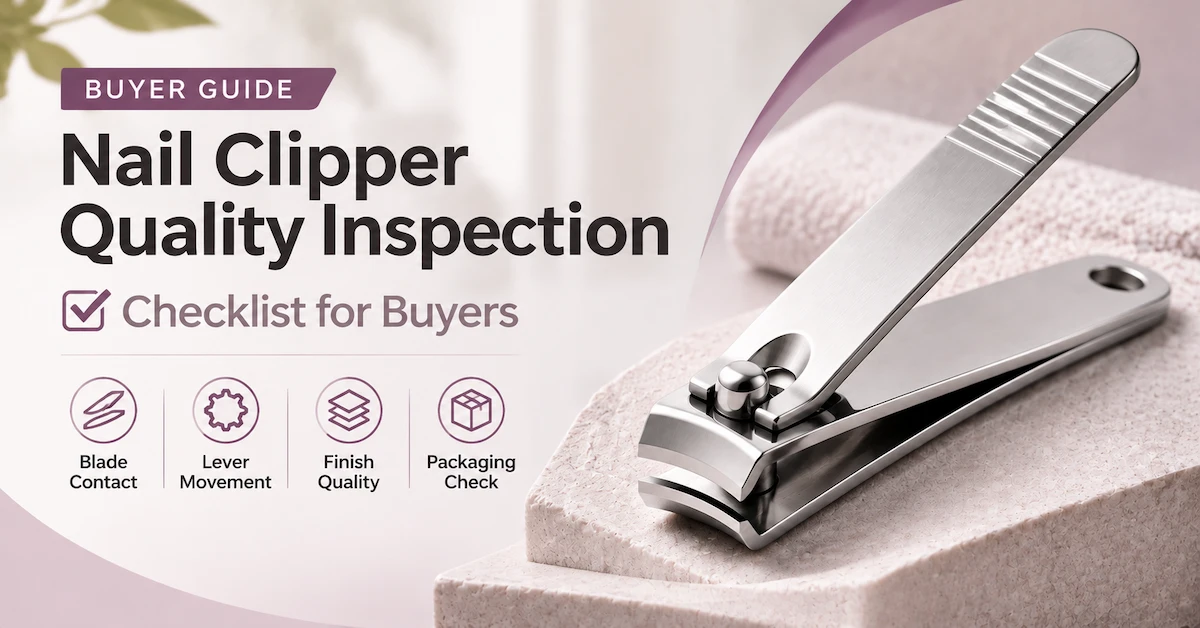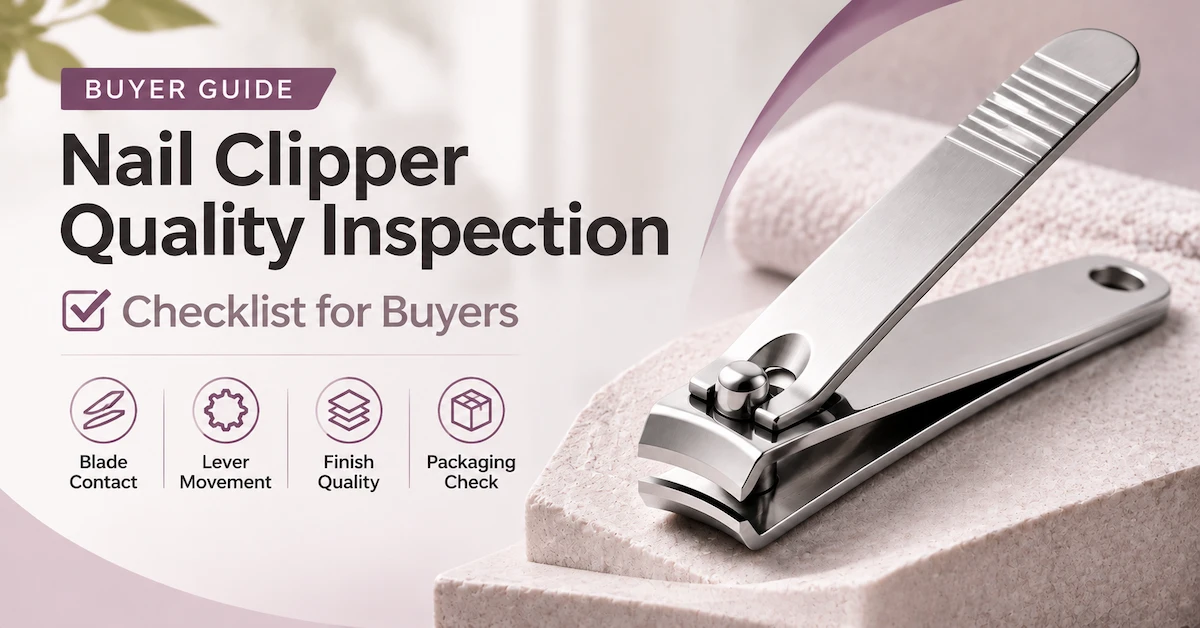
When buyers compare nail clipper features, the important question is not which product has the longest feature list. It is whether the working parts, handling details, finish, packaging and evidence fit the customer and the selling channel. A clipper that looks similar to another model may have a different blade relationship, lever feel, body profile or package risk, so a catalogue image and unit price are not enough for a reliable product decision.
This guide gives importers, retailers, private-label teams and professional distributors a practical way to compare nail clippers before approving a sample or quotation. It separates visible features from claims requiring confirmation and turns the review into a buyer-side decision record. Material, finish, dimensions, MOQ, lead time, documentation and packaging remain project-specific.
Review Nail Clipper Product Options
Which nail clipper features deserve comparison first?
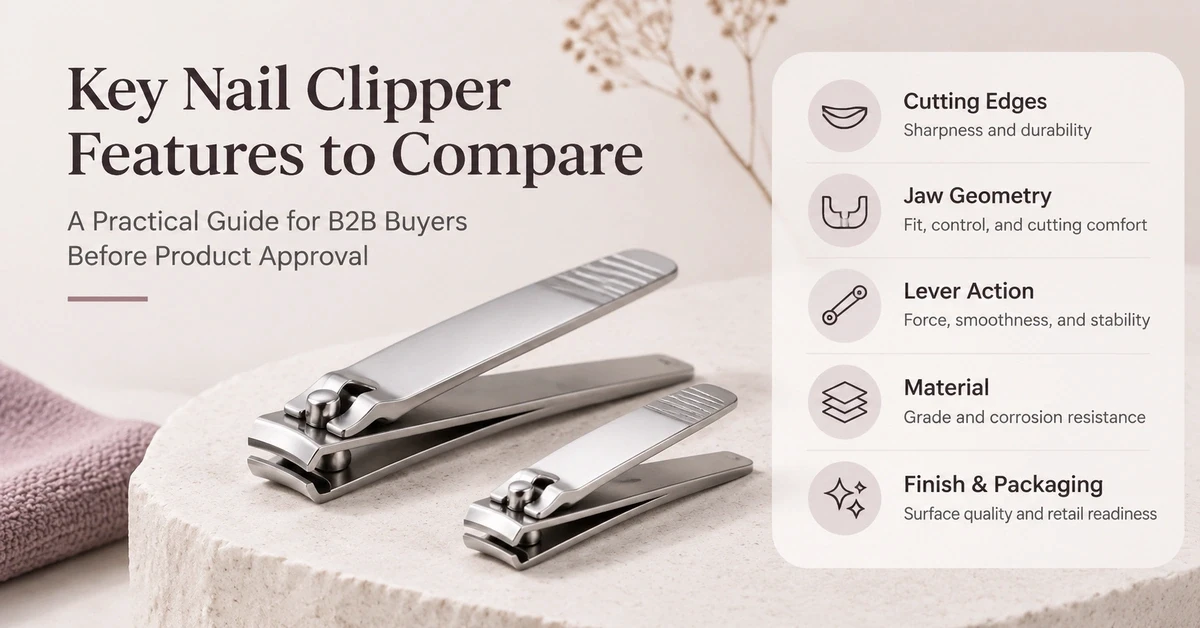
Direct answer: compare the cutting edges, jaw geometry, lever action, pivot or connecting parts, body profile, grip, surface finish, size, included features and product-to-package fit. These features affect whether the clipper is easy to position, comfortable to operate, visually consistent and practical to sell or replenish. Review them in that order because a decorative feature cannot compensate for a working edge that does not meet correctly.
The buyer should also separate three kinds of information:
- Observed feature: what can be seen or felt on the sample, such as a broad lever, a curved body or a visible file.
- Functional result: what the feature is intended to support, such as controlled closing or easier positioning.
- Claim requiring evidence: a material grade, durability, corrosion resistance, safety statement or service-life promise that should be confirmed for the selected model.
A useful feature comparison therefore asks: What is the feature? What does it change for the user? How will the buyer inspect it? What evidence is needed before it appears in a product listing? This structure keeps the review useful without turning a visual impression into an unsupported technical claim. Before comparing suppliers, assign each feature a priority: required for release, preferred if the commercial case supports it, or optional when it is only a range differentiator. That single decision prevents a low-value accessory from receiving the same approval attention as the cutting edge.
For each received sample, keep the model code and revision beside the tool, photograph the closed and open positions, record the package version, and write one observation per feature. Then compare the observation with the brief: pass the feature, hold it for clarification, request supporting evidence, or request a revised sample. The method is deliberately buyer-controlled because the acceptable result depends on the intended channel and the claims the brand plans to publish.
How do cutting edges and jaw geometry change the buying decision?
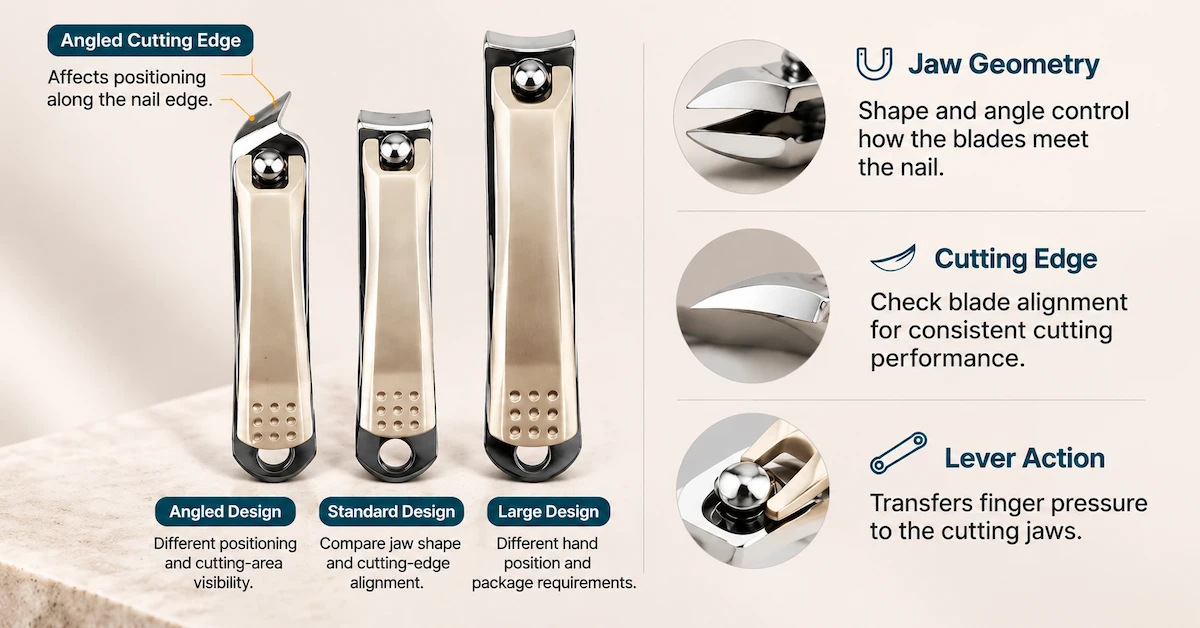
The cutting area is the primary feature because it determines whether the tool can engage the nail edge in a controlled way. Buyers should examine the relationship between the two edges, the opening shape, the visible gap when closed and the way the jaws return to position after operation.
Blade meeting and alignment
Close the clipper slowly and observe whether the edges meet evenly across the intended cutting area. Look for an offset, a persistent gap, a section that contacts first or a jaw that shifts sideways. These observations should be recorded against the approved sample, not against an invented universal tolerance. If a buyer needs a measurable alignment requirement, it should be written into the project brief and confirmed with the supplier's inspection method.
Opening shape and visibility
A wider or narrower opening changes how the user positions the tool along the nail edge. A low-profile head may make the cutting area easier to see, while a larger head may be intended for a different product direction. Do not assume that one jaw shape is better for every customer. Match the head to the intended use, then confirm that the package and product copy describe the selected configuration accurately.
Cutting observation
If the sample is approved for functional review, use a consistent buyer-side method: use the same material and size of test piece for each comparison, inspect the closed tool before and after the cut, and have the same reviewer describe the result as clean engagement, crushing, tearing, incomplete cutting, excessive pressure or uneven movement. If more than one sample is available, label each one before testing so the notes can be traced to a model and revision. A short observation is more useful than writing "sharp quality" without a test condition. Do not publish a claim about cutting performance based on one casual try if the project needs a repeatable test or a defined market requirement.
The cutting edge should be reviewed together with the body and lever. A well-shaped edge can still be difficult to control if the handle flexes, the pivot shifts or the lever requires an unsuitable amount of pressure. This is why feature comparison should follow the force path through the complete tool rather than isolate the blade in a product photograph.
What should buyers compare about the lever, pivot and connecting parts?
The lever converts hand pressure into movement at the cutting head, so its shape and connection influence control, perceived quality and storage. Compare the lever length, contact area, surface, movement range and relationship to the body rather than calling a lever "ergonomic" from its outline alone.
Operate the lever slowly and repeatedly. Note whether it feels loose, gritty, stiff, obstructed or inconsistent. Check whether the lever remains in its intended position during use and whether the clipper can be returned to a compact closed position for storage. A pivot or rivet should be visually secure, with no obvious wobble or sharp unfinished area around the connection. These are sample observations; they do not establish a production tolerance or a guaranteed service life.
For a retail buyer, lever geometry also affects the product photograph and package depth. A raised lever can increase the required insert clearance; a broad lever may need more card space; a low-profile design may fit a compact kit but provide a different hand feel. Include the lever position in the packaging sample review instead of approving the tool and package separately.
If the product includes a file, catcher, cover, hanging hole or other added feature, inspect its connection and access. Ask whether it is included in every quoted version, whether it changes the package layout and whether it requires separate artwork or assembly control. A feature that appears in a supplier photograph but is absent from the quotation is an open commercial field, not an included specification.
How should body shape, size and grip be compared?
Body shape is both a handling feature and a range-positioning decision. Buyers should compare the overall length, width, thickness, head profile, lever height and grip contact area against the intended customer and package format. Exact measurements should be taken from the selected model or supplier specification, not estimated from a screen image.
Size and intended user
A compact clipper may suit travel kits, small-format retail or a coordinated manicure set. A larger body may provide a different hand position or target a different use context. Neither description is a universal performance conclusion. State which user and channel the SKU is designed for, then make sure the product page, package and sales team use the same positioning.
Grip and contact edges
Run a finger along the intended contact areas and check for rough edges, sharp corners, slippery surfaces or pressure points. A polished or coated finish may change the feel, but surface appearance alone does not prove grip performance. If the buyer requires a textured, matte or soft-touch area, specify where it must appear and approve it on the physical sample.
Storage and kit compatibility
Check whether the lever folds or rests in a consistent position and whether the full outline fits the proposed pouch, tray or carton. A body feature that improves handling may increase the package footprint. Record the external dimensions and the clearance needed around the working head before the package is finalized.
The strongest comparison links body shape to a buyer action: measure the sample, place it in the proposed package, ask several reviewers to operate it, and record whether the same feature supports the intended user. Avoid ranking "ergonomics" as a vague score with no observation behind it.
Which material and finish questions should buyers ask?
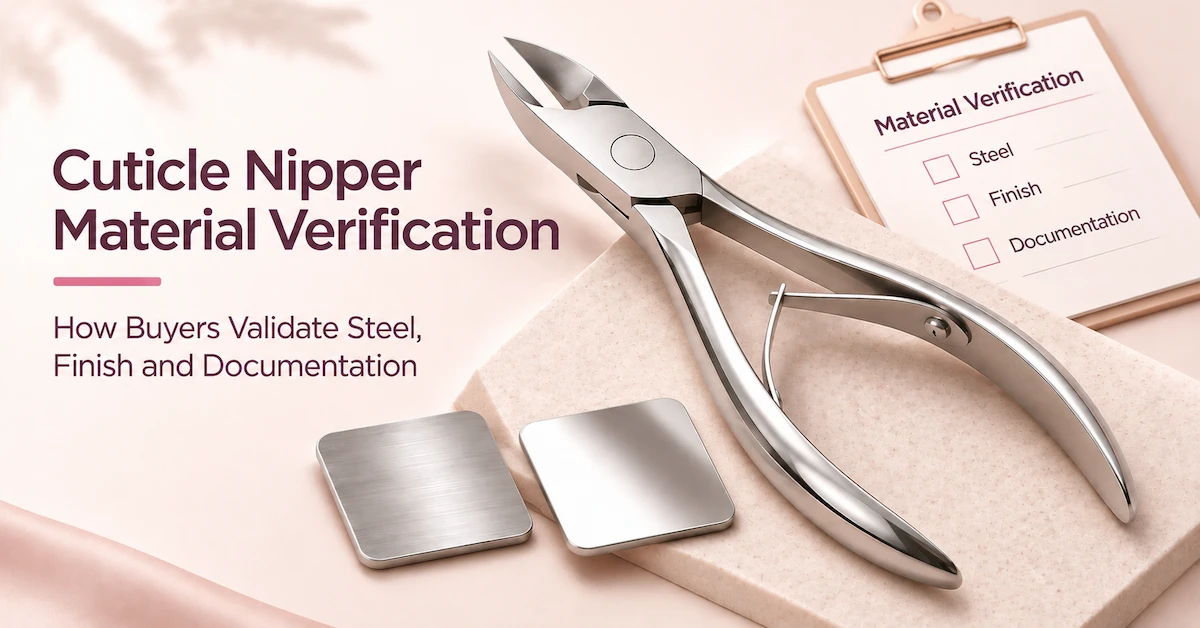
Material and finish are related but not interchangeable. Material describes what a component is specified as; finish describes the surface appearance or treatment visible on the sample. A silver colour does not establish stainless steel, and a dark surface does not establish a particular coating system or corrosion result.
Request the component-level material statement for the body, lever, pivot or other relevant parts, then ask which finish or surface treatment applies to each visible area. If a document or test record is supplied, check its model, revision, component, issuer, date, method and permitted claim wording. Missing fields should be marked as hold or request evidence.
OLIMOR public fact: the site's materials and finishes route treats material, surface, colour and product-use considerations as connected project questions. Project-specific confirmation: the exact nail clipper material, treatment, documentation and claim scope must be confirmed for the selected model and order.
On the sample, inspect the finish at edges, corners, the lever contact area, the underside, the pivot and the logo zone. Look for scratches, colour variation, flaking, roughness, stains or a surface that differs between components. Compare samples under the same visual conditions and keep a reference image or physical sample ID. This gives the supplier a clear correction request without pretending that appearance alone proves a technical property.
How do added features affect assortment and packaging?
Added features can help a product occupy a clear role in an assortment, but each feature creates another point to quote, inspect, protect and explain. Compare the value of the feature with the operational cost it adds to the SKU.
A feature is commercially useful when the buying team can explain why it exists and what happens if it changes. Use the following scorecard as a working brief, not a universal factory standard. It makes the comparison auditable without inventing an unagreed tolerance.
| Feature area | Set the priority | Buyer-side check | Evidence and release action |
|---|---|---|---|
| Cutting edges and jaw | Required for every SKU. | Close slowly, observe contact across the intended area, then record gap, offset, first contact and side movement. | If the observation differs from the brief, hold or re-sample. Any measurable criterion must be agreed with the supplier. |
| Lever, pivot and return action | Required when control or repeat use is central to the SKU. | Open and close repeatedly using the same reviewer notes; check looseness, scraping, obstruction and storage position. | Record the approved feel and request clarification before using "ergonomic" or service-life language. |
| Integrated file, catcher or cover | Preferred or optional unless the range promise depends on it. | Check attachment, access, retention, cleaning information and whether it appears in every quoted SKU. | Confirm inclusion in the quotation and package; otherwise keep it out of the product claim. |
| Finish and marking | Required for visual consistency; technical claims need evidence. | Compare edges, underside, pivot, contact areas and logo zone under the same viewing conditions. | Use the approved sample as the reference; request material or finish documentation when copy requires it. |
| Product-to-package fit | Required for retail, e-commerce and kits. | Place the approved tool in the actual insert, card or carton; check head protection, rubbing, clearance and barcode visibility. | Approve the tool and package as one revision, not as separate samples. |
The right feature depends on the product's job. Do not add a file, catcher, cover or display hole simply because a competing listing shows one. Ask whether it improves the channel, whether the customer understands it and whether the supplier can keep it consistent across the approved sample, package and repeat order. For MOQ and repeat-order questions, connect this scorecard with OLIMOR's wholesale nail clipper buying guide.
Discuss Product-to-Pack Requirements
How should buyers turn feature observations into a decision?
Use a feature record that links the observation to an action. "Looks good" is not a release criterion. The buyer should be able to tell the supplier what passed, what remains open and what needs a new sample. The following is a buyer-side recommendation, not an OLIMOR factory standard.
| Status | Trigger | Record to keep | Next action |
|---|---|---|---|
| Proceed | Working features, finish and package match the approved direction; open commercial fields are recorded. | Model, sample revision, photographs, package version and reviewer. | Move to quotation or production release for the confirmed scope. |
| Hold | The sample is usable, but material wording, feature inclusion, package scope or quantity basis is unclear. | Open-field list and supplier question owner. | Request clarification before publishing or ordering. |
| Request evidence | A claim about material, finish, durability or care is stronger than the available record supports. | Model, revision, component, document ID, issuer, date and method if supplied. | Quality or compliance owner requests applicable documentation. |
| Re-sample | Edges, lever action, grip, finish, added feature or package fit differs from the brief. | Marked photographs, sample ID and requested revision. | Supplier revises the defined feature and returns a new reference sample. |
This process makes feature comparison useful to purchasing, design and quality teams at the same time. It also prevents a cosmetic improvement from being approved while a working or packaging issue remains unresolved. OLIMOR's quality discussion route can help frame the conversation around working alignment, appearance, marking and product-to-pack checks.
Do not treat every open point as a reason to restart the project. A loose lever or uneven jaw contact belongs in Re-sample; an unclear material statement in Request evidence; a missing quoted accessory in Hold. This tells the supplier exactly what must change.
What should buyers ask before approving a feature-rich nail clipper?
A feature list is ready for approval only when the supplier can identify the exact model, what is included, how the working feature is checked, what the package protects and what changes require a new sample. Ask for the product code, revision, component scope, material statement, finish reference, packaging version, quantity basis and approval owner in one record.
For a branded or mixed-SKU program, also ask whether the same feature appears in every variant. A file on one model, a cover on another or a different lever finish can create separate product descriptions and package layouts. Record the difference instead of grouping the products under one generic feature claim.
When the project needs samples, use the sampling route to review operation, finish, branding and package presentation together. Send the model reference, required or optional features, sales channel and any claim needing evidence. Final material, MOQ, price, lead time, documentation and production controls remain project-specific.
How should feature choices change by sales channel?
The same feature can be valuable in one channel and unnecessary in another. Retail needs a clear shelf story and compact pack; e-commerce needs accurate images, dimensions and parcel protection; salon distribution needs repeatable handling and simple staff explanation; kits need predictable fit beside other tools. Make cutting and safe handling release gates, finish and marking brand consistency gates, and added accessories commercial options unless the range promise depends on them.
Retail and e-commerce
For retail or online SKUs, visible differentiation must remain accurate. A broad lever, hanging hole, integrated file or cover needs matching photography and package space. Verify the image shows the approved version, including accessory, finish and logo. If dimensions or weight change, update the listing and carton record. Prioritize the visible head, package protection, display format and image-to-sample match before decorative additions.
Salon and professional distribution
Professional buyers usually care less about decorative additions than repeatable operation, grip, storage and care guidance. Ask whether the same working feel is expected across the order and how receiving staff should report a loose lever, damaged finish or missing accessory. Do not describe a tool as suitable for sterilization, clinical treatment or every client type without separate review for the exact construction and market. Prioritize the force path, contact edges and care wording.
Sets, kits and coordinated ranges
When a clipper is packed with files, scissors or other tools, include neighboring components in the comparison. A lever can scratch another tool, a sharp end can mark an insert, and a cover can consume space. Test the complete arrangement in the actual package and record orientation and retention. Here, package fit becomes a release gate alongside cutting performance.
This channel view prevents the buying team from selecting features by popularity alone. It also gives the supplier a clearer reason for each requested detail. State whether a feature is required for function, useful for presentation, optional for a second SKU or excluded to protect the target price and package size.
How should feature claims be written for a product page?
Write product copy at the same evidence level as the approved sample and specification. A feature statement can describe a visible design choice, but a performance or compliance statement needs a stronger basis. This distinction protects the buyer from publishing a claim that the supplier never agreed to support.
- Safe visual description: "low-profile lever," "integrated hanging hole," "curved cutting head" or "brushed appearance," when those details match the approved version.
- Needs product confirmation: "stainless steel," "replaceable component," "corrosion resistant," "long service life," "non-slip" or "suitable for professional cleaning."
- Needs market or regulatory review: medical, sterilization, safety, hypoallergenic, child-use or universal-fit wording.
Keep the claim record beside the SKU, not in a separate marketing file that can drift from purchasing information. For each sentence, record the supporting sample observation, specification or document, the revision it applies to and the person who approved the wording. If evidence is missing, downgrade the statement to a neutral visual description or mark the copy as pending.
This matters when several variants share one family name. A standard, compact and catcher model may not share material, dimensions or care instructions. Product pages, retail cards and sales scripts should identify the differences.
Nail clipper features buyers should compare FAQ
Which nail clipper feature matters most?
Start with the cutting-edge relationship and closing action, then compare the lever, pivot, body, grip, finish, added features and package fit. A decorative feature should not outweigh an unresolved working-end problem.
How do I check nail clipper blade alignment?
Close the sample slowly and observe whether the edges meet evenly across the intended cutting area. Record any offset, persistent gap, first-contact section or side movement, then compare the result with the approved reference or agreed buyer-side criterion.
Does a stainless-looking finish prove the material?
No. Colour and shine do not establish an alloy, coating or treatment. Request the material statement and any applicable document for the selected model and keep public product claims within the confirmed evidence.
Are integrated files or catchers worth comparing?
They may be useful when they have a clear role in the target channel. Compare access, attachment, retention, package space, cleaning information and whether the feature is included in every quoted SKU before adding it to a product claim.
Should buyers test the lever repeatedly?
Yes. Repeated opening and closing can reveal looseness, scraping, uneven resistance or a change in return action that a single movement does not show. Record the observation and agree any numerical test requirement with the supplier.
How should packaging affect feature selection?
The feature must fit the retail or set package without pressing the working head, rubbing the finish or hiding the product information. Approve the actual tool inside the proposed pack and record the pack version with the SKU.
What should be recorded for a repeat order?
Keep the model, revision, working observations, material wording, finish, logo, included features, package version and approval date. Review any component, surface or package change before reorder.
Conclusion
The right way to compare nail clipper features is to connect each feature to a customer use, a sample observation, an evidence boundary and a purchasing action. Start with the cutting edges and jaw geometry, follow the force path through the lever and pivot, then review body shape, grip, material, finish, added features and packaging as one product decision.
This approach gives the buyer more than a feature list. It creates a controlled reference for quotation comparison, sample approval, product copy, packaging release and repeat orders. OLIMOR's product, sampling, quality, materials, packaging and OEM/ODM routes can support the next discussion, while exact specifications and commercial terms remain subject to confirmation for the selected model and order.
A strong product brief does not need every possible feature. It needs the working result, evidence required for public claims, package format and change-control point for the next order. That lets a buyer compare samples on the same basis.