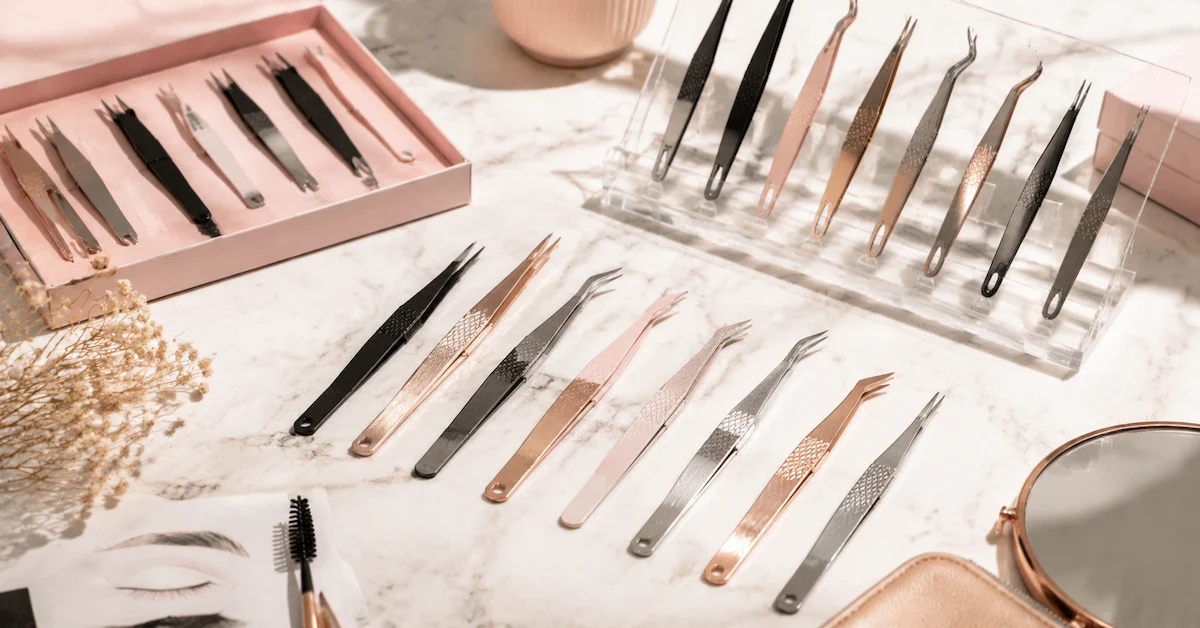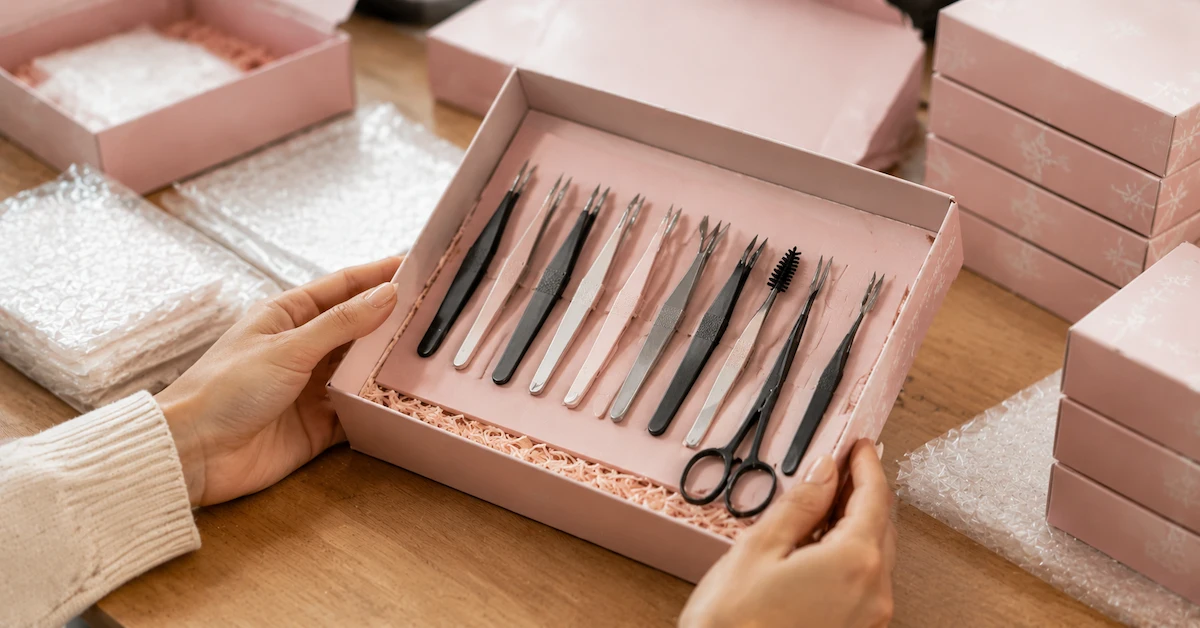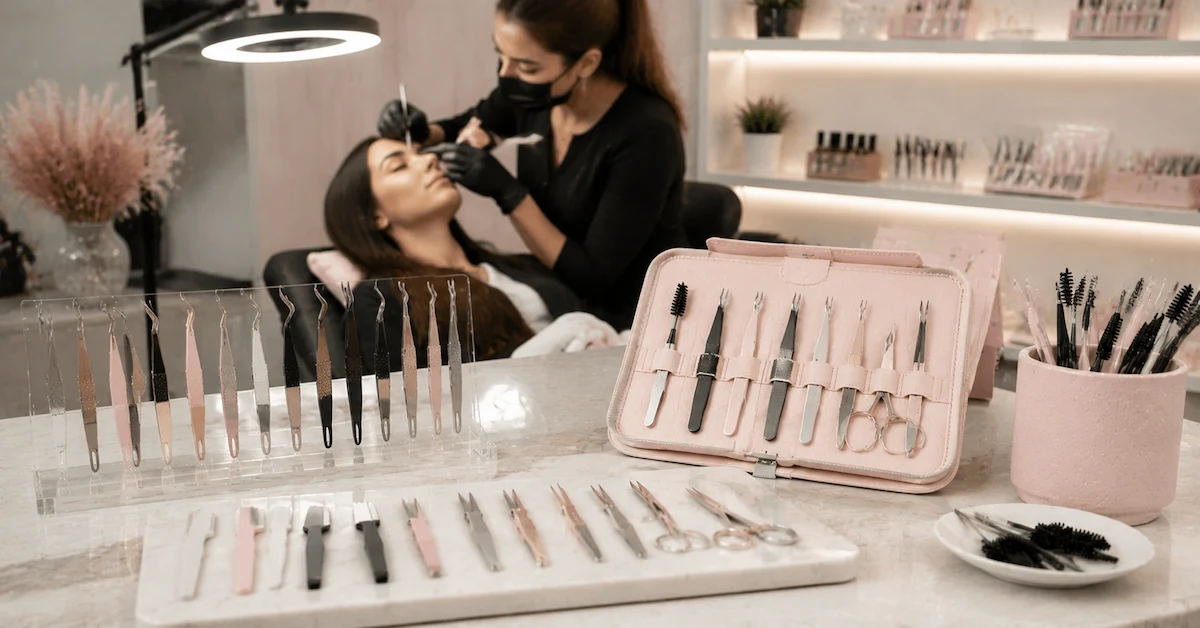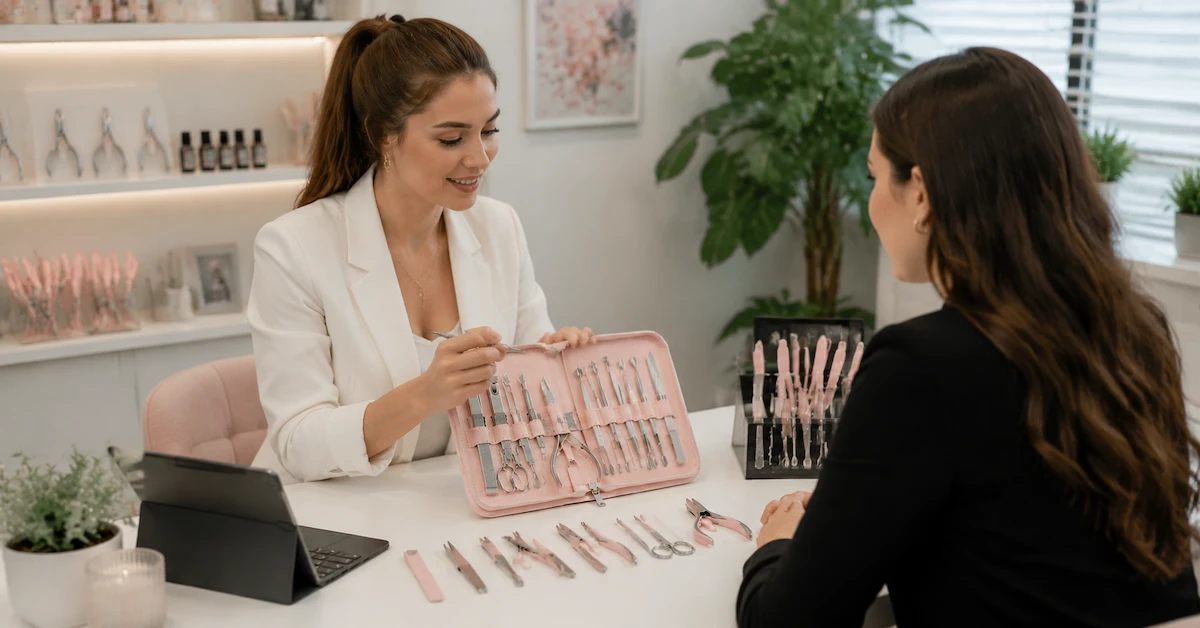











Wholesale salon supplies are simple to compare in catalog photos, but harder to buy well. A manicure and grooming kit may look polished because the tools are bright, the case is neat, and the assortment appears complete. For a salon, spa, beauty retailer, barber counter, gift channel or private-label program, the real question is whether the set is useful, repeatable, easy to merchandise and suitable for the customer you serve.
This guide focuses on one common wholesale category: multi-piece salon and personal grooming tool kits with nail clippers, scissors, nippers, tweezers, files, facial-care accessories and a zippered case. The goal is to help B2B buyers evaluate product fit before placing an order, especially when comparing options from a beauty tool supplier. For related assortments, you can review Olimor’s beauty tool products or contact the team through sourcing support.
Why Multi-Piece Grooming Kits Sell in Wholesale Channels
A compact grooming set sells because it solves several small needs in one purchase. End users may need nail trimming, shaping, cuticle care, tweezing, light exfoliation, lash grooming or facial massage tools. Instead of buying each item separately, they see a complete kit that is easy to understand and easy to store.
For wholesale buyers, that broad use case is commercially useful. A salon can offer the kit as an add-on retail item. A beauty supply store can present it as an all-in-one grooming set. A spa can position the facial roller and gua sha-style board as part of a self-care routine. A barber or men’s grooming counter can focus on trimming, tweezing and maintenance. A gift retailer can emphasize the organized case and multi-piece layout.
The zippered storage case is not just packaging. It is part of the product value. Organized slots help keep tools in place, reduce loose-item handling, and make the set feel more complete. In retail environments, a tidy case can also improve presentation and reduce the impression that the tools are a random bundle.
What Is Usually Included and How Each Piece Affects Selling Value
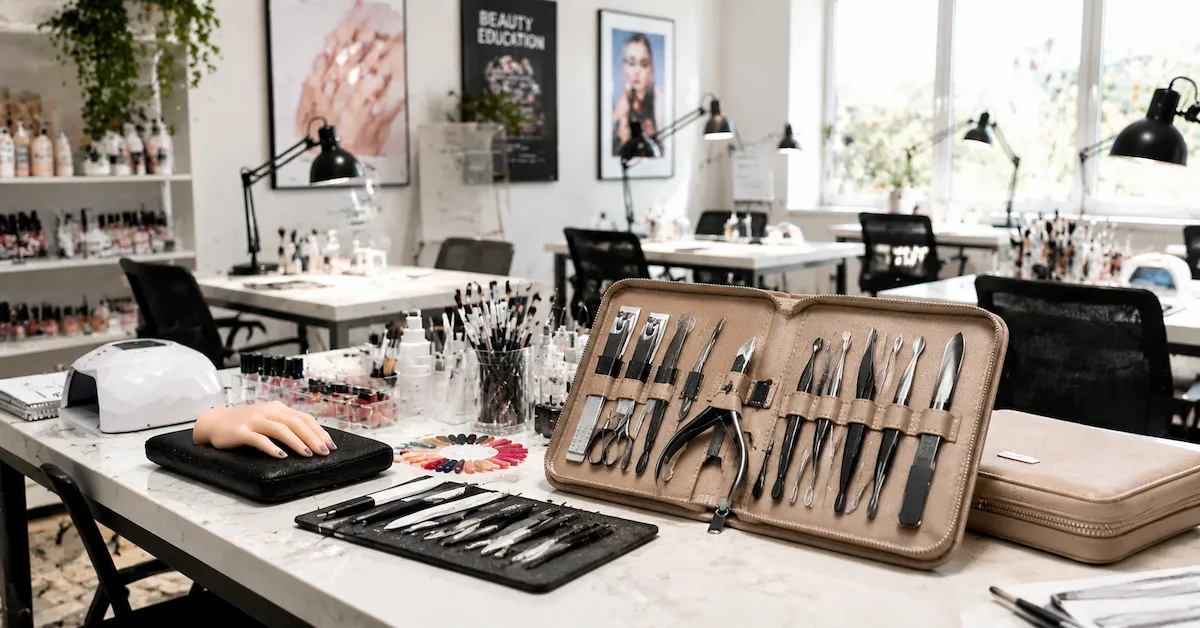
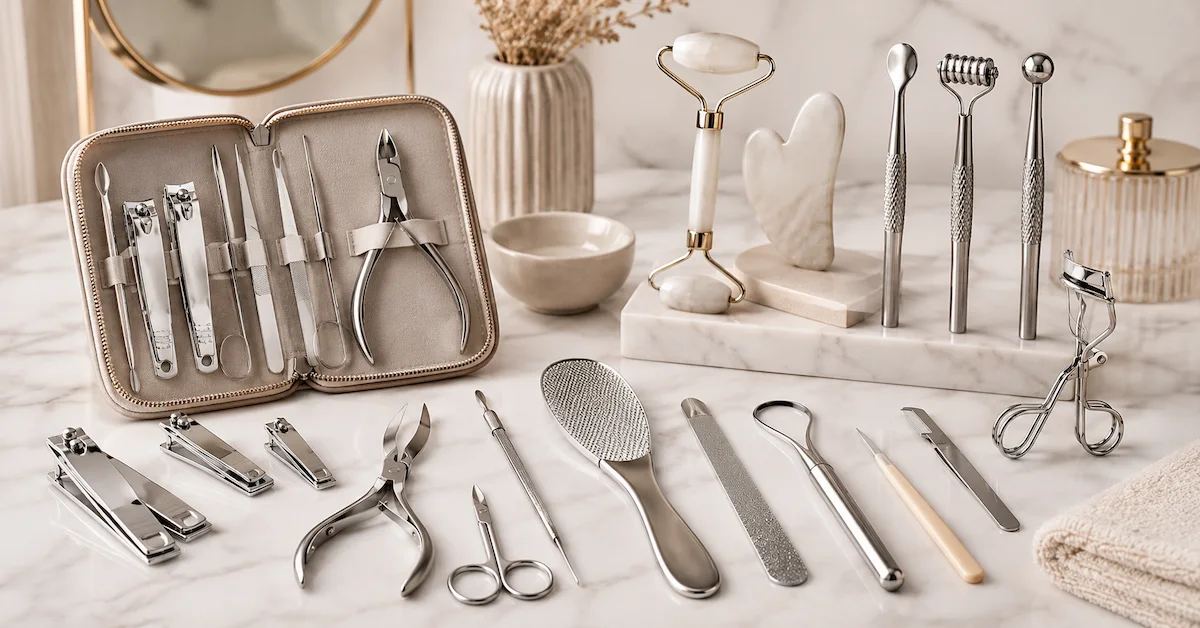
The visible assortment in this type of set includes several nail clippers in different sizes, cuticle scissors and nippers, tweezers, metal files, a foot or nail rasp, an eyelash curler, and small grooming tools. It also includes facial-care items such as a dual-ended roller and a gua sha-style board. This mix expands the product beyond basic nail care and gives buyers several ways to position it.
From a commercial perspective, each tool should justify its place. Multiple clippers can be useful if they serve different trimming needs. Tweezers and scissors are familiar, fast-moving items because customers immediately understand them. Files and rasps add perceived completeness for manicure and pedicure care. Facial accessories create a spa or self-care angle, but they should not distract from the performance of the core metal tools.
Buyers should avoid judging value only by piece count. A high piece count can look attractive online, but duplicate or low-use tools can create disappointment. A lower-count kit with practical, well-finished tools may be easier to sell and less likely to generate complaints. The best configuration depends on the target channel and how the product will be explained at the point of sale.
Materials, Finish and Construction Details to Inspect
Many tools in this category appear to be stainless steel or another polished metal. That bright finish creates a clean, professional appearance and is common for nail and grooming implements. However, buyers should not assume that all shiny tools are equal. Edge quality, hinge movement, alignment, hand feel and finishing consistency matter more than the first impression.
For nail clippers, check whether the jaws meet evenly and whether the lever moves smoothly without excessive looseness. For scissors and nippers, inspect tip alignment, joint movement and whether edges close cleanly. For tweezers, check the meeting point and grip. For files and rasps, review whether the working surfaces are even and free from sharp burrs where the user holds the tool.
The facial roller and gua sha-style board should be described carefully. If the exact material is not confirmed, avoid claims about stone type, mineral composition or therapeutic performance. They can still be useful as decorative-functional facial-care accessories, but marketing language should stay accurate and verifiable.
The case also needs inspection. A beige or tan zippered case with fitted interior slots can look elegant and retail-friendly, but buyers should check the zipper, stitching, lining, slot tension and how well each tool stays in place. A soft case protects against light scuffs and helps organization; it should not be treated as heavy-duty protection unless the supplier provides evidence for that claim.
Wholesale Buyer Checklist Before Placing an Order
A sample review should be practical and repeatable. Use the same checklist for each supplier or each version of the kit so your team can compare products fairly.
| Check Area | What to Review | Why It Matters |
|---|---|---|
| Tool assortment | Confirm the exact tool count, functions and whether any items duplicate the same use. | Prevents paying for pieces that do not add real selling value. |
| Cutting tools | Inspect clipper jaw alignment, scissor tips, nipper movement and edge consistency. | Core tools drive user satisfaction and returns risk. |
| Surface finish | Look for burrs, rough edges, discoloration, scratches or inconsistent polishing. | Finish affects safety perception, appearance and retail quality. |
| Case construction | Test zipper movement, stitching, interior slots and tool retention. | The case is part of the product experience and shelf appeal. |
| Packaging | Review retail box, labeling space, barcode needs and protection during shipping. | Packaging affects display, storage, private label planning and damage risk. |
| Repeatability | Compare multiple samples if available and ask how production consistency is controlled. | Wholesale buyers need stable quality from lot to lot. |
| Compliance documents | Ask what material, labeling or market-entry documents are available for your destination market. | Requirements vary by country and sales channel. |
How to Match the Kit to the Right Sales Channel
The same salon grooming kit can succeed or fail depending on where it is sold. Before ordering, define the primary buyer and the main use case. This keeps the assortment, packaging and claims aligned.
Salon retail add-on
For salons, the kit works best as a convenient retail product clients can use between appointments. The message should focus on maintenance, portability and organized storage. If the salon already sells nail care items, this kit can sit beside files, clippers and cuticle-care accessories.
Beauty supply store
For beauty retailers, the set can be positioned as an all-in-one grooming kit. Shelf appeal, clear packaging and an easy-to-understand tool layout are important. Retail staff should be able to explain the main functions quickly without making unsupported performance claims.
Spa or facial-care environment
For spa channels, the facial roller and gua sha-style board may be useful selling points. Still, the kit should not be marketed as a treatment device unless the supplier provides appropriate documentation and your local regulations support the claim. Keep the wording focused on facial-care routines, relaxation and accessory use.
Barber and men’s grooming counters
For barbershops or men’s grooming retail, the strongest angle may be trimming, tweezing, nail care and travel convenience. Avoid overly spa-focused language if it does not match the customer base.
Gift and travel channels
For gift sales, the case and complete assortment matter most. Buyers should prioritize a coherent visual style, secure storage and packaging that feels presentable. The set should look organized when opened, not crowded or improvised.
Cost Factors That Influence Wholesale Decisions
Wholesale cost is affected by more than the number of tools. Buyers should consider the full construction and presentation of the set. Material selection, finishing quality, hinge and edge workmanship, case construction, packaging, labeling, customization, inspection requirements and shipment packing can all affect the final quotation.
A low unit cost may be attractive, but it can create hidden costs if the tools feel rough, the case fails, or the assortment does not match customer expectations. Returns, discounting and poor reviews often cost more than a careful sample review. At the same time, buyers should not over-specify features that their channel does not need. A travel retail kit, a salon add-on and a spa gift set may require different packaging and different selling priorities.
When comparing quotations, ask suppliers to quote against the same configuration. Confirm whether the price includes the same tool count, case style, packaging, logo method, labeling requirements and inspection expectations. Without that alignment, two prices may not represent the same product.
Quality, Safety and Documentation Questions
Tools that touch nails or skin should be sourced with care. Buyers should ask for material details, recommended cleaning guidance, packaging information and any documents relevant to the sales market. Do not assume a product is suitable for professional sanitation processes, medical use or specialized claims unless the supplier provides clear written support.
For international sales, requirements may involve consumer product rules, restricted substances, labeling, packaging and importer responsibilities. In the European Union, REACH is often relevant to restricted substances in products and materials. In the United States, consumer product expectations may involve agencies such as the U.S. Consumer Product Safety Commission depending on the product and channel. Requirements change, so always verify current versions, local rules and supplier documents before purchase. These references do not mean Olimor or any product is certified; they are examples of public frameworks buyers may need to consider.
Useful supplier questions include:
- What materials are used for the metal tools, handles, facial accessories and case?
- Can the supplier provide current product photos and pre-production samples?
- What inspection steps are used for tool alignment, finish, case stitching and packaging?
- What labeling or documentation can be provided for the destination market?
- Can the assortment, case color, packaging or logo be customized?
Common Sourcing Mistakes to Avoid
The first mistake is buying from photos alone. Catalog images can show shine and layout, but they do not show clipper tension, edge smoothness, tweezer grip or zipper reliability. Always review samples when possible, especially before a larger wholesale order.
The second mistake is overvaluing piece count. More tools may help the listing look complete, but only if the tools are genuinely useful. Redundant pieces can make the kit look crowded and increase cost without improving customer satisfaction.
The third mistake is using unsupported claims. Avoid language such as professional-grade, surgical, therapeutic, sterilizable or natural stone unless those details are verified and appropriate for the market. Accurate descriptions build trust and reduce complaints.
The fourth mistake is ignoring packaging. For wholesale salon supplies, packaging affects shipping protection, shelf display, barcode handling, private-label presentation and perceived value. A good product can underperform if the packaging looks weak or does not explain the assortment clearly.
The fifth mistake is failing to define the channel. A set that is ideal for gift retail may not suit heavy salon backbar use. A spa-focused kit may not be the best fit for a barber counter. Decide the commercial role before you buy.
How to Evaluate a Beauty Tool Supplier
A reliable supplier should help you understand the product, not only send a price. When evaluating a beauty tool supplier, look for clear communication about assortment, materials, case options, packaging, sample availability and customization. The supplier should be willing to confirm details in writing and provide realistic answers instead of broad claims.
For sourcing teams building a wider assortment, it can help to compare related categories across a supplier’s product collection. This shows whether the supplier can support a coherent range rather than a single one-off item. If you are ready to discuss a specific configuration, use the product inquiry channel and include your target market, intended sales channel and packaging needs.
Supplier evaluation should include both product and process. Ask how samples are handled, how pre-shipment checks are arranged, what customization options are available, and how changes are confirmed. Avoid assuming that a catalog image represents every production batch. Repeatability is one of the most important factors in wholesale buying.
Practical CTA for Sourcing Teams
If you are comparing wholesale salon supplies, start with the customer use case, then inspect the tools, case and packaging against that use case. A multi-piece grooming kit can be a strong B2B item because it is compact, understandable and flexible across salon, spa, retail, barber and gift channels. It performs best when the assortment has a clear role and the supplier can support consistent production details.
For a practical next step, request samples, confirm the tool list, review finishing quality and ask what customization or documentation is available for your market. Keep claims accurate, verify current requirements, and choose the version that fits your channel instead of the one that only looks best in a photo.
FAQ for Wholesale Salon Supplies Buyers
Can I request samples before placing a wholesale order?
Yes. Sample review is recommended for this category because photos cannot confirm edge feel, tool alignment, case construction or packaging quality. Ask the supplier what sample options are available for the configuration you are considering.
Is there a minimum order quantity for grooming tool kits?
Minimum order requirements depend on the product configuration, packaging, customization and current supplier terms. Confirm MOQ directly before planning retail pricing or launch timing.
Can the kit be customized for private label?
Customization may be possible for elements such as assortment, case style, color, logo placement or packaging, depending on the supplier’s available options. Request written confirmation and review samples before approval.
How should buyers check quality before shipment?
Use a checklist covering tool count, finish, cutting alignment, tweezer grip, case stitching, zipper function, packaging and labeling. If your company uses third-party inspection, share the criteria with the supplier early.
What affects lead time for a wholesale order?
Lead time can be affected by order quantity, customization, packaging approval, sample confirmation, production schedule and shipping method. Ask for the current timeline for your exact order rather than relying on a general estimate.