










OEM custom tweezers are small beauty tools, but they can strongly influence how customers judge a private label line. A tweezer is held close to the face, used for precise grooming and often kept for a long time. If the tips do not meet cleanly, the finish looks uneven or the grip feels uncomfortable, the buyer remembers the weakness. If the set feels controlled, attractive and well presented, it can support repeat orders and brand trust.
For beauty brands, salons, lash businesses and retail buyers, the key question is not only whether a supplier can make tweezers. The better question is which tip styles, finishes, handle textures, packaging formats and inspection points will fit the intended market. A consumer gift set, a salon retail set and a promotional grooming tool may all use metal tweezers, but they should not be specified in the same way.
This guide explains how to evaluate OEM custom tweezers as a B2B product decision, from functional tip selection to private label packaging and supplier communication. For related beauty tools and sets, buyers can also review Olimor product categories through the beauty tool products page.
What Buyers Usually Mean by OEM Custom Tweezers
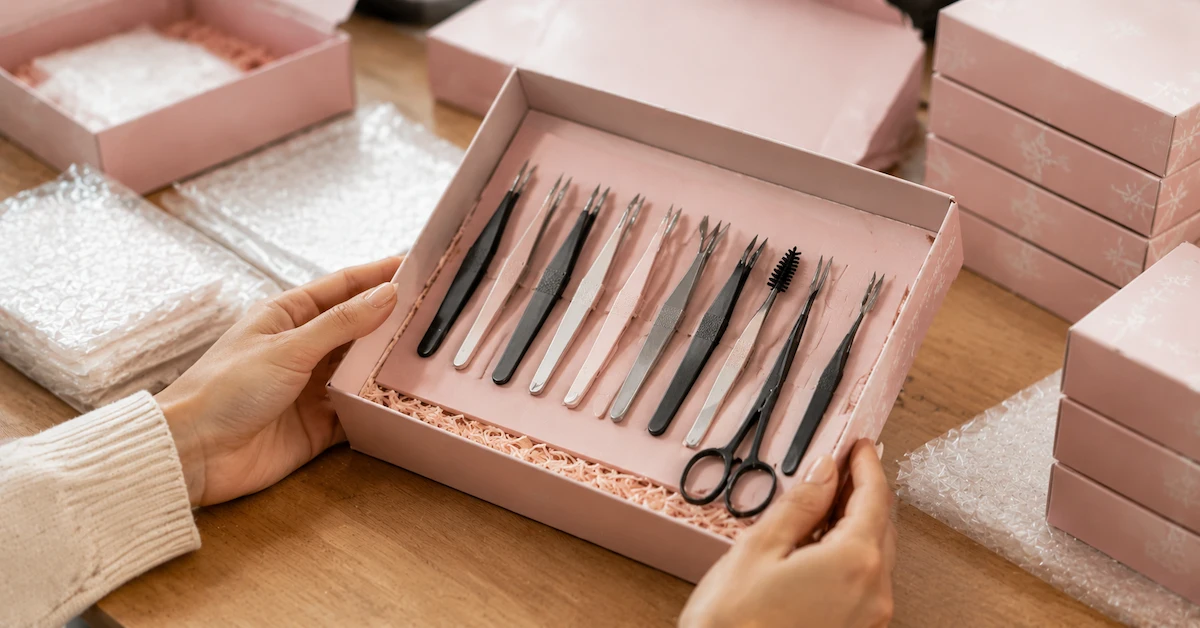
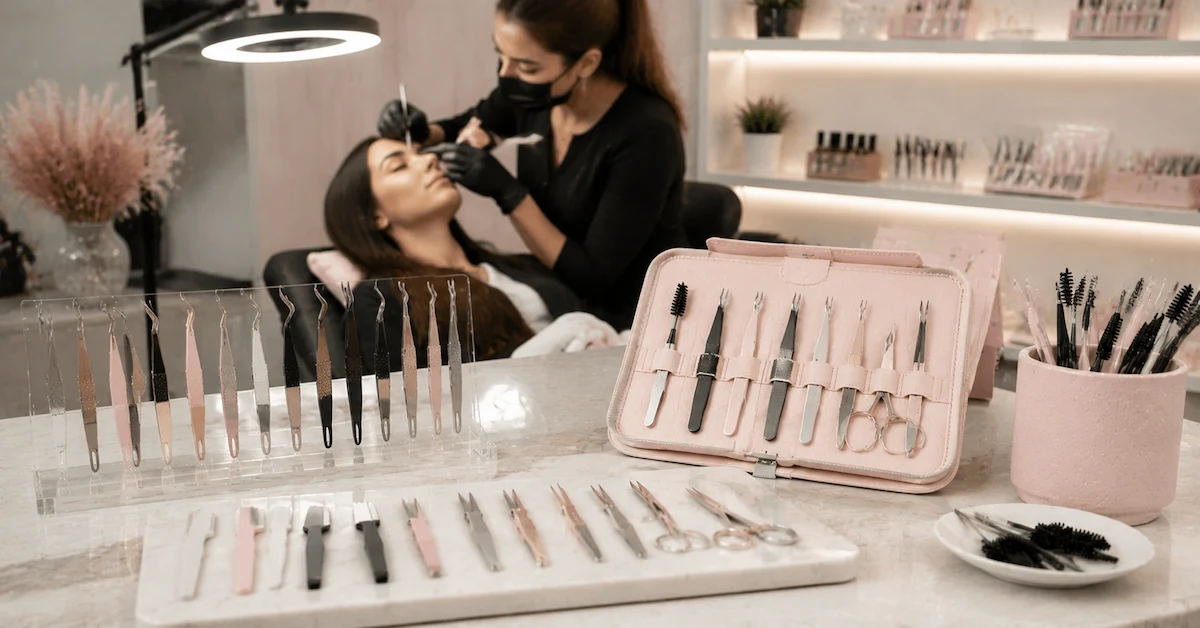
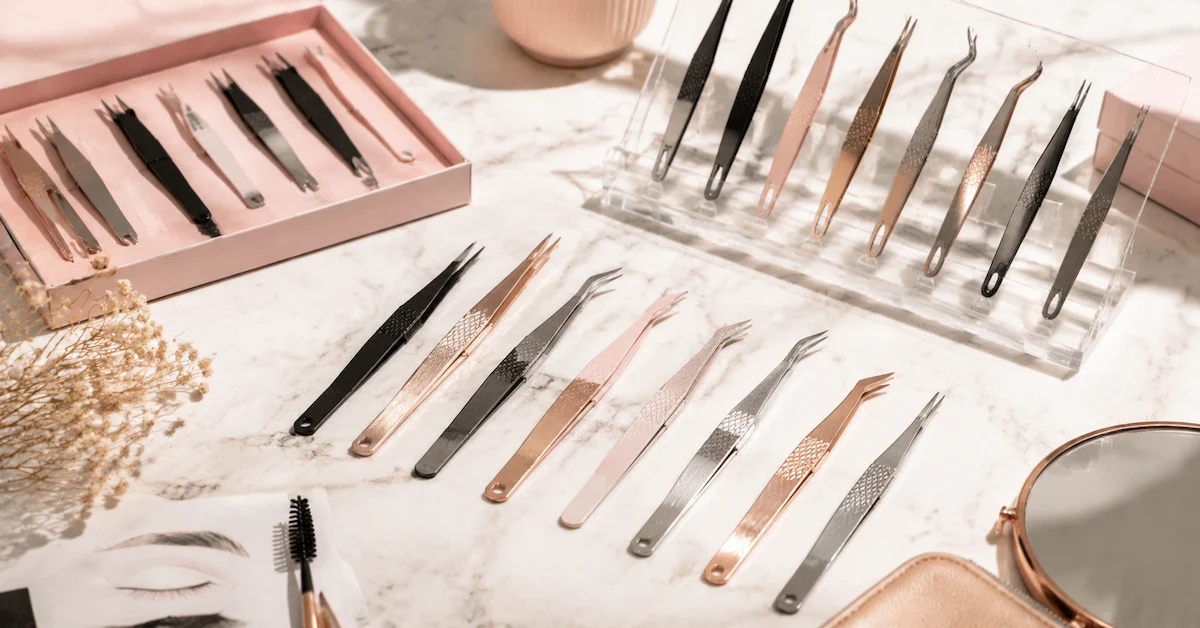
In this category, OEM custom tweezers usually refer to metal eyebrow or beauty tweezers supplied with buyer-specific choices for assortment, finish, branding and packaging. The visible product range includes multiple tweezer profiles, such as slanted, straight, pointed and curved tips. It also includes finishes in matte black, rose gold, silver and light pink metallic tones, with some models using textured grip zones for a more controlled hand feel.
That range matters because private label tweezers are often sold as more than one tool. A brand may want a mixed set that looks complete in a box or display tray. A salon may prefer a smaller selection focused on repeated professional use. A retailer may want a color story that fits the rest of a beauty accessories collection.
The commercial intent is usually a combination of function and presentation. Buyers want tweezers that can grip accurately, look consistent, protect the tips during shipping and carry brand artwork without appearing cheap. The best sourcing briefs treat these points together instead of separating the tool from the package.
Tip Style Comes Before Color
Color and finish are important for shelf appeal, but tip geometry decides whether the tweezer is useful. A beautiful metallic finish will not rescue a tool that slips, pinches awkwardly or fails to meet at the working edge. Before choosing a matte black or rose gold look, the buyer should decide what the end user will do with the tool.
Common tip styles and typical use cases
- Slanted tip: Often chosen for eyebrow grooming because it gives a practical balance of visibility and control. It is a common general-purpose option for consumer sets.
- Straight tip: Useful where a flat gripping edge is preferred. It can give a different feel from a slanted profile and may suit buyers who want variety in a set.
- Pointed tip: Designed for fine picking tasks that require precision. It may be less forgiving for casual users, so it should be included with the target customer in mind.
- Curved or angled profile: Changes the approach angle of the hand and can be useful for beauty tasks around brows or lashes, depending on user preference.
- Mixed set: A practical choice for retail and gift programs because it gives the consumer options while improving perceived value.
A simple way to plan the line is to match each tip style to a job. Avoid adding styles only because they make the tray look full. Every profile should have a reason to be in the set.
Customization Options That Affect the Final Product
Private label tweezers are not limited to logo printing. The important customization levers include tip style, body shape, finish, grip treatment, packaging and brand presentation. Each lever affects how the product is used, inspected and sold.
| Customization area | Buyer decision | Why it matters |
|---|---|---|
| Tip assortment | Single style or mixed slanted, straight, pointed and curved profiles | Determines the use case and whether the set feels specialist or general purpose |
| Body and grip | Smooth slim body or textured grip zone | Affects comfort, handling and perceived tool quality |
| Finish | Matte, brushed or metallic color family such as black, rose gold, silver or pink tone | Supports the brand look and retail shelf appeal |
| Packaging | Boxed set, display tray, clear presentation or other retail-ready format | Protects tips, organizes the assortment and communicates value |
| Branding | Logo placement, insert card, outer packaging artwork and color matching | Makes the set recognizable as a private label product, not a generic tool |
For a first program, many buyers do better with a focused configuration. One core assortment, one or two finish families and a packaging format that can scale are easier to approve, inspect and reorder than a highly fragmented launch with too many variations.
How Metal Beauty Tweezers Are Typically Produced
Based on the product type, OEM tweezers generally involve metal forming, shaping, tip grinding, surface finishing and packaging. The arms need consistent spring tension and alignment. The tips need clean contact at the working point. The surface finish needs to look even across the batch and withstand normal handling, storage and retail display conditions.
The most important manufacturing detail for buyers is that cosmetic appearance and functional performance must be controlled together. A finish may look attractive in a sample photo, but the tool still needs proper tip contact. Likewise, a tweezer may grip well but fail the retail test if the finish looks inconsistent beside the insert card or other items in the set.
When discussing production, ask the supplier how tips are protected after finishing and during packing. Tweezer tips can be damaged by poor handling, loose movement in transit or packaging that allows contact between tools. A boxed set or tray should hold the pieces securely and present them neatly.
Inspection Points Before Approving a Sample
A sample review should go beyond checking the logo and color. The buyer should inspect the tool like a user and like a retailer. Function, finish and packaging all need attention before approval.
Practical sample checklist
- Check whether both arms are symmetrical and comfortable to press.
- Look at the working tips under good light to confirm they meet evenly.
- Test whether the selected tip style matches the intended use, such as eyebrow grooming or fine picking.
- Compare all pieces in a set for consistent color tone and finish.
- Confirm that textured grip areas are clean, comfortable and not merely decorative.
- Review logo placement for visibility, durability expectations and alignment with the finish.
- Open and close the packaging to see whether it protects the tips and supports retail display.
- Assess whether the set looks coherent as a private label product rather than a collection of unrelated tools.
If the product will be sold in a regulated retail environment, buyers should also verify current requirements for destination markets. For example, EU buyers may request supplier documentation related to REACH for materials and substances, while US retail buyers may review relevant Consumer Product Safety Commission guidance where applicable. Requirements change, and buyers should verify current versions and actual supplier documents rather than relying on assumptions.
Private Label Packaging: Where Much of the Value Sits
For small beauty tools, packaging is not an afterthought. It protects the working edges, shapes the customer’s first impression and can make a compact product feel giftable. The supplied product direction suggests presentation boxes and display-style trays, which are useful for salons, retail counters and curated beauty sets.
A strong private label set has a clear visual hierarchy. The tools should be arranged so the customer can understand the assortment quickly. The finish color should work with the insert card and outer box. The logo should be placed where it supports the design rather than overwhelming the tool. Matte black may feel premium when paired with restrained branding. Rose gold or pink metallic tones may suit giftable or beauty-focused ranges. Silver can support a cleaner, more classic tool look.
Packaging also affects cost. More elaborate presentation formats, custom inserts, color printing, protective components and display-ready structures can increase the total program cost. Buyers should ask suppliers to separate the tool cost drivers from packaging cost drivers so the team can make informed choices. To discuss artwork, display formats or sample planning, buyers can use the custom product inquiry form.
Cost Factors Without Guesswork
OEM tweezer costs vary because the specification varies. It is not useful to guess a price without knowing the assortment, finish, packaging, branding and order conditions. Instead, buyers should understand which factors usually influence the quotation.
- Number of pieces in the set: A single tweezer, three-piece set and larger assortment have different material, finishing and packing requirements.
- Tip complexity: Mixed tip styles may require more sample review and inspection attention than one repeated profile.
- Surface finish: Matte, brushed and metallic color effects may differ in process requirements and visual tolerance.
- Grip texture: A textured zone can add perceived value but should be specified clearly.
- Logo and artwork: Branding method, placement and color matching affect preparation and approval work.
- Packaging format: A simple pack, presentation box and display tray do not carry the same development effort.
- Quality expectations: Tighter inspection expectations, especially around tip alignment and finish consistency, should be discussed before quoting.
The most reliable quotation comes from a complete brief, not a catalog screenshot. If a buyer only asks for the cheapest tweezer, the result may not match the brand’s desired positioning.
Choosing a Custom Tweezers Manufacturer
A custom tweezers manufacturer should be evaluated on communication and production discipline, not only on product photos. Catalog images show appearance, but sourcing success depends on how well the supplier understands use case, finish control, packaging and repeatability.
Ask for sample options that represent the intended program: the selected tip styles, the desired finish family and a realistic packaging approach. If the final product will use a textured handle, review that detail in the sample. If the final product will sit in a display tray, inspect the tray, not only the loose tools.
Useful supplier questions include:
- Which tip styles are already available for sampling?
- Which finishes are practical for the intended private label look?
- How are tips protected during packing and shipping?
- What artwork files and packaging information are needed for branded samples?
- How is visual consistency checked across colors and pieces in a set?
- What supplier documents can be provided for the destination market requirements?
Buyers comparing beauty tool ranges can also review broader categories on the Olimor collection page before narrowing the tweezer specification.
Common Problems and How to Avoid Them
The first common problem is over-customization. Too many colors, tip profiles and packaging versions can slow sample approval and make the launch harder to manage. A focused first assortment is often better for quality control and reorder planning.
The second problem is treating the tool as decorative. Tweezers are functional instruments. If the tips slip or the arms feel uncomfortable, the product will disappoint even if the package looks attractive.
The third problem is separating packaging from product development. A metallic pink finish may look strong on its own but clash with the printed insert. A matte black tool may look refined with subtle branding but crowded with heavy artwork. The tool, package and logo should be reviewed as one product.
The fourth problem is approving samples too quickly. Buyers should test handling, compare pieces side by side, check the tips and inspect the packaged presentation. Small differences are easy to miss in photos and much easier to correct before production.
Best-Fit Recommendations by Buyer Type
Beauty brands should focus on a coherent line. A slanted tweezer, a straight tweezer and one pointed or curved option can show range without making the set confusing. The finish should support the brand’s existing color system.
Salons and lash businesses should prioritize grip feel, tip behavior and easy access at the workstation. Presentation still matters, but daily usability should lead the specification.
Retailers should consider shelf visibility, gift appeal and packaging protection. A display-ready set can make the product easier to merchandise than loose tools.
Promotional buyers should be careful not to reduce the product to a cheap logo item. A poorly finished tweezer can weaken the brand message. Even for promotional use, tip alignment and finish consistency remain important.
A Practical Next Step
Before contacting a supplier, define the role of the product: professional tool, consumer grooming essential, gift set or promotional beauty accessory. Then choose the tip styles, finish family, grip treatment and packaging format that support that role. This sequence saves time and helps the supplier return a more relevant sample plan.
For a custom OEM discussion, prepare reference images, preferred colors, desired tip profiles, packaging expectations and any destination-market document requests. Olimor can review beauty tool customization needs through the contact page.
FAQ
Can I request samples before confirming an OEM tweezer order?
Yes. Buyers should discuss available sample options with the supplier, including tip styles, finishes, grip textures and packaging formats. Sample availability depends on the requested configuration.
Is there an MOQ for private label tweezers?
MOQ depends on the specific product, finish, branding method and packaging plan. Buyers should confirm the current requirement directly with the supplier before planning a launch.
Can the tweezers and packaging both be customized?
Yes, private label programs commonly consider tool finish, logo placement, artwork and packaging presentation together. A complete design brief helps the supplier judge feasibility.
How should quality be checked before production?
Review tip alignment, grip comfort, finish consistency, logo placement and packaging protection on samples. Also request relevant supplier documents for the target market where applicable.
What affects lead time for custom tweezers?
Lead time can be affected by sample approval, finish selection, packaging development, artwork confirmation and order details. Confirm current timing with the supplier for the exact specification.