Wholesale tweezers look like a simple purchase, but B2B buyers usually need more than a low unit cost. The right bulk tweezer set should match the end user’s task, feel consistent in the hand, present well in packaging and avoid avoidable quality complaints.
This guide explains how to evaluate a metal tweezers assortment for resale, beauty kits, salon supply, light technical use, craft work and general precision handling. It focuses on practical sourcing questions: which tip styles matter, what can be checked from samples, how to compare suppliers and what to confirm before placing a volume order.
What Buyers Mean by Tweezers Wholesale
When buyers search for tweezers wholesale, they are often sourcing for one of several business needs: retail resale, private-label beauty accessories, salon tool supply, grooming kits, lash or brow kits, gift sets, hobby tool assortments, electronics handling or light workshop use. These channels do not always need the same tweezer, even when the product photos look similar.
A wholesale order should therefore be judged as a complete supply decision, not only as a hand tool. The set needs to fit the intended user, the packaging format, the inspection expectations and the sales channel. A polished metal tweezer may look professional, but performance depends on tip alignment, grip comfort, tip geometry and surface finish consistency across the batch.
For buyers building a wider beauty-tool line, it can help to compare tweezers alongside other grooming and accessory products in the Olimor product range. This makes it easier to decide whether the tweezer set should be positioned as a standalone item, a kit component or part of a broader personal-care assortment.
How a Metal Tweezers Set Is Typically Used
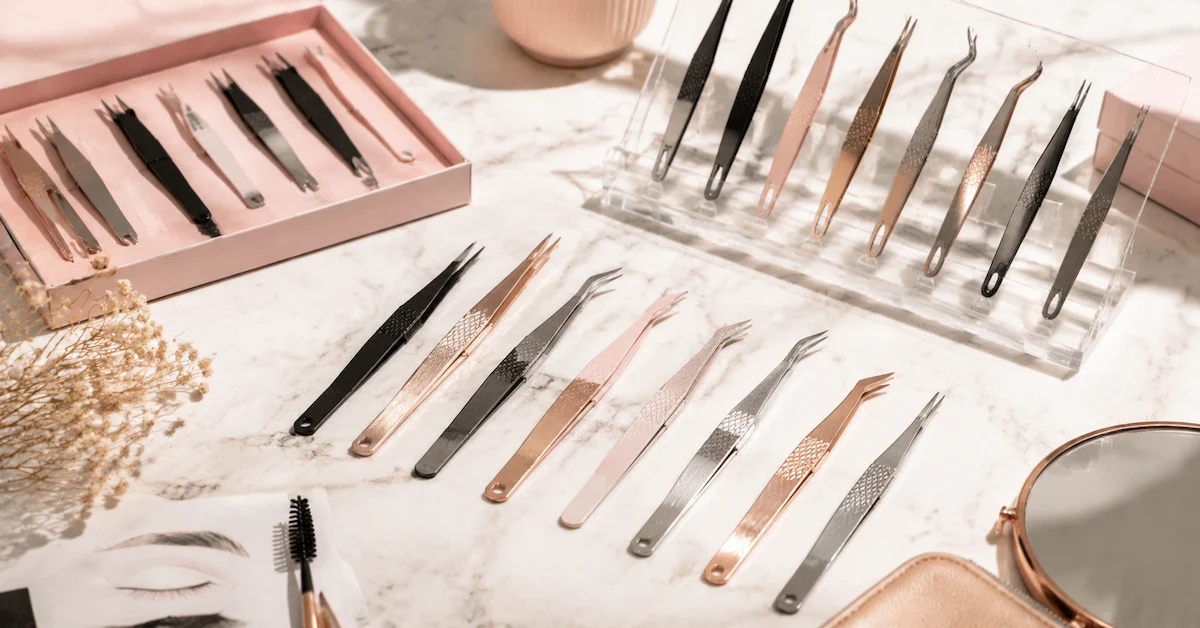
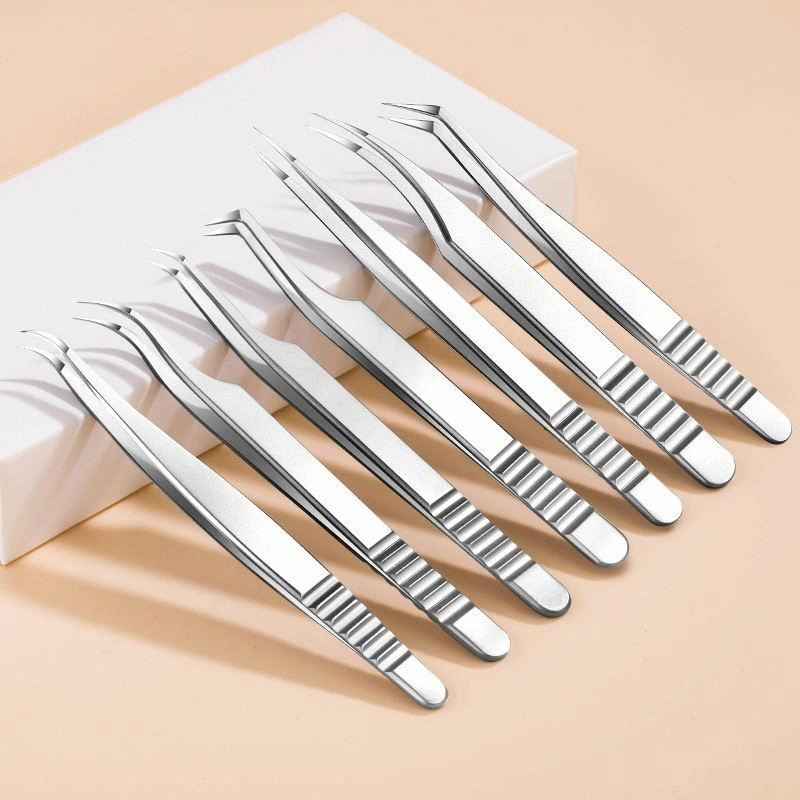
The product format described here is a silver-tone metal tweezers set with multiple tip geometries, including straight and angled styles. The visible construction suggests an elongated flat body, formed tips and a ribbed or serrated grip section near the handle end. The finish appears polished or satin, and the material is likely stainless steel or a similar corrosion-resistant metal. Exact material grade should be confirmed with the supplier rather than assumed.
This type of set is intended for precision gripping, picking, pulling or placing small items. In beauty use, tweezers may support brow shaping, lash work or general grooming. In non-beauty settings, similar tools can be used for jewelry handling, craft work, small component pickup, packaging tasks or other detail-oriented work.
The assortment matters because different tip shapes solve different access problems. A straight tip is useful for general pickup and alignment. An angled tip helps when the user wants the hand to stay out of the line of sight or when access is tighter. Narrow precision tips can be useful for small items, but they also require closer attention to alignment and safe handling.
Compare the Set, Not Just the Individual Tweezer
Many poor bulk-buying decisions happen because the buyer compares one tweezer photo against another and ignores the overall assortment. For wholesale buyers, the commercial question is: does this set cover the jobs your customers actually need?
A mixed set can reduce the risk that one tip style fails to satisfy every user. It can also make the product easier to sell as a versatile grooming, craft or precision tool kit. However, variety only helps when each included style has a clear purpose. If half the assortment is not useful for your channel, those pieces may become dead weight in the offer.
| Evaluation Point | Why It Matters | What to Check Before Bulk Order |
|---|---|---|
| Tip geometry | Different shapes suit different gripping angles and access needs. | Confirm which styles are included and request close-up photos or samples. |
| Tip alignment | Small misalignment can make fine gripping frustrating. | Review samples and ask how closing behavior is inspected. |
| Grip texture | Ribbed areas improve control during repeated use. | Check that the texture is secure but not uncomfortable or sharp. |
| Metal finish | Finish affects shelf appeal, cleaning perception and user confidence. | Inspect for burrs, scratches, stains, discoloration or inconsistent polishing. |
| Packaging | Packaging protects tips and explains the assortment. | Confirm layout, labeling, protection method and retail presentation. |
| Use positioning | Beauty, craft and technical users may expect different claims and presentation. | Match product copy and packaging to the actual market. |
Material, Finish and Construction Details to Review
Metal construction is commonly preferred for tweezers because it can feel durable, support precise forming and offer a professional appearance. The described set appears to use stainless steel or a similar silver metal with a smooth polished or satin finish. Because the available product information does not state a confirmed grade, buyers should ask for material documentation when corrosion resistance, sterilization compatibility, magnetism or restricted-substance requirements are important.
The flat body and formed tip style suggest a manufacturing route that may include cutting or stamping, forming, tip shaping and surface finishing. Buyers do not need to control every manufacturing step, but they should understand which steps affect user satisfaction. Tip forming affects grip accuracy. Edge finishing affects comfort and safety. Surface polishing affects appearance. Grip ribbing affects control during repeated tasks.
For retail or beauty use, visual finish is especially important because consumers often judge tool quality before touching the product. For kit assembly or technical use, functional consistency may matter more than mirror-like appearance. In both cases, buyers should inspect samples under normal lighting and also handle them as an end user would. A tweezer can look acceptable in a photo but feel slippery, overly flexible or poorly balanced in use.
Tip Styles: Straight, Angled and Precision Options
Tip selection is one of the most important decisions when buying bulk tweezers. A single-style order can be efficient if the use case is narrow and well understood. A mixed set is usually better when the product will serve multiple end users or be sold through general retail channels.
Straight tips
Straight tweezers are familiar and useful for general pickup, alignment and pulling tasks. They are easy for most users to understand and can work across beauty, craft and light technical environments. Their limitation is access: when the work area is tight, the user’s hand may block the view.
Angled tips
Angled tips help the user approach from the side while keeping the hand more comfortable. This can be helpful for brow and lash work, small object placement or tasks where visibility matters. For many retail assortments, at least one angled tweezer increases perceived versatility.
Narrow precision tips
Narrow tips can grasp very small items, but they demand better alignment and careful packaging protection. If the tip is damaged in transit or bent during use, performance can drop quickly. Buyers should inspect these styles closely before committing to bulk quantities.
Quality Inspection Checklist for Bulk Tweezers
Wholesale tweezers should be sampled and inspected before a full order whenever possible. The product is small, but defects are easy for users to notice. A simple inspection plan helps prevent avoidable returns and complaints.
- Check tip closure: Close each tweezer slowly and confirm that the tips meet evenly for the intended gripping area.
- Look for visible burrs: Edges, grip ribs and tips should not feel sharp in unintended places.
- Inspect finish consistency: Watch for scratches, stains, rough polishing, discoloration or uneven surface texture.
- Test grip comfort: Hold the tool with dry hands and, if relevant, with gloves to see whether the ribbed area improves control.
- Compare spring feel: The tweezer should open and close consistently enough for repeated use without feeling overly stiff or weak.
- Review packaging protection: Tips should be protected from bending, rubbing and cosmetic damage during storage and transport.
- Confirm assortment accuracy: Make sure the shipped set matches the promised combination of straight, angled and precision styles.
- Ask for supplier quality documents: If your company uses incoming inspection standards such as ISO 2859 sampling procedures, verify the current version and agree on inspection expectations with the supplier in writing.
Where chemical restrictions or market access rules are relevant, buyers may also ask suppliers about applicable requirements such as EU REACH. Requirements vary by market and product composition, so verify current regulations and supplier documents instead of relying on assumptions.
Packaging and Channel Fit
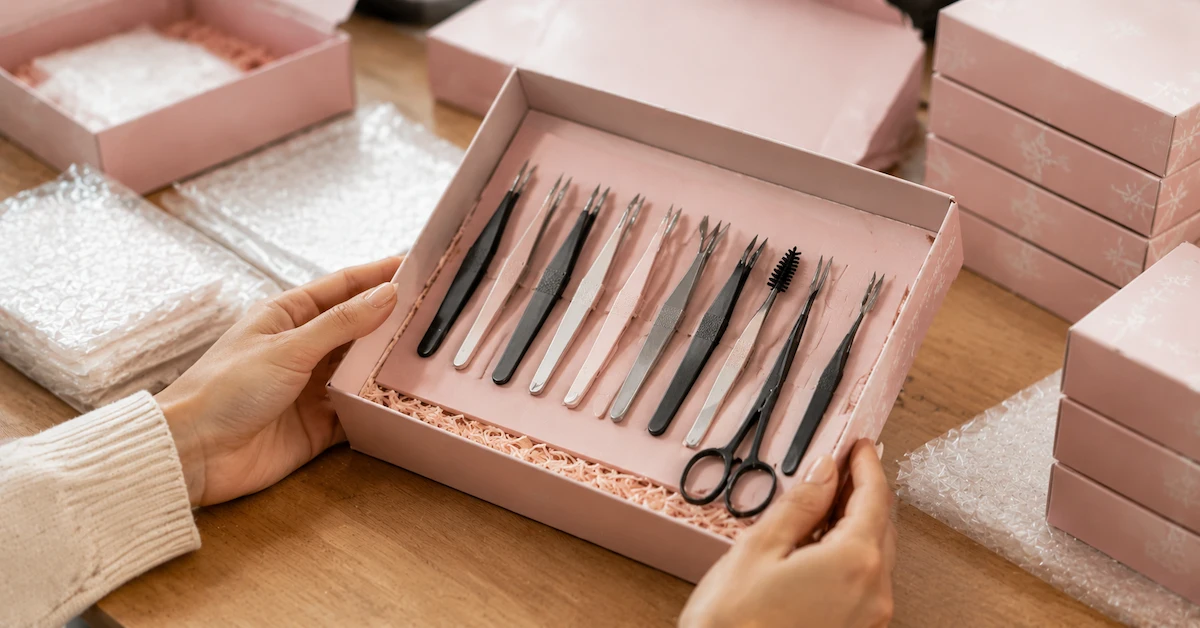
Packaging is not only a marketing decision. For tweezers, it protects tip alignment, prevents surface scuffing and helps users understand why several shapes are included. A mixed tweezer set should make the role of each piece obvious. If customers cannot tell why an angled tweezer is different from a straight one, they may undervalue the set.
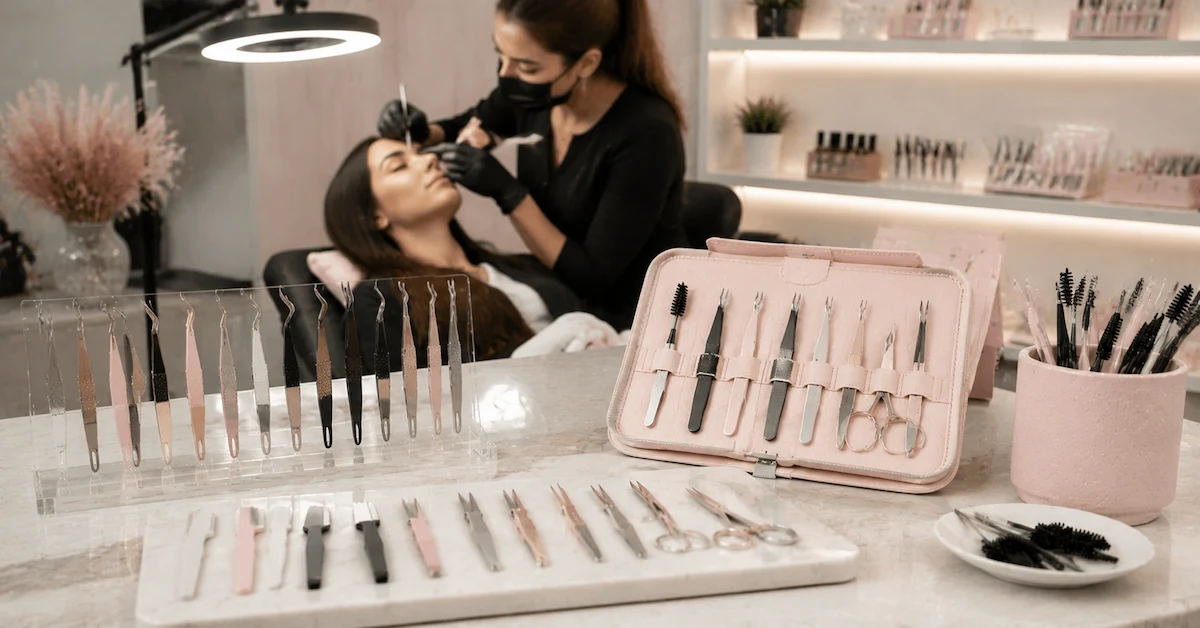
For beauty retail, packaging should emphasize cleanliness, grooming use, ease of control and visible tool variety. For salon supply, durability, handling comfort and repeat-use practicality may be more important. For craft or light technical channels, the buyer may care more about precision gripping and assortment logic than cosmetic presentation.
Businesses considering a broader launch can review related assortments in the beauty tool collection and decide whether the tweezer set belongs with brow tools, nail accessories, general grooming tools or multi-purpose precision accessories.
Cost Factors Without Reducing the Decision to Price
Unit price matters, but the cheapest tweezer is not always the lowest-cost option in a B2B program. Returns, complaints, damaged tips, poor packaging and unclear assortment value can all create hidden cost. A slightly better-finished tool may be more commercially useful if it reduces issues and supports a stronger retail presentation.
Key cost drivers can include material choice, number of pieces in the set, tip complexity, finishing process, packaging format, customization needs, order quantity, inspection requirements and shipping method. None of these should be assumed from a photo. Ask the supplier which specifications affect cost most so you can decide where to simplify and where not to compromise.
If you are comparing several wholesale tweezers, do not only ask for a quotation. Ask what is included in that quotation: the exact assortment, packaging, labeling, customization scope, sample terms, inspection process and documentation available. This makes supplier comparisons fairer and reduces misunderstandings later.
Common Sourcing Mistakes to Avoid
The first common mistake is buying on appearance alone. A polished silver finish can photograph well, but performance depends on how the tips meet and how the tool feels during repeated small actions.
The second mistake is assuming one tip style fits every user. Straight tweezers are familiar, but angled and narrow-tip versions can solve access and precision problems. For mixed retail audiences, a set with multiple shapes is often easier to position than a single tool.
The third mistake is ignoring the use environment. A salon buyer, a beauty-kit assembler and a craft distributor may all want tweezers, but each cares about different details. Packaging, claims and quality checks should match the channel.
The fourth mistake is relying on unverified material assumptions. If stainless steel grade, sterilization method, corrosion resistance, anti-static behavior or magnetism matters, confirm it directly. The available product description does not establish those performance details.
Supplier Evaluation Questions for Wholesale Buyers
A reliable supplier conversation should be practical and specific. Before committing to volume, ask questions that connect directly to your market and quality expectations.
- Which tip shapes are included in the set, and can each style be photographed separately?
- What material information can be provided, and is the exact metal grade documented?
- How are tip alignment, surface finish and grip texture checked before shipment?
- What packaging options are available for retail, salon supply or kit assembly?
- Can the set be customized with packaging, labeling or assortment changes?
- What sample process is available before a bulk order?
- What documents can be supplied for your target market, and should current regulatory requirements be verified?
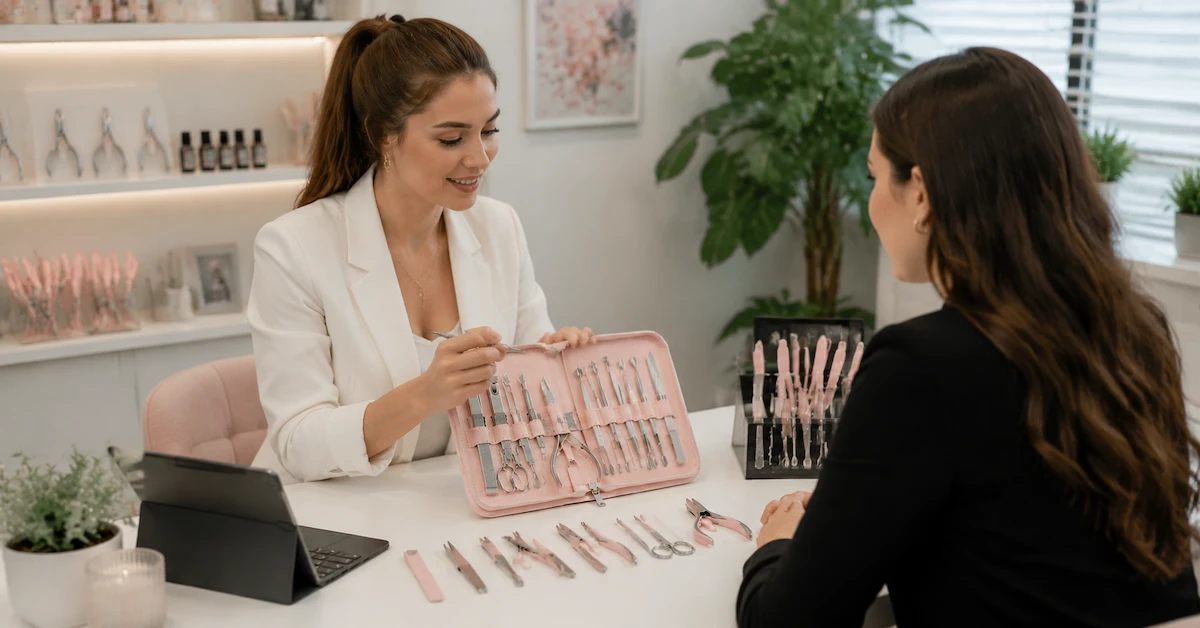
For buyers ready to discuss a project, the most efficient next step is to share the intended channel, target users and packaging needs through a product inquiry. Clear use-case information helps a supplier recommend the right assortment instead of quoting only the lowest-cost option.
When This Type of Tweezer Set Is a Good Fit
A metal tweezers set with straight and angled variants, precision tips and a textured grip is a good fit when your buyers value versatility. It can work well for beauty accessory programs, brow and lash kits, grooming sets, craft tool assortments and general precision handling offers.
It may be less suitable when the application requires a very specific technical property that has not been documented, such as a defined stainless steel grade, anti-magnetic behavior, anti-static performance or validated sterilization compatibility. In those cases, treat the set as a candidate only after confirming documentation and sample performance.
The best buying decision starts with the end user. If your customer needs a clean-looking, easy-to-understand assortment with several useful tip shapes, a wholesale metal tweezer set can be a practical stock item. If your customer needs a specialized tool for one narrow task, a single confirmed tip style may be more efficient.
FAQ
Can I request samples before ordering wholesale tweezers?
Sample availability should be confirmed with the supplier. For precision hand tools, reviewing samples is strongly recommended because tip alignment, grip feel and finish quality are difficult to judge from photos alone.
Is there a fixed MOQ for bulk tweezers?
MOQ can depend on the assortment, packaging, customization and current production plan. Ask for the current MOQ based on your required style, packaging and destination rather than assuming one number applies to every order.
Can wholesale tweezers be customized?
Customization may be possible for packaging, labeling or set configuration, depending on the project. Confirm what can be changed, what artwork or approval steps are needed and whether customization affects cost or production timing.
How should I check quality before shipment?
Agree on inspection points such as tip closure, finish consistency, burrs, grip texture, packaging protection and assortment accuracy. If you follow a formal sampling standard, verify the current version and align the inspection plan with the supplier.
How do I discuss lead time?
Lead time depends on order details, customization and production scheduling. Provide the target quantity, packaging needs and delivery destination when you contact the supplier so timing can be discussed accurately.
A Practical Next Step
Before placing a wholesale tweezer order, define the user task, choose the right mix of tip styles and review samples for alignment, comfort and finish. Then compare suppliers on documentation, packaging, inspection support and communication, not only on unit price.
To discuss a tweezer assortment for resale, salon supply or kit assembly, share your project details through Olimor contact support. A clear brief helps narrow the options and keeps the purchase focused on usable, sellable tools.