










Choosing a tweezer supplier is not only a unit-price decision. For beauty retail, salon distribution, lash kits and private-label grooming sets, the value of the product depends on how accurately the tips meet, how comfortable the handles feel, how durable the finish appears in daily handling and whether the packaging supports the market position.
A precision tweezer set can look simple in a catalog photo, but buyers should evaluate it like a functional hand tool. The most important questions are practical: Does the slanted tip grip hair cleanly? Do pointed tips meet evenly? Does the textured grip help control? Does the case protect the tools during transport and storage? This guide explains how to compare tweezer types, assess samples, prepare RFQs and evaluate suppliers without relying on unsupported claims.
What Buyers Should Expect From a Precision Tweezer Set
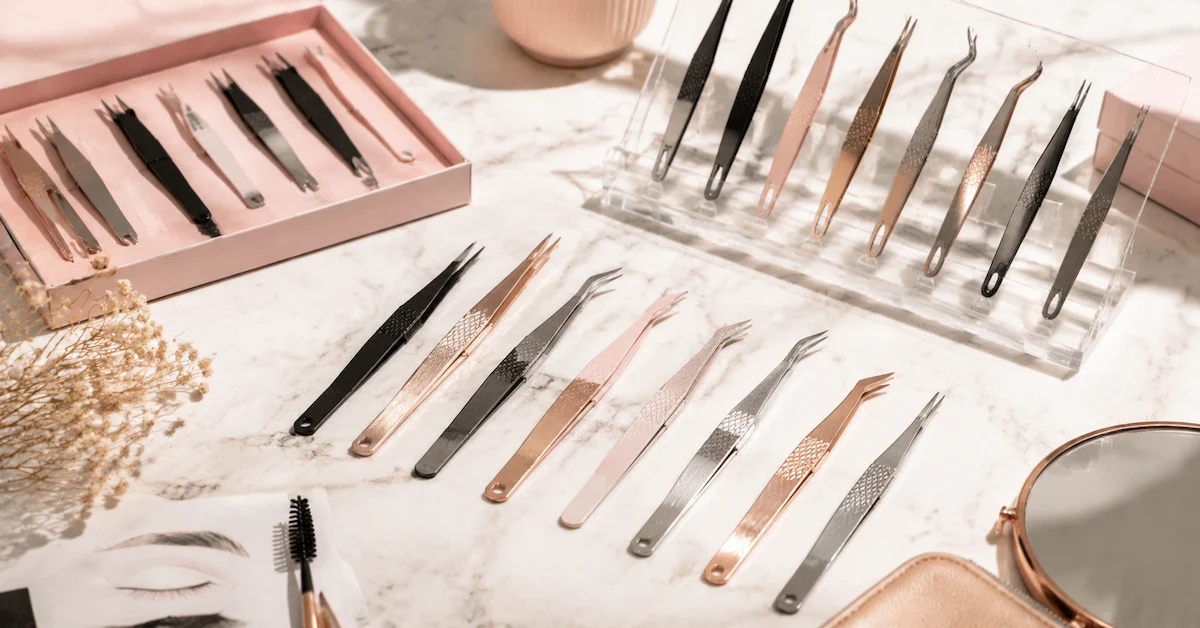
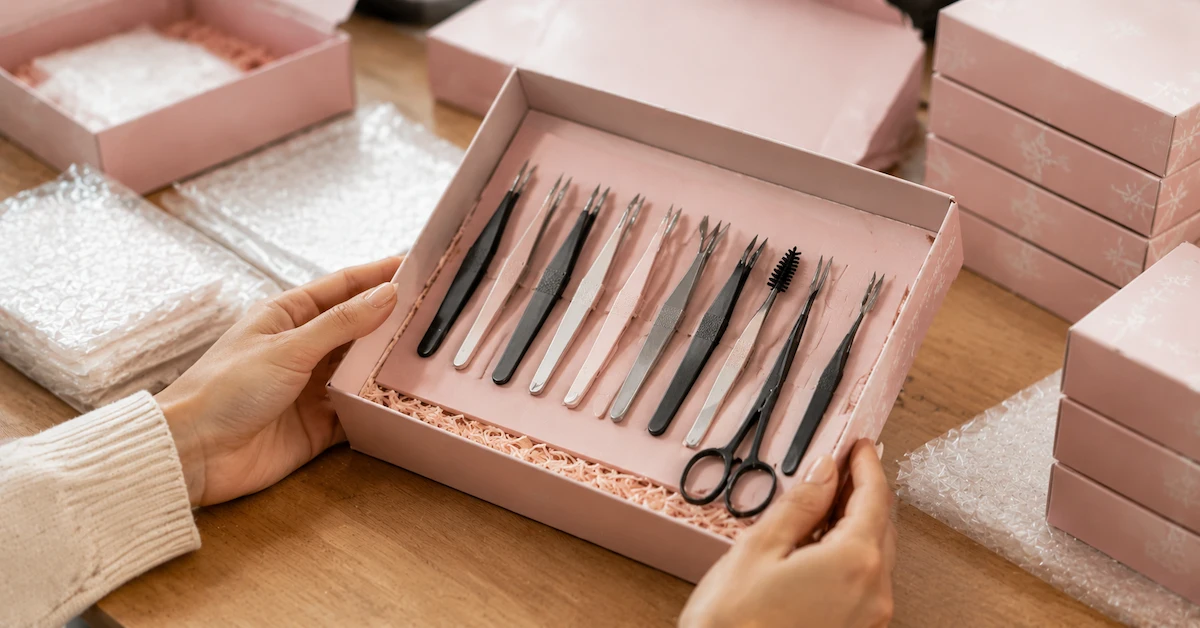
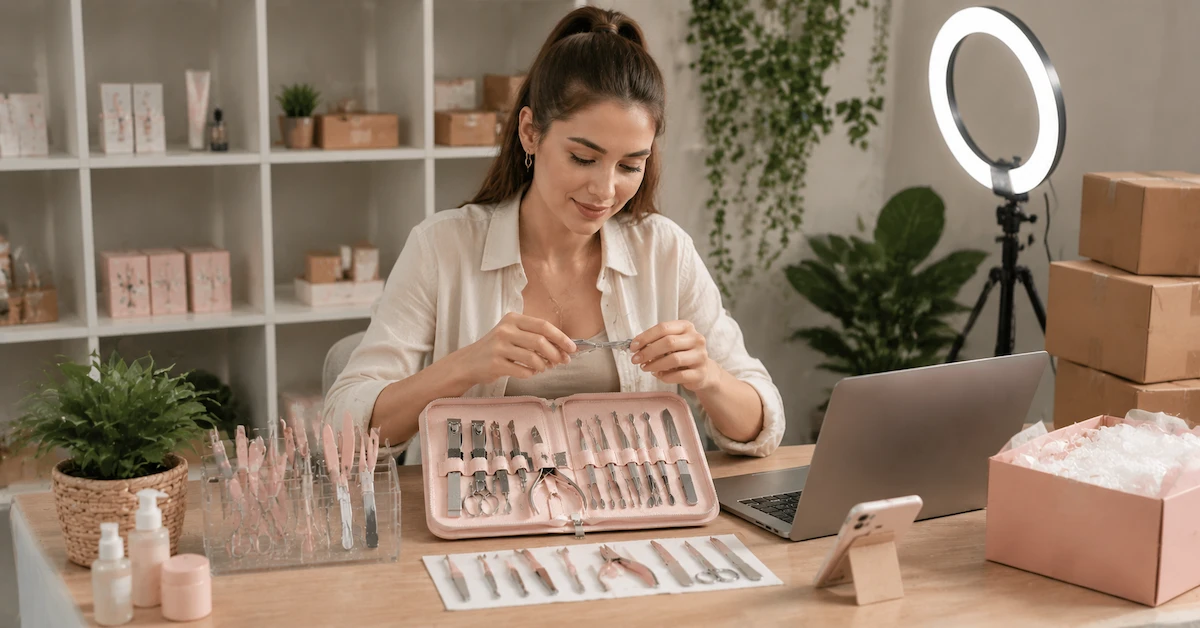
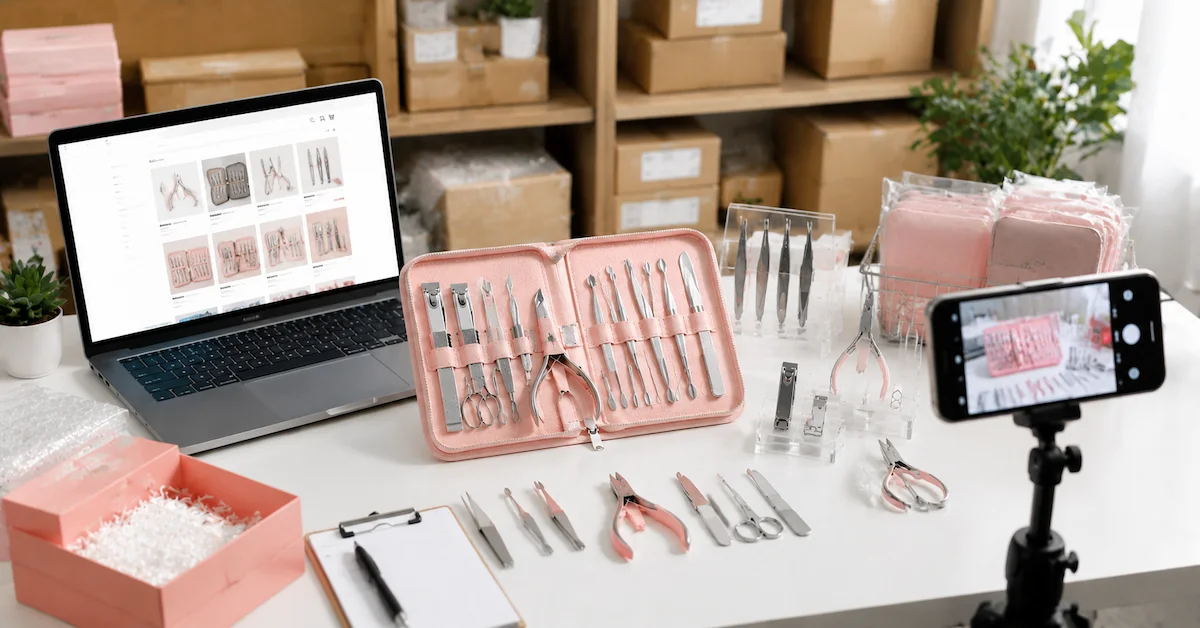
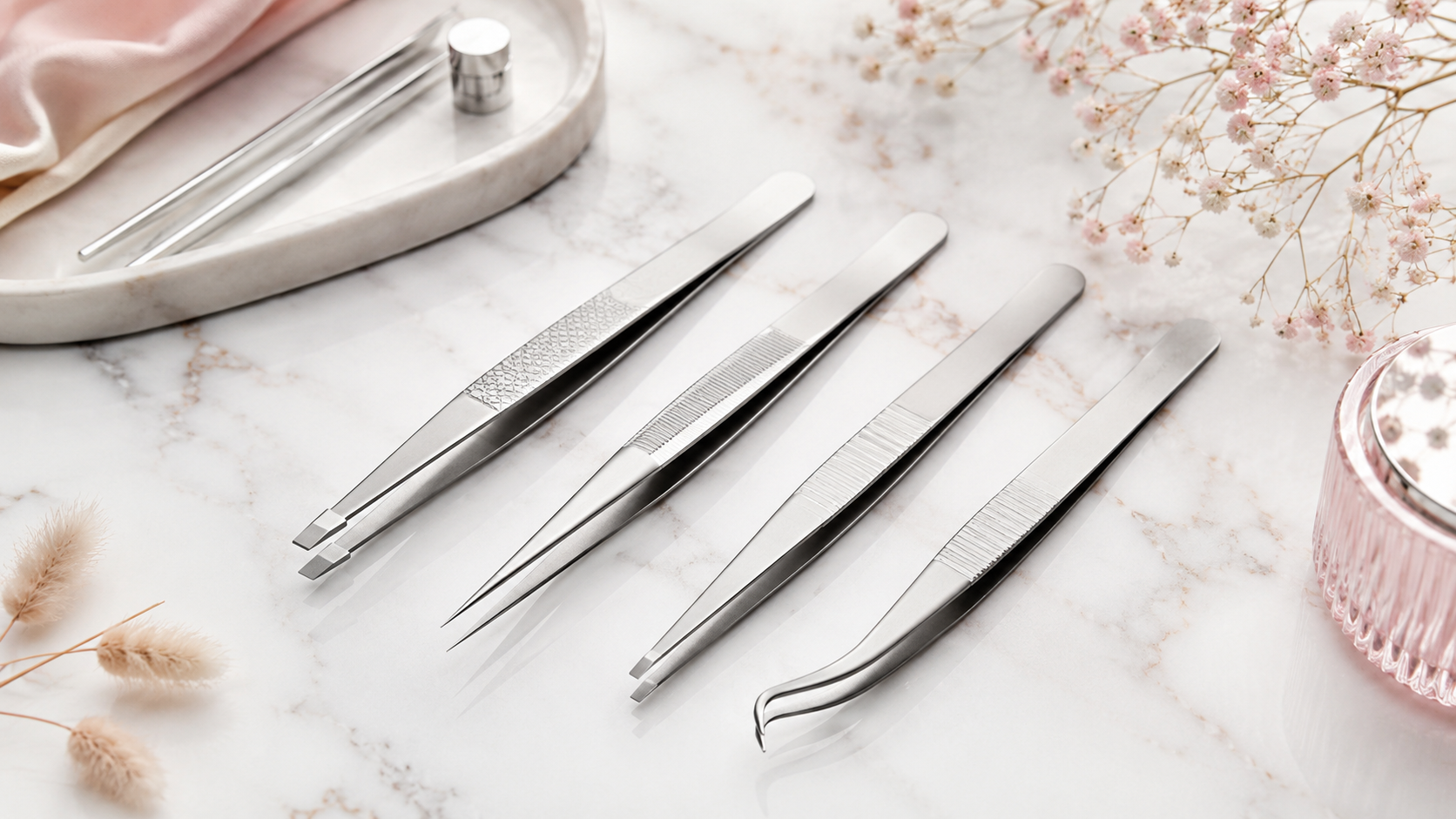
The product style described here is a compact multi-piece set of stainless-steel-looking precision tweezers presented with a blush-pink rigid box and a matching zip case. The set includes several tip geometries, including slanted or angled tips, fine pointed tips and flatter or straighter styles. Some handles show ribbed or etched grip zones designed to reduce slipping during fine work.
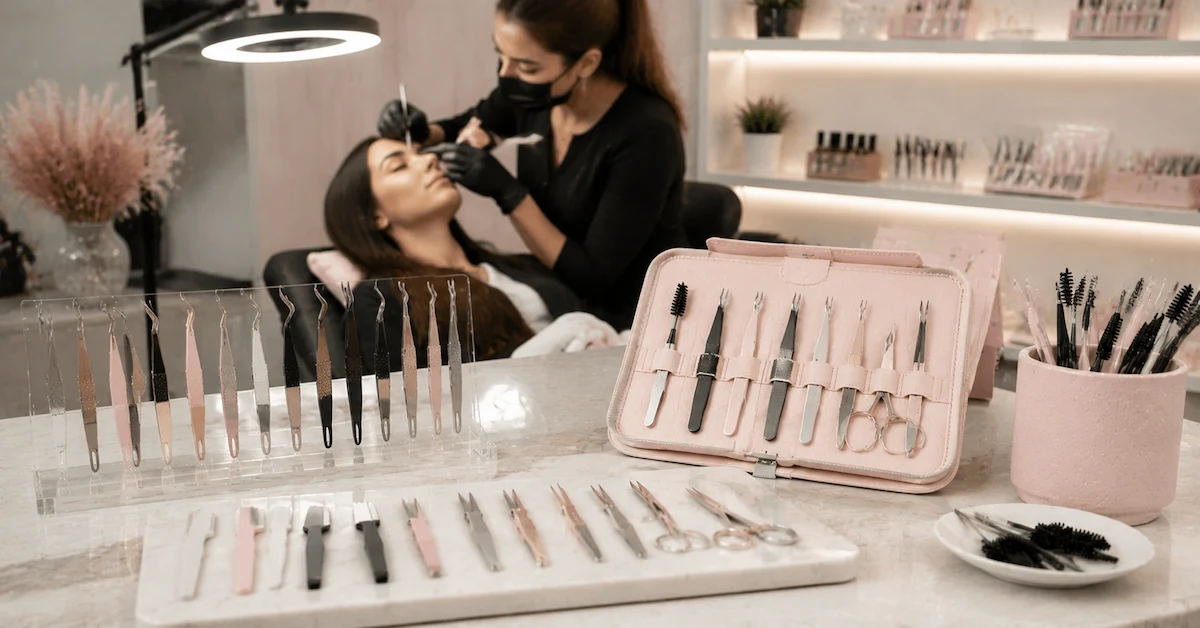
This format is especially suitable for eyebrow grooming, lash work, general beauty kits, splinter removal, craft use and other small-detail handling tasks. It is not positioned as a single industrial specialty tool; it is more useful as a versatile retail or professional grooming set. The mixed-tip format gives buyers more merchandising options because the set can be sold as an eyebrow kit, lash support tool set, giftable grooming accessory or private-label precision tool pack.
The brushed silver appearance suggests a stainless steel or similar corrosion-resistant metal, but buyers should confirm the exact material and finish with the supplier before making product claims. In beauty tools, stainless steel construction is commonly preferred because tweezers are exposed to skin oils, cosmetic residue, moisture, frequent handling and storage in cosmetic bags or salon trays. However, appearance alone is not proof of material grade, corrosion performance or production process.
How to Match Tip Styles to the Intended Use
The most common sourcing mistake is treating all tweezers as interchangeable. Tip geometry determines how the tool performs. A useful supplier should be able to explain which styles fit your target user instead of offering only a generic assortment.
Slanted tweezers for eyebrow grooming
Slanted or angled tips are the everyday choice for eyebrow shaping and general grooming. The angled edge gives the user a better line of sight and helps grip individual hairs at a shallow angle. For salon and retail beauty channels, a slanted tweezer is often the anchor piece in the set because it is familiar, versatile and easy for consumers to understand.
Fine pointed tweezers for detailed picking
Pointed tweezers are used for small hairs, splinters, craft components and other precise picking tasks. They require careful tip grinding because misaligned points are immediately noticeable. When reviewing samples, close the points against a light background and check whether both sides meet evenly without crossing or leaving a gap.
Straight or flat tips for broader contact
Straight and flatter tips can grip slightly broader surfaces without concentrating pressure at a needle point. They are useful in a mixed kit because they expand the set beyond eyebrow shaping. For delicate items, a flatter contact area may feel more controlled than a sharp point.
Curved tips for lash and contour work
Curved tips are often preferred in lash-related work and placement tasks where visibility and hand angle matter. A curved profile can help the user work around contours without blocking the view. If your channel includes lash artists or lash retail kits, ask whether curved-tip options are available and request samples for real application review.
Material, Finish and Manufacturing Details to Confirm
A precision tweezer is typically made through metal forming, cutting or stamping, followed by tip grinding, polishing and final adjustment. Textured grip zones may be created by etching, ribbing, knurling or another surface process. These production steps matter because they influence jaw alignment, closure feel and batch consistency.
Buyers do not need to know every factory operation, but they should ask enough questions to separate a serious tweezers manufacturer from a reseller with limited technical control. A capable supplier should be able to discuss the base material description, visible finish, tip options, handle texture, packaging contents and inspection practices. If a supplier gives vague answers about material or cannot provide close-up sample photos, proceed carefully.
Do not assume that a bright finish means better quality or that a matte brushed finish means lower value. In this category, the functional inspection is more important than the shine. Check whether the jaws close evenly, whether the edges feel clean, whether the handle texture is comfortable and whether the product looks consistent across every piece in the set.
For regulated markets, buyers should also verify applicable requirements for their destination market. For example, chemical restrictions under EU REACH may be relevant to metal articles, coatings, packaging components or accessory materials, depending on how the product is sold. In the United States, consumer product requirements may involve agencies such as the U.S. Consumer Product Safety Commission when products are sold to consumers. Always verify current versions of regulations and request supplier documents rather than assuming compliance from appearance or product category.
Comparison Checklist for Sourcing Teams
Use the following checklist during supplier comparison, sample review and internal product approval. It helps keep the conversation focused on measurable product details rather than only photos and price.
| Evaluation area | What to check | Why it matters |
|---|---|---|
| Tip alignment | Close each tweezer and inspect whether both sides meet evenly without gaps, crossing or twisting. | Alignment determines whether the tool can grip small hairs or objects reliably. |
| Tip variety | Confirm the exact mix of slanted, pointed, straight, flat or curved tips in the set. | The correct assortment supports eyebrow, lash, grooming and detail-use positioning. |
| Handle texture | Feel ribbed, etched or textured zones with dry hands, wet hands and, if relevant, gloves. | Grip texture should improve control without feeling sharp or uncomfortable. |
| Finish consistency | Compare color, brushing, polish and surface marks across all pieces. | Consistent finish helps the set look retail-ready and reduces quality complaints. |
| Packaging | Review the rigid box, zip case, inserts and how securely each tool is held. | Packaging affects shelf appeal, gifting value, transport protection and perceived quality. |
| Documentation | Request material description, packing details, customization options and any relevant compliance documents. | Written confirmation protects your listing accuracy and supports internal approval. |
Packaging and Retail Positioning
Packaging can change how a tweezer set is sold. A loose tweezer may be treated as a low-ticket accessory, while a coordinated multi-piece kit in a rigid box and zip case can be positioned as a giftable grooming set or a more complete beauty tool solution. The blush-pink packaging style works especially well for beauty retail, personal care assortments and private-label cosmetic accessories.
When reviewing packaging, look beyond color. Check whether the case closes smoothly, whether the tweezers remain secure inside, whether the tools rub against one another and whether the box protects the product through normal handling. A case that looks attractive but allows the tools to shift may create scuffs before the customer opens it.
Private-label buyers should ask which packaging elements can be customized. Typical decision points may include outer box design, case color, insert layout, label placement and selection of tip styles. Do not assume every element is adjustable on every order; confirm options directly with the supplier and request artwork requirements before committing to retail launch schedules.
Cost Factors Without Reducing the Decision to Price
Tweezer costs are influenced by more than the metal tool itself. Tip complexity, finishing requirements, handle texture, number of pieces, packaging format, inspection expectations, customization and packing method can all affect the final quotation. A basic single tweezer in simple packaging is not the same product as a multi-piece precision set with a rigid box and zip case.
Buyers should compare quotations on a like-for-like basis. If one supplier quotes a lower cost, confirm whether the same tip mix, same number of pieces, same packaging contents and same finishing expectations are included. Also clarify whether sample costs, customization work, export packaging and documentation are handled separately.
For product planning, it is often better to define a target retail position first and then build the specification around it. A salon-oriented lash kit may need different tip geometry than a general grooming gift set. A retail display product may justify more attention to case presentation, while a professional refill tool may prioritize hand feel and closure consistency.
How to Evaluate a Tweezer Supplier
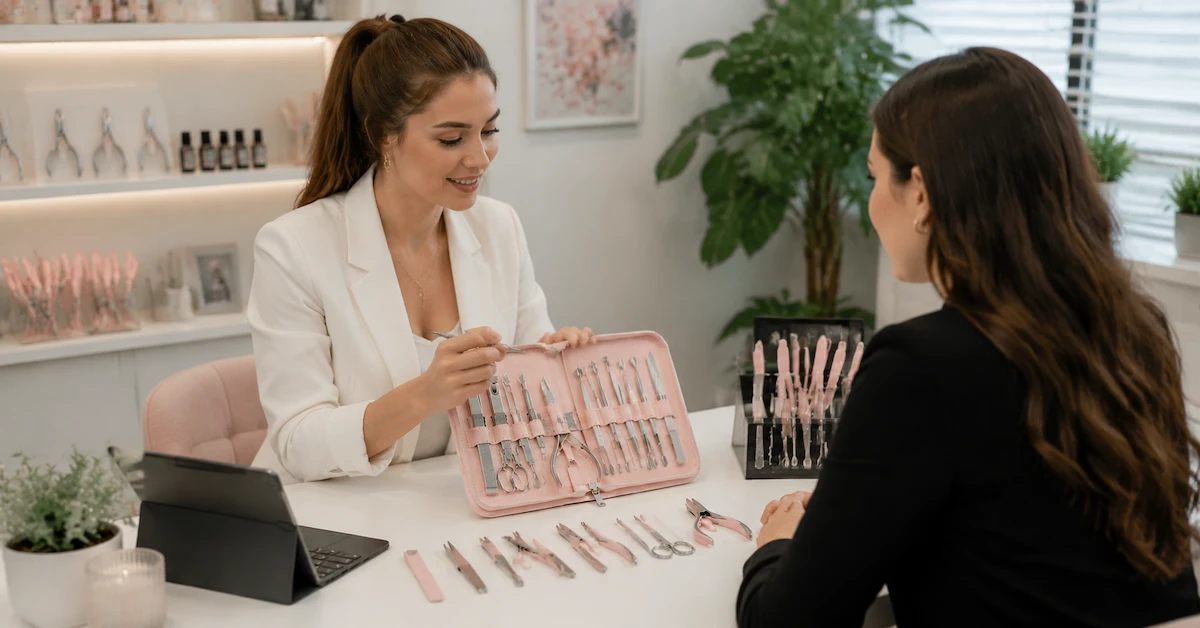
A strong supplier does not simply send a catalog image and a price. The right partner should help you define the set by use case, confirm product details, provide usable sample information and respond clearly to quality questions. If you are comparing options, start with the broader beauty tool product range to see how tweezers fit with grooming kits, manicure tools or personal care accessories.
During supplier evaluation, ask whether the company can provide close-up photos of closed tips, open tips, handle texture and packaging. Request confirmation of the number of pieces, tip styles, material description, finish, case contents and available customization. A reliable supplier should not exaggerate performance or make unsupported certification claims. Instead, they should provide practical documentation and invite sample testing.
It is also useful to compare how the tweezer set fits with other items in your category plan. If you are building a coordinated retail line, review related personal care items through the current collection and consider whether finish, color and packaging language should match across products.
RFQ Details to Include Before Requesting Samples
A clear RFQ reduces delays and prevents suppliers from quoting different assumptions. Include the intended sales channel, target user, preferred number of pieces, required tip styles, packaging expectations and any customization needs. If you need product wording for a regulated market, ask for documentation that supports the claims you plan to make.
- State whether the product is for eyebrow grooming, lash work, general beauty retail, salon distribution, gift sets or mixed-use precision handling.
- List the required tip styles, such as slanted, pointed, straight, flat or curved.
- Ask for close-up images of the tips in both open and closed positions.
- Confirm the visible finish and request a material description without assuming a grade that has not been supplied.
- Specify whether a rigid box, zip case, insert, sleeve, label or custom packaging is required.
- Ask what customization is available and what artwork files or approval steps are needed.
- Request packing information and any applicable compliance documents for your destination market.
After receiving samples, test them under realistic conditions. Use them for the tasks your customers will perform, not only for a quick visual inspection. Try the smallest hair, lash or object that the tool is expected to handle. Compare several samples from the same batch if possible, because consistency is as important as one good unit.
Common Problems and How to Prevent Them
The most common tweezer problems are uneven tips, weak grip, sharp unfinished edges, overly slippery handles, inconsistent finish and packaging that does not protect the product. These issues are preventable when the buyer defines functional expectations early and reviews samples carefully.
If the tweezer does not grip well, inspect the tip contact line first. A small gap can make the tool feel useless even if it looks fine from a distance. If the handle feels uncomfortable, review the grip texture and edge finishing. If the set looks inconsistent, compare surface finish, logo placement if customized and how each piece sits inside the case.
For retail programs, also review the customer unboxing experience. A beauty tool set should look organized when opened. If the tools are loose, tilted or scuffed, the customer may judge the quality before using the tweezers. Packaging inspection is therefore part of product inspection, not a separate cosmetic detail.
Responsible Claims and Documentation
Accurate product claims protect both the buyer and the supplier. If the supplier has not confirmed the exact steel grade, do not publish a specific grade. If testing documents are not provided, do not claim laboratory results. If a certification is not documented for the product or factory, do not imply it exists.
Instead, use careful language that matches the evidence available: precision tweezer set, mixed-tip design, stainless-steel-looking finish if unconfirmed, textured grip zones, rigid box and zip case where verified by sample. If selling into markets with chemical or consumer product requirements, request current documents and verify them against the latest requirements from recognized public bodies or qualified compliance advisors.
Next Step for B2B Buyers
If you are building a beauty retail line, salon kit or private-label grooming set, start by defining the user and the tip assortment. Then request samples and inspect the tools for alignment, grip, finish and packaging security. A restrained but practical sample review will reveal more than a catalog image or a low quote.
To discuss a precision tweezer set or compare packaging options, contact Olimor through the sourcing team. If your specification is already prepared, you can also send a direct product inquiry with the required tip styles, packaging format and customization questions.
FAQ
Can I request samples before placing a bulk order?
Yes. Samples are the best way to check tip alignment, closure feel, grip texture, finish consistency and packaging quality. Confirm sample availability and any related cost directly with the supplier.
Is there a fixed MOQ for customized tweezer sets?
MOQ depends on the product configuration, packaging and customization requirements. Ask for confirmation based on your selected tip mix, case style, logo or artwork needs.
Can the packaging be customized for private label?
Customization may be available for elements such as box design, case color, inserts or labeling, depending on the project. Provide artwork requirements early so the supplier can confirm feasibility.
How should quality be checked before shipment?
Inspection should include tip alignment, gripping performance, surface finish, handle texture, set completeness, case function and retail packaging condition. Buyers should agree on inspection points before production.
What affects lead time for a tweezer set?
Lead time can be affected by sample approval, material and component availability, packaging customization, production scheduling and inspection requirements. Request a project-specific schedule from the supplier rather than relying on a general estimate.