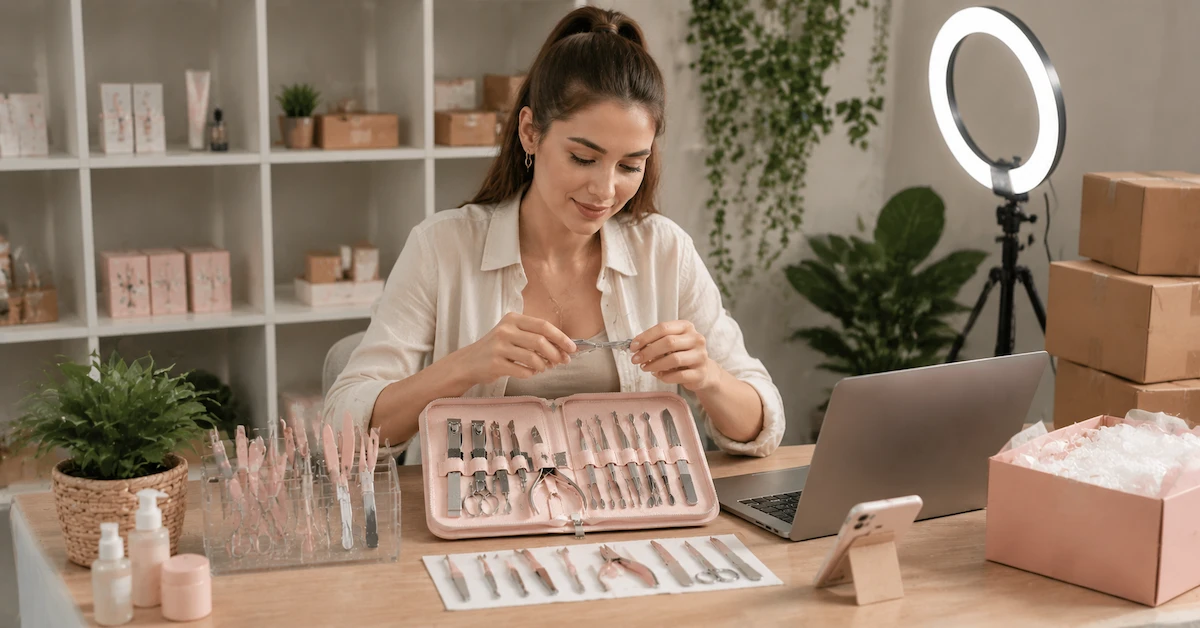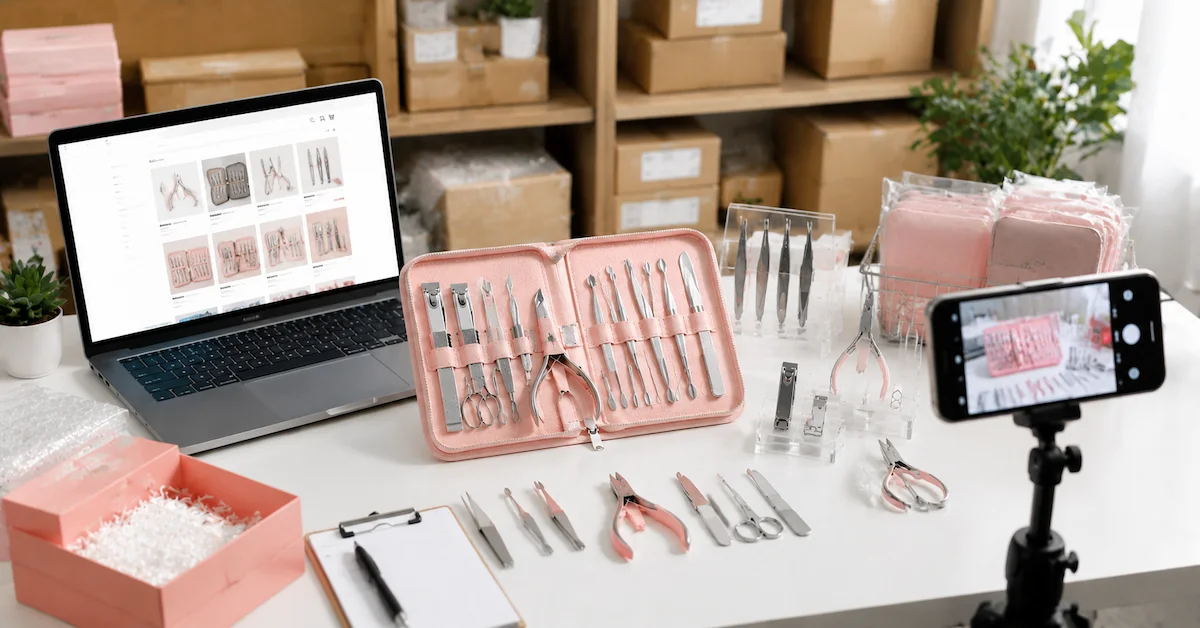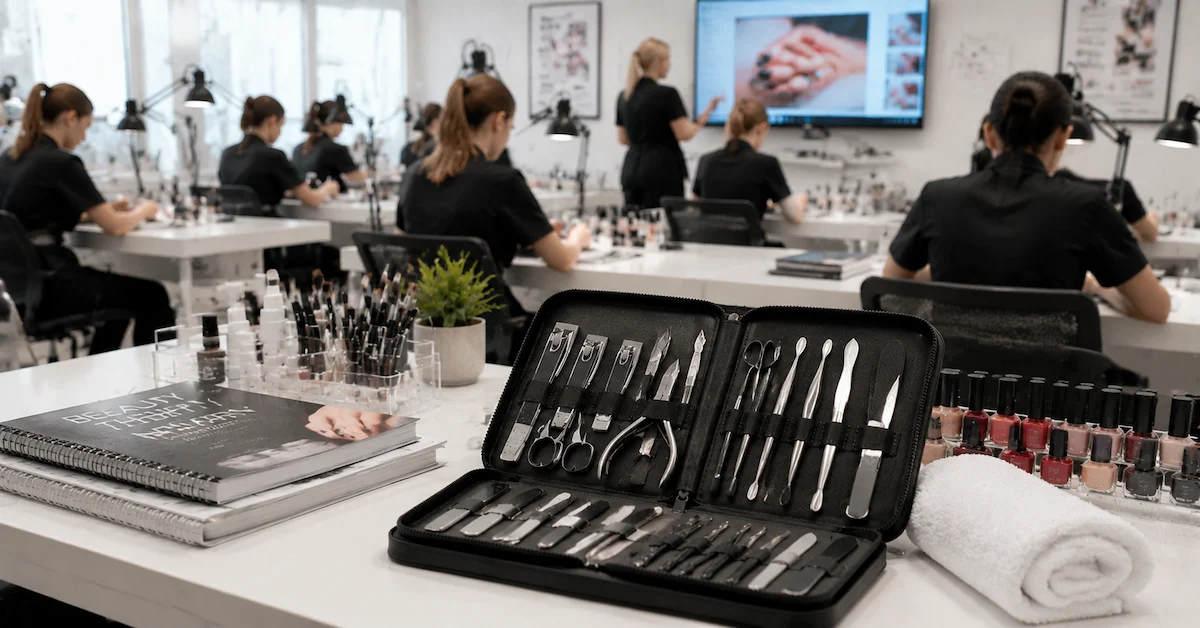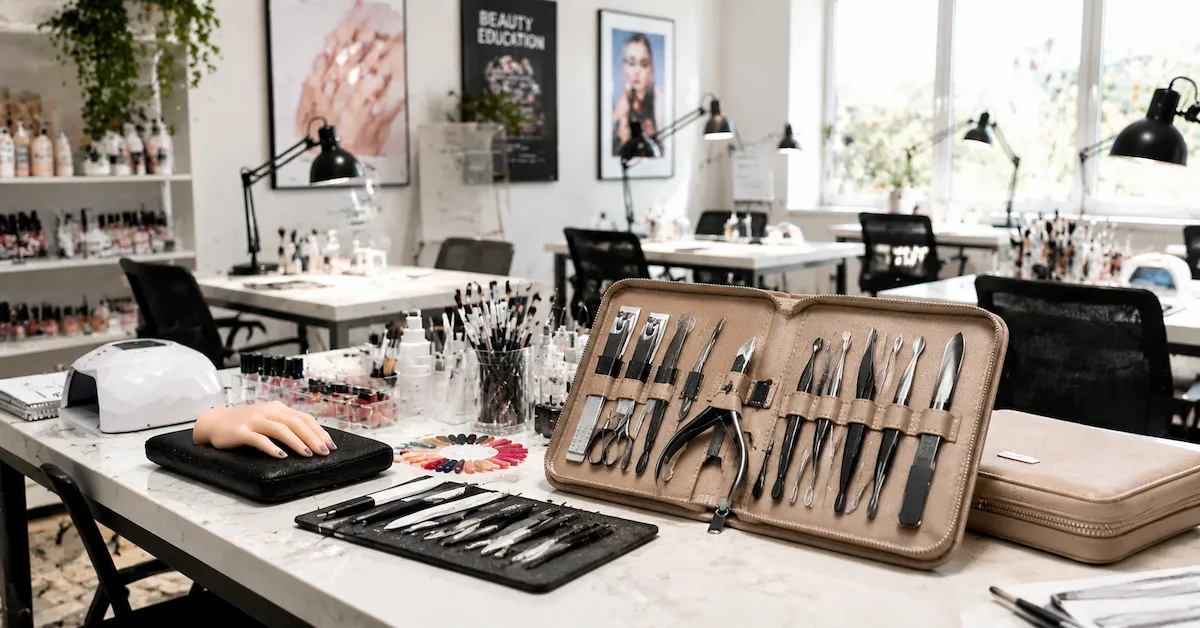











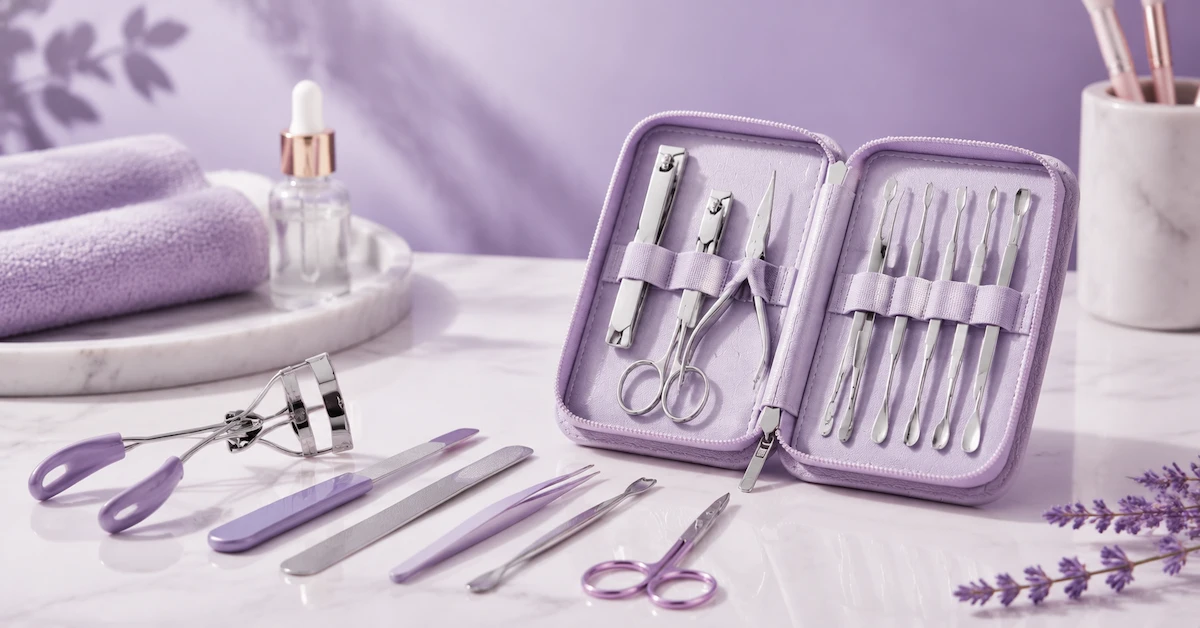
Wholesale buyers searching for professional beauty tools are usually trying to answer a practical question: will this kit be reliable, presentable and suitable for the channel where it will be sold or used? A compact manicure and pedicure kit with a zippered case, organized tool slots and coordinated metal tools can support salon retail, beauty supply distribution, e-commerce gifting, travel grooming and private-label programs. The challenge is knowing what to inspect before placing a larger order.
This guide focuses on one common wholesale format: a portable grooming kit that includes visible nail clippers, cuticle tools, tweezers, a file or buffer, small scissors or nippers and related personal-care accessories, packed in a lavender or purple zippered case. The tools appear polished and coordinated, with elastic retention inside the case. Those visible details matter because wholesale value is not only about tool count. It is about whether the set is easy to understand, easy to merchandise and consistent enough for repeated sale.
What Buyers Mean by Professional Beauty Tools Wholesale
In B2B sourcing, professional beauty tools wholesale does not always mean one single product standard. A salon owner may use the phrase to describe dependable backstock for service support. A distributor may mean retail-ready grooming sets that can move through beauty supply stores. A private-label buyer may be looking for a base product that can be customized with packaging, color or logo placement. The same kit can be suitable for one purpose and weak for another.
For this type of manicure and pedicure set, the strongest commercial uses are often retail, gifting, travel grooming and add-on salon sales. The compact case creates a finished product experience. The coordinated color makes the set easier to photograph. The elastic tool layout helps shoppers understand the contents quickly. These advantages are especially useful for beauty retailers and online sellers, where presentation has to communicate value before the customer touches the tools.
For daily professional nail service, buyers should be more cautious. A kit may look polished and complete, but that does not automatically confirm professional service durability, sterilization suitability or tool grade. Those points should be verified with supplier documentation, sample testing and the buyer’s own use case. A practical sourcing decision starts by separating visual merchandising value from actual service performance.
Visible Product Details That Affect Buying Decisions
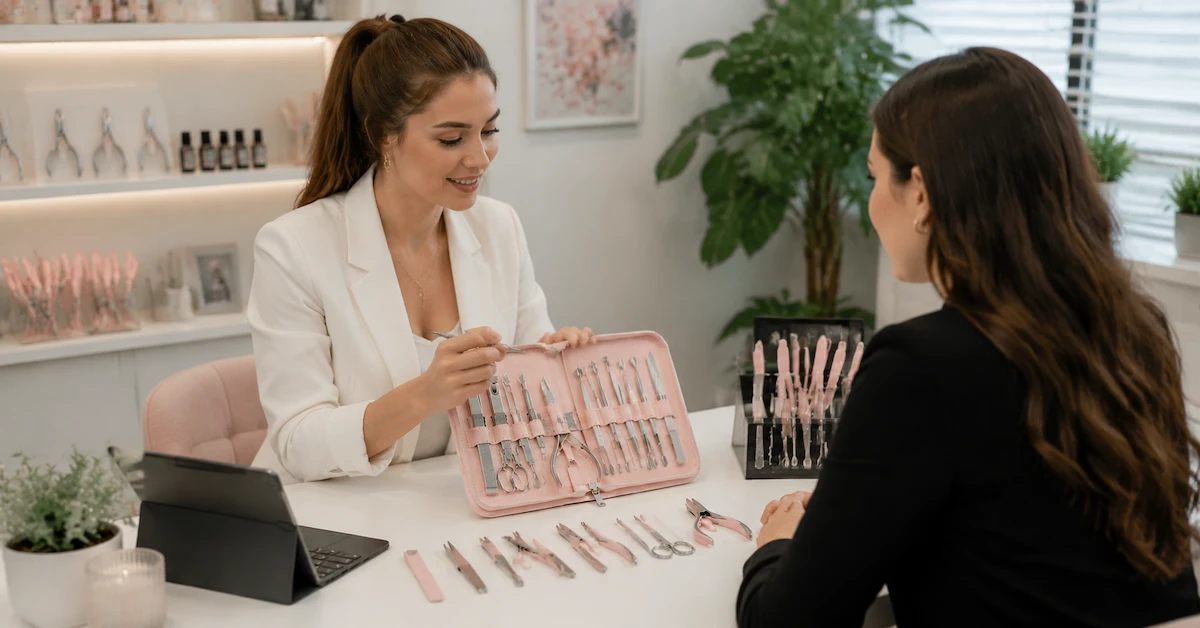
The visible product is a manicure and pedicure grooming kit in a soft purple zippered case. The case opens like a clamshell or small book, with tools held by elastic bands on both sides. This format is common because it keeps small implements organized, reduces tool movement during handling and creates a tidy display when the case is opened.
The visible tool assortment includes nail clippers, cuticle nippers or scissors, tweezers, a nail file or buffer and several pushers or cuticle-cleaning tools. An eyelash curler is also shown separately, which suggests a broader personal-grooming positioning rather than a strictly nail-only set. That may be positive for gift buyers and travel kits, but it should be considered carefully if the target channel is focused only on nail care.
The tools appear to be stainless steel or another polished metal, with purple-coated or purple-handled accents. The case appears to be a PU-style or synthetic leather-look material. These observations should not be treated as confirmed specifications unless supplied in writing. For wholesale procurement, visual inspection is only the first step. Buyers should request the exact tool list, material description, packaging details and customization options before building product listings or retail packaging copy.
How to Match the Kit to the Right Sales Channel
The same grooming kit can perform differently depending on where it is sold. A buyer should define the intended channel before comparing samples, because channel fit affects assortment, packaging, customization and acceptable cost structure.
Salon and spa retail
For salons and spas, a compact kit can work as a client take-home product, reception-area retail item or backup grooming set. The case helps the product feel giftable and organized. However, if the kit will be used by staff in service areas, sample testing should focus on tool action, grip comfort, ease of cleaning and whether each implement is actually useful in the salon workflow.
Beauty supply and retail stores
For beauty supply stores, the case presentation is a major advantage. A coordinated color story and visible layout can make the set easier to display. Retail buyers should check how the kit looks closed, open and packaged. If the item will hang, stand or sit in a box, packaging design should support that display method.
E-commerce and gifting
For e-commerce, the kit needs to photograph clearly and arrive without looking disorganized. Elastic retention and a zippered case are useful because they help maintain the layout during shipping. For gifting, the case finish, zipper feel and color consistency matter because buyers often judge value by touch and presentation.
Private-label programs
For private label, the main question is whether the kit can be adapted without losing coherence. Buyers may want a different case color, logo placement, revised tool selection or retail packaging. Review Olimor’s broader beauty tool range through the beauty tools product catalog to compare possible assortments before requesting a customized quote.
Wholesale Evaluation Checklist
A useful sample review should cover both product function and commercial presentation. The table below can help sourcing teams compare samples from multiple suppliers without relying only on photos.
| Evaluation area | What to check | Why it matters |
|---|---|---|
| Tool assortment | Confirm the exact contents, including clippers, tweezers, cuticle tools, file and any grooming accessories. | Prevents listing errors and helps match the kit to salon, retail or gifting use. |
| Tool action | Open and close clippers, nippers, scissors and tweezers repeatedly during sample review. | Smooth action is more important than appearance for user satisfaction. |
| Edges and finish | Look for burrs, rough spots, uneven polishing, loose coating or sharp unintended edges. | Small defects can lead to complaints, returns or poor perceived quality. |
| Case construction | Check zipper movement, stitching, edge finish, case alignment and odor. | The case carries the retail impression and protects the tools in transit. |
| Elastic retention | Remove and replace every tool to see whether it fits securely without being difficult to access. | A neat layout improves usability and reduces movement during shipping. |
| Packaging fit | Review closed-case dimensions, retail box options, labeling area and shipping protection. | Packaging affects merchandising, storage, freight efficiency and brand consistency. |
| Customization scope | Ask whether case color, logo placement, tool mix or packaging can be adjusted. | Private-label and distributor programs often need product differentiation. |
| Compliance documents | Request applicable material and product documents from the supplier. | Buyers need evidence for their target market and sales channel requirements. |
Manufacturing and Inspection Points Buyers Should Understand
Manicure and pedicure tools are commonly produced through metal forming, stamping, grinding, polishing and assembly, while the case is sewn or assembled separately with a zipper, lining and elastic bands. The important point for buyers is not to memorize the manufacturing process, but to understand where defects are likely to appear.
On metal tools, inspect the working edge, hinge or pivot area, grip surface and overall finish. A nail clipper should close cleanly. Tweezers should meet evenly at the tip. Cuticle tools should feel smooth where the user holds them. A polished tool can still have an uncomfortable edge or weak alignment, so hands-on testing is essential.
On colored or coated handles, compare several samples under consistent light. Look for color variation, uneven coating, scratches or areas where the finish may rub against elastic bands inside the case. If the supplier offers different colors, request pre-production samples for the selected color rather than assuming all colors behave the same.
On the case, check the zipper first. A case that looks attractive but has a catching zipper can damage the customer experience immediately. Stitching should be even, the case should close without forcing, and the tools should not press awkwardly against each other when zipped. If the kit will be sold online, consider drop and transit handling within your own packaging process, because movement in shipping can change how the kit looks when opened.
Cost Factors Without Guessing the Price
Wholesale cost for beauty tool kits depends on several variables, and responsible buyers should avoid comparing only the headline unit price. A lower-cost kit may become expensive if the case fails, tools need replacement, packaging is weak or customization requires extra rework.
Key cost drivers usually include tool count, tool complexity, finish requirements, case material, zipper quality, retail packaging, logo application, color customization, inspection requirements and shipping configuration. A broader assortment may look like better value, but every added tool must serve a purpose. If the target buyer wants a nail-focused set, extra grooming accessories may increase cost without improving sell-through.
Packaging also affects landed cost. A flat zippered case is efficient compared with loose bulky packaging, but the final retail format still matters. A display box, insert card, barcode label or protective sleeve may be necessary depending on the sales channel. Buyers should request quotes that separate product, packaging and customization details so internal teams can compare options fairly.
When reviewing Olimor options or preparing a buying brief, it can help to browse related grooming categories in the beauty tool collection and identify whether the kit should be positioned as a manicure set, travel grooming set, gift set or salon retail product.
Compliance and Documentation Questions for B2B Buyers
Beauty tools are not always regulated in the same way as cosmetics or medical devices, but buyers still need to consider market rules for materials, labeling and consumer safety. Requirements vary by destination, product construction and sales channel. For example, EU REACH requirements may be relevant to chemical substances in materials, while California Proposition 65 may be relevant for products sold into California. Buyers should verify current versions and request supplier documents that apply to the actual product and market.
Do not assume compliance from appearance. A polished metal tool and synthetic case may look ordinary, but professional procurement still requires written specifications, material declarations where applicable and packaging information. If your company has restricted substances requirements, labeling rules or internal quality procedures, share them before sampling rather than after production.
For private-label buyers, documentation should also support accurate product descriptions. Confirm the exact number of tools, names of each implement, material descriptions the supplier can support, country-of-origin labeling needs and packaging claims. Avoid unsupported language such as medical-grade, sterilizable or professional-grade unless the supplier provides documentation and your compliance team approves the claim for the target market.
Common Sourcing Problems and How to Prevent Them
One common mistake is treating all manicure kits as interchangeable. A giftable travel kit, a salon service kit and a low-cost promotional set may contain similar tools, but they are judged differently by end users. Before requesting quotes, define the product role clearly: retail shelf product, salon add-on, private-label line extension, promotional giveaway or e-commerce bundle.
Another problem is overvaluing tool count. More pieces can help a listing look complete, but unnecessary tools can confuse the buyer or increase cost. A focused assortment with clippers, tweezers, cuticle tools and a file may be stronger than a larger kit with items that do not match the channel.
Buyers also sometimes approve samples based only on the closed case. Always inspect the kit open, closed and fully emptied. Remove every tool, check each elastic loop and then repack the kit. This simple test reveals whether the layout is practical. A tool that looks good in the slot may be hard to remove, easy to scratch or awkward to replace.
Finally, do not wait until the purchase order stage to discuss customization. Color matching, logo placement, package artwork and tool substitution can affect feasibility and cost. If you need a branded version, share artwork, target packaging style and channel requirements early. To discuss a tailored configuration, sourcing teams can send details through the wholesale inquiry form.
Supplier Evaluation Questions Before a Larger Order
A dependable supplier should be able to answer practical questions clearly, even when some details require confirmation. For a manicure and pedicure kit, ask for a written product specification, clear photos, sample availability and customization options. If the supplier cannot confirm a feature, it should not appear as a claim in your retail listing.
- What is the exact tool count and name of each included item?
- Can the case color, logo position, packaging or tool assortment be customized?
- What material descriptions can be supported with supplier documentation?
- How are tools inspected for edge finish, action, surface appearance and case fit?
- What retail packaging formats are available for the intended channel?
- How are samples prepared, and will production match the approved sample?
- What documents are available for the destination market or buyer requirements?
- How should defects, replacements or quality feedback be handled after delivery?
These questions help separate a visually attractive product from a commercially reliable one. They also give your team a clearer basis for comparing suppliers beyond price.
Practical Next Step for Wholesale Buyers
The best next step is to run a structured sample review. Compare the kit against your target channel, not against a generic idea of what a beauty tool set should be. If the product is for retail, judge presentation and packaging. If it is for salon support, judge tool feel and workflow. If it is for private label, judge customization potential and documentation readiness.
Olimor can support buyers evaluating manicure, pedicure and grooming tool assortments for wholesale programs. Share your intended channel, preferred case style, packaging needs and customization goals through Olimor contact so the discussion can focus on the right product configuration rather than a one-size-fits-all kit.
FAQ for Wholesale Beauty Tool Sourcing
Can I request samples before placing a larger wholesale order?
Sample requests are a practical part of evaluating manicure and pedicure kits. Use samples to check tool action, case finish, zipper movement, elastic retention, packaging fit and whether the assortment matches your channel.
Is there a fixed MOQ for customized beauty tool kits?
MOQ can depend on the product configuration, customization method, packaging and production requirements. Buyers should confirm MOQ directly with Olimor for the specific kit, color, logo and packaging plan being discussed.
Can the case color, logo or tool assortment be customized?
Customization may be possible depending on the selected product and order requirements. Ask early about case color, logo placement, packaging design and whether individual tools can be added, removed or substituted.
How should quality be checked before approving production?
Approve a physical sample when possible. Check every tool outside the case, test moving parts, inspect finish consistency, open and close the zipper, review packaging and confirm that written specifications match the approved sample.
How can buyers confirm lead time and production details?
Lead time depends on the order, customization and packaging requirements. Confirm timing, sample approval steps, inspection expectations and shipping terms with the supplier before committing to launch dates or retail promotions.