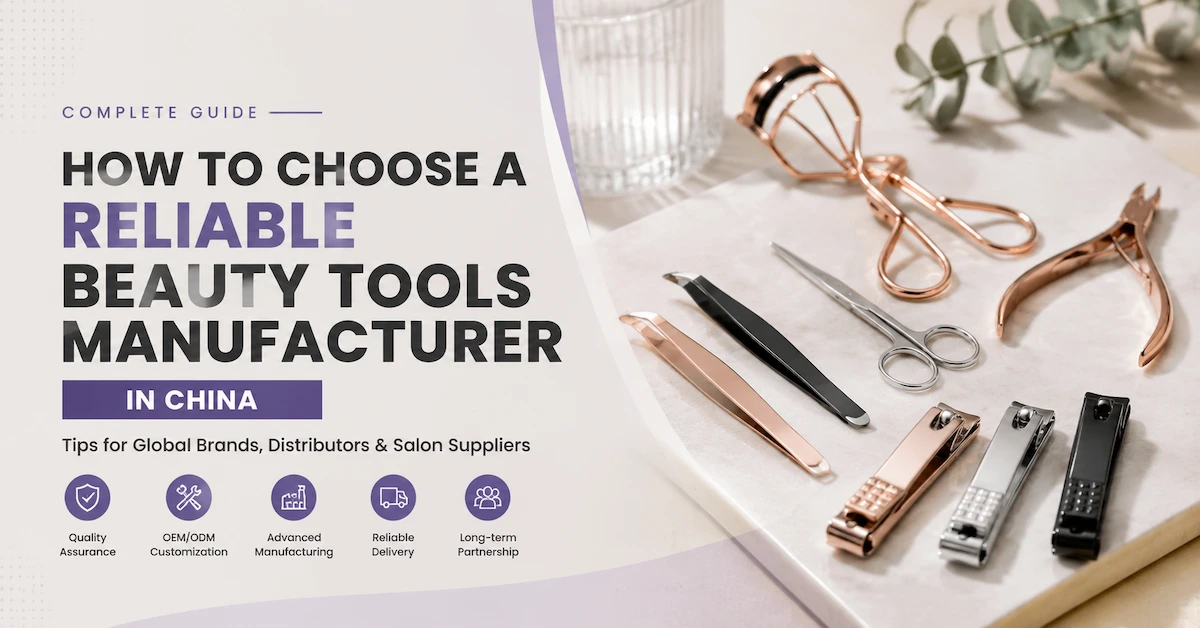
Choosing a beauty tools manufacturer is a sourcing decision that affects product performance, customer reviews, repeat orders and brand trust. For brands, distributors, retailers, salons and gift-set companies, the right supplier should do more than quote a low unit cost. A reliable partner should understand how tools are used, how materials behave during processing, how finishing affects hand feel, and how inspection reduces risk before shipment.
China is an important manufacturing base for beauty and personal care tools, including nail tools, beauty scissors, tweezers, eyelash tools and manicure sets. However, buyers should not assume that every factory can meet brand-level requirements. The strongest sourcing decision comes from comparing product expertise, process control, OEM or ODM support, quality checks, packaging capability and communication discipline before a purchase order is placed.
This guide explains how to evaluate a beauty tools manufacturer for private label, wholesale, professional and retail programs. It also highlights practical inspection questions and supplier-evaluation phrases buyers can use when requesting samples or quotations.
Start With One Clear Product Brief
Before comparing factories, define what the finished product must do for your customer. A mass retail nail clipper, a premium manicure set and a professional brow tweezer may all sit in the beauty tools category, but they are judged by different standards. Retail customers may care about clean packaging, safe edges and value. Salon users may focus on cutting precision, grip comfort and repeatable performance. Gift buyers may judge the case, layout and perceived quality before they test the tools.
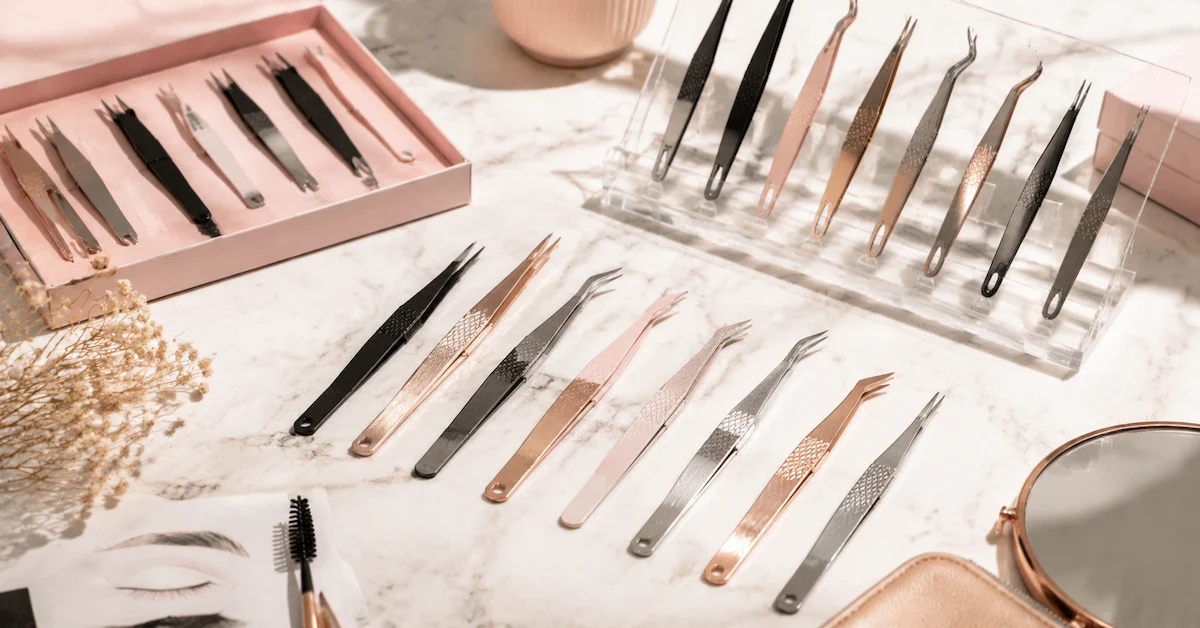
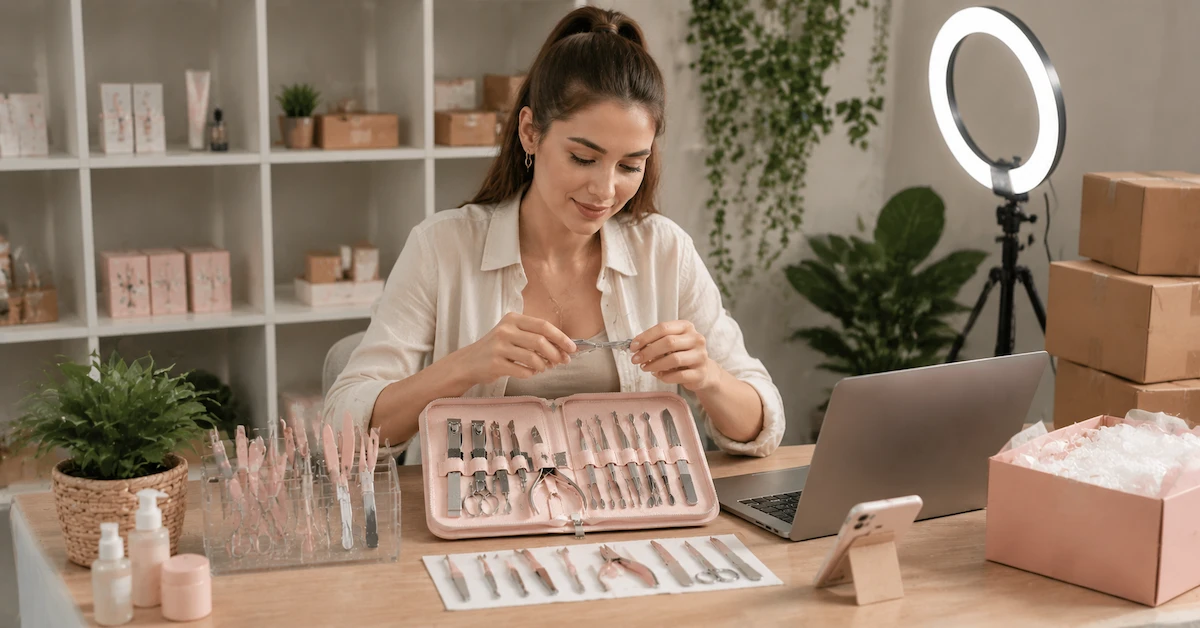
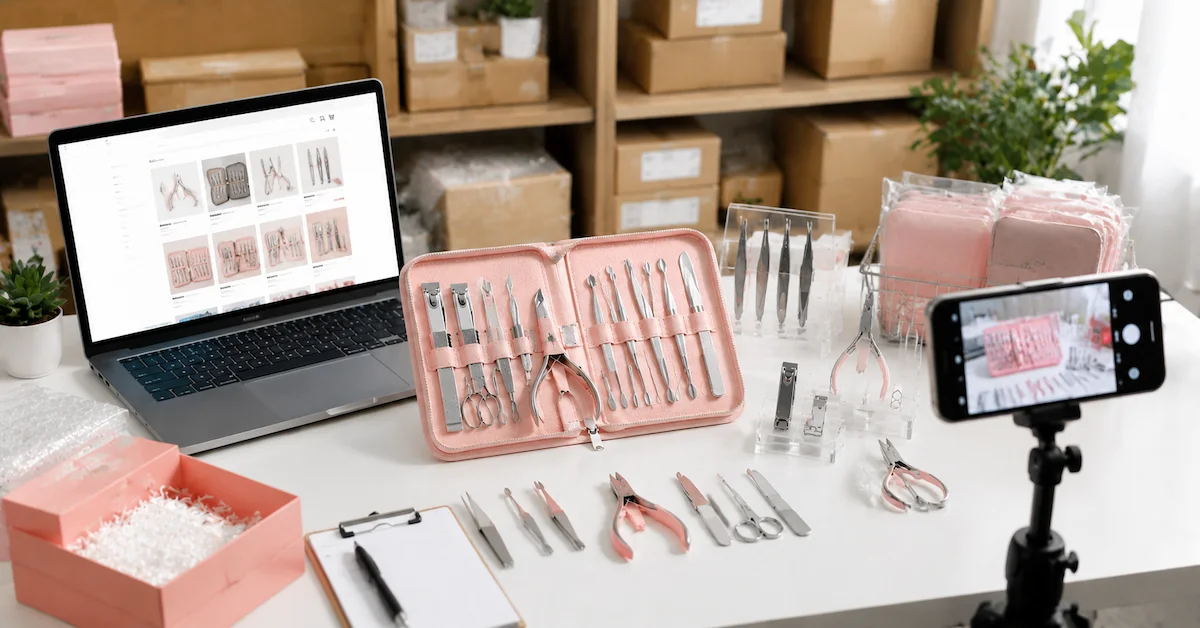
A clear product brief prevents vague sampling and unnecessary revisions. It should describe the target user, sales channel, product positioning, required tool types, preferred finish, packaging format, logo position and any functional features that cannot be compromised. If your team is still comparing product formats, reviewing Olimor beauty tool products can help identify common tool categories, finishes and set configurations before preparing a sourcing request.
Match the Manufacturer to Your Business Model
Different buyers need different supplier strengths. A good beauty tools manufacturer for a salon supply program may not be the best match for a retail gift set, and a wholesaler may evaluate capacity and repeat-order consistency more heavily than product development support.
Private Label and Beauty Brands
Beauty brands usually need product differentiation, logo application, customized packaging and stable quality across repeated orders. For these buyers, an OEM or ODM beauty tools manufacturer can support the path from product concept to sample, production and packaging. Useful support may include shape modification, size adjustment, material discussion, finish options, laser marking or other logo application methods, and packaging artwork coordination.
Distributors and Wholesalers
Distributors normally focus on consistent product quality, competitive cost factors, repeat supply and delivery reliability. They should evaluate whether the supplier can maintain the same finishing, tension, packaging condition and carton protection across multiple purchase cycles, not only on the first order.
Salon, Professional and Retail Buyers
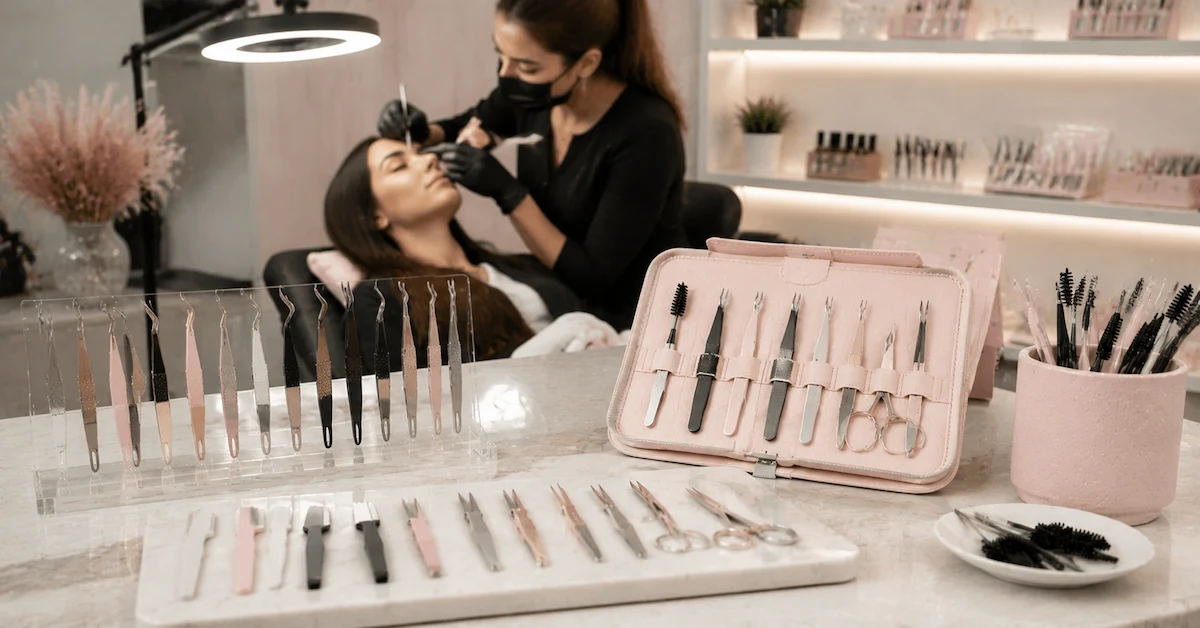
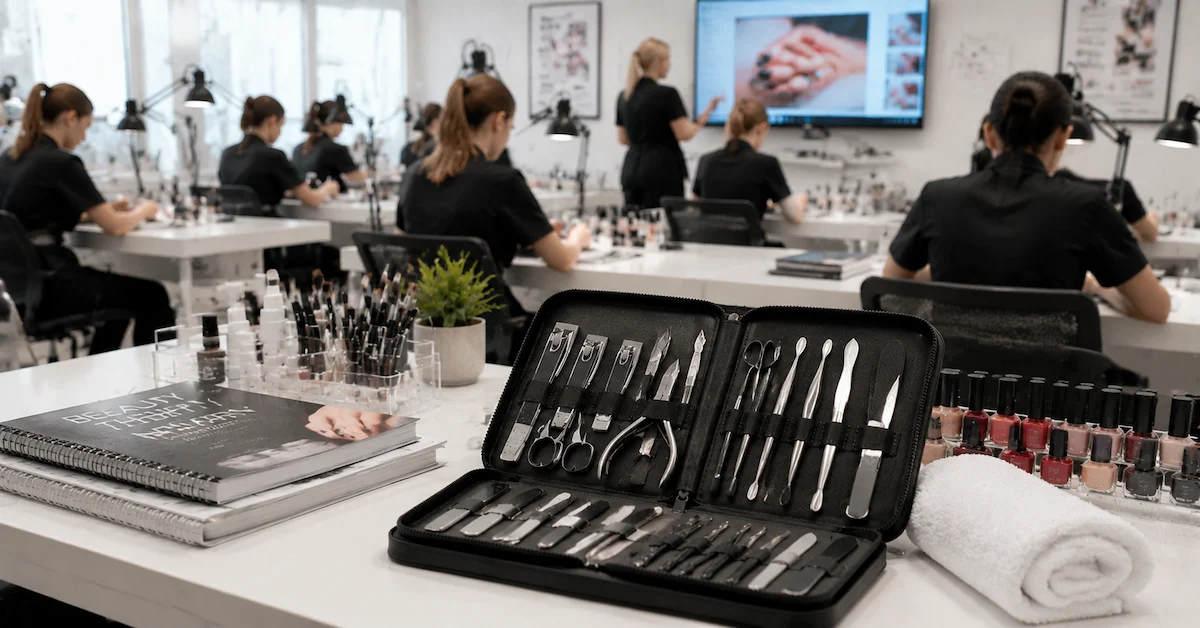
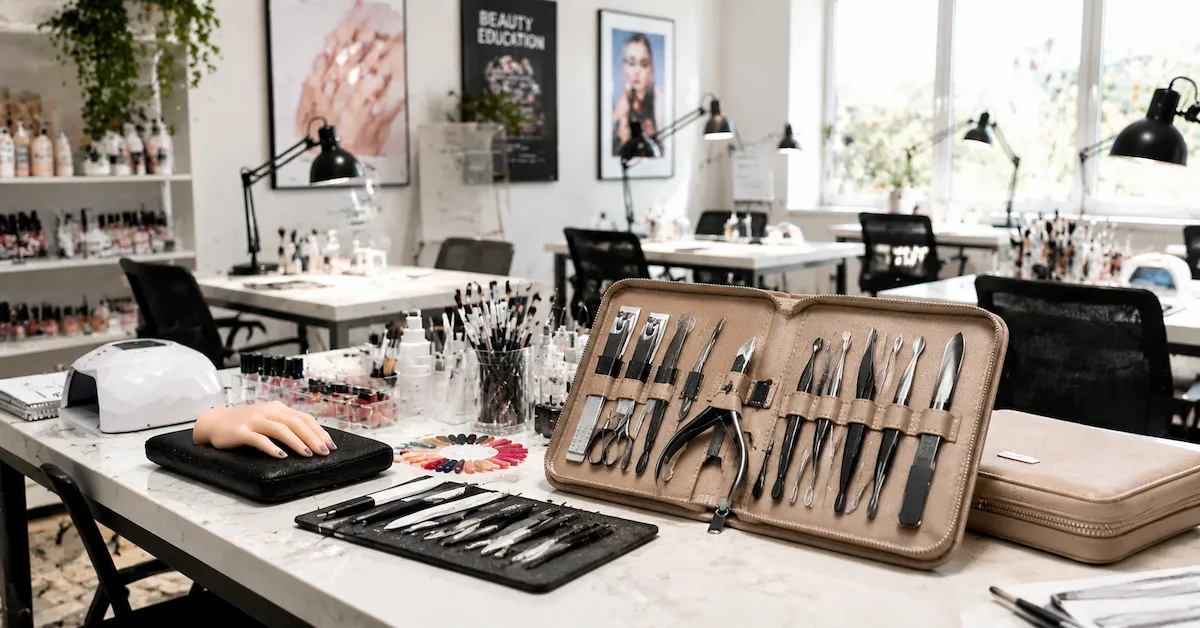
Professional beauty suppliers need tools that feel controlled and reliable in daily use. Nail tools require accurate cutting edges, smooth movement and corrosion-resistance expectations suitable for the intended market. Tweezers require accurate tip alignment, proper elasticity and fine surface finishing. Beauty scissors require precision grinding, balanced tension and comfortable handle design. Retail buyers also need shelf-ready presentation, clear labeling areas and packaging that protects the product during transit.
Evaluate Manufacturing Experience and Product Expertise
Beauty tools are small, but they are not simple. Many defects come from tiny variations in edge finishing, alignment, polishing, plating or assembly. A capable manufacturer should be able to explain how each tool is made and how common defects are controlled during production.
Ask how the supplier manages different product families. Nail clippers, scissors, tweezers, eyelash tools and manicure sets require different processing knowledge. For example, a tweezer sample should be checked for even tip contact and usable elasticity. A nail clipper should close cleanly without obvious blade offset. A manicure set should have consistent finishing across all pieces and should fit securely in its case. A manufacturer with real product expertise can recommend practical improvements in materials, structure, finishing and packaging compatibility instead of only accepting a drawing and quoting a price.
Olimor works in professional beauty tool manufacturing, including stainless steel beauty tools, nail care tools, beauty scissors, tweezers and other personal care products. Buyers can explore wider range planning through the Olimor beauty tools collection when considering product families or future line extensions.
Understand Materials, Finish and Durability Factors
Material selection directly influences tool performance, cleaning, durability and perceived value. Stainless steel is widely used in beauty tools because it can support corrosion resistance expectations, easy cleaning and long service life when properly selected and processed. However, material name alone does not guarantee quality. Buyers should also review material consistency, hardness expectations, surface treatment, edge condition and processing accuracy.
Finishing is equally important. Polishing, brushing, coating or other surface treatments affect appearance, hand feel and customer perception. Premium-looking tools can still fail if edges are rough, tips are misaligned or coating is uneven in recessed areas. When evaluating samples, check visible and less visible surfaces, including hinge areas, inside case contact points and edges that touch skin or nails.
For regulated markets, buyers should confirm the applicable requirements for the product, materials and packaging. Public frameworks such as EU REACH chemical restrictions or relevant ISO quality-management references may be part of a buyer’s documentation review, depending on market and product type. Do not rely on general claims. Verify the applicable version, test scope, supplier documents and whether any report actually applies to the exact item being purchased. Unless a certification is provided and verified, it should not be used in product claims.
Review the Manufacturing Process, Not Only the Finished Sample
A sample can look impressive, but stable production depends on process control. A professional beauty tools manufacturer should be able to describe the main production steps and where inspections happen. Typical stages include material preparation, cutting or stamping, grinding, polishing, assembly, surface treatment, final inspection and packaging.
Material preparation should include checks on surface condition and specifications before production begins. Precision processing may involve cutting, stamping, grinding and polishing depending on the tool type. Assembly should confirm smooth operation, blade or tip alignment, hinge movement and product feel. Surface treatment should support the desired appearance and corrosion-resistance expectations. Final inspection should check appearance, sharpness or grip function, operation smoothness and packaging condition before shipment.
Buyers should ask which processes are handled directly by the manufacturer and which may involve supporting suppliers. Outsourced steps are not automatically a problem, but the main supplier should still control specifications, inspection requirements and defect handling.
Use Samples to Test Consistency, Not Just Appearance
When reviewing samples, do not approve based only on the first visual impression. Hold each tool, open and close it repeatedly, compare several pieces side by side and check how the tool contacts skin, hair or nail depending on its function. Consistency across multiple samples is often more meaningful than one perfect piece.
- Alignment: Tweezer tips should meet evenly, and clipper blades should close cleanly without obvious offset.
- Edge finish: Cutting, gripping or contact edges should be functional without rough burrs or unsafe sharp corners.
- Surface quality: Polishing, coating or brushing should look even across visible and hard-to-see areas.
- Hand feel: Tools should be comfortable to hold, with practical grip, balanced pressure and controlled movement.
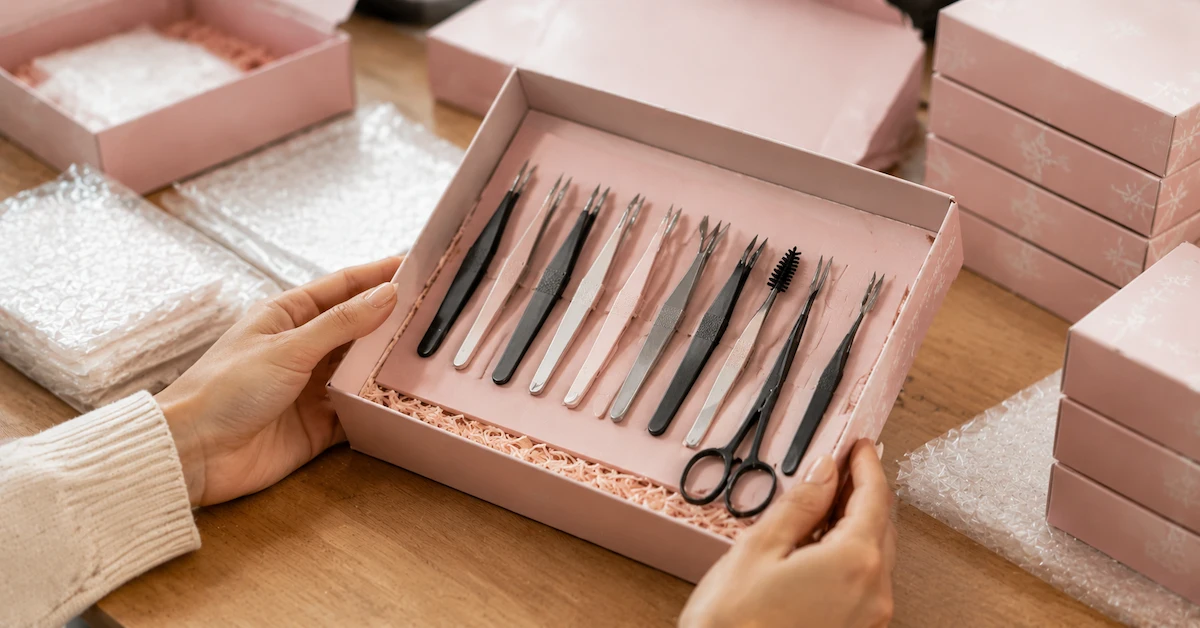
- Set presentation: Manicure tools should fit securely in their case and remain organized during shipping, storage and display.
If a sample fails, ask whether the problem is a sampling adjustment issue, a tooling limitation, a material issue or a production-process risk. The answer will tell you how well the supplier understands root causes.
Compare OEM and ODM Customization Capabilities
Customization is often essential for brands entering or expanding in the beauty tools market. A capable OEM beauty tools manufacturer should support product customization such as shape modification, size adjustment, color or finish options, material discussion and set configuration. Branding support may include logo engraving, laser marking, customized packaging and product presentation planning.
ODM support is useful when a buyer has a market concept but needs help turning it into a manufacturable product. Experienced manufacturers can help improve product functionality, production feasibility and cost efficiency. This reduces the risk of designing an attractive tool that is difficult to produce consistently or too expensive for the intended retail position.
When discussing customization, ask for practical confirmation: where the logo can be placed, how the finish may affect readability, whether a case insert needs adjustment, how artwork files are reviewed and how changes are confirmed before mass production. For project discussion, buyers can contact Olimor through custom beauty tools inquiry with product references, target market and packaging requirements.
Quality Control Questions Every Buyer Should Ask
Quality control should cover more than final inspection. A stronger system includes incoming material inspection, production inspection and finished product inspection. Incoming checks may review material quality, surface condition and specifications. Production checks may monitor processing accuracy, assembly, alignment and function. Finished product checks may review appearance, cutting or gripping performance, operation smoothness and packaging condition.
Ask suppliers how they record defects, how they separate nonconforming goods and how they confirm corrective actions. Also ask how they maintain consistency on repeat orders. A first order may be carefully supervised, but brand owners need the same finishing, tension, packaging and carton protection every time.
| Evaluation Area | What to Review | Why It Matters |
|---|---|---|
| Material and finish | Surface condition, corrosion-resistance expectations, polishing, coating and edge condition | Influences durability, safety, perceived value and customer reviews |
| Function | Grip, cutting action, alignment, spring or hinge movement and repeated-use feel | Determines whether the tool performs well after purchase |
| Inspection process | Incoming checks, in-process checks, final inspection points and defect handling | Helps maintain consistency across larger or repeated orders |
| Packaging compatibility | Retail box, pouch, case, insert, barcode area, label placement and shipping protection | Affects shelf presentation, unboxing experience and transit damage risk |
| Customization readiness | Logo position, finish options, set combinations and packaging artwork workflow | Supports brand identity without compromising product function |
| Communication | Sampling status, order details, change confirmation and documentation | Reduces mistakes and supports smoother launches |
Look Beyond Unit Price: Real Cost Factors in Beauty Tool Sourcing
A low unit cost can become expensive if it causes returns, repacking, rejected goods, launch delays or damaged reviews. When comparing beauty tools suppliers, evaluate total sourcing risk. Important cost factors include material choice, finishing complexity, tooling or adjustment needs, packaging structure, inspection requirements, order management and logistics protection.
Ask whether a lower price changes the material, finishing level, packaging protection or inspection method. A professional supplier should explain the trade-offs clearly. For example, a simplified case may reduce cost, but it must still hold the tools securely. A decorative finish may improve shelf appeal, but it should be compatible with the tool’s function and expected use. A sharp edge may improve cutting performance, but it must be finished safely for the intended product.
Packaging and Presentation Are Part of the Product
For beauty tools, packaging is not only decoration. It protects the product, communicates value and supports retail display. Manicure sets need cases or inserts that keep tools organized. Tweezers and clippers may need retail cards, boxes, pouches or protective caps depending on the sales channel. Gift sets require layout consistency and perceived quality. E-commerce programs need packaging that can withstand handling during transit.
Before production, confirm barcode space, label placement, instruction or warning needs, carton protection and whether the packaging material supports your brand’s public claims. If you plan to describe packaging as simplified, recyclable or plastic-reduced, confirm the exact structure before using those statements in marketing.
Evaluate Communication and Supplier Reliability
Good communication reduces sourcing risk. A reliable manufacturer should confirm specifications in writing, respond clearly to sample feedback, document changes and explain what information is needed before quotation or production. Buyers should provide product references, target positioning, expected packaging format, logo requirements and market requirements as early as possible.
Production capacity and delivery reliability also matter. Instead of asking only whether the supplier can produce an order, ask how they manage production scheduling, repeat orders, packaging materials and export documentation. Avoid relying on unsupported promises. Confirm what is included in the quotation, what remains pending and what documents will be available before shipment.
Responsible Sourcing Without Vague Claims
Many buyers now consider environmental and ethical factors when selecting personal care products. Responsible sourcing should be practical and verifiable. For beauty tools, this may involve choosing long-lasting materials, reducing unnecessary packaging, improving product consistency to avoid waste and selecting packaging structures that match the market’s requirements.
Keep sustainability language accurate. If a product uses stainless steel, describe the material and intended longevity without making unsupported environmental claims. If packaging is reduced or recyclable, verify the composition and local recycling relevance. Strong sourcing practice is based on documentation, supplier transparency and realistic claims rather than broad marketing language.
When Olimor Can Support Your Beauty Tool Program
Olimor focuses on professional beauty tool manufacturing and customized manufacturing solutions for global buyers. Relevant product areas include nail care tools, beauty scissors, tweezers, manicure sets, eyelash tools and other personal care tools where precision processing, finishing and quality checks are important.
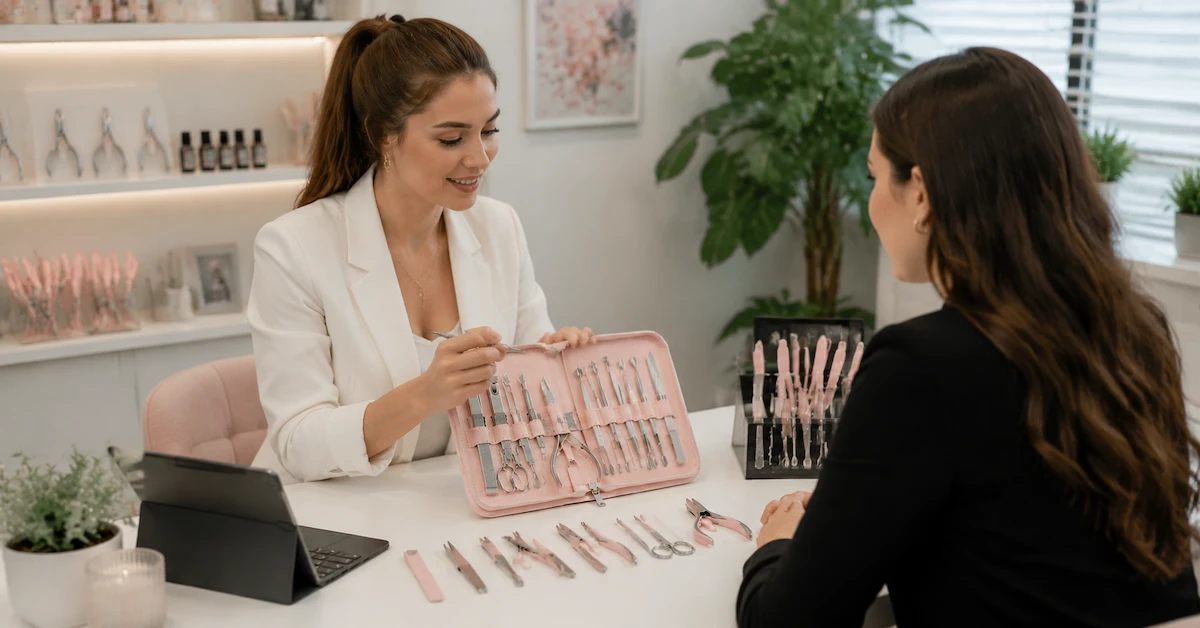
If you are building a private label line, refreshing a manicure set, comparing stainless steel beauty tools or sourcing a supplier for repeat wholesale programs, Olimor can discuss product selection, customization feasibility and packaging direction based on your brief. To start a practical sourcing conversation, share your product type, target user, preferred finish, packaging idea and any documentation requirements through the Olimor contact page.
FAQ
Can I request samples before placing a beauty tools order?
Yes. Samples are important for checking alignment, edge finish, hand feel, surface quality, packaging fit and overall presentation. Buyers should compare several pieces where possible and give clear feedback before approving production.
What should I ask about MOQ?
Ask whether MOQ depends on product type, customization level, packaging structure, finish and material availability. Avoid assuming one MOQ applies to every tool or set. Confirm the current requirement with the supplier for the exact project.
Can beauty tools be customized with my logo and packaging?
Many beauty tools can support customization such as logo marking, finish selection, set configuration and custom packaging. Feasibility depends on the tool shape, surface, packaging format and artwork requirements, so details should be confirmed during sampling.
What quality checks are most important before shipment?
Key checks include material and surface condition, cutting or gripping function, tip or blade alignment, operation smoothness, edge safety, packaging condition and carton protection. Buyers should also ask how defects are recorded and handled.
How should I discuss lead time with a manufacturer?
Lead time can depend on sampling, customization, packaging materials, order quantity and production scheduling. Ask the supplier to confirm the process steps, what information is still needed and when each stage can be reviewed rather than relying on a general estimate.