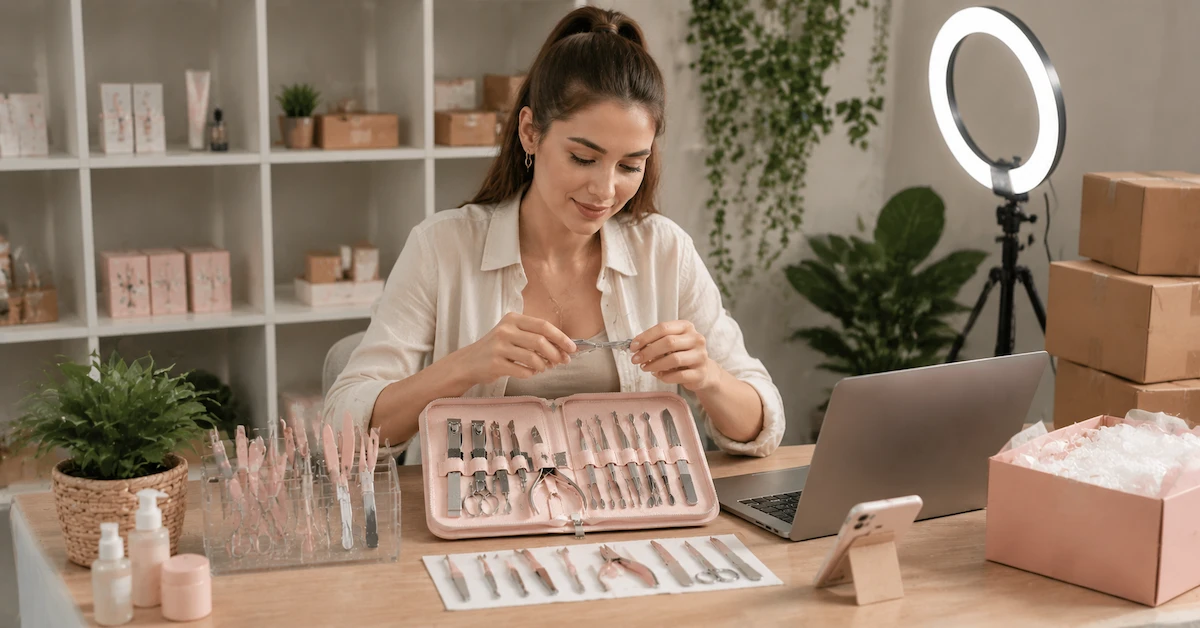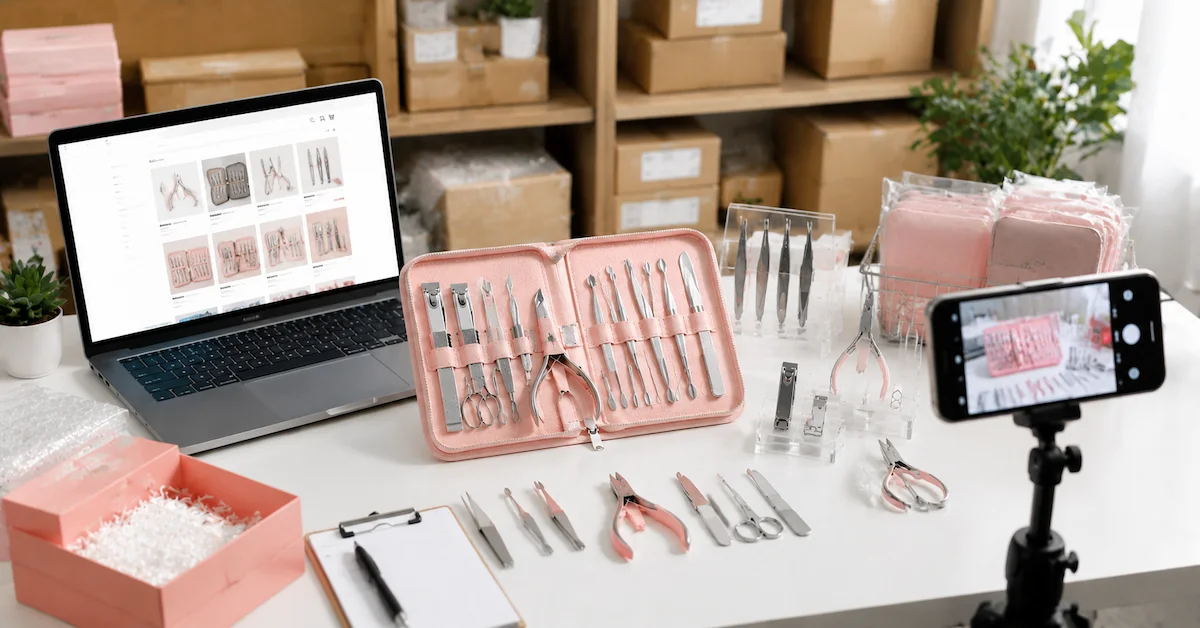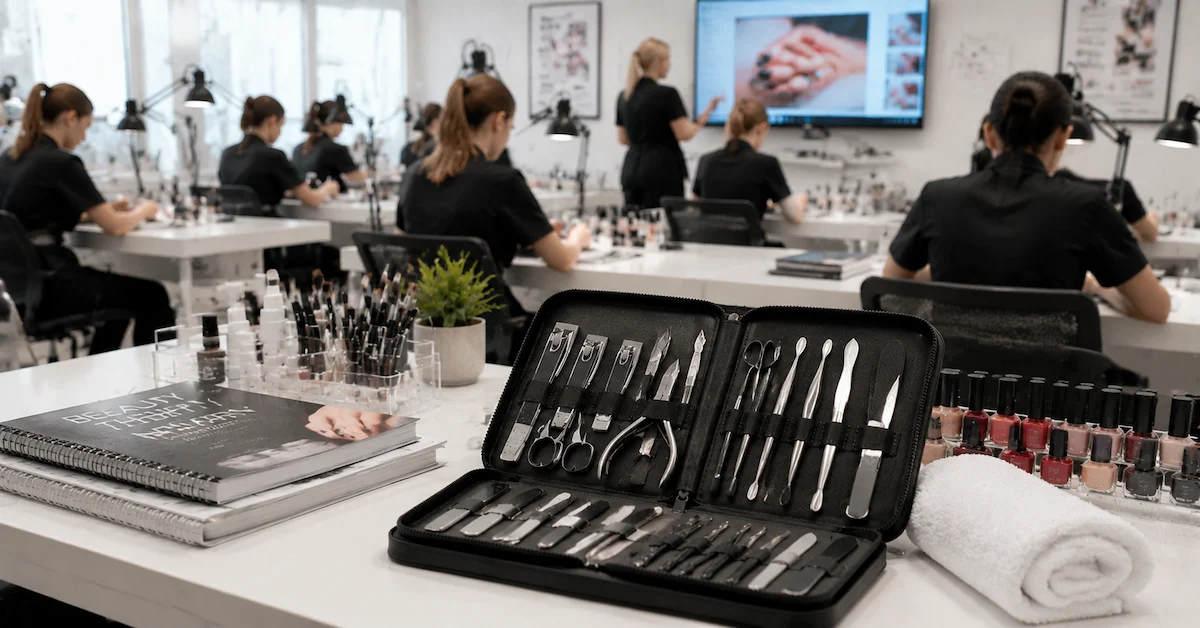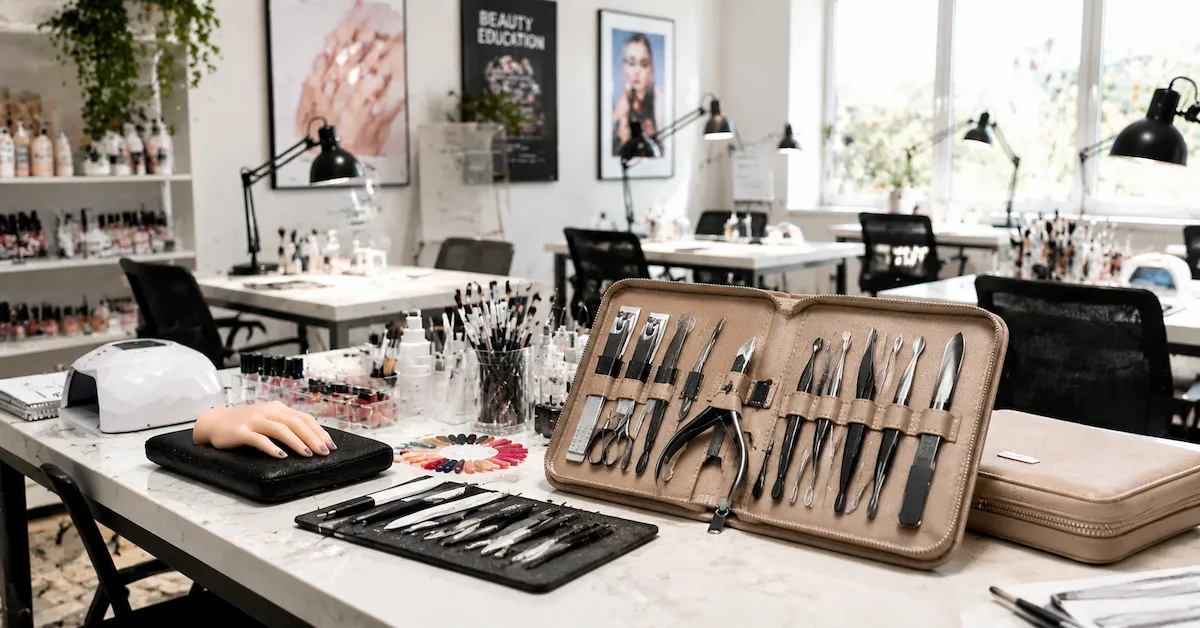
Wholesale foot care tools are best evaluated as a complete grooming system, not as isolated files, clippers or accessories. A useful kit should help the end user file rough skin, trim nails, tidy cuticles, clean tools and store everything in one organized case. For B2B buyers, the real question is whether the set is practical, understandable at retail and consistent enough to support repeat orders.
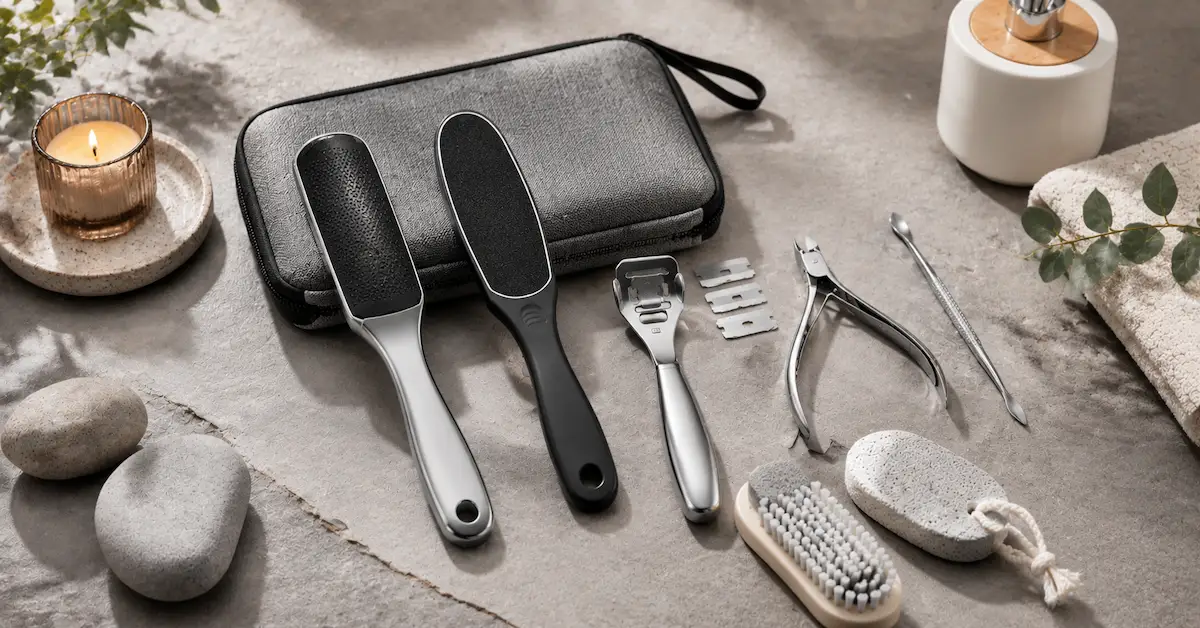
The kit described here includes two long-handled foot files or rasps, a smaller metal callus-remover head, nail clippers, a double-ended cuticle or push tool, replacement blade inserts, a small scrub brush, an oval pumice-like stone and a zippered carrying case with a wrist strap. That mix makes it suitable for foot-care merchandising, personal grooming, travel care, spa resale and private-label assortment planning, provided that claims, materials and packaging are verified before ordering.
Why Buyers Source Foot Care Tools as a Kit
A single foot file solves one visible problem: rough heels or dry skin on the sole. A kit solves a broader shopping need. It gives the customer a simple path from filing to trimming, cleaning and storage. That is why many wholesale buyers look for bundled pedicure tools rather than buying separate items from different sources.
The kit format also improves merchandising. A zippered case makes the product easier to photograph, display and explain. It can be positioned as a personal grooming set, a foot-care maintenance kit, a travel grooming pouch or a giftable self-care item. The buyer does not need to build the assortment piece by piece, and the end user does not need to guess which tools belong together.
For procurement teams comparing options across beauty tool products, this is the first filter: does the set have a clear use sequence? If a customer can understand the function in a few seconds, the kit has stronger retail logic. If the set looks crowded or repetitive, a higher piece count may not translate into better sell-through.
What Is Included and Why Each Piece Matters
A foot-care kit should not be judged only by the number of tools. Each component should have a role that supports the main use case. The visible assortment in this kit covers abrasive care, nail care, cuticle care, cleaning and storage.
Long-handled foot files and rasps
The two long-handled foot files, one silver and one black, are the primary tools in the set. They are designed for working on rough skin areas such as heels and soles. Their long handles help create a clear visual identity for the kit and make the main benefit easy to understand in retail images or packaging.
When inspecting samples, buyers should not rely on appearance alone. Check whether the abrasive surface feels even, whether edges are smooth to the touch and whether the handle transition feels secure. Exact abrasive construction, grit and metal grade should be confirmed with the supplier rather than assumed from the image.
Targeted callus-remover head
The smaller metal callus-remover head adds a more focused tool for targeted rough-skin work. Its inclusion can make the kit feel more complete than a basic file-and-clipper set. However, buyers should be careful with wording. Unless the supplier provides appropriate documentation, avoid medical or clinical claims. This is a personal grooming product, not a medical treatment device.
Nail clippers and cuticle tool
The metal nail clippers and double-ended cuticle or push tool expand the product from foot filing into broader manicure and pedicure care. That matters for wholesalers selling into mixed beauty channels, because the kit can sit beside nail tools, personal-care accessories or travel grooming sets.
Inspection should focus on cutting alignment, spring or lever feel, edge smoothness and the finish of any pointed or narrow ends. A cuticle tool that feels sharp in the wrong place can create complaints even if the rest of the set looks attractive.
Replacement blade inserts, brush and pumice-like stone
The replacement blade inserts suggest that at least part of the kit is intended for continued use rather than immediate disposal. Buyers should confirm how the inserts fit, how they are replaced and how they are packaged for safe handling. The small white-bristle brush supports cleaning after use, while the oval pumice-like stone gives the customer a familiar manual option for rough-skin care.
These supporting pieces do not need exaggerated marketing claims. Their value is practical: they make the kit feel complete and help the customer maintain the tools and skin-care routine more easily.
Materials, Manufacturing and Construction Checks
The main working parts appear to be metal, likely stainless steel or another corrosion-resistant alloy, but the exact material grade is not provided. B2B buyers should therefore treat material statements as items to verify. A polished surface does not prove a specific grade, coating thickness or corrosion performance.
Typical grooming-tool production may involve metal stamping, forming, grinding, polishing, coating and assembly. Abrasive file surfaces may be created by different processes, such as punched textures, etched textures or bonded abrasive layers. Because this detail is not visible from appearance alone, sample testing and supplier confirmation are important.
Practical inspection should include:
- Running a gloved finger carefully around file edges to check for burrs or sharp unintended corners.
- Checking whether abrasive surfaces are even and firmly attached.
- Opening and closing the nail clipper several times to feel alignment and resistance.
- Confirming that replacement inserts fit securely and are not loose in the case.
- Inspecting the zipper, wrist strap and stitching on the carrying case.
- Checking whether the case closes properly after all tools are returned to their positions.
The carrying case is more than packaging. It protects the assortment, improves presentation and reduces the chance that small parts are lost. Exact textile content is not specified, so it should be described as a zippered carrying case unless material details are confirmed.
For regulatory awareness, buyers selling consumer grooming tools should verify applicable requirements in their target market. In the United States, consumer product expectations may involve the U.S. Consumer Product Safety Commission depending on product type and distribution. In the European Union, the General Product Safety Regulation may be relevant for general consumer product safety. Always check the current versions and request supplier documents before making compliance statements.
Best-Fit Sales Channels and Use Cases
This type of wholesale pedicure kit can serve several channels, but each channel values a slightly different specification. A retail buyer may prioritize case appearance, compact layout and clear product photography. A spa or salon resale buyer may care more about clean presentation and tool organization. A promotional buyer may want a useful bundle that feels substantial without becoming bulky. A private-label team may focus on branding space, packaging hierarchy and whether the set supports a clear product story.
Common use cases include at-home pedicure care, heel maintenance, travel grooming, giftable personal-care sets and spa resale. The inclusion of nail clippers and a cuticle tool also supports broader positioning as a manicure pedicure tool kit. However, the foot files, callus-remover head and pumice-like stone should remain the anchor of the product story, because they define the strongest use case.
If you are building a broader assortment, compare this type of item with other grooming and beauty tools in your product collection. The goal is to avoid unnecessary overlap. A foot-care kit should complement nail kits, cuticle tools and general grooming sets rather than duplicate them without a clear reason.
How to Compare Wholesale Pedicure Tool Kits
Good comparison begins with function, not surface decoration. Color, finish and case design matter, but they should come after the basic question: does the kit help the user complete a sensible grooming routine?
| Buying factor | What to check | Why it matters |
|---|---|---|
| Core function | Files, callus tool, clippers, cuticle tool, brush and storage | Confirms the kit covers filing, trimming, tidying, cleaning and organization |
| Material disclosure | Metal type, coating, abrasive surface and case material where available | Prevents assumptions based only on a polished appearance |
| Tool finish | Burrs, uneven abrasive areas, loose inserts and rough handle transitions | Reduces complaint risk and improves perceived quality |
| Replacement logic | How blade inserts are stored, replaced and explained | Supports safe use and better customer understanding |
| Case construction | Zipper movement, strap attachment, stitching and internal fit | Affects shelf appeal, portability and long-term usability |
| Marketing position | Home grooming, travel, spa resale, private label or gift set | Keeps product claims aligned with available documentation |
Cost comparison should also be practical. A lower unit cost may not be better if the case feels weak, the tools rattle, the abrasive surface is inconsistent or the kit requires extra repacking. On the other hand, an expensive-looking finish may not add value if the customer cannot quickly understand what each piece does. Buyers should compare total value, including tool mix, packaging, inspection burden, customization needs and after-sales risk.
Common Sourcing Mistakes to Avoid
The most common mistake is overvaluing piece count. A larger kit can look impressive in a spreadsheet, but duplicate or low-use items may make the product feel padded. A smaller set with a logical grooming sequence can be easier to sell and easier for customers to use.
Another mistake is treating the case as an afterthought. For this type of kit, the case is part of the product experience. A zipper that catches, a strap that feels weak or an interior layout that fails to hold tools neatly can make the whole set feel lower quality.
Buyers also sometimes assume that all abrasive tools perform the same because they look similar in photos. In reality, surface consistency, edge finishing and handle comfort can vary significantly. Ask for samples before committing to packaging or marketing copy.
A final mistake is using unsupported claims. Unless documents support it, do not describe the set as medical-grade, clinically tested, sterilizable or certified. Responsible product copy protects both the buyer and the supplier.
Supplier Evaluation and Pre-Order Checklist
Before placing a wholesale order, procurement teams should use a structured checklist. This reduces confusion between similar-looking offers and helps identify gaps before production or shipment.
- Request a complete component list for the kit, including all tools and replacement inserts.
- Ask for material information for the metal tools, abrasive surfaces and case where available.
- Review sample finish under good lighting, especially edges, joints and abrasive areas.
- Test the nail clipper action, cuticle tool finish and insert fit.
- Confirm whether branding, packaging or case color customization is available.
- Check how the supplier handles samples, order quantities and repeat-order consistency.
- Ask for care, cleaning and storage instructions suitable for end users.
- Verify target-market safety and labeling requirements with current public guidance and supplier documents.
If you need to confirm whether an existing kit can match your retail or private-label plan, send specifications through the product inquiry form. Include your target channel, packaging expectations and any compliance documents your market requires.
Care, Maintenance and End-User Instructions
Useful care guidance can reduce returns and improve customer satisfaction. For a reusable grooming kit, end users should remove debris from files and tools after use, keep the kit dry before storage and return each component to the case so sharp or abrasive parts do not rub against other items. The included small brush can support routine cleaning.
Retail packaging or instructions should also remind users to handle replacement blade inserts carefully and keep grooming tools away from children. Avoid promising that the kit can be sterilized unless the material, construction and supplier documentation support that claim. For most consumer grooming positioning, simple cleaning, drying and safe storage language is more appropriate.
For buyers, maintenance instructions are not just a customer-service detail. They are part of product quality. A kit with clear instructions feels more professional and reduces confusion around replaceable parts, abrasive tools and storage.
Commercial Questions Buyers Should Ask
Commercial evaluation should cover more than the quoted unit price. Ask whether samples are available, what customization options can be supported, what packaging formats are possible and how quality will be checked before shipment. Do not rely on assumptions about MOQ, lead time, certification or testing; these should be confirmed for the specific order.
If the product will be sold under a private label, provide artwork requirements, packaging dimensions, barcode needs and destination-market labeling expectations early. If the product will be sold to spas or retailers, clarify whether the kit is intended for resale, promotional use or internal professional handling. Those differences affect packaging, claims and inspection priorities.
For sourcing discussion, you can contact the team through Olimor contact support with your channel, expected assortment role and any documentation your buyers require.
FAQ
Can I request a sample before placing a wholesale order?
Sample availability should be confirmed with the supplier for the current item and configuration. For this type of kit, reviewing a physical sample is strongly recommended because abrasive feel, clipper action, insert fit and case quality cannot be fully judged from photos.
Is there an MOQ for this foot care tool kit?
MOQ depends on the order requirements, customization level, packaging plan and current supplier arrangement. Buyers should confirm MOQ directly before finalizing artwork, pricing or launch schedules.
Can the kit be customized for private label?
Customization may be possible for elements such as packaging, branding or case presentation, but available options must be confirmed for the specific order. Provide artwork, target market and packaging expectations early to avoid delays.
How should quality be checked before shipment?
Quality checks should include component count, tool finish, abrasive consistency, clipper function, replacement insert fit, zipper movement, stitching and final packing. Buyers should agree on inspection criteria with the supplier before production or shipment.
A Practical Next Step for Procurement Teams
When shortlisting wholesale foot care tools, treat the kit as both a grooming product and a merchandising unit. The best option is not necessarily the one with the most pieces or the brightest finish. It is the one that presents a clear routine, feels reliable in hand, stores neatly and supports claims that can be documented.
Start with samples, verify materials and construction, inspect the case and confirm commercial terms before committing to packaging. With that process, a compact pedicure grooming kit can become a useful evergreen item for retail, spa resale, travel care, gifting or private-label personal-care assortments.