









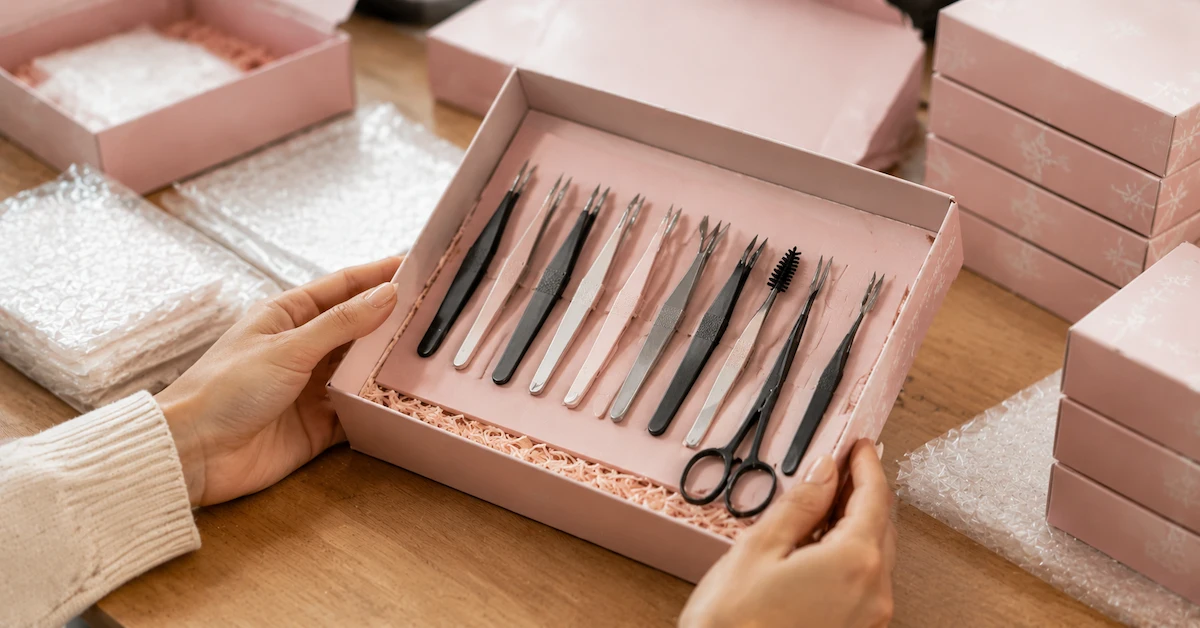
Wholesale eyebrow tools are small products, but they can have an outsized effect on how customers judge a beauty assortment. A tweezer that grips cleanly, compact scissors that feel controlled, and a spoolie that stays intact all suggest that the buyer selected the kit with care. For salons, retailers, gift programs and private-label brands, the goal is not simply to buy eyebrow tools in bulk. The goal is to choose a kit that matches the selling channel, the user’s grooming routine and the level of presentation expected at the point of purchase.
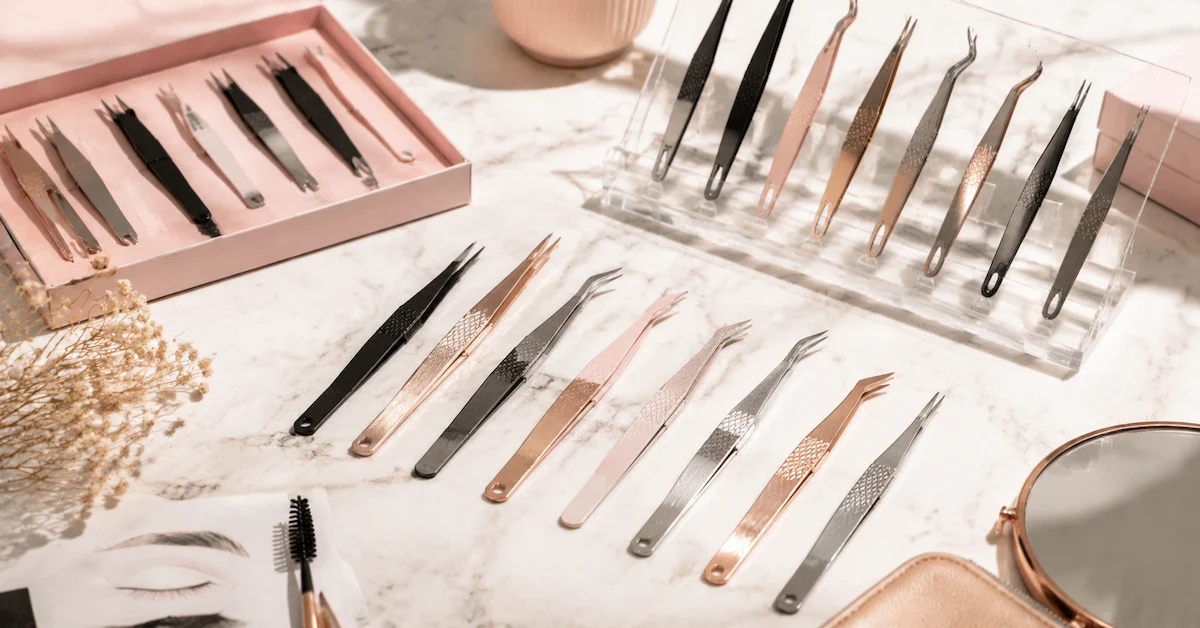
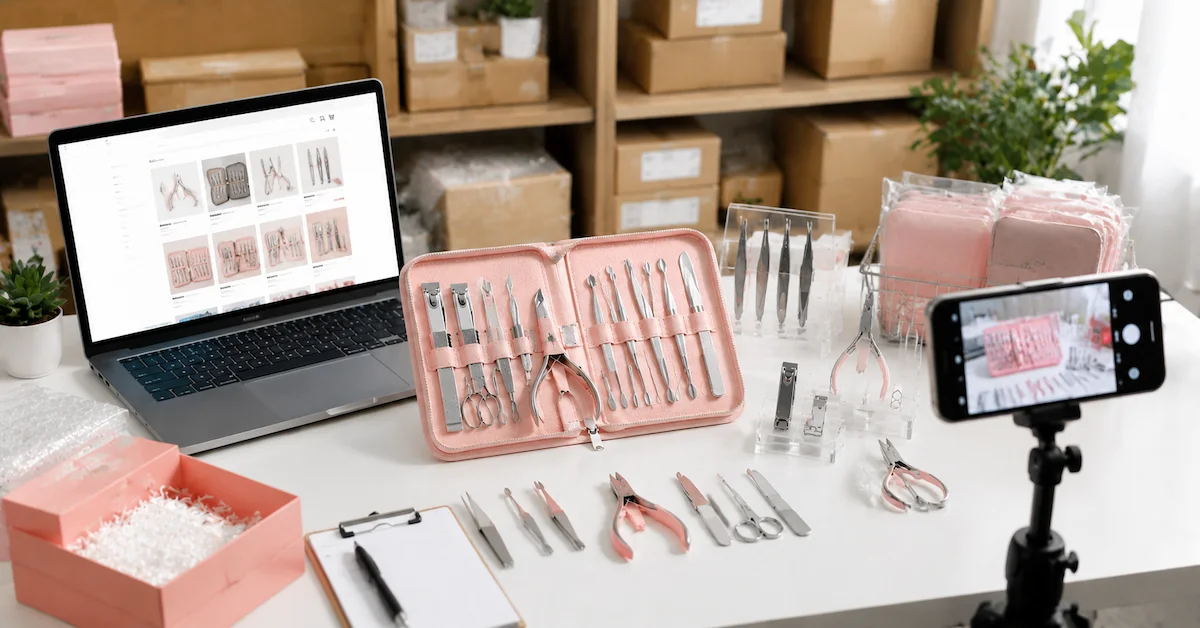
A practical eyebrow grooming kit usually combines several functions: plucking, trimming, brushing and finishing. The product details available for this type of set point to multiple tweezers with different tip shapes or widths, small eyebrow scissors and a spoolie or brush, packed in a shallow rectangular gift box with a lid, pink cardboard, printed decorative pattern and pink interior filler. The tools may use mixed visual finishes such as matte black, polished silver and rose-gold tones. Those details matter because they affect both usability and merchandising.
This guide explains how to compare eyebrow tool kits, what to inspect before ordering, which questions to ask suppliers, and how to avoid common sourcing mistakes. Buyers reviewing beauty accessories can also browse Olimor’s broader beauty tool products to compare related formats and kit positioning.
What Wholesale Eyebrow Tools Are Meant to Solve
An eyebrow tool kit should help users manage common brow grooming steps without needing to buy each item separately. A good set is not defined by the highest piece count. It is defined by whether each tool has a clear role. For most buyers, the useful core is a mix of tweezers, eyebrow scissors and a spoolie or brush.
Tweezers handle individual hair removal and shaping. Different tip shapes support different levels of control. Slanted tips are commonly used for general brow maintenance because they offer a balanced contact area. Fine or pointed tips are better suited to detailed cleanup when a user needs more precision. Wider tips may feel firmer for users who prefer a stronger grip, although they may not be ideal for very delicate work.
Eyebrow scissors support trimming rather than plucking. Their value depends on compact size, comfortable finger loops and a steady cutting feel. A brow scissor should feel manageable near the face and should not behave like a general-purpose craft scissor. The spoolie or brush then supports the finishing step: brushing hairs upward, checking shape, blending brow product and confirming whether more trimming is needed.
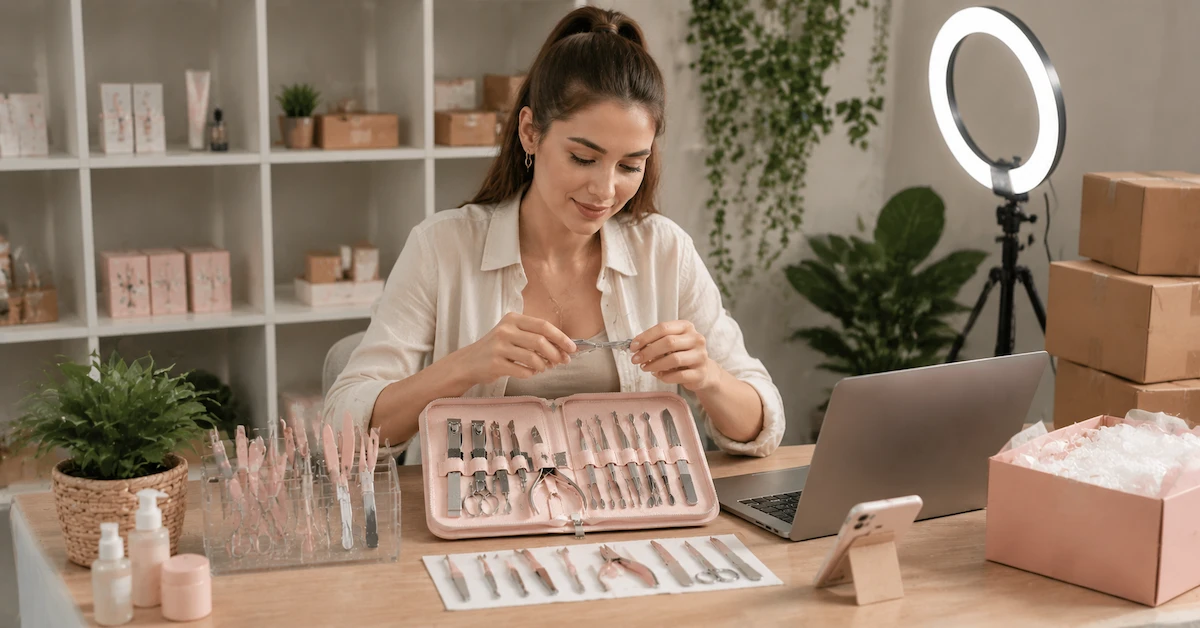
For B2B buyers, the commercial benefit is convenience. A retailer can sell a complete grooming solution. A salon supplier can offer a compact kit for technician use or resale. A private-label brand can turn a simple accessory into a giftable item when the packaging and tool arrangement look intentional.
Match the Kit to the Selling Channel First
The right wholesale eyebrow tools depend heavily on where and how they will be sold. A salon supply buyer, a beauty retailer and a promotional gift buyer may all ask for a brow kit, but they are usually solving different problems.
Salon and professional supply
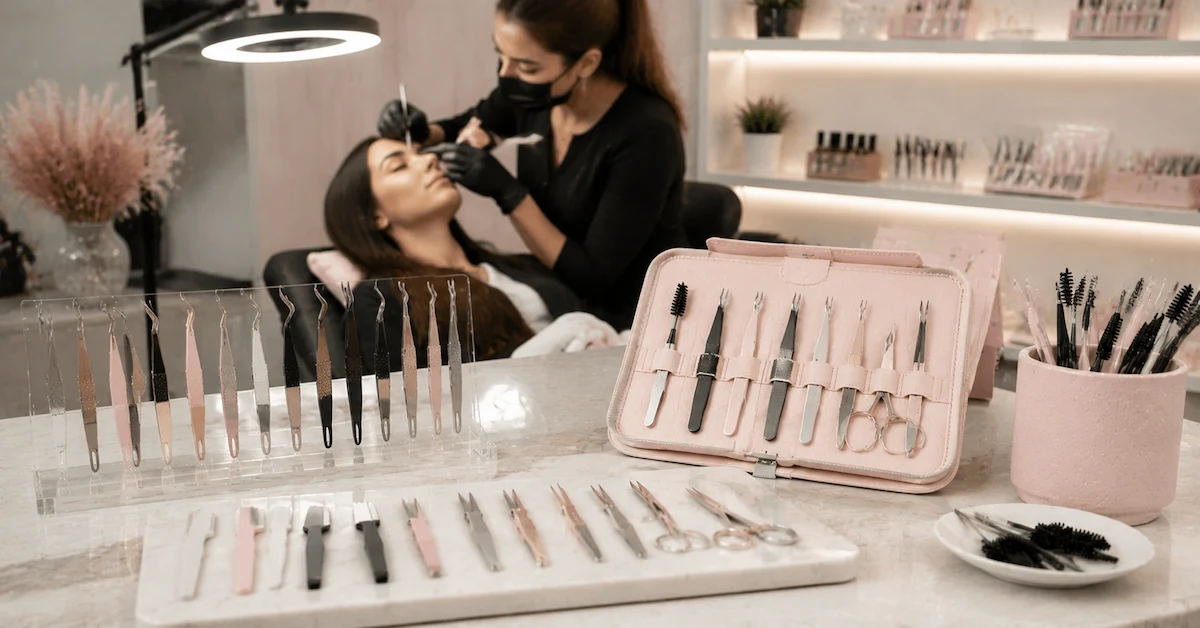
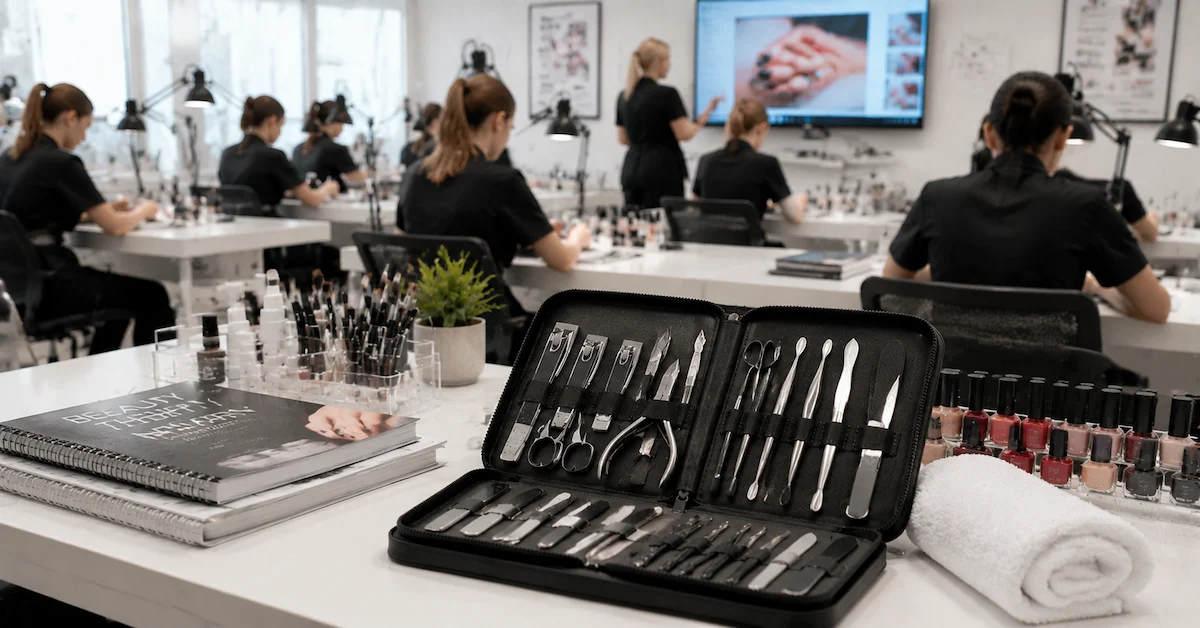
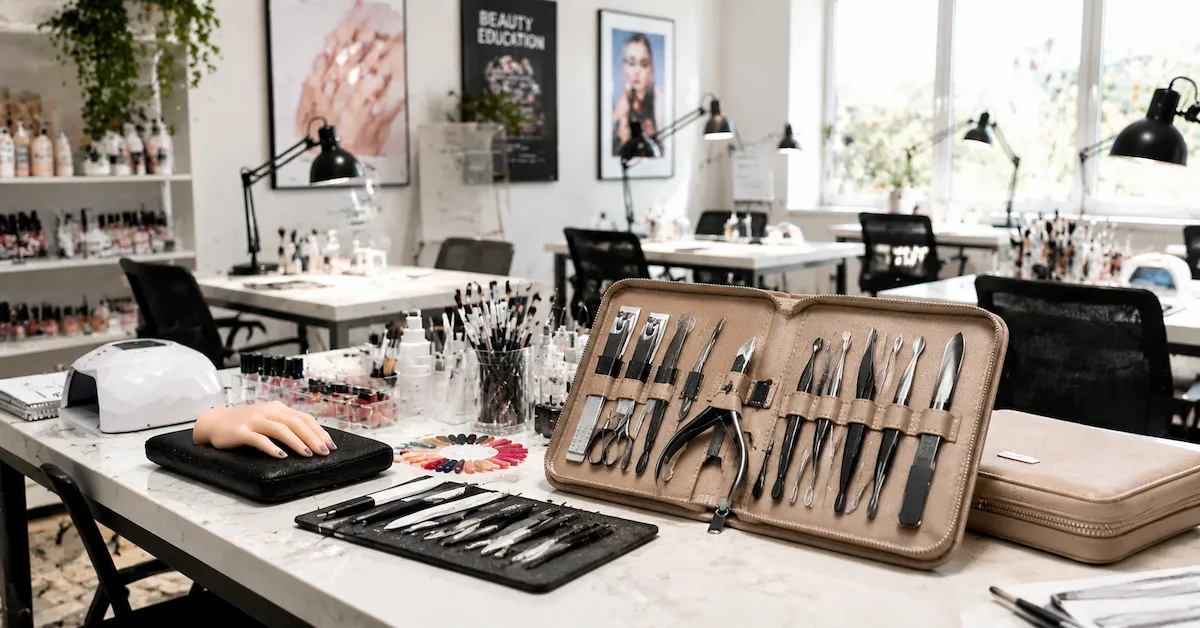
For salon use, handling and consistency matter more than decorative packaging. Technicians care about tweezer alignment, controlled tension, tip contact and scissor comfort. If the kit includes several tweezers, the buyer should confirm that the tips serve genuinely different use cases rather than repeating the same function in different colors.
Beauty retail and e-commerce
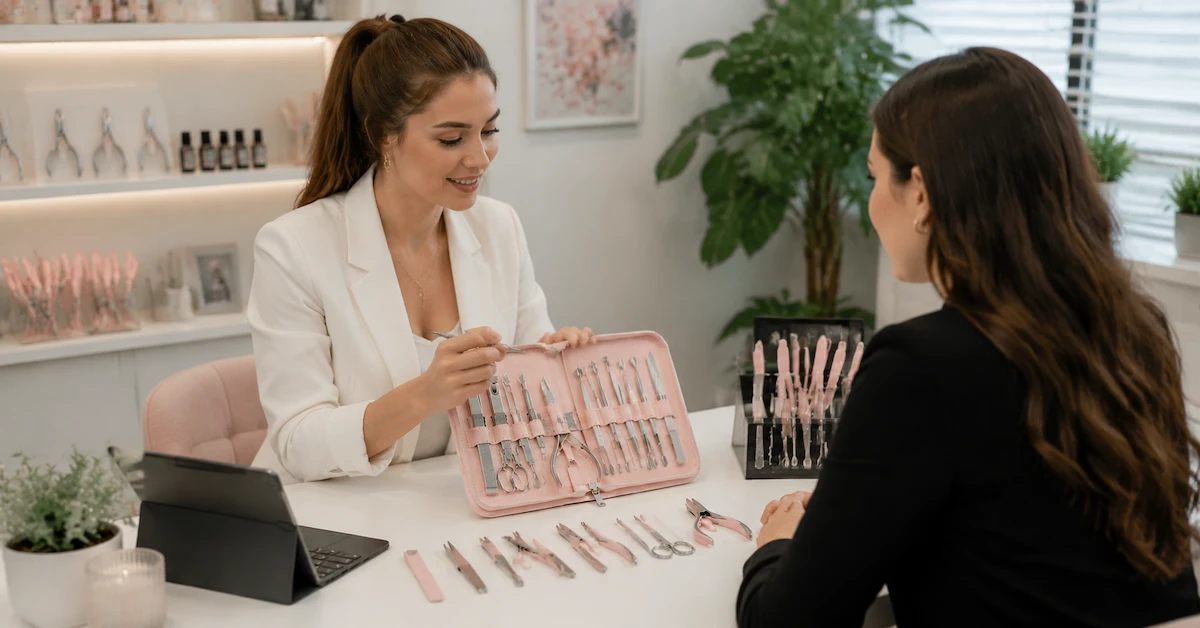
For retail, presentation carries more weight. The described shallow rectangular gift box, printed pink cardboard, lid and interior filler can help a set look more complete on a shelf or product page. The customer should understand the kit quickly: what each tool is for, how many pieces are included and why the set is useful for everyday grooming.
Gifting, bundles and private label
For promotional programs and cosmetic bundles, the kit needs to look finished when opened. Mixed finishes such as matte black, polished silver and rose-gold tones can create visual interest, but they should feel coordinated. If the tools look randomly assembled, the set may appear cheaper even when the components are acceptable.
When planning a private-label or curated assortment, it is helpful to compare product families through a beauty tool collection view before deciding whether the eyebrow kit should stand alone or support a larger grooming range.
Key Components to Compare Before Placing a Wholesale Order
Buyers often start with price, but the first comparison should be functional. If two kits have similar packaging and a similar piece count, the better choice is usually the one with clearer tool roles and more reliable inspection results.
| Component or factor | What to check | Why it matters |
|---|---|---|
| Tweezer tip mix | Confirm whether the set includes slanted, fine, pointed or wider tips. | Different tip shapes support different brow grooming tasks and make the kit more useful. |
| Tweezer alignment | Close the tips and look for even contact without obvious gaps or twisting. | Poor alignment can reduce gripping performance and increase user frustration. |
| Scissor handling | Check finger loop comfort, compact size and steady opening and closing action. | Eyebrow trimming requires control near the face, not just a sharp-looking tool. |
| Spoolie or brush | Check whether the brush head is secure and whether bristles shed easily during handling. | The spoolie is often used before and after shaping, so loose parts reduce perceived quality. |
| Finish consistency | Compare matte black, polished silver and rose-gold or metallic surfaces under normal light. | Uneven color, scratches or patchy coating can cause retail returns or customer complaints. |
| Packaging structure | Review the gift box, lid, printed board, filler and tool placement. | Packaging must display the set attractively and protect components during normal handling. |
| Customization scope | Ask what can be changed: box artwork, color theme, tool mix or labeling. | Clear options help private-label buyers avoid assumptions before confirming a specification. |
This table should be used during sample review, not only during quotation. A supplier’s product photo can show the concept, but samples reveal how the tools feel, whether the finishes are consistent and whether the packaging holds the set securely.
Materials, Finishes and Packaging Details Buyers Should Clarify
The tools in this type of eyebrow kit appear to be metal, and buyers may expect stainless steel or a similar material, but the exact grade should not be assumed unless the supplier confirms it in writing. This point is important for purchasing teams, because material descriptions can affect costing, import documentation, compliance review and customer-facing claims.
Finishes are easier to observe. The product style described includes mixed finishes such as matte black, polished silver and rose-gold or metallic tones. These finishes can improve the perceived value of a modest grooming set, especially in gift packaging. They also create questions worth asking: how consistent is the color between batches, how should tools be handled to avoid surface marks, and what finish variations are acceptable under the supplier’s inspection standard?
Packaging is not just decoration. The shallow rectangular box with a lid, pink cardboard, printed pattern and pink interior filler helps frame the tools and make the kit giftable. For retail, that structure can be an advantage because shoppers often judge beauty accessories before touching them. For shipping, however, buyers need to think beyond the presentation box. The outer carton, inner packing and placement of tools should protect the set from movement, scuffing and crushing during normal logistics.
Regulatory expectations vary by market and product positioning. For metal tools and packaging components, buyers may need to consider chemical restrictions such as EU REACH requirements or consumer product safety expectations under public bodies such as the U.S. Consumer Product Safety Commission. These references are starting points, not proof of compliance. Always verify the current versions of applicable rules and request the supplier’s current material, testing or conformity documents when they are relevant to your market.
Cost Factors Without Reducing the Decision to Unit Price
Wholesale eyebrow tools are often treated as low-cost accessories, but the final commercial result depends on more than the quoted unit price. A cheaper kit may cost more if it generates returns, looks inconsistent on the shelf or requires rework before launch.
Important cost factors include the number of tools in the set, the complexity of the tweezer mix, the finish type, the packaging material, the printed design, assembly requirements and any customization. A simple back-bar salon kit may not need a highly decorative box. A retail gift kit may need stronger visual presentation, clearer labeling and more secure internal placement.
Buyers should also consider the cost of decision delays. If a supplier cannot clearly explain what is included, what can be customized and how samples will represent production, the sourcing process becomes slower. Clear specifications reduce back-and-forth and help purchasing, design and quality teams approve the same product.
Instead of asking only for the lowest price, ask for a quote tied to a defined specification: tool count, tip shapes, finishes, packaging style, branding needs and inspection expectations. If you need to share a defined project brief, Olimor’s product inquiry form is a practical next step for aligning requirements before quotation.
Sample Inspection Checklist for Eyebrow Tool Kits
Sample inspection should be simple, repeatable and linked to the way the product will be sold. The following checklist helps buyers evaluate a kit before committing to a purchase order.
- Confirm the tool count and compare it with the quotation, artwork and product listing.
- Identify each tweezer tip shape and make sure the mix supports different grooming tasks.
- Close each tweezer slowly and check whether the tips meet evenly.
- Hold the tweezers as a consumer would and evaluate grip comfort and tension.
- Open and close the eyebrow scissors to check smoothness, finger loop comfort and control.
- Brush the spoolie gently against the hand or brow area to see whether it feels secure and tidy.
- Inspect matte black, polished silver and rose-gold or metallic finishes for scratches, uneven color or rough edges.
- Open and close the gift box lid several times and check whether the structure feels stable.
- Shake the closed package lightly to see whether tools move excessively inside the filler or insert.
- Review whether the front panel or labeling explains the kit clearly for the intended shopper.
For private-label programs, keep one approved sample as a reference. It gives the buyer, supplier and quality team a shared comparison point for finish, arrangement, packaging color and tool composition.
Common Sourcing Mistakes and How to Avoid Them
The first common mistake is choosing by appearance alone. A brow kit may photograph well, especially in a decorative pink gift box, but it still needs functional tools. If the tweezers do not align, the scissors feel awkward or the spoolie sheds, the packaging will not protect the buyer from poor reviews.
The second mistake is overloading the kit with similar tools. Multiple tweezers can be valuable, but only when they offer different uses. Three nearly identical tweezers can make the set look larger without making it more helpful. Buyers should ask suppliers to describe each tool’s purpose in plain language.
The third mistake is ignoring channel fit. A salon buyer may prioritize tool feel and repeat handling. A retail buyer may need stronger packaging and clearer customer explanation. A gift buyer may care about the unboxing impression. Selecting one kit for all channels can work only if the specification genuinely supports those different uses.
The fourth mistake is assuming material and compliance claims. If the exact metal grade, coating process or regulatory documentation matters to your customer or destination market, ask for confirmation before order approval. Do not build product descriptions around assumptions.
How to Evaluate an Eyebrow Tool Supplier
A good supplier should make the sourcing process clearer, not more confusing. Start by asking for a complete product breakdown: tool count, tweezer tip types, scissor style, brush or spoolie details, finish options and packaging format. The answer should be specific enough for your purchasing and design teams to understand what will be supplied.
Next, evaluate communication during sampling. Does the supplier explain which parts can be customized? Can they confirm whether the shallow rectangular box, printed pattern, filler color or tool finish can be adjusted? Do they distinguish between visual options and confirmed material specifications? These details help prevent misunderstanding later.
Quality control should also be discussed early. Buyers do not need an overly complex process for every accessory, but they should agree on practical inspection points: tool count, finish appearance, tweezer alignment, scissor operation, spoolie security, packaging placement and carton condition. If a buyer has market-specific compliance needs, the supplier should be able to provide relevant current documents or explain what is available for review.
For projects that require discussion of packaging, sample review or customization, contact the Olimor team through supplier support and contact with your intended channel, target kit style and packaging expectations.
FAQ for Sourcing Teams and Product Managers
Can I request samples before confirming a wholesale eyebrow tool order?
Yes. Samples are important because they let you inspect tweezer alignment, scissor handling, spoolie quality, finish consistency and packaging structure before purchase approval. Confirm whether the sample represents the intended production specification.
Is there a fixed MOQ for eyebrow tool kits?
MOQ depends on the selected product, packaging, customization and production arrangement. Ask the supplier to confirm the current MOQ for the exact kit and branding requirements you are considering.
Can the packaging or tool mix be customized?
Customization may be possible for elements such as box artwork, color theme, labeling or tool combination, depending on the project. Buyers should confirm available options, approval steps and any effect on cost before finalizing specifications.
How should I check quality before shipment?
Agree on practical inspection points in advance: correct tool count, defined tip shapes, finish appearance, tweezer closing action, scissor operation, spoolie security and packaging condition. Keep an approved sample as the reference for comparison.
How long does production or delivery take?
Lead time varies by order size, customization, packaging and production schedule. Request current lead-time information directly from the supplier when you submit your specification.
A Practical Next Step
The best wholesale eyebrow tool kit is the one that fits the channel, not the one with the most pieces or the flashiest photo. Start with the user’s grooming routine, confirm the tool mix, inspect samples carefully and make sure the packaging supports your retail, salon or private-label plan.
For buyers building a beauty accessory assortment, a well-chosen brow kit can be more than a low-ticket add-on. With clear tool functions, consistent finishes and suitable gift-style packaging, it can become a dependable item that supports repeat purchasing and strengthens the overall presentation of the brand.