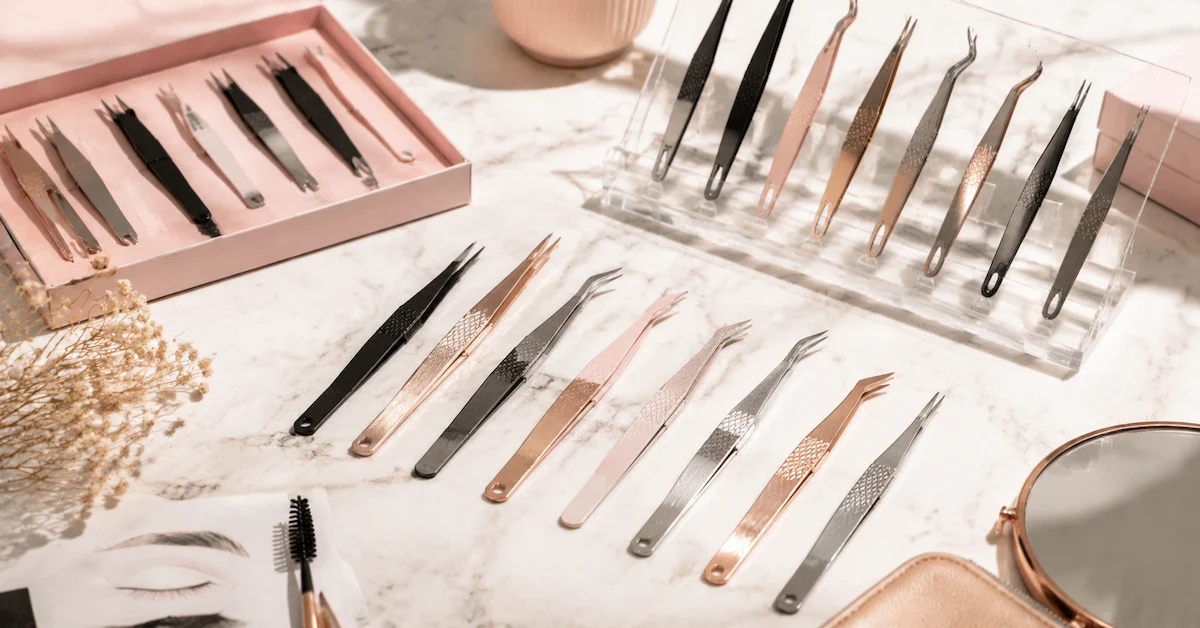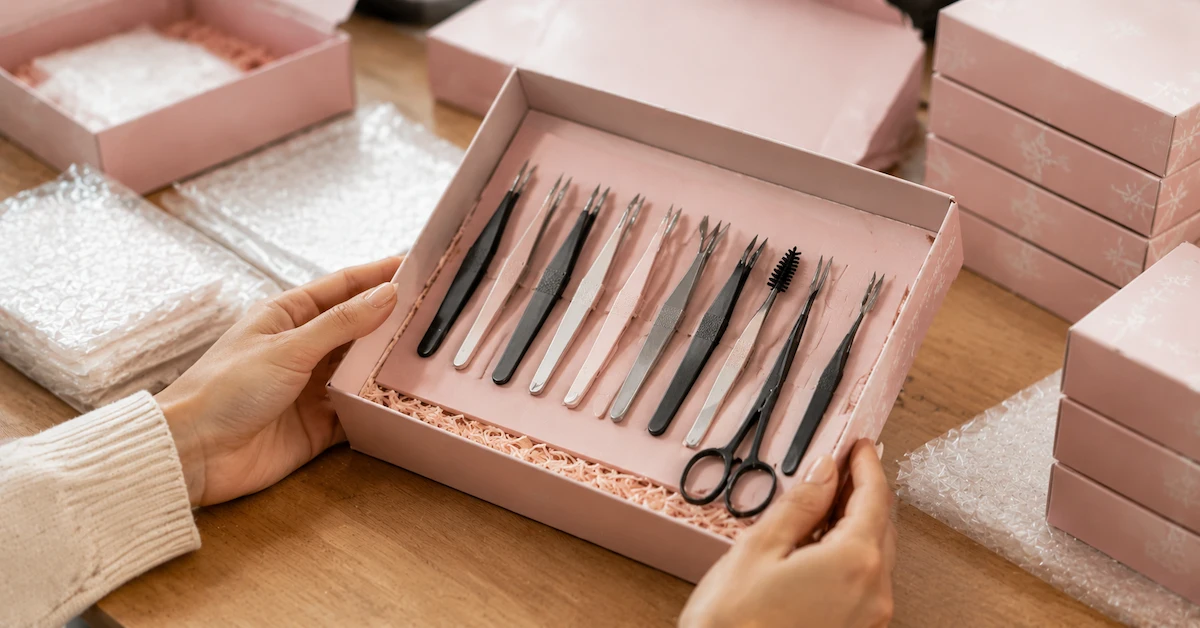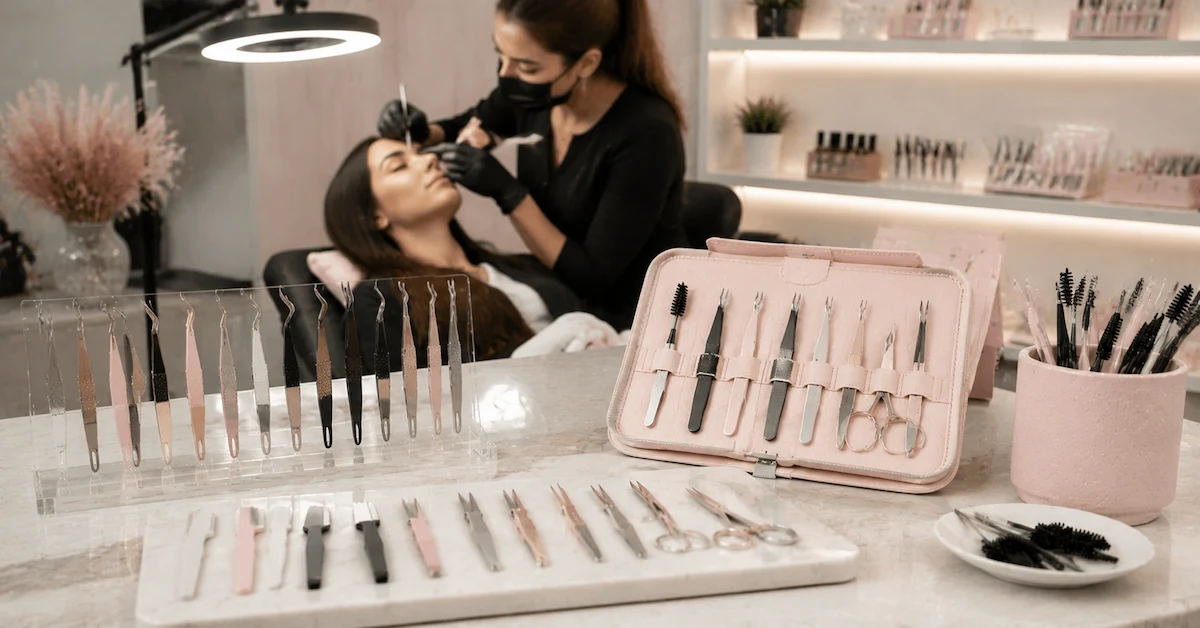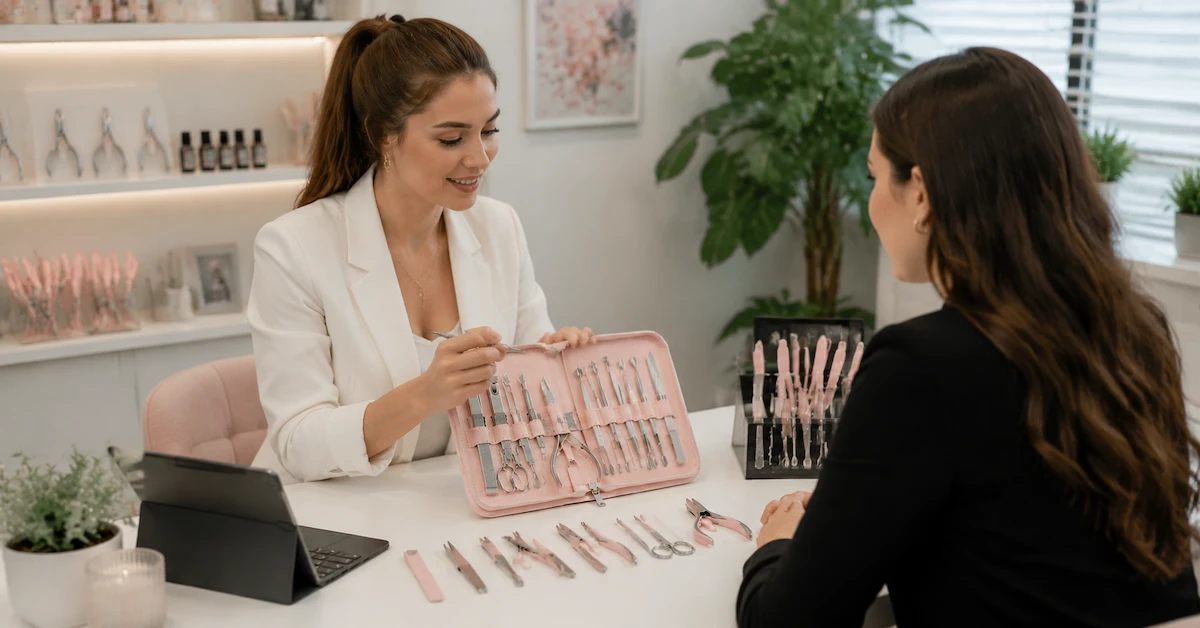











A well-made eyelash curler should feel smooth, align evenly, press consistently and avoid rough contact with delicate lashes. That result is not only a matter of appearance. It depends on frame geometry, polished contact surfaces, controlled spring action, material behavior, assembly accuracy and practical quality checks during production.
For B2B buyers, the main question is simple: how can you evaluate whether an eyelash curler is engineered for reliable daily use before placing a purchase order? This guide explains the manufacturing and inspection details that matter, how clean-contact physics applies to beauty tools, which cost factors influence quotations, and what to ask a supplier when comparing samples. To review available product directions, start with Olimor’s beauty tool product range and use this guide as a checklist during sourcing.
What “Clean Contact” Means in an Eyelash Curler
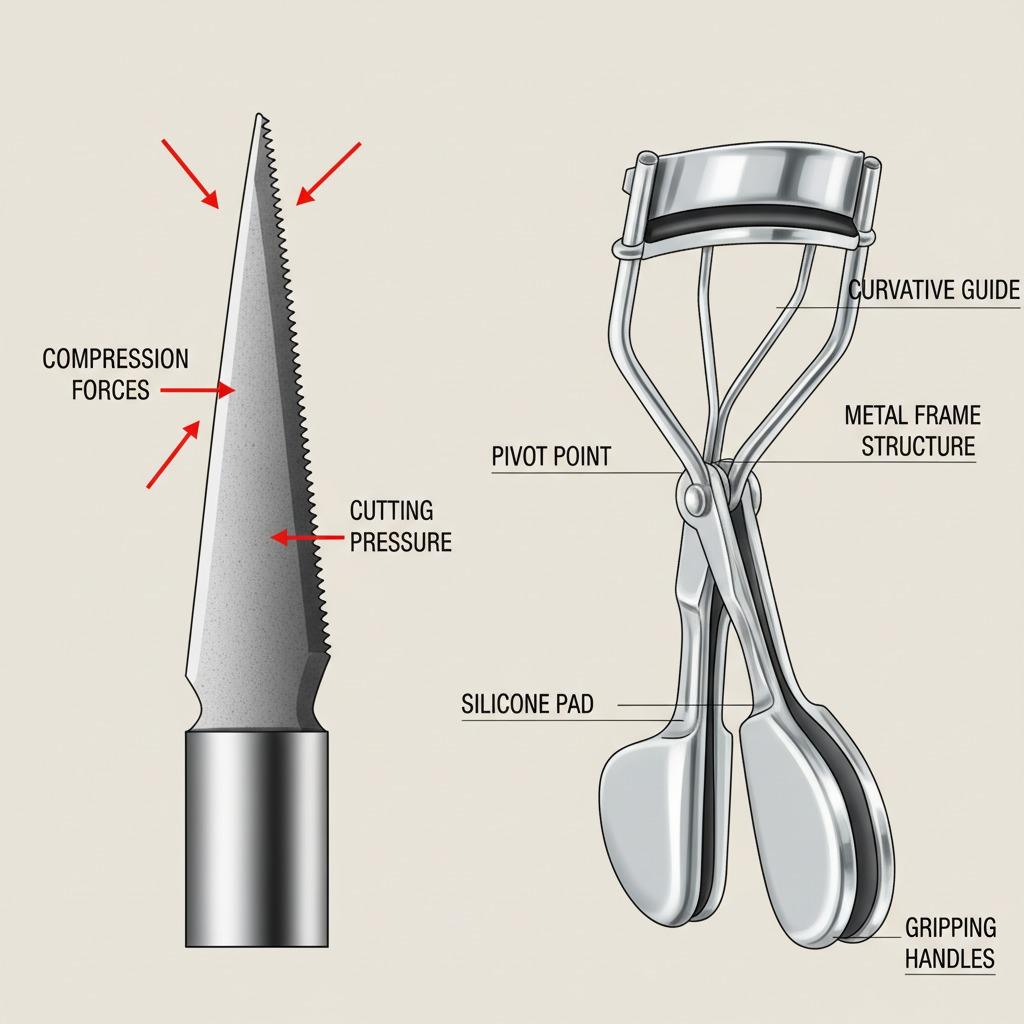
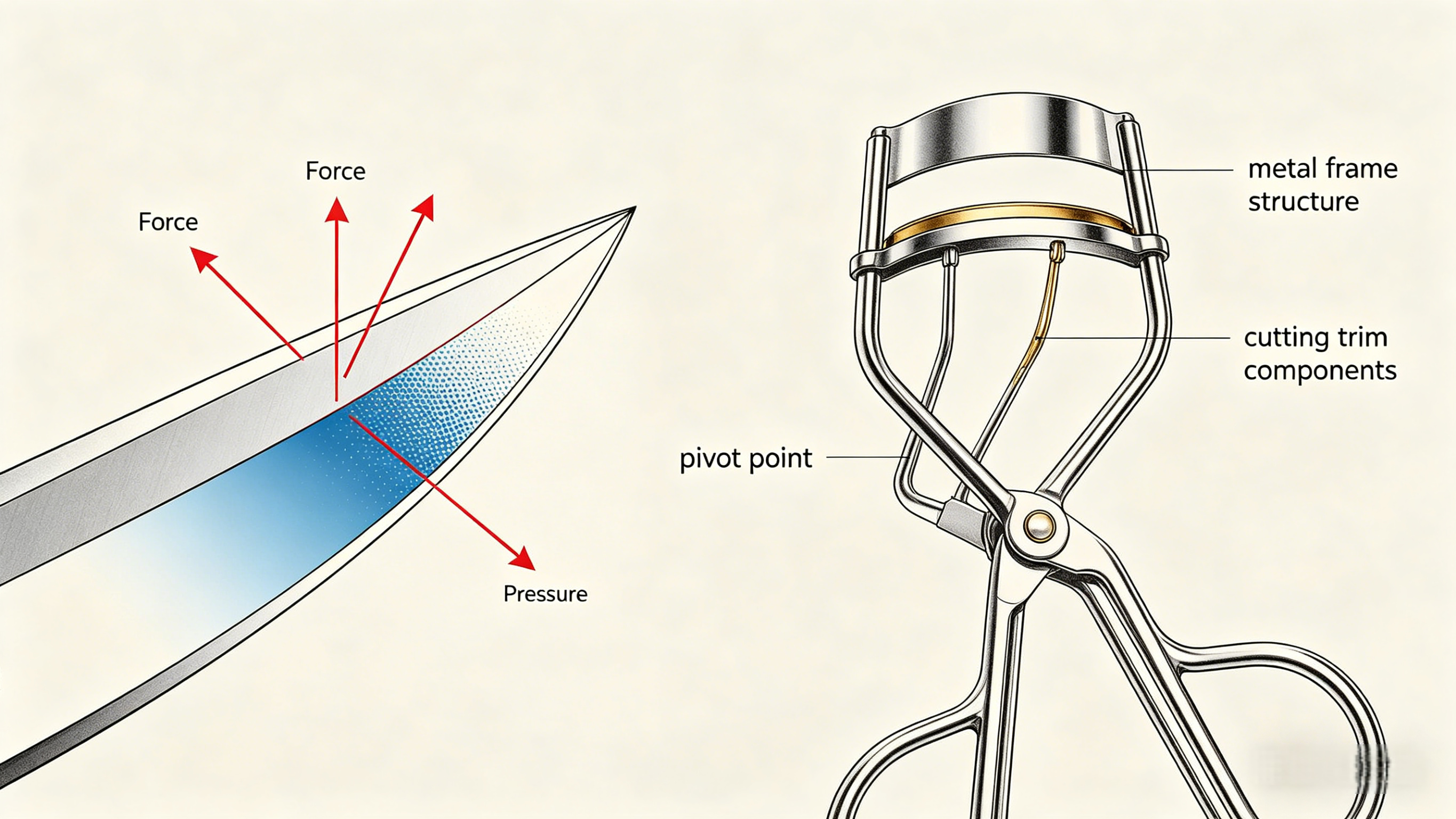
In cutting tools, a clean cut comes from force being concentrated along a controlled edge. An eyelash curler is different because it is not designed to cut lashes. The relevant idea is clean contact: the upper frame, lower pad and arc geometry must guide pressure smoothly across the lash line without sharp burrs, side dragging or uneven pinching.
Clean contact is created by four engineering factors. First, force distribution must be even across the curved pressing area. Second, the surfaces that touch or approach the lashes must be polished enough to reduce friction. Third, the metal frame must have enough rigidity to hold its shape while retaining controlled elasticity under repeated pressing. Fourth, the assembled parts must fit accurately so the pad, hinge, handles and arc remain aligned.
When any of these factors is weak, users may feel pulling, inconsistent curling, premature loosening or scraping from unfinished edges. For retailers, salons and private-label buyers, these issues can become return risks and brand reputation problems. That is why a beauty tool should be judged not only by its surface finish but also by the way it is formed, polished, assembled and inspected.
Key Physics Behind a Smooth Press
The physics behind a reliable eyelash curler can be understood without overcomplicating the product. Buyers should focus on how force, friction, material behavior and tolerance control affect the finished tool.
Force Distribution Across the Arc
The curved frame must match the intended lash contact area. If the arc is poorly formed or the upper and lower sections do not meet evenly, pressure concentrates in small areas. That can create pinching at the center or at the corners. A controlled arc helps spread pressure along the pad so the user can achieve a consistent curl with less effort.
Friction and Surface Smoothness
Friction matters because lashes are fine and easily disturbed. Polished metal contact surfaces and smooth transitions reduce drag. Unpolished edges, burrs or rough plated areas can catch lashes or feel uncomfortable against skin. The supplied engineering references for Olimor production emphasize surface roughness control, including a referenced Ra ≤ 0.2 μm target for polished contact surfaces. Buyers should treat such figures as supplier-specific inspection points and request confirmation on the actual product drawing or quality document for the order.
Material Rigidity and Controlled Elasticity
The frame needs to resist deformation while still functioning comfortably under repeated hand pressure. A frame that is too weak may lose alignment; one that is too brittle may be vulnerable at high-stress points such as the hinge or handle connection. The supplied technical reference describes stainless steel frames and hardness control for balancing rigidity and fatigue resistance. When sourcing, buyers should confirm the actual material specification, finish and hardness requirements on the approved sample and purchase documents.
Tolerance Control During Forming and Assembly
Small dimensional deviations can have an outsized effect on a curler. The hinge, spring, arc frame and pad channel all interact. The supplied reference mentions dimensional tolerance control down to ±0.03 mm for precision fitting. Whether that tolerance applies to all models or selected components should be verified against the model drawing. For B2B buyers, the practical point is to ask which dimensions are critical to function and how the supplier inspects them.
Manufacturing Steps That Affect Performance
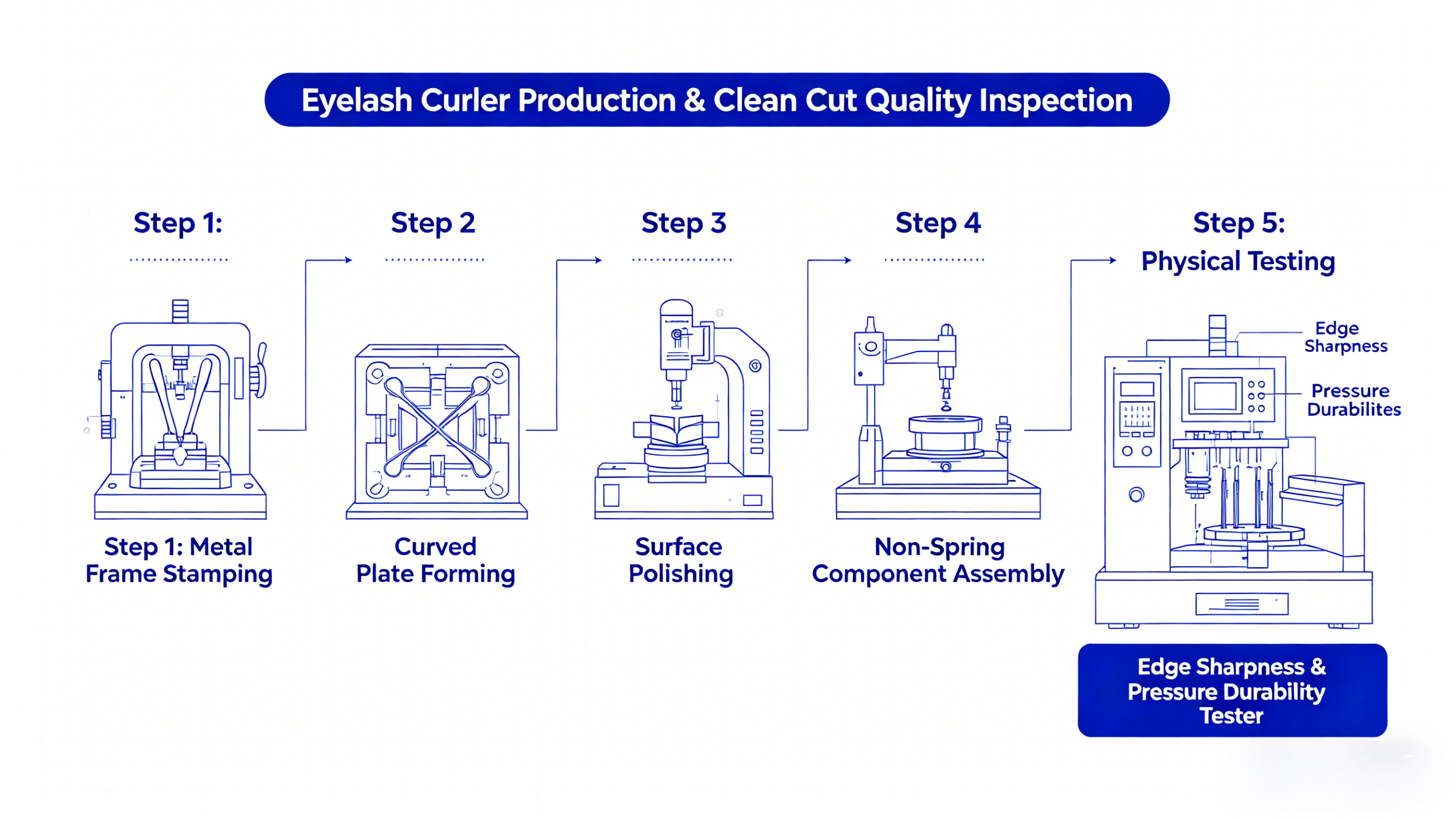
An eyelash curler may look simple, but several production stages determine whether it performs consistently. Understanding these steps helps buyers ask better questions and evaluate samples more accurately.
Stamping and Forming
Metal components are formed to create the handles, frame and pressing arc. During stamping and curving, tooling condition is important. Worn tooling can introduce burrs, inconsistent curves or edge distortion. Thermal expansion during machining and forming can also influence dimensional control, so factories need process settings and in-process checks rather than relying only on final inspection.
Grinding and Edge Refinement
Edges that are not intended to cut still need refinement. Any area near the eye must be free from sharp burrs. Grinding and polishing help remove roughness from stamped edges and improve the feel of the product. The supplied factory article references edge grinding angles of 15°–25° for precision edge work. For eyelash curlers, the key is not to create a cutting edge but to control the contact geometry and remove unsafe or uncomfortable sharpness.
Surface Polishing and Finishing
Polishing contributes to smooth contact and visual quality. The final finish may also influence corrosion resistance and cleaning behavior. Buyers should inspect whether plating or surface treatment is even around joints, corners and the pad channel, not just on broad visible areas. Uneven finish can indicate process control issues.
Pad, Spring and Hinge Assembly
The soft pad is central to user comfort. It should seat correctly in the lower channel and align with the upper frame. The spring and hinge should move smoothly without excessive looseness. A curler can pass visual inspection but still fail in function if the pad is offset or the hinge creates uneven pressure.
Factory Inspection Points Buyers Should Request
Quality control should include more than a final cosmetic check. A practical inspection plan looks at component dimensions, edge condition, surface finish, assembly alignment and functional feel. Olimor’s supplied reference mentions physical stress testing, friction-related checks, repeated cycle testing and corrosion resistance checks. Buyers should request the specific inspection method and acceptance criteria used for the model they are ordering.
| Inspection Area | What to Check | Why It Matters | Buyer Question |
|---|---|---|---|
| Arc alignment | Upper frame meets the pad evenly | Prevents uneven pressing and lash pinching | Which dimensions control arc fit? |
| Edge and burr control | No sharp burrs near contact areas, handles or hinge | Improves comfort and safety perception | Is burr inspection visual, tactile or both? |
| Surface smoothness | Polished contact surfaces with controlled roughness | Reduces friction and pulling | Can the surface finish requirement be stated in the specification? |
| Frame hardness and rigidity | Material and hardness match the approved requirement | Supports shape retention and repeat use | What material and hardness documents are available for this model? |
| Assembly function | Hinge, spring and handles move smoothly | Affects user feel and consistency | How is functional pressing checked during QC? |
| Corrosion resistance | Finish resists oxidation under the agreed test condition | Important for bathroom and cosmetic environments | Is the salt spray method based on a recognized standard such as ISO 9227? |
| Batch sampling | Finished goods inspected by a defined sampling plan | Helps control outgoing quality | Is sampling aligned with a recognized approach such as ISO 2859-1? |
ISO 9227 and ISO 2859-1 are recognized references often used for corrosion testing and sampling procedures. Buyers should verify the current versions, confirm whether they apply to the actual order and review the supplier’s documents. Mentioning a standard in a sourcing discussion is not the same as proving certification or compliance.
How to Compare Eyelash Curler Designs
Different eyelash curler designs can serve different retail positions. A lightweight promotional model, a salon-focused tool and a premium private-label item may not have the same material, finish, pad or packaging requirements. The best choice depends on your target customer, channel and quality expectations.
Standard Metal Curlers
Standard metal curlers are common because they offer a familiar structure, clear visual quality and broad market acceptance. Buyers should pay attention to the frame strength, surface finish, pad fit and hinge action. If the product is sold under a retailer’s own brand, consistency across batches is often more important than adding unnecessary design complexity.
Curlers With Customized Handles or Finishes
Customization can improve shelf appeal, but it also adds process risk. Colored finishes, special handle shapes or branded packaging should be checked for durability, color consistency and assembly fit. A finish that looks attractive on one sample must be repeatable in production.
Professional or Salon-Oriented Curlers
Salon-oriented products may be judged more strictly for hand feel, repeat use and cleanability. Buyers should request samples for practical evaluation by users who understand the category. The goal is to test alignment, smoothness and control rather than relying only on photos.
If you are comparing categories beyond eyelash curlers, Olimor’s beauty tool collection can help you organize sourcing by product type and retail positioning.
Cost Factors Without Guesswork
Unit cost is influenced by design, material, finishing, inspection level, customization and packaging. A lower quote may be reasonable for a simple design with standard packaging, but it may also reflect reduced polishing, lighter materials, simplified inspection or limited customization support. Buyers should avoid comparing prices without comparing specifications.
- Material and frame construction: Stainless steel selection, thickness and forming complexity affect cost and performance.
- Polishing and finishing: Smooth contact areas and consistent surface treatment require process time and control.
- Pad quality and replacement requirements: The pad affects comfort, perceived value and after-sales experience.
- Customization: Logo application, finish color, handle design and retail packaging can change tooling and production steps.
- Inspection requirements: More detailed dimensional, functional or corrosion checks can affect production planning.
- Order structure: Mixed models, packaging versions or complex labeling may influence quotation and scheduling.
For a commercially useful quotation, provide the target design, finish, packaging concept, sales market, inspection expectations and any required documentation. If these details are not fixed, ask for options rather than a single price.
Common Problems and Practical Troubleshooting
Many eyelash curler problems can be traced to a small number of causes. When reviewing samples or production goods, use the issue to identify the likely process gap.
Lashes Feel Pulled or Caught
Check for burrs, rough plating, pad misalignment or excessive friction at the contact area. Run a careful visual and tactile inspection around the upper frame and pad channel. If the issue appears only on some pieces, ask whether polishing or final inspection is consistent across the batch.
Curl Is Uneven From Left to Right
Uneven curl often points to arc distortion, hinge looseness or pad seating problems. Compare the upper frame and lower pad contact visually when the handles are gently pressed. Ask the supplier which fixture is used to check arc alignment.
Frame Feels Loose Too Quickly
Look at hinge fit, spring quality and material rigidity. Repeated pressing can reveal looseness that is not obvious during first use. If durability is important for your channel, request the supplier’s cycle test method and acceptance criteria rather than accepting a general statement.
Rust or Discoloration Appears
Corrosion can relate to material choice, surface finish, cleaning exposure or storage conditions. If corrosion resistance is part of the requirement, define the test method and acceptance criteria in advance. A reference such as ISO 9227 may be useful, but the actual test duration and result requirements must be agreed in supplier documents.
B2B Supplier Evaluation Checklist
Before confirming an order, buyers should evaluate both the product and the supplier’s ability to repeat the approved sample. Use this checklist during supplier discussions and sample review.
- Confirm the exact model, finish, pad type and packaging version.
- Review the approved sample for arc alignment, smooth pressing and burr-free edges.
- Ask which material, hardness and surface finish requirements apply to the model.
- Request the critical dimensions used for frame, hinge, spring and pad fit.
- Clarify whether corrosion, cycle or functional tests are routine or order-specific.
- Ask how batch sampling is performed and how nonconforming goods are handled.
- Confirm customization options, artwork approval steps and packaging proof requirements.
- Request clear documentation before mass production, including specification, sample approval and inspection expectations.
When you are ready to discuss a specific eyelash curler project, share your target market, design reference and packaging needs through Olimor’s inquiry page. For direct sourcing questions or documentation requests, you can also reach the team through contact support.
FAQ for Eyelash Curler Sourcing
Can I request samples before placing a bulk order?
Yes. Sample review is recommended because alignment, hand feel, surface smoothness and pad fit are difficult to judge from photos alone. Ask whether the sample represents standard production or a customized version.
Is there an MOQ for eyelash curler orders?
MOQ depends on the model, customization level, finish, packaging and production arrangement. Request the current MOQ from the supplier for the exact product version you want to order.
Can Olimor support customization?
Customization may include product finish, logo application and packaging depending on the selected model and project requirements. Confirm available options, artwork requirements and approval steps before production.
How should quality requirements be documented?
Use an approved sample plus written specifications. Include material, finish, key dimensions, functional checks, packaging requirements and any agreed inspection or test references. Verify current standard versions and supplier documents.
What affects lead time?
Lead time can be influenced by sample approval, customization, packaging, material availability, inspection requirements and order quantity. Ask for the current schedule after the specification is confirmed.
Final Buying Guidance
A reliable eyelash curler is the result of controlled engineering, not just attractive styling. Clean contact comes from a balanced arc, smooth surfaces, burr control, stable material behavior and accurate assembly. For B2B buyers, the most useful sourcing approach is to connect every claim to a sample, drawing, inspection item or written specification.
Evaluate the product in hand, ask how the factory controls repeatability and document expectations before mass production. That process helps protect your retail program, reduces preventable quality issues and gives your customers a beauty tool that feels smooth, consistent and trustworthy in daily use.