










For B2B buyers, a portable manicure and pedicure kit is more than a small accessory item. It is a complete retail unit made up of tools, storage, presentation and user experience. A polished kit in a zippered carry case can work for home grooming, travel, salon resale, gifting and private-label beauty programs, but only if the tool quality and case construction support the way it will be sold.
The best way to evaluate this category is to inspect the kit as a system. Nail clippers, scissors, tweezers, cuticle pushers, nippers, files and other grooming implements must feel useful individually, while the case must hold them securely and present them neatly. For professional beauty tools wholesale, that combination determines whether the product feels dependable or merely decorative.
What a Portable Manicure and Pedicure Kit Is Designed to Do
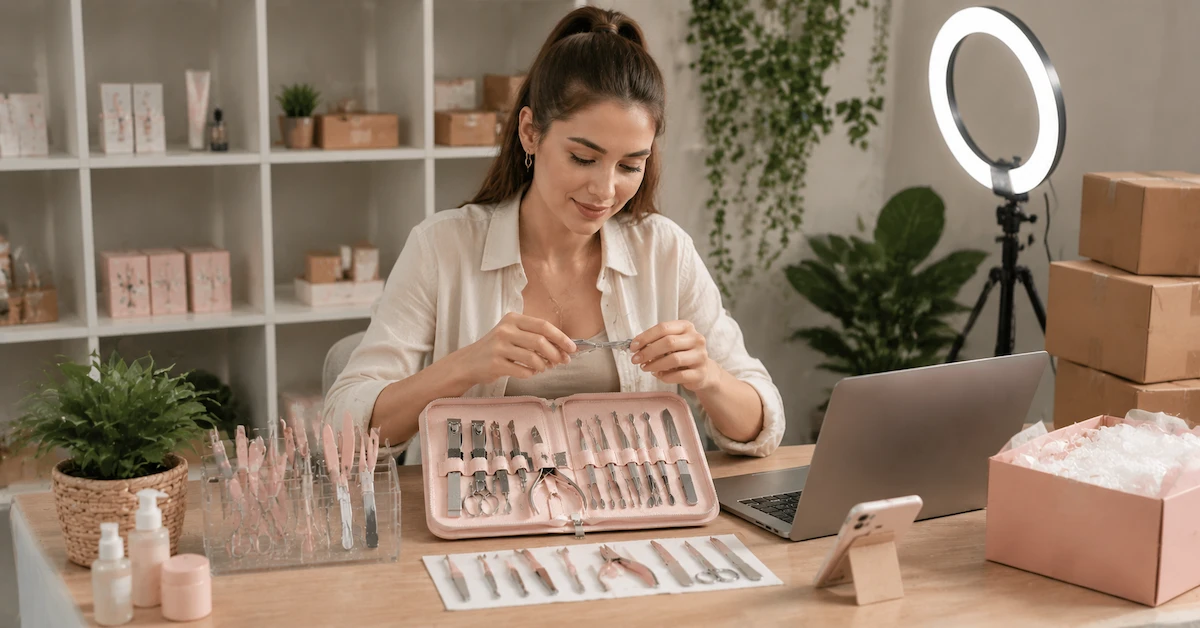
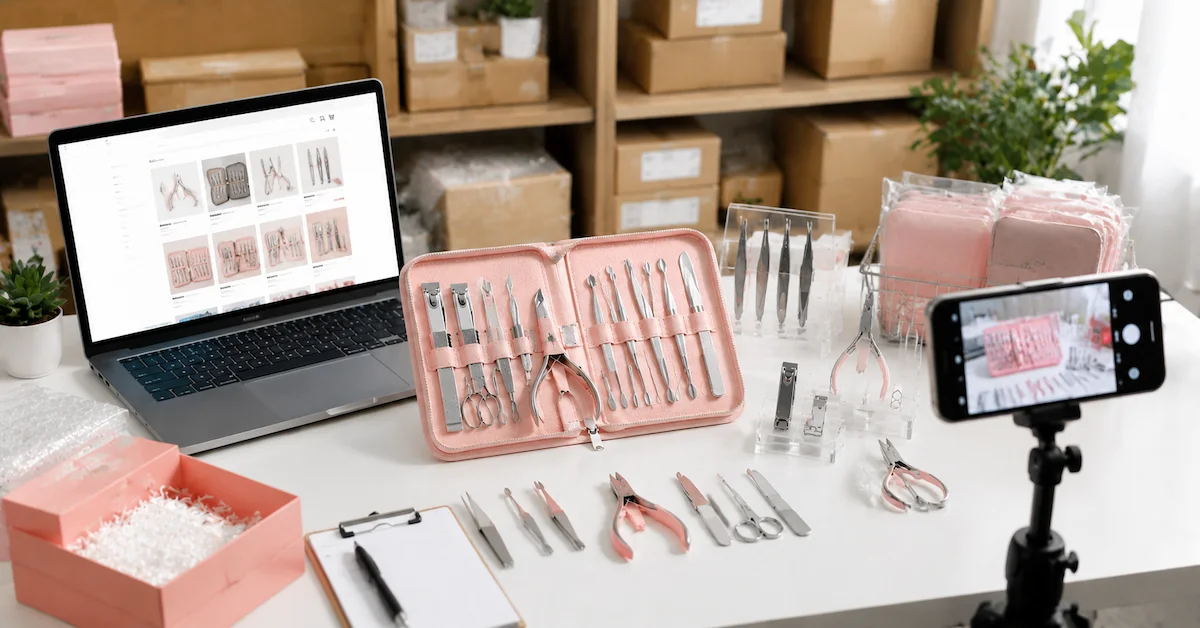
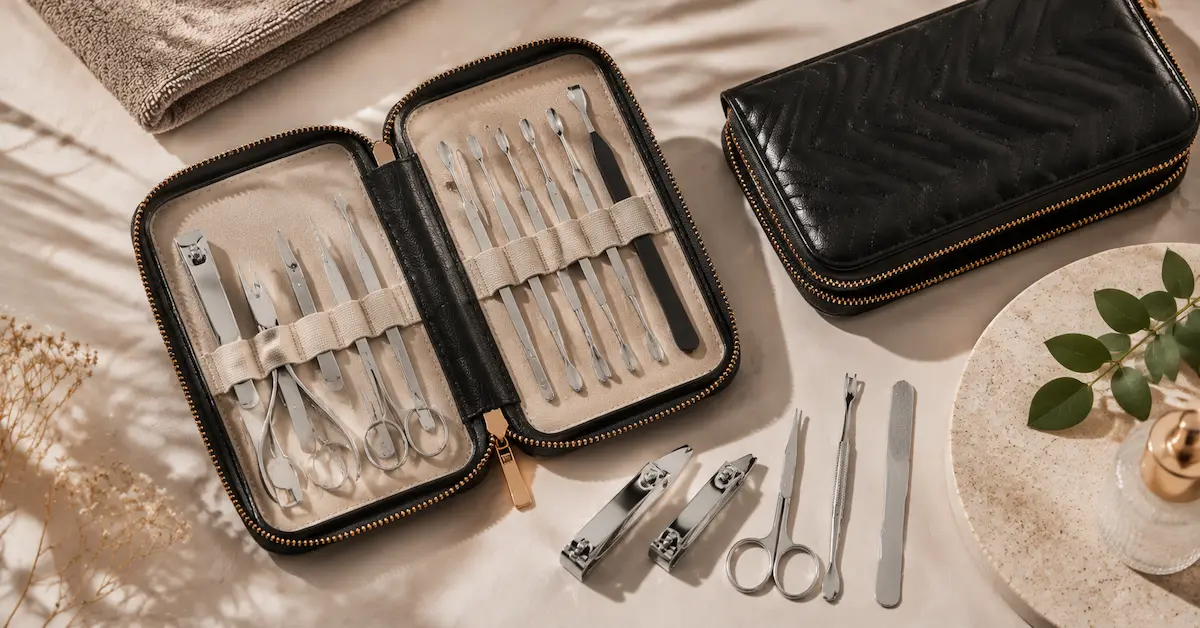
A portable manicure and pedicure grooming kit is built to organize multiple hand tools in one compact case. The type of set shown in this category typically uses a clamshell-style zippered case with two interior panels. Elastic retaining bands hold slim metal implements in position so the kit can be opened, displayed, closed and transported without loose pieces moving around.
This structure solves several commercial problems. For retail buyers, it creates a ready-to-sell product instead of a collection of individual tools. For salon buyers, it can function as a front-counter add-on or aftercare recommendation. For private-label teams, the case provides a visible surface for branding, packaging design and gift positioning. For wholesale distributors, the compact format can simplify assortment planning because the product is easy to explain to different customer groups.
From a sourcing perspective, buyers should look beyond tool count. A larger set may look more valuable, but a well-edited kit with properly finished tools and a practical layout can be easier to use and easier to merchandise. The case, zipper, lining, elastic retention and metal finish all contribute to perceived quality.
Key Product Details Buyers Should Inspect
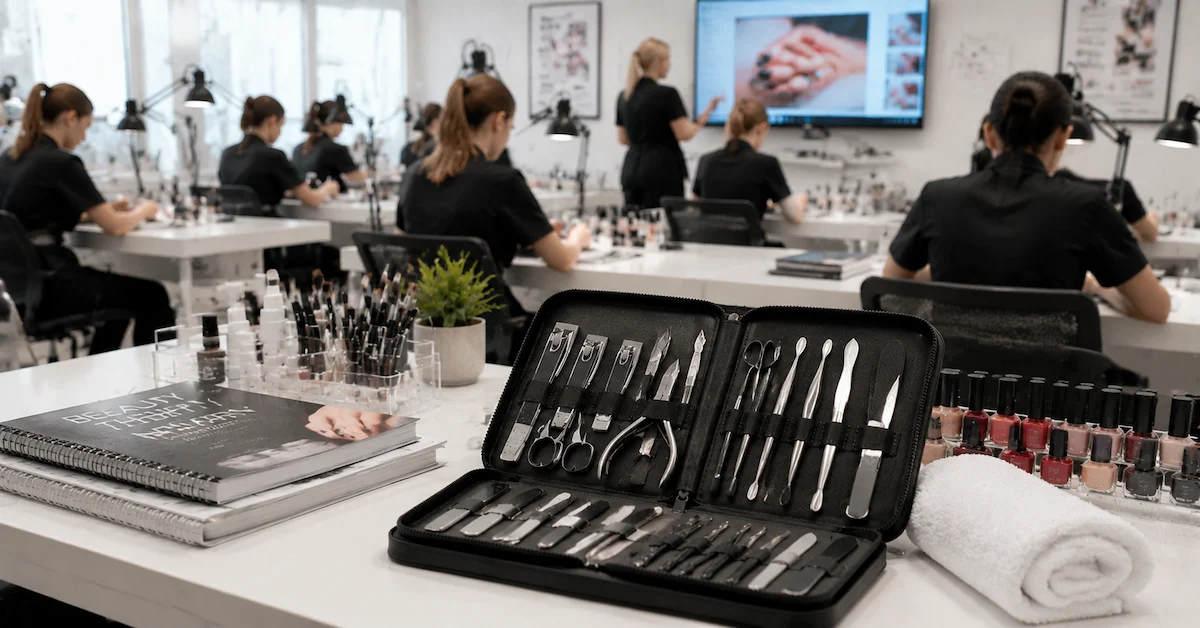
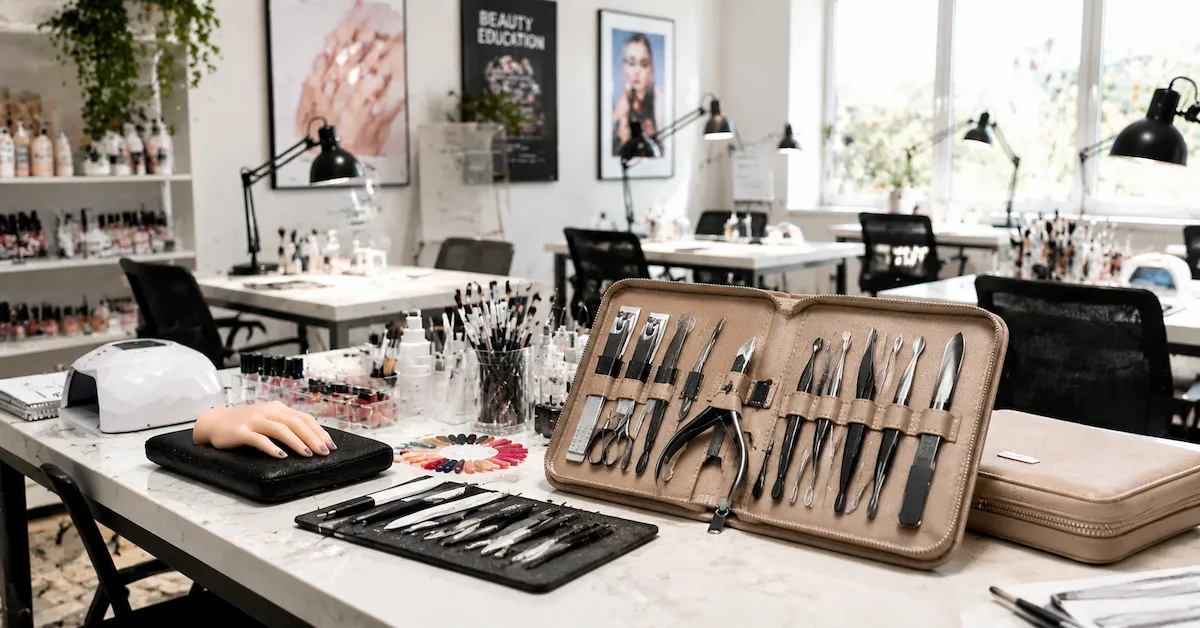
The visible format of this kit includes a compact black exterior with a leather-like textured surface, rounded corners and gold-tone zipper hardware. Inside, a light beige lining creates contrast against polished metal tools. The tools appear to include common manicure and pedicure implements such as nail clippers, scissors, tweezers, cuticle pushers, nippers, files and pointed or angled grooming tools.
Those details are useful starting points, but they are not a substitute for sample inspection. Exact tool count, steel grade, corrosion resistance, sterilization suitability and long-term durability should be confirmed with supplier documents and physical samples rather than assumed from photography.
Tool finish and hand feel
Polished metal can improve shelf appeal, but professional beauty tools wholesale buyers should check whether the finish is consistent across every implement. Look for burrs, rough edges, uneven grinding, sharp corners in the wrong places, weak springs, loose pivots or tips that do not align. Scissors and nippers should open and close smoothly. Tweezers should meet evenly at the tip. Nail clippers should feel controlled rather than flimsy.
Case structure and retention
The case should protect the tools, present them neatly and make removal easy. Elastic bands need enough tension to hold tools during shipping and handling, but not so much that consumers struggle to remove them. Check whether the case opens flat enough for display, whether the lining is cleanly fitted and whether tools scrape against each other when placed back into position.
Zipper and hardware reliability
A zipper is a small component with a large impact on returns and complaints. It should move smoothly around the perimeter without catching at corners. The puller should feel secure, and the teeth should align evenly. Gold-tone hardware can support a more giftable look, but appearance should not come at the expense of function.
How to Position the Kit in a Wholesale Assortment
The same portable grooming set can serve several channels, but each channel values different features. Before comparing suppliers, define where the product belongs in your range. This decision affects the acceptable tool mix, case finish, packaging budget and quality inspection priorities.
Home grooming and travel
For home and travel customers, the case is central. Consumers want a compact kit that stores easily in a drawer, handbag, suitcase or bathroom cabinet. The assortment should cover common trimming, shaping and grooming tasks without feeling confusing. A neat interior layout and secure closure are important because travel use exposes the kit to movement and repeated handling.
Salon and spa retail
For salon resale, the product must feel clean, professional and easy to recommend. The tools do not need unsupported claims, but they should look well finished and operate smoothly. Salon customers may compare the set with tools they see professionals using, so uneven edges, loose implements or a weak case can quickly reduce confidence.
Gift and private-label programs
For gift sets and private-label beauty accessories, presentation becomes a major value driver. A textured case, contrasting interior lining and polished metal tools can create a stronger unboxing impression than a plain pouch. Buyers should still avoid selecting the kit on appearance alone. Giftability may bring the first purchase, but tool comfort and case durability influence repeat orders and customer reviews.
Comparison Checklist for B2B Buyers
Use a structured checklist when comparing beauty tools wholesale options. This keeps the review focused on practical acceptance criteria rather than image appeal alone.
| Evaluation area | What to check | Why it matters |
|---|---|---|
| Tool assortment | Confirm the actual implements included and whether each one fits the target use case. | A higher tool count does not guarantee a better set if the selection is not useful. |
| Metal finish | Inspect polishing, edges, tips, joints, pivots and visible surface consistency. | Finish quality affects both safety perception and user satisfaction. |
| Cutting and gripping function | Test clippers, scissors, nippers and tweezers by hand on appropriate sample materials or inspection tasks. | Moving tools must feel controlled, aligned and comfortable. |
| Case exterior | Review texture, stitching or bonding, corner finish and overall shape retention. | The case carries much of the product’s retail and gift appeal. |
| Interior layout | Check elastic tension, spacing between tools and ease of removal and replacement. | Poor retention can cause shipping movement, scratches and a messy presentation. |
| Zipper closure | Open and close repeatedly, especially around corners. | Zipper failure is easy for customers to notice and hard to overlook. |
| Packaging readiness | Confirm whether the kit supports labels, sleeves, cartons or private-label presentation. | Packaging affects shelf impact, logistics and channel fit. |
| Supplier documentation | Request material information, care guidance and any applicable compliance documents. | Claims should be supported before they are used in sales materials. |
Cost Factors That Influence a Wholesale Manicure Kit
Portable manicure kits can look similar in product photos while differing significantly in cost structure. B2B buyers should separate visible upgrades from functional requirements. A textured case, polished finish, gold-tone zipper and organized interior can support stronger retail presentation, but each detail may affect cost, packaging weight or production complexity.
Tool assortment is one of the most obvious cost factors. More tools can increase perceived value, yet every added implement must be produced, finished, fitted and inspected. If a channel does not need specialty tools, a smaller and better-finished kit may be more commercially sensible than a crowded layout.
Case construction also matters. A structured clamshell-style case generally offers better presentation than a basic pouch, but it may require more material, more assembly and more packaging space. The exterior texture, interior lining, elastic bands and zipper hardware all contribute to the final specification. For price-sensitive promotions, buyers may prioritize simplicity. For retail, gifting or salon resale, a more refined case can justify a stronger shelf position.
Customization can also affect cost. Exterior branding, packaging changes, color adjustments or interior layout changes may require additional sampling and confirmation. Before committing to a custom version, ask the supplier what can be changed, what must remain standard and what documentation will be provided for final approval.
Quality and Compliance Questions to Ask Suppliers
Wholesale beauty supplies are often purchased across regions, so buyers should verify the current rules that apply to their destination market. For consumer products sold in the European Union, buyers may need to consider the EU General Product Safety Regulation and chemical substance obligations such as REACH where relevant to materials, coatings or components. Requirements can change, so always verify current versions and request supplier documents that match the exact product being purchased.
For manicure and pedicure tools, practical supplier questions should include material disclosure, finishing process, edge inspection, packaging configuration and care instructions. Avoid building marketing claims around unverified assumptions. If a supplier cannot document steel grade, coating details, corrosion performance or sterilization suitability, those claims should not be used in your catalog or sales copy.
Good supplier evaluation is also operational. Ask how samples are prepared, whether production samples will match approved samples, how visual defects are classified and how packed goods are inspected before shipment. A clear approval process helps prevent misunderstandings between sourcing, product development and quality teams.
Buyers reviewing available beauty accessories can start with Olimor’s broader beauty tool product range to understand category options, then use the sample checklist above to compare actual units before placing a bulk order.
Common Sourcing Mistakes to Avoid
The first mistake is selecting the kit only because it looks premium in a photo. Studio lighting can make polished tools and textured cases appear more refined than they feel in hand. Request samples and inspect them under normal office, warehouse and retail lighting. Open and close the case, remove every tool, return every tool and check whether the layout still looks orderly afterward.
The second mistake is treating all stainless-looking tools as equivalent. A reflective metal finish does not confirm steel grade, corrosion resistance or edge quality. Buyers should ask for material information and verify whether the supplier’s claims are appropriate for the intended market. If documentation is not available, keep product descriptions conservative.
The third mistake is overvaluing tool count. A crowded kit can be harder to use and more likely to scratch internally during shipping. If tools are too close together, consumers may bend elastic bands or scrape adjacent implements when removing them. A clear layout with useful tools can deliver better customer satisfaction than a larger but less practical set.
The fourth mistake is ignoring packaging and merchandising. A portable manicure kit may be sold online, displayed in a salon, placed in a gift set or shipped as part of a wholesale beauty bundle. Each scenario needs different packaging support. Confirm whether labels, sleeves, cartons, barcodes or private-label materials can be accommodated before finalizing the specification.
How to Build a Practical Sample Review Process
A disciplined sample process reduces risk before a larger wholesale order. Start by defining the commercial role of the kit: travel grooming, home care, salon resale, gifting or private label. Then evaluate the sample against that role instead of judging it as a generic beauty accessory.
- Inspect presentation first. Check the exterior texture, zipper alignment, case shape and interior cleanliness as a customer would see them.
- Remove and replace every tool. Confirm that elastic bands hold securely without making the tools awkward to access.
- Test moving parts. Open and close scissors, clippers and nippers to check smoothness, alignment and hand comfort.
- Review edges and tips. Look for burrs, uneven grinding or points that feel poorly finished.
- Compare samples side by side. Small differences in case feel, tool finish and zipper action become clearer when multiple suppliers are reviewed together.
- Record approved details. Keep photos, notes and supplier confirmations so production goods can be checked against the approved sample.
If the kit is intended for a broader assortment, buyers can compare it with other manicure, pedicure and grooming accessories in the Olimor collection to decide whether the format fills a clear gap or overlaps with existing products.
Supplier Evaluation for Wholesale and Private Label
A strong supplier should help buyers confirm what is standard, what is customizable and what must be verified through sampling. For a portable manicure kit, key discussion points include tool assortment, case material appearance, lining color, zipper hardware, branding surface, packaging method and inspection criteria.
Private-label buyers should be especially careful with claims. Branding can improve perceived value, but it also increases responsibility for accurate product descriptions. Do not describe material grade, coating performance, sterilization compatibility or professional performance unless those details are confirmed for the exact item. Clear, modest copy is more sustainable than unsupported claims.
Commercially, the right supplier is not simply the lowest quote. Buyers should consider communication quality, sample consistency, willingness to provide documentation and ability to explain options clearly. A supplier that helps you avoid unclear claims and mismatched specifications can be more valuable than one that only provides attractive images.
For project-specific questions, buyers can send requirements through the product inquiry page or contact the team through Olimor contact support with target channel, preferred case style, branding needs and inspection concerns.
Practical Takeaways for Procurement Teams
A portable manicure and pedicure kit should be evaluated as a complete consumer-ready product. The visible strengths of this format are organized storage, compact portability, polished presentation and suitability for multiple channels. The main risks are uneven tool finish, weak zipper performance, poor elastic retention, unsupported material claims and a tool mix that does not match the selling channel.
For procurement teams, the best decision process is straightforward: define the channel, request samples, inspect the tools and case by hand, verify supplier documentation and approve only the claims that can be supported. This approach protects the buyer, the retailer and the end customer while keeping the product commercially useful.
FAQ for Wholesale Buyers
Can buyers request samples before placing a wholesale order?
Yes. Samples are the most practical way to check tool finish, zipper function, case structure and interior retention before confirming a larger purchase. Buyers should compare samples against their intended channel and acceptance criteria.
Is there a fixed MOQ for this type of manicure kit?
MOQ can depend on the product configuration, packaging, customization and order requirements. Buyers should ask the supplier to confirm the applicable MOQ for the exact kit and branding plan under discussion.
Can the case or packaging be customized for private label?
Customization may be possible depending on the case surface, packaging format and production plan. Confirm what can be changed, request a sample or artwork proof where appropriate and avoid final approval based only on assumptions.
How should buyers evaluate quality before shipment?
Set clear inspection points for tool alignment, edge finish, moving parts, zipper function, elastic retention, case appearance and packaging condition. Production goods should be compared with the approved sample and confirmed supplier documents.
What affects lead time for a wholesale order?
Lead time can vary with order quantity, customization, packaging requirements, sample approval and production scheduling. Buyers should confirm timing directly with the supplier for the specific order rather than relying on a general estimate.