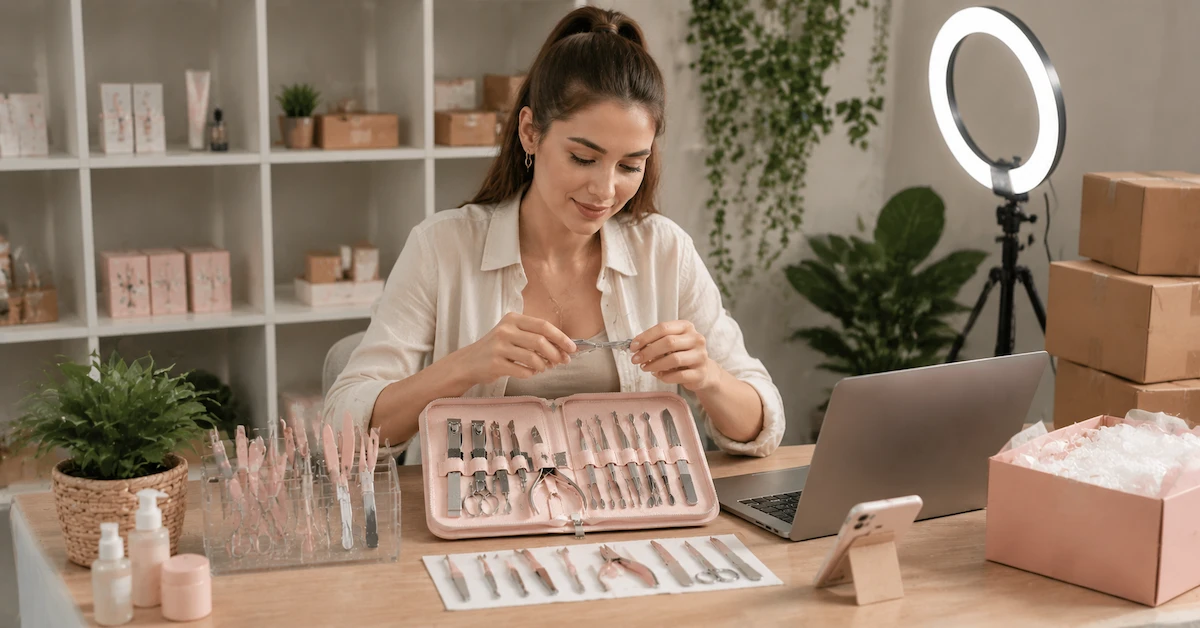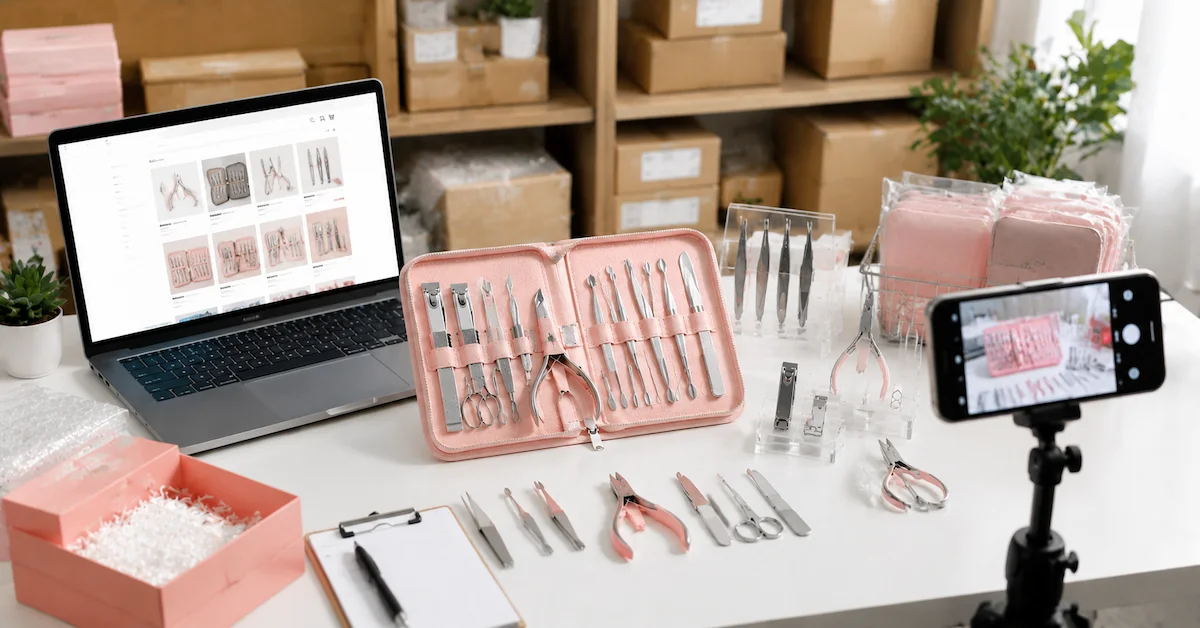











Wholesale nail care tools look simple, but they are not a product category to buy only from photos. A reliable assortment needs to feel solid in the hand, cut or grip cleanly, present well in packaging, and remain consistent from sample to repeat order. For beauty supply retailers, salon distributors, online sellers, promotional kit buyers and private-label sourcing teams, the real buying question is not just whether the tools are stainless steel. It is whether the whole set is suitable for the market, channel and price position you plan to serve.
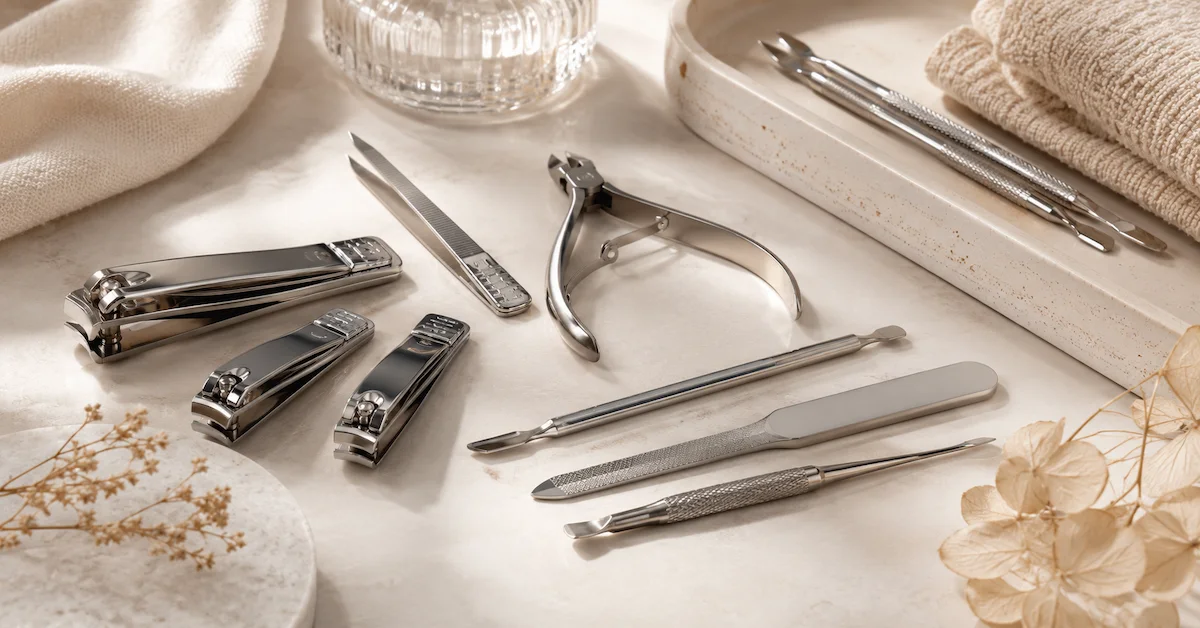
A typical nail care tool assortment may include stainless-steel nail clippers in different sizes, tweezers, a cuticle nipper, a cuticle pusher or spatula-style tool, and a nail file or buffer. These are everyday grooming items, but each component has its own quality risks. A clipper with poor jaw alignment, tweezers that do not close evenly, or a cuticle nipper with rough action can affect customer reviews and repeat purchases. This guide explains how to compare wholesale beauty tools, what to inspect, which cost factors matter, and what to ask a supplier before scaling an order.
1. Start With the Buying Intent: Set, Single Tool or Private-Label Range?
Before comparing quotes, define the role of the product. Nail care tools can be sold as individual items, compact travel kits, salon retail sets, beauty gift sets, promotional packs or private-label grooming ranges. Each route requires a different buying logic.
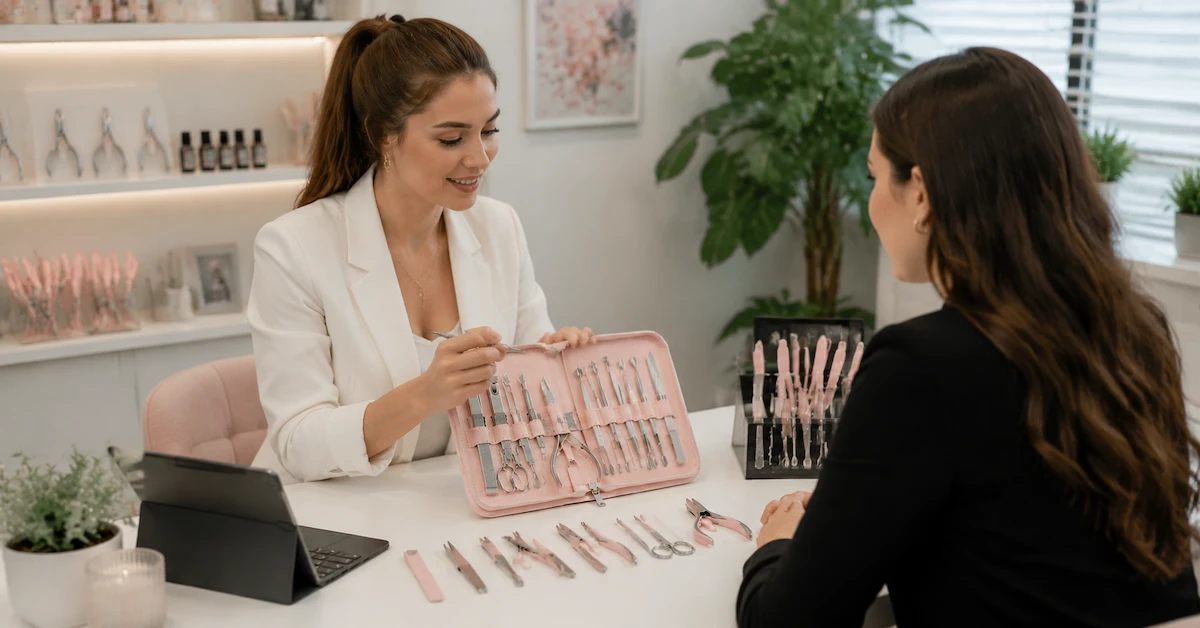
Individual tools work well when the customer knows exactly what they want. Professional users and beauty supply customers may buy separate clippers, files or cuticle tools because they already have the rest of their kit. Sets are easier to understand at retail because the buyer sees a complete solution in one package. A set containing clippers, tweezers, cuticle tools and a file can serve home grooming, travel and gifting without much explanation.
Private-label and house-brand buyers should think beyond the tool list. Consistency of finish, grip detail, packaging layout and product naming becomes more important because the customer judges the range as one brand experience. If the products are intended for a house-brand line, request samples that show the full assortment rather than one polished hero item.
2. What a Practical Nail Care Tool Assortment Includes
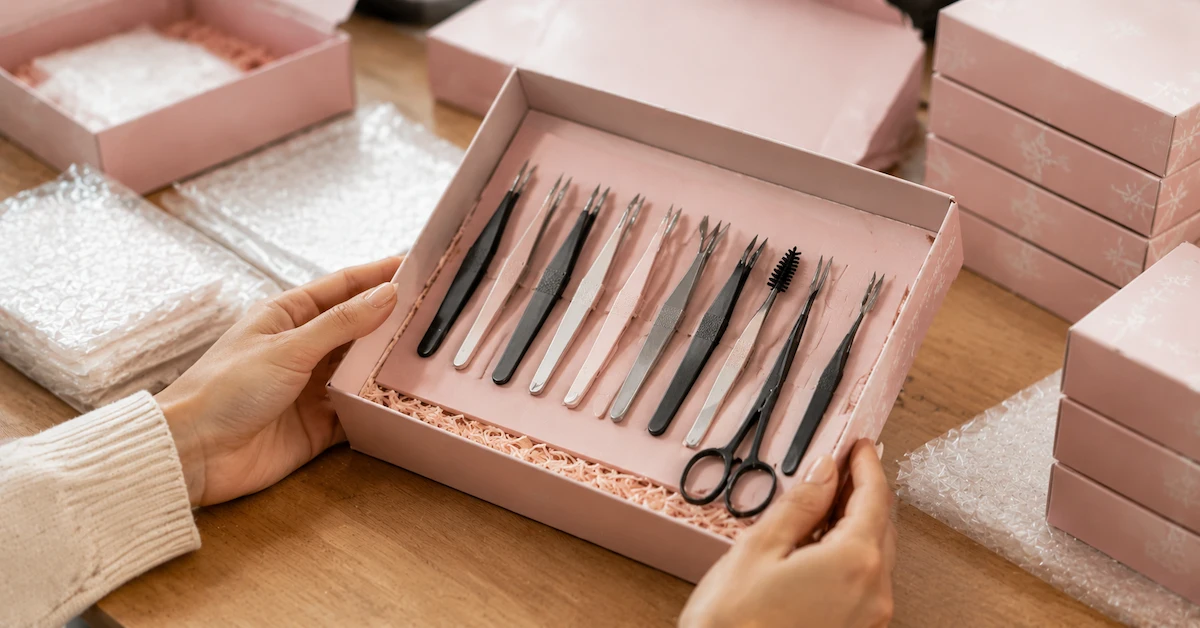
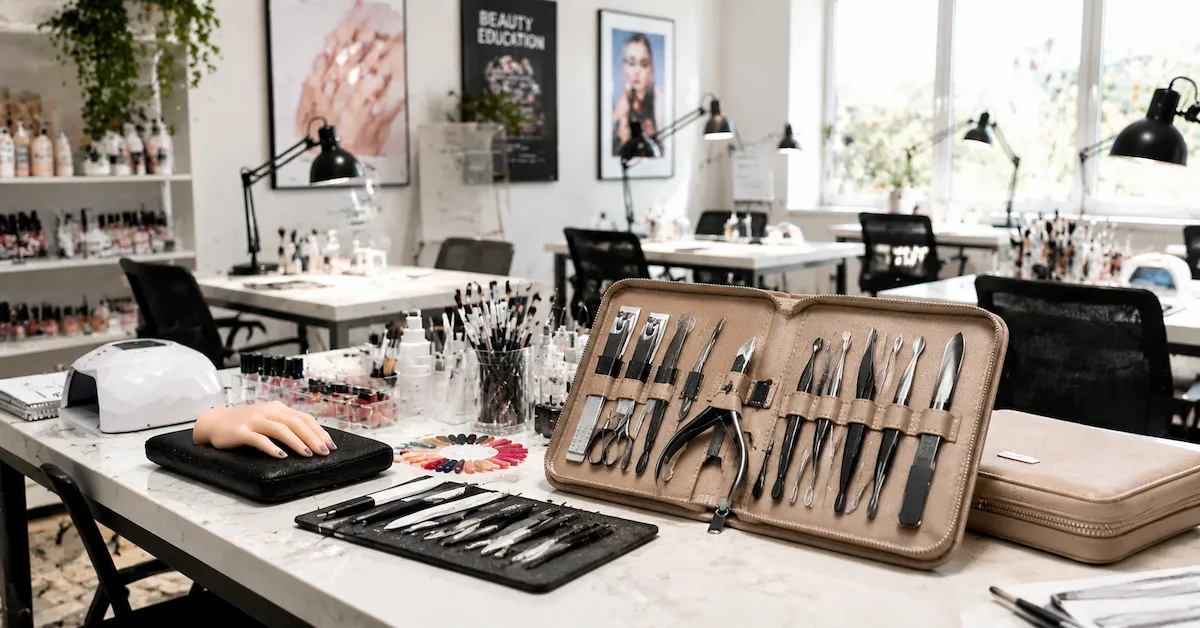
A balanced wholesale assortment usually covers trimming, shaping, cleaning and detail grooming. The mix described here includes the core items most buyers expect in a nail grooming category.
- Nail clippers in different sizes: Smaller clippers are suitable for fingernails, compact kits and travel formats. Larger clippers are often preferred for toenails or heavier trimming tasks. Buyers should check jaw alignment, lever feel and edge consistency.
- Tweezers: Tweezers add grooming value beyond nail care. They may be used for stray hairs, small debris or detail work around the nail area. The main inspection point is whether the tips meet evenly without twisting.
- Cuticle nipper: This is one of the most sensitive items in a set. Buyers should pay attention to the smoothness of the action, the alignment of the cutting edges and whether the tool feels controlled rather than loose or stiff.
- Cuticle pusher or spatula-style tool: This item helps prepare the nail area and push back cuticles. Check that the edges are finished smoothly and that the handle provides enough control.
- Nail file or buffer: A file or buffer completes the grooming sequence and makes a kit feel more useful for retail customers. Packaging should protect the abrasive surface and keep the set tidy.
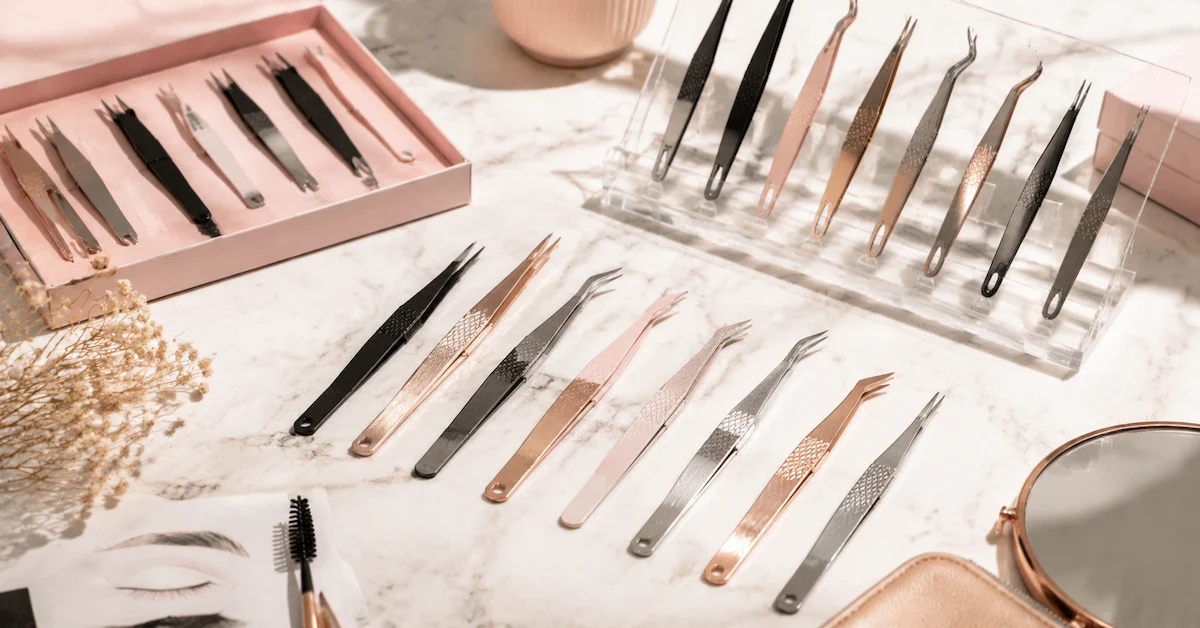
Many metal components in this category use a polished finish, and some handles include textured or knurled sections for grip. Those details are not just decorative. Grip texture can improve handling when fingers are damp, when lotion residue is present, or when tools are used repeatedly in a salon retail context.
3. How to Compare Wholesale Nail Tools Without Relying on Photos
Product photos can show shape and shine, but they cannot prove cutting performance, alignment or batch consistency. A good comparison process combines visual review, hand testing and supplier documentation. When evaluating nail care collections, compare the same tool types side by side rather than treating each set as a single product.
Function Comes Before Finish
Start with the working parts. Clipper jaws should meet cleanly and the lever should move without feeling weak or uneven. Tweezers should close accurately along the tips. A cuticle nipper should open and close smoothly, and the cutting edges should align. A cuticle pusher should not have rough or uncontrolled edges. If the working action is poor, a polished surface will not prevent complaints.
Finish Should Be Uniform Across the Set
Polished metal is common in nail care tools, but finish quality varies. Look for visible scratches, dull patches, burrs, residue, uneven color tone and inconsistent edge finishing. A buyer should inspect more than one sample because the issue is not only whether one tool looks good, but whether the finish can be repeated across a batch.
Packaging Must Match the Sales Channel
Packaging should protect the tools, present the assortment clearly and support the sales channel. Retail displays need clean layout and quick recognition of the tools inside. E-commerce packs need to reduce movement in transit. Promotional kits may prioritize compactness and a neat visual impression. For private-label projects, packaging space, labeling approach and visual consistency should be discussed early.
4. Selection Table: Match the Tool Format to the Channel
The best wholesale choice depends on where and how the tools will be sold. Use the table below to narrow the assortment before requesting samples.
| Buyer type | Useful format | What to inspect first | Commercial consideration |
|---|---|---|---|
| Beauty supply retailer | Individual tools plus small sets | Clipper alignment, tweezer closure, finish consistency | Needs clear product tiers and packaging that works on shelf |
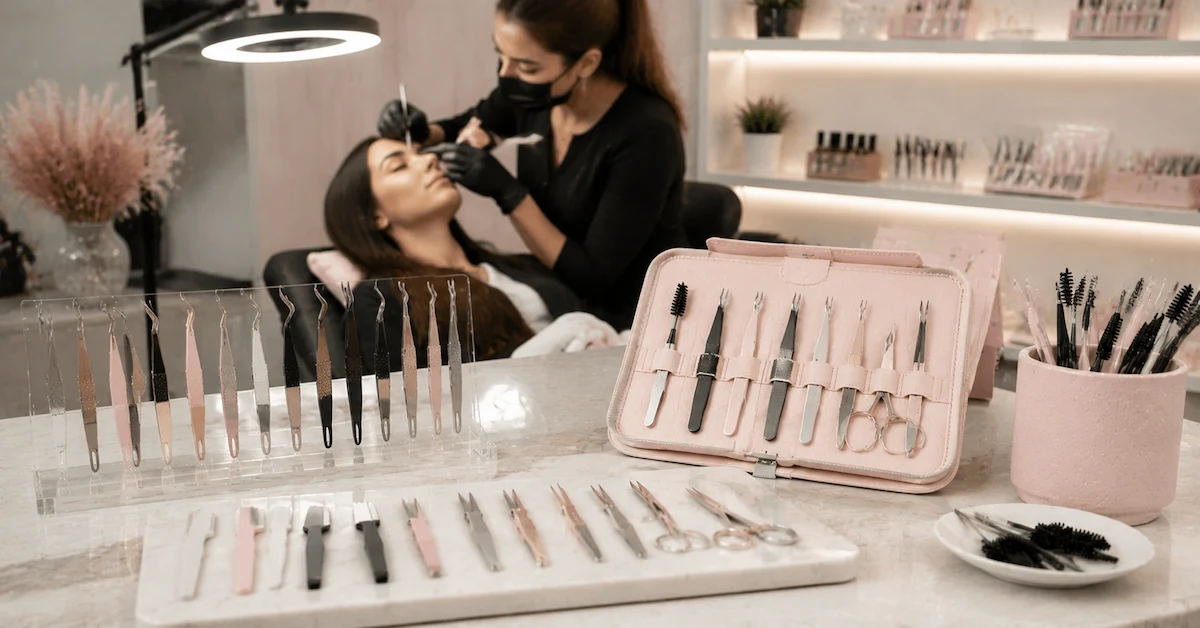
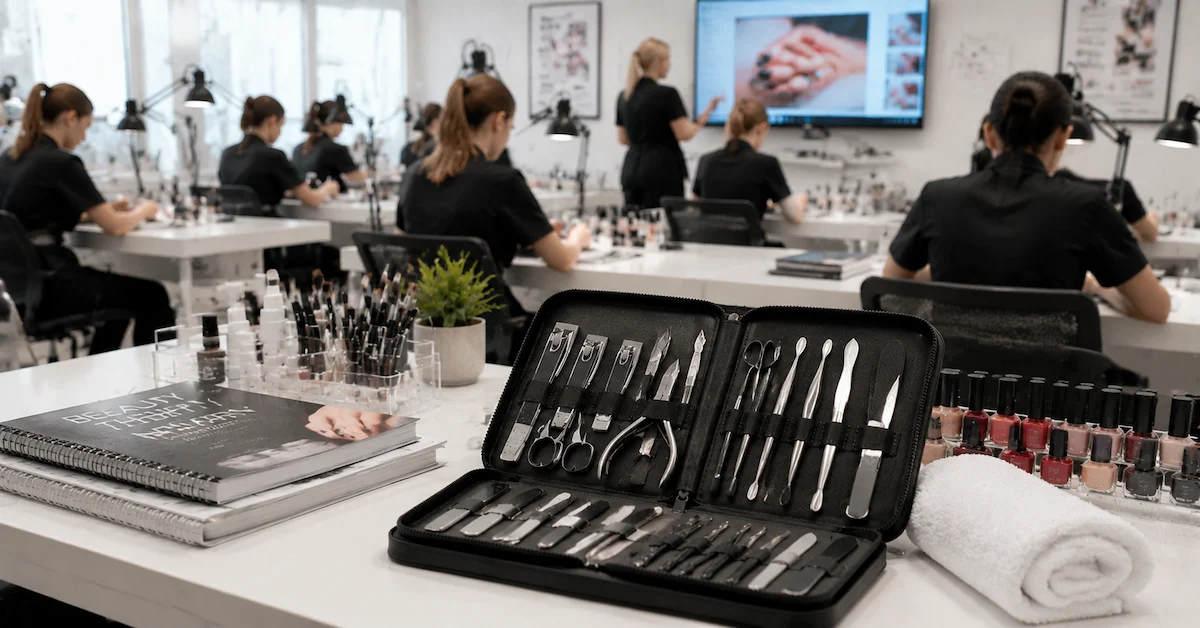
| Salon retail counter | Complete grooming set or selected professional-looking tools | Nipper action, grip comfort, clean polished appearance | Customer expectations are higher because the product is sold in a professional environment |
| Online reseller | Compact sets with clear tool list | Packaging protection, product consistency, visible defects | Photos, descriptions and delivered product must match closely |
| Travel or gift kit buyer | Small clipper, tweezers, file and essential cuticle tool | Compact layout, safe storage, presentation | Portability and perceived completeness matter |
| Private-label buyer | Coordinated assortment with consistent finish and packaging | Batch uniformity, logo or packaging feasibility, supplier communication | Brand reputation depends on repeatable appearance and handling |
5. Manufacturing and Inspection Realities to Understand
Nail care tools are small, but their quality depends on several manufacturing and finishing steps. Products in this category are commonly shaped, ground, polished and assembled through multiple processes, though the exact method and steel grade should be confirmed with the supplier rather than assumed. Small variations can lead to misaligned clipper jaws, rough edges, loose movement or inconsistent shine.
For buyers, the most useful approach is to inspect repeatability. A single good sample is positive, but it is not enough. Ask the supplier how samples relate to production goods, and inspect multiple pieces from the same shipment when possible. Look for variation between tools of the same type: one clipper may cut cleanly while another has uneven contact; one pair of tweezers may close properly while another has a gap at the tip.
Moving parts deserve special attention. Hinges, levers and spring-loaded actions influence user experience more than many buyers expect. A tool can look bright and clean while still feeling weak, stiff or unstable. For cuticle nippers, smooth opening and closing matters because users need control. For clippers, lever resistance should feel appropriate and consistent. For tweezers, alignment matters more than decorative finish.
6. Cost Factors: What Changes the Wholesale Value
Buyers often ask why similar-looking nail tools are quoted differently. The answer can involve material choice, finishing time, tool complexity, packaging, customization and inspection expectations. Without inventing fixed prices, it is still possible to identify the main cost drivers.
- Assortment size: A set with multiple clippers, tweezers, a nipper, pusher and file will involve more components than a basic two- or three-piece kit.
- Tool complexity: Cuticle nippers and hinged tools require more attention to alignment and action than simple flat tools.
- Finish level: More uniform polishing and cleaner edges can add process time, but also improve shelf appeal and user confidence.
- Grip detail: Textured or knurled handles may improve handling and perceived value, depending on the tool design.
- Packaging format: Retail-ready packaging, protective inserts, compact kit layouts and private-label presentation affect total landed value.
- Customization: Logo application, packaging artwork and assortment changes should be discussed as separate scope items rather than assumed in a standard quote.
- Inspection requirements: More detailed quality checks may influence timeline and cost, but can reduce avoidable complaints.
The lowest quote is not always the best commercial result. If a cheaper tool causes returns, poor reviews or retail rejection, the real cost rises. At the same time, buyers should not over-specify beyond the intended market. A promotional travel kit and a salon retail set do not need the same positioning.
7. Supplier Evaluation Questions for B2B Buyers
A good supplier conversation should be practical. Ask questions that reveal whether the supplier understands assortment, packaging, repeat orders and inspection. If you are ready to compare options, you can send project details through the inquiry page with your intended channel and tool mix.
Assortment and Sampling
Ask which tool types can be supplied together, whether clippers are available in more than one size, and whether the sample can show the complete set. If your market needs a compact travel kit, do not evaluate only a full desktop assortment. If you need salon retail quality, do not approve a sample that excludes the nipper or tweezers.
Customization and Packaging
For private-label or retail projects, ask what parts of the packaging can be adjusted and what information the supplier needs from you. Do not assume logo, artwork, insert layout or tool substitution is included in a standard product quote. Clarify whether packaging is designed for display, shipping protection, kit storage or promotional distribution.
Quality Control and Documents
Ask what inspection steps are used for alignment, finish, movement and packaging. For products sold into regulated markets, buyers should also verify current requirements with their own compliance advisors and request relevant supplier documents. Public bodies and rules such as the U.S. Consumer Product Safety Commission and the EU General Product Safety Regulation may be relevant depending on destination, product claims and sales channel. Always verify current versions and do not treat any general reference as proof of certification.
8. Common Sourcing Problems and How to Avoid Them
The most common mistake is evaluating only the most visible item. Buyers often focus on the clippers because they are familiar, then overlook tweezers or the cuticle nipper. In a set, the weakest tool can shape the customer’s opinion of the whole product.
A second problem is confusing shine with quality. A polished surface helps presentation, but it does not guarantee clean cutting, firm grip or durable handling. Always test the action of moving parts and the feel of working edges.
A third problem is ignoring the target user. Home grooming customers may value convenience and a complete kit. Salon retail buyers may expect better grip, smoother action and a more professional appearance. Travel kit buyers may care most about compact storage. Promotional buyers may prioritize a clean visual story and broad usefulness. The same product family can serve all of these markets, but not with the same assortment logic.
A fourth problem is failing to define packaging early. Packaging affects perceived value, transit protection, display and private-label feasibility. If the tools are good but the packaging looks unclear or allows movement during shipping, the customer experience can still suffer.
9. Pre-Order Checklist for Wholesale Nail Care Tools
Use this checklist before moving from samples to a larger order:
- Confirm the target channel: retail, salon, online, travel, gift, promotional or private label.
- Check that the assortment includes the tool types customers will actually use.
- Inspect clipper jaw alignment, lever feel and size suitability.
- Test tweezer tip closure and grip accuracy.
- Open and close the cuticle nipper several times to check smoothness and control.
- Review the cuticle pusher for edge finishing and hand comfort.
- Check the file or buffer placement and protection in the pack.
- Compare finish consistency across multiple pieces, not one sample only.
- Confirm packaging style, labeling approach and shipping protection.
- Ask what customization is available and what information is needed to quote it.
- Request supplier documents relevant to your market and verify current regulatory requirements.
- Clarify how repeat orders will match the approved sample.
10. FAQ for Wholesale Buyers
Can I request samples before placing a bulk order?
Yes, sample review is the sensible first step for this category. Ask for a sample that represents the full assortment, including clippers, tweezers, cuticle tools and file or buffer, so you can evaluate the set as customers will receive it.
Is there a fixed MOQ for nail care tools?
Minimum order requirements can depend on the tool mix, packaging, customization and production plan. Confirm MOQ directly with the supplier for the exact assortment and sales format you need.
Can packaging or tool combinations be customized?
Customization may be possible depending on the project. Discuss the desired tool list, packaging format, logo or artwork needs, and target channel early so the supplier can advise what is practical.
How should I judge quality before repeat orders?
Use approved samples as the reference, then inspect production goods for alignment, cutting or gripping action, finish consistency, packaging condition and assortment accuracy. Pay special attention to moving and cutting tools.
How do I confirm lead time?
Lead time depends on order scope, customization, packaging and production schedule. Ask for a current estimate when you submit final specifications, and confirm it again before placing the order.
11. A Practical Next Step
If you are sourcing nail care tools for retail shelves, salon resale, online bundles or private-label kits, begin with a clear assortment brief. Define the user, the channel, the packaging requirement and the level of finish expected. Then request samples that show the complete tool mix, not only the easiest item to approve.
Olimor offers beauty tool sourcing support across practical grooming categories. To discuss nail care tools, assortment options or packaging direction, contact the team through Olimor contact support. A careful sample review and a realistic inspection checklist will do more for your business than a quick decision based only on product photos. The right wholesale nail care tools should be easy to merchandise, comfortable to use and consistent enough to support repeat sales without becoming a quality headache.