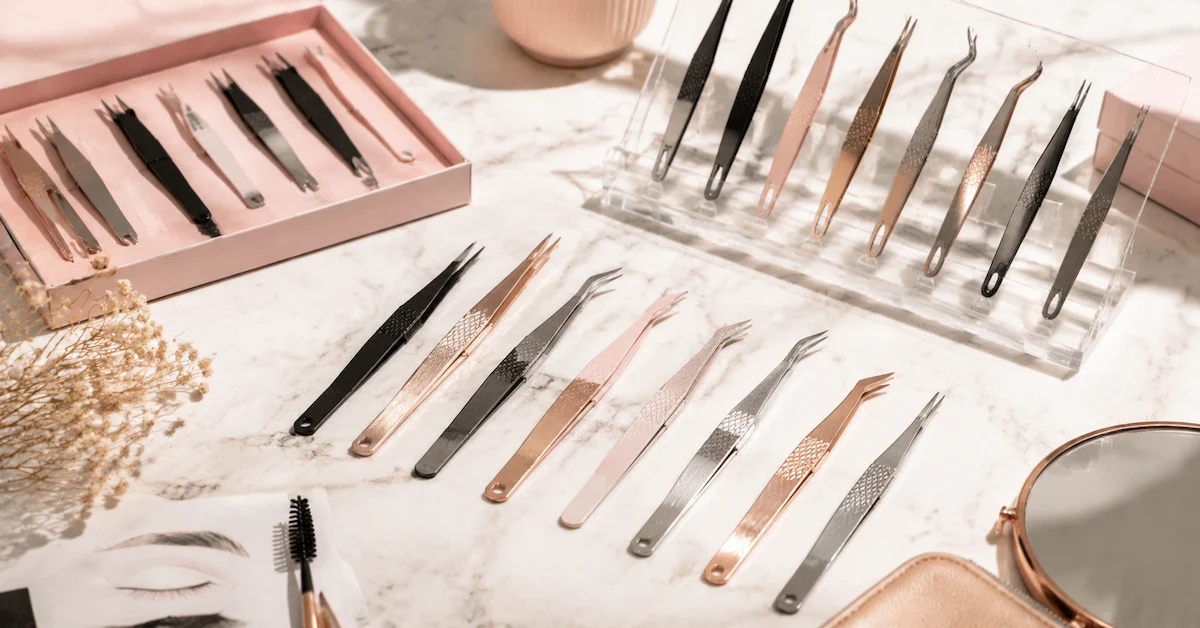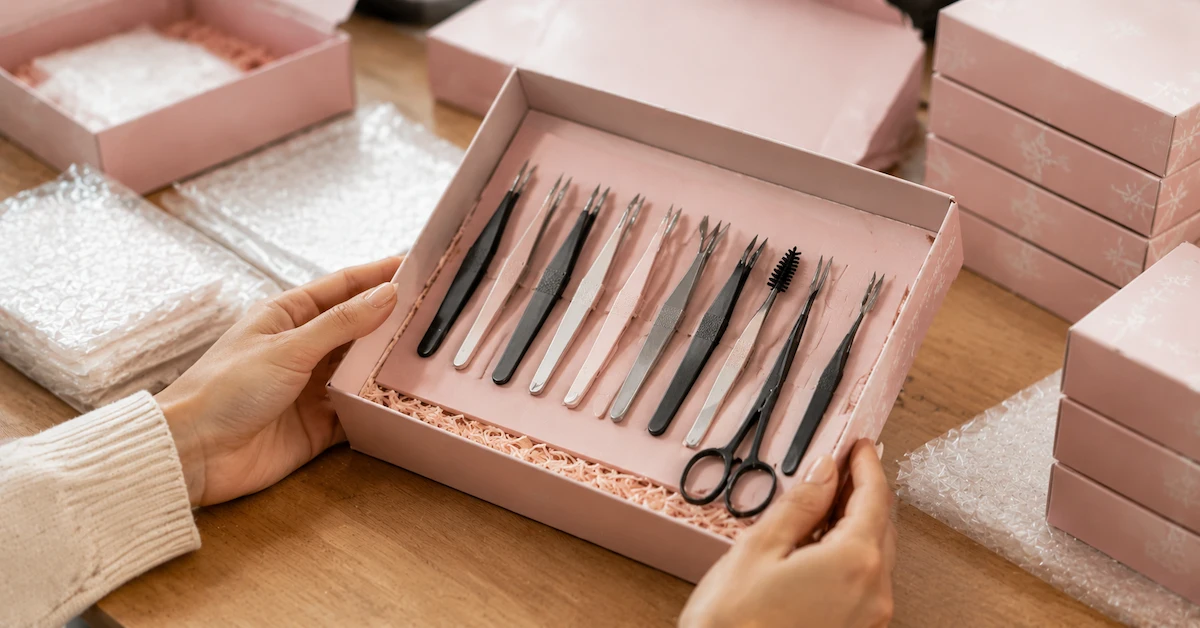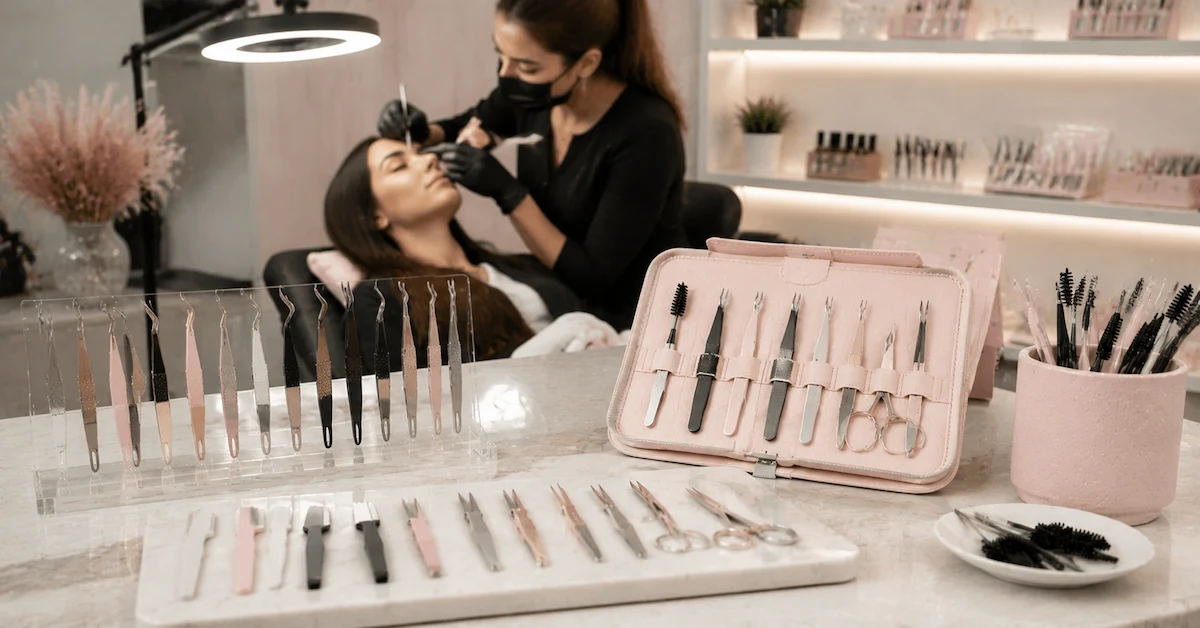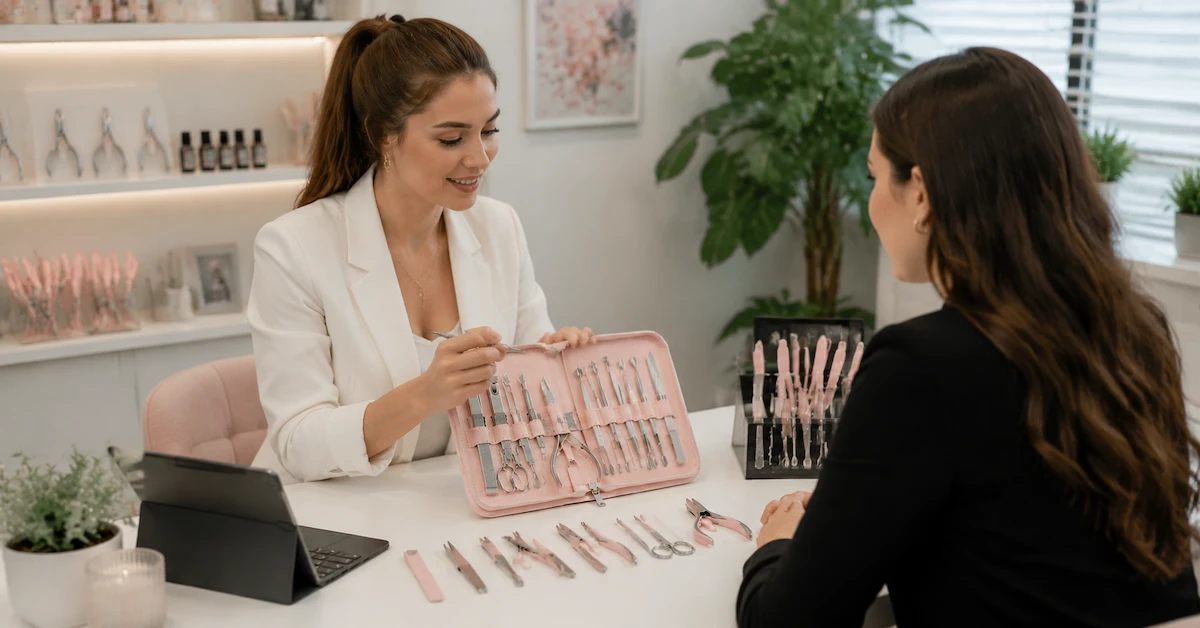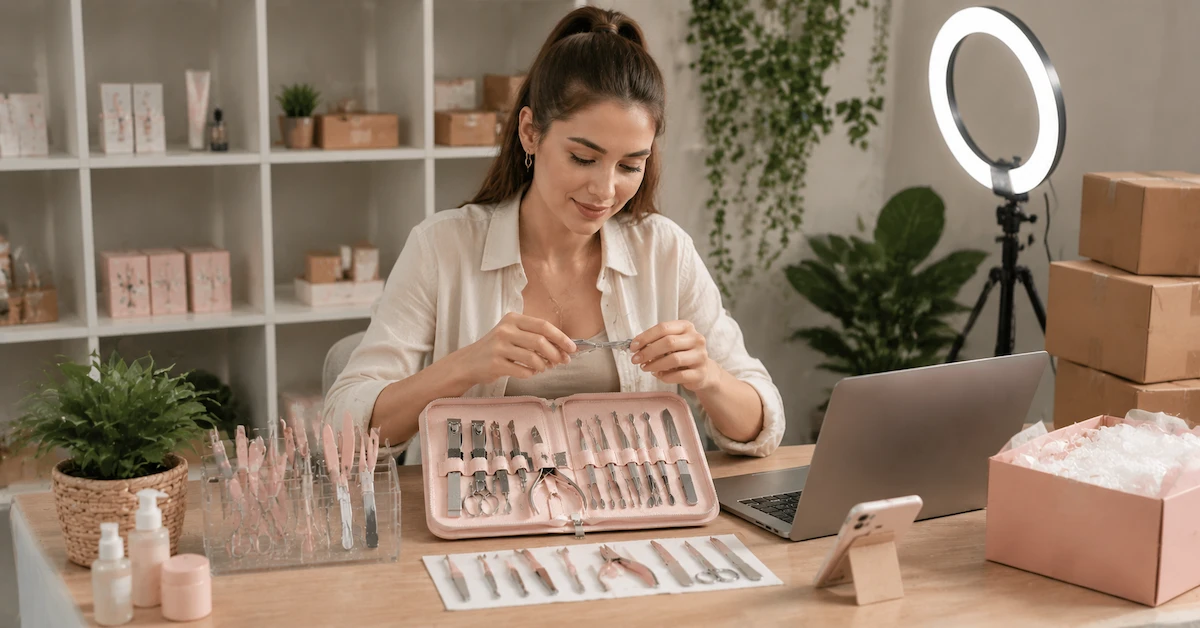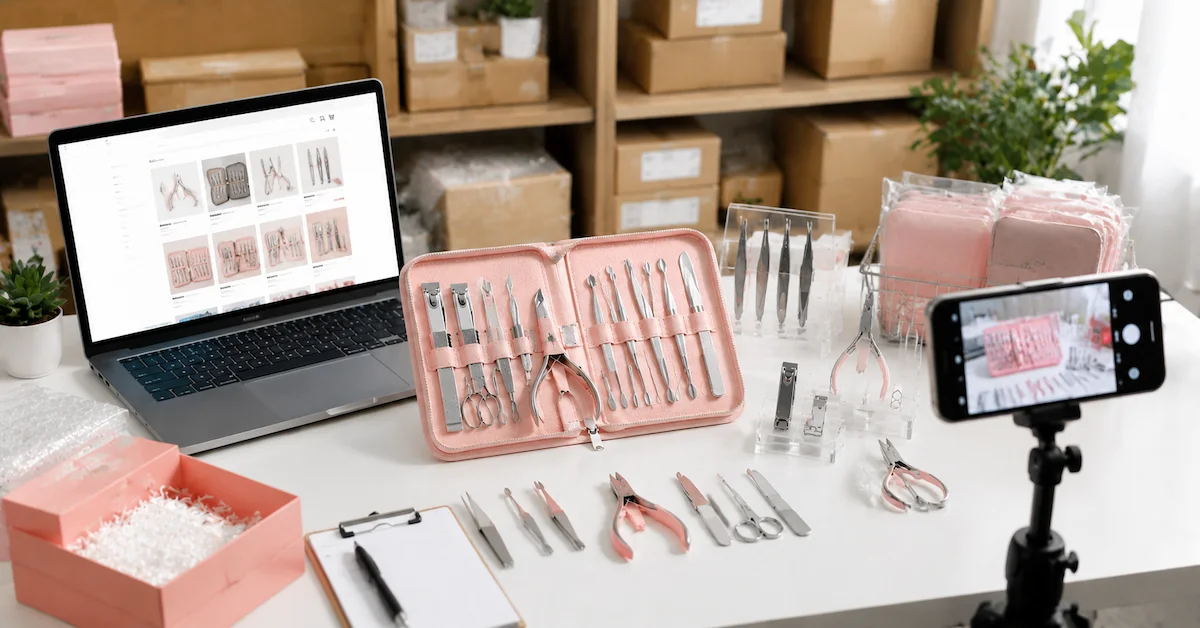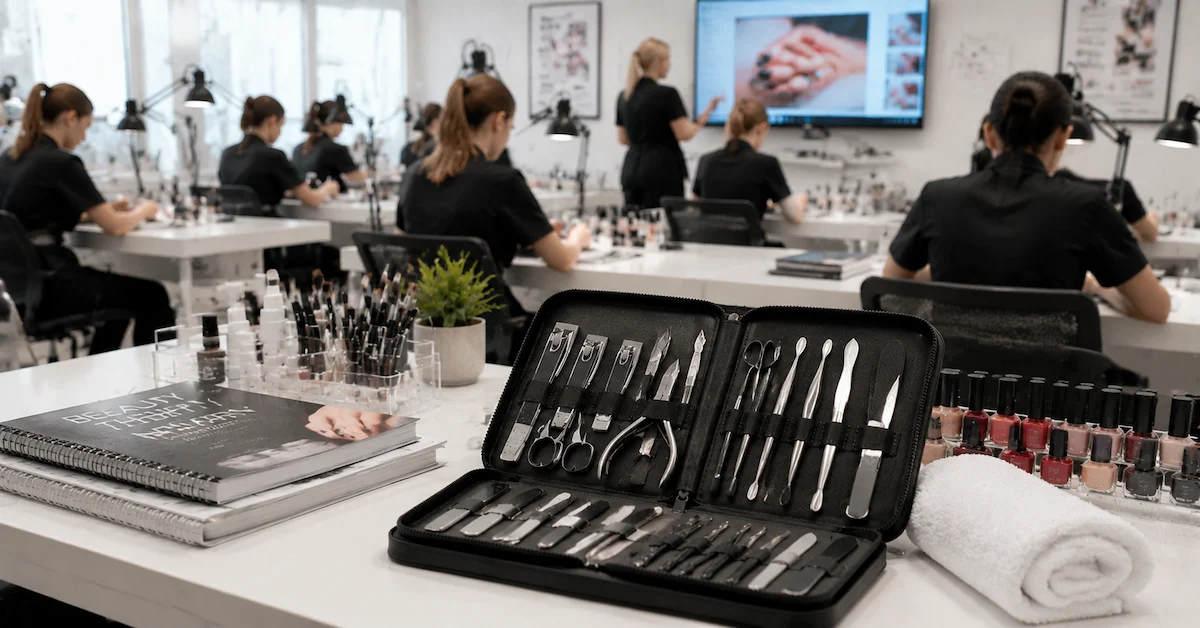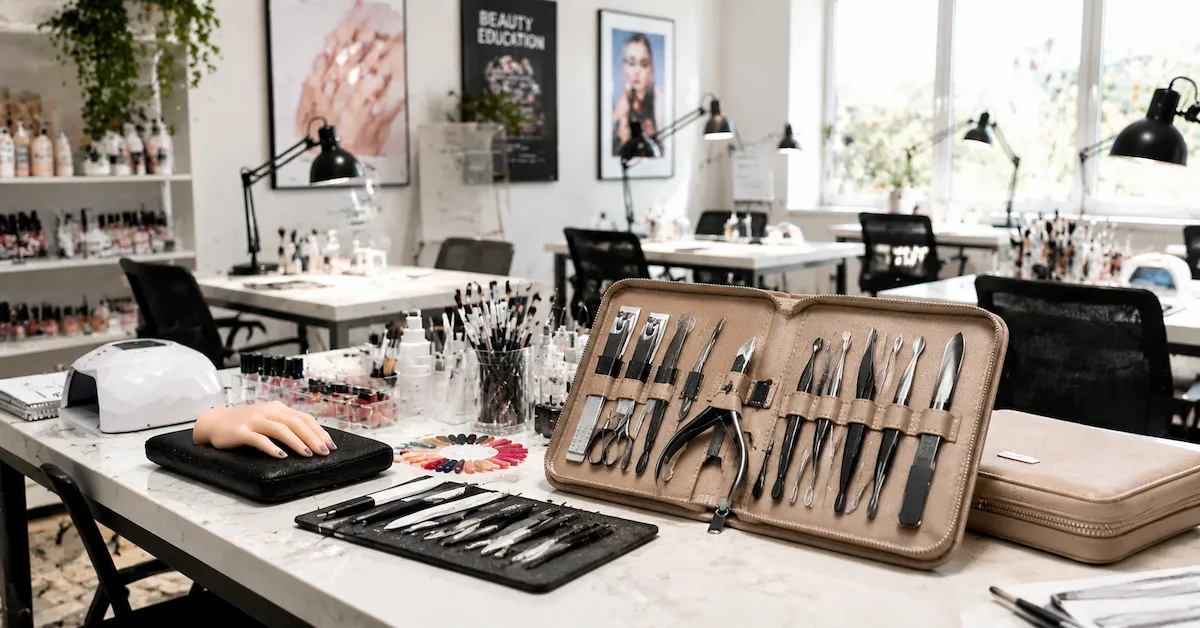











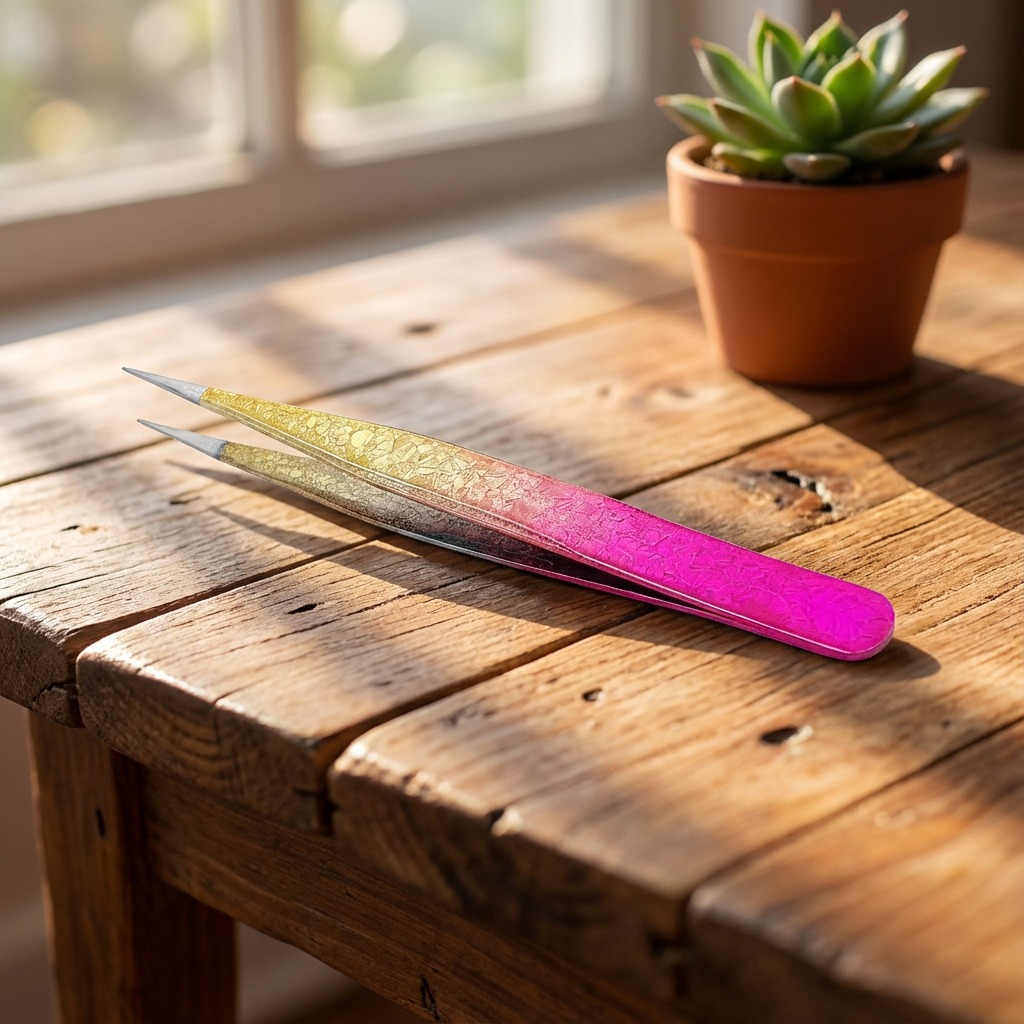
Custom logo tweezers are small beauty tools with a large branding role. They appear in brow kits, lash sets, salon retail displays, travel grooming pouches, promotional beauty boxes and private-label collections. Because a tweezer is handled closely and judged immediately by its feel, alignment and finish, it can strengthen a brand’s credibility or reveal weak sourcing decisions very quickly.
For beauty brands, distributors, salon buyers and private-label tool sellers, the goal is not simply to place a logo on metal. The tool must grip reliably, feel comfortable in the hand, arrive with consistent finishing and fit the commercial channel where it will be sold. A lightweight promotional item, a professional brow-counter tool and a premium gift-set accessory may all carry a logo, but they should not be specified in the same way.
This guide explains how to evaluate custom logo tweezers from a practical sourcing point of view: performance features, logo placement, finish selection, packaging, inspection priorities, supplier evaluation and the questions buyers should clarify before production. To compare related grooming tools, you can browse Olimor Beauty beauty tool products or review coordinated options in the product collections.
Why Custom Logo Tweezers Work for Beauty Branding
Tweezers are practical, compact and easy to include in many beauty programs. Unlike decorative packaging that may be discarded, a useful tweezer can stay in a makeup bag, brow station or bathroom cabinet for a long time. That repeated use gives the logo regular visibility and makes branded tweezers attractive for beauty retailers, brow studios, cosmetic gift sets and grooming-tool distributors.
The strongest programs treat the tweezer as a functional precision tool first and a branded item second. If the tips do not meet evenly, if the tension is uncomfortable, or if the grip feels unstable, the logo will not rescue the product. A brand mark has more value when the user associates it with accuracy, comfort and reliability.
Common B2B Use Cases
- Private-label beauty ranges: compact grooming tools that carry the buyer’s own visual identity.
- Brow and lash service providers: take-home accessories sold after appointments or included in care kits.
- Retail beauty sets: coordinated tools added to eyebrow, lash or grooming assortments.
- Promotional beauty kits: useful tools that support brand visibility beyond the campaign.
- Travel and grooming pouches: small recognizable accessories for everyday maintenance.
- Seasonal bundles: matching colors, finishes and packaging for a more coherent presentation.
Start With Performance Before Adding a Logo
A custom logo cannot compensate for poor alignment, inconsistent spring tension or rough edges. Before buyers discuss artwork, packaging or color, they should confirm that the base tweezer works as intended for the target user. A salon professional, retail consumer and promotional recipient may have different expectations, but all will notice basic handling quality.
The supplied product details for one Olimor tweezer format include a 115mm length, lightweight 14g build, stainless steel construction, finely tapered tips, textured grips and ergonomic contours. These details are useful evaluation points because they relate directly to hand control, user comfort, branding area and precision work. They should still be confirmed against the exact sample and specification selected for the buyer’s program.
Key Tool Features to Review
- Tip alignment: the two tips should meet evenly under normal pressure without a visible gap.
- Tip finish: edges should feel controlled and precise, not rough, uneven or burred.
- Tension: the tweezer should open and close smoothly without requiring excessive force.
- Grip security: textured areas should improve control without creating uncomfortable pressure points.
- Weight and balance: a lightweight tool can reduce hand fatigue, but it should still feel stable in use.
- Surface consistency: polish, color or gradient effects should appear consistent enough for retail presentation and repeatable branding.
Stainless steel construction is a common baseline for beauty tweezers because tools may be exposed to moisture, skin oils and cleaning routines. Buyers should still verify the exact material description, finish and care recommendations in the supplier’s documentation rather than assuming that all stainless steel tools are identical.
Logo Placement, Finish and Readability
Logo placement should be visible but practical. A mark placed where fingers repeatedly squeeze the tool may experience more friction. Branding near the working tips can interfere with the clean appearance of the tool and is usually less useful for presentation. In many cases, a flatter visible face of the tweezer provides the best balance of readability, appearance and handling comfort.
Finish selection affects how the logo looks. A mark that reads clearly on a matte surface may be less visible on a polished or reflective finish. A gradient finish or textured grip can look distinctive, but the buyer should review whether the logo remains legible against the background. Samples should be checked under realistic lighting, not only on a digital artwork proof.
Logo size also influences perceived value. Very large marks can make a precision tool look like a giveaway item, while overly small marks may disappear on a reflective surface or curved area. For professional brow tools and premium private-label lines, restrained logo placement often feels more refined. For promotional kits, quicker brand recognition may matter more.
Packaging Choices for Retail, Salon and Kit Programs
Packaging should be developed alongside the tweezer rather than treated as a final step. The same base tool can feel different in a simple sleeve, pouch, blister card or boxed presentation. Packaging affects shelf appearance, shipping protection, perceived value and how easily the product fits into a larger beauty kit.
For retail buyers, packaging may need space for product information, barcode placement, display requirements and country-specific labeling. For professional kits, easy access and tip protection may matter more than shelf impact. For promotional beauty boxes, compact size and visible branding are often key considerations.
The working tips need protection during shipping and handling. If the tips bend, rub or arrive misaligned, the buyer may face returns even when the logo and outer packaging look attractive. Packaging inserts, sleeves or protective caps should be reviewed as part of sample approval.
Comparison Table: How to Specify Custom Logo Tweezers by Channel
| Buying Scenario | Main Buyer Priority | Specification Focus | Common Risk to Avoid |
|---|---|---|---|
| Professional brow or lash salon | Accuracy, comfort and clean station appearance | Tip alignment, controlled tension, grip security and subtle branding | Choosing a decorative finish that looks good but feels slippery in use |
| Private-label retail beauty tool | Repeatable appearance and customer satisfaction | Consistent surface finish, readable logo, protective retail packaging | Approving artwork without checking marked physical samples |
| Promotional beauty kit | Brand visibility and practical usefulness | Clear logo placement, compact packaging and reliable basic grip | Treating the tool only as a giveaway and ignoring tip quality |
| Travel grooming set | Compact format and protection inside a pouch or kit | Secure tip protection, lightweight handling and coordinated presentation | Packaging the tweezer loosely so tips rub against other tools |
| Premium gift or seasonal bundle | Perceived value and coordinated design | Finish consistency, refined logo scale and gift-ready packaging | Using a bold logo or mismatched finish that weakens the premium feel |
Quality Checks Before Bulk Production
Export-quality tweezers depend on more than an attractive surface. Defects can appear at several stages: raw material selection, shaping, tip finishing, surface treatment, logo application or packing. Olimor Beauty’s beauty-tool sourcing approach emphasizes review from material through final packaging, which is important for a precision tool that is judged by both appearance and function.
Buyers should create a simple inspection checklist and use it consistently from sample review to bulk order approval. Photos are helpful, but they are not enough. A sample should be opened, squeezed, tested for basic grip if appropriate, examined under bright light and reviewed inside the intended packaging.
Practical Inspection Checklist
| Checkpoint | What to Review | Why It Matters |
|---|---|---|
| Tip alignment | Tips meet evenly without a visible gap under normal pressure | Supports accurate gripping and reduces user frustration |
| Tip finish | Edges are controlled, clean and free from obvious roughness | Improves comfort and user confidence near the skin |
| Tension | Tool opens and closes smoothly without excessive resistance | Affects comfort during repeated grooming work |
| Grip and contours | Textured or shaped areas support control without discomfort | Helps users hold the tool steadily |
| Surface finish | Color, polish or gradient effect appears consistent across samples | Protects retail presentation and brand perception |
| Logo clarity | Logo is readable, correctly positioned and appropriate in scale | Ensures the branding investment is visible and professional |
| Packaging protection | Tips are protected from bending, rubbing or surface abrasion | Reduces damage risk during shipping and handling |
If several finishes are being considered, each one should be sampled separately. A logo may read differently on matte, polished, colored or gradient surfaces. Buyers should also handle the marked sample repeatedly to see whether the chosen logo area sits in a high-friction grip zone.
Factory-Direct Sourcing and Supplier Evaluation
Factory-direct sourcing can help buyers align tool construction, logo execution and packaging decisions earlier in the development process. For custom logo tweezers, that coordination matters because small changes in finish, grip texture or packaging insert design can affect both function and branding.
However, factory direct does not automatically mean the supplier is the right fit. The sourcing conversation should be specific. Instead of asking only for a low unit price, buyers should define the product they are trying to build: a professional brow tool, a retail private-label item, a travel-set accessory or a promotional kit component. The supplier’s ability to understand the difference is often more important than a catalog image.
Questions to Ask a Potential Tweezer Supplier
- Can you provide physical samples with the proposed finish and logo placement before bulk production?
- How do you control tip alignment, tip finish, surface consistency and final packaging checks?
- Can packaging be reviewed together with the tool sample to confirm tip protection and presentation?
- How are artwork position, finish references and packaging details confirmed in writing?
- Can the same specification be repeated for future orders or coordinated with other beauty tools?
Clear answers, organized sample references, stable packaging discussions and written confirmations help reduce sourcing risk. Custom tools often fail because of small misunderstandings: wrong logo size, incorrect placement, color mismatch, packaging that does not protect the tips, or a sample that was approved visually but not handled in real use.
Cost Factors Without Guesswork
Buyers often ask how much custom logo tweezers cost, but a responsible quotation depends on the specification. Unit cost can be influenced by tweezer style, material description, finish, logo method, packaging type, inspection requirements, order quantity, artwork complexity and whether the item is part of a larger kit.
A lower price may be suitable for a simple promotional project, while a salon or retail program may justify more attention to finish, packaging and sample review. The important point is to compare like with like. A quote for an unbranded basic tweezer in a simple sleeve should not be compared directly with a marked stainless steel tool in protective retail packaging.
Buyers can prepare for quotation by sharing the intended use, target channel, preferred finish, logo file, packaging expectations and whether repeat orders are expected. If you are planning a custom program, Olimor can review the project through the custom beauty tool inquiry page.
Standards and Documentation Buyers Should Verify
For B2B sourcing, buyers may refer to recognized quality and inspection frameworks when discussing supplier controls. For example, ISO 9001 is a widely used quality management system standard, and ISO 2859-1 is commonly referenced for acceptance sampling procedures. These references can help structure supplier conversations, but buyers should verify the applicable version, inspection plan and supplier documentation for their own market and product requirements.
No buyer should assume that a supplier holds a certification or follows a specific standard unless current documentation is provided and verified. For beauty tools sold into different markets, importers should also confirm any local labeling, safety, packaging or consumer product requirements that apply to their distribution channel.
How to Build a Repeatable Custom Tweezer Specification
A repeatable specification makes future orders easier and reduces the risk of inconsistent results. Once a sample is approved, buyers should record the essential details rather than relying on memory or photos alone.
Specification Details to Confirm
- Tweezer shape, length, weight reference and grip design where applicable.
- Material description and surface finish selected for the project.
- Tip style, alignment expectation and acceptable handling feel.
- Logo size, placement, color reference and marking method if confirmed.
- Packaging type, insert design, tip protection and retail information needs.
- Sample approval process and checkpoints before bulk production.
- Final packing requirements for cartons, kits or distributor handling.
This level of detail is especially important for private-label beauty ranges and distributors that plan repeat orders. A clear specification allows the buyer and supplier to discuss changes deliberately rather than discovering differences after production.
When Olimor Is a Good Fit
Olimor Beauty is suited to buyers who need custom logo tweezers to function as real beauty tools, not only branded accessories. The best fit is a buyer who can define the target channel, review physical samples and make decisions about finish, logo position and packaging before production approval.
If you are sourcing tweezers for brow kits, grooming sets, salon retail or private-label programs, Olimor can help discuss tool format, branding presentation and packaging direction. To start a project conversation, contact the team through Olimor Beauty contact with your intended use, logo requirements and packaging goals.
FAQ: Custom Logo Tweezers for B2B Buyers
Can I request samples before confirming a custom logo tweezer order?
Yes, sample review is an important step. Buyers should check not only appearance, but also tip alignment, tension, grip comfort, logo readability and packaging protection before approving bulk production.
Is there an MOQ for custom logo tweezers?
Minimum order requirements depend on the selected tool, finish, logo process and packaging. Buyers should request the current MOQ for the exact specification rather than relying on a general assumption.
Can the logo, finish and packaging all be customized?
Custom options may include logo placement, surface finish and packaging direction, depending on the chosen tweezer and production feasibility. The best approach is to review artwork and packaging goals during sampling.
What quality checks should be confirmed before shipment?
Useful checks include tip alignment, tip finish, tension, surface consistency, logo clarity and packaging protection. Buyers should confirm the inspection scope and documentation with the supplier before production.
How should buyers discuss lead time?
Lead time depends on sample approval, customization complexity, packaging and production schedule. Buyers should confirm the current timeline in writing for the specific order and allow time for sample review.