











Custom logo tweezers are small beauty tools with a large influence on how customers judge a brand. They are used close to the face, often for detailed brow or grooming work, so buyers evaluate them quickly by how accurately the tips meet, how comfortable the tool feels and whether the finish looks clean after handling. A logo can make the product recognizable, but reliable gripping performance is what makes users keep it.
For beauty brands, salon chains, distributors, gift programs and private-label buyers, sourcing custom tweezers should not begin with color alone. The better starting point is the working structure of the tool: tip style, alignment, hand feel, surface finish, logo readability, packaging fit and inspection consistency. A polished sample may look attractive, but repeat orders depend on whether each production batch performs and presents consistently.
This guide explains how to compare custom logo tweezers for informational evaluation and B2B purchasing decisions. It focuses on practical product checks, supplier questions and customization choices that affect real use, retail presentation and export quality.
Why Custom Logo Tweezers Remain Useful for Beauty Branding
Tweezers are strong branding items because they are compact, functional and easy to include in many beauty formats. They can be sold as a standalone grooming tool, added to brow kits, packed with lash accessories, included in travel beauty sets, supplied to salons or used as retail add-ons. Compared with larger beauty tools, they are also relatively simple to store, display and combine with other items in a product range.
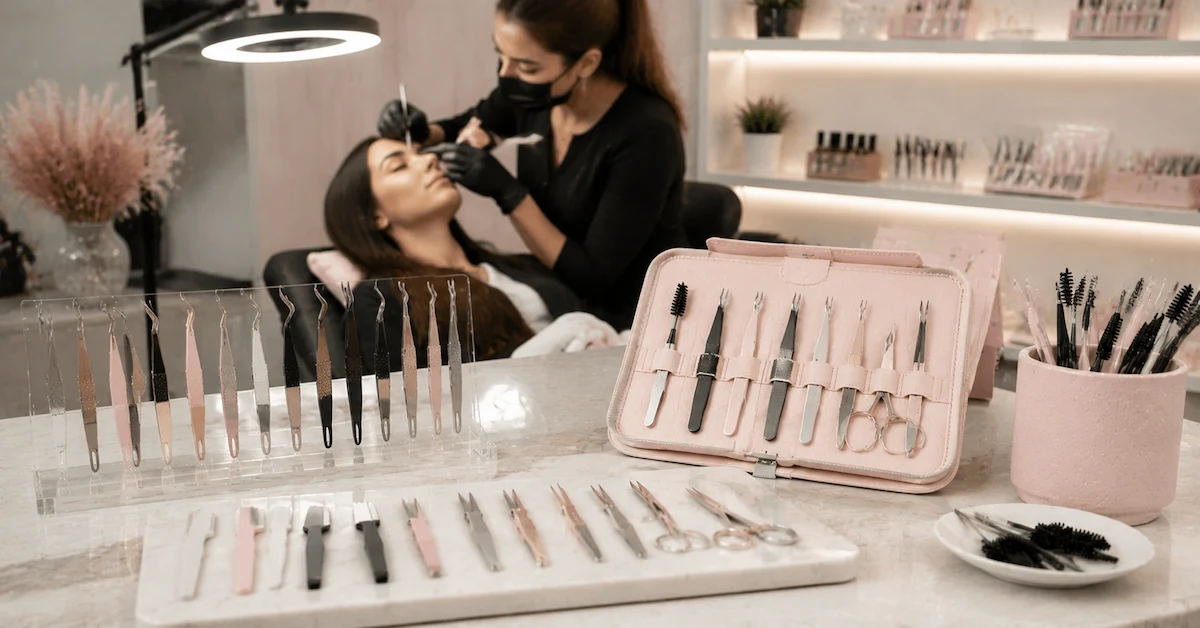
The handle area naturally supports logo decoration. A brand mark can be visible when the tool is held, displayed in packaging, photographed for e-commerce or stored in a makeup bag. For retailers and distributors, this helps separate a private-label item from generic grooming tools. For salons and brow studios, it can support a consistent professional image across treatment rooms and retail shelves.
However, the branding only helps if the tweezer feels dependable. If the tips misalign, the arms feel weak or the finish scratches too easily, the logo can reinforce a negative impression. A good sourcing decision matches the customization level to the end user: salon professionals may prioritize working feel, retail customers may notice finish and packaging, while wholesale programs often need repeatable appearance across orders.
Start with Tip Performance Before Logo Placement
The tip is the working part of the tweezer. Decoration, color and packaging cannot compensate for tips that fail to grip cleanly. For eyebrow grooming and fine hair removal, the tips should meet evenly at the gripping point and hold hair without requiring excessive hand pressure. If the tips have visible gaps, uneven edges or inconsistent closure, users may break hair, miss fine hairs or experience discomfort.
Different tip styles suit different use cases. Slanted tips are widely used for brow shaping because the angle supports controlled grooming. Pointed tips can support more detailed work where precision is required. Flat or straight tips may be more suitable for broader gripping tasks. The right selection depends on the selling promise and user skill level. A professional brow salon, a beginner retail kit and a lash accessory set may not need the same profile.
When reviewing samples, test them as a customer would use them. Hold the tool naturally, compress the arms several times and check whether the tips close smoothly at the very end. Look for even spring return, edge comfort and a gripping surface that is neither too sharp nor too blunt. These details influence user satisfaction more than decorative appearance.
Practical tip checks for buyers
- Tip alignment: The two ends should meet consistently without a visible gap at the gripping point.
- Grip control: The tweezer should hold fine or short hairs without slipping or requiring excessive squeezing force.
- Spring feel: The arms should compress and return smoothly during repeated use.
- Edge comfort: Handle edges should not feel sharp against the fingers.
- Surface condition near the tip: Check for rough polishing marks, stains, scratches or uneven finishing that could affect use or appearance.
Material, Finish and Hand Feel
Stainless steel components are commonly used for tweezers because they can support durability, precision forming and a clean beauty-tool appearance when produced well. The supplied product direction for Olimor includes stainless steel tweezers with pointed tips for eyebrow grooming, ergonomic styling, a gradient gold-to-fuchsia finish and embossed floral patterns. This shows how a tweezer can combine visual identity with practical grooming use, but buyers should still test comfort and gripping performance before approving a decorative design.
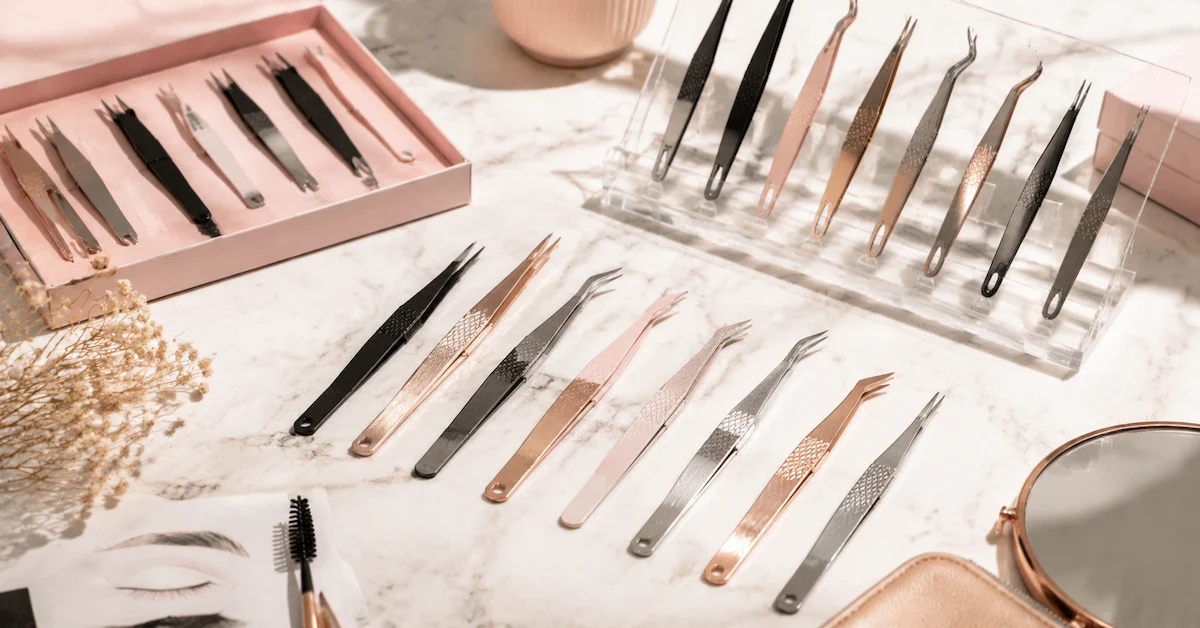
Finish selection affects both brand presentation and handling. A polished metallic finish can feel classic and retail friendly. A matte coating may suit minimalist or spa-positioned lines. A colorful or gradient finish can help a beauty brand stand out in online photography and display packaging. Embossed or patterned surfaces can add texture and visual interest, but they should not make the tool uncomfortable or interfere with cleaning and grip.
Buyers should compare multiple samples rather than relying on one perfect piece. Look at color consistency, coating evenness, logo contrast, scratches, stains and rough areas. A decorative tweezer should still feel stable in the hand and should not become slippery during normal use. If the product will be included in a premium brow kit or salon retail range, finish consistency across the full order is especially important.
Logo Placement, Readability and Decoration Decisions
A custom logo should look intentional on the tweezer body. The handle is usually the most practical branding area because it provides length for a brand name, icon or short message. The logo should remain visible without interfering with the user grip, tip function or cleaning. It should also avoid awkward placement near edges or curved areas where distortion may occur.
Before approving artwork, review the logo at actual tweezer size. Digital mockups can make thin lettering and complex icons appear clearer than they will be on a narrow handle. Low-contrast color combinations may also disappear in product photography or retail lighting. A simpler mark often prints more cleanly, especially for private-label programs that need repeatable production across future orders.
Logo scale is also important. If the logo is too small, it may be hard to see in online listings or retail display. If it is too large, the tool may look like a giveaway item rather than a serious beauty product. The best result balances brand recognition with a clean, finished appearance.
How to review a custom logo sample
- Check the logo from close inspection distance to confirm line clarity.
- Hold the tweezer normally and confirm the mark remains readable during use.
- Place the tool in its intended packaging and check whether the logo is visible or hidden.
- Photograph the sample under ordinary lighting to see whether contrast and finish work for e-commerce images.
- Compare several samples to identify shifts in placement, color or clarity.
Packaging and Channel Fit
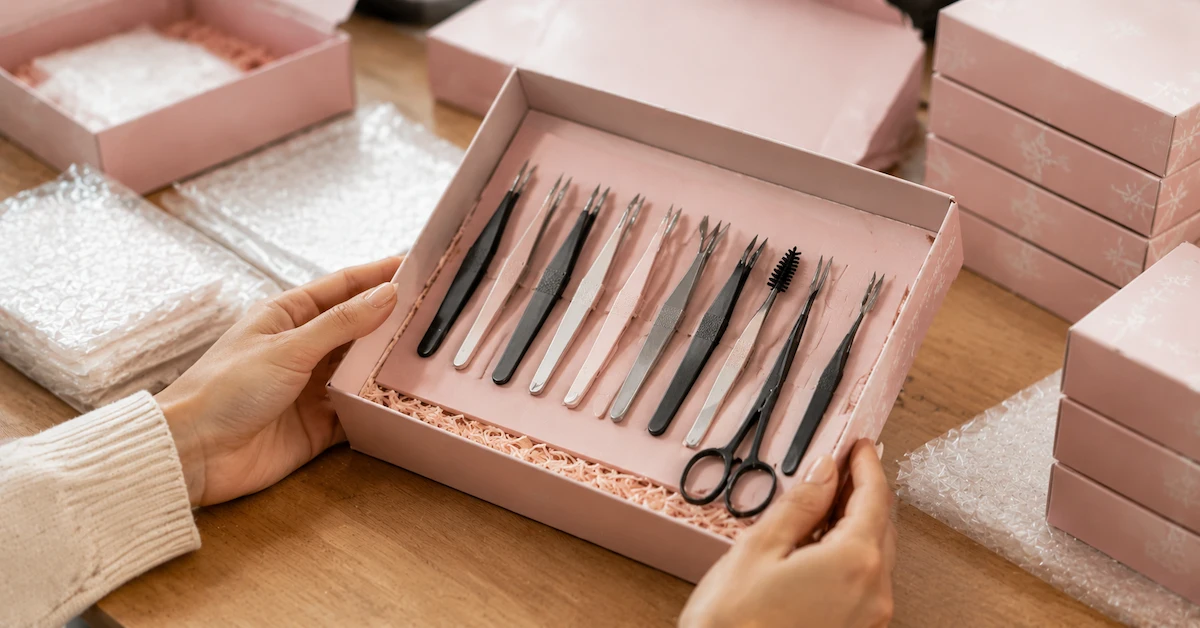
Packaging should protect the tweezer, support the selling channel and present the logo clearly. A salon-facing product may need simple, clean packaging that allows easy storage and professional use. A retail beauty kit may need a stronger visual story, consistent color matching and space for product information. A distributor may prioritize packaging that is efficient, clear and suitable for multiple customer accounts.
The tweezer should sit securely in its package so the tips are not damaged during handling. Buyers should check whether the package holds the tool straight, whether the finish rubs against inserts and whether any protective tip cover or holder is suitable for the intended retail experience. If the product will be sold in multiple markets, packaging layout should leave room for required labeling, warnings, barcodes or language variations.
For broader beauty tool planning, it is useful to align tweezers with lash tools, manicure tools or grooming accessories. Buyers can review Olimor beauty tool options through the Olimor products page or compare category directions in the beauty tool collection when building a coordinated private-label range.
Buyer Comparison Table for Custom Logo Tweezers
A structured review helps buyers compare suppliers and samples with less guesswork. Use the table below when discussing custom tweezers for private label, salon retail, wholesale distribution or promotional beauty programs.
| Decision Area | What to Check | Why It Matters | Supplier Questions |
|---|---|---|---|
| Tip profile | Slanted, pointed, straight or flat style matched to use case | The profile affects brow shaping, detailed work and general gripping performance | Which tip styles are available for custom logo orders? |
| Tip alignment | Even closure at the gripping end with no obvious gap | Misaligned tips can slip, break hairs or create user frustration | How is alignment checked during production and before packing? |
| Material and structure | Stainless steel construction, stable arms and comfortable spring return | The tool must feel controlled and durable in normal grooming use | What material options are offered, and can samples be reviewed before order confirmation? |
| Finish consistency | Color, coating, polishing, pattern and surface condition across multiple samples | Retail ranges look inconsistent if tone or surface quality varies unexpectedly | How are finish appearance and surface defects inspected? |
| Logo execution | Readable artwork, suitable scale, accurate placement and good contrast | The logo should support the brand without making the tool look crowded | Can artwork proofing or a pre-production sample be approved before mass production? |
| Packaging fit | Secure placement, visible branding and protection for the tips | Packaging affects both retail appearance and damage prevention | What packaging formats and mockup review steps are available? |
| Export readiness | Labeling accuracy, packing condition, order consistency and documentation needs | International buyers need repeatable quality and clear shipment preparation | What final checks are performed from raw materials through packaging? |
Factory-Direct Sourcing and Supplier Evaluation
Factory-direct sourcing can help buyers coordinate product details, packaging and inspection expectations earlier in the process. For custom logo tweezers, direct communication is valuable because small changes can affect the final user experience. A slight shift in tip finishing, coating thickness, logo size or package insert can change how the product feels and looks.
When evaluating a supplier, look for practical answers rather than broad quality claims. Buyers should clarify available shapes, finish options, decoration methods, packaging formats, sample approval steps and inspection points. Olimor Beauty is described as maintaining inspection attention from raw materials to packaging, which is the type of process focus buyers should ask about when sourcing branded grooming essentials.
Long-term consistency matters for private-label beauty tools. If a brand reorders the same item, the finish tone, logo position and packaging layout should remain aligned with the approved reference. Buyers should keep approval files, sample records and packaging artwork organized so future orders can be compared against the agreed standard.
Key supplier evaluation questions
- Can the supplier provide samples that reflect the intended finish, tip style, logo position and packaging?
- How are tip alignment, surface appearance, logo clarity and packing condition checked before shipment?
- Can packaging mockups or artwork files be reviewed before production begins?
- How are approved samples or reference details controlled for repeat orders?
- What customization options are realistic for the target sales channel and budget range?
Cost Factors Buyers Should Understand
Custom logo tweezer cost is influenced by more than the base tool. Tip profile, material selection, surface finish, logo method, packaging format, order complexity and inspection requirements can all affect the final quotation. A simple logo on a plain finish may be more straightforward than a decorative gradient finish with pattern work and custom retail packaging.
Buyers should avoid evaluating supplier quotes only by unit price. A low quotation may not include the same finish complexity, packaging detail, sample process or inspection expectations. A more useful comparison is total order value: product quality, branding execution, packaging suitability, communication clarity, documentation support and repeatability. For distributors and private-label brands, consistency can be more valuable than a short-term saving if the product will be reordered.
MOQ, sample cost, lead time and tooling or setup requirements should be confirmed directly for the specific product plan. These details vary by customization level and order conditions, so buyers should request current supplier information rather than relying on assumptions.
Quality, Compliance and Documentation Notes
Beauty tool buyers should define the quality checks they expect before placing an order. For tweezers, the most relevant checks include tip alignment, closing feel, edge comfort, visible surface condition, logo position, packaging fit and labeling accuracy. The approved sample should not be treated as a display piece only; it should become a practical reference for production evaluation.
Depending on the destination market and product claims, buyers may also need to review applicable regulatory or documentation requirements. Public frameworks such as EU REACH for chemical substances and ISO 9001 quality management principles may be relevant reference points when evaluating supplier processes or material documentation. Buyers should verify the applicable version, market requirements and supplier-provided documents for their own product and destination. This should not be interpreted as a claim that Olimor holds any specific certification unless it is confirmed in supplied documentation.
If packaging includes warnings, barcode areas, recycling marks or language requirements, these should be planned before artwork approval. Late changes can affect layout, cost and timing. International buyers should also confirm carton marking, packing method and final inspection arrangements before shipment.
How Olimor Supports Custom Beauty Tool Planning
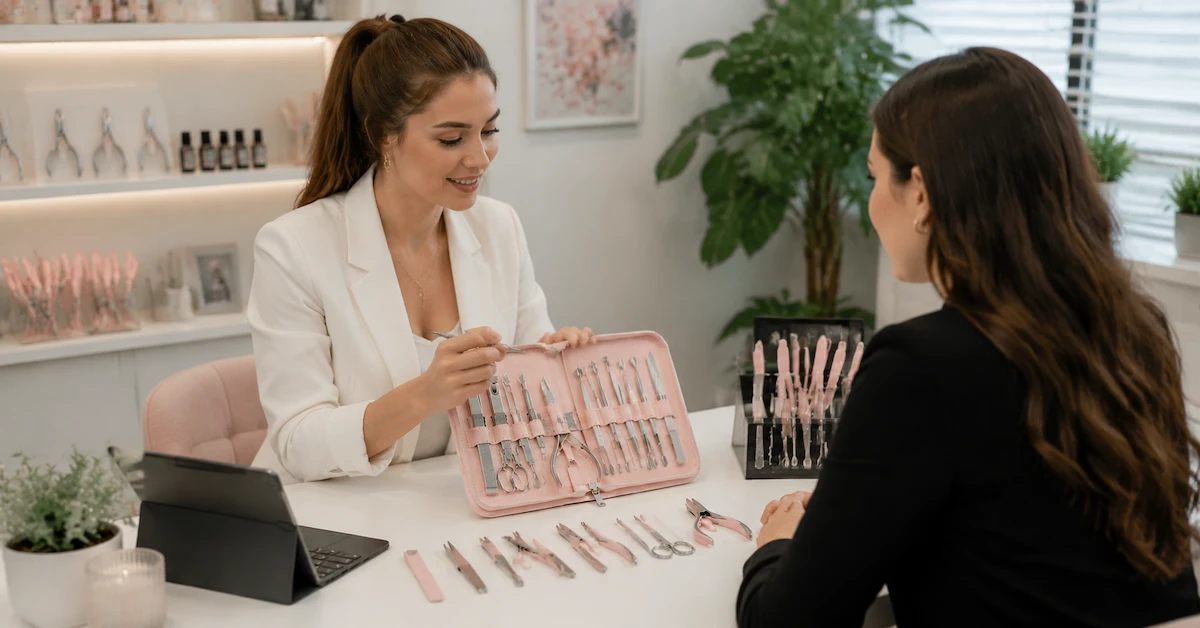
Olimor Beauty supplies beauty tools for buyers who need practical product options and factory communication for branded programs. For custom logo tweezers, the most productive inquiry includes the intended use, target channel, preferred tip style, finish direction, logo artwork, packaging idea and any market-specific labeling needs.
If you are developing a private-label tweezer, brow kit or coordinated grooming range, you can send product requirements through the Olimor inquiry page. For questions about customization options, sample discussion or project suitability, contact the team through Olimor contact support. The goal should be a clear product brief, a realistic sample review process and an inspection plan that matches the selling channel.
FAQ: Custom Logo Tweezers for Beauty Brands
Can I request samples before confirming a custom logo tweezer order?
Yes, buyers should discuss sample availability before order confirmation. A useful sample should show the intended tip style, finish direction, logo placement and packaging approach where possible. Confirm any sample cost, timing and approval steps directly with the supplier.
Is there a fixed MOQ for custom logo tweezers?
MOQ depends on the product style, finish, logo method, packaging and current production conditions. Buyers should share the full customization plan and request the applicable MOQ for that specific project rather than assuming one standard quantity.
What customization details should be prepared before asking for a quote?
Prepare the intended tweezer tip style, material or finish preference, logo artwork, color direction, packaging concept, target market and sales channel. Clear information helps the supplier assess feasibility, cost factors and sample requirements more accurately.
What quality checks matter most before shipment?
For tweezers, buyers should focus on tip alignment, gripping feel, spring return, edge comfort, surface finish, logo clarity, packaging fit and labeling accuracy. These checks help confirm that the order matches the approved sample and is suitable for retail or professional use.
Can lead time be confirmed before production?
Lead time should be confirmed after the supplier reviews the product design, customization method, packaging requirements and sample approval status. Avoid relying on generic timing because decorative finishes, packaging changes and artwork revisions can affect the schedule.