










For lash studios, brow bars, salon groups, beauty retailers and distributors, buying tweezers in bulk is not only a purchasing decision. It affects service speed, technician comfort, customer satisfaction and product returns. A tweezer may look simple, but small differences in tip alignment, tension, surface finish and handle grip can decide whether it performs reliably in daily professional use.
When sourcing at volume, the goal is not to find the lowest-cost item on a spreadsheet. The goal is to secure a consistent tool that works the same from piece to piece. A single sample can feel good in the hand, but a bulk order must maintain that same precision across the carton. This guide explains what to check before placing a larger tweezer order, how to compare supplier options, and why construction details matter for lash, brow and retail applications.
Who Should Buy Tweezers in Bulk?
Bulk tweezer orders are common for several types of beauty businesses. Lash extension studios need multiple pairs for each workstation so tools can be rotated, cleaned and replaced when needed. Brow specialists rely on consistent tip control for shaping, cleanup and fine hair removal. Retailers and e-commerce sellers may need shelf-ready products that feel dependable when a customer opens the package. Training academies also require matched tools so students can learn techniques without struggling against inconsistent equipment.
Bulk purchasing can help standardize the experience across locations or staff members. If every technician works with tools that have the same tension and grip, training becomes easier and service results are more predictable. For retailers, consistent tweezer quality reduces the risk that one customer receives a well-aligned tool while another receives a pair that pinches unevenly.
Before you buy, define the primary use case. Tweezers intended for false-lash application may need a different tip profile from general grooming tweezers. A retail assortment may require more than one shape to cover several customer needs. If you are still comparing categories, Olimor’s beauty tool products page is a useful place to review available product directions before narrowing your inquiry.
What Precision Means in a Bulk Tweezer Order
Precision is often used as a marketing word, but for professional beauty tools it has practical meaning. A precise tweezer closes evenly, grips where it is supposed to grip, and gives the user enough control without requiring excessive pressure. In a bulk order, precision also means repeatability: the tenth, hundredth and thousandth piece should not feel dramatically different from the approved sample.
When evaluating tweezers for salon or retail use, focus on these quality points:
- Tip alignment: The tips should meet cleanly and consistently. Misaligned tips can slip, pinch unevenly or fail to grip fine fibers and hairs.
- Grip performance: The tweezer should hold the target securely without crushing, bending or sliding during normal use.
- Hand tension: If tension is too stiff, technicians may feel fatigue during repeated services. If it is too loose, control may suffer.
- Surface finish: Edges should feel smooth enough for professional handling, with no rough areas that distract the user or catch on packaging.
- Body texture: A ridged or textured grip can help reduce slipping, especially in fast-paced salon environments.
- Cleaning practicality: Beauty professionals need tools that can be wiped, handled and stored efficiently according to their own hygiene procedures.
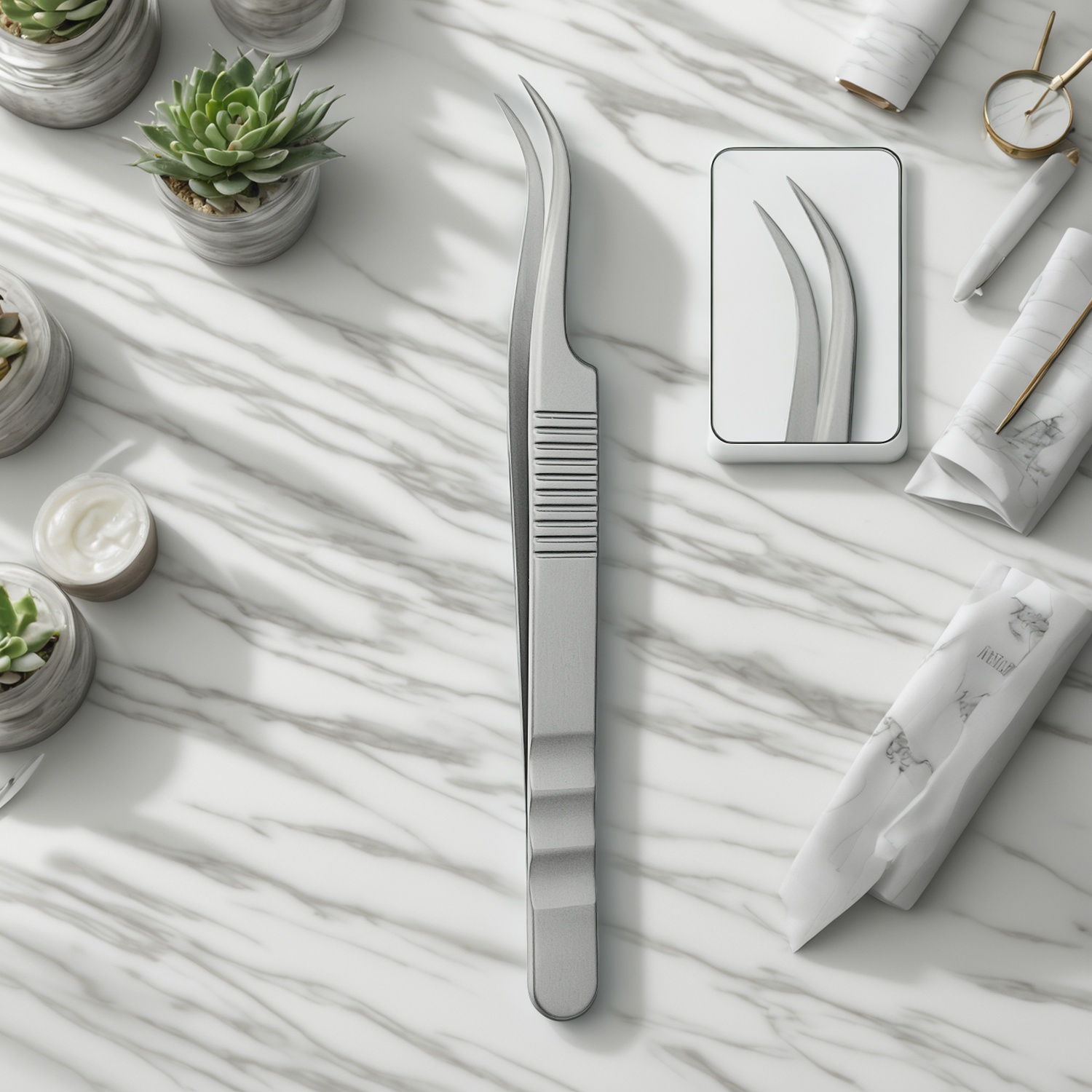
For lash-focused work, the tip shape is particularly important. The False-Lash Tweezer referenced by Olimor Beauty is made from high-quality stainless steel and uses gently curved tips designed for a firm, precise grip. Its ridged body supports a comfortable, non-slip hold. Those are practical features for users who need controlled placement and repeated handling during lash application.
Material, Shape and Handle Details to Compare
Stainless steel is widely used for beauty tweezers because it offers durability and a clean, professional appearance. However, material alone does not determine whether a tweezer is suitable for your order. Shape, finishing and user comfort all matter. A beautifully polished tool with poor tip contact will not serve a lash technician well, while a strong tool with uncomfortable tension may slow down a long service day.
Tip profile should match the intended task. Gently curved tips can be useful for false-lash handling because they help the user approach delicate materials at a controlled angle. Slanted or pointed tips may suit other grooming or detail work, depending on the target customer. If you plan to sell tweezers through retail channels, consider whether one shape is enough or whether your assortment should address different routines.
The handle area deserves equal attention. A ridged body can help create a non-slip hold, especially when the user is working quickly or handling small lash pieces. The grip should not be so aggressive that it feels uncomfortable, but it should give enough feedback to help the user control movement. For professional buyers, comfort is not a luxury feature; it influences service consistency and technician fatigue.
Also review packaging expectations early. A salon purchasing internal-use tweezers may prioritize simple protective packing, while a retailer may need packaging that supports barcode placement, shelf presentation or product information. These decisions should be clarified before bulk production planning, because packaging affects handling, shipment organization and final customer perception.
Bulk Buying Checklist for Salons, Retailers and Distributors
A structured checklist helps prevent decisions based only on photos or unit price. Use the table below to compare suppliers and samples before confirming a bulk tweezer purchase.
| Evaluation Area | What to Check | Why It Matters |
|---|---|---|
| Sample consistency | Compare several pieces, not just one display sample | Bulk orders need repeatable performance across units |
| Tip contact | Close the tweezer slowly and inspect where the tips meet | Poor alignment can cause slipping and uneven grip |
| Hand feel | Test tension during repeated opening and closing | Comfort matters for technicians using tools all day |
| Grip texture | Review ridges or surface texture on the body | A stable hold supports control in lash and brow work |
| Finish quality | Look for smooth edges and a clean surface appearance | Finish affects perceived value and handling comfort |
| Packaging fit | Confirm whether packing suits salon use, retail sale or distribution | Packaging influences storage, presentation and customer experience |
| Order flexibility | Review available quantity options, including low MOQ possibilities | Smaller trial orders may help new programs reduce risk |
This type of comparison is especially useful when your team includes multiple decision makers. A buyer may focus on cost, a trainer may care most about tension, and a retail manager may prioritize packaging. Putting each requirement in writing makes the final decision easier and reduces confusion during order discussion.
Why Work Directly With a Tweezer Manufacturer?
Working with a dedicated tweezer manufacturer can simplify communication around technical details. Instead of choosing only from generic stock descriptions, you can discuss the application: lash placement, brow grooming, salon use, retail resale or training kits. That context helps align the tool choice with the end user.
A manufacturer relationship can also make quality expectations clearer. For example, you can define what an acceptable sample looks and feels like, then use that approved sample as a reference for a larger order. While buyers should not assume every supplier follows the same inspection process, they can create a practical approval path: sample review, packaging review, order confirmation and receiving inspection.
Olimor Beauty positions its tweezer supply around professional beauty tool needs, including attention to ergonomic design, manufacturing steps and internal quality control from raw material selection to final packaging. For buyers, the useful takeaway is to treat the supplier conversation as more than a price request. Discuss performance, comfort, finish and consistency before committing to quantity.
If you are preparing a purchase brief, you can browse product collections to understand broader beauty tool categories, then send an inquiry with your target use, quantity range and packaging expectations.
How to Plan a Low MOQ or Trial Tweezer Order
Not every business is ready for a large first order. A salon may want to test a new lash tweezer with several technicians. A retailer may want to confirm customer response before expanding a beauty accessories range. A distributor may need to evaluate packaging, labeling workflow and local market demand. In these cases, low MOQ tweezers can provide a practical entry point without forcing a buyer to overcommit.
A trial order should still be treated professionally. Decide how you will evaluate the tools before they arrive. For a salon, that might mean assigning samples to experienced lash or brow technicians and collecting feedback on grip, comfort and cleaning workflow. For retail, it may include checking presentation, packaging protection and customer comments. For distribution, it may involve carton handling, inventory labeling and reorder planning.
Keep notes from the trial. Vague feedback such as “good” or “not good” is hard to act on. More useful comments include “tip alignment stayed consistent,” “tension felt too firm after repeated use,” or “packaging needs clearer product identification.” These details help refine the next order and make communication with the supplier more efficient.
Receiving and Maintaining Bulk Tweezers
Quality control should not stop when the shipment arrives. Build a simple receiving inspection into your process. Open cartons carefully, check a reasonable sample of pieces, and compare them with the approved reference sample if you have one. Look at tip alignment, finish, tension and packaging condition. If your business distributes products onward, document any issues before items are mixed into inventory.
For salon use, maintenance and storage habits influence tool life. Tweezers should be protected from impact because a dropped tool can lose tip alignment even if the material is durable. Staff should avoid using precision tweezers for tasks they were not intended for, such as prying, scraping or opening containers. Dedicated storage helps prevent tips from being bent or dulled by contact with other metal tools.
Retailers should also think about customer education. Simple usage and care language can reduce avoidable complaints. Customers may not realize that precision tips can be damaged if thrown loose into a makeup bag. Even basic guidance on storage and intended use can improve satisfaction.
Building a Better Bulk Tweezer Purchasing Brief
A strong inquiry gives the supplier enough information to recommend a suitable option. Include the intended use, such as false-lash application, brow grooming, professional salon use, retail resale or training kits. Mention the preferred tip style if known, and describe whether stainless steel construction, curved tips, ridged grip or non-slip handling are priorities. If packaging matters, explain whether you need retail presentation, simple protective packing or a format suitable for distribution.
Also define how you will judge success. Are you trying to reduce technician fatigue? Improve lash placement control? Offer a dependable retail accessory? Standardize tools across multiple salon locations? The clearer the business objective, the easier it is to select the right tweezer and avoid unnecessary changes later.
Buying tweezers in bulk works best when precision, comfort and consistency are treated as measurable requirements. Olimor Beauty’s stainless steel False-Lash Tweezer, with gently curved tips and a ridged non-slip body, shows the kind of details that matter in this category. Whether you are starting with a trial quantity or planning a larger replenishment program, organize your evaluation around real use conditions rather than photos alone. For product questions or sourcing support, contact Olimor with your application and order goals.