What Makes a Manufacturer the Right Fit for Your Business?
Choosing a beauty tools manufacturer affects more than the products in your first shipment. It also shapes how clearly specifications are documented, how sample changes are handled, and how future orders are kept consistent.
A catalogue can help you identify suitable products, but photographs alone cannot show how a supplier manages production requirements. Buyers also need to understand who performs the work, what gets inspected, and which details must be approved before an order moves forward.
For importers, distributors, retail chains, and beauty businesses, the strongest starting point is a structured evaluation. Instead of asking every company for a general price list, prepare a focused brief and compare how each candidate responds.
Define Your Requirements Before Comparing Manufacturers
A manufacturer may be suitable for one project and less suitable for another. Your evaluation should begin with the products and services your order actually needs.
Identify the Product Categories You Need
List the tools you intend to purchase, such as eyebrow tweezers, eyelash curlers, nail clippers, cuticle nippers, beauty scissors, eyebrow razors, or nail files.
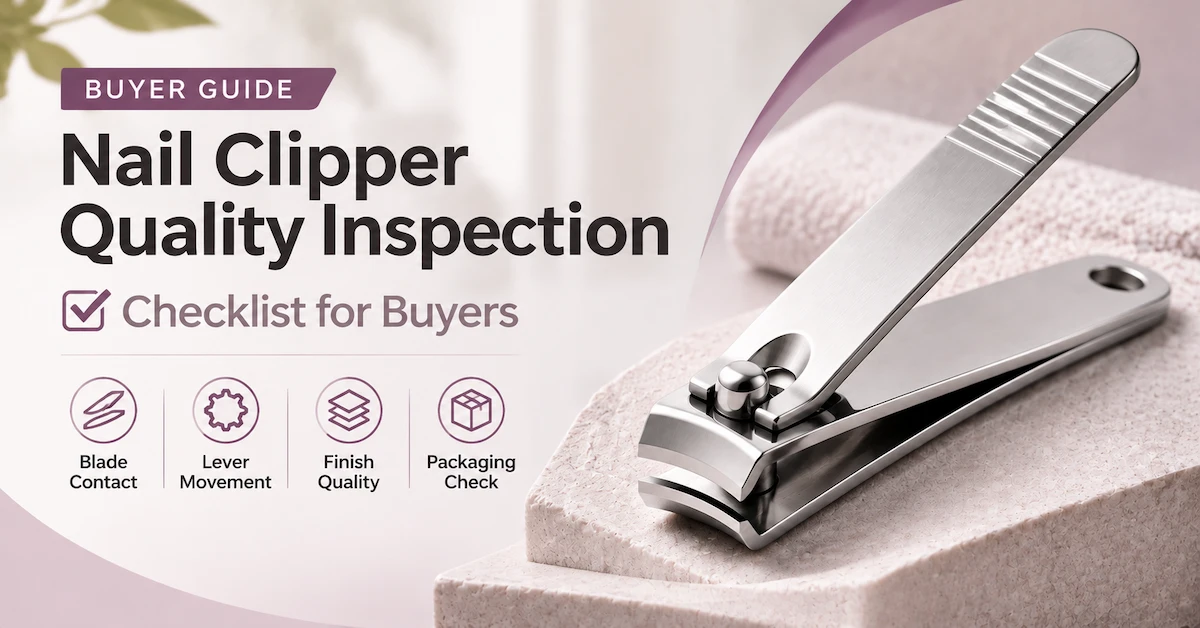
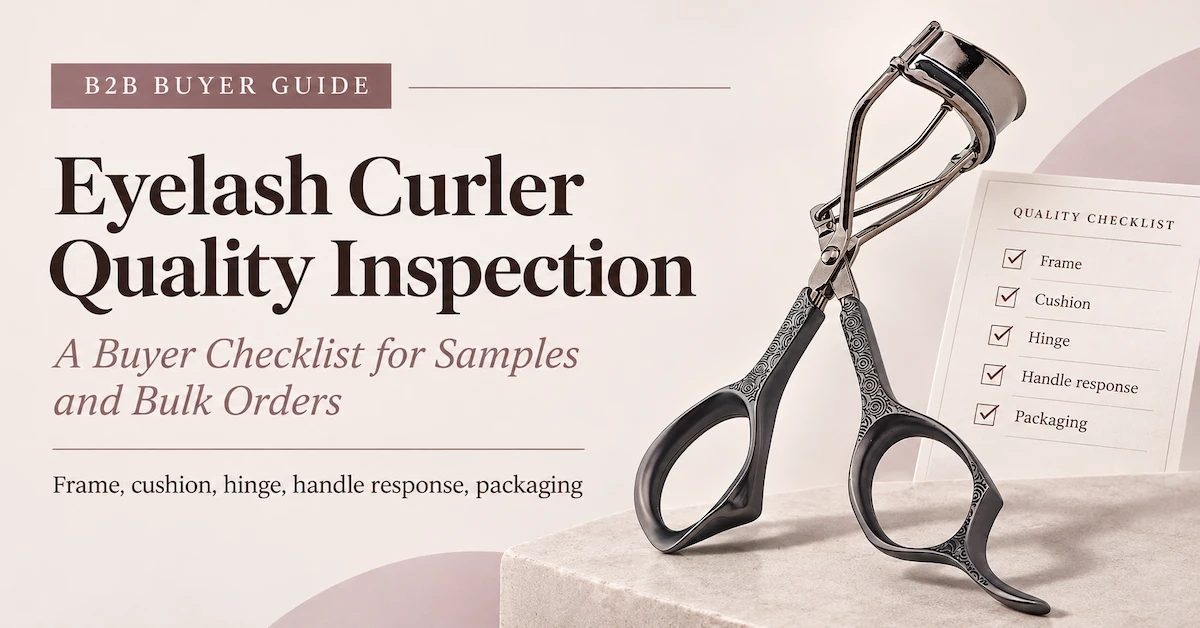
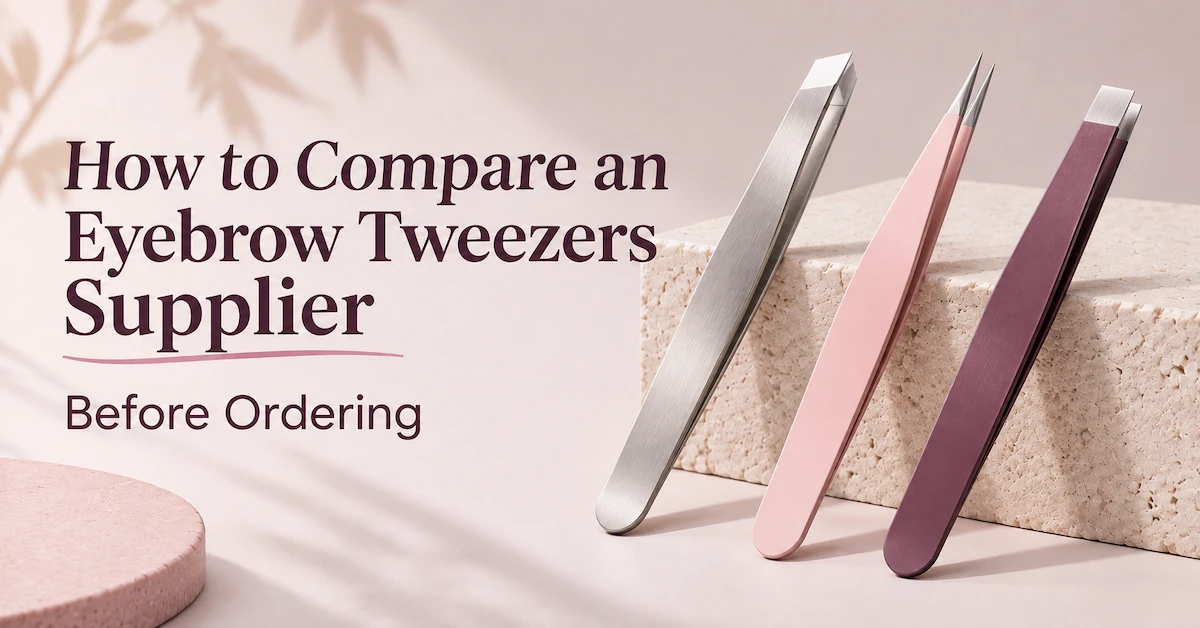
Then identify the features that matter for each category. Tweezer tip alignment, eyelash curler cushion fit, and nail clipper lever movement require different discussions.
This makes your inquiry more useful than a broad request for “high-quality beauty tools.”
Specify Your Sales and Packaging Requirements
Explain whether the products will be sold individually, combined into sets, supplied to professional customers, or distributed through retail stores.
Include the intended sales channel, destination market, estimated quantities, and packaging format. These details help a prospective manufacturer identify questions that need to be resolved before quoting.
Separate Essential Requirements from Preferences
Some details may be mandatory, while others remain open for discussion.
For example, a required product dimension may be fixed, but the packaging finish may be flexible. Marking those differences helps suppliers propose relevant options without changing the essential scope.
Confirm Who Is Responsible for Manufacturing and Delivery
Before assessing production capability, clarify the company’s role in your order.
A business may manufacture selected products internally, coordinate specialist production partners, or supply a broader assortment sourced from several facilities. What matters for the buyer is understanding those arrangements and establishing clear responsibility.
Ask Which Operations Are Performed In-House
Request a product-specific explanation of the proposed manufacturing route.
Depending on the selected tool, questions may cover component preparation, forming, machining, assembly, surface finishing, inspection, and packing.
Ask which operations the company performs itself and which are handled by external partners. Avoid assuming that every item in a catalogue follows the same production route.
Identify the Party Responsible for Quality Decisions
Confirm who will approve specifications, review sample changes, authorize production, and address any nonconforming goods.
If several facilities are involved, ask how the final product requirements are communicated and checked across them.
A clear point of accountability helps buyers resolve issues without being passed between different parties.
Request Evidence Relevant to Your Order
Useful evidence may include a discussion with the production or quality team, a walkthrough of relevant operations, or records showing how a comparable product is inspected.
General factory photographs can provide context, but they do not establish the capability to make a specific tool to your requirements. Focus your questions on the product and process you intend to purchase.
Evaluate Product Expertise Through Technical Questions
A capable beauty tools manufacturer should be able to discuss the details that affect the selected tool’s function and consistency.
The purpose is not to request complicated terminology. It is to determine whether the supplier understands your concerns and can turn them into clear specifications.
| Product Category | Questions to Ask | Evidence to Review |
|---|---|---|
| Eyebrow tweezers | How are tip alignment and closing contact checked? | Samples and the proposed inspection criteria |
| Eyelash curlers | How are frame movement and cushion fit evaluated? | Assembled samples and component details |
| Nail clippers | How are blade alignment and lever operation checked? | Functional samples and written specifications |
| Cuticle nippers | How are jaw closure, joint movement, and spring action reviewed? | Samples showing the selected configuration |
| Beauty scissors | How are blade alignment and pivot movement assessed? | Samples and agreed functional checks |
| Eyebrow razors | How are the head, guard, and protective cover secured? | Assembly details and sample inspection |
| Nail files | How are abrasive specifications and backing quality defined? | Material specifications and representative samples |
A supplier’s answers should help you decide what to inspect and approve. Broad claims such as “premium quality” are less useful than a clear explanation of the checks proposed for your product.
Use Sampling to Test Both the Product and the Working Process
Sampling provides two kinds of information: whether the product meets your expectations and whether the supplier can respond accurately to feedback.
Distinguish Standard Samples from Order-Specific Samples
Ask whether the sample is an existing catalogue item or a version prepared to match your proposed order.
A standard sample may help you assess the general construction, but it may not represent the final finish, dimensions, marking, or packaging.
Record any differences so that an early sample is not mistaken for the approved production reference.
Give Measurable Feedback
Describe what needs to change and how you will judge the revised version.
For example, “the protective cover fits loosely and separates during handling” is more useful than “improve the packaging.” Similarly, a note identifying uneven tweezer tip contact gives the supplier a specific issue to review.
Where a measurement matters, agree on the measurement method and any acceptable variation.
Review How Revisions Are Returned
When a revised sample arrives, check whether the requested changes were made and whether other features changed unexpectedly.
Ask for a revision summary. Keep the sample reference, photographs, and specification together so that the approved version can be identified later.
The quality of this process can reveal how effectively the manufacturer will manage changes during future orders.
Look for a Quality Plan That Matches the Product
A quality plan should describe what will be checked, when checks will occur, and how results will be recorded.
Not every beauty tool needs the same inspection process. The plan should reflect the selected product’s construction, working parts, and packaging.
Material and Component Checks
Confirm how the agreed materials and components will be identified.
A finish color should not be used as proof of material composition. If a particular material specification is required, include it in the purchasing documents and agree on the supporting evidence.
For assembled products, clarify whether key components such as cushions, springs, guards, or covers are included in the specification.
Checks During Production
Ask which product characteristics are reviewed before the full order reaches the packing stage.
Depending on the tool, these may include dimensions, alignment, assembly fit, movement, or surface appearance.
Discuss how a problem is handled if it is found during production. The answer should identify who makes the decision and how affected goods are separated or corrected.
Final Product and Packaging Checks
Before shipment, the agreed inspection may cover appearance, function, quantities, labels, and packaging accuracy.
If your order uses a sampling-based inspection, agree on the sampling approach and acceptance criteria in advance. Avoid leaving the meaning of “passed inspection” undefined.
A buyer checklist might include the following:
| Check Area | What to Define Before Production |
|---|---|
| Product identity | Item code and approved version |
| Materials | Required specifications and supporting information |
| Dimensions | Measurement points and agreed tolerances |
| Function | Product-specific checks and evaluation method |
| Appearance | Finish reference and unacceptable defects |
| Packaging | Pack contents, fit, labels, and artwork version |
| Quantity | Units per pack, inner box, and carton |
| Reporting | Inspection record and approval responsibility |
Assess Production Planning Before Accepting a Delivery Date
A proposed delivery date is more useful when the manufacturer explains the conditions behind it.
Ask What Must Be Ready Before Production Begins
Confirm whether production depends on sample approval, material availability, packaging confirmation, payment arrangements, or other agreed milestones.
If packaging is still being developed, ask how that affects the schedule. A production estimate should not be treated as a complete delivery timeline unless the remaining stages are included.
Clarify Capacity for Your Order
Ask whether the quoted timing reflects the selected quantity and product mix.
A manufacturer may be able to supply one standard item on a different schedule from a mixed order involving several finishes or packaging formats. Request an order-specific plan rather than relying on a general lead-time statement.
Discuss How Delays Will Be Communicated
Agree on the milestones at which you expect updates and who will provide them.
If a material, component, or packaging issue affects timing, you should know what information will be shared and how revised dates will be confirmed.
Compare Commercial Terms Alongside Product Capability
When purchasing bulk beauty tools, pricing should be reviewed together with the scope of supply.
A quotation is easier to assess when it identifies the exact product, packaging configuration, quantity, and included services.
Confirm MOQ by Item and Variant
Ask whether the minimum quantity applies to each model, finish, color, or packaging version.
For mixed orders, clarify the requirement for every item. This helps you avoid building an assortment around quantities that the supplier has not agreed to support.
Identify Separate Charges
Ask whether sampling, tooling, setup, packaging development, inspection, or shipping charges are included or quoted separately.
If new tooling is involved, clarify ownership, maintenance responsibilities, storage, and conditions for future use in the written agreement.
Agree on the Process for Handling Problems
Before ordering, discuss how shortages, incorrect items, or quality concerns should be reported.
Confirm what evidence is required, who reviews the issue, and how the proposed resolution will be documented. These discussions are easier to conduct before a shipment problem occurs.
Check How Repeat Orders Will Be Kept Consistent
A successful first order is valuable, but many buyers need a manufacturer that can support replenishment.
Ask how the approved specification will be retained and how changes will be communicated before a later order.
Maintain a Clear Product Record
The record should identify the product version, materials, dimensions, finish, packaging, and any agreed inspection requirements.
Reference samples can support this record, but written details remain important, especially if the original sample becomes worn or unavailable.
Require Confirmation Before Substitutions
Discuss how changes to materials, components, finishes, or production arrangements will be handled.
Ask the supplier to identify proposed changes before applying them to your order. Where a change affects the approved product, agree on whether new samples or additional review are needed.
Review the First Order Before Reordering
Compare the delivered goods with the approved requirements and record any recurring issues.
Use those findings to update the specification or inspection plan before placing the next order. This turns receiving feedback into clearer instructions for future production.
Use a Simple Manufacturer Evaluation Scorecard
A scorecard helps your team compare candidates consistently. Set the importance of each area according to your project rather than treating every factor equally.
| Evaluation Area | What a Useful Response Looks Like |
|---|---|
| Product fit | Relevant tools with clearly explained specifications |
| Manufacturing responsibility | Transparent explanation of internal and external operations |
| Sample handling | Accurate revisions and identifiable approved versions |
| Quality planning | Defined checks that match the selected product |
| Communication | Complete answers and written confirmation of changes |
| Production planning | A schedule tied to quantities and approval milestones |
| Commercial clarity | A quotation with a clear scope and separate charges identified |
| Repeat-order control | Retained specifications and an agreed change process |
Before assigning scores, identify any essential requirements that must be met. A strong result in one area should not compensate for an unresolved requirement that is critical to your order.
Frequently Asked Questions About Choosing a Manufacturer
What should I ask a beauty tools manufacturer first?
Start with your selected product categories, estimated quantities, specifications, packaging, and destination market. Then ask which manufacturing operations the company performs and how it proposes to check the products.
How can I tell whether a company manufactures its own products?
Ask which operations are completed in-house for the specific items you plan to buy. Request relevant process information or a facility review where appropriate. A broad catalogue or factory photograph alone does not establish how each product is made.
Is a trading supplier always less suitable than a manufacturer?
Suitability depends on your requirements. A beauty tool supplier coordinating several production partners may support a broad assortment, while a manufacturer may offer more direct involvement in particular processes. Evaluate transparency, accountability, product capability, and order control in either case.
What should an approved sample record include?
Include the item code, version, photographs, dimensions, material and finish specifications, packaging details, and any agreed changes. Identify which sample and documents will serve as the production reference.
Should I choose the supplier with the lowest price?
Compare equivalent specifications first. Materials, packaging, quantities, inspection scope, and delivery terms can explain price differences. Evaluate the total cost of meeting your requirements rather than unit price alone.
How can I reduce inconsistencies in repeat orders?
Keep a complete approved specification, require confirmation before substitutions, and review receiving feedback before reordering. Agree on which checks will be repeated for each production batch.
Discuss Your Manufacturing Requirements with OLIMOR
Choosing a manufacturing partner becomes easier when your product requirements and approval process are clear.
OLIMOR’s website presents beauty tool categories including tweezers, eyelash curlers, nail clippers, cuticle nippers, beauty scissors, eyebrow razors, nail files, and nail care tools, alongside product development, sampling, and packaging discussions.
Explore the OLIMOR product range to identify tools for your next order. Then contact the team with your product references, estimated quantities, packaging requirements, and target delivery window to discuss the project scope.