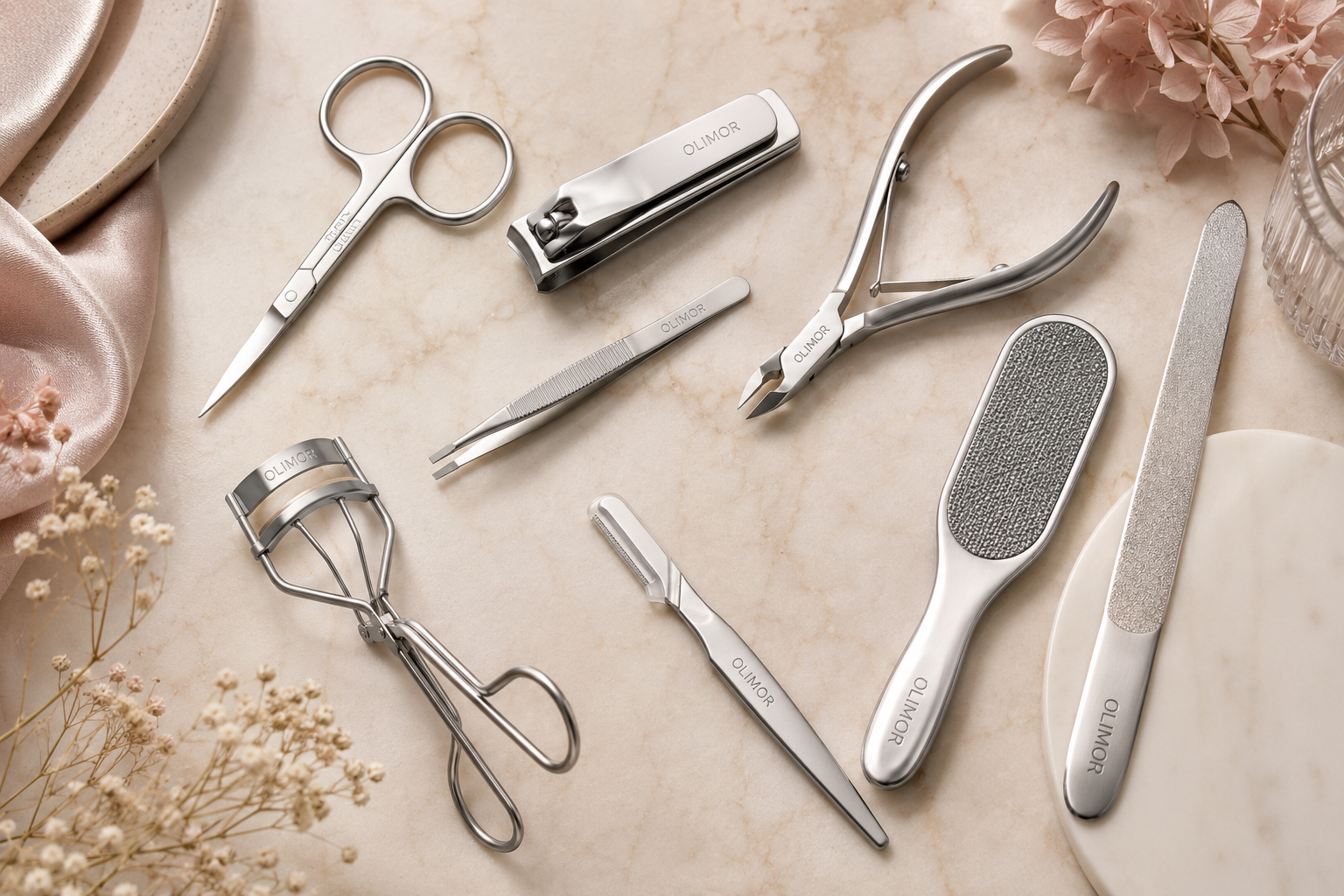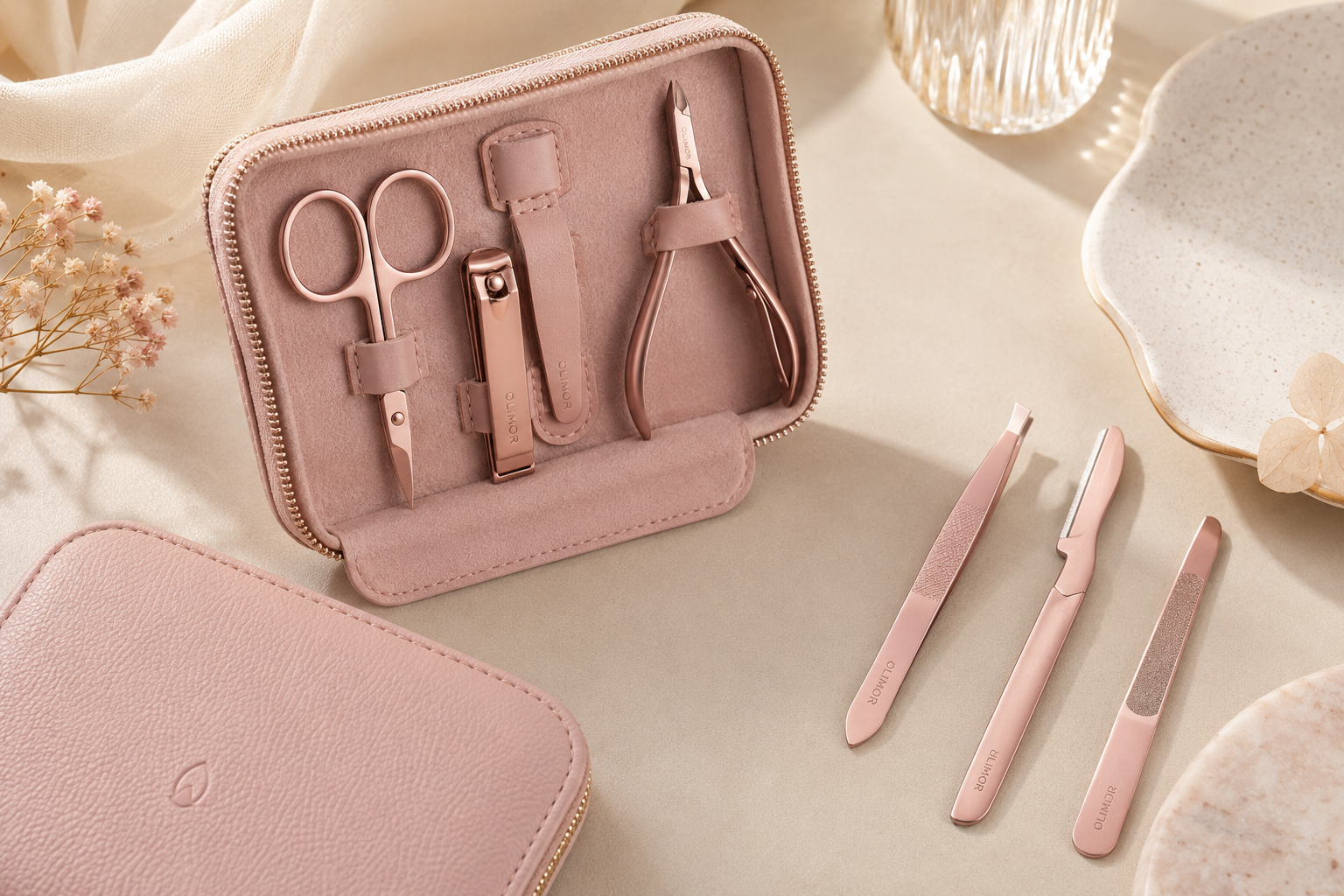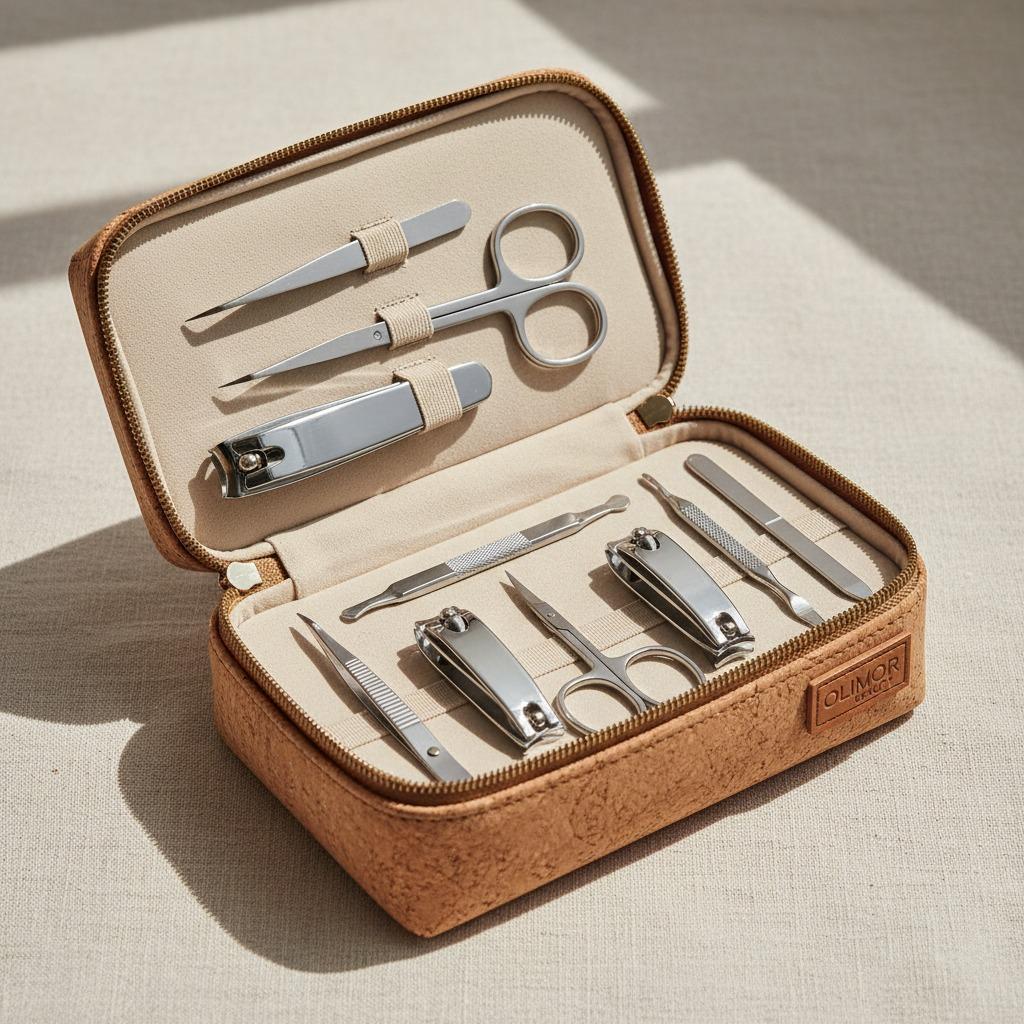











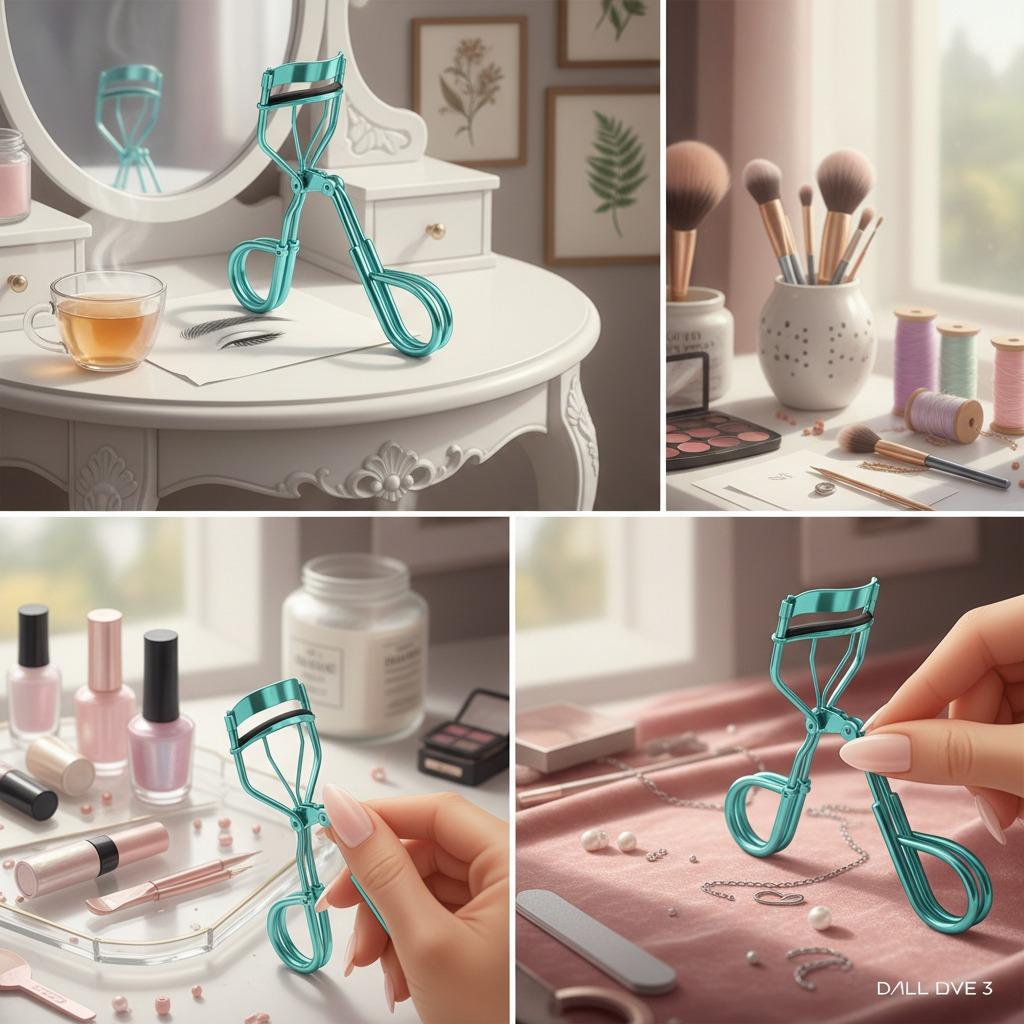
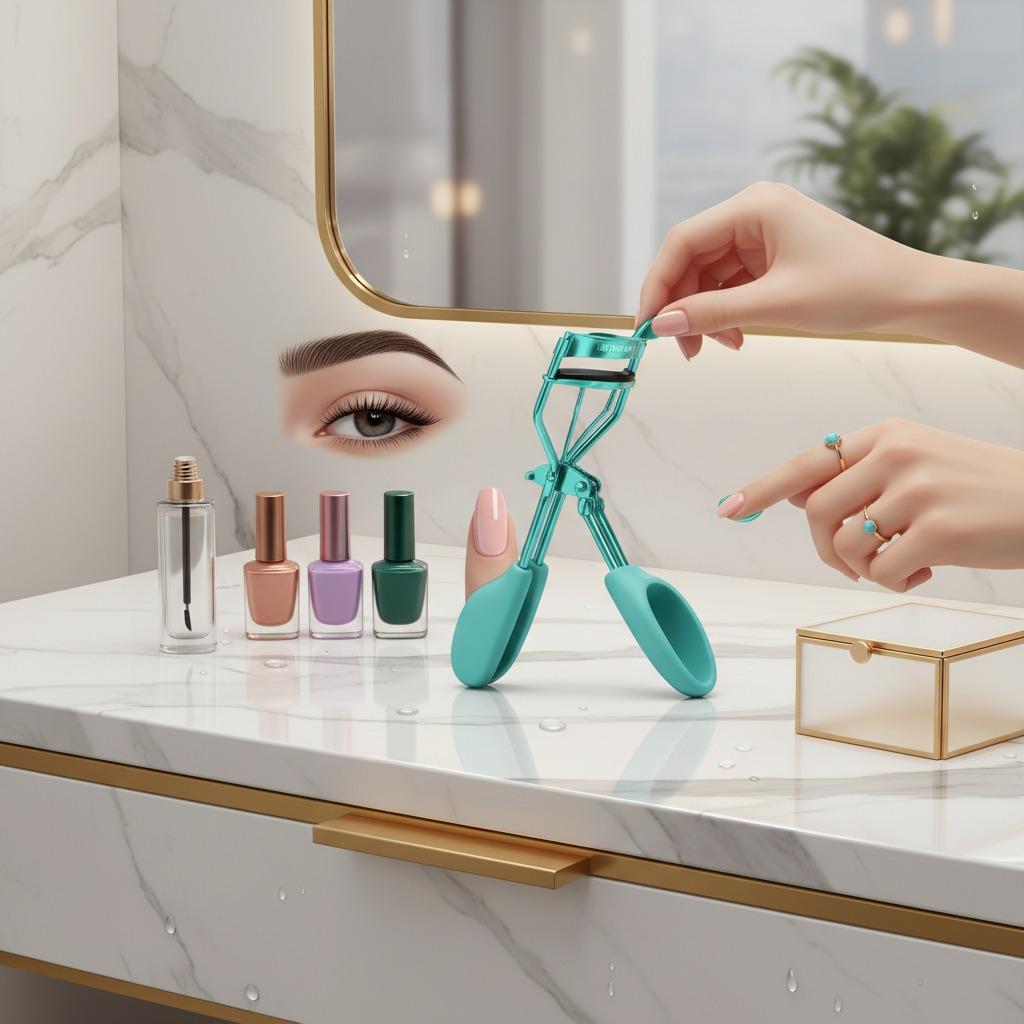
An eyelash curler is made to lift natural lashes before mascara or false lash finishing. Its curved frame, cushioned pad and controlled clamp are designed for soft hair near the eye area, not for hard repair tasks. Used carefully, however, the same shape can support several practical beauty and travel tasks: brow grooming, false lash positioning, makeup symmetry checks, compact packing and quick texture inspection during makeup prep.
This guide focuses on safe, useful and commercially relevant ways to think about an eyelash curler. It is written for beauty consumers, makeup artists, salon buyers, gift-set planners and private-label sourcing teams who want more value from a small tool without encouraging misuse. If you are building a beauty tool range, you can compare related items in Olimor beauty tool products or review broader product collections to plan how a curler fits into a complete kit.
What an Eyelash Curler Can and Cannot Do
The most important rule is simple: an eyelash curler can guide, align and gently press soft cosmetic materials or hair. It should not cut, crush, bend or repair hard objects. The frame may look sturdy, but the hinge, pad groove and upper clamp are shaped for controlled lash pressure. Using the tool like pliers can bend the frame, tear the pad or leave rough edges that should never go near the eye.
Good alternative uses are usually close to the original purpose. They involve lashes, brows, soft false lash bands, makeup placement or travel organization. Poor uses involve nails, jewelry, wires, packaging, heated metal or sticky products that cannot be cleaned away. When in doubt, ask whether the task would still be safe if the tool touched lashes immediately afterward. If the answer is no, do not use the curler for that task.
Safety and Hygiene Rules Before Any Unusual Use
Because the curler works near the lash line, cleaning and pressure control matter more than the hack. Eye-area tools can transfer mascara residue, lash glue, brow wax, skin oil or dust if they are not maintained. A practical use becomes a bad idea when hygiene is ignored.
- Clean before and after use: Wipe the frame, clamp and pad with a cosmetic-safe wipe or mild soap and water, then dry fully before storage.
- Use light pressure only: The tool should never pinch skin, pull hair or crush product packaging.
- Check the pad: Replace or stop using the curler if the pad is cracked, loose, sticky, deeply compressed or stained in a way that cannot be cleaned.
- Avoid wet mascara: Curling mascara-coated lashes can make lashes stick to the pad and may cause pulling.
- Keep non-beauty tasks separate: Do not use a lash curler for dirty, sharp, chemical or hardware tasks and then return it to lash use.
- Stop if it tugs: Tugging on lashes, brow hair or skin means the angle, pressure or tool condition is wrong.
Public bodies such as the U.S. Food and Drug Administration provide consumer information related to eye-area cosmetics, while the European Chemicals Agency publishes information on chemical restrictions relevant to many consumer products in the EU market. Buyers should verify current versions of applicable rules and request supplier documents for the specific market, material and packaging format involved. Do not assume a beauty tool has a certification unless the supplier provides valid documentation for that exact product.
Use the Curved Frame as a Brow Grooming Guide
One of the most realistic alternative uses is brow grooming. The top curve of a lash curler can act as a visual guide when brushing brow hairs upward and checking the arch. This does not mean clamping the brow. Instead, hold the clean curler near the brow, follow the natural curve and use a spoolie to brush the hairs up against that line. Then apply clear or tinted brow gel in the same direction.
This method is useful for soft, natural brow looks and quick symmetry checks. It can help a user compare the left and right brow without carrying a separate stencil. For makeup artists, it may be useful backstage or during travel when the kit is limited. If unruly brow hairs need a little control, a very gentle press may help, but the curler should not catch skin or pull hair. A dedicated brow brush or spoolie remains the correct tool for most shaping work.
Position False Lashes More Carefully
A lash curler can help with false lash placement when used as an alignment aid, not as a clamp for wet glue. After a strip lash has been measured, trimmed if needed and placed with tweezers or a lash applicator, a clean curler can help check whether the lash band follows the natural lash line. Once adhesive is tacky and the strip is stable, the curler may lightly press the natural lashes and false lashes in the same direction.
The goal is not to curl the false lash aggressively. The goal is to reduce visible separation between the natural lash and the strip lash. This is especially useful when the inner or outer corner is slightly lifted. Work slowly, look downward into a mirror and avoid closing the clamp hard. If adhesive transfers to the pad or frame, clean it immediately. Dried glue can pull natural lashes during the next use.
Pre-shape Flexible Lash Strips
Some false lash bands feel too straight when removed from the tray. A curler can help create a gentle arc before application. Place the lash strip along the top curve of the curler without fully closing the clamp, then hold the band in a soft curve for a few seconds. This may help the strip sit more naturally on a rounded eyelid.
This works best with flexible bands. Thick or rigid bands should not be forced because sharp bending may weaken the strip or distort lash fibers. For retail buyers, this is a useful product-development reminder: curlers and false lash accessories are often used together. A practical kit should consider whether the curler shape, pad feel, handle control and packaging support both natural lash curling and false lash finishing.
Check Makeup Symmetry Without Extra Tools
The curved metal frame can be used as a small visual reference for eyeliner, eyeshadow and lower lash balance. Hold the curler a short distance from the face and compare the curve against each eye. You are not stamping makeup or pressing the tool onto finished makeup. You are using it like a compact guide to spot uneven angles.
For winged liner, hold the curler near the outer corner and compare the upward angle on both sides. For soft eyeshadow, use the curve to see whether one side has been blended higher than the other. For lower lash shadow, the curler can help identify whether one side is heavier or lower. This is useful during travel, quick touch-ups or content creation where makeup needs to appear balanced on camera.
Use It as a Compact Travel Beauty Organizer
A clean eyelash curler can help keep a few small beauty items together in a pouch. The open frame can hold a wrapped hair tie, a mini spoolie, a small sealed lash glue tube or a few cotton swabs inside a separate sleeve. This is not a replacement for a proper organizer, but it can stop tiny items from disappearing in an overnight kit.
Do not overload the clamp or force items into the hinge. Liquids and adhesives should be sealed separately so they cannot leak onto the pad. If the curler has a visible colored handle, it may also be easier to find in a crowded cosmetic bag. For travel-oriented gift sets, this shows why appearance is not the only purchase driver. Handle visibility, grip comfort, pad protection and packaging format all affect the user experience.
Inspect Small Product Textures During Makeup Prep
Another careful use is texture checking. The smooth outer frame of a clean curler can help a user inspect whether cream eyeshadow, brow wax or lash adhesive is too wet, stringy or clumpy before it reaches the eye. Use a disposable applicator, touch a small amount of product to the non-pad metal area and observe the texture. Clean the tool afterward.
This is not a substitute for professional cosmetic testing or hygiene procedures. It is a personal-use habit that can prevent applying overly wet glue or heavy cream product near the lash line. For shared salon or counter environments, sanitation procedures should be stricter, and disposable tools should be used where appropriate.
What Not to Do With an Eyelash Curler
Some viral uses are not worth copying. A lash curler should not be used as a nail tool, jewelry tool, wire crimper, bottle opener, craft clamp or heated styling device. Even if the frame survives, the pad and hinge may become unsafe for eye-area use. The table below separates practical beauty uses from risky misuse.
| Use idea | Safer approach | Reason |
|---|---|---|
| Guiding brow shape | Use the curve as a visual guide with a spoolie | Supports symmetry without pinching skin |
| Pressing false lashes | Use very light pressure after adhesive is tacky | Helps layers align without smearing glue |
| Checking eyeliner balance | Hold the curler away from the skin as a guide | Avoids disturbing finished makeup |
| Shaping nails | Use a nail file or clipper | Hard nail edges can damage the pad and frame |
| Fixing jewelry or wires | Use proper pliers | Metal-on-metal force can bend the curler |
| Heating with flame | Avoid open flame; follow safe care instructions | Excess heat can burn skin or degrade the pad |
| Curling mascara-coated lashes | Curl clean lashes before mascara | Mascara can stick to the pad and pull lashes |
How Buyers Should Evaluate Eyelash Curlers for Beauty Kits
For retail, salon, promotional and private-label projects, the best curler is not simply the one that looks good in photos. It should feel stable, open and close smoothly, hold the pad securely and suit the target customer group. Eye shapes vary, so a curve that works well in one market may feel too flat or too rounded in another. Product teams should evaluate function, comfort, maintenance and packaging together.
Buyer inspection checklist
- Frame alignment: The upper and lower parts should meet evenly without twisting or scraping.
- Hinge movement: Opening and closing should feel smooth, not loose, stiff or uneven.
- Pad fit: The pad should sit securely in the groove and should not shift during light pressure.
- Pad condition: Check for visible cracks, sticky surfaces, uneven molding or loose edges.
- Handle comfort: Finger loops or handles should allow controlled pressure without slipping.
- Surface finish: Inspect for rough edges, burrs, flaking finish or areas that could catch skin or lashes.
- Packaging protection: Travel and retail kits may need a sleeve, insert or box that protects the clamp and pad.
- Care instructions: Clear cleaning, drying and pad-replacement guidance helps reduce misuse.
Cost is influenced by material selection, surface finish, handle design, pad configuration, packaging, order requirements, inspection level and customization scope. Buyers should avoid comparing only unit price without confirming what is included. A lower-cost item may not include the same packaging, replacement pad, finish requirement or inspection process. For project planning, contact Olimor through beauty tool sourcing support or send project details through the custom inquiry form.
Customization, Retail Positioning and Supplier Questions
Eyelash curlers can be positioned in several ways: as a standalone beauty tool, part of a lash application set, a travel kit item, a salon accessory or a promotional gift. The intended channel affects the specification. A travel kit may prioritize compact packaging and visible handle color. A salon-focused set may prioritize cleaning guidance and durable handling. A retail gift set may require consistent finish, attractive presentation and clear instructions for first-time users.
Before confirming a supplier, prepare a written specification rather than relying on a sample photo alone. Include the expected product style, finish preference, pad requirements, packaging format, labeling needs, inspection points and target market. Ask the supplier to confirm which documents can be provided for the actual product and shipment. If regulatory or chemical compliance is relevant to your market, verify it with current public guidance and the supplier’s documentation.
Cleaning and Maintenance After Alternative Uses
After any non-standard beauty use, clean the curler before it touches lashes again. Remove visible residue with a soft cloth. Wash the pad area gently with mild soap and water, then dry fully. Avoid prolonged soaking if the handle, finish or packaging components should stay dry. If lash glue, wax or cream product remains near the hinge or pad groove, use a cotton swab to loosen it gently.
Store the curler in a dry pouch or protective compartment rather than loose beside metal tools that may scratch it. Replace the pad when it becomes cracked, compressed, loose or difficult to clean. If the frame is bent or the clamp no longer meets evenly, stop using it near the eyes. Maintenance is simple, but it is essential because the tool works close to sensitive areas.
FAQ
Can buyers request eyelash curler samples before placing an order?
Sample availability depends on the project, product style and customization requirements. Buyers should share the intended market, packaging needs and any finish or pad preferences so the supplier can advise what sample options are possible.
Is there a fixed MOQ for customized eyelash curlers?
MOQ can vary by design, material, finish, packaging and branding requirements. Request confirmation for the exact specification rather than assuming one quantity applies to all curler projects.
What customization details should be discussed?
Useful discussion points include handle color or finish, logo placement, pad option, packaging style, care instructions and inspection expectations. Avoid approving customization based only on appearance; function and cleaning guidance should also be reviewed.
How should quality be checked before shipment?
Inspection should cover frame alignment, hinge movement, pad fit, surface finish, packaging condition and any approved branding details. Buyers should request documents and inspection criteria that match the confirmed order.
How is lead time determined?
Lead time depends on sample approval, customization complexity, packaging, order quantity and production scheduling. Ask the supplier to confirm timing for the specific project and verify whether approvals or document reviews may affect the schedule.
An eyelash curler is most useful when it stays within its design limits. Use the curve for guidance, the pad for gentle lash control and the compact frame for careful beauty-kit organization. Avoid hard repairs, dirty tasks and anything that compromises hygiene. For buyers, the same practical thinking should guide product selection: inspect function, confirm documents, define packaging and choose a supplier who can answer product-specific questions clearly.