










False lash tweezers are small tools, but they can strongly influence how confidently a lash artist, student, retailer or end customer works. For B2B buyers, the right sourcing decision is not only about finding a low unit cost. It is about choosing a tweezer that grips accurately, feels comfortable through repeated use, arrives with consistent finishing, and fits the way the target customer actually applies lashes.
Olimor Beauty supplies professional beauty tools, including stainless steel false lash tweezers designed for precision, durability and comfortable handling. This guide explains how to evaluate wholesale false lash tweezers, what to check before ordering in bulk, how to plan private label or OEM requirements, and how to discuss quality expectations with a supplier without relying only on product photos.
What Buyers Should Look for First
The primary question for any wholesale false lash tweezer order is simple: will the tool support controlled lash handling for the intended user group? A salon buyer may prioritize repeatable closing tension and comfort. A beauty school may need consistent starter-kit tools so students can learn technique without unnecessary variation. A retailer may need clean finishing, protective packaging and easy product positioning. A distributor or private label brand must think about reorder consistency and how the tool represents the brand after it reaches the end user.
A false lash tweezer should be evaluated through practical use scenarios: picking up fine lash fibers, positioning strip or segment lashes, making small adjustments, isolating areas around the lash line, and releasing cleanly. If the tips do not meet evenly, if the body feels tiring, or if the finish looks inconsistent, the problem may become visible as user complaints, returns, training difficulty or poor repeat orders.
For buyers comparing Olimor beauty tool options, the wider range can be reviewed through the Olimor beauty tool products page, where lash tweezers can be considered alongside other professional tools for salons, retail kits and distribution assortments.
Why Ultra-Thin Tip False Lash Tweezers Matter
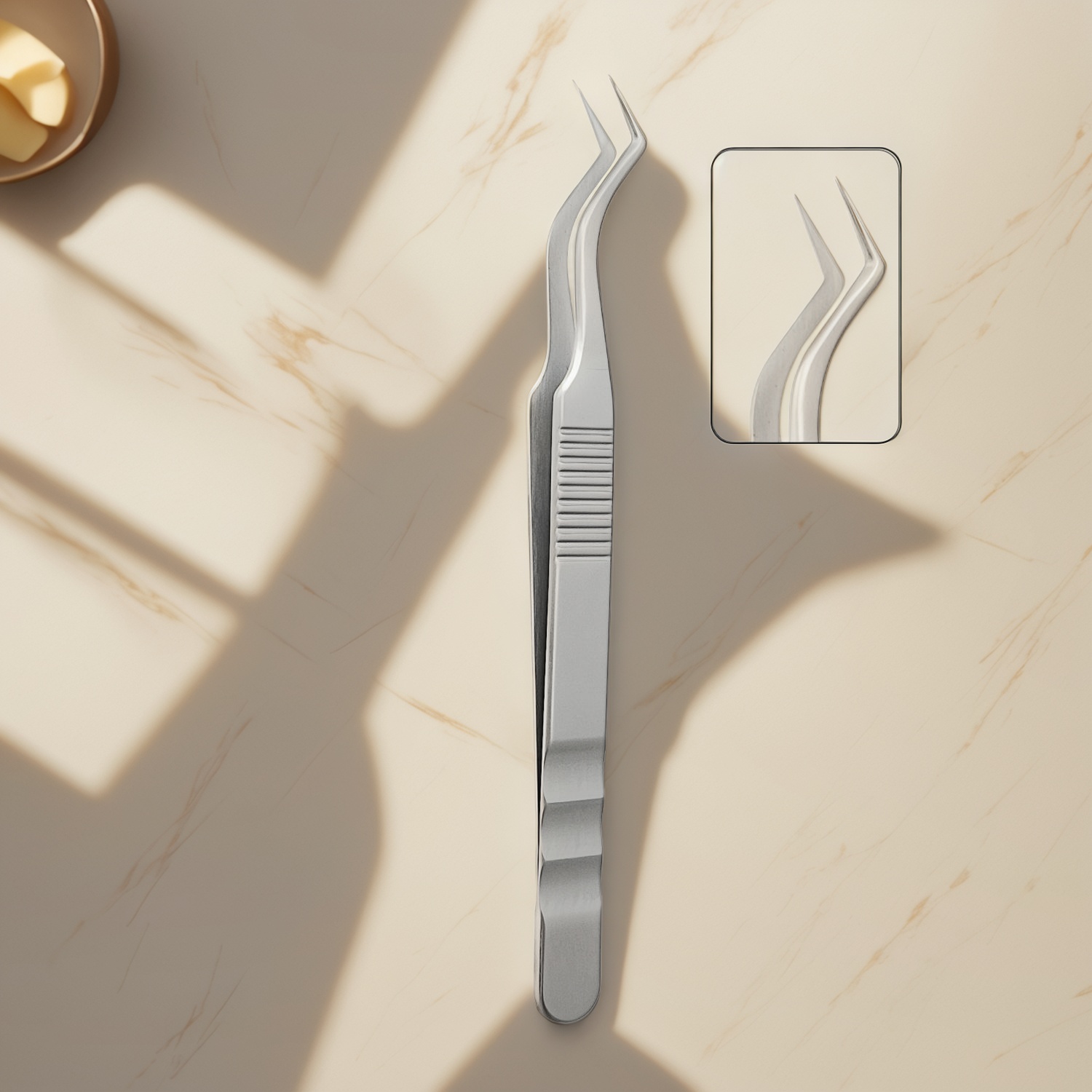
The Ultra-Thin Tip False Lash Tweezer is designed for precision lash application. Its ultra-thin tips help users work near the lash line with better visibility and control. In false lash work, the user often needs to position a lash segment or strip accurately without blocking the view, squeezing too hard, or disturbing surrounding lashes. A narrow, well-aligned tip can make this delicate handling easier.
Ultra-thin tips are especially relevant for four common use cases. First, they can help with placement when the user needs to position lashes close to the intended line. Second, they support fine adjustment when a lash needs a small correction. Third, properly aligned tips can reduce slipping because contact at the tip is more controlled. Fourth, they are useful in training and demonstrations because students can better understand how grip, angle and release affect the final result.
However, ultra-thin does not mean universal. A tweezer intended for detailed lash handling should not be positioned as a substitute for every grooming tool, heavy-duty tweezer or medical instrument. Clear positioning protects both the buyer and the end user: this is a precision false lash tool, not an all-purpose implement.
Core Selection Criteria for Wholesale Tweezers
Wholesale buyers should evaluate false lash tweezers beyond appearance. A product photo can show shape and finish, but it cannot fully communicate closing tension, tip contact, balance or hand feel. Before confirming a larger order, create a selection checklist that reflects real use conditions and the expectations of your channel.
| Selection point | Why it matters | What to review before bulk purchase |
|---|---|---|
| Tip alignment | Determines whether the tweezer can grip fine lashes cleanly. | Check that both tips meet evenly and are not visibly uneven or twisted. |
| Tip shape | Affects visibility, reach and control during lash placement. | Confirm the ultra-thin tip suits false lash application rather than general grooming only. |
| Closing tension | Influences comfort and control during repeated use. | Test whether pressure feels controlled, not too stiff and not too loose. |
| Stainless steel body | Supports a durable, professional tool feel for salon and retail environments. | Review the material, finish and compatibility with the buyer’s own care process. |
| Surface finish | Impacts user comfort and retail presentation. | Look for clean finishing without rough areas that affect handling or appearance. |
| Ergonomic handling | Helps users maintain stable hand positioning during longer sessions. | Have actual lash artists, trainers or retail testers hold and close the tool repeatedly. |
| Packaging protection | Prevents tip damage during shipping, storage and kit assembly. | Confirm how tips will be protected and how labeling will fit the selling channel. |
| Batch consistency | Reduces mixed user feedback and reorder risk. | Discuss how incoming goods will be inspected and how samples compare with production. |
Material, Finish and Cleaning Considerations
Stainless steel is valued in beauty tools because it offers durability and a professional appearance. For false lash tweezers, the stainless steel body also contributes to the overall hand feel, perceived quality and suitability for salon or retail environments. Buyers should still avoid vague assumptions. Instead, they should ask how the material and surface finish fit their expected handling, storage and cleaning workflow.
Cleaning and hygiene practices can vary by market, salon policy and training environment. B2B buyers should define their own procedure and confirm that the selected tool and packaging approach are suitable for that procedure. If the tweezers will be used in professional services, the buyer should also consider how tools are stored between uses and how tips are protected from accidental bending or impact.
Where products are sold into regulated consumer markets, buyers should verify the applicable version of relevant public requirements and supplier documentation. For example, companies selling consumer products in the European Union may need to consider the EU General Product Safety Regulation. A supplier quality management framework such as ISO 9001 may also be part of a buyer’s supplier-evaluation checklist, but buyers should verify current documentation directly and should not assume certification unless the supplier provides evidence.
Wholesale Buyer Profiles and Priorities
Salons and Lash Studios
Salons need tools that support daily service work. A tweezer that closes unevenly, slips easily, or requires excessive hand pressure can slow down appointments and frustrate technicians. For salon purchasing, bulk buying helps maintain tool availability. If a tweezer is lost, damaged or rotated out of service, a replacement should be ready without interrupting bookings.
When salons compare wholesale tweezers, they should test samples with more than one artist. Different users may prefer different hand positions and tension levels, but the tool should still feel stable, controlled and predictable. A good salon choice balances tip precision, comfortable tension, clean finishing and easy storage.
Beauty Schools and Training Programs
Training environments need consistency. If each student receives a tool with a different feel, instructors may struggle to identify whether the problem is technique or tool variation. Standardized lash tweezers help students learn grip, placement and release with fewer variables.
For beauty schools, the most useful wholesale false lash tweezer is one that supports demonstration and repetition. Ultra-thin tips can help students see the working area more clearly, while ergonomic handling can make repeated practice more comfortable. Schools should also consider kit packaging, safe tip protection and simple care instructions.
Retailers and Distributors
Retailers and distributors must choose products that are easy to describe, stock and reorder. A false lash tweezer can fit into lash, brow, manicure or general beauty categories, but the product message should remain specific. Precision false lash application is a clearer position than a broad claim that the tool is suitable for every beauty task.
Distributors should also think about repeat purchase behavior. If customers reorder because the tools meet expectations, inventory planning becomes easier. Inconsistent finishing, weak packaging protection or unclear product positioning can create avoidable service problems.
Private Label and OEM Beauty Brands
Private label buyers need the tool, packaging and brand message to work together. Branding cannot compensate for poor tip alignment or uncomfortable handling. The Ultra-Thin Tip False Lash Tweezer offers a focused product angle: precision false lash application with a stainless steel body and ergonomic design.
For assortment planning, buyers can review Olimor product collections to consider how lash tweezers may be grouped with related beauty tools for salon supply assortments, retail sets or promotional programs.
How to Plan a Private Label Tweezer Program
OEM sourcing works best when the buyer defines the product purpose before discussing customization. A false lash tweezer intended for professional lash extension work may need different priorities from a retail cosmetic tweezer. Reference photos are useful, but they cannot fully explain closing tension, hand feel, tip contact or packaging expectations.
A practical private label brief should include the target user, selling channel, preferred tweezer type, expected use environment, packaging needs and quality expectations. The brief should also state whether the tweezer will be sold alone, included in a lash kit, paired with other tools, or used in a training set.
- Target user: Decide whether the product is for salons, students, retail consumers, distributors or mixed channels.
- Product positioning: Keep the message specific to precision false lash application.
- Handling preference: Explain the expected feel for closing tension and grip control.
- Packaging protection: Define how ultra-thin tips should be protected during shipping and storage.
- Retail information: Identify care notes, usage guidance and market labeling needs.
- Incoming inspection: Plan how the buyer will check samples and production goods before distribution.
Sampling is especially important. Testers should include people who will use or sell the product in realistic conditions, such as lash technicians, trainers or retail staff. Their feedback can reveal whether the tool fits the intended market before a larger order is placed.
Cost Factors Without Reducing the Decision to Price
In wholesale sourcing, the lowest visible unit cost is not always the lowest real cost. A tweezer that needs frequent replacement, causes inconsistent feedback, or requires extra customer service may become expensive in practice. Buyers should compare total sourcing value rather than price alone.
Important cost factors include material choice, tip precision, surface finishing, packaging protection, customization requirements, inspection expectations and the complexity of logistics or kit assembly. Private label programs may also involve artwork coordination, packaging decisions and sample review. These factors should be discussed early so the final product meets the channel’s expectations.
For B2B buyers, a good supplier conversation should connect price with quality requirements. Ask what level of finishing is expected, how tips are protected, how samples should be evaluated, and what documentation the supplier can provide for the order. This approach helps prevent misunderstandings and supports a more reliable long-term sourcing relationship.
Supplier Evaluation Checklist
Choosing a tweezers China manufacturer or wholesale beauty-tool supplier should be treated as a quality-control decision. The supplier should understand that small variations in tweezers can change the user experience. Before committing to volume purchasing, use a checklist that covers product, communication and inspection.
- Confirm the application: State that the product is for false lash handling, placement or training, not an undefined general tool.
- Review samples in use: Test grip, tension, tip alignment and comfort with actual users.
- Compare sample and production expectations: Clarify how production goods should match approved samples.
- Discuss packaging: Make sure ultra-thin tips are protected through shipping, storage and retail handling.
- Define acceptable finish: Review surface appearance, edge comfort and cleanliness of presentation.
- Plan incoming checks: Decide how your team will inspect goods before distribution or kit assembly.
- Verify documentation: Request applicable supplier documents and confirm the current version where standards or market rules apply.
This checklist is useful for salons buying in bulk, distributors adding a new SKU, and private label buyers building a branded beauty tool range. It also creates a clear basis for communication if adjustments are needed after sampling.
Working With Olimor Beauty
Olimor Beauty supports B2B buyers looking for professional beauty tools, including stainless steel false lash tweezers designed for precision handling and comfortable use. Buyers can compare available tool categories, prepare a product brief and discuss wholesale or private label requirements based on the intended user and sales channel.
If you are preparing a sourcing project, share your target market, packaging needs, expected application and quality priorities through the Olimor inquiry form. For broader project discussion, you can also contact Olimor Beauty with your sourcing questions. A clear brief helps both sides evaluate whether the selected tweezer, packaging direction and order plan are suitable before moving forward.
FAQ
Can I request samples before placing a wholesale false lash tweezer order?
Sample availability should be discussed directly with Olimor. For professional tools, sampling is useful because buyers can check tip alignment, tension, surface finish and handling with real lash users before confirming a larger order.
Does Olimor offer private label or OEM false lash tweezers?
Olimor can support buyers who want to discuss OEM or private label beauty-tool requirements. Prepare a brief covering target user, tweezer type, packaging needs, positioning and quality expectations so the project can be evaluated clearly.
What MOQ or lead time should I expect?
MOQ and lead time depend on the product, customization, packaging and order requirements. Buyers should confirm current details with Olimor during inquiry rather than relying on assumptions.
How should buyers check quality when receiving bulk tweezers?
Inspect tip alignment, closing tension, grip consistency, surface finish, packaging protection and whether production goods match approved samples. For regulated selling markets, buyers should also verify applicable documentation and current requirements.