










Choosing a tweezers wholesaler is not only about finding a low unit price. For beauty retailers, lash educators, brow studios, and private label brands, tweezers are precision tools that directly affect service quality, user comfort, and repeat purchasing. A tweezer that looks acceptable in a product photo can still fail in daily use if the tips do not meet evenly, the grip feels unstable, or the finish wears too quickly.
This guide explains how to evaluate wholesale tweezers for professional beauty applications, especially when buying in bulk or exploring OEM customization. It focuses on practical sourcing decisions: tip type, material expectations, finishing, packaging, inspection points, and communication with a manufacturer. If you are comparing broader beauty tool products for your catalog, these criteria can also help you build a more consistent product line.
Who Should Source Tweezers in Bulk?
Bulk tweezers are used by several types of buyers, and each group may need a different sourcing strategy. A lash studio purchasing tools for internal use may prioritize hand comfort and consistent tip closure. A retailer may care more about packaging, display value, and a clear product description. A distributor may need stable replenishment and a range of tip styles that cover different customer segments.
Common wholesale tweezer buyers include:
- Lash technicians and training schools that need reliable tools for classic, volume, isolation, and placement work.
- Brow bars and beauty salons that require accurate hair removal tools for daily professional service.
- Beauty retailers adding accessories to online or offline assortments.
- Private label brands developing OEM tweezers with custom finishes, logos, or packaging.
- Promotional and kit suppliers assembling beauty sets where tweezers must match the rest of the collection.
Before contacting a supplier, define whether the tweezers are for professional services, consumer retail, training kits, or bundled gift sets. That one decision will influence tip design, price target, packaging level, and inspection requirements.
Key Tweezer Features That Matter in Professional Use
A useful pair of beauty tweezers should do three things well: grip precisely, feel stable in the hand, and remain dependable after repeated use. Buyers often focus on appearance first, but the functional details are what create long-term value.
Tip alignment is one of the most important checks. The two sides should meet evenly without visible gaps at the gripping point. Poorly aligned tips can slip on fine brow hairs or fail to separate lashes cleanly. For lash applications, even a small inconsistency can slow down the technician and increase hand fatigue.
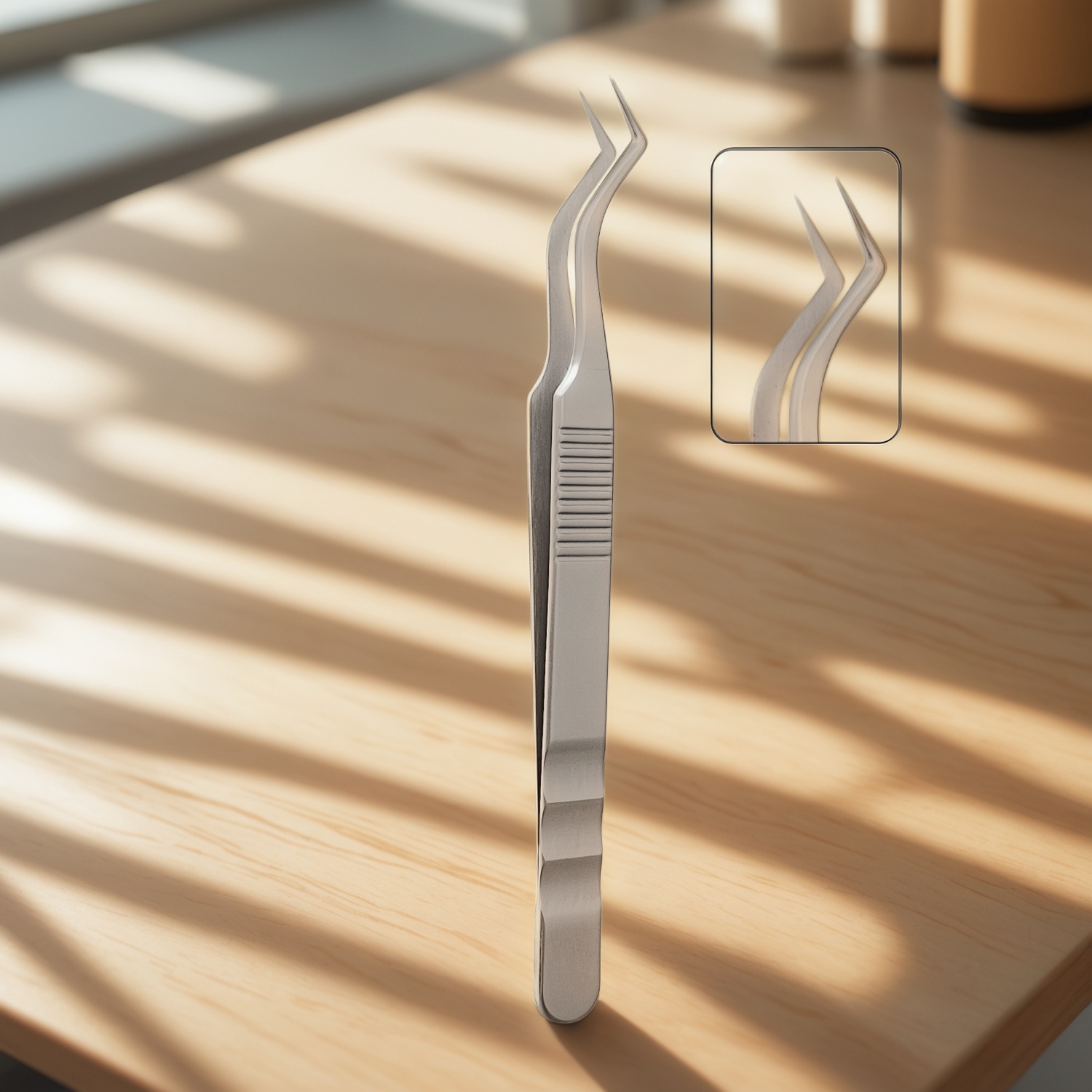
Tip shape should match the intended task. Straight tips can help with isolation and general handling. Curved tips may support placement work, depending on the technician’s style. Slanted tips are common for brow grooming and consumer use. Pointed tips can be precise but require careful handling and clear user guidance.
Grip tension affects comfort. If the tweezer is too stiff, the user’s hand tires quickly. If it is too loose, the tool may not hold fibers or hairs securely. A balanced spring response is especially important for professionals who use tweezers for long service sessions.
Surface finish influences both appearance and usability. A smooth finish is easier to clean, while a textured or coated area may provide extra control. Metallic finishes can support a premium retail presentation, but buyers should still check whether the finish is even, clean around the tips, and suitable for the intended cleaning routine.
Comparing Tweezer Types for Lash, Brow, and Retail Sets
There is no single best tweezer for every buyer. A wholesaler or manufacturer should help you match the design to the end user, but it is helpful to prepare a clear brief. The table below summarizes common sourcing considerations.
| Use Case | Preferred Buyer Focus | What to Check Before Bulk Order |
|---|---|---|
| Lash isolation | Fine control, smooth opening and closing | Tip alignment, hand comfort, consistency across samples |
| Lash placement | Secure grip and predictable angle | Tip curvature, grip point, technician feedback |
| Brow grooming | Clean hair removal and easy retail explanation | Slant accuracy, edge smoothness, protective cap or packaging |
| Consumer beauty kits | Attractive finish and safe storage | Packaging, finish durability, simple instructions |
| Private label tools | Brand consistency and repeatable production | Logo method, color tolerance, carton labeling, inspection plan |
For a brand building a complete accessory range, it may be more effective to source several complementary tweezer styles instead of one universal product. You can also review Olimor product collections to think about how tweezers may fit alongside other beauty tools in a cohesive assortment.
What to Look for in a Tweezers Wholesaler or Manufacturer
A dependable tweezers wholesaler should provide more than a catalog image. The supplier should be able to discuss intended use, available finishes, packaging options, and inspection expectations in clear terms. When the order is for OEM or private label supply, communication becomes even more important because small details affect the final product.
Use the following checklist when comparing suppliers:
- Request functional samples. Evaluate grip, tension, tip closure, and finish under real working conditions rather than relying only on photos.
- Confirm the intended application. Specify lash, brow, retail, training, or kit use so the supplier can recommend suitable tip shapes.
- Review finish and logo options. Make sure branding details are appropriate for the tweezer size and surface.
- Check packaging structure. Retail packaging, protective sleeves, and bulk packing each serve different purposes.
- Define acceptable variation. For beauty tools, small differences in tip contact can change the user experience, so inspection criteria should be practical and measurable.
- Clarify labeling and shipping marks. This is especially important for distributors and brands managing several SKUs.
Working directly with a manufacturer can also simplify technical communication. Instead of passing design changes through several trading layers, buyers can discuss samples, finishes, packaging, and inspection points more efficiently.
OEM Tweezers: Customization Decisions That Affect the Final Product
OEM tweezers can help a beauty brand create a more recognizable product line, but customization should be handled with restraint and purpose. A distinctive color or logo is useful only if the tool remains comfortable and precise.
Common OEM decisions include tip style, body shape, surface finish, logo placement, packaging format, and set configuration. For example, a professional lash brand may prioritize functional tip geometry and a clean protective case. A consumer retail brand may place more emphasis on giftable packaging and a finish that photographs well for ecommerce listings.
Before approving an OEM direction, consider how the tweezer will be used after purchase. Will it be cleaned frequently in a salon setting? Will it be stored loose in a makeup bag? Will it be sold as a single tool or included in a kit? These questions help prevent design choices that look appealing but reduce practical value.
For logo work, keep the available surface area in mind. Tweezers are slim tools, so a simple logo or short brand mark is usually easier to reproduce clearly than a complex design. Packaging can carry more detailed brand messaging, instructions, and barcode information.
Quality Control Points for Bulk Tweezer Orders
Quality control for tweezers should focus on function first. Appearance matters, especially for retail, but precise contact at the tip is the core performance requirement. A buyer’s inspection plan does not need to be complicated, but it should be specific.
Useful inspection points include:
- Tip closure: both sides meet cleanly at the intended gripping area.
- Tip condition: no burrs, rough edges, visible deformation, or sharp unintended projections.
- Spring tension: consistent opening and closing feel across inspected pieces.
- Body symmetry: no twisting that affects grip or user comfort.
- Finish quality: even color, clean surface, and no obvious stains or scratches beyond the agreed standard.
- Packaging accuracy: correct logo, labels, quantity, and protective packing method.
If possible, test samples with the same type of task your customers will perform. A tweezer intended for lash extension work should be tested with lash fibers, not only inspected visually. A brow tweezer should be assessed on fine hair gripping rather than judged by weight or finish alone.
Packaging and Retail Presentation for Wholesale Tweezers
Packaging has two jobs: protect the tweezer and communicate the product clearly. For professional users, simple protective packaging may be enough if the tool is purchased for salon use. For retail shelves or ecommerce, packaging should also explain the tip type, intended use, and basic care guidance.
Buyers should decide whether the tweezer needs a protective cap, sleeve, box, backing card, pouch, or kit packaging. The right choice depends on product positioning and distribution channel. A low-profile sleeve can be practical for bulk professional supply, while a printed box or card may support a higher retail presentation.
Packaging should not hide tool quality. If customers cannot see the tip shape or understand the intended use, returns and dissatisfaction may increase. Clear wording such as “slanted brow tweezer” or “curved lash tweezer” is more helpful than vague claims.
Care and Maintenance Guidance for End Users
Including simple care instructions can reduce complaints and improve user experience. Tweezers should be kept dry, stored with the tips protected, and handled carefully to avoid damaging the alignment. Dropping a tweezer tip-first can affect closure, even if the tool is made from durable material.
For retail or professional kits, consider adding a short care note to the packaging or insert card. It can cover cleaning after use, avoiding harsh handling, and storing the tool away from loose items that may bend or blunt the tips. Care instructions are especially useful for pointed or precision tip styles.
Building a Better Wholesale Tweezer Brief
A strong sourcing brief helps a wholesaler or manufacturer respond with relevant options. Include the intended customer, use case, preferred tip style, finish direction, packaging needs, expected order structure, and any brand requirements. If you are not sure which tweezer is suitable, start with use case and target price level rather than a fixed design.
Olimor Beauty works with beauty tool buyers who need practical sourcing support for bulk and OEM projects. To discuss tweezer options, private label presentation, or related accessory sourcing, you can contact Olimor or send an inquiry with your product brief. The more specific your use case, the easier it is to compare samples and move toward a reliable wholesale solution.