Buying tweezers factory direct is a practical sourcing strategy for beauty retailers, salon suppliers, grooming brands, distributors and private label buyers who need dependable performance as well as controlled presentation. Tweezers may be small, but they are judged quickly: the tips must meet accurately, the tension must feel comfortable, and the finish must hold up through daily handling. When those details are off, customer trust can drop just as fast.
For buyers comparing factory direct tweezers wholesale options, the real value is not only unit cost. It is the ability to review construction, finish, packaging, inspection points and customization before committing to larger orders. Olimor works in the beauty tools category and offers precision tweezers such as stainless steel models with gradient, brushed, textured or decorative finishes. This guide explains how to choose precision beauty tweezers for retail and professional use, what affects sourcing decisions, and how to evaluate a supplier with confidence.
Why factory direct sourcing matters for tweezers
Tweezers seem simple, but their performance depends on small manufacturing details. Tip alignment, spring tension, edge shaping, surface finish and coating consistency all affect how the tool feels and performs in the hand. A factory direct route gives buyers a clearer way to discuss those details before bulk production begins.
That matters because tweezers are high-touch products. A customer who buys one pair may judge the entire brand based on whether the tips close cleanly or the finish feels rough. Salon users may notice fatigue if tension is too stiff. Retail buyers may care about shelf appeal as much as practical use. Direct sourcing helps align those priorities early.
It also helps reduce miscommunication. If you need angled tips for brow shaping, curved tips for controlled access, or a specific decorative finish for gift sets, those requirements are easier to confirm when you can speak directly about the product and sample it against the same criteria used for production.
If you are building a broader grooming assortment, you can review the wider beauty tool range to see how tweezers fit beside other personal care items.
What to check in precision tweezer construction
The most important part of a tweezer is the point where the two tips meet. A clean meeting point is what allows the tool to grip fine hair without slipping. Supplied product descriptions for Olimor tweezers include stainless steel bodies, angled or curved tips, textured grips, micro-textured surfaces, and gradient or brushed finishes. Those details are useful, but buyers should still inspect samples in a structured way.
Core construction checks
- Tip alignment: The two arms should meet evenly at the working edge. Misalignment can cause slipping or uneven pressure.
- Tip shape: Angled tips suit many brow-shaping tasks, while curved tips may help with visibility and controlled access.
- Tension: The tool should open and close with controlled resistance. Too stiff can cause fatigue; too loose can reduce grip.
- Surface grip: Textured or micro-textured areas may improve handling in salon or skincare environments.
- Finish consistency: Gradient, ombre, brushed or patterned finishes should be smooth, even and free from obvious defects.
- Cleaning practicality: The body should be easy to wipe clean without grooves that trap residue.
For beauty professionals, the best sample test is a real-use test. Try the tweezers on fine, medium and short hairs where appropriate. Check whether the tips grip without cutting too high above the root. Open and close the tool several times to see whether the feel stays comfortable after repeated use.
Comparing tip styles, finishes and buyer use cases
Different sales channels value different features. A salon distributor may prioritize reliable tension and easy cleaning. A beauty retailer may want strong shelf appeal. A private label buyer may need logo placement, coordinated packaging and a presentation that matches the rest of the brand.
| Buyer use case | What to prioritize | Why it matters |
|---|---|---|
| Professional salon supply | Tip precision, repeatable grip, comfortable tension | Frequent use makes consistency and hand feel especially important |
| Retail beauty store | Visual finish, packaging appeal, dependable performance | Customers judge both appearance and functionality at a glance |
| Private label kits | Logo placement, coordinated look, package fit | Brand presentation must work with the rest of the kit |
| Promotional or travel sets | Compact form, protected tips, straightforward handling | Packaging and durability matter when the product is bundled with other items |
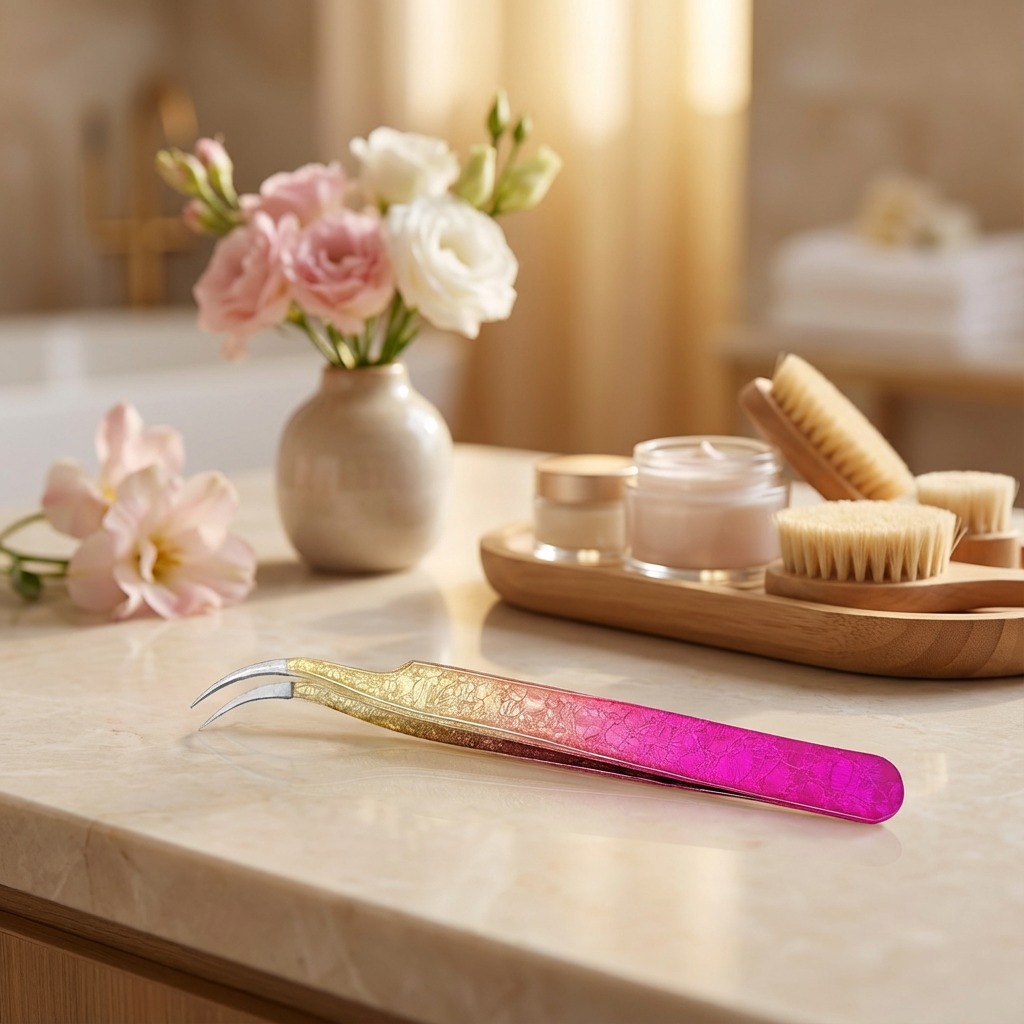
Finish choice can also influence buying decisions. A gold-to-magenta gradient, a seamless ombre transition, or a crackle-style pattern may help a tweezer stand out on shelf. A brushed stainless steel finish may suit buyers who want a more minimal look. The right choice depends on the customer, not just the catalog image.
For a broader assortment plan, browse the current collection to compare styles that may fit different retail or salon channels.
How finish and material affect value
Material and finish are not only appearance decisions; they also affect usability, durability and perceived quality. Stainless steel is commonly used for tweezers because it supports a clean grooming-tool look and can hold shape well when properly made. Decorative coatings can improve retail appeal, but they should never interfere with the working tips.
When comparing factory direct tweezers, ask what affects the quoted cost. Typical cost drivers include material choice, tip complexity, finish process, packaging level, logo application and inspection requirements. A more decorative gradient finish or customized retail box may add steps to production. Buyers should weigh those changes against market positioning and expected sell-through.
A practical sourcing approach is to separate the functional requirement from the visual requirement. First confirm that the tool grips cleanly and feels balanced. Then decide which finish supports the brand story. This keeps the product from becoming attractive but impractical.
Supplier evaluation: questions buyers should ask
Good supplier evaluation is about clarity, not just price. A strong tweezers supplier should be able to describe the product in terms of use, not only appearance. The following questions help buyers compare options more objectively:
- What stainless steel or other body material is used for the quoted model?
- How is tip alignment checked during production and before shipment?
- What finish options are available, and how are they applied?
- Can samples be reviewed before bulk ordering?
- How are the tips protected during packing and transport?
- What visual defects are considered unacceptable?
- Can packaging, labeling or logo placement be adjusted for the intended sales channel?
Olimor product descriptions reference inspection from raw materials through final packaging. Buyers should translate that kind of language into their own approval process: request samples, inspect several units from the same batch, and compare them side by side under good lighting.
If your project needs a more specific discussion, you can send a direct custom sourcing inquiry with your target use case, packaging needs and finish preferences.
Quality control checklist for wholesale orders
Small defects can become large problems in wholesale quantities, so quality control needs to be practical and repeatable. Use the same checklist for samples, pre-production approval and finished goods review.
| Quality area | What to inspect | Why it matters |
|---|---|---|
| Tip closure | Even meeting from end to end, no visible gap | Confirms the tool can grip fine hair accurately |
| Edge finish | Smooth working edge, no burrs or rough spots | Supports comfort and safe everyday use |
| Tension | Controlled resistance during repeated opening and closing | Helps prevent hand fatigue and weak grip |
| Surface quality | Even polishing, coating or texture across the visible body | Improves perceived quality and customer satisfaction |
| Packaging fit | Tips protected and product held securely | Reduces transport damage and tip misalignment |
| Batch consistency | Multiple samples perform similarly | Prevents returns and complaints after bulk delivery |
When inspecting decorative tweezers, check for scratches, uneven color transitions, rough coating edges or other visible imperfections. A finish should look attractive, but it must still support the tool’s function.
Wholesale and import planning considerations
Buying tweezers wholesale or importing them from a manufacturing partner requires more than a product decision. You also need to plan assortment, packaging, labeling, documentation and the quality criteria that will be used at receiving.
It helps to define the intended channel early. A salon buyer may need a dependable everyday tool with comfortable grip. A retailer may need a display-ready product that stands out on shelf. A private label program may require a packaging style that supports branding and barcode placement. The same tweezer can work across those channels, but the presentation and inspection needs can differ.
Import buyers should also confirm the applicable product-safety, labeling and customs requirements for their destination market. Where relevant, check current guidance from public bodies such as the U.S. Food and Drug Administration or the European Commission, and verify the applicable version of any rule with supplier documentation before finalizing packaging. Do not assume a standard applies without confirming the market and product category.
Because these requirements vary by region and channel, it is wise to align them before artwork and packaging are approved. That keeps the order from needing costly changes later.
How to choose precision beauty tweezers with confidence
The best choice is usually the one that balances performance, appearance and supply reliability. In practice, that means the tips align correctly, the tension feels usable, the finish fits the market, and the supplier can support stable production and clear communication.
- Define the use case first: brow shaping, salon grooming, retail resale or kit inclusion.
- Match tip style to use: angled for controlled brow work, curved for visibility and access, or another shape suited to the application.
- Review samples under real conditions, not only by photos.
- Check packaging protection and shelf presentation.
- Compare supplier communication, inspection process and customization flexibility.
- Confirm documentation needs for your destination market before production starts.
For buyers seeking a supplier conversation that stays focused on real product requirements, Olimor can be a practical starting point for precision tweezers and related beauty tools. Explore the range, compare finishes, and use the contact or inquiry pages to discuss your sourcing brief with the product team.
To continue, you can contact the team for general sourcing questions or use the inquiry form for a project-specific request.
FAQ
Can I request samples before placing a bulk order?
Yes, sample review is a standard part of a careful sourcing process. Use samples to check tip alignment, tension, finish quality and packaging fit before committing to wholesale quantities.
What should I ask about MOQ?
Ask how the minimum order quantity changes with the model, finish, packaging style or customization needs. MOQ can vary by product configuration, so it is best confirmed directly with the supplier.
Which customization options are worth discussing?
Common options include logo placement, finish selection, packaging style and retail labeling. The right choices depend on whether the tweezers are for salon supply, retail display or private label kits.
How do I check quality before shipping?
Request a clear inspection process, then review samples for tip closure, surface defects, tension and packaging protection. Ask the supplier how finished goods are checked before packing.
What affects lead time?
Lead time usually depends on order size, finish complexity, packaging requirements and whether customization is involved. Confirm timing early so production and launch plans stay realistic.