










Buying tweezers factory direct can be a smart route for beauty retailers, salon suppliers, lash studios, brow professionals and private-label buyers who need consistent tools rather than one-off purchases. Tweezers look simple, but small differences in tip alignment, tension, finishing and packaging can affect how well they perform at the counter, in a treatment room or in a customer’s daily grooming kit.
Factory direct sourcing is not only about finding a lower unit cost. It is about understanding where quality is created, what can be customized, and how to reduce uncertainty before a wholesale order is placed. For buyers comparing a tweezers supplier, an importer, a trading company or a manufacturer, the most useful approach is to evaluate the tool itself and the production process behind it.
This guide explains what to check when sourcing tweezers factory direct, how to compare product options such as curved tweezers, and what questions help you build a more reliable supply chain with Olimor Beauty.
What Factory Direct Means for Tweezers Buyers
In beauty tool sourcing, “factory direct” generally means working with the producer or a manufacturing partner close to production rather than purchasing through multiple resellers. For tweezers, that can affect communication, product consistency and the ability to define details before goods are made.
A direct factory relationship may help buyers discuss technical points such as tweezer shape, finish, grip area, tip style and packaging expectations. It can also make it easier to review samples, confirm inspection criteria and understand what is feasible for a wholesale order. This matters because tweezers are precision tools: if the two arms do not meet evenly, if the tips are too blunt, or if the tension feels inconsistent, the user notices immediately.
Buyers should not assume that factory direct automatically means perfect quality or the lowest total landed cost. Shipping, packaging, import procedures, rejected goods and slow communication can all affect the real cost of an order. The goal is to work with a supplier that can support both product selection and quality control in a clear, repeatable way.
How to Select the Right Tweezer Type for Your Market
Different customers use tweezers for different tasks. A brow salon may prioritize clean hair removal and hand comfort, while a lash artist may focus on precise placement. A retail customer may respond to finish and packaging, but will still judge the product by how accurately the tips grip.
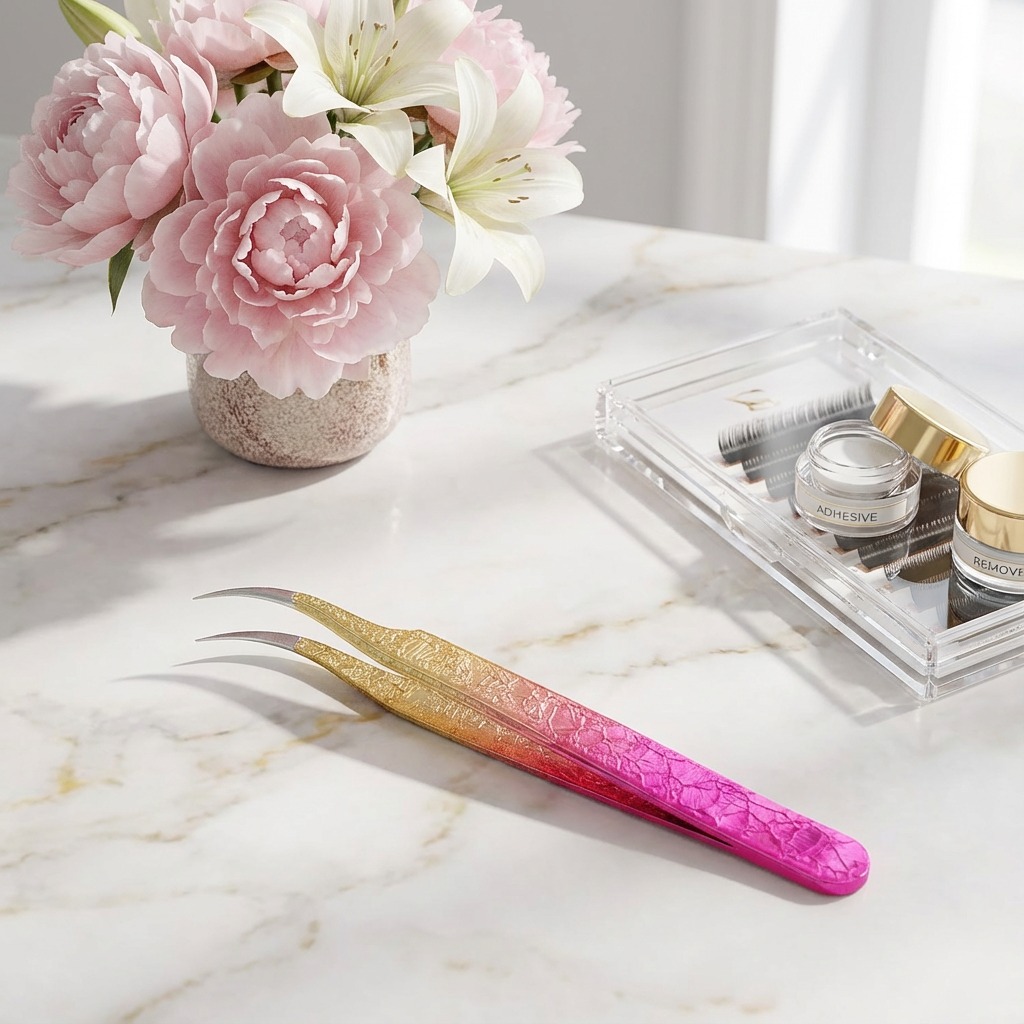
Olimor Beauty’s supplied article references a Gradient Chrome Curved Tweezer with a pink-to-gold gradient finish. A curved tweezer can be especially relevant for beauty applications where access angle and visibility matter, such as lash work or controlled grooming tasks. However, buyers should match the tweezer shape to the intended user rather than choosing only by appearance.
- Curved tweezers: Useful when the working angle matters, including lash placement or delicate grooming tasks where the hand needs clearance.
- Slanted tweezers: Common for eyebrow shaping and general hair removal because the angled edge can help approach the hair close to the skin.
- Pointed tweezers: Designed for very precise tasks, but they require careful handling and may not suit every retail audience.
- Flat or straight tweezers: Often selected for broader gripping tasks, depending on the tip finish and alignment.
If you are building a retail range, it may be useful to compare several tip types through samples and user feedback. For wholesale or professional supply, performance should weigh more heavily than color or decorative finish, although a strong finish can support shelf appeal when the product is positioned for retail.
Quality Checks That Matter Before a Wholesale Order
Tweezers quality is often decided by details that are easy to overlook in a product photo. A polished finish and attractive color can help the product sell, but the tool must still grip consistently. Before committing to a larger order, create a simple inspection checklist that can be used for samples and production goods.
| Quality area | What to check | Why it matters |
|---|---|---|
| Tip alignment | The two tips should meet evenly without a visible gap at the gripping point. | Poor alignment causes slipping and frustration during hair removal or lash work. |
| Tip finish | Edges should feel clean and controlled, not rough, bent or overly sharp for the intended use. | The wrong finish can damage hairs, reduce grip or feel unsafe to users. |
| Tension | The arms should close smoothly with a comfortable amount of pressure. | Too much tension tires the hand; too little can reduce control. |
| Surface finish | Check for scratches, uneven coating, discoloration or rough areas. | Visible defects affect retail value and brand perception. |
| Consistency | Compare multiple pieces, not only one sample. | Wholesale buyers need repeatable quality across a batch. |
| Packaging fit | Confirm the tool is protected and held securely. | Good packaging reduces damage and improves presentation. |
For buyers importing tweezers from China or purchasing from any overseas supplier, quality expectations should be written in plain language before production. Photos, approved samples and defect categories can reduce misunderstandings. If your business sells professional tools, it is also wise to test samples with the people who will actually use them: brow technicians, lash artists or experienced retail staff.
Factory Direct vs. Trading Supplier: Practical Differences
Many beauty tool buyers compare factory direct sourcing with buying through a trading supplier. Each route can work, but they solve different problems. A trading supplier may offer a broad catalog and simplify mixed-product purchasing. A factory direct relationship may offer more control over a specific product category, especially when repeat orders and product consistency are important.
When dealing with tweezers, the practical differences often show up in sample feedback and change requests. If you need to adjust the finish, packaging, tip type or inspection expectations, direct communication with a manufacturer can make the process clearer. If you need to buy many unrelated beauty tools in small mixed quantities, a general supplier may appear simpler, but you should still verify how product quality is managed.
Olimor Beauty works in the beauty tools category, and buyers can review related beauty tool products to understand the wider sourcing context. If you are comparing tweezers alongside other implements, looking across product collections can help you plan a coordinated retail or professional assortment.
Questions to Prepare Before Contacting a Tweezers Manufacturer
A good sourcing conversation is easier when you know what information you need. Rather than beginning with price only, prepare a concise brief that describes the user, sales channel and expected quality level. This helps the supplier recommend the most suitable option and helps you compare quotations more fairly.
- Define the end user. Is the tweezer for salon professionals, lash technicians, brow specialists, retail customers or promotional beauty kits?
- Choose the function first. Decide whether the priority is hair removal, lash placement, general grooming or a multi-use beauty tool.
- Specify the appearance. Note preferred finish, color direction, packaging style and whether a decorative finish is important for the market.
- Set sample evaluation rules. Decide who will test samples and what pass or fail criteria they will use.
- Clarify order packaging. Consider individual packaging, protective tip covers, retail presentation and carton labeling needs.
- Plan import documentation. Identify the documents your company or freight partner requires for customs clearance in your market.
This preparation is especially useful for wholesale tweezers because two products that look similar in a photo may perform differently in the hand. A clear brief also makes it easier to compare a curved tweezer with a slanted or pointed option without being distracted by finish alone.
Import and Wholesale Planning for Tweezers
When importing tweezers, the purchase price is only one part of the decision. Buyers should consider sampling time, packaging decisions, inspection process, freight method, customs requirements and the risk of stock that does not match the market. A lower quoted price may not be the better option if it comes with unclear specifications or weak sample approval.
For wholesale planning, estimate how the product will be sold before placing an order. A professional salon supplier may need reliable performance and repeat availability. A beauty retailer may need packaging that explains the use case clearly. An online seller may need accurate product descriptions and close-up imagery to reduce returns. These sales-channel needs should influence the tweezer type and finish you choose.
It is also wise to keep your first order focused. Testing one or two well-defined tweezer styles may provide better market feedback than launching too many similar tools at once. If the Gradient Chrome Curved Tweezer style fits your audience, assess it alongside other functional options and confirm whether the finish, shape and packaging match your price position.
Working With Olimor Beauty on Tweezer Sourcing
Olimor Beauty can support buyers who are evaluating tweezers factory direct for wholesale, retail or professional beauty use. The most productive discussions begin with a clear product purpose, target customer and quality expectation. From there, buyers can compare available options, review samples and decide whether a curved precision tweezer or another tip style is the right fit.
Because beauty tools depend on small physical details, sample review is essential. Look closely at alignment, grip, finish and tension before moving forward. If you are purchasing for a team of professionals, collect feedback from more than one user. If you are purchasing for retail, consider both performance and the way the product will be presented to the customer.
To discuss a tweezer sourcing plan, you can contact Olimor with your target market, preferred tweezer type and packaging requirements. If you already have a defined order brief, you can also send an inquiry so the team can review the details and respond with relevant next steps.
Factory direct sourcing works best when it is treated as a quality and communication process, not just a price search. By choosing the right tweezer type, setting practical inspection standards and working with a supplier that understands beauty tool details, buyers can build a more dependable tweezer program for professional or retail customers.