For beauty brands, salons, distributors and private-label buyers, a tweezer is a small tool with a large effect on customer satisfaction. A well-made tweezer should pick up fine hairs cleanly, help position lash accessories accurately and feel controlled in the hand during repeated use. A poor tweezer, even if it looks attractive in packaging, can slip, pinch unevenly or lose alignment after limited use.
Olimor Beauty manufactures beauty tools for grooming and cosmetic applications, including precision tweezers designed for professional and retail use. This guide explains what matters when evaluating a tweezer manufacturer: tool geometry, material choice, grip, finishing, inspection and sourcing questions for bulk or OEM projects. It is written for buyers who need practical criteria rather than broad claims.
What a Beauty Tweezer Needs to Do Well
The main job of a beauty tweezer is controlled gripping. Whether the user is shaping eyebrows, removing a fine hair, handling small beauty accessories or applying lash-related items, the two arms of the tweezer must meet consistently at the tip. The contact point should hold the target without forcing the user to squeeze excessively.
In beauty applications, accuracy matters more than aggressive force. A tweezer that is too stiff can fatigue the hand and make detailed work harder. A tweezer that is too soft may not hold the hair or accessory securely. The best balance depends on arm thickness, metal spring response, tip grinding and the overall length of the tool.
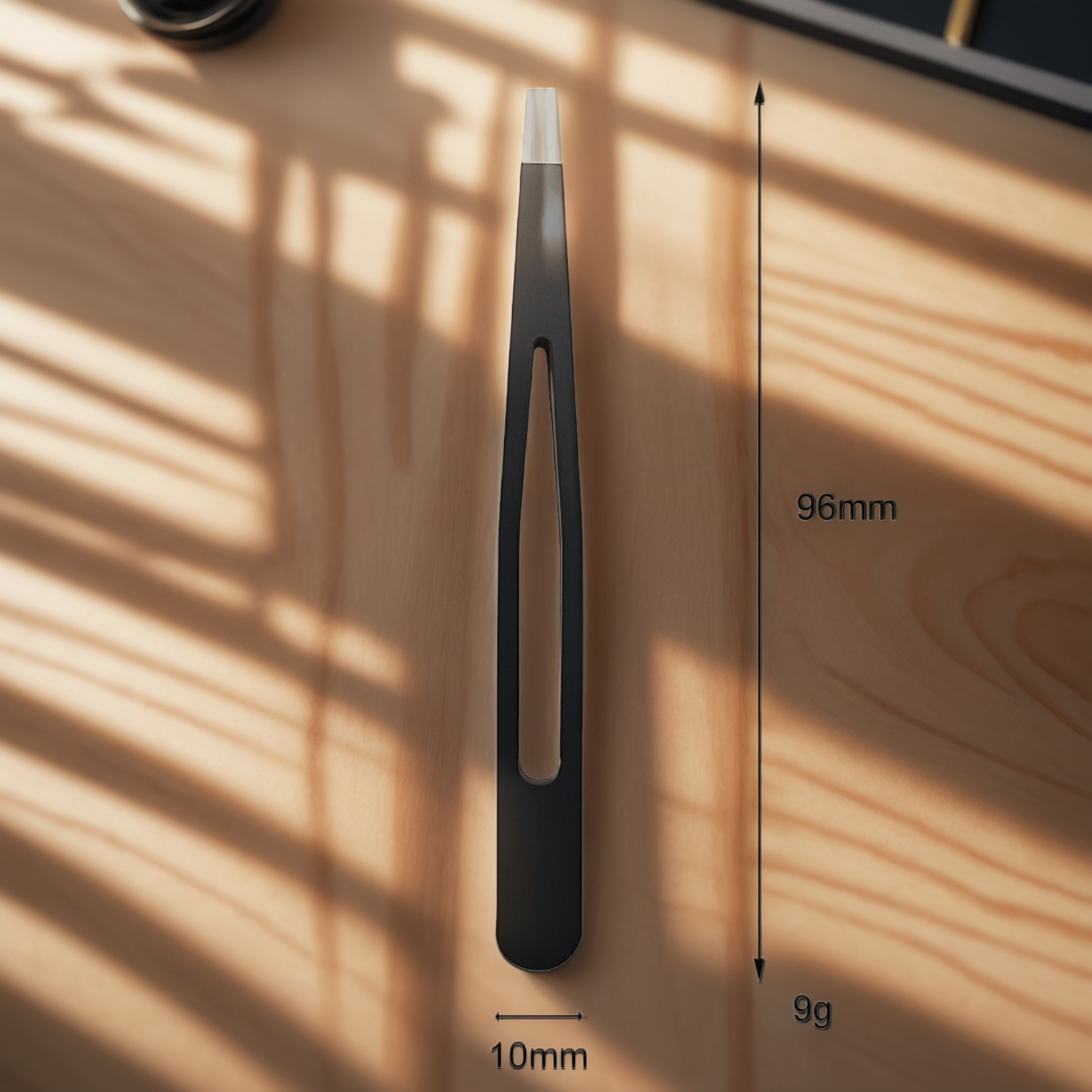
The supplied Olimor Beauty tweezer is specified at 96 mm in height, 10 mm in width and approximately 9 grams in weight. These dimensions place it in a compact category suitable for makeup bags, retail grooming kits, salon stations and travel-friendly personal care sets. The lightweight body supports maneuverability, while the narrow width helps keep the gripping action focused.
Design Details That Affect Precision
Precision is not created by one feature alone. It comes from a combination of manufacturing decisions that must be controlled consistently from batch to batch. Buyers should pay attention to the following points when comparing tweezer suppliers or reviewing samples:
- Tip alignment: The tips should meet evenly without visible offset. Misalignment leads to slipping or partial gripping.
- Tip finish: A clean, precision-machined tip can improve contact with fine hairs or small cosmetic items.
- Arm tension: The tweezer should close with controlled pressure and reopen smoothly without feeling loose.
- Grip area: Surface shape and cut-outs can improve handling, especially during longer salon use.
- Edge comfort: Edges should feel smooth enough for repeated handling, with no sharp burrs.
- Weight balance: At around 9 grams, this type of tweezer should feel light but not flimsy.
The Olimor Beauty tweezer described for this page includes a cut-out feature for enhanced handling and a black finish for a professional appearance. The cut-out is not only visual; it can help create a more secure finger position, especially when users need controlled pressure during eyebrow shaping or lash application. For brand buyers, this type of feature can also help differentiate a tweezer from very basic flat-arm designs without making the tool complicated.
Material and Finish Considerations
The original product information identifies high-grade stainless steel as the material used for the tweezers. Stainless steel is commonly selected for beauty tools because it can provide a good balance of durability, shape stability and clean appearance. For sourcing teams, the key is not only the material name but how the tool is formed, finished and inspected.
A black finish can create a more professional look for retail sets, salon kits and private-label cosmetic accessories. However, finish quality should be evaluated carefully. The surface should appear even, with consistent color coverage and no obvious flaking, rough patches or discoloration around the cut-out or tip area. Because tweezers are handled frequently, the finish should also feel comfortable against the fingers.
When reviewing finish samples, do not rely only on product photos. Check how the tweezer looks under normal room light, bright retail lighting and close-up inspection. Small cosmetic flaws may be acceptable for some budget programs, while premium kits typically need tighter visual consistency. The correct standard should match the sales channel and target customer, not just the lowest unit cost.
Common Use Cases for This Type of Tweezer
A 96 mm beauty tweezer with a lightweight body can be used across several grooming and cosmetic tasks. It is not limited to one customer type, which makes it useful for beauty brands building kits or distributors serving mixed channels.
| Use case | What buyers should evaluate |
|---|---|
| Eyebrow shaping | Tip alignment, clean gripping of fine hairs and comfortable squeezing pressure. |
| Lash application support | Control near the tip, hand stability and a shape that helps accurate placement. |
| Salon station tools | Durability, consistent tension and easy handling during repeated use. |
| Retail grooming kits | Compact size, attractive finish, packaging compatibility and perceived value. |
| Private-label beauty sets | Design consistency, finishing quality and suitability for the brand’s positioning. |
For professional users, performance over time is especially important. The tweezer should not feel precise only during the first trial. Buyers preparing wholesale or OEM programs should review multiple samples, not a single ideal unit, and should compare samples from the beginning and later stages of any approval process.
Quality Checks Before Bulk Ordering
A reliable tweezer manufacturer should be able to support repeatable quality, because small differences in tip grinding or arm tension can change the user experience. Before confirming a bulk program, buyers can build a simple inspection checklist that focuses on performance and appearance.
- Check tip closure: Hold the tweezer against a light background and close it slowly. The tips should meet cleanly.
- Test grip on fine material: Use a fine hair-like fiber or similar small item to confirm that the tip does not slip easily.
- Review tension: Open and close the tweezer multiple times. The motion should feel smooth and repeatable.
- Inspect the finish: Look for scratches, uneven black coating, rough edges or visible marks around the cut-out.
- Measure basic dimensions: Confirm that the size aligns with the expected 96 mm height and 10 mm width where applicable.
- Assess packaging fit: If the tweezer will be included in a kit, confirm that the shape and tip protection work with the planned packaging.
These checks are straightforward but valuable. They help teams avoid placing orders based only on catalog appearance. They also create a shared language between product development, purchasing, quality control and sales teams.
OEM and Wholesale Sourcing Questions
Many buyers approach a tweezer factory for OEM, private-label or wholesale supply. The right conversation should cover both appearance and functional requirements. If you are developing a beauty set, decide early whether the tweezer needs to match other tools in color, finish or packaging style. If the product is intended for professional salons, prioritize grip reliability, tension and durability over purely decorative details.
Useful sourcing questions include: What sample approval process will be used? Which visual defects are acceptable or unacceptable? How will tip alignment be checked? Will the final packaging protect the tweezer tip during shipping and retail handling? What information is needed for branding, labeling or kit assembly? These questions help prevent misunderstandings before production begins.
Olimor Beauty supports buyers looking for beauty tools for retail, salon and distribution channels. You can browse related beauty tool products to compare tool categories or review broader product collections when planning a coordinated beauty accessory range. For custom sourcing discussions, use the send an inquiry page with your target use case, expected packaging format and any sample evaluation requirements.
How to Choose a Tweezer Manufacturer With Confidence
The best tweezer supplier is not simply the one offering an attractive finish or a low quotation. A dependable partner should understand that beauty tweezers are judged by touch, control and consistency. Buyers should look for a manufacturer that can discuss material, dimensions, grip design, finishing and inspection in practical terms.
For this Olimor Beauty tweezer, the important stated attributes are its stainless steel construction, 96 mm by 10 mm compact size, 9 gram lightweight build, black finish, cut-out handling feature and precision-machined tip. Those details make it suitable for buyers seeking a controlled, professional-looking tweezer for eyebrow shaping, lash application support and beauty grooming kits.
If you are comparing options for a new retail tool, salon accessory or OEM beauty program, prepare a short performance checklist before evaluating samples. Focus on how the tweezer closes, grips, feels and looks after careful inspection. When those elements are aligned, a small beauty tool can support a stronger product experience and a more reliable brand impression. To discuss a sourcing project directly, contact Olimor with your application and sample review needs.