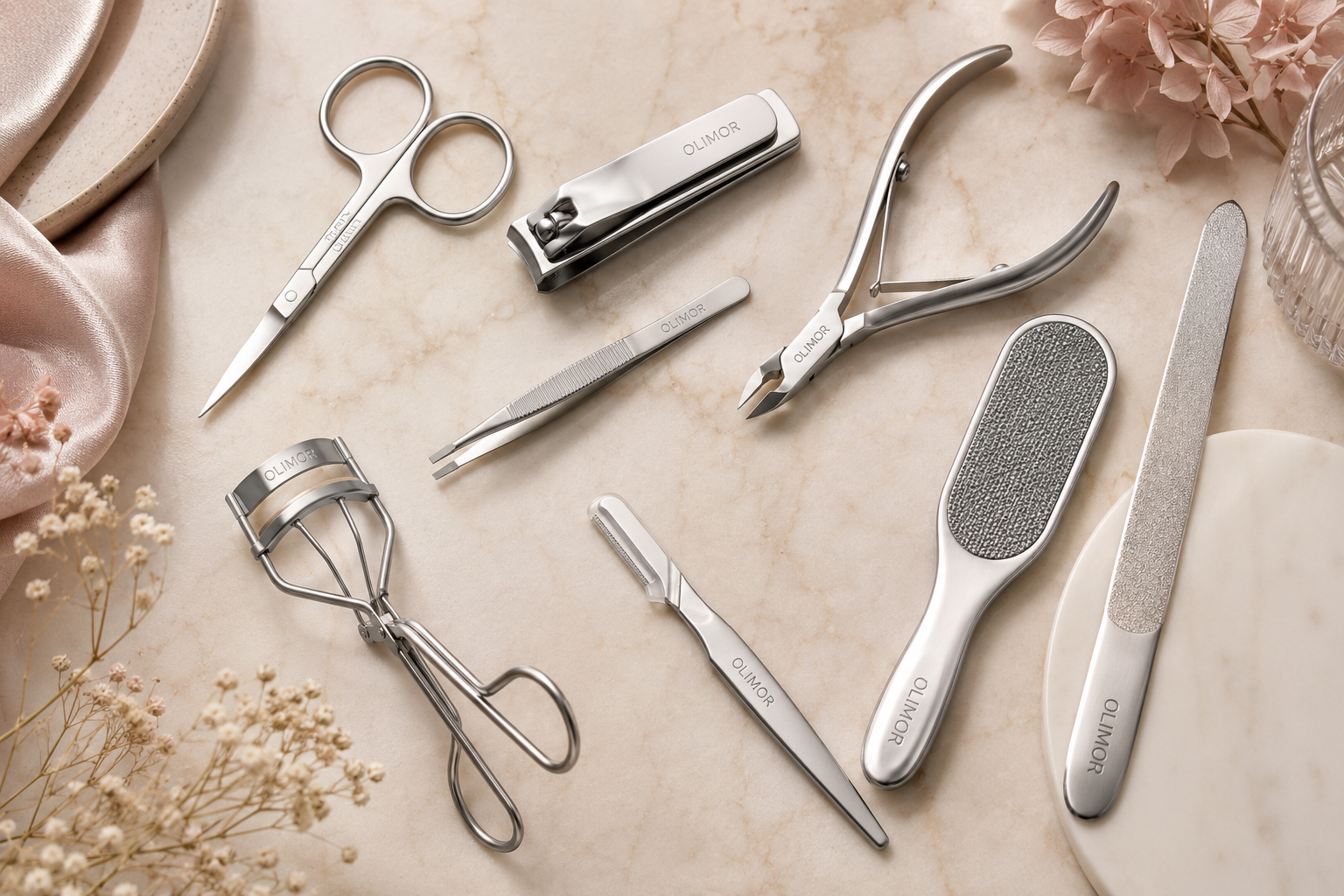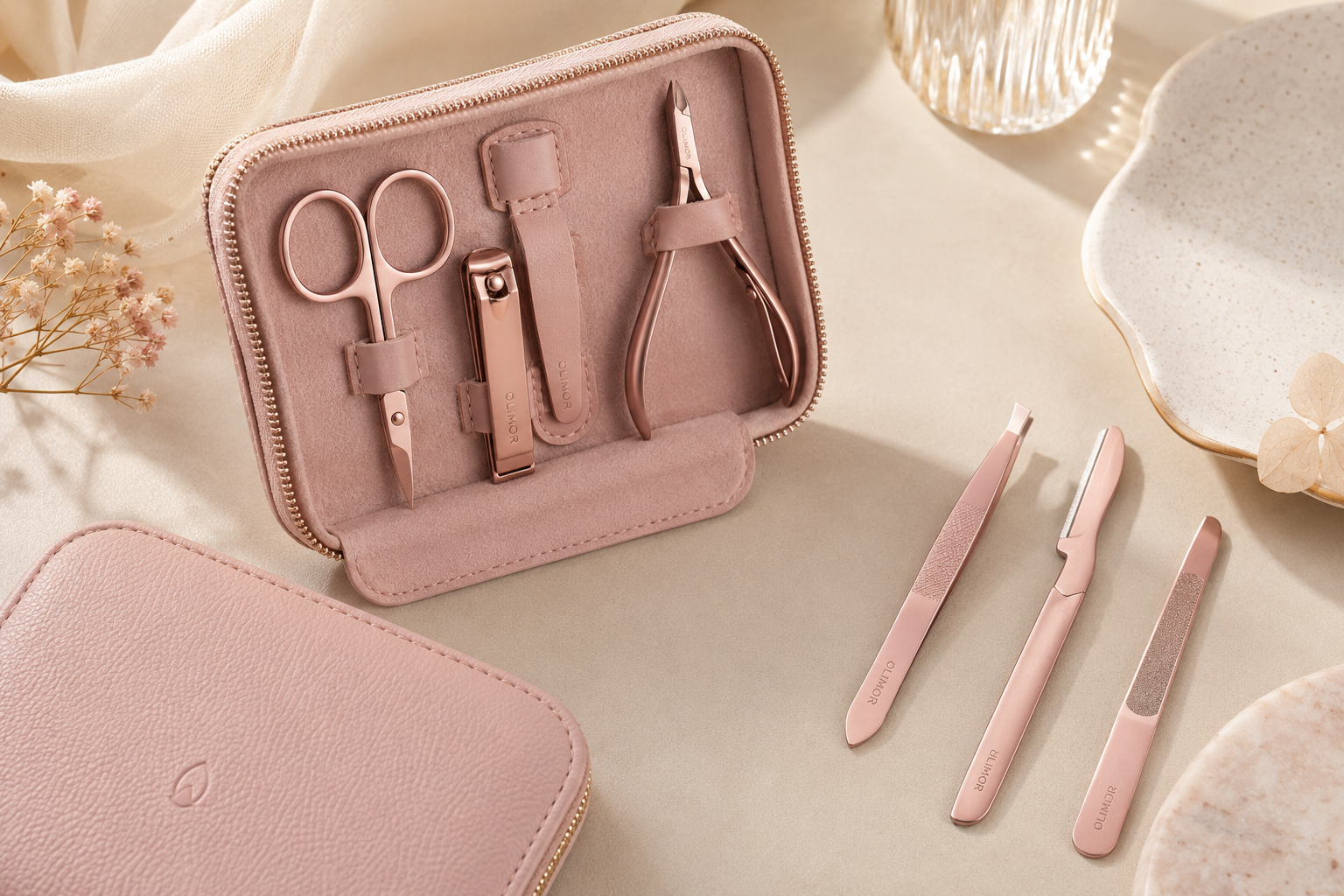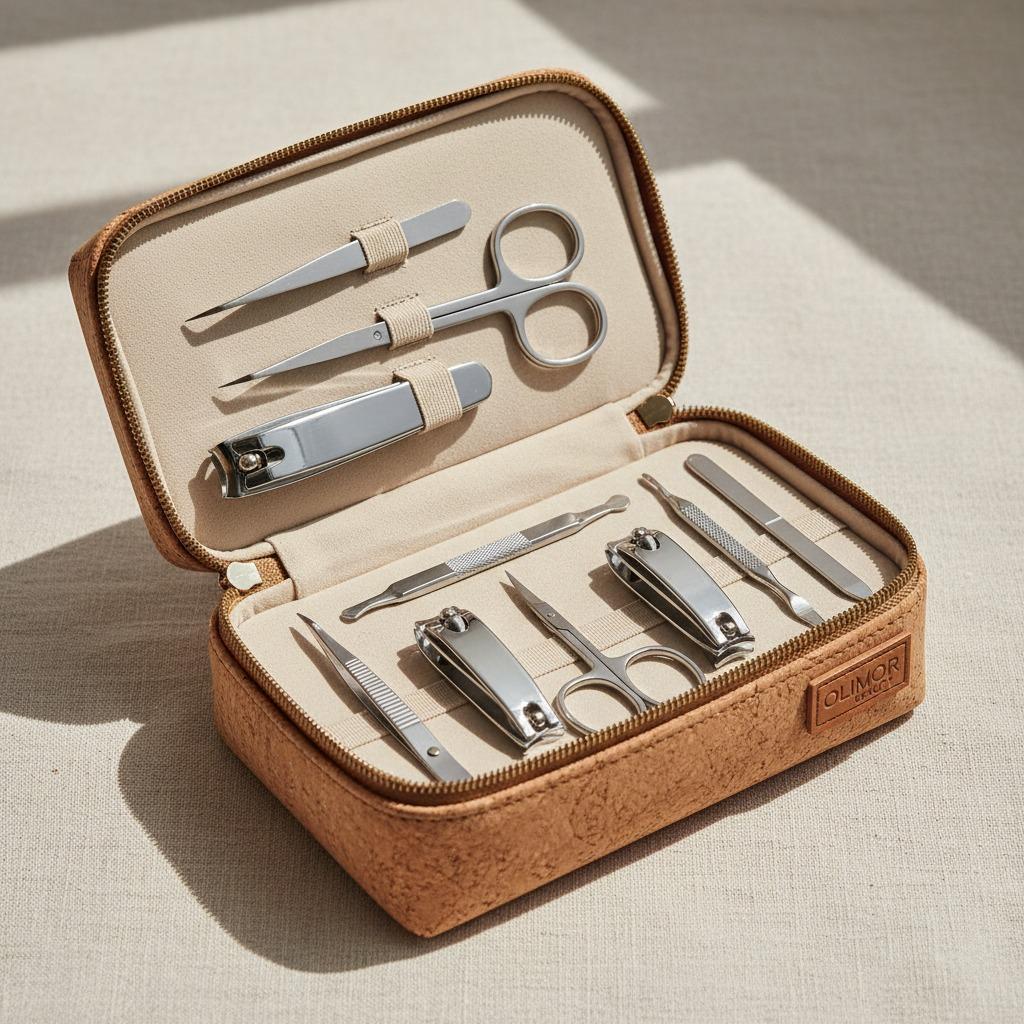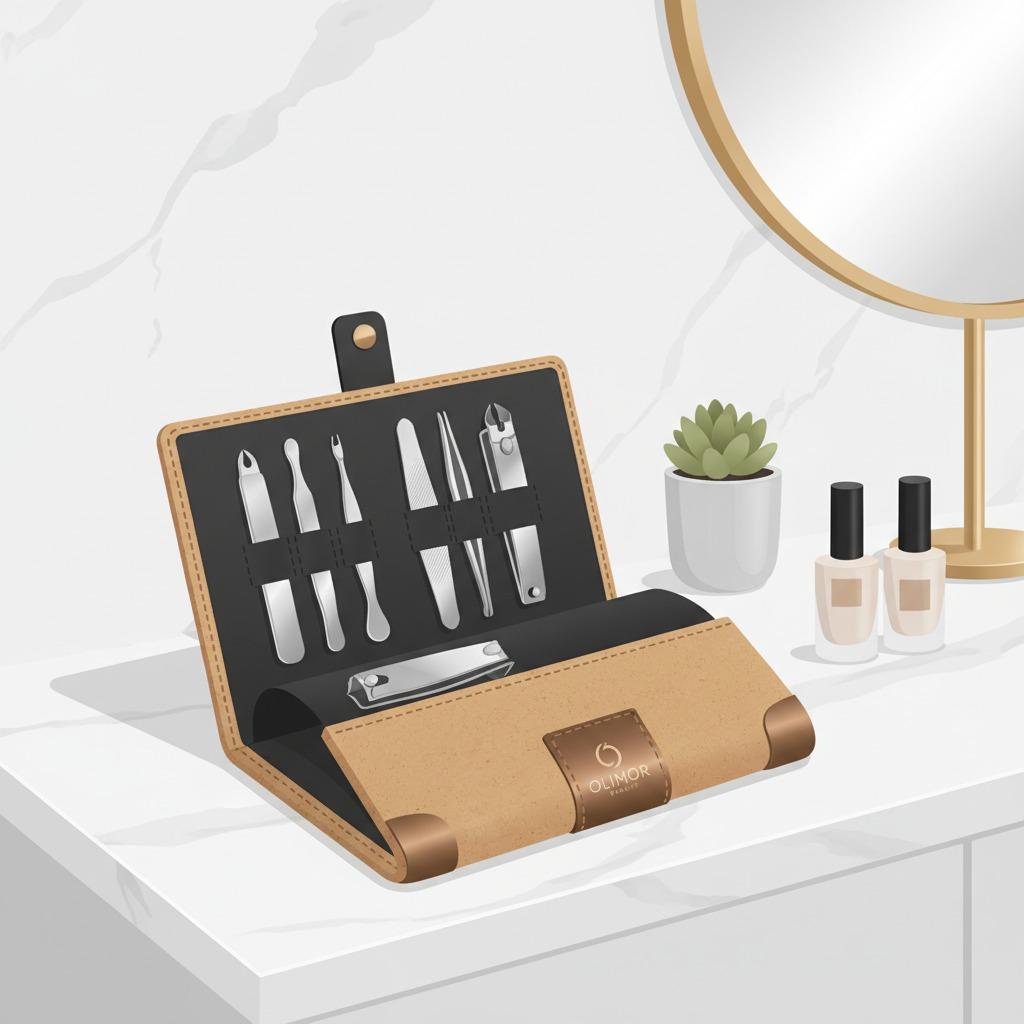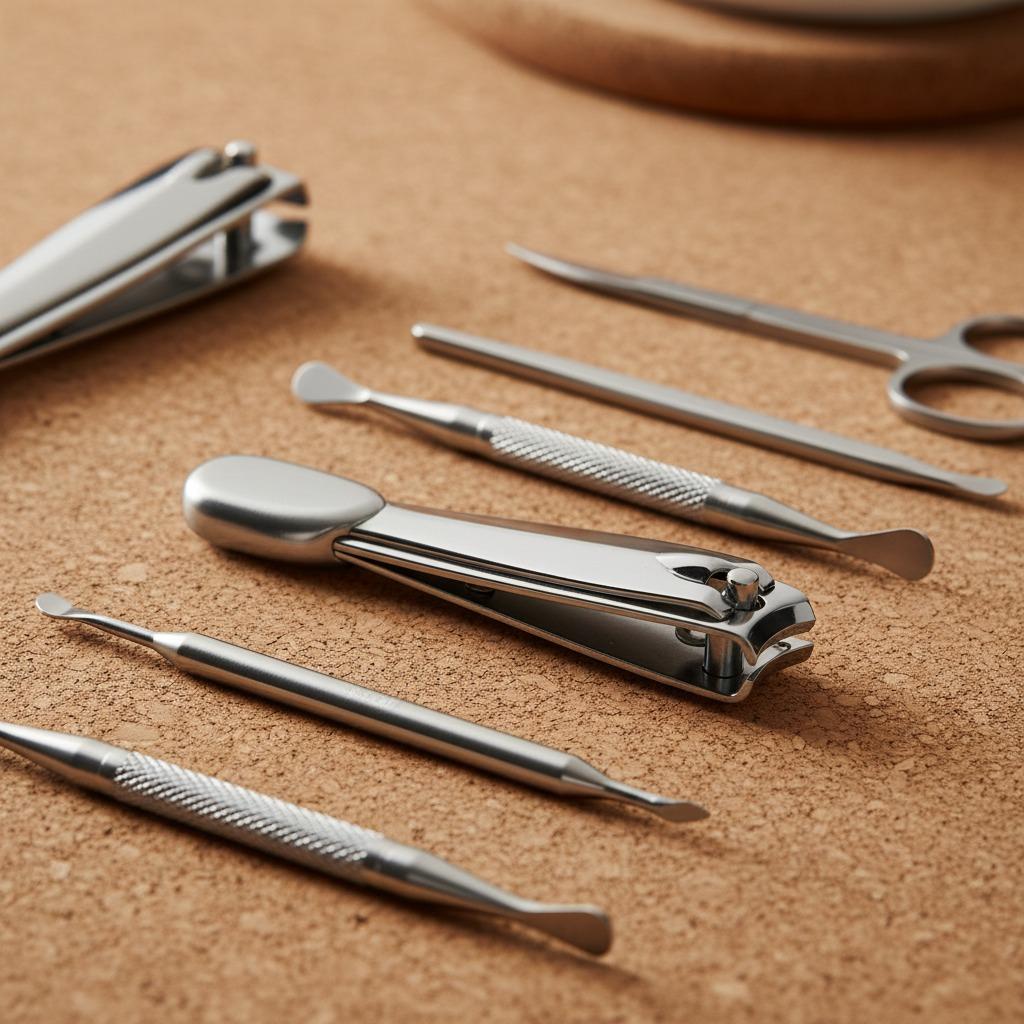











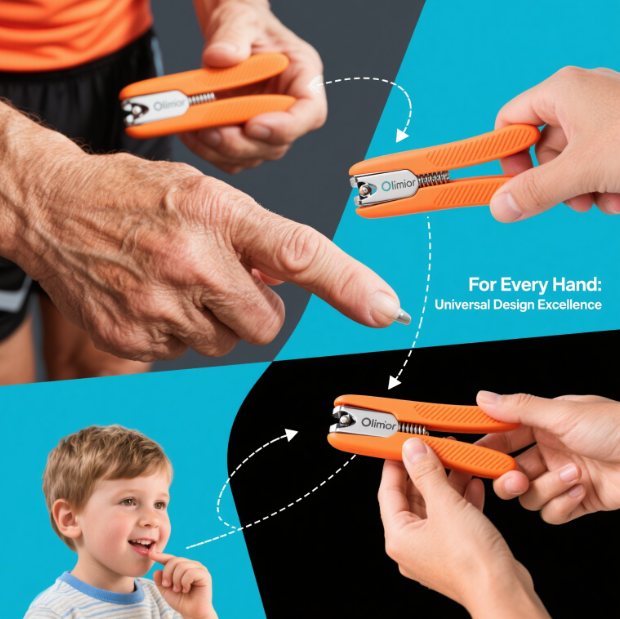
Travel nail clippers should be compact, easy to clean, comfortable to control, and suitable for the person using them. For adults, that usually means enough cutting strength and leverage for regular fingernails and, where appropriate, thicker toenails. For children, it means a smaller, more controlled trimming experience that helps caregivers work carefully without rushing.
This guide explains how to choose nail clippers for family travel, home grooming, retail ranges, and B2B sourcing. It focuses on practical selection points: user type, cutting feel, hygiene, storage, inspection, packaging, cost factors, and supplier questions. If you are comparing beauty tool products for a travel kit or family grooming assortment, start with the intended user rather than the lowest unit cost or the smallest size.
What Makes a Nail Clipper Suitable for Travel?
A travel-friendly nail clipper is not simply a miniature clipper. It needs to perform reliably after repeated packing, unpacking, cleaning, and storage in a pouch or grooming case. A very small clipper may look convenient, but if it requires several hard presses to trim one nail, the user may end up with jagged edges, discomfort, or nail splitting.
The best travel nail clippers balance portability with function. The lever should lift and press smoothly. The cutting jaws should meet evenly. The exterior should feel smooth enough that it does not scratch other grooming items or snag fabric inside a toiletry bag. After use, the tool should be easy to wipe clean and dry before storage.
For family travel, separation is also important. Adult and child nail clippers should be easy to identify. A child’s clipper should not be confused with an adult toenail tool, and a shared clipper should be cleaned carefully between uses. Retailers and distributors can reduce customer confusion by making the intended user clear on packaging and product listings.
Adult vs Kids Nail Clippers: Key Differences
Adult nail clippers and children’s nail clippers solve different grooming problems. Adult nails are often wider and may be thicker, especially toenails. Adults usually need a stable grip, clean cutting pressure, and enough leverage to avoid crushing the nail. A compact adult clipper still needs to feel strong enough for routine use.
Children’s nails are smaller and thinner, but trimming them can be more difficult because children may move suddenly. A child-focused clipper should support visibility and control. Rounded design features, a manageable size, and a gentler feel can help caregivers trim small sections at a time. The purpose is not fast cutting; it is careful, confident trimming.
| Selection point | Adult nail clippers | Kids nail clippers | Why it matters |
|---|---|---|---|
| Cutting strength | Needs enough leverage for regular adult nails | Should cut thinner nails without feeling aggressive | The wrong strength can crush, split, or overcut the nail |
| Tool size | Should match finger or toenail width | Should be small enough for caregiver control | Oversized tools reduce precision on small nails |
| Grip and handling | Stable grip for self-use | Comfortable grip for caregiver use | Better control reduces trimming mistakes |
| Travel storage | Compact, smooth exterior, easy to pack | Separate, identifiable, protected from adult tools | Clear storage improves hygiene and prevents mix-ups |
| Inspection focus | Jaw alignment, lever pressure, clean edge | Rounded feel, smooth action, no rough surfaces | Inspection helps avoid tools that snag or tear nails |
How to Choose the Right Nail Clipper for a Family Grooming Kit
A family grooming kit should be built around actual use cases. One clipper rarely works equally well for everyone. A practical kit may include a compact adult fingernail clipper, a stronger adult toenail clipper if needed, and a child-focused clipper kept separately. The goal is to make regular nail care easier, cleaner, and safer for every family member.
Start by considering nail type. Thin fingernails do not require the same cutting force as thick toenails. Then consider the user’s hand control. Some adults prefer a larger lever because it feels stable. Caregivers trimming children’s nails may prefer a smaller tool that allows them to see the fingertip clearly. For travel, also consider how the tool closes, whether the edges are smooth, and how easily it can be cleaned.
Family nail clipper checklist
- Choose by user: Select adult and child tools separately when trimming needs differ.
- Check jaw alignment: The cutting edges should meet evenly without visible twisting or gaps.
- Test lever comfort: The lever should press smoothly and should not require excessive force.
- Inspect exterior edges: Travel tools should not scratch pouches or catch on other items.
- Confirm easy cleaning: Simple surfaces and accessible cutting areas are easier to wipe and dry.
- Store dry: Do not leave clippers in a damp bathroom area or sealed wet pouch.
- Replace worn tools: If the clipper tears, bends, or leaves sharp fragments, replacement is safer than forcing continued use.
For buyers building a retail assortment, the same checklist can be used during sample review. The product should not only look good in packaging; it should also feel stable, cut cleanly, and match the target customer described on the label or listing.
Safe Nail Trimming Tips for Children
Children’s nail trimming requires patience and good lighting. The caregiver should be able to see the nail edge clearly and keep the skin away from the blade. Trimming after a bath can make nails feel softer, but the tool should still be clean and dry before storage. If a child is anxious, short sessions are better than forcing a complete trim all at once.
Use small, controlled cuts instead of trying to cut the whole nail in one movement. Leave a slight white edge rather than cutting too close to the skin. If any edge feels rough, smooth it gently with an appropriate nail file. A child-safe routine depends on both the design of the tool and the behavior of the person using it.
- Wash and dry the child’s hands or feet before trimming.
- Use a clipper suited to small nails rather than a heavy adult clipper.
- Hold the finger or toe gently but securely.
- Keep the fingertip visible and away from the cutting edge.
- Trim a small amount at a time.
- Stop if the child becomes restless or starts moving suddenly.
- Clean and dry the tool before putting it away.
Caregivers should inspect the clipper before every use. A loose lever, dull cutting edge, rough exterior surface, or misaligned jaw can make trimming less predictable. A child-focused design cannot compensate for a worn or poorly made tool.
Cleaning, Hygiene, and Maintenance for Longer Tool Life
Nail clippers contact nails, skin, moisture, and small debris. Regular cleaning is part of responsible grooming. After use, remove nail fragments, wipe the cutting area, and allow the clipper to dry completely before storage. Moisture trapped inside a travel pouch or bathroom drawer can shorten the useful life of grooming tools and make them less hygienic.
For home use, store clippers in a dry location away from wet sinks or shower areas. For travel, use a small grooming pouch or protected compartment. If multiple family members carry tools in one case, keep child and adult clippers separated or clearly identifiable. This reduces confusion and supports better hygiene habits.
Routine inspection should include the lever, jaws, rivet area, exterior edges, and finish. The lever should move smoothly. The jaws should align when pressed. The cutting action should trim the nail rather than bend or tear it. If the clipper needs unusual pressure or leaves repeated jagged edges, it may be dull, misaligned, or unsuitable for that nail type.
Retailers and sourcing teams should also think about maintenance from the customer’s perspective. A tool that is difficult to clean may generate complaints even if it cuts well at first. Simple shapes, smooth finishing, and packaging that protects the tool can all improve the user experience.
Cost Factors: What Affects Nail Clipper Value?
Nail clippers are often treated as low-cost accessories, but buyers should evaluate value rather than price alone. A very cheap clipper can become expensive if it causes returns, poor reviews, or customer dissatisfaction. For B2B purchasing, total value includes product consistency, cutting feel, finishing quality, packaging suitability, and supplier communication.
Several factors can influence cost without requiring any invented performance claims. Material selection, forming, sharpening, polishing, assembly, inspection, packaging, and customization all affect production complexity. A simple unpackaged tool for a basic grooming set will not have the same cost structure as a finished retail product with branded packaging and multiple inspection points.
Common cost drivers for nail clippers
- Tool type and size: Adult, child, fingernail, toenail, and travel designs may require different construction details.
- Cutting edge preparation: Consistent jaw alignment and clean cutting feel require careful processing and inspection.
- Surface finishing: Smooth exterior edges and consistent finish are important for hand feel and travel storage.
- Packaging format: Retail display cards, travel kits, family sets, and private label packaging affect cost.
- Customization needs: Logo, color, packaging artwork, and assortment structure can change production and approval steps.
- Quality control expectations: Sample approval, production inspection, and final packing checks require planning.
For commercial buyers, the most useful price discussion begins with application. Is the clipper for an adult grooming line, a children’s care set, a hotel amenity, a travel kit, or a retail family pack? Clear positioning helps suppliers recommend appropriate options and avoids comparing products that are not designed for the same purpose.
Supplier Evaluation for Retailers, Distributors, and Private Label Buyers
When sourcing nail clippers, evaluate samples before committing to a product range. Photographs can show shape and finish, but they cannot fully show leverage, cutting action, comfort, or consistency. Test samples in realistic scenarios, including adult fingernail use, adult toenail use where relevant, and caregiver-controlled trimming for smaller nails.
Ask the supplier how quality is controlled from material handling through final packaging. Do not rely only on appearance. Look for stable lever movement, clean jaw alignment, smooth exterior finishing, consistent branding, and packaging that protects the tool during transport and display. If the product is marketed for children, check the applicable requirements in your target market and verify supplier documents.
Recognized public bodies and standards can help buyers frame compliance questions. For example, the U.S. Consumer Product Safety Commission may be relevant when products are sold or marketed for children in the United States. For international shipments, travel and security rules can vary, so travelers and sellers should verify current guidance from the Transportation Security Administration or the relevant authority in the destination market. Always check the current versions of applicable regulations and request current supplier documentation instead of assuming compliance.
Olimor Beauty supplies practical beauty tools for grooming assortments and sourcing programs. Buyers comparing nail care items within broader beauty tool products or planning a family grooming range can review available product collections and discuss target users, packaging expectations, and quality priorities before ordering.
Problem Solving: Common Nail Clipper Issues and What They Mean
If a nail clipper bends the nail instead of cutting it, the tool may be dull, too small, or not strong enough for the nail type. If it leaves sharp corners, the jaws may not align well, or the user may be cutting too much in one motion. If the lever feels unstable, the assembly may be loose or the tool may be worn.
For children, the most common issue is lack of control. An oversized adult clipper can block visibility and make caregivers nervous. A smaller child-focused clipper with smooth handling can make trimming easier, but technique still matters. Short, careful cuts are safer than one fast cut across the nail.
For travel, problems often come from storage and moisture. A clipper tossed loosely into a bag can scratch other items, collect debris, or become difficult to keep clean. A damp pouch can also affect the tool over time. The simple fix is to clean, dry, and store the clipper in a designated compartment after each use.
When to Contact a Supplier About Customization
Customization is useful when the nail clipper must fit a specific retail position, brand identity, or kit format. Buyers may want a family grooming set, child-focused packaging, travel pouch compatibility, or coordinated appearance with other beauty tools. The most productive customization discussion includes the target market, user type, packaging channel, branding needs, and inspection expectations.
A supplier should not be asked only for the lowest price. Instead, ask which design is appropriate for the nail type and use case, how samples can be reviewed, what packaging options are available, and what documents can be provided for your market review. Avoid assuming material grade, certification status, minimum order quantity, or delivery schedule until the supplier confirms them for the specific project.
For product suitability, sample discussion, or private label planning, you can contact Olimor or send a sourcing inquiry with your intended application and market requirements.
FAQ
Can I request samples before placing a nail clipper order?
Sample availability depends on the product style, customization needs, and current supply status. Buyers should request samples to evaluate cutting feel, lever action, finish, packaging, and user suitability before confirming a larger order.
Is there a fixed MOQ for travel or kids nail clippers?
MOQ can vary by design, packaging, branding, and production arrangement. Confirm the minimum order quantity with the supplier for the exact nail clipper model and customization plan you are considering.
Can nail clippers be customized for private label retail?
Customization may include branding, packaging format, assortment planning, and presentation for travel or family grooming sets. Available options should be confirmed during the inquiry stage because they depend on product structure and order requirements.
How should buyers evaluate nail clipper quality?
Check jaw alignment, lever stability, cutting smoothness, exterior finish, cleaning ease, packaging protection, and consistency across samples. For children’s products or market-specific retail sales, verify current regulatory requirements and supplier documents.
What affects lead time for nail clipper orders?
Lead time can be influenced by product availability, customization, packaging approval, production scheduling, inspection, and shipping arrangements. Ask for a current timeline after the supplier confirms the exact product and order details.