










For beauty professionals, lash technicians, retailers and private-label buyers, tweezers are small tools with a large impact on the customer experience. A false lash tweezer that pinches unevenly, slips in the hand or loses alignment too quickly can slow down application and create avoidable frustration. When sourcing from a tweezers supplier, the goal is not simply to find a low-cost item; it is to identify a tool that feels controlled, looks professional and can be supplied consistently.
Olimor Beauty focuses on beauty tools for professional and retail use, including the False Lash Tweezer described for lash application. This article explains how buyers can evaluate false lash tweezers more carefully, what details matter in a tweezers factory relationship and how to compare wholesale or OEM options without relying on vague claims. If you are reviewing multiple beauty tool products for a salon, store or brand assortment, the criteria below can help you make a more confident decision.
Start With the Application: Why False Lash Tweezers Need Different Control
False lash tweezers are not the same as general grooming tweezers. A brow tweezer is often judged by how well it grips a single hair, while a lash tweezer is judged by how smoothly it helps position a lash strip or cluster near the lash line. The tool must allow accurate placement without forcing the user into an awkward wrist angle.
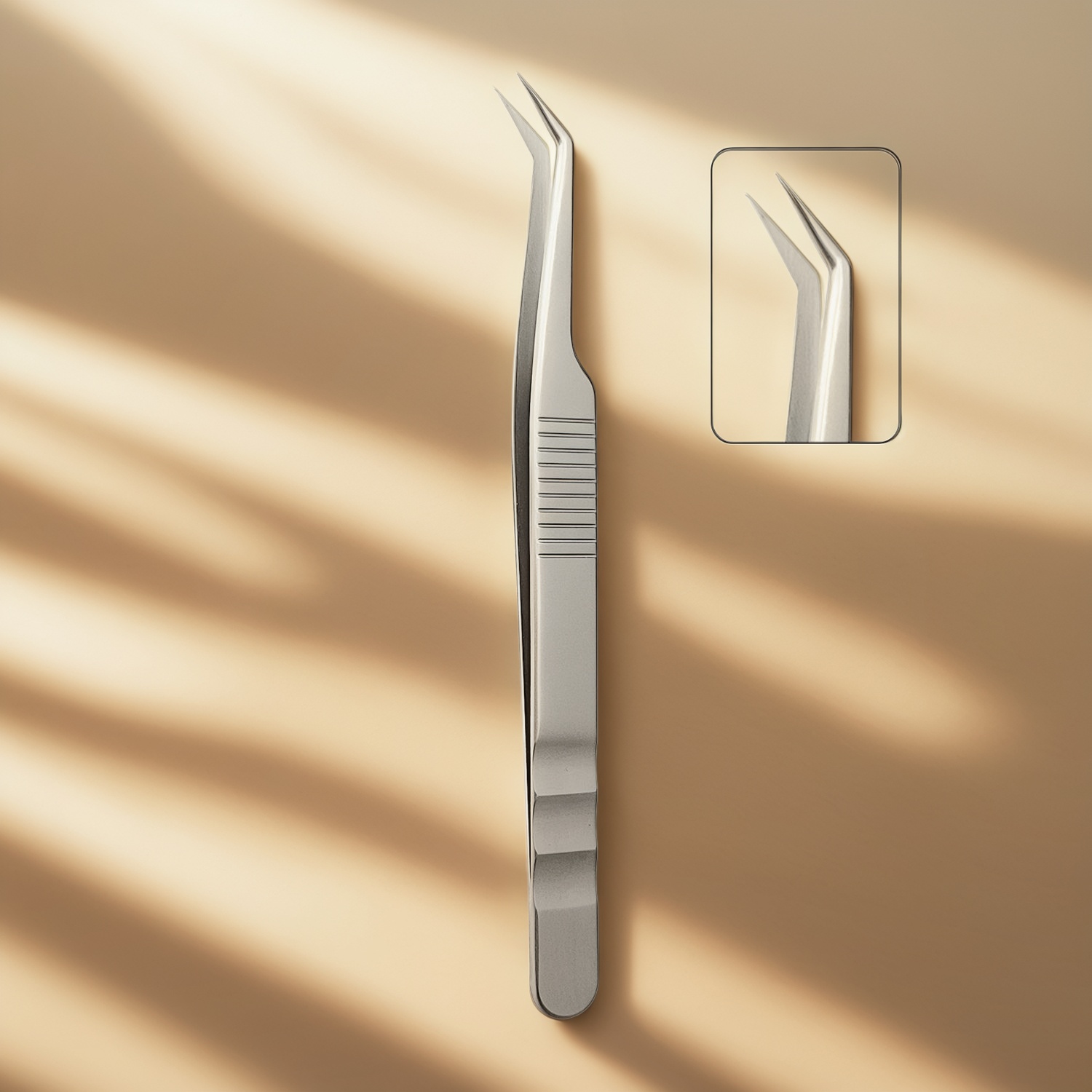
The Olimor Beauty False Lash Tweezer is described with an elegantly curved tip engineered to mimic the natural lash curl. That curve is important because it helps the user approach the lash line in a way that feels more natural than a straight-tip tool. For makeup artists, this can support faster work during appointments. For home users, it can make controlled placement less intimidating, especially when applying lashes close to the inner or outer corner of the eye.
When comparing suppliers, check whether the tweezer design is actually matched to the intended use. A supplier may offer many tweezer shapes, but for false lash application you should look closely at tip curvature, closing action and handle stability. The right tool should support precision without requiring excessive hand pressure.
Material and Skin Contact Considerations
The supplied product information states that Olimor Beauty tweezers are crafted from high-grade, hypoallergenic stainless steel. For beauty tools used near the eye area, material choice matters for durability, hygiene routines and user comfort. Stainless steel is widely used in beauty tools because it can provide strength, a clean surface and resistance to everyday handling when properly manufactured and maintained.
Buyers should avoid treating “stainless steel” as a complete specification on its own. When product details are limited, build a practical material checklist for supplier comparison. Important questions include how the surface is finished, whether edges are smooth to the touch, whether the tool can withstand routine cleaning and whether the closing tips remain properly aligned after normal use.
For salons and retail brands, the material story also affects customer trust. A false lash tweezer may be displayed in a kit, sold as an accessory or used by artists in front of clients. A clean, smooth stainless steel finish gives the tool a professional appearance, while rough finishing or uneven polishing can make even a functional tweezer feel low quality.
Tip Geometry, Alignment and Grip: The Details That Decide Performance
The tip is the working end of any tweezer, and for lash tools it deserves careful inspection. A curved tip should help guide the lash rather than block the user’s view. The two arms should meet evenly, and the closing pressure should feel balanced. If the tips cross, gap or meet at only one point when they should close more evenly, application becomes less predictable.
The False Lash Tweezer is also described with non-slip, finely ribbed handles. This is a useful design feature because lash application often involves small movements, adhesive timing and close mirror work. A smooth handle can become difficult to control if the user has skincare residue, foundation or moisture on the fingers. Fine ribbing can provide tactile feedback and help the user maintain grip without squeezing too hard.
When sampling lash tweezers from any tweezers China manufacturer or wholesaler, test them in realistic conditions. Pick up a lash strip, hold it at the center and at both ends, then place it against a curved surface or practice lash line. Notice whether the tool gives enough visibility and whether the handle remains stable during small adjustments.
Ergonomics for Professionals and At-Home Users
A tweezer can look precise but still be tiring to use. Ergonomics affect how the tool feels over repeated applications, especially for makeup artists who may work with multiple clients in one day. The Olimor Beauty False Lash Tweezer is described as having an ergonomic, contoured shape that fits comfortably in the hand. For sourcing teams, that detail should be tested by different users rather than judged only from a product photo.
Consider hand sizes, dominant hand use and typical application style. Some users hold lash tweezers close to the tip for maximum control, while others prefer holding nearer the center of the body. A well-designed tweezer should not create sharp pressure points. It should open and close smoothly, with enough spring to return to shape but not so much resistance that it fatigues the fingers.
For retail programs, ergonomics can reduce returns and complaints. Customers may not describe the issue in technical terms; they may simply say the tweezer is “hard to use.” In many cases, that feedback comes from poor balance, slippery handles or a tip angle that does not match the task.
Quality Control Inside a Tweezers Factory
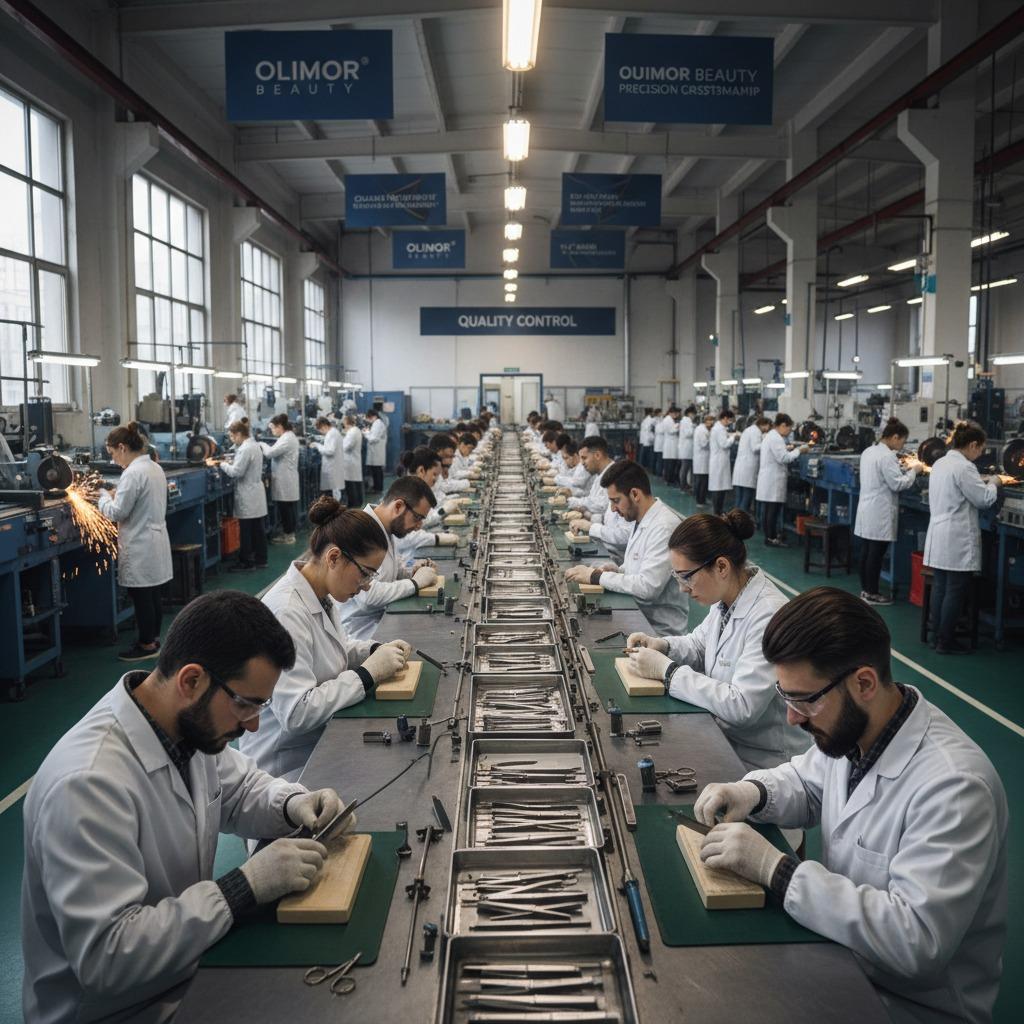
The original product information highlights Olimor Beauty’s internal quality control process, with inspections from raw material sourcing to final packaging. For wholesale buyers, this is a key part of supplier evaluation. A sample can look good, but repeat orders depend on process discipline. The real question is whether the factory can maintain the same feel, finish and alignment across production batches.
A practical inspection plan for false lash tweezers should include both visual and functional checks. Visual checks look for scratches, burrs, inconsistent polishing, stains, uneven ribbing and packaging defects. Functional checks confirm that the arms close properly, the tips align, the grip feels stable and the tool is not bent or overly stiff.
- Tip alignment: Confirm that the two sides meet cleanly and do not twist away from each other.
- Surface finish: Check for smooth edges, clean polishing and a professional appearance.
- Handle grip: Test whether ribbing or texture improves control during small movements.
- Spring tension: Open and close the tweezer repeatedly to judge comfort and consistency.
- Packaging condition: Review whether each item is protected against scratches during shipment and storage.
These checks are useful whether you are purchasing a small wholesale quantity for a salon group or planning a larger private-label program. They also help your team compare suppliers using observable criteria rather than marketing language alone.
Wholesale and OEM Sourcing: What Buyers Should Clarify
Olimor Beauty is presented as a tweezers wholesaler and offers tweezers OEM services for brands that want to develop a custom line. For buyers, wholesale and OEM have different priorities. Wholesale sourcing focuses on choosing an existing tool that fits your sales channel, while OEM work may involve decisions about finish, packaging, branding and assortment planning.
Before moving forward, define the role of the false lash tweezer in your business. Is it a standalone retail product, part of a lash kit, a salon-use tool or an add-on to a broader beauty accessories range? The answer affects packaging expectations, product presentation and reorder planning. You can review broader product collections to think about how tweezers may sit alongside other tools in a cohesive assortment.
For OEM discussions, avoid starting only with logo placement. A reliable custom program should first confirm the base tool’s performance. Once the shape, grip, material and finishing meet your needs, then packaging and branding decisions become more meaningful. If you are ready to compare options or share your sourcing plan, you can send an inquiry with your intended use, target channel and customization requirements.
Buyer Checklist for Comparing False Lash Tweezers Suppliers
A structured checklist helps prevent rushed decisions, especially when several suppliers appear similar at first glance. Use the table below to compare samples and conversations consistently.
| Evaluation Area | What to Look For | Why It Matters |
|---|---|---|
| Tip shape | Curved tip suitable for lash placement | Supports visibility and controlled application near the lash line |
| Tip alignment | Even closing without gaps or twisting | Improves precision and reduces slipping during placement |
| Handle design | Contoured body with non-slip ribbing | Helps users maintain control without excessive pressure |
| Material finish | Smooth stainless steel surface and clean edges | Contributes to durability, comfort and professional presentation |
| Quality process | Inspection from material sourcing through packaging | Supports consistency across repeat wholesale or OEM orders |
| Business fit | Wholesale availability and OEM communication | Ensures the supplier can support your sales model and product plan |
Care, Handling and Long-Term Product Value
Even a well-made tweezer needs proper care. Lash professionals and retail customers should keep tips protected when the tool is stored, because the working ends can be affected by drops or pressure from other items in a makeup bag. After use, the surface should be cleaned according to the hygiene practices appropriate for the setting. Salons should follow their own professional sanitation procedures and local requirements for tools used around the eye area.
For retailers, care guidance can be included in product pages, inserts or staff training. Simple instructions help customers understand that precision tools should not be treated like disposable accessories. Protecting the tip, keeping the surface clean and avoiding unnecessary bending can extend useful life and preserve performance.
Choosing a Supplier With Practical Confidence
A dependable false lash tweezers supplier should combine product performance, repeatable manufacturing and responsive business support. Olimor Beauty’s False Lash Tweezer brings together several relevant features for this category: stainless steel construction, a curved tip for lash application, an ergonomic contoured body and finely ribbed handles for grip. For buyers, those features should be evaluated through samples, practical use and clear sourcing criteria.
If you are building a lash tool assortment, refreshing salon accessories or exploring tweezers OEM options, focus on the details that users feel immediately: alignment, comfort, grip and finish. A small tool that performs consistently can strengthen the perceived quality of a broader beauty range. To discuss suitable options for your channel, contact Olimor with your product goals and application needs.