










A professional stainless steel nail clipper should do more than look sharp in a grooming kit. It should feel stable in the hand, close with controlled pressure, cut fingernails and toenails cleanly, and remain easy to clean after repeated use. For beauty tool distributors, salon supply buyers, private-label teams and retailers, the right clipper can become a dependable core item rather than a low-value add-on.
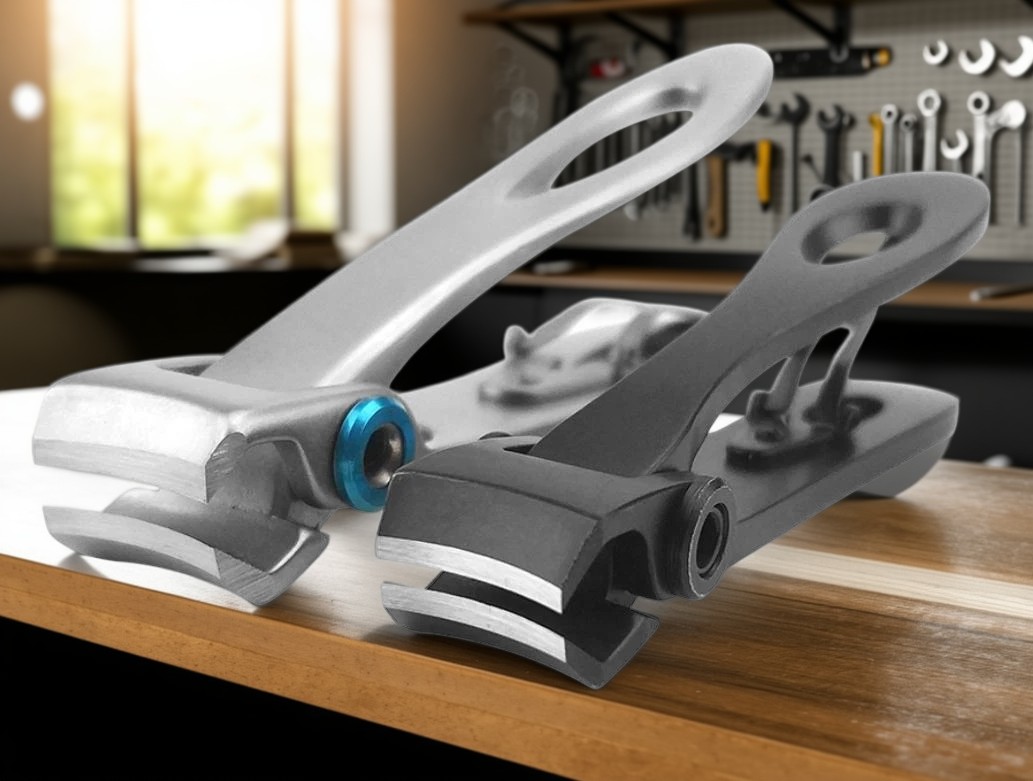
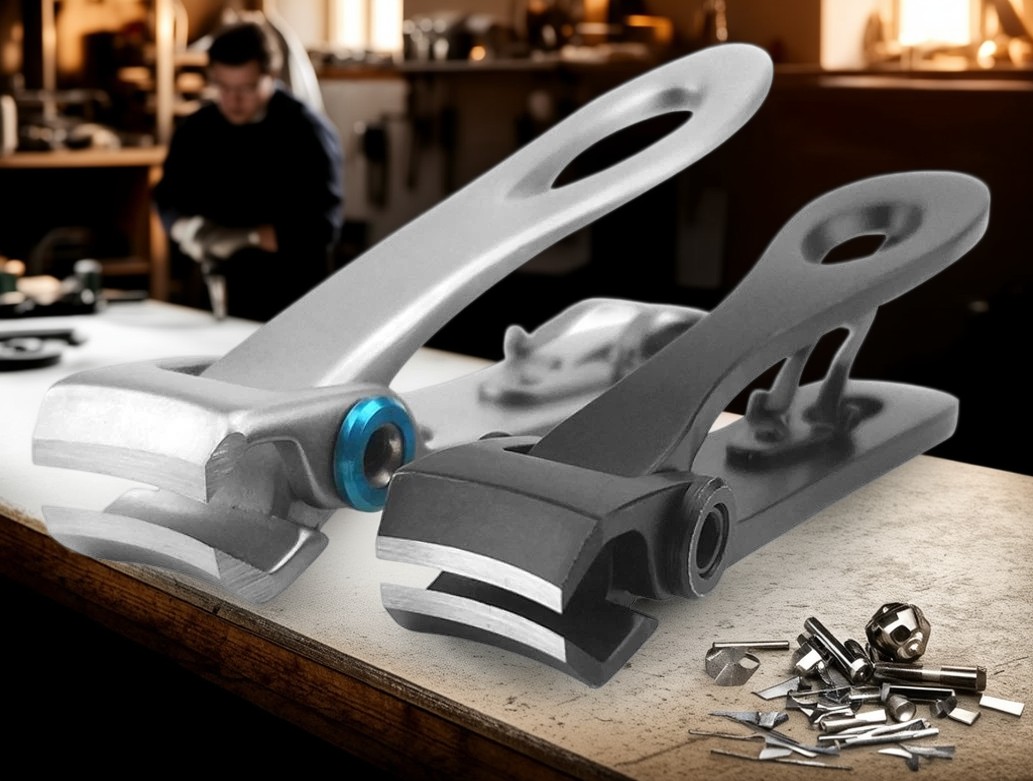
Olimor Beauty’s large professional nail clipper is built around practical grooming needs: stainless steel construction, curved cutting blades, an ergonomic body, a slim handle with a convenient hole, a slightly recessed grip area and modern finish options such as matte black, brushed styling, polished silver and black styling. These features make the clipper suitable for personal care, travel kits, salon assortments and broader manicure or pedicure ranges.
This guide explains how to evaluate a professional nail clipper from a buyer’s point of view: material, blade geometry, leverage, finish, packaging fit, user safety, maintenance and supplier review. It also helps end users understand how to trim nails more comfortably and how to care for the tool over time.
What Buyers Mean by a Professional Nail Clipper
A professional nail clipper is not defined only by size or a premium surface finish. In a practical sense, it should provide consistent cutting, secure handling, corrosion resistance when properly maintained, and a structure suited to frequent use. Those qualities matter whether the clipper is sold individually, placed in a travel set, included in a salon kit or offered as part of a private-label grooming line.
Stainless steel is commonly used for grooming tools because it provides strength, a cleanable surface and better resistance to rust than many ordinary metal alternatives when dried and stored correctly. For a nail clipper, the material must work together with blade alignment and lever design. A strong body alone cannot compensate for cutting edges that do not meet evenly.
The Olimor large clipper is intended for both fingernails and toenails. This is important for assortment planning because toenails are often thicker and need more leverage than fingernails. A larger clipper body can give users better control, while the curved blade shape helps follow the natural nail contour when used carefully.
If you are comparing grooming tools across a wider product range, start with function before appearance. Review available beauty tool products by asking whether each item solves a specific user problem: cleaner trimming, easier handling, safer storage, better kit presentation or simpler maintenance.
Material, Finish and Surface Details to Inspect
The clipper is described as stainless steel and is available in modern finishes including matte black, brushed, polished silver and black styling. Finish choice affects both visual positioning and daily use. A matte black clipper can suit contemporary men’s grooming kits, minimalist travel sets and premium retail displays. Brushed or polished silver may communicate a more classic manicure and pedicure tool appearance.
For B2B buyers, the surface should be evaluated through sample inspection rather than photographs alone. Check whether the finish is even across the handle, lever and body. Look closely around edges, the hinge area and the handle opening, where roughness or uneven coating is easier to miss. A finish should not feel slippery during normal handling, especially if the clipper may be used after washing hands or in a salon environment.
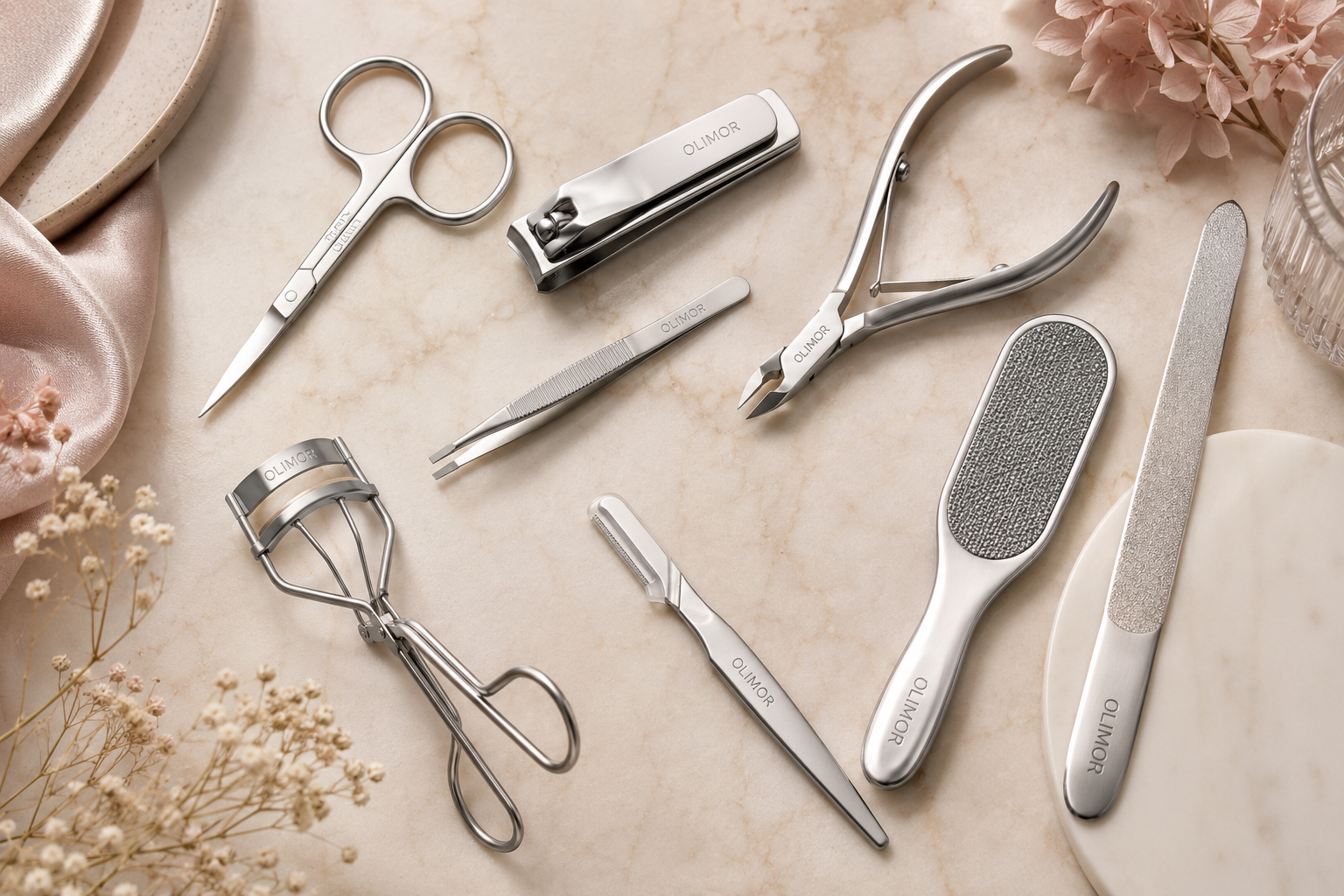
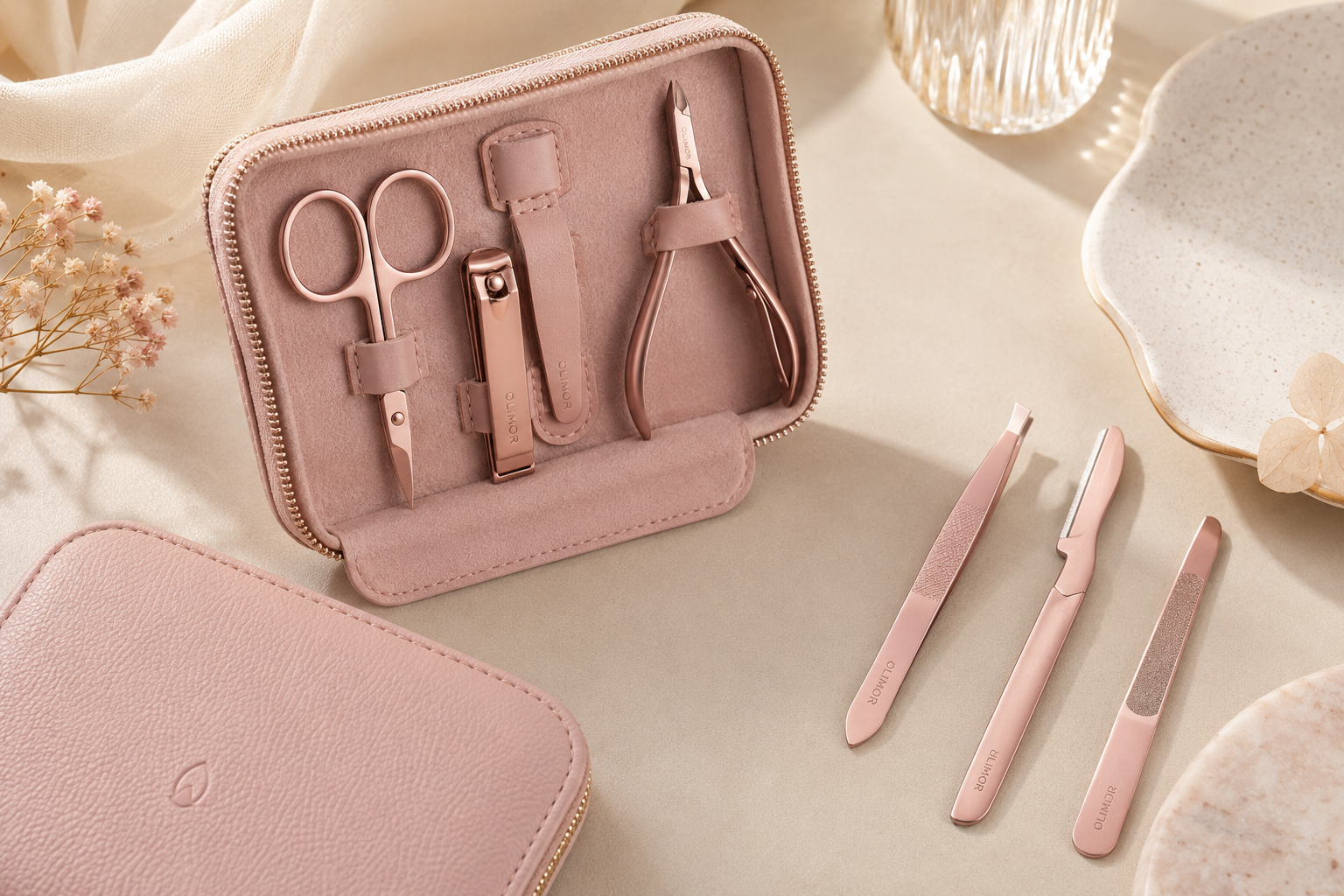
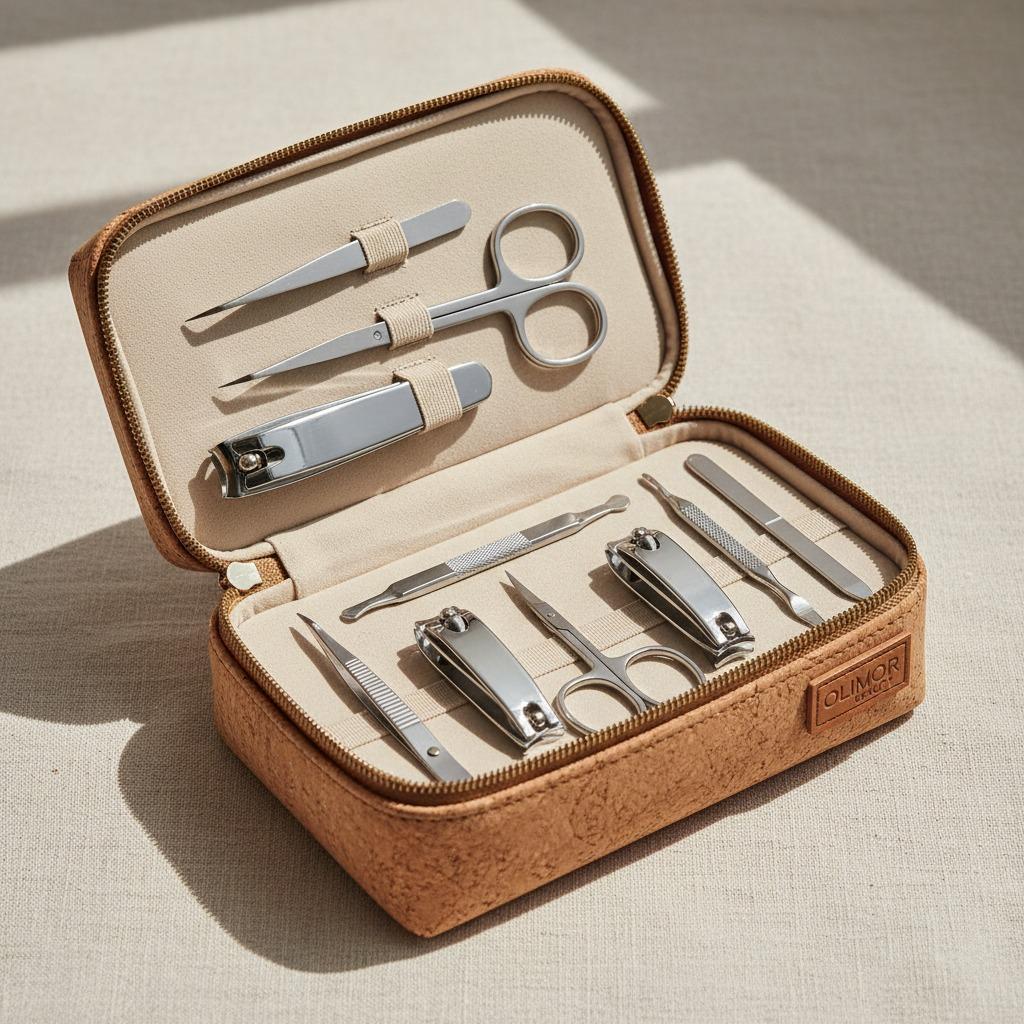
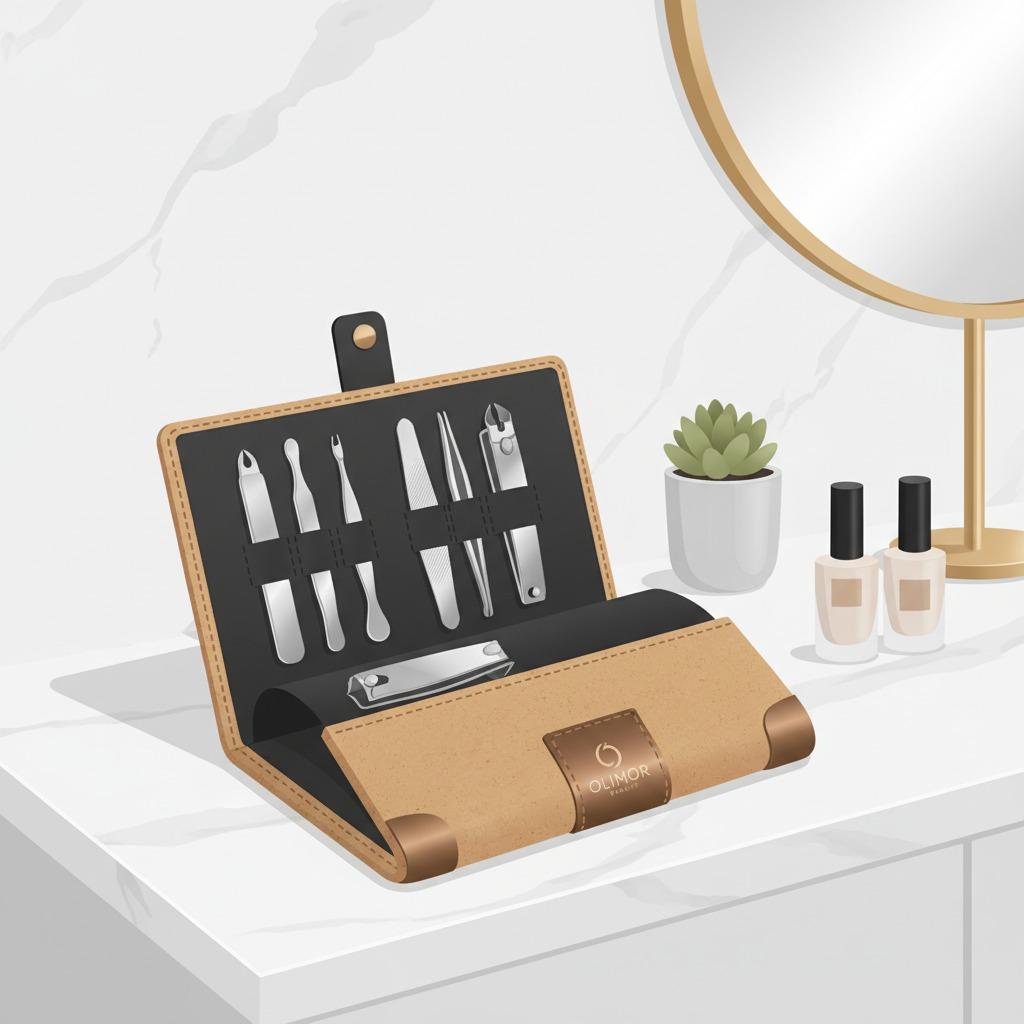
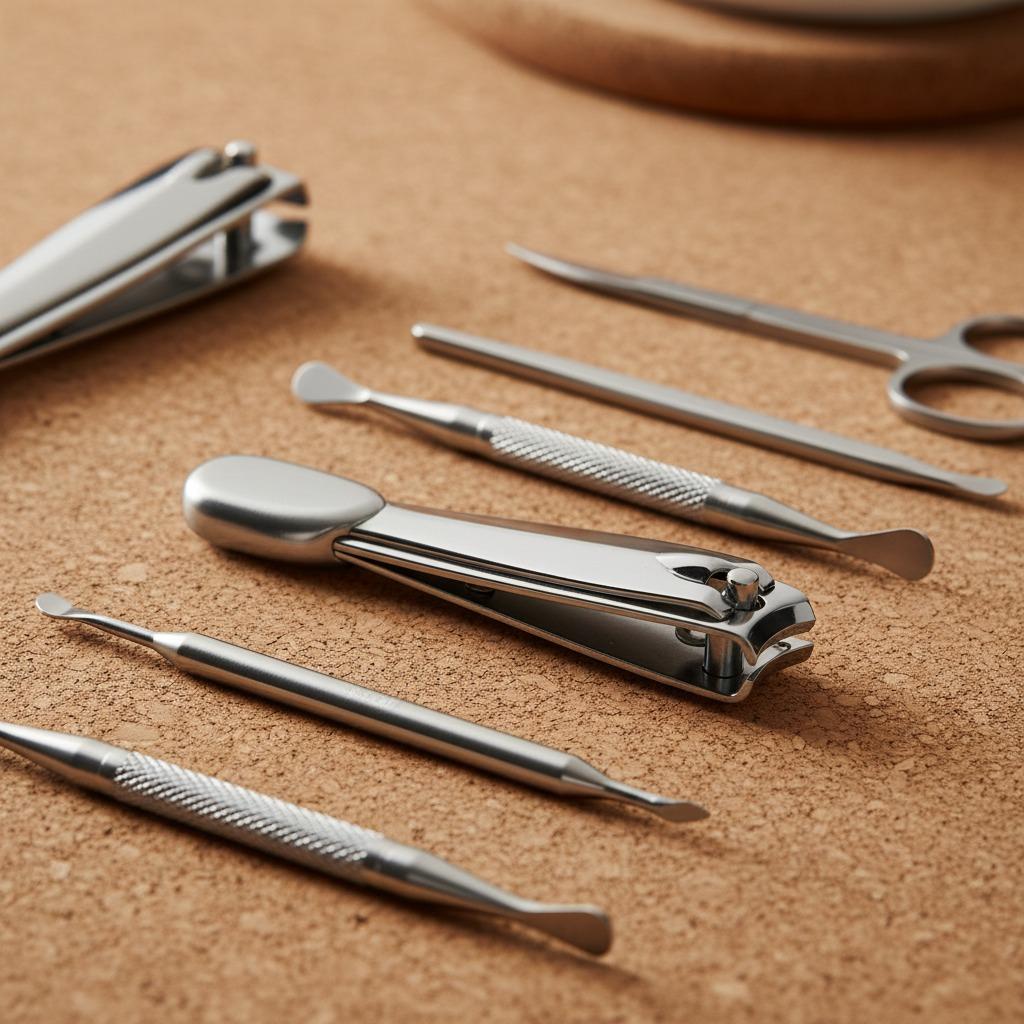
Also consider how the clipper will sit beside other tools. If it is paired with tweezers, scissors, files, cuticle pushers or other manicure items, a consistent finish can raise perceived value. If the clipper is sold as a standalone tool, packaging, hang-card layout and product photography may carry more importance. For broader assortment planning, compare finish options with existing beauty tool collections so the final range feels intentional rather than mixed at random.
Blade Shape, Alignment and Cutting Control
The cutting edge is the most important part of any nail clipper. Olimor’s large professional clipper uses curved blades designed for precise trimming. Curved blades are suitable for general fingernail shaping because they can follow the natural arc of the nail. They can also be used on toenails, although many users should trim toenails more straight across and avoid cutting deeply into the corners.
When reviewing a sample, close the clipper slowly and check whether the cutting edges meet evenly from side to side. Poor alignment can cause the nail to bend, tear or remain partly attached after clipping. Inspect the blade tips and nearby surfaces for burrs or sharp unfinished points that could scratch the skin. The jaw opening should be practical for the intended user group, especially if the clipper is positioned for toenails or thicker nail edges.
Cutting performance should be tested in realistic grooming conditions. A clipper may feel acceptable when opened and closed in the hand, yet perform poorly when pressure is applied to a thicker toenail. Buyers should check whether the lever action feels smooth, whether the body stays stable, and whether the user can make small controlled cuts without twisting the wrist.
Ergonomics: Grip, Leverage and User Comfort
Control is what separates a useful clipper from a frustrating one. The Olimor design includes an ergonomic contour, a slim handle, a convenient hole and a slightly recessed handle area. These details support grip and positioning rather than simply adding decoration. The oval hollow design is also described as reducing overall weight, which may improve comfort during repeated use.
Leverage matters most when trimming toenails or thicker nail edges. A larger clipper can help the user apply pressure with less strain, but only if the handle remains secure and the cutting head stays aligned. A handle that feels too flat, slippery or abrupt can make the user press harder than necessary, increasing the chance of an uneven trim.
Sample testing should include different hand positions. Hold the clipper with dry hands, then with slightly damp hands. Press the lever slowly and quickly. Check whether the thumb rests naturally on the handle and whether the recessed area improves control. If the clipper is intended for a salon supply channel, ask whether the tool remains comfortable through repeated trims, not just a single test cut.
Comparison Checklist for Selecting a Nail Clipper
A structured inspection process helps buyers compare similar-looking clippers without relying on surface appearance alone. Use the following checklist when reviewing samples for retail, salon, travel or private-label use.
| Evaluation point | What to check | Why it matters |
|---|---|---|
| Material | Confirm stainless steel construction and inspect the surface for visible roughness, discoloration or weak finishing. | Material and finish affect durability, cleaning and customer perception. |
| Blade alignment | Close the jaws slowly and confirm the curved cutting edges meet evenly. | Uneven blades can crush, bend or tear nails instead of cutting cleanly. |
| Leverage | Test the lever on fingernail and toenail use cases where appropriate. | A professional clipper should provide controlled pressure for thicker edges. |
| Grip comfort | Review the ergonomic contour, recessed handle area and handle opening. | Good grip helps reduce slipping and improves user confidence. |
| Finish option | Compare matte black, brushed, polished silver or black styling with the target range. | Finish affects retail positioning and coordination with other tools. |
| Cleaning access | Check whether nail debris can be removed from the jaw and hinge area. | Easy cleaning supports hygiene and longer service life. |
| Packaging fit | Place the clipper in the intended pouch, tray or retail pack. | Poor fit can scratch nearby tools or reduce presentation quality. |
| Supplier support | Ask for current product details, packaging options and inspection expectations. | Clear communication reduces sourcing risk before bulk purchasing. |
How to Use a Stainless Steel Nail Clipper Safely
Even a well-made nail clipper depends on good technique. Nails are often easier to cut after bathing or after a short soak because they are slightly softer. Hard or brittle nails can split if the user tries to remove too much length in one heavy press.
- Clean the clipper before use, especially if it has been stored in a shared pouch or kit.
- Trim in small sections instead of forcing the full nail width into one cut.
- For fingernails, follow the natural curve and leave a small smooth edge.
- For toenails, avoid digging into the side corners; many users should cut more straight across.
- Use a nail file to smooth sharp corners after clipping.
- Remove nail debris and dry the clipper before putting it away.
Users with diabetes, circulation problems, painful thickened nails, nail infections or recurring ingrown toenails should be cautious and consider professional foot care guidance. A strong clipper can improve control, but it is not a medical treatment and should not be used aggressively on unhealthy or painful nails.
Maintenance, Cleaning and Storage
Stainless steel is durable, but it still benefits from routine care. After each use, remove nail fragments from the jaw area and wipe the tool dry. Do not store the clipper while wet inside a sealed pouch, because trapped moisture may affect surface appearance over time. If debris builds up around the hinge or lever, the cutting action can feel less smooth and less controlled.
For personal use, simple cleaning and dry storage are usually the key habits. For shared environments such as salons, follow the cleaning and disinfection procedures required by the local setting. Requirements can vary by market and service type, so businesses should verify current rules and supplier documents before making claims on packaging or instructions.
When selling into consumer markets, buyers should also check applicable product safety, labeling and import expectations. Public bodies such as the U.S. Consumer Product Safety Commission and the European Union framework for general product safety may be relevant depending on destination market and sales channel. Always verify current versions and local requirements; do not assume that a general grooming tool automatically meets every buyer or regulator expectation.
Cost Factors Without Reducing the Tool to Price
Nail clippers are often compared by unit cost, but the lowest price may not be the best value for a retail or salon program. Several factors can influence total cost: stainless steel construction, blade finishing, surface treatment, handle design, packaging type, inspection requirements, customization needs and order complexity. A clipper included in a premium kit may need tighter visual consistency than a basic standalone item, while a salon supply buyer may prioritize cutting feel and durability.
Finish selection can also affect sourcing decisions. Matte black, brushed and polished appearances may require different finishing steps or quality checks. Packaging can be another significant variable, especially if the clipper must fit securely in a pouch, molded tray, carded retail pack or multi-tool set. For private-label programs, artwork, logo placement and packaging coordination should be discussed early so the product design and retail presentation work together.
When speaking with a supplier, provide the intended sales channel, target customer, preferred finish, packaging concept and whether the clipper will be sold alone or in a set. Clear information helps the supplier recommend practical options and reduces back-and-forth during sampling.
Supplier Evaluation for Wholesale and Private-Label Buyers
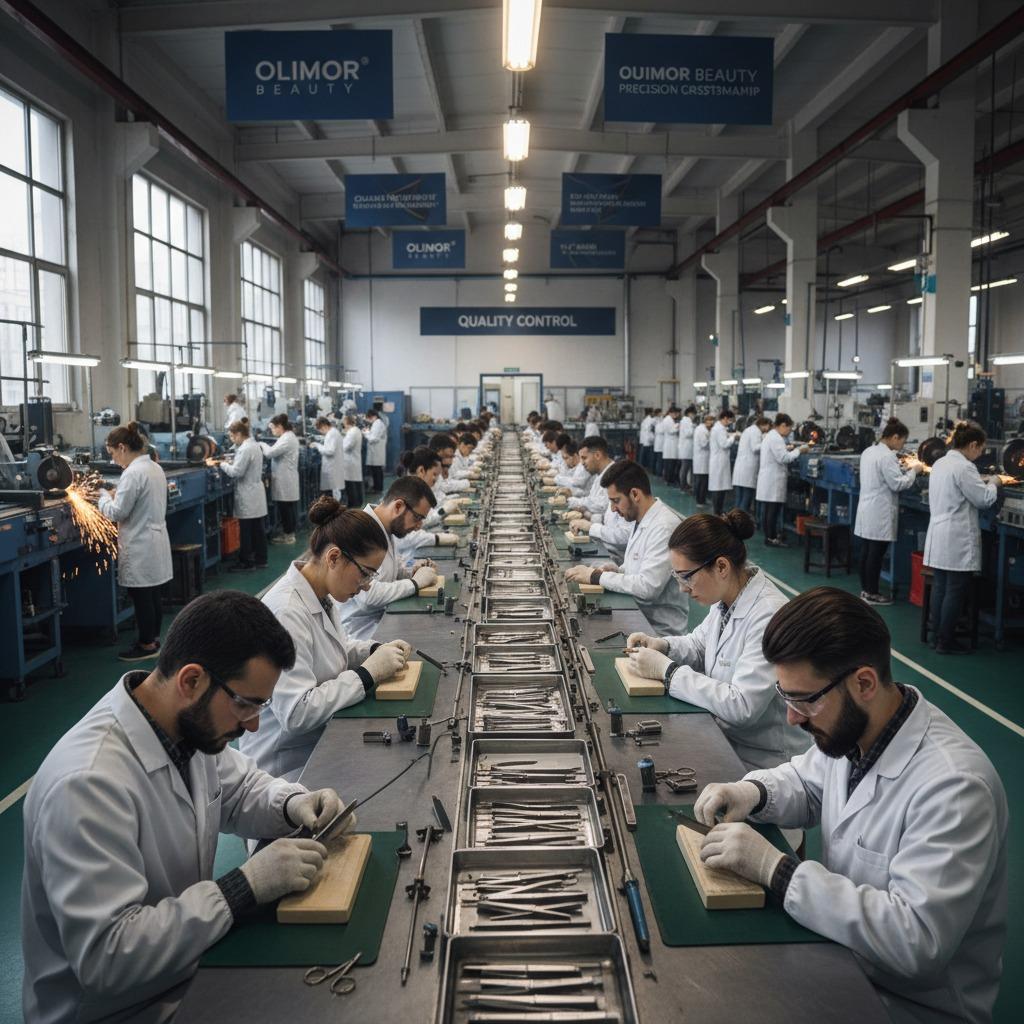
A reliable supplier conversation should cover more than appearance. Ask how the clipper should be inspected, what customization options are available, how packaging is handled and what documents can be provided for the destination market. Do not rely on unsupported claims. Request current product information and review samples before confirming a program.
For wholesale buyers, a practical sample review can include cutting feel, handle stability, blade alignment, finish consistency, cleaning access and packaging fit. For private-label buyers, add logo position, finish compatibility, packaging artwork, barcode or labeling needs and how the clipper will coordinate with other manicure or pedicure tools.
Olimor Beauty’s stainless steel nail clipper can be considered for individual retail sales, travel grooming sets, manicure and pedicure kits, salon supply assortments and gifting programs. To discuss a specific application, buyers can send a product inquiry with the intended use case, finish preference and packaging direction. For broader sourcing questions, contact Olimor Beauty to review available options.
FAQ
Can buyers request samples before placing a wholesale order?
Sample availability should be confirmed directly with Olimor Beauty. Buyers should use samples to check blade alignment, cutting feel, finish consistency, grip comfort and packaging fit before making a purchasing decision.
Is there a minimum order quantity for this nail clipper?
MOQ depends on the order type, customization needs, finish selection and packaging plan. Buyers should request current MOQ details during inquiry rather than relying on assumptions.
Can the clipper be customized for private-label grooming kits?
Customization may be possible depending on the project requirements. Discuss logo placement, finish preference, packaging format and whether the clipper will be sold alone or as part of a set.
How should quality be checked before bulk purchasing?
Inspect samples for stainless steel surface quality, curved blade alignment, smooth lever action, secure grip, clean edges and debris-free construction. Buyers should also confirm any required documents for their market.
What affects lead time for a nail clipper order?
Lead time can be influenced by order quantity, finish choice, packaging, customization and production scheduling. Confirm current timing with the supplier after the product specification is clear.
A Practical Core Tool for Clean Nail Grooming
A professional stainless steel nail clipper earns its place through everyday performance: stable leverage, clean blade contact, comfortable grip, easy cleaning and a finish that suits the target market. Olimor Beauty’s large nail clipper combines stainless steel construction, curved blades, ergonomic handling and modern styling options for both fingernail and toenail grooming.
For buyers, the best decision comes from matching the clipper to a clear channel and testing real samples. For users, careful trimming and simple maintenance help the tool deliver clean, controlled results over time.