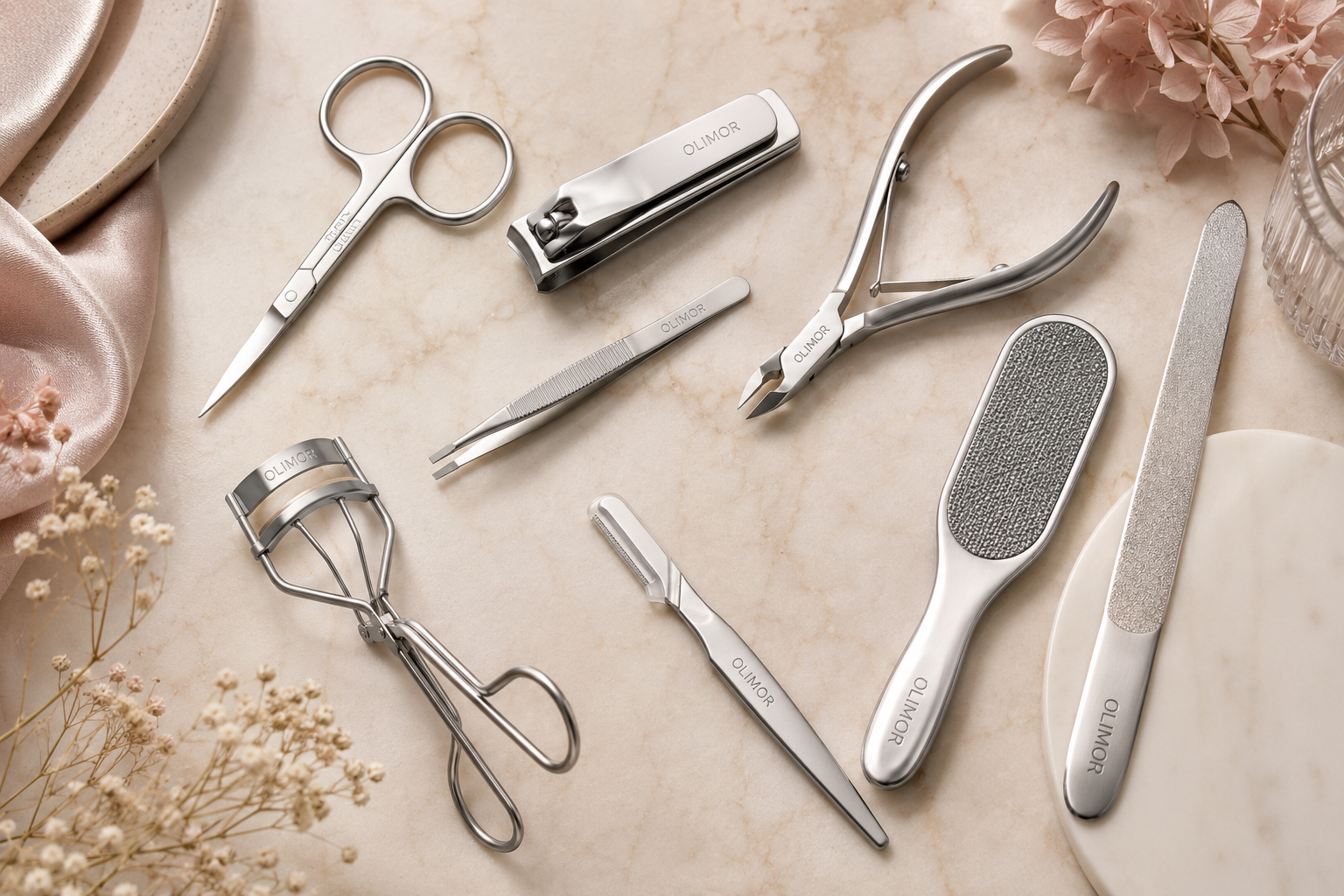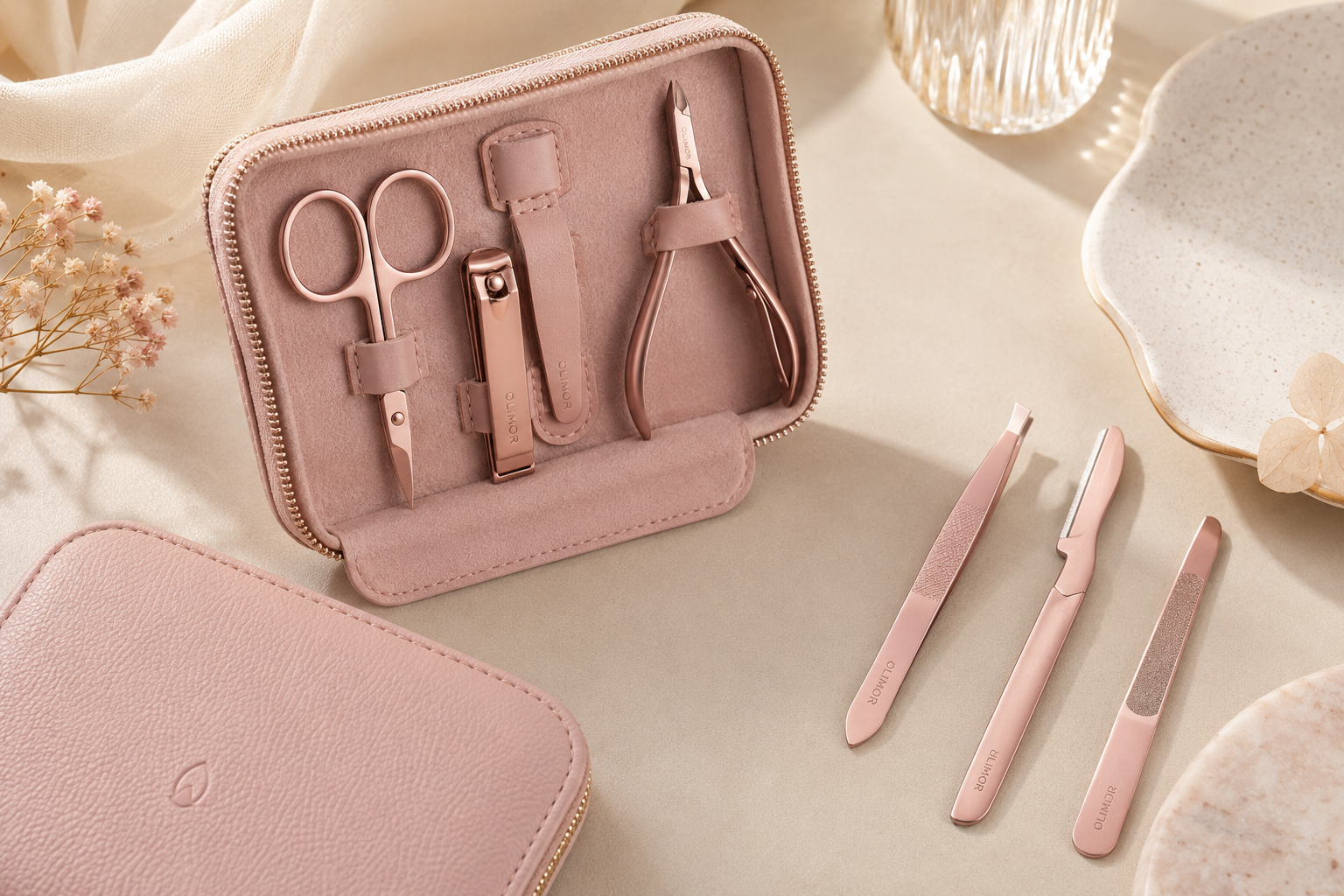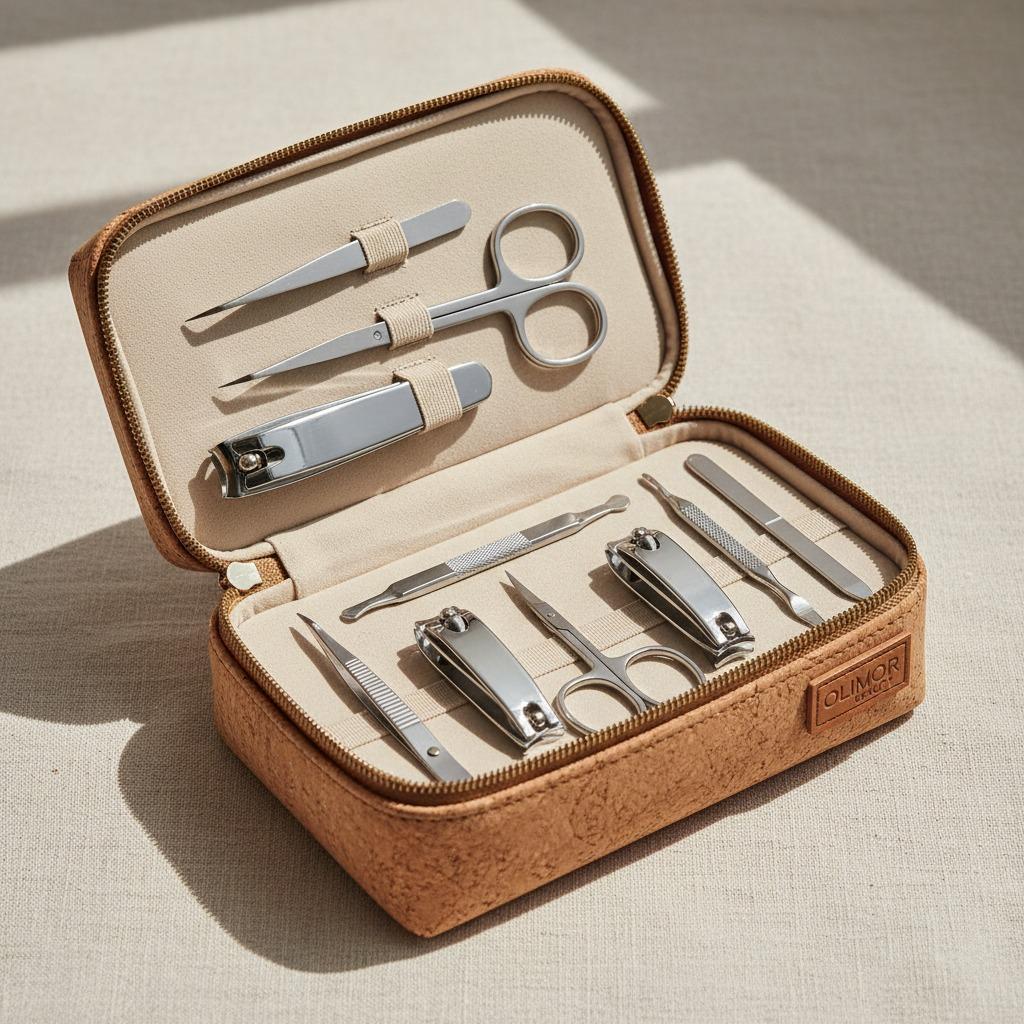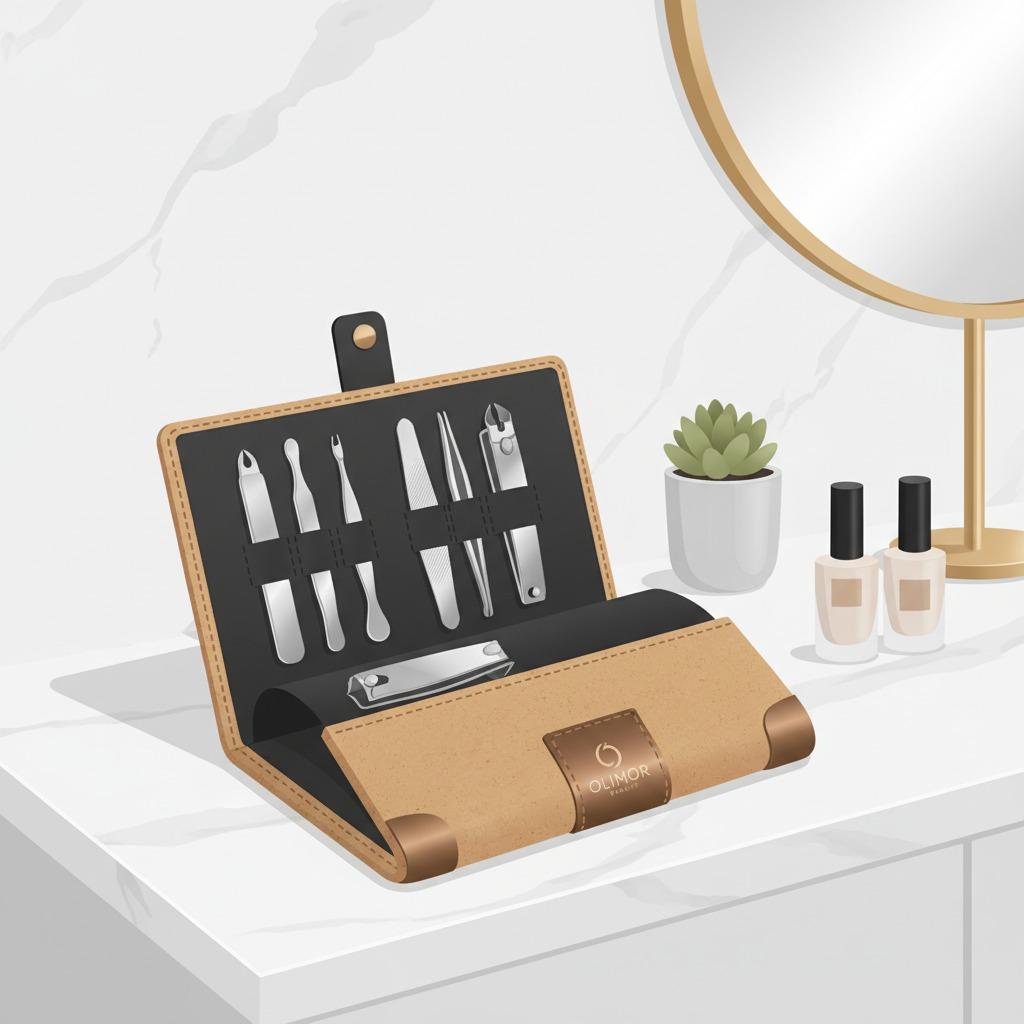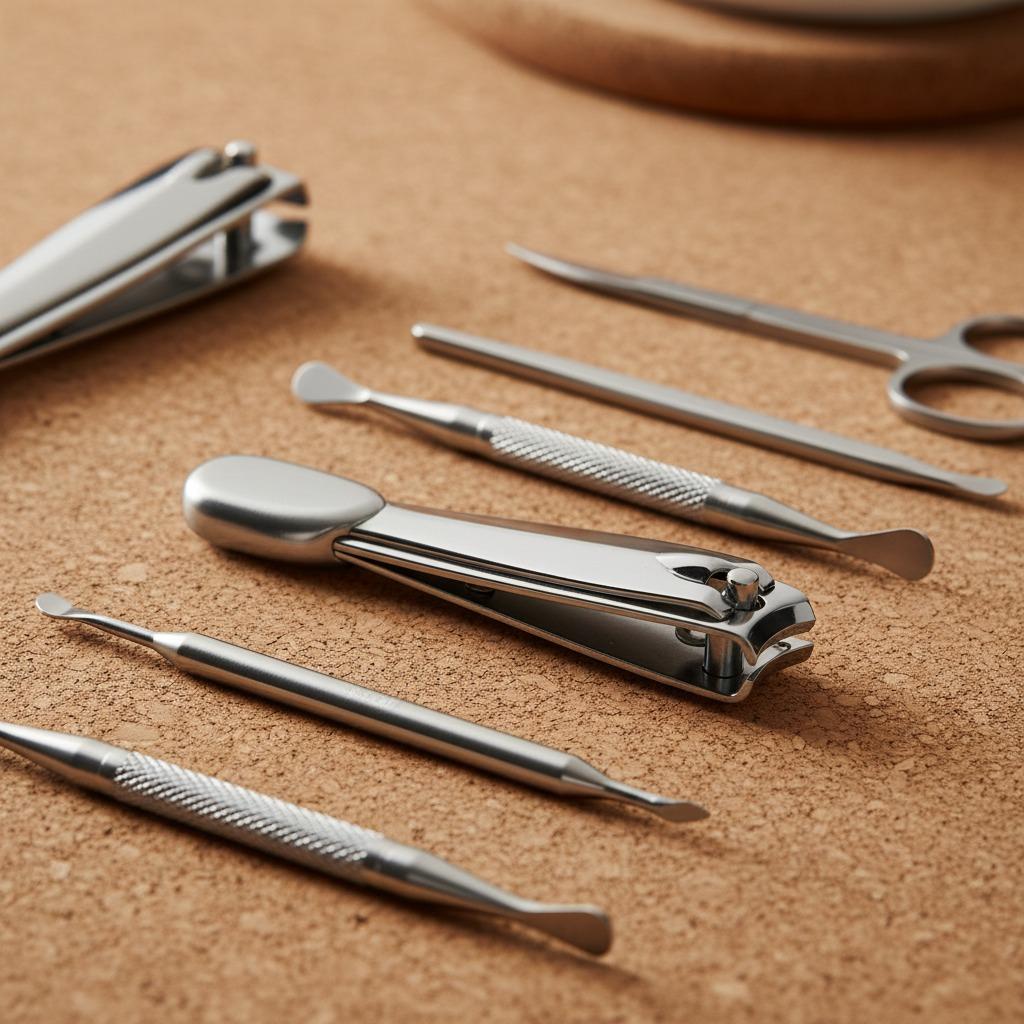
A professional nail clipper looks simple, but the difference between a clean trim and a rough, split edge often comes down to design details. For salons, beauty retailers, grooming kits and daily home care, the right clipper should cut predictably, feel stable in the hand and withstand frequent cleaning and repeated use. Olimor Beauty focuses on beauty tools that combine practical function with a polished appearance, and this professional nail clipper is positioned for buyers who want a dependable trimming tool rather than a disposable accessory.
This guide explains what matters when selecting a professional nail clipper: blade geometry, stainless steel construction, handle comfort, finishing quality, usability in salon workflows and care after purchase. It also offers a practical checklist for product buyers comparing options for retail, private-label assortments, salon supply or branded grooming kits. If you are building a broader assortment, you can also review Olimor beauty tool products or browse related product collections for complementary manicure and personal care tools.
What Makes a Nail Clipper “Professional”?
A professional nail clipper should offer more than a sharp first cut. It needs consistent performance over time, enough control for different nail shapes and a structure that does not feel flimsy under pressure. In salon environments, tools may be handled many times a day, cleaned repeatedly and used by people with different trimming techniques. For personal use, the same qualities matter because a stable clipper helps reduce the chance of jagged edges, over-cutting or uncomfortable pressure on the nail plate.
The product described here includes a contoured blade design intended to support precision with each cut. Contouring matters because fingernails and toenails are not flat surfaces. A blade that meets the nail evenly can help produce a smoother edge and reduce the need for heavy filing afterward. The clipper is also made from stainless steel, a practical choice for beauty tools because it supports durability and corrosion resistance when properly maintained.
Professional quality is also about inspection and consistency. Olimor Beauty’s approach emphasizes quality checks so that the final product meets expectations for function and finish. For business buyers, this is especially important: a nail clipper may be small, but it directly affects how customers judge an entire grooming kit or manicure line.
Blade Design: The Center of Clean Nail Trimming
The blade is the working part of the clipper, and small differences in its shape, alignment and edge condition have a large impact. A good blade should close evenly, cut without crushing and leave an edge that feels clean enough for light finishing. When a clipper struggles to cut, users tend to squeeze harder, which can bend the nail or create uneven pressure.
For product buyers, the most important evaluation is not only whether the blade feels sharp on the first use, but whether the cutting action is controlled. During sample review, test the clipper on nail tips or appropriate sample materials that simulate nail resistance. Pay attention to whether the blades meet cleanly across the full width, whether the lever returns smoothly and whether the clipper produces a ragged edge. A contoured blade should feel helpful rather than aggressive, guiding the cut while still allowing the user to trim gradually.
Useful blade evaluation points include:
- Cut alignment: The upper and lower blades should meet evenly, without side-to-side shift.
- Edge finish: The cut nail edge should be clean, not crushed, torn or sharply burred.
- Controlled bite: The clipper should remove small sections easily so the user can shape the nail carefully.
- Pressure response: The tool should not require excessive force during normal trimming.
- Safety feel: The cutting edge should be precise but not awkward to position on the nail.
Stainless Steel Construction and Corrosion Resistance
Stainless steel is a common and sensible material for professional nail tools because it offers strength, a clean appearance and resistance to corrosion. For a clipper, the material must support the blade edge, the lever action and the body structure. A tool that flexes too much can feel unstable, while a tool that corrodes quickly will lose both performance and customer appeal.
Corrosion resistance does not mean a beauty tool can be neglected. Any nail clipper should be dried after cleaning, stored away from prolonged moisture and kept free from residue. In salons or retail education materials, it is useful to include simple care instructions so end users understand how to keep the tool performing well. For travel kits, adding a small pouch or protective position within the kit can also help prevent scratches and reduce exposure to damp environments.
When sourcing or approving stainless steel nail clippers, buyers should examine the body finish as closely as the blade. Look for smooth edges, uniform surfaces and a lever that does not wobble. If the clipper includes decorative finishing, such as a metallic sand gloss or matte effect, check whether the finish feels even and appropriate for the intended market. A polished appearance is valuable, but it should never interfere with grip, cleaning or cutting control.
Ergonomic Grip and Comfortable Handling
Comfort is often underestimated in nail clipper selection. A professional clipper may be used by salon technicians, mobile beauty professionals, retail customers, elderly users or people who trim nails regularly at home. If the handle is awkward, too slippery or too narrow, the user may apply uneven force. That can lead to poor trimming results and hand fatigue.
This clipper is designed with an ergonomic handle and premium grip wrapping, giving users a more comfortable contact point. The goal is to make repeated trimming less tiring and more controlled. For salon technicians, a comfortable grip supports workflow efficiency. For consumers, it makes grooming feel less rushed and helps them make smaller, more accurate cuts.
When comparing nail clippers, hold each sample as a real user would. Open and close it several times. Test it with dry hands and, if appropriate, after handling other grooming products. Consider whether the lever area provides enough traction and whether the clipper can be positioned clearly at different angles. Comfort should not be judged by softness alone; stability and control are more important.
Design Details That Affect Retail Appeal
A professional nail clipper is a functional tool, but appearance still matters. Beauty tools are often displayed in retail packaging, included in gift sets or sold as part of a personal grooming range. The described metallic sand gloss and matte effect give the clipper a refined visual finish that can fit both salon and home-care positioning.
The product also features a distinctive rotating decoration and adjustable clipping pressure concept as described in the product information. For buyers, this kind of detail should be evaluated for practical value as well as visual appeal. Decorative components should feel secure, move smoothly if movement is part of the design and not create cleaning difficulties. A premium-looking clipper should still be easy to use, easy to package and suitable for the daily environments where nail tools are stored.
Retail appeal is strongest when the design communicates the function. A clipper that looks professional, feels balanced and cuts cleanly is easier for sales teams and product pages to explain. Avoid relying only on broad claims. Instead, describe the visible and tactile details that customers can understand: stainless steel body, contoured blade, ergonomic handle, comfortable grip and clean finish.
How to Evaluate a Sample Before Bulk Selection
Whether you are a distributor, salon buyer, brand owner or e-commerce seller, sample evaluation should be structured. A nail clipper is small enough that buyers sometimes make decisions based only on photos. That can lead to problems later because cutting action, lever comfort and finish quality are difficult to judge visually. Use a checklist that reflects the actual user experience.
| Evaluation Area | What to Check | Why It Matters |
|---|---|---|
| Blade performance | Clean closure, smooth cut, no obvious tearing | Determines trimming quality and user satisfaction |
| Handle comfort | Stable grip, comfortable pressure, easy control | Reduces fatigue and improves cutting accuracy |
| Material finish | Even stainless steel surface, no rough edges | Supports perceived quality and safe handling |
| Lever action | Smooth movement without looseness | Creates reliable force transfer during trimming |
| Cleaning practicality | Accessible surfaces and no residue traps | Important for salons, kits and long-term use |
| Packaging fit | Appropriate size, protection and presentation | Helps retail display and reduces transit damage |
After testing, document the feedback in practical language. Instead of noting only “good” or “bad,” record details such as “cuts cleanly with moderate pressure,” “handle is comfortable for repeated use,” or “finish appears uniform under bright light.” This makes it easier to compare the clipper with other manicure tools in the same sourcing round.
Use Cases for Salons, Retailers and Home Grooming Kits
A well-made professional nail clipper can serve several markets. In salons, it works as a core manicure and pedicure support tool, especially when clean trimming is required before shaping. In retail, it can be sold as a standalone personal care item or paired with files, tweezers, scissors or other grooming accessories. In travel and gift sets, it provides practical value because nearly every customer understands its purpose immediately.
For home users, the best use is careful, gradual trimming. Nails should be clean and preferably dry enough to control. Cutting small sections rather than one large piece helps maintain shape and reduces stress on the nail. After trimming, a file can refine the edge. The clipper should be wiped clean and stored in a dry place.
For professional environments, hygiene practices should follow the salon’s local rules and internal procedures. Stainless steel supports cleaning, but the tool still needs proper handling. Keeping clippers separated, dry and inspected for wear will help maintain confidence in the tool and the service.
Care and Maintenance for Longer Tool Life
Even a durable stainless steel nail clipper benefits from routine care. Nail dust, moisture and product residue can collect around the blade and lever. Over time, residue may affect movement or appearance. The maintenance routine does not need to be complicated, but it should be consistent.
- Remove visible nail debris after each use.
- Wipe the tool with a clean, dry or properly prepared cloth according to the setting in which it is used.
- Allow the clipper to dry fully before storage.
- Store it away from standing water, damp drawers or loose items that may scratch the finish.
- Inspect the blade and lever periodically for alignment, looseness or dull cutting performance.
If the clipper is part of a retail package, care instructions can improve customer satisfaction and reduce misuse. For business buyers developing product pages, include practical cleaning and storage guidance rather than exaggerated performance claims.
Choosing the Right Nail Clipper Partner
The right professional nail clipper should balance cutting precision, material durability, comfortable handling and attractive presentation. Olimor Beauty’s stainless steel clipper with contoured blade design, ergonomic grip and refined metallic finish is suited to buyers looking for a practical beauty tool with professional positioning.
For sourcing decisions, compare samples through real handling tests, review finish quality carefully and think about how the clipper will be presented to the end customer. If you need help evaluating options for a manicure assortment, you can contact Olimor to discuss product direction, or send an inquiry with your intended market, packaging needs and buying goals.
A nail clipper may be a compact tool, but it plays an important role in everyday grooming. Selecting one with a clean cutting action, durable stainless steel construction and comfortable grip helps create a better experience for salon professionals, retail customers and home users alike.