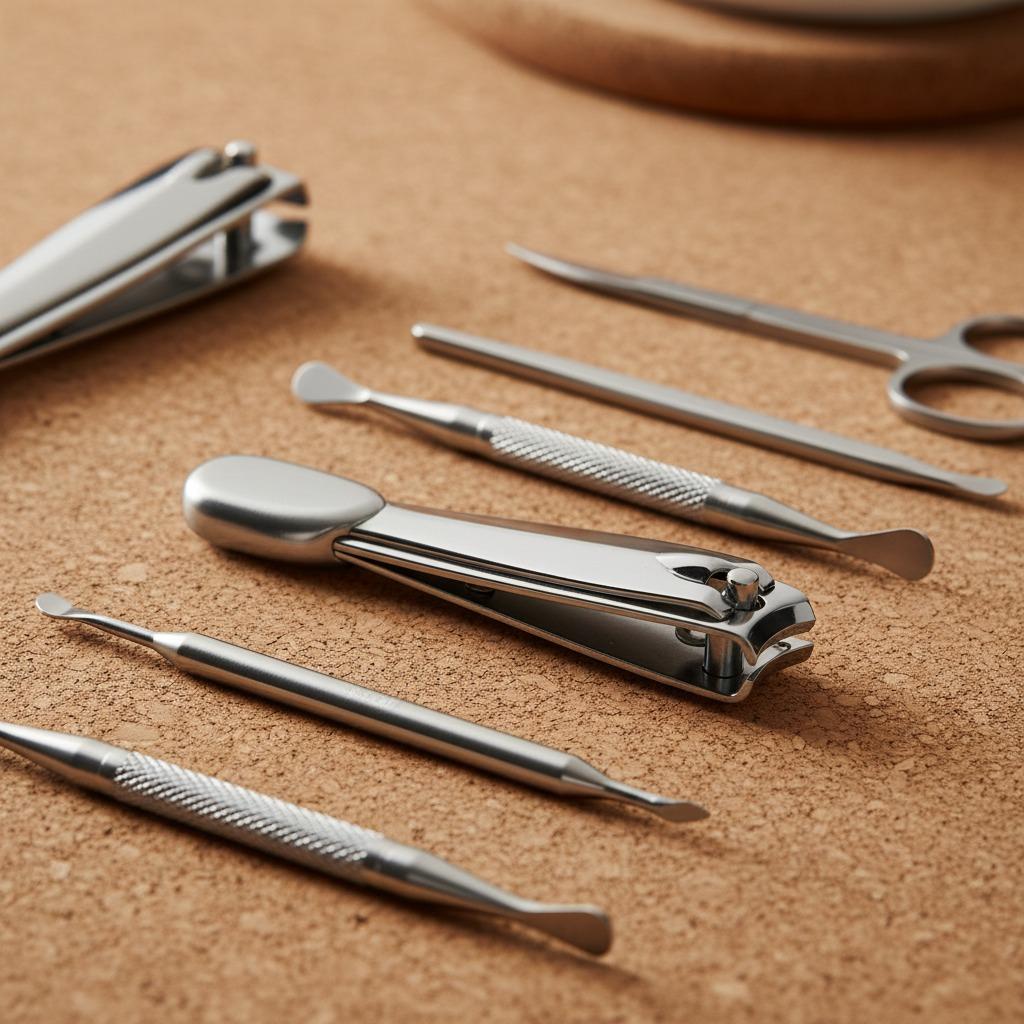











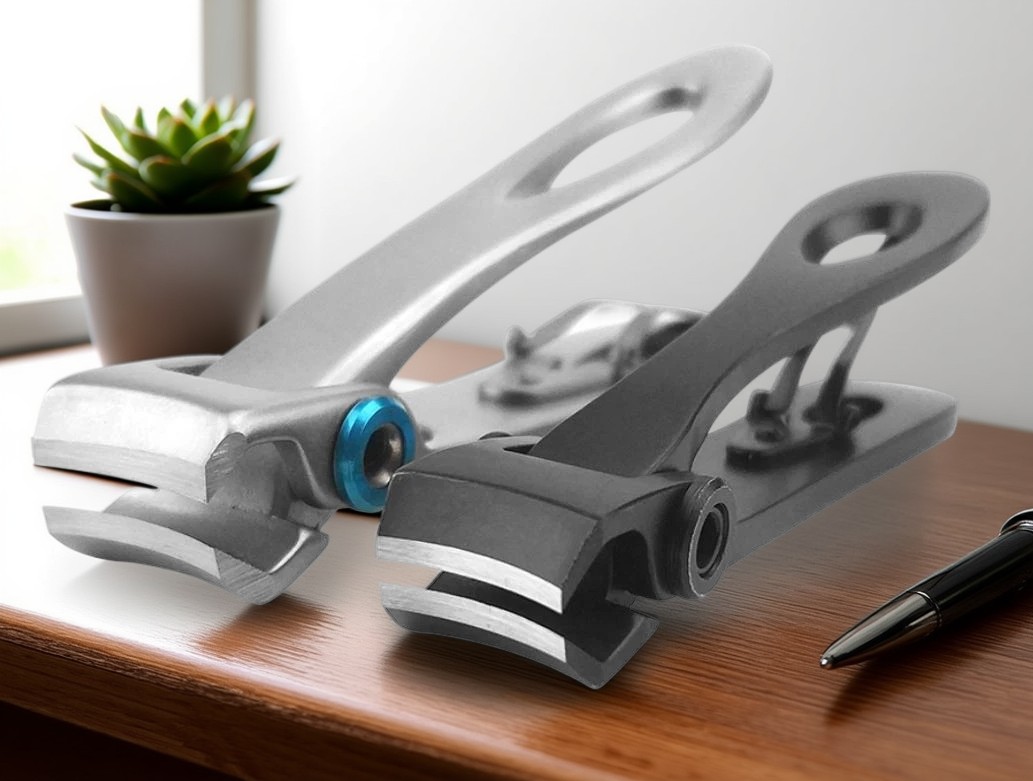
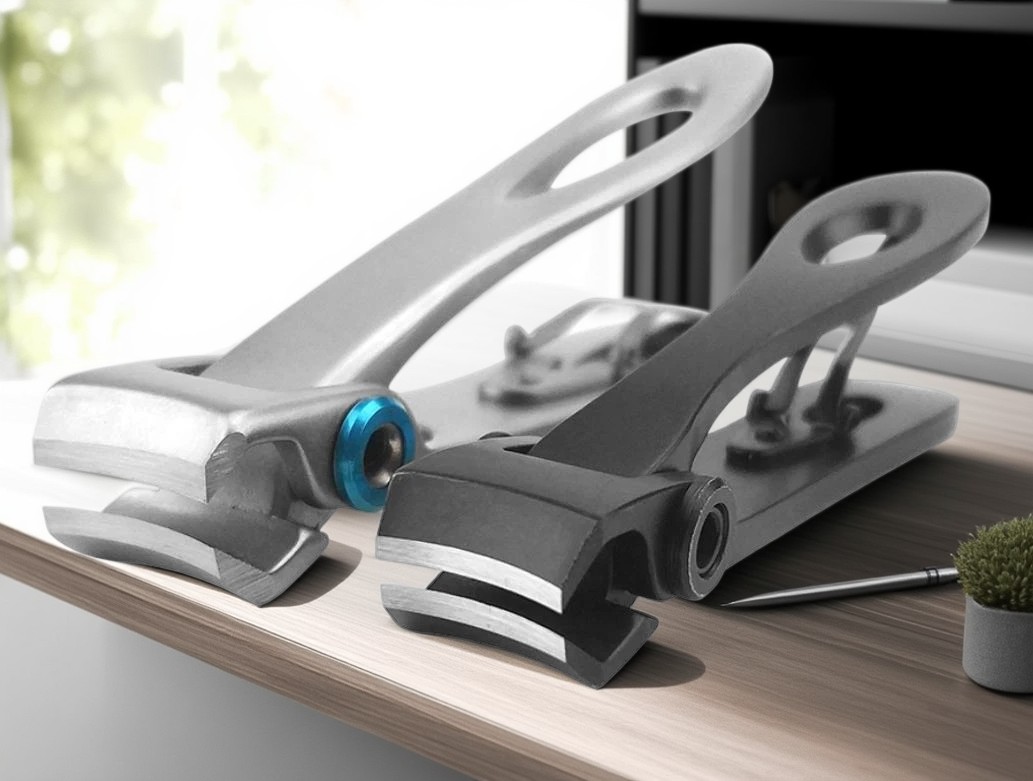
A good nail clipper looks simple, but the difference between a clean trim and a rough, uneven edge often comes down to small design choices. For personal grooming, salon workstations, travel kits, hotel amenities, retail beauty assortments, and B2B sourcing, the right nail clipper should cut predictably, feel stable in the hand, and remain easy to clean after use.
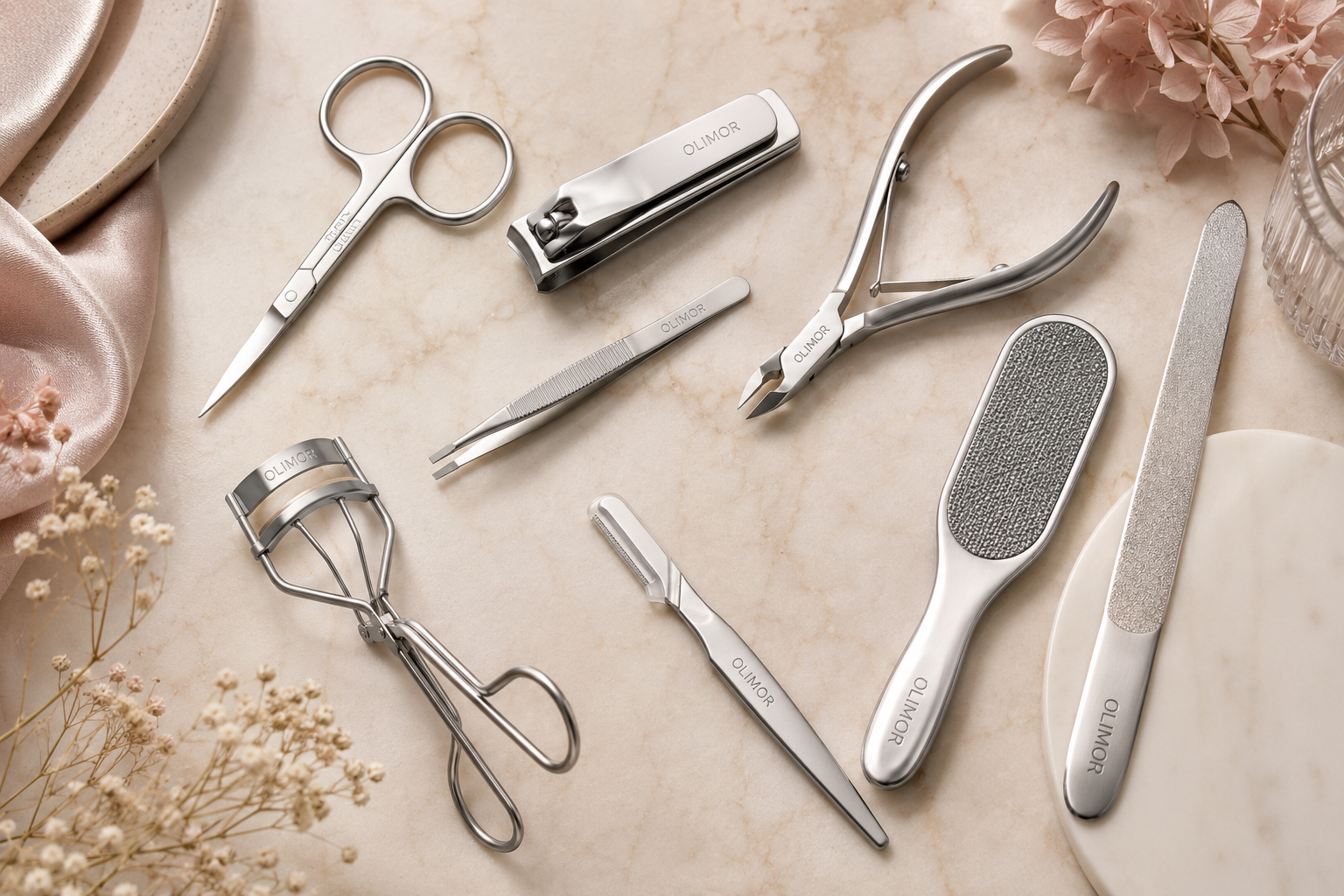
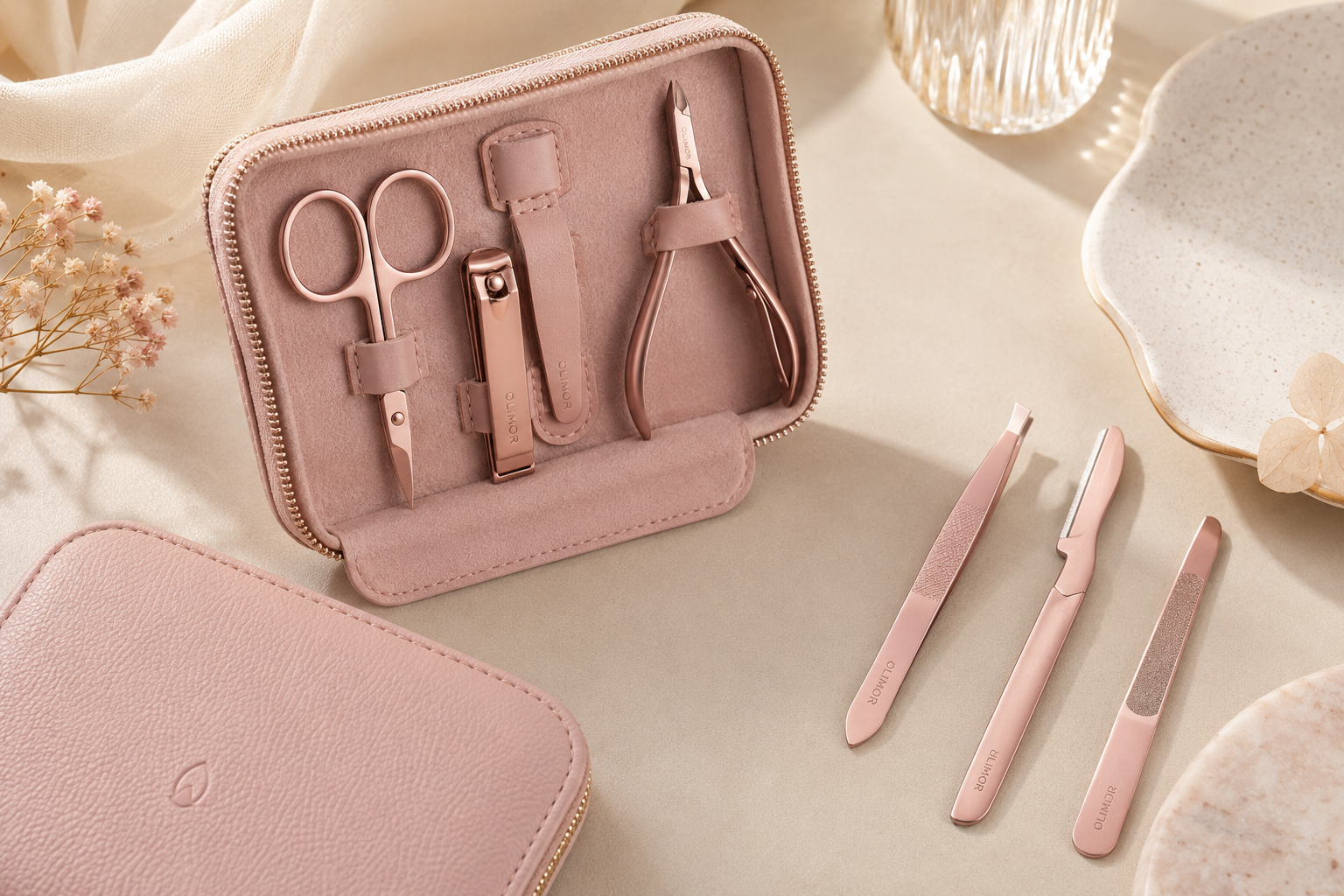
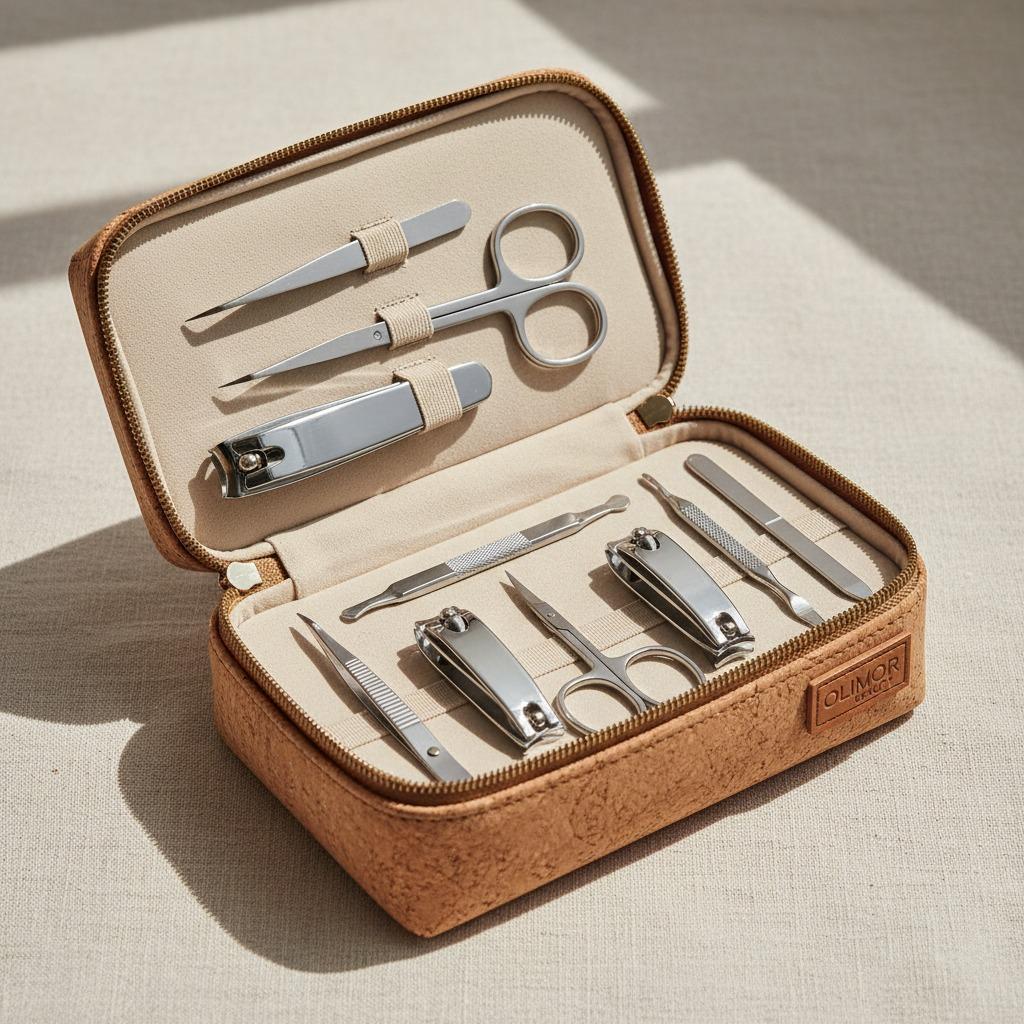
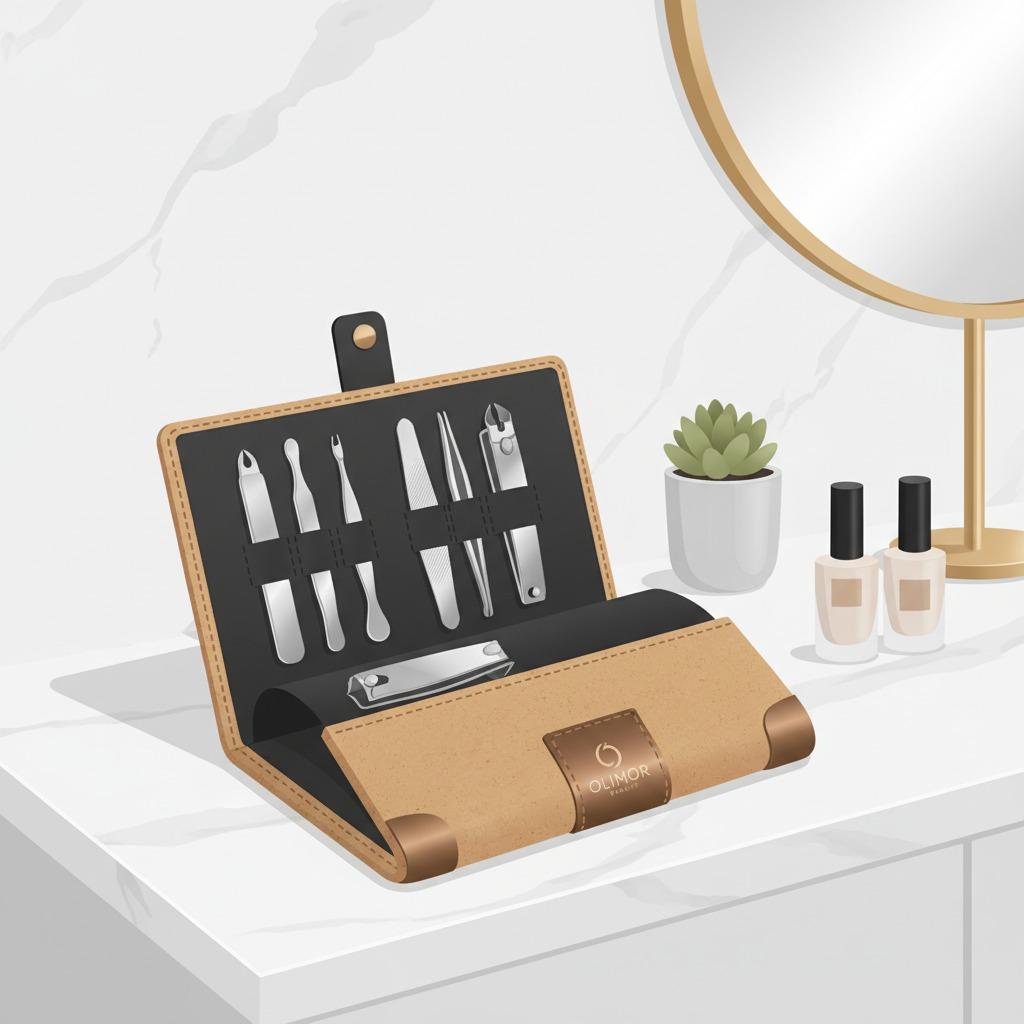
Olimor Beauty nail clippers are presented as stainless steel grooming tools with precision blades, ergonomic handling details, textured or controlled grip features, and finish options such as smooth silver, polished chrome-like styling, or modern matte black depending on the product selection. These details matter because nail trimming is a high-control task: the clipper must apply enough force to cut thicker nails without crushing thinner nails or forcing the user to squeeze repeatedly.
This guide explains how to choose professional nail clippers by blade geometry, material, grip, size, finish, maintenance needs, and supplier evaluation. It is written for buyers comparing Olimor beauty tool products, salon professionals building dependable stations, and everyday users who want a cleaner trim with less corrective filing afterward.
What Makes a Nail Clipper Professional?
A professional nail clipper is not defined by appearance alone. It is judged by how consistently it performs the basic job: cutting the nail cleanly with control. Basic clippers may be acceptable for occasional use, but salon, retail, travel, and shared household applications require more dependable blade alignment, stronger lever action, and surfaces that can be wiped clean.
The three most important outcomes are simple: the clipper should cut cleanly, sit securely in the hand, and withstand repeated use when properly maintained. When cutting edges are dull or misaligned, the nail may bend before it cuts. That can leave ragged corners, stress marks, or small splits at the free edge. When the handle slips, the user may cut too deeply or trim at an awkward angle.
For B2B buyers, professional quality also includes consistency from sample to order. A product photo cannot show whether the lever rattles, whether the blades meet evenly, or whether the finish has rough edges. Sample evaluation and clear supplier communication are therefore essential before adding any nail clipper to a beauty tool range.
Blade Precision Is the First Buying Criterion
The blade determines the quality of the trim. A clean cut depends on sharpness, alignment, and the way the upper and lower cutting edges meet. Sharp blades reduce the force needed to cut through the nail. Aligned blades help the cut travel evenly from one side of the nail to the other. This is especially important for thicker toenails and for nails that tend to peel or split.
When comparing professional nail clippers, inspect the cutting edge closely. The two blades should close smoothly without a visible gap. The cutting arc should match the intended use. A gently curved blade is common for fingernails, while larger clippers are often chosen when more leverage or jaw opening is needed. The supplied Olimor product information describes a large clipper designed to handle both thick and thin nails effectively, making it practical for general grooming kits where one dependable tool must serve multiple users.
Blade details to check on a sample
- Clean contact: the upper and lower blades should meet evenly from edge to edge.
- Controlled sharpness: the clipper should cut without excessive pressure or repeated squeezing.
- Stable jaw opening: the opening should suit the nail thickness expected in the target use case.
- Smooth blade area: the cutting edge and nearby surfaces should not feel burred, rough, or uneven.
- Predictable bite: the clipper should not pull, twist, or leave part of the nail attached.
A light file may still be useful after trimming, but the clipper should do the main cutting work. If heavy filing is always needed to repair jagged edges, the blade quality or alignment is not suitable for a professional grooming assortment.
Why Stainless Steel and Finish Quality Matter
Stainless steel is a sensible material for nail clippers because grooming tools are exposed to moisture, skin oils, hand creams, bathroom storage conditions, travel pouches, and cleaning routines. The original Olimor product descriptions identify the clippers as stainless steel tools, with polished chrome-like, smooth silver, and matte black finish options referenced across the range. Without assuming a specific grade or laboratory result, buyers can still treat stainless steel construction as an important indicator for regular grooming use.
Material choice is only one part of durability. The tool should feel rigid when pressed. If the lever flexes too much or the body twists during cutting, control suffers. The hinge should open and close smoothly without rattling. The finish should be uniform, with no sharp corners or rough plating that could make the tool uncomfortable to hold or harder to clean.
For retail and promotional buyers, finish quality also affects perceived value. Nail clippers are small tools, but customers handle them closely and judge them by feel. A clean exterior, smooth lever surface, and consistent finish help the product feel more refined. For salon or shared grooming use, accessible surfaces also make it easier to remove nail dust and dry the tool after cleaning.
Grip, Lever Action, and Ergonomic Control
Control is not only about the blade. The handle determines how accurately pressure is applied. Olimor Beauty nail clippers are described with ergonomic design features, textured grip, and a cutout design in certain versions. These are practical details because trimming nails often requires the user to work near curved edges, corners, and sensitive skin.
A good lever should provide enough contact area for the thumb and should not feel sharp, cramped, or unstable. Texture can help fingers stay positioned during the clipping motion, especially if hands are slightly damp or if extra force is needed for thicker nails. A cutout can reduce visual bulk and may offer a more secure place for finger placement, but the most important issue is whether the clipper remains steady when pressure is applied.
Before choosing a nail clipper for a salon kit, retail line, travel set, or hospitality amenity, test it in realistic positions. Hold it as a user would when trimming fingernails and toenails. Press the lever slowly. Check whether the movement feels predictable and whether the hand naturally stays aligned with the cutting edge. A clipper that feels acceptable in a quick demonstration may feel less comfortable after repeated use, so grip comfort should be treated as a functional feature rather than decoration.
Choosing the Right Nail Clipper by Use Case
Not every buyer needs the same nail clipper. A household grooming kit may need to handle adult fingernails, thicker toenails, and quick touch-ups. A salon buyer may prioritize repeated workstation use and easy cleaning. A retailer may care about finish consistency, packaging compatibility, and broad consumer appeal. B2B buyers should define the intended use before comparing samples.
| Use case | What to prioritize | Why it matters |
|---|---|---|
| Daily fingernail grooming | Blade alignment, compact control, comfortable lever pressure | Helps create a neat edge without over-cutting corners |
| Thicker toenails | Leverage, stable jaw opening, secure grip | Reduces crushing, repeated pressing, and uneven breaks |
| Thin or flexible nails | Sharp blades and controlled pressure | Helps prevent peeling, splitting, and bending before the cut |
| Travel grooming kits | Durable body, easy cleaning, practical size | Keeps grooming convenient without a flimsy tool |
| Salon or spa stations | Consistent action, wipeable surfaces, reliable material | Supports repeated use and standard workstation routines |
| Retail or gift sets | Finish consistency, visual match, comfortable handling | Improves customer perception and assortment coherence |
For buyers organizing a broader grooming assortment, Olimor product categories can be reviewed through the beauty tool collections page to compare nail tools with related accessories.
Large Nail Clippers: When More Leverage Helps
Large nail clippers are often chosen for toenails, but they can also help users who prefer more leverage. A larger lever can make it easier to cut a thicker nail without squeezing too hard. However, size should be balanced with accuracy. A clipper that is too large for small fingernails may make it harder to shape corners carefully.
The Olimor professional large clipper is presented as suitable for both thick and thin nails. That makes it relevant for general grooming kits, travel sets, and retail assortments where buyers want one dependable tool rather than several specialized pieces. For fine grooming, users should still trim in small sections instead of removing a wide strip of nail at once. Smaller cuts reduce stress on the nail plate and make it easier to follow the natural shape before filing.
Safe, Clean Use and Maintenance
Professional grooming depends on both the tool and the routine. Even a well-made nail clipper should be used carefully and cleaned after use. Nail clippers are used near skin, and nail dust can collect around the blade and hinge area. A simple maintenance process helps preserve appearance, hygiene, and smooth operation.
- Wash and dry hands or feet before trimming so the nail area is clean.
- Trim in small sections rather than forcing one large cut across the nail.
- Follow the natural nail shape and avoid cutting deeply into corners.
- Wipe away nail dust from the blades, lever, and hinge area after use.
- Dry the clipper before storage, especially if it has been exposed to water or disinfecting steps.
- Store the tool in a clean pouch, drawer, retail kit, or workstation area where the blades are protected.
Salons, spas, and shared-use environments should follow their local public health or cosmetology authority requirements for cleaning and disinfection. Requirements vary by location and may change, so buyers should verify the applicable version of local rules and supplier documentation. For manufacturing and sourcing discussions, buyers may also ask suppliers how their quality management approach aligns with recognized frameworks such as ISO 9001, but they should not assume certification unless the supplier provides valid documentation.
How B2B Buyers Should Evaluate a Nail Clipper Supplier
For commercial sourcing, the best nail clippers are not only the ones that look good in a catalog. They must be repeatable, inspectable, and appropriate for the target channel. A salon distributor, beauty retailer, hotel amenity buyer, or private label customer should ask practical questions before placing an order.
Supplier evaluation checklist
- Sample availability: Can the supplier provide samples for handling, cutting feel, finish review, and packaging assessment?
- Material statement: Does the supplier clearly identify the material as stainless steel without unsupported claims?
- Blade inspection: Are blade alignment, jaw opening, cutting feel, and edge smoothness checked before shipment?
- Finish consistency: Are silver, chrome-like, matte black, or other finish options visually consistent across units?
- Customization scope: Can the supplier discuss branding, finish, packaging, or assortment options without promising unsupported specifications?
- MOQ and lead time: Are minimum order quantity and production timing confirmed based on the actual configuration and order details?
- Documentation: Can the supplier provide relevant product, packing, and quality information for buyer review?
- Communication: Does the supplier respond clearly when asked about defects, rework, inspection standards, or acceptable quality expectations?
These questions help buyers compare nail clipper suppliers on real sourcing factors: sample quality, production consistency, customization feasibility, cost drivers, packaging requirements, and after-sales communication. Cost is usually affected by material selection, finish process, packaging style, order quantity, customization needs, and inspection requirements. Because these variables differ by project, buyers should request a quotation based on the intended specification rather than relying on generic assumptions.
Common Problems and How Better Clippers Help
Many nail clipping problems are caused by poor blade contact or unstable handling. If nails split during trimming, the blade may be dull, the user may be pressing too hard, or the cut may be too wide. If the nail edge is jagged, the blades may not meet evenly. If the tool feels unsafe, the lever may be too slippery or the body may be too small for the user’s hand.
A better clipper does not need complicated features. It needs aligned precision blades, a strong stainless steel body, a controlled grip, and smooth finishing. The user should feel that the clipper cuts at the first press without pulling the nail. For thicker nails, stable leverage helps. For thin nails, sharpness and small controlled cuts are more important than force.
For buyers building an assortment, the practical question is not simply “Which nail clipper looks best?” It is “Which nail clipper gives the cleanest cut, the most comfortable handling, and the most consistent quality for the intended customer?” That is the question a sample review should answer.
When to Consider Olimor Nail Clippers
Olimor Beauty nail clippers are suitable for buyers seeking stainless steel grooming tools with precision blades, ergonomic handling, and finish choices that can fit everyday grooming, travel kits, salon retail, and broader beauty tool assortments. The product information highlights clean cutting, secure handling, and polished appearance while leaving room for buyers to confirm the exact configuration, packaging, customization, MOQ, and lead time for their order.
If you are comparing nail clippers for a commercial range, start by reviewing available options, then request samples or project details through Olimor product inquiry. For custom sourcing discussions or order-specific questions, the Olimor contact page is the best place to confirm current availability and documentation.
FAQ
Can I request samples before placing a bulk order?
Yes, B2B buyers should request samples when evaluating blade alignment, grip comfort, finish quality, packaging fit, and overall handling. Sample availability and arrangements should be confirmed directly with Olimor based on the product and project requirements.
Is there a fixed MOQ for Olimor nail clippers?
MOQ can depend on the selected model, finish, packaging, customization, and order requirements. Buyers should confirm the applicable minimum order quantity during the inquiry stage rather than assuming a standard number.
Can nail clippers be customized for retail or promotional use?
Customization may involve finish selection, packaging, assortment planning, or branding discussions depending on the project. Buyers should share the intended channel, quantity, and design requirements so Olimor can confirm what is feasible.
What quality checks should buyers ask about?
Useful checks include blade contact, lever stability, hinge movement, edge smoothness, finish consistency, cleanliness, and packaging condition. Buyers should also verify any supplier documentation and applicable standard versions before purchasing.
How should lead time be confirmed?
Lead time should be confirmed after the model, order quantity, customization, packaging, and inspection needs are defined. These factors can affect production and shipping arrangements, so project-specific confirmation is recommended.