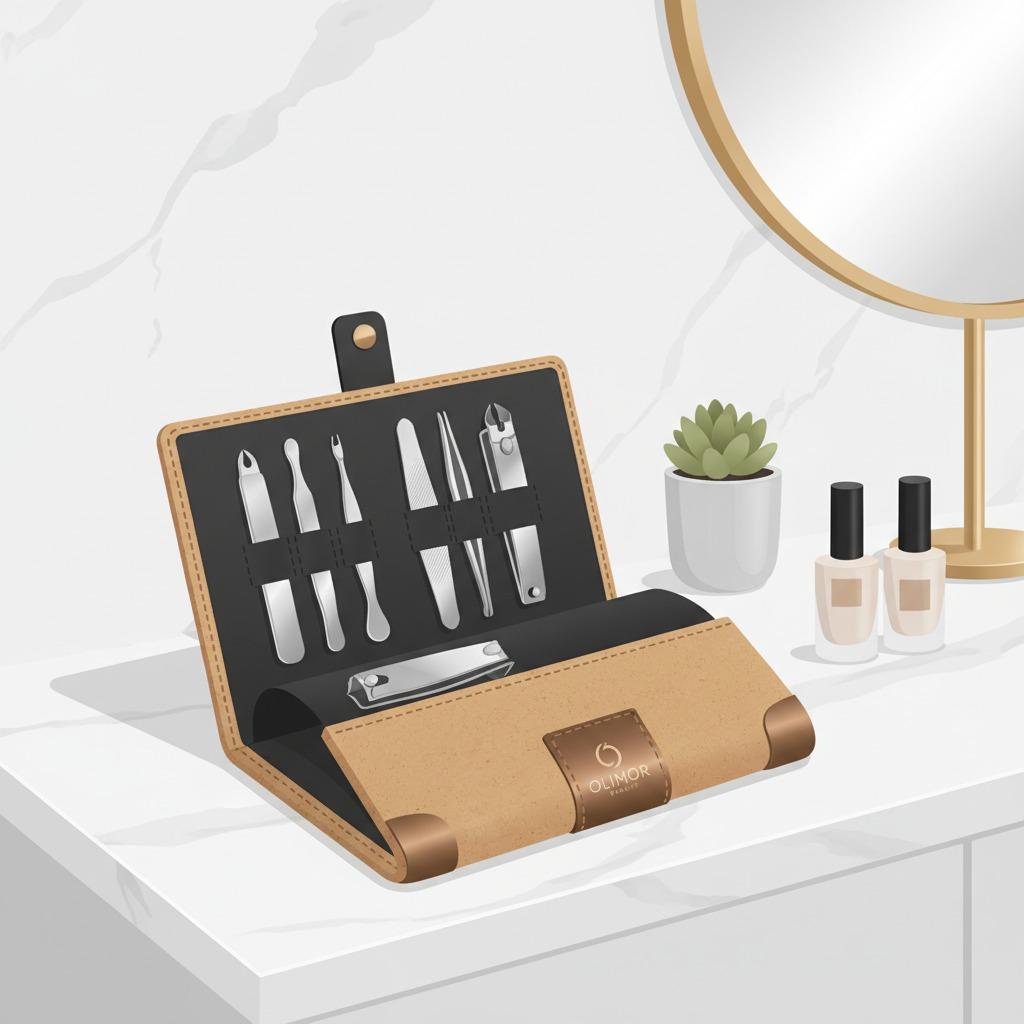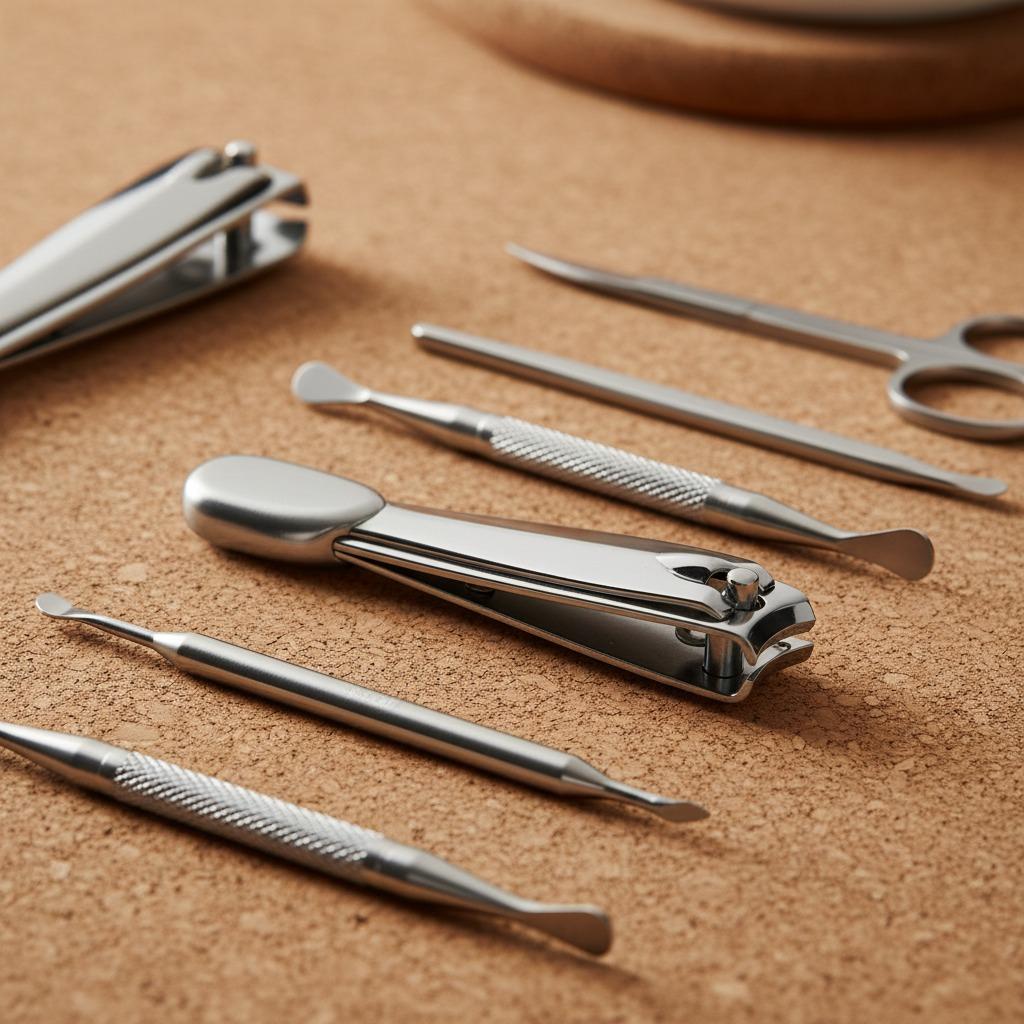











A nail clipper is a small tool, but buyers know it can quickly reveal the difference between careful manufacturing and ordinary production. A good clipper should cut cleanly, feel secure in the hand and keep its mechanism stable after repeated use. For beauty brands, retailers, salons and personal care distributors, choosing the right nail clipper manufacturer is not only about appearance. It is about repeatable performance, dependable quality control and a product that users can trust for simple, safe grooming.
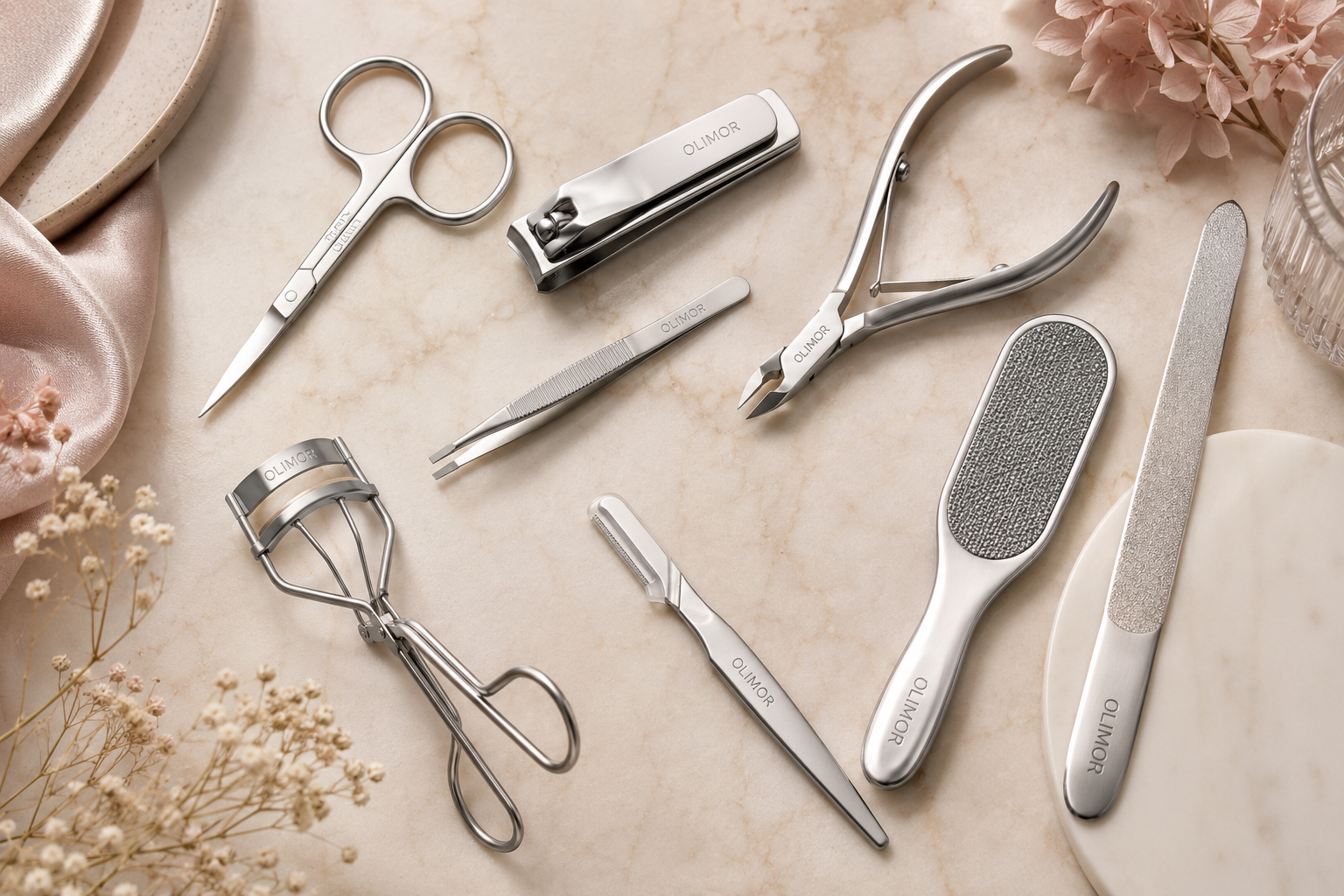
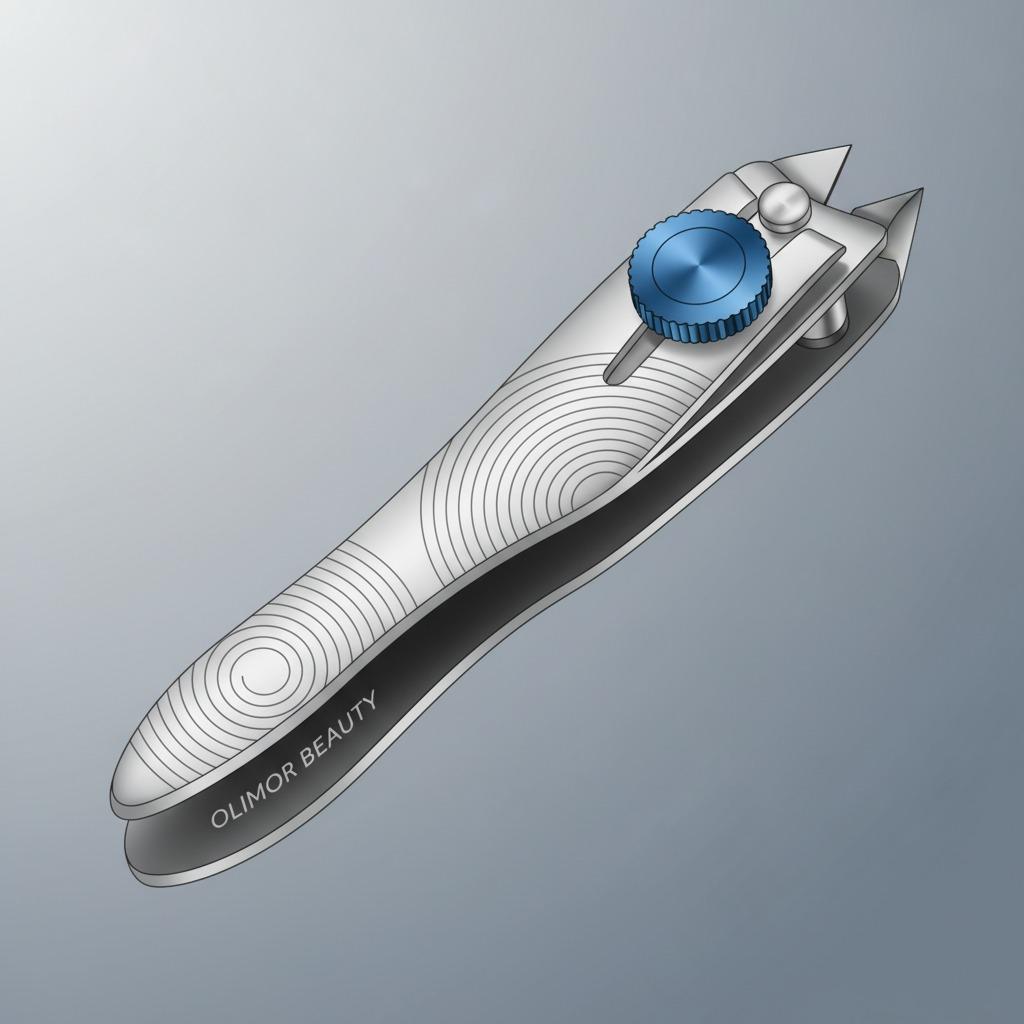
Olimor Beauty focuses on beauty tools designed for practical daily use. The nail clipper shown here combines stainless steel blades, an ergonomic handle with a concentric circle design and a distinctive blue adjustment mechanism intended to help personalize clipping pressure for different nail thicknesses. This guide explains how to assess those features, what to look for before sourcing, and how to maintain nail clippers so they continue to perform well.
What Makes a Nail Clipper Worth Sourcing?
When evaluating nail clippers for retail or professional beauty assortments, the first question should be whether the tool solves the most common user problems. Poor clippers can crush the nail, slip during use, leave rough edges or require too much force. A better clipper should provide controlled leverage and a smooth cut with minimal effort.
The Olimor Beauty nail clipper highlights several details buyers should examine closely: the cutting edge, the hand feel, the pressure adjustment and the consistency of finishing. Each part affects user experience. A polished exterior may attract attention, but long-term customer satisfaction depends on whether the blades align properly and whether the lever action feels steady over time.
For buyers comparing beauty tool products, nail clippers are often considered a basic item. That is exactly why they matter. Basic grooming tools are used frequently, reviewed quickly by customers and commonly purchased as part of nail care sets, travel kits, salon accessories and personal care displays.
Blade Performance: Clean Cutting Without Overcomplication
The supplied product information identifies stainless steel blades as a key feature. Stainless steel is widely used in grooming tools because it is suitable for repeated contact with hands, nails and cleaning routines. However, the material alone is not enough. Buyers should also consider blade geometry, alignment and edge finishing.
A well-made nail clipper should meet the nail evenly across the cutting surface. If the jaws are misaligned, the user may need to squeeze harder, clip the same area twice or deal with uneven nail edges. In sourcing discussions, it is useful to check samples for the following:
- Jaw alignment: the upper and lower blades should meet cleanly without visible offset.
- Cut consistency: the clipper should cut thin and thicker nail edges without tearing.
- Lever smoothness: the handle should press down evenly and return without feeling loose.
- Edge finishing: exposed edges should feel comfortable to handle, not sharp in unintended areas.
- Resistance to routine cleaning: the tool should remain easy to wipe and keep hygienic after use.
For brands planning repeat orders, testing one sample is not enough. Compare multiple samples from the same production batch when possible. This helps reveal whether the manufacturer can deliver consistent blade alignment rather than only a good individual piece.
Ergonomic Handle Design and Grip Control
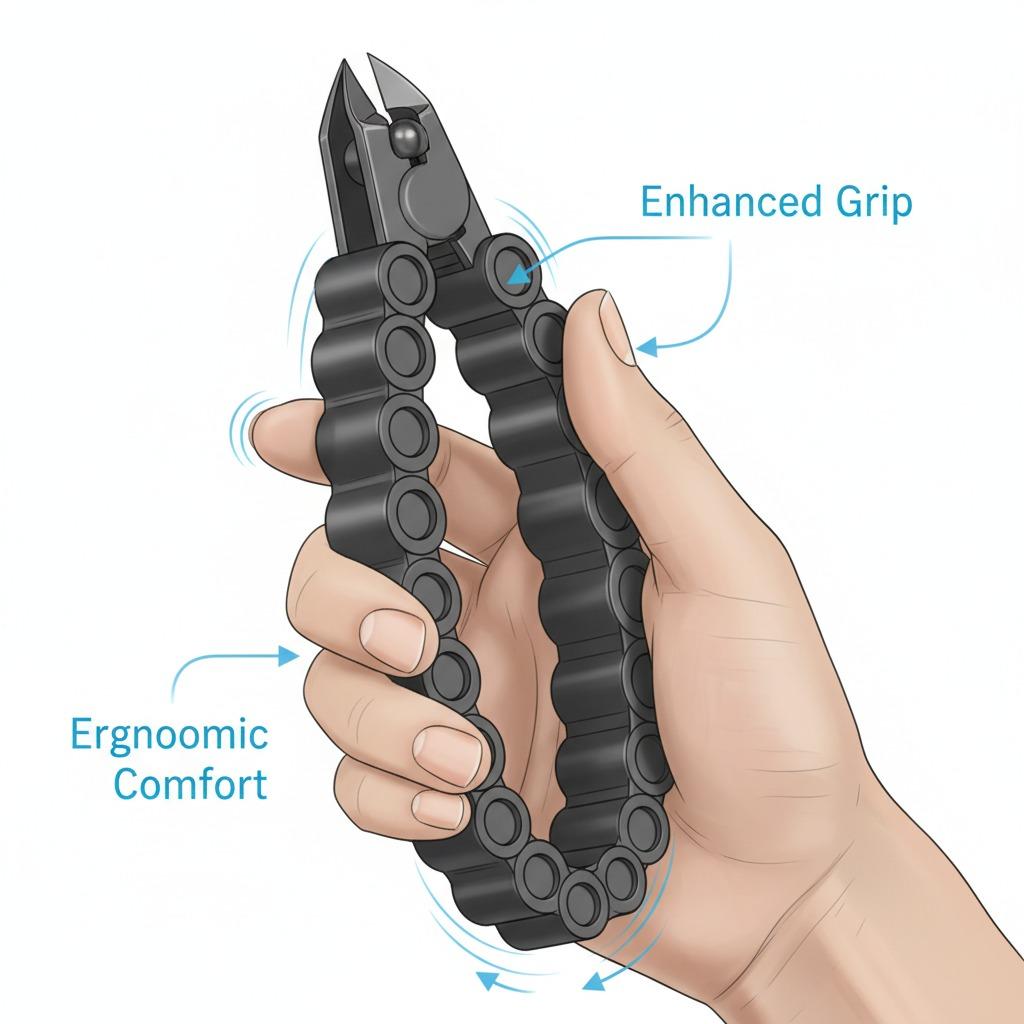
The nail clipper described in the original product information features an ergonomically crafted handle with a unique concentric circle design. This is more than a decorative detail. On a small metal grooming tool, surface texture can influence control, especially when hands are damp after washing or when a user needs extra steadiness for careful trimming.
A comfortable handle should support the natural pressing motion of the thumb and fingers. If the handle is too smooth, too narrow or poorly balanced, users may press at an awkward angle. That can reduce cutting accuracy and increase the chance of clipping too close. The concentric circle design can provide a more defined contact area for the thumb, helping the user maintain a secure grip during trimming.
Buyers should test the clipper with different hand sizes and use scenarios. A product that feels comfortable to one person may not feel the same to another. For personal care assortments, it is helpful to consider older users, travel users and people who prefer compact tools but still need solid leverage.
Why an Adjustable Clipping Pressure Feature Matters
One of the more distinctive details of this Olimor Beauty nail clipper is the blue adjustment mechanism. The supplied information describes it as allowing personalized clipping pressure and adapting to various nail thicknesses. This is a practical feature because fingernails and toenails are not all the same. Some users need a gentler clip for thin nails, while others require stronger pressure for thicker edges.
An adjustment feature should be simple enough that users understand it without complicated instructions. It should also feel stable in use. If a mechanism moves unintentionally while clipping, it can reduce confidence in the tool. During product evaluation, buyers should check how the adjustment feels before, during and after repeated clipping motions.
This feature can be especially useful when positioning the product for consumers who want more control than a basic clipper provides. It may also help retailers differentiate the tool in a crowded category where many nail clippers look similar at first glance.
Use Cases: Retail, Salon, Travel and Personal Care Kits
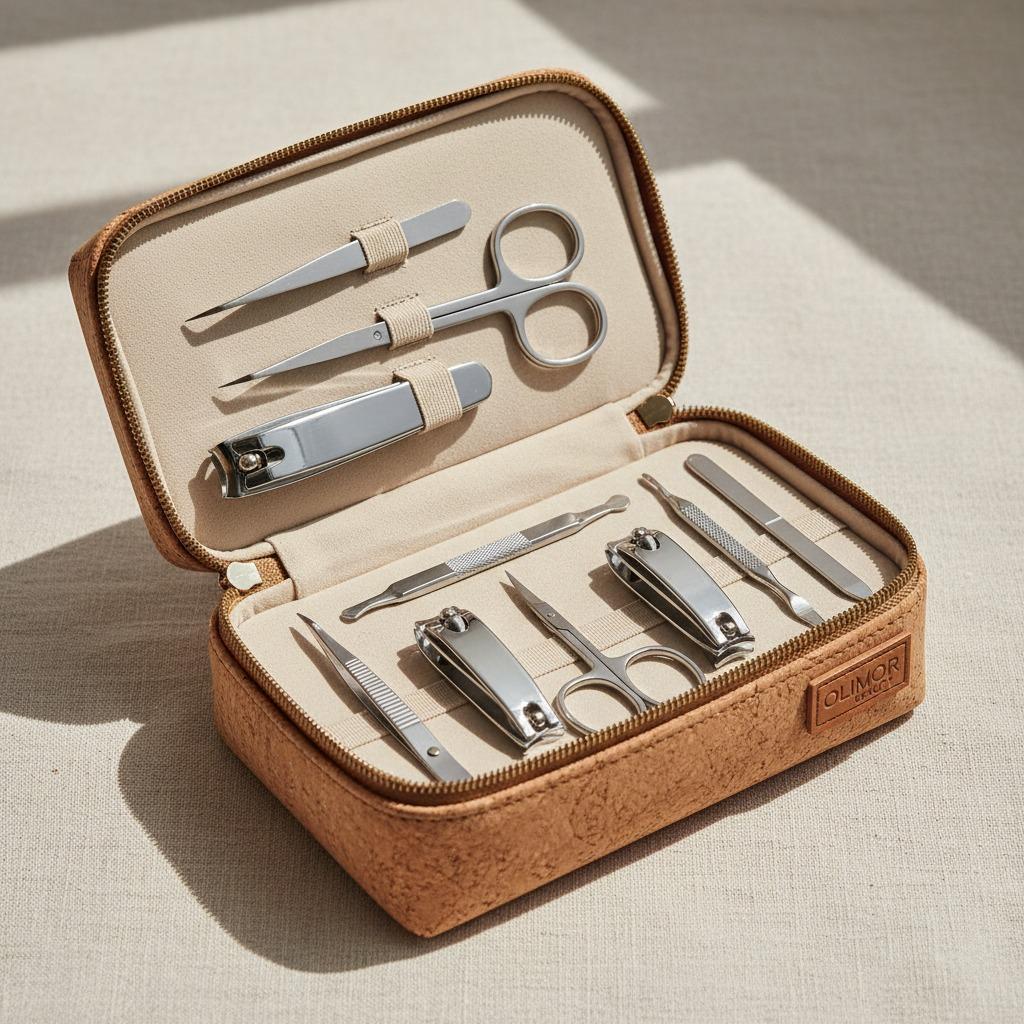
A precision nail clipper can serve several channels, and each channel may require a slightly different sourcing focus. Retail buyers often prioritize clear visual appeal, safe packaging and easy customer understanding. Salons may care more about repeated handling, ease of cleaning and consistent cutting feel. Gift and travel kit suppliers may focus on compactness, presentation and compatibility with other grooming tools.
| Use case | What to prioritize | Buyer check |
|---|---|---|
| Retail nail care display | Clear product benefit, attractive finish, reliable blade alignment | Confirm packaging can protect the cutting edge during shipping and display. |
| Salon or beauty service use | Grip comfort, cleaning convenience, steady mechanism | Test repeated opening and clipping motions for looseness or discomfort. |
| Travel grooming kit | Compact handling, safe storage, durable construction | Check whether the clipper sits securely with other tools in the kit. |
| Personal care gift set | Consistent appearance, user-friendly features, smooth finish | Review surface finishing and color consistency across samples. |
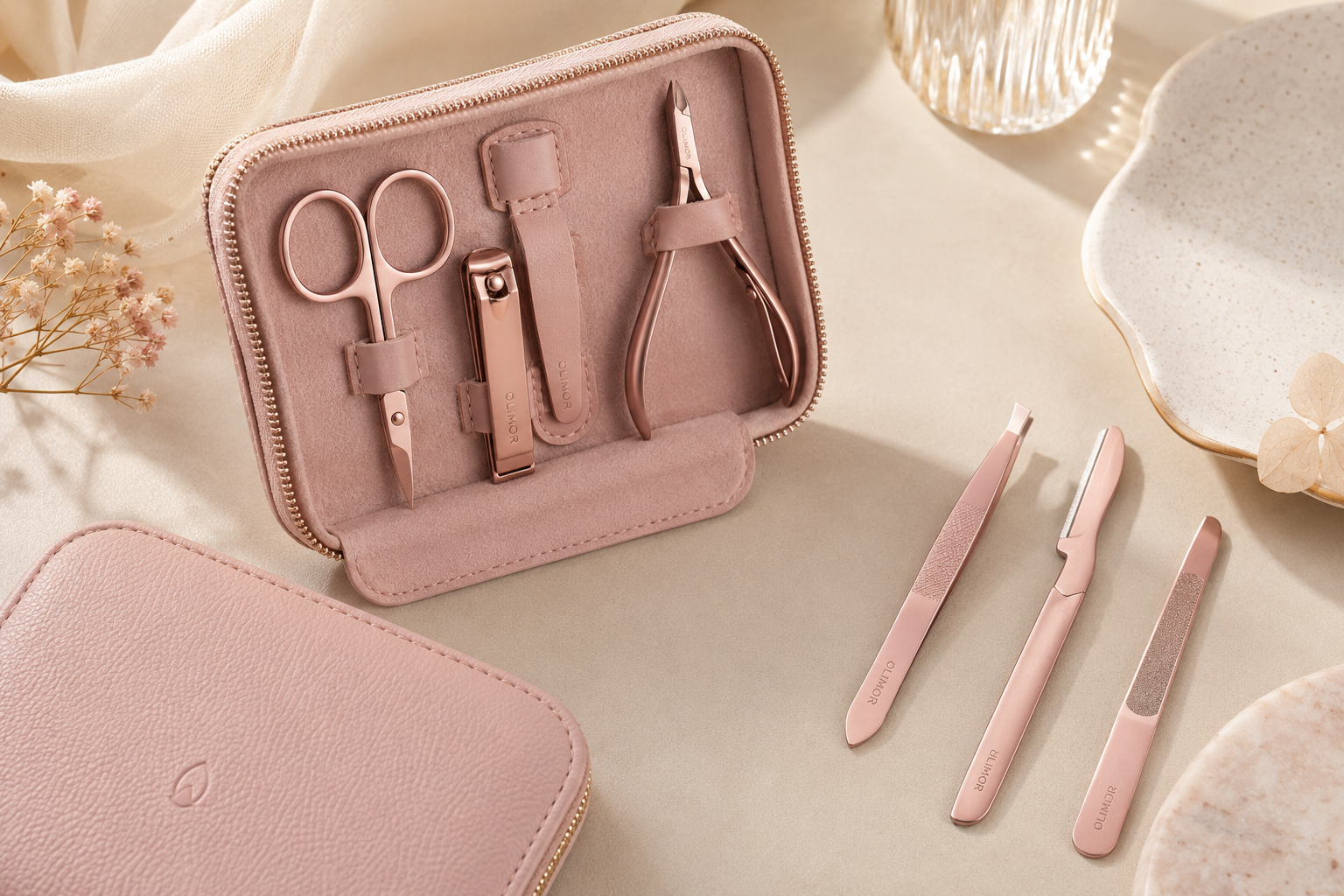
If you are building a broader assortment, review related product collections to see how a nail clipper may fit with other beauty tools in a coordinated offering.
Quality Control Questions for Nail Clipper Buyers
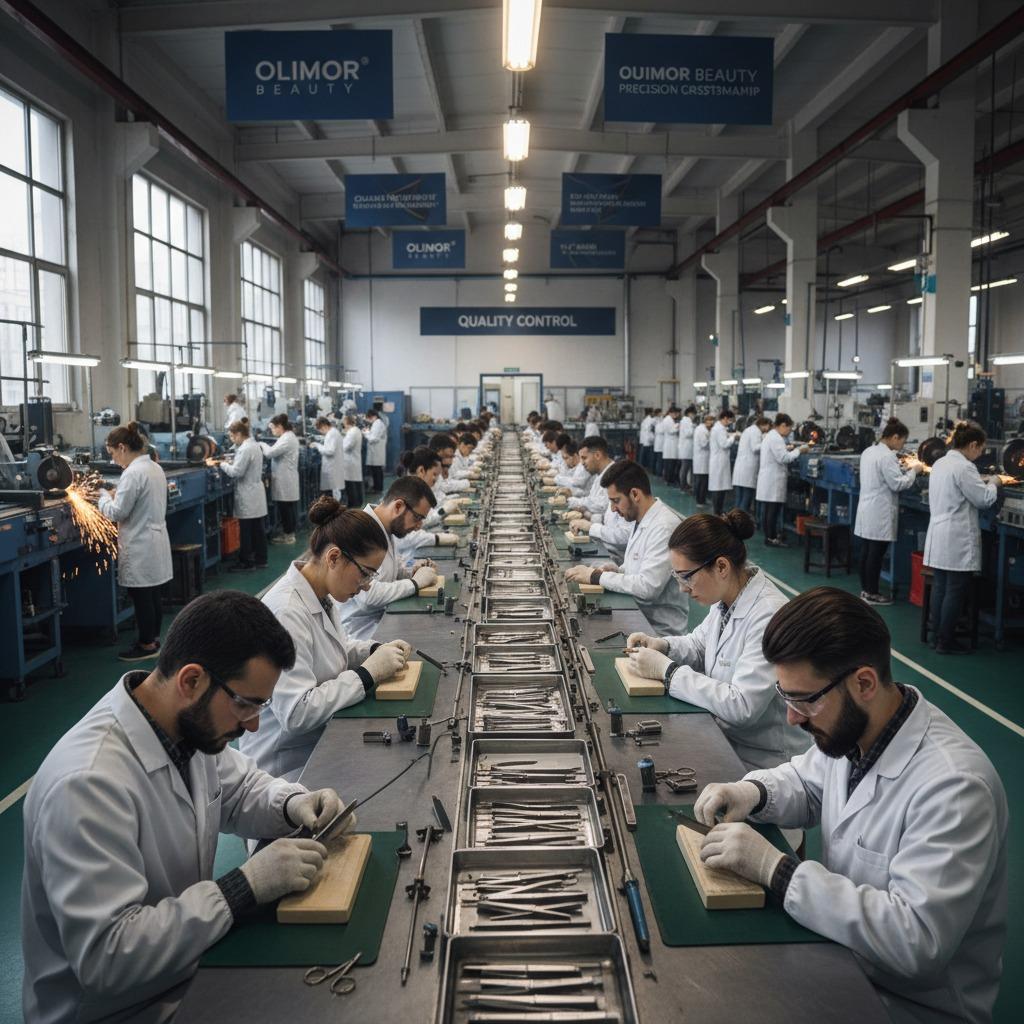
The product information notes strict internal quality control from raw materials to final packaging. For sourcing teams, quality control should be discussed in practical terms. The most useful checks are those that connect directly to customer experience and return risk.
- Raw material inspection: confirm how incoming metal parts are checked for surface defects, deformation or inconsistent finishing.
- Blade alignment inspection: review how the cutting jaws are examined before packaging.
- Functional testing: test lever movement, cutting action and adjustment stability.
- Surface review: look for burrs, scratches, uneven polishing or rough areas that could affect handling.
- Packaging protection: ensure the clipper is protected from movement, moisture and friction during transport.
These questions do not require invented claims or unnecessary complexity. They help buyers focus on whether the manufacturer controls the details that matter most: cut quality, hand comfort, mechanism stability and appearance consistency.
Care and Maintenance for Longer Service Life
Even a well-made nail clipper performs best when used and maintained correctly. Consumers should trim nails after cleaning and drying their hands or feet, clip gradually rather than forcing a large cut, and avoid using nail clippers on materials other than nails. After use, the clipper should be wiped clean and stored in a dry place.
For salons or shared-use environments, hygiene procedures should follow the business’s local requirements and internal sanitation practices. For retail brands, simple care instructions can reduce misuse and help customers understand how to keep the tool in good condition. A short care card or back-of-pack instruction panel can be valuable, especially when the product includes an adjustment feature.
How to Compare Nail Clipper Manufacturers Without Relying on Claims Alone
Many suppliers can describe a nail clipper as sharp, durable or premium. A better sourcing process converts those claims into checks. Request production-representative samples when evaluating a manufacturer, compare multiple units, and test the clipper on different nail thicknesses where appropriate. Examine the adjustment mechanism, handle texture, cutting sound and finish quality. Small differences are easy to miss during a quick visual review but become obvious during actual use.
Olimor Beauty’s nail clipper is positioned around practical design: stainless steel blades for clean cutting, an ergonomic concentric circle handle for grip, and a blue adjustment mechanism for personalized clipping pressure. These are meaningful features when they are supported by consistent manufacturing and careful final inspection.
For sourcing questions, customization discussions or product assortment planning, you can contact Olimor or send an inquiry with your target market, packaging needs and expected product application. The right conversation should focus on sample evaluation, quality checkpoints and how the nail clipper will be used by your customers.
Final Buying Takeaway
A reliable nail clipper is not defined by one feature alone. It is the result of aligned blades, controlled leverage, comfortable handling, stable adjustment and careful inspection before packaging. For beauty brands and retailers, these details support customer satisfaction and reduce the risk of a basic product becoming a weak point in the assortment.
When choosing a nail clipper manufacturer, look beyond broad promises and review the tool in hand. Test the cut, feel the handle, examine the mechanism and confirm that the product can be supplied with consistent finish and function. A small grooming tool can carry a large impression of your brand’s quality, so it deserves a sourcing process that treats every detail seriously.