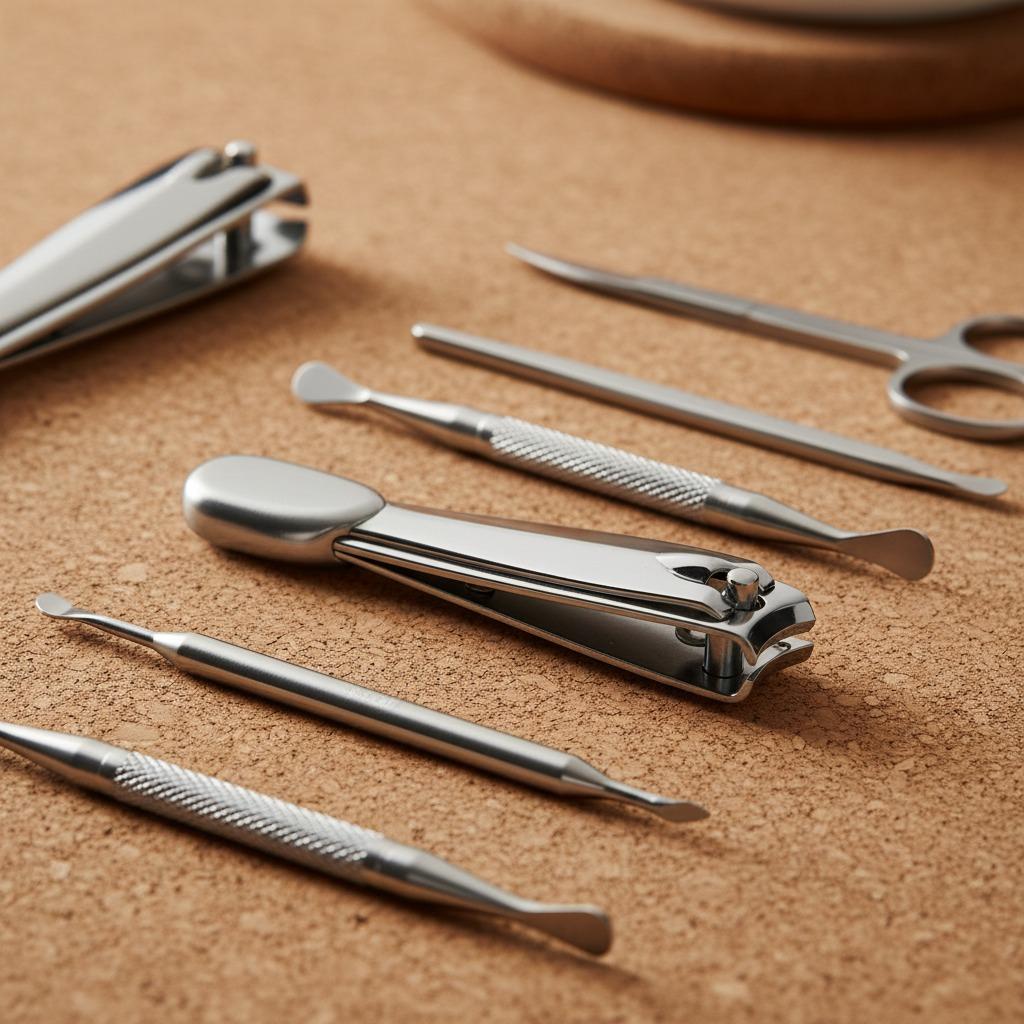











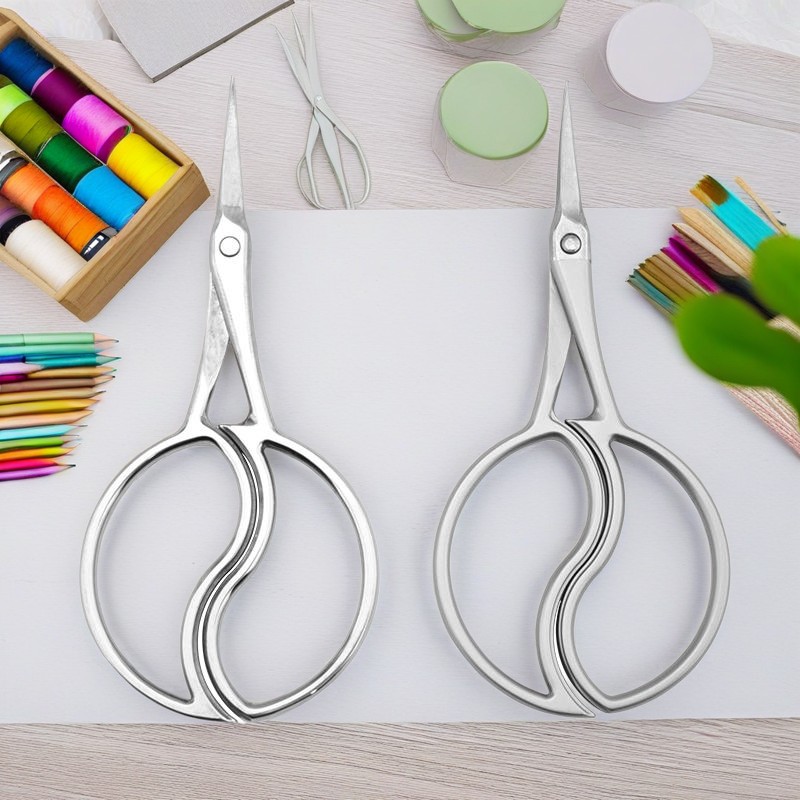
Professional beauty scissors are small tools, but they have a direct effect on the finish of a grooming service or personal care routine. When the cut is clean, eyebrow edges look tidier, facial hair can be shaped with better control, and cosmetic touch-ups feel less rushed. When the scissors are dull, bulky, or uncomfortable, even a simple trim can leave uneven ends, pulled hairs, or hand fatigue.
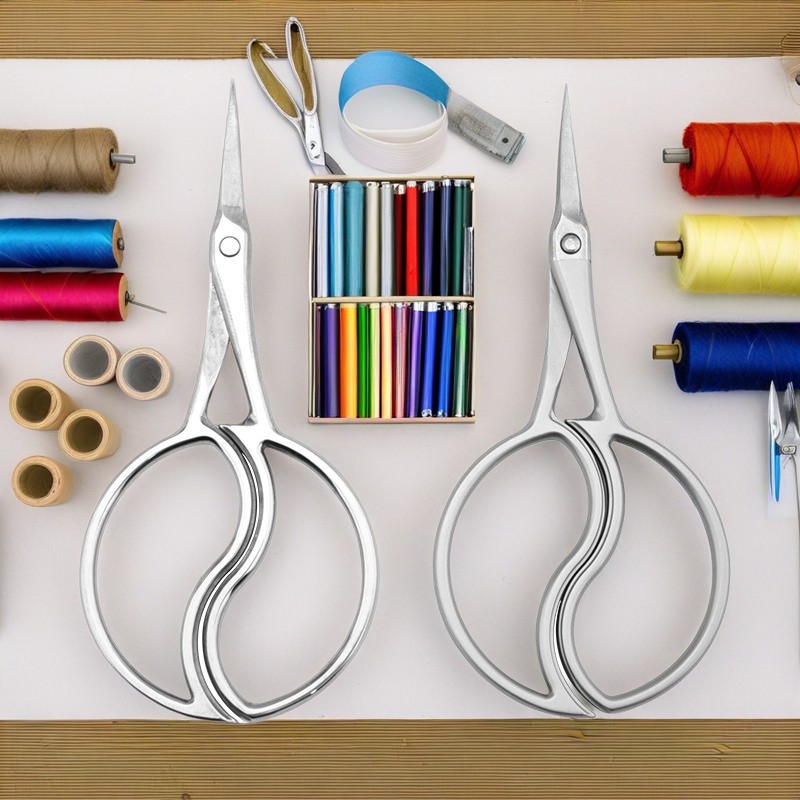
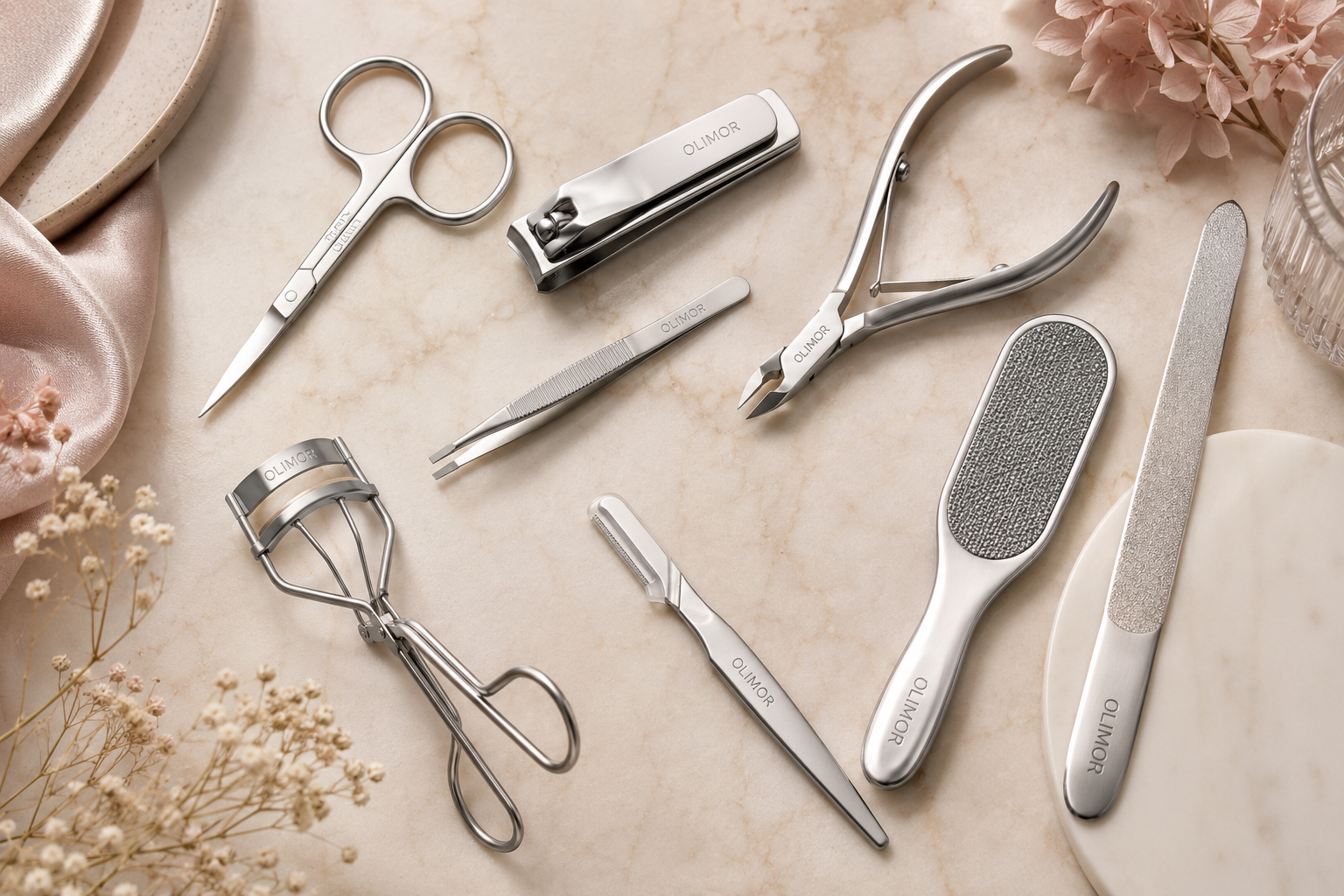
Olimor Beauty professional beauty scissors are designed for detailed grooming tasks where ordinary household scissors are not precise enough. The original product information highlights stainless steel precision and titanium grooming scissors, ergonomic circular handles, ultra-sharp slightly curved blades, tapered tips, and a lightweight compact form. These features matter most for users who need control in close areas, including brow shaping, facial hair trimming, loose-thread snipping, and fine craft or cosmetic work.
Why ordinary scissors do not perform well in beauty grooming
Standard scissors are usually made for paper, packaging, kitchen use, or general household cutting. They may be larger than needed, with blades that are too thick for close trimming around the face. They can also crush or push fine hairs instead of cutting them cleanly. For grooming, the problem is not only sharpness; it is also visibility, control, blade shape, and how stable the tool feels between the fingers.
In eyebrow work, a bulky tip can block the user’s view and make it hard to isolate a single longer hair. In facial hair trimming, blades that do not meet evenly may create jagged ends. During longer sessions, uncomfortable handles can make the hand tense, which reduces accuracy. A professional beauty scissor is built around the needs of small, visible, controlled cuts rather than broad cutting power.
Key features to look for in professional beauty scissors
Before choosing scissors for salon use, retail beauty kits, travel sets, or personal grooming, it helps to evaluate the tool by function rather than appearance alone. The best choice depends on what the scissors will cut, how often they will be used, and whether they need to fit into a compact grooming pouch.
- Blade sharpness: Fine grooming scissors should cut cleanly without bending or dragging hair. Sharp blades reduce repeated snipping and help create a neater finish.
- Slightly curved blade shape: A curved profile can help follow natural contours around brows, moustache edges, and other small grooming zones.
- Tapered tips: Narrow tips make it easier to reach individual hairs or tiny threads without cutting surrounding material.
- Ergonomic circular handles: Comfortable handles support controlled movement and help reduce strain during repeated use.
- Polished stainless steel construction: Stainless steel is valued in beauty tools for durability and resistance to corrosion when cleaned and dried properly.
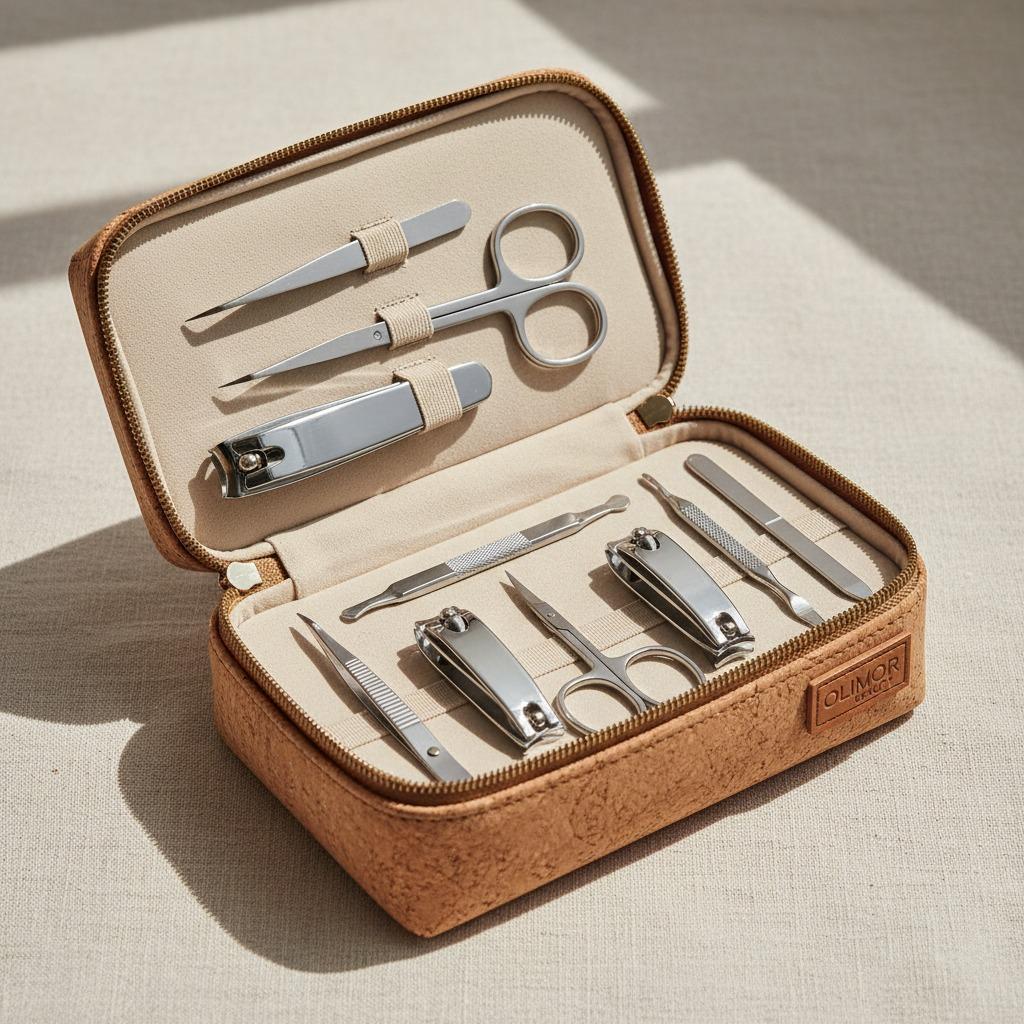
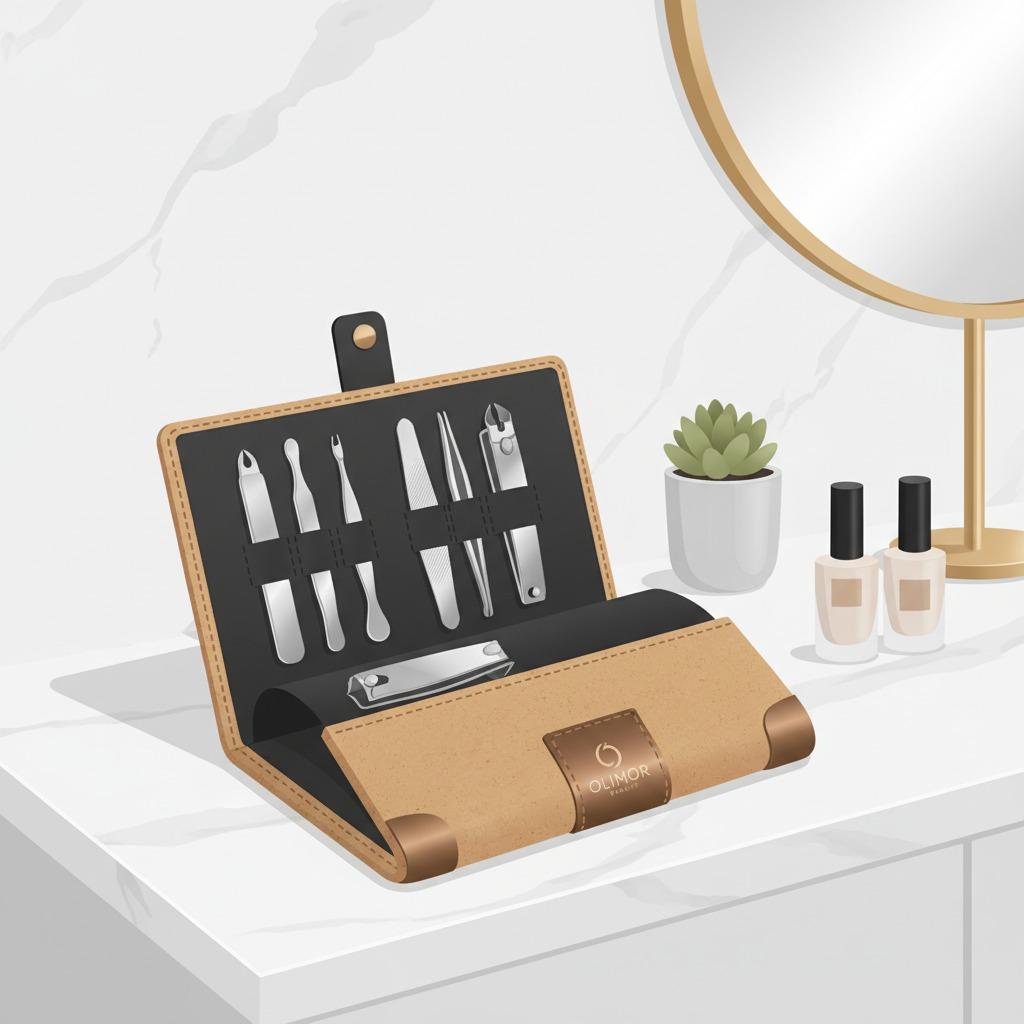
- Compact portability: Lightweight scissors are easier to carry in a salon kit, travel pouch, or personal grooming case.
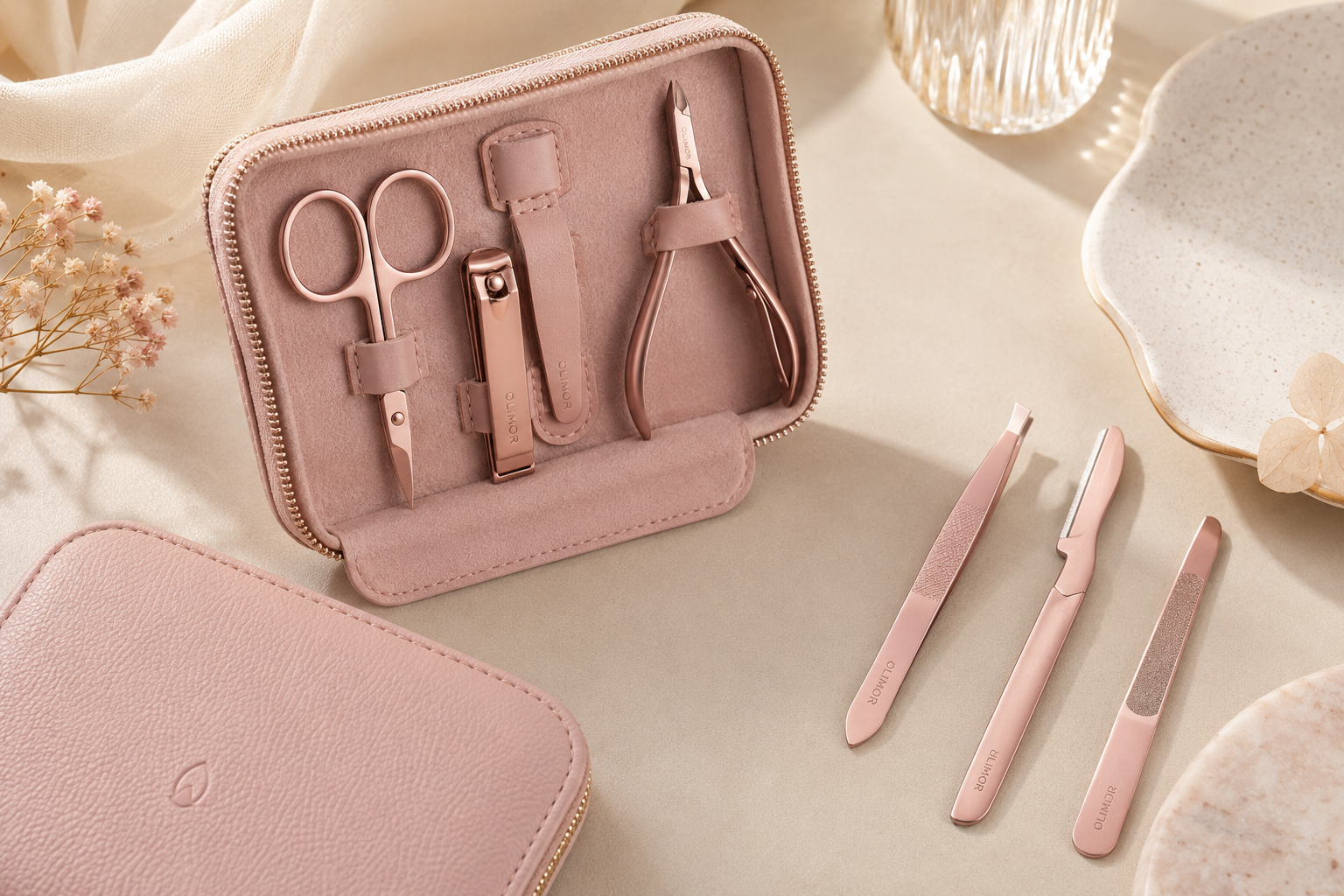
Olimor Beauty’s beauty tool range is developed for practical grooming and personal care use. Buyers comparing related items can browse beauty tool products to understand how scissors fit alongside other grooming tools.
Common use cases: brows, facial hair, touch-ups, and detail cutting
Professional beauty scissors are most useful when the task requires accuracy rather than speed. For eyebrow shaping, they can trim long hairs after the brow has been brushed upward or outward. The tapered tip helps target only the hairs that extend beyond the desired line. This is especially important for users who want a natural brow shape instead of a sharply over-cut look.
For facial hair, small scissors allow gradual shaping around moustache edges, beard lines, sideburns, and stray hairs. Compared with a trimmer, scissors can be quieter and more controlled for final touch-ups. They are also useful when only one or two hairs need attention and using an electric tool would remove too much.
In cosmetic work, beauty scissors can help with small adjustments such as trimming false lashes, cutting beauty tape, or snipping loose threads on fabric near a makeup or styling area. The product information also notes suitability for intricate fabrics and crafting, which makes a compact precision scissor useful beyond grooming. However, for hygiene and blade performance, it is best to separate scissors by use: one pair for personal grooming and another for craft or fabric tasks.
How to compare stainless steel and titanium grooming options
The original product information refers to stainless steel precision scissors and titanium grooming scissors. Without relying on unverified specifications, buyers can still make a practical comparison based on intended use, finish preference, and maintenance expectations. Stainless steel beauty scissors are often chosen for everyday grooming because they combine strength, polish, and corrosion resistance when cared for correctly. Titanium grooming scissors may appeal to buyers looking for an alternative finish or a specialized grooming option within a product line.
| Selection factor | What to check | Why it matters |
|---|---|---|
| Primary task | Eyebrows, facial hair, cosmetic trimming, travel, or detail craft work | The blade shape and tip style should match the cutting area |
| Blade feel | Smooth opening and closing, even blade contact, no catching | Consistent motion improves control and reduces uneven cuts |
| Handle comfort | Finger fit, grip stability, and ease of rotation | Comfort matters during repeated grooming sessions |
| Portability | Compact size and safe storage compatibility | Travel and salon kits need tools that are easy to pack and protect |
| Cleaning routine | Ability to wipe, dry, and store the tool properly | Good care supports hygiene and long-term cutting performance |
For buyers building a coordinated grooming assortment, product collections can help compare product categories and identify complementary tools for retail or professional kits.
Using beauty scissors safely and accurately
Precision scissors perform best when the user works slowly and with good visibility. For eyebrow trimming, brush the hairs into position first, then cut only the ends that clearly extend beyond the intended shape. Avoid cutting deeply into the brow line, because a small over-cut can create a visible gap. For moustache or beard detail work, trim in small increments and check symmetry frequently.
- Clean and dry the area before trimming so hairs separate naturally.
- Use good lighting and a stable mirror position.
- Hold the scissors so the tapered tips remain visible at all times.
- Cut less than you think you need at first; repeat only if necessary.
- Wipe the blades after use to remove hair, oils, or cosmetic residue.
- Store the scissors in a dry pouch or case to protect the blade edges.
Because these scissors are sharp and designed for detailed work, they should be kept away from children and not used while moving, traveling in a vehicle, or working without a clear view of the cutting area.
Care and maintenance for lasting performance
Even a well-made pair of professional beauty scissors can lose performance if it is stored wet, dropped, or used on unsuitable materials. After grooming, wipe the blades with a soft dry cloth. If the scissors come into contact with water or cosmetic products, dry them fully before storage. Avoid leaving them in humid bathrooms for long periods, especially if the storage pouch does not allow airflow.
Use the scissors only for appropriate detail tasks. Cutting hard plastic, wire, thick packaging, or adhesive-heavy materials may affect the blade edge. If one pair is used in a salon or shared setting, follow the hygiene routine required by the workplace or local practice standards. For retail buyers, adding simple care instructions to packaging or product pages can reduce misuse and help customers understand how to keep the tool working smoothly.
Buyer considerations for sourcing professional beauty scissors
For distributors, beauty brands, salons, and kit assemblers, professional beauty scissors should be evaluated as both a functional tool and a customer experience item. A scissor may look attractive in photos, but the real test is how it feels in hand and how consistently it cuts fine hair. Requesting samples, checking blade alignment, reviewing handle comfort, and confirming packaging needs are all practical steps before placing an order.
Useful sourcing questions include: What grooming tasks is this scissor best suited for? Is the blade slightly curved or straight? Are the tips tapered enough for brow and facial detail work? How should the scissors be cleaned and stored? What packaging format is appropriate for retail, salon, or travel kits? These questions help buyers match the tool to the actual use case instead of relying on a generic description.
If you are comparing professional grooming scissors for a product line, salon supply program, or private assortment, you can send an inquiry with your intended use and packaging needs. For additional guidance on available beauty tools, you may also contact Olimor.
A precise tool for small grooming decisions
Professional beauty scissors are valuable because they give users control over details that larger tools often miss. The combination of sharp blades, tapered tips, ergonomic circular handles, and compact portability makes them suitable for eyebrow shaping, facial hair trimming, cosmetic touch-ups, and delicate cutting tasks. For individual users, they can make daily grooming cleaner and more predictable. For beauty businesses, they are a practical addition to a well-planned grooming tool range.
Choosing the right pair comes down to blade performance, comfort, intended use, and care habits. When those factors are considered carefully, professional beauty scissors become a dependable tool for precise, tidy, and repeatable results.