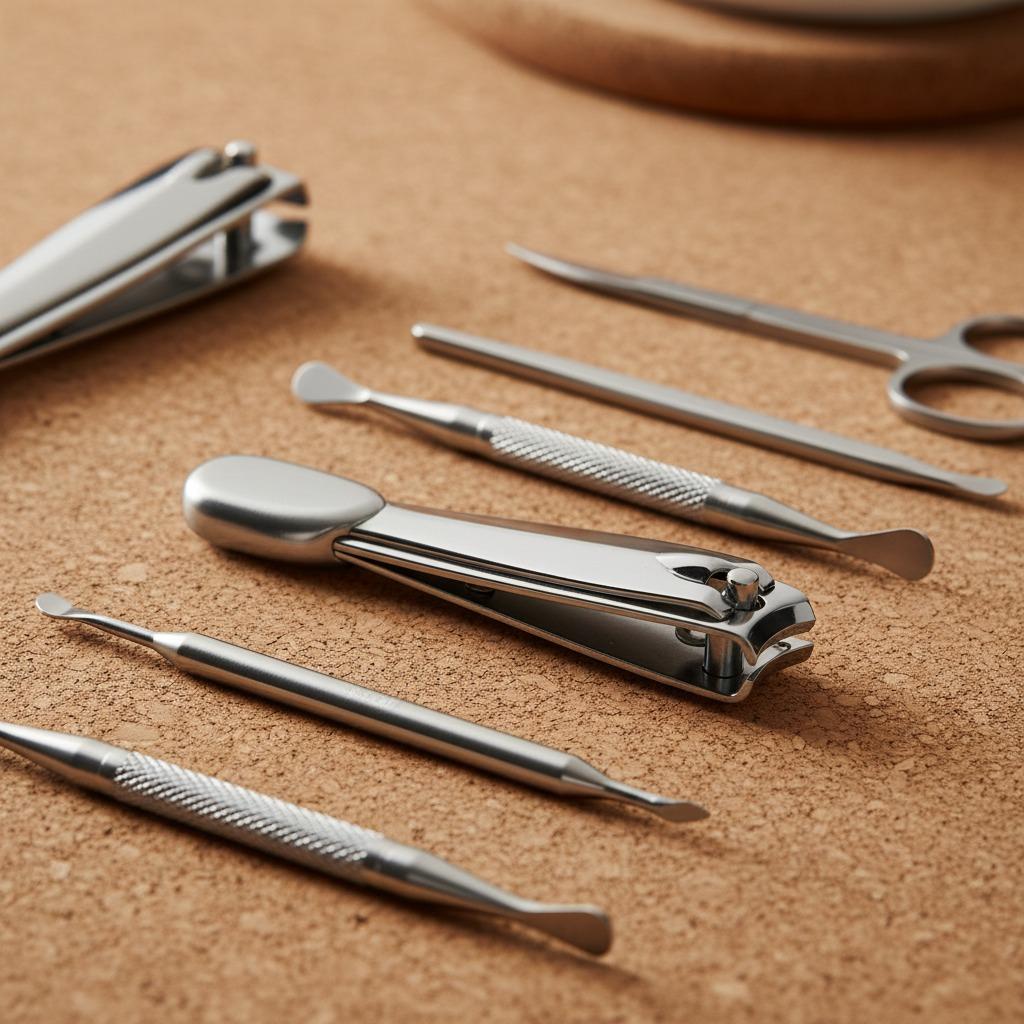











An ergonomic nail clipper should do more than make a sharp first cut. For retailers, distributors, salon buyers and beauty tool sourcing teams, the right clipper must feel secure in the hand, transfer pressure efficiently, cut cleanly through different nail types and remain practical to clean, store and present to customers. Reviews can be useful, but only when they describe these real use conditions instead of relying on broad praise.
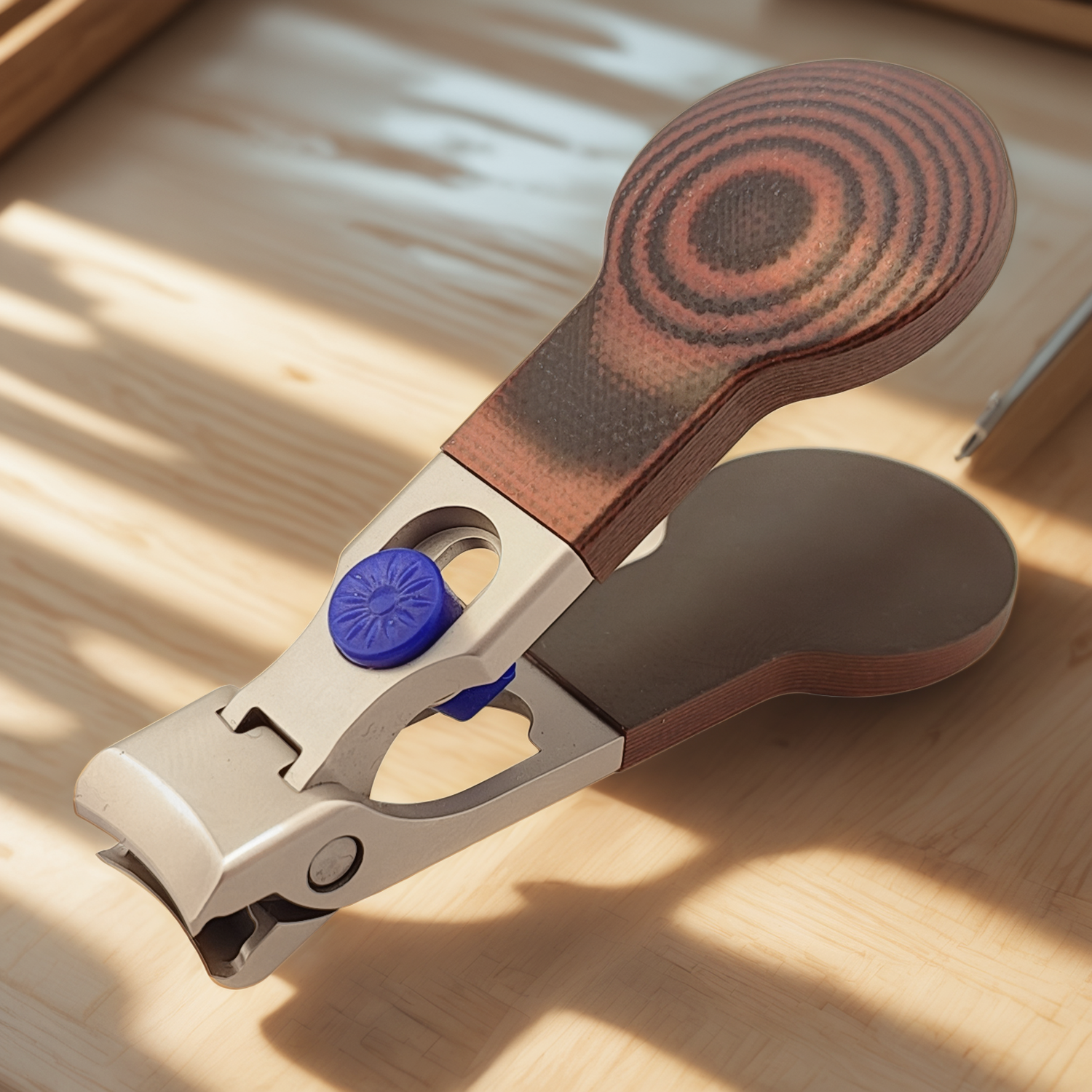
This guide explains how to evaluate an ergonomic nail clipper with a practical B2B lens. It uses product-specific design details associated with an Olimor ergonomic nail clipper concept, including a G10 composite handle, concentric ring texture, an advanced lever system, a blue adjustable knob, stainless steel cutting components and a stainless steel pivot mechanism. These details create a clear framework for comparing samples, reading customer feedback and asking better supplier questions without depending on vague quality claims.
What Makes a Nail Clipper Ergonomic?
An ergonomic nail clipper is designed to reduce unnecessary hand effort while improving control. The most important elements are grip security, lever efficiency, blade alignment, cutting stability and safe handling before and after use. A tool can feel acceptable during a quick showroom test yet become uncomfortable when used on thicker toenails, damp hands or repeated trimming tasks.
For commercial buyers, ergonomics also affects customer satisfaction and return risk. A user who struggles to hold a clipper steady may blame the product even if the blades are sharp. A user who must squeeze too hard may trim unevenly or cut too deeply. This is why nail clipper reviews should be read for specific handling evidence, not just comments such as sharp, strong or premium.
When comparing options, look for comments that answer practical questions: Does the clipper twist in the hand? Is the thumb pad comfortable? Does the lever feel smooth or abrupt? Does the tool cut thick nails gradually, or does it crush before cutting? These details are more valuable than a short five-star comment with no use context.
Grip Design: Why Handle Material and Texture Matter
The handle is the user’s first point of control. The Olimor concept described in the supplied product details uses G10 composite, a fiberglass-epoxy material known for a lightweight feel and abrasion-resistant character. In a nail clipper, the practical value of such a handle is not simply appearance. A stable handle can help the user maintain pressure direction, especially when trimming toenails or nails that require more force.
Texture is equally important. The referenced design includes a concentric ring texture on the handle. This type of surface detail can support grip by giving the thumb and fingers more contact feedback. A smooth decorative surface may look refined, but it can become difficult to hold if the user has just washed hands, applied lotion or is working in a salon environment where tools are handled frequently.
Grip questions to ask when reading reviews
- Does the reviewer mention whether the tool is secure with dry, damp or recently washed hands?
- Does the handle provide enough area for the thumb to press without discomfort?
- Is the texture described as helpful, or does it feel rough during repeated use?
- Can users with different hand sizes reposition the tool easily?
- Does the handle support a natural pinch motion without forcing the wrist into an awkward angle?
For B2B sampling, do not rely on one evaluator. Ask people with different hand sizes and trimming habits to test the same sample. A clipper that works well for small fingernails may feel less stable on wider toenails, and a design that feels substantial to one user may feel bulky to another.
Leverage and Cutting Control for Thick Nails
Leverage determines how much effort the user must apply to complete a cut. The Olimor ergonomic concept includes an advanced lever system described as expanding cutting power, which is especially relevant for thicker or stubborn nails. This does not replace professional medical care for painful, infected or severely ingrown nails, but it can improve routine grooming when the main challenge is nail thickness or resistance.
A good lever system should feel controlled from the beginning of pressure to the end of the cut. If the clipper requires excessive squeezing, users may lose control and remove too much nail. If the lever snaps shut abruptly, the cut can feel unpredictable. The goal is steady force transfer, not simply a strong bite.
When reading reviews, pay attention to whether customers distinguish fingernails from toenails. Toenails are usually thicker and often require a stronger, more stable action. A review that says the clipper works well on thick toenails gives more useful evidence than one that only says it is sharp. For retailers and distributors, this distinction helps decide whether a tool should be positioned as a general nail clipper, a toenail-focused clipper or an ergonomic option for users seeking easier control.
Blade Alignment, Stainless Steel Parts and Pivot Stability
Sharpness matters, but it is only one part of cutting quality. The supplied product description refers to stainless steel cutting components and a stainless steel pivot mechanism, with an emphasis on durability and corrosion resistance. Stainless steel is commonly used in grooming tools because nail clippers are exposed to moisture, skin oils and cleaning routines. However, material selection alone does not guarantee performance.
Blade alignment is critical. The upper and lower cutting edges should meet evenly across the cutting arc. If one side meets before the other, the nail may split, tear or bend before the cut completes. A poorly aligned edge can also make the user apply more force than necessary.
The pivot deserves the same attention. A stable pivot helps the blade edges meet consistently. Too much wobble can reduce precision, while a pivot that feels overly stiff can make trimming tiring. During sample inspection, open and close the lever several times and listen for irregular scraping, uneven pressure or side movement. Reviews that mention loose action, drifting blades or inconsistent cuts should be taken seriously.
Adjustable Knob and Storage Lock: Useful or Unnecessary?
The Olimor concept includes a blue adjustable knob described as serving two purposes: locking the clipper for safer storage and allowing the user to fine-tune cutting pressure. This is a commercially relevant feature because it addresses two common concerns at once. Customers want a clipper that can adapt to different nail types, and retailers or salons need tools that can be stored without exposed cutting edges.
Adjustability should be judged by usability. A knob or dial is helpful only if the user can understand it quickly, set it without frustration and trust it to stay in place during trimming. If an adjustable feature shifts unexpectedly, feels fragile or complicates a simple grooming task, it may reduce satisfaction.
For product teams, the storage lock should also be checked as part of packaging and handling review. A locked clipper is easier to place in a drawer, travel kit or retail display without the cutting edge opening freely. The mechanism should be operated gently and should not require force beyond its intended range.
Comparison Checklist for Reviews and Samples
The following checklist can be used when reading nail clipper reviews, comparing samples or preparing supplier questions. It focuses on observable qualities rather than unsupported claims.
| Evaluation Area | What to Check | Why It Matters | Good Evidence in Reviews |
|---|---|---|---|
| Grip material | Handle stability, weight and surface feel | Affects control and fatigue | Mentions secure hold and comfort during full trimming |
| Texture | Concentric rings or other grip features | Helps reduce slipping | Notes performance with damp hands or repeated use |
| Lever action | Smooth pressure and efficient force transfer | Improves trimming of thicker nails | Describes less squeezing effort without sudden snapping |
| Blade alignment | Even contact between cutting edges | Supports clean cuts and reduces splitting | Reports clean trimming rather than tearing or crushing |
| Pivot mechanism | Stable movement without wobble | Maintains cutting accuracy | Mentions consistent action over multiple uses |
| Adjustable knob | Pressure setting and locking function | Adds control and safer storage | Explains whether the setting remains stable |
| Cleaning and storage | Residue removal, dry storage and closed edge | Supports hygiene and tool life | Mentions easy wiping and safe drawer or travel storage |
Maintenance, Cleaning and Everyday Use
Even a well-designed nail clipper needs sensible maintenance. After use, remove nail clippings from the cutting area and wipe the blade edges. If the handle has textured rings or grooves, check that residue is not trapped in the surface pattern. Moisture should not be left around the pivot, because any grooming tool exposed to water and skin oils benefits from dry storage.
For personal use, trimming after washing or bathing can make nails slightly softer, unless the supplier’s instructions advise otherwise. For shared environments, tools should be cleaned appropriately between users and allowed to dry fully before storage. Salons and professional settings should follow their local hygiene rules and any applicable public health guidance.
Practical use tips
- Trim gradually instead of removing a large section in one squeeze.
- Keep the clipper stable before applying full pressure.
- Follow the natural nail shape and avoid cutting too deeply at the corners.
- Clean the blade and pivot area after use.
- Store the clipper dry, closed and protected from impact with harder tools.
If the clipper includes a lock or adjustable knob, use it as intended. Do not force the mechanism beyond its normal range, and check whether the lock remains secure before placing the tool in a travel bag, drawer or display sample kit.
B2B Selection: Cost Factors Without Guesswork
For business buyers, the lowest unit cost is not always the lowest total cost. A nail clipper that feels unstable, arrives with inconsistent blade alignment or produces unclear customer expectations can create returns, complaints and extra inspection work. Instead of asking only for a price, evaluate the factors that influence value.
Cost can be affected by handle material, surface texture, cutting component construction, pivot design, adjustable mechanisms, finishing requirements, packaging, inspection expectations and customization scope. A G10 composite handle, textured grip pattern or adjustable locking feature may require different production considerations than a basic all-metal clipper. Packaging that protects the cutting edge and explains operation may also affect project planning.
When discussing a project, share the intended sales channel and target user. A retail product for general home use may need different packaging and instructions than a salon-oriented tool or private label grooming set. To compare related beauty tool categories, review Olimor beauty tool products and consider how each item’s function, finish and packaging support the intended customer experience.
Supplier Evaluation and Documentation
A capable supplier should be able to discuss materials, finish expectations, sample review steps, packaging options and quality checks in clear terms. For ergonomic nail clippers, ask how the supplier verifies blade alignment, pivot movement, handle finish, locking action and visual consistency. Do not assume certifications, test results or performance data unless they are documented for the specific product and order.
Depending on the destination market, buyers may also need to verify applicable regulatory and chemical restriction requirements. For example, EU REACH obligations or guidance from the U.S. Consumer Product Safety Commission may be relevant depending on product composition, packaging, coatings and sales channel. Always confirm the current versions of applicable rules and request supplier documents that match the actual product being purchased.
For sourcing teams building a product line, Olimor product collections can help compare nail tools with other beauty accessories. If a project requires a specific handle concept, finish direction or packaging plan, use the inquiry form to provide the tool type, target market and quality expectations.
How to Read Nail Clipper Reviews More Critically
The most useful reviews describe the user, the nail type and the trimming situation. A review from someone trimming thin fingernails once a week does not answer the same question as a review from someone cutting thick toenails or evaluating a tool for salon use. Separate emotional reactions from observable product details.
Give more weight to reviews that mention grip under real conditions, cutting smoothness, blade alignment, adjustment stability and cleaning. Be cautious with reviews that focus only on packaging appearance or first-use sharpness. First impressions are helpful, but nail clippers must remain comfortable and predictable through repeated use.
For commercial decisions, combine reviews with sample inspection. Reviews can reveal common user concerns, while samples confirm whether the specific product version meets your expectations. If you are comparing multiple designs, create a scoring sheet for grip, lever action, blade meeting point, pivot feel, lock function, finish, packaging and instructions. This keeps decisions consistent across teams and avoids choosing only by appearance.
FAQ
Can Olimor provide samples for ergonomic nail clipper evaluation?
Sample availability depends on the product and project requirements. Buyers should request samples for hands-on checks of grip, lever action, blade alignment, locking function and packaging before making a larger purchasing decision.
Is there a fixed MOQ for customized nail clippers?
MOQ can vary by product design, customization scope, materials, packaging and production plan. Share your target tool type and customization needs through Olimor contact channels so the team can confirm project-specific requirements.
What customization details should buyers prepare?
Useful details include intended market, target user, handle preference, surface finish, logo or branding needs, packaging type, safety instructions and inspection expectations. Clear requirements help avoid misunderstandings during sampling.
How should quality be checked before shipment?
Common checks include visual finish, handle texture, cutting edge alignment, pivot movement, lever consistency, lock or knob function, cleanliness and packaging condition. Buyers should agree on inspection criteria and request relevant product documents instead of assuming undocumented claims.
Choosing an Ergonomic Nail Clipper With Confidence
A strong ergonomic nail clipper combines secure grip, efficient leverage, accurate cutting edges, stable pivot movement and safe storage. Product-specific features such as a G10 composite handle, concentric ring texture, advanced lever system, stainless steel cutting and pivot parts, and an adjustable blue knob are worth evaluating because they address practical user concerns: slipping, hand strain, thick nails, inconsistent cutting and open-edge storage.
For B2B buyers, the best decision comes from combining detailed reviews, sample testing and supplier documentation. Focus on how the tool performs in real hands and real trimming situations. A restrained but thorough evaluation will help you select nail care tools that are easier to use, easier to explain to customers and better aligned with your market’s expectations.