










A nail clipper looks simple until it fails at the exact moment you need control. A weak lever can crush instead of cut. A slippery handle can shift in the hand. A poorly aligned edge can leave jagged nail corners that need extra filing. For consumers, salon buyers and beauty-tool distributors, the right ergonomic nail clipper is not only about sharpness; it is about how the whole tool works with the hand, the nail and the pressure required for a clean trim.
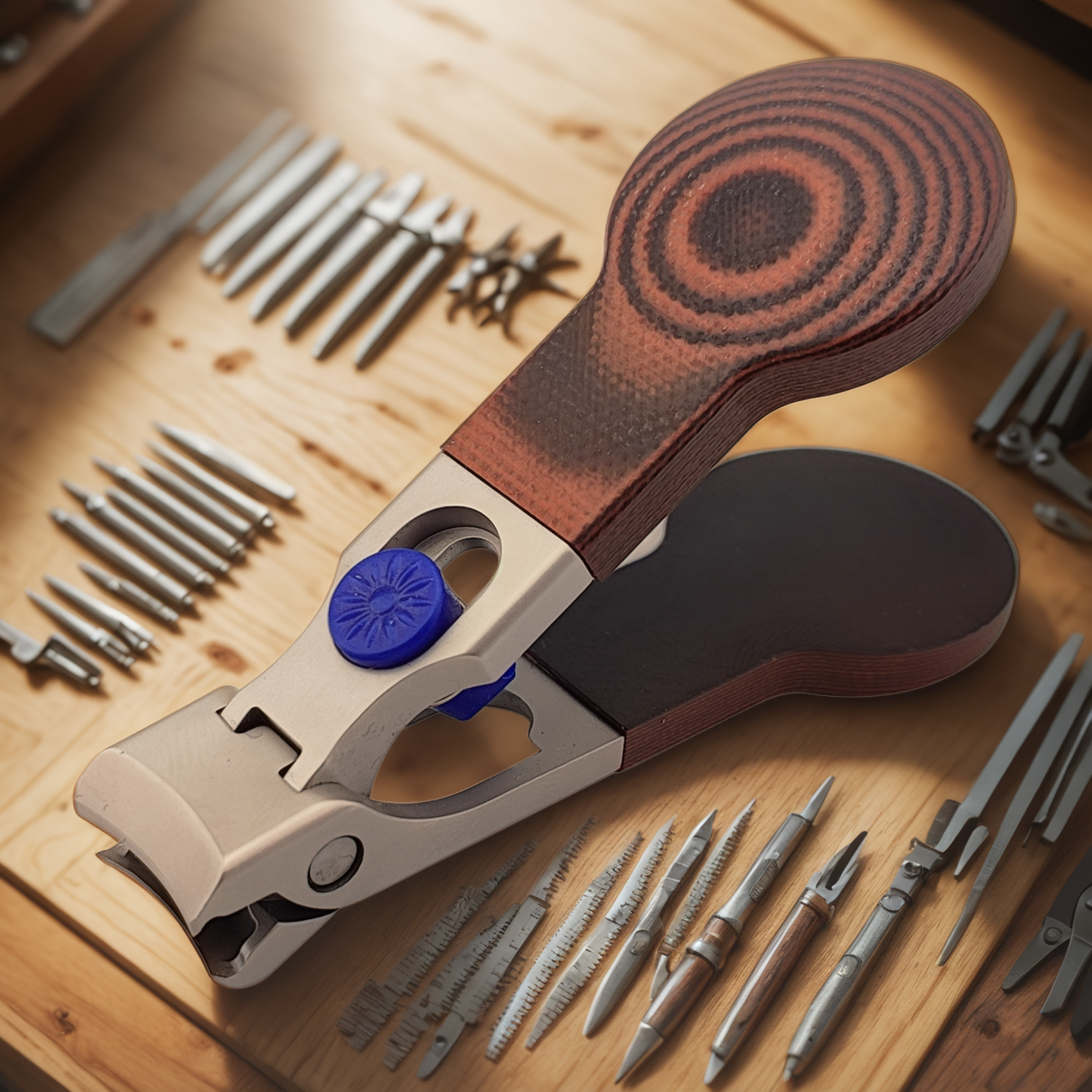
This review-style guide focuses on the ergonomic nail clipper category and the design details that matter when comparing options. Olimor Beauty’s current design direction highlights several features often requested in precision nail care tools: a G10 composite handle for grip, stainless steel components for durability, a lever-based mechanism to amplify cutting force and an adjustable blue dial knob intended for customized tightness and safe handling. Those features are useful reference points for anyone evaluating nail clipper quality without relying on vague marketing claims.
Why Ergonomics Matter in a Nail Clipper
Traditional lever nail clippers can work well for light trimming, but they often become uncomfortable when nails are thicker, hands are wet or the user has limited hand strength. Ergonomics addresses the points of contact between the tool and the user: where the fingers rest, how much pressure is needed, whether the handle slips and how predictable the cut feels.
A good ergonomic clipper should reduce unnecessary strain while improving control. That does not mean the tool must be large or complicated. It means the handle, lever, pivot and cutting edge should work together so the user can place the edge accurately, apply pressure steadily and finish the trim with fewer corrective cuts. This is especially important for people who trim nails frequently, such as salon professionals, caregivers, travel grooming-kit buyers and private-label beauty tool brands comparing samples.
Key Design Features to Review Before Choosing
When comparing ergonomic nail clippers, look beyond the surface finish. The most useful review criteria are functional: grip, leverage, cutting consistency, adjustability and cleaning access. The table below summarizes how each feature affects real use.
| Feature | What to Check | Why It Matters |
|---|---|---|
| Handle material | Texture, shape and slip resistance; G10 composite is one example used for strength and grip. | A stable handle helps the user keep the cutting edge aligned instead of twisting during pressure. |
| Lever action | Whether pressure transfers smoothly from the lever to the blades. | Good leverage can reduce hand fatigue and help with tougher nails. |
| Cutting components | Stainless steel components, blade alignment and edge finish. | Clean cutting depends on hard, well-aligned edges that meet evenly. |
| Adjustability | Any tension or tightness control, such as an adjustable dial knob. | Controlled tightness can improve handling and support safer storage or use. |
| Cleaning access | Open areas where nail dust and clippings may collect. | Tools that are easier to wipe and dry are more practical for repeated use. |
For a broader view of available categories, buyers can compare related beauty tool products and decide whether a nail clipper belongs in a personal care kit, salon retail line or specialized grooming assortment.
Grip and Handle Material: Why G10 Is Not Just Decorative
The handle is one of the most important parts of an ergonomic nail clipper because it determines how confidently the user can control the tool. G10 composite material, when used as a handle, is valued for strength and a secure grip. In nail care, that matters because clipping requires short bursts of pressure. If the handle slips even slightly, the user may cut at the wrong angle or apply more force than needed.
Texture should be evaluated with both dry and slightly damp hands because nail care often happens after washing, soaking or bathing. A handle that feels comfortable in a product photo may be too smooth in real use. Buyers should also check edge comfort: a grippy surface is helpful, but sharp handle corners can create pressure points during repeated clipping.
The best ergonomic handle is not necessarily the thickest one. It should fit the hand naturally, allow the thumb or fingers to rest securely and keep the cutting head visible. Visibility is especially important when trimming short nails or shaping corners. If the handle blocks the view of the cutting edge, precision suffers.
Cutting Force, Lever Design and Nail Types
A lever-based nail clipper increases the force applied to the cutting edge. This is useful for users who do not want to squeeze hard or who need to trim nails that are more resistant. However, leverage must be balanced with control. A clipper that cuts too abruptly can remove more nail than intended, while one with weak leverage forces the user to press repeatedly.
When reviewing samples, test the clipper on different nail conditions if appropriate: thin fingernails, average toenails and firmer nail edges. The goal is not to claim that one tool solves every nail concern, but to see whether the cutting action stays consistent. A well-designed lever should feel smooth through the full press, with the blade edges meeting cleanly at the end of the motion.
Blade alignment deserves close attention. Even stainless steel components can perform poorly if the edges are uneven or the pivot is loose. Look for a clean meeting line, no visible gap at the cutting surface and no side-to-side wobble when pressure is applied. After clipping, the nail edge should be reasonably smooth, with less need for aggressive filing.
The Role of an Adjustable Dial Knob
An adjustable blue dial knob is a distinctive feature in Olimor Beauty’s ergonomic nail clipper concept. The practical value of this type of control is that it can allow the user to tune tightness and handling feel instead of accepting a fixed mechanism. For buyers, the key question is whether the adjustment is stable, intuitive and useful in daily operation.
Review the knob by checking whether it turns predictably and remains in place during clipping. It should not loosen unexpectedly, create rattling or require excessive force to adjust. The color contrast of a blue dial can also help users identify the adjustment point quickly, which is useful when the tool is shared in a household or inspected as part of a product line.
For distributors and brand owners, adjustability can be an advantage only when supported by clear user instructions. A feature that people do not understand may lead to misuse. If you are considering this type of clipper for sourcing, include packaging copy, safety notes and simple diagrams in your evaluation plan.
Who Benefits Most from an Ergonomic Nail Clipper?
An ergonomic nail clipper can help many users, but it is especially relevant for people who value control or find standard clippers uncomfortable. That may include older adults, users with reduced grip strength, people who trim thicker nails, salon professionals who repeat the same motion many times and buyers assembling practical grooming kits.
- Home users: Look for a comfortable grip, clear view of the cutting edge and simple cleaning after use.
- Salon and spa buyers: Prioritize consistent cutting action, easy wipe-down surfaces and durable components suitable for repeated handling.
- Retail beauty brands: Compare ergonomics, packaging clarity and whether the feature set is easy for shoppers to understand.
- Caregivers: Choose designs that reduce slipping and allow slow, controlled trimming.
- Travel kit buyers: Consider safety, compact handling and whether the clipper can be stored without snagging nearby items.
To compare how nail care tools may fit into a broader assortment, browse Olimor product collections and group products by use case rather than appearance alone.
Maintenance and Hygiene Checks
Even a well-designed nail clipper needs basic maintenance. Nail fragments and fine dust can collect around the cutting head, pivot and handle joints. After use, wipe the tool with a dry or slightly damp cloth and make sure it is fully dry before storage. If the clipper is used in a shared environment, follow the hygiene procedures required for that setting.
Do not judge durability only by the first cut. Review how the mechanism feels after repeated opening and closing. Listen for scraping, check for looseness and confirm that the blade alignment remains stable. If a clipper includes an adjustable knob, include that part in routine checks so it does not become overly tight or loose over time.
Sourcing Questions for Beauty Tool Buyers
For business buyers, a nail clipper review should become a structured evaluation rather than a quick visual inspection. Before moving forward with a product, prepare a checklist that covers function, finish, packaging and end-user instructions.
- Confirm the intended user group: general grooming, salon retail, travel, senior-friendly care or thicker-nail trimming.
- Request clear information on handle material, metal components and surface treatment without assuming unsupported specifications.
- Test grip comfort with different hand sizes and with dry and slightly damp hands.
- Evaluate cutting consistency across multiple samples, not only one display unit.
- Check whether the adjustable dial or tension feature is easy to understand and stable during use.
- Review packaging language for safety, cleaning and storage instructions.
- Compare the tool with other nail care items so the final assortment has a clear purpose.
If you need help matching an ergonomic nail clipper concept to a beauty-tool range, you can contact Olimor or send an inquiry with your intended market, packaging needs and functional priorities.
Final Verdict: Precision Comes from the Whole Design
The best ergonomic nail clipper is not defined by one feature alone. A G10 composite handle can support grip, stainless steel components can support clean cutting, a lever-based design can improve force transfer and an adjustable blue dial knob can add handling control. The real measure is how these details work together in the user’s hand.
For shoppers, choose a clipper that feels steady, cuts cleanly and can be maintained easily. For beauty-tool buyers, evaluate samples through repeated functional tests and clear sourcing criteria. A precise nail clipper should make trimming more controlled, more comfortable and more predictable—without relying on oversized claims or unnecessary complexity.