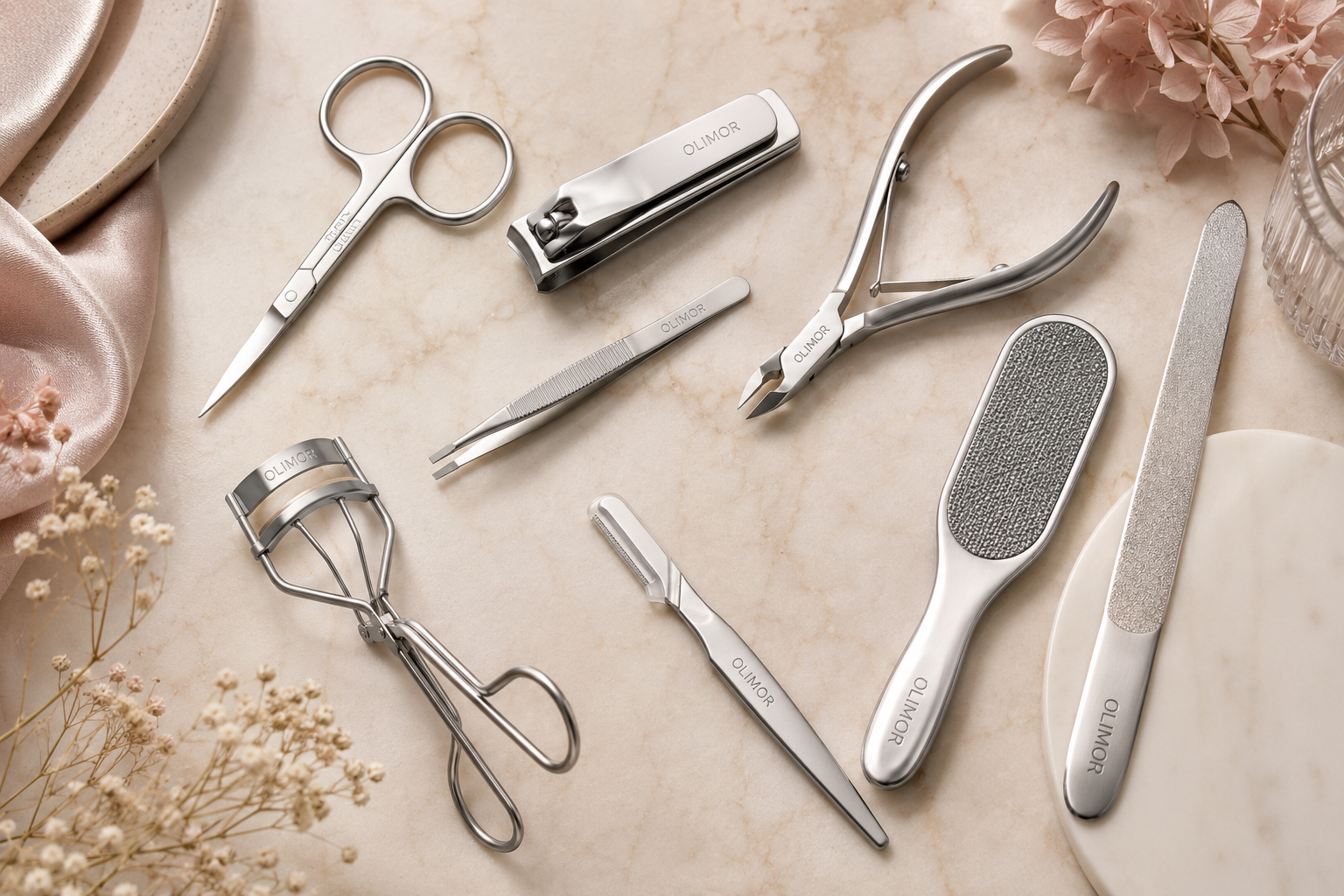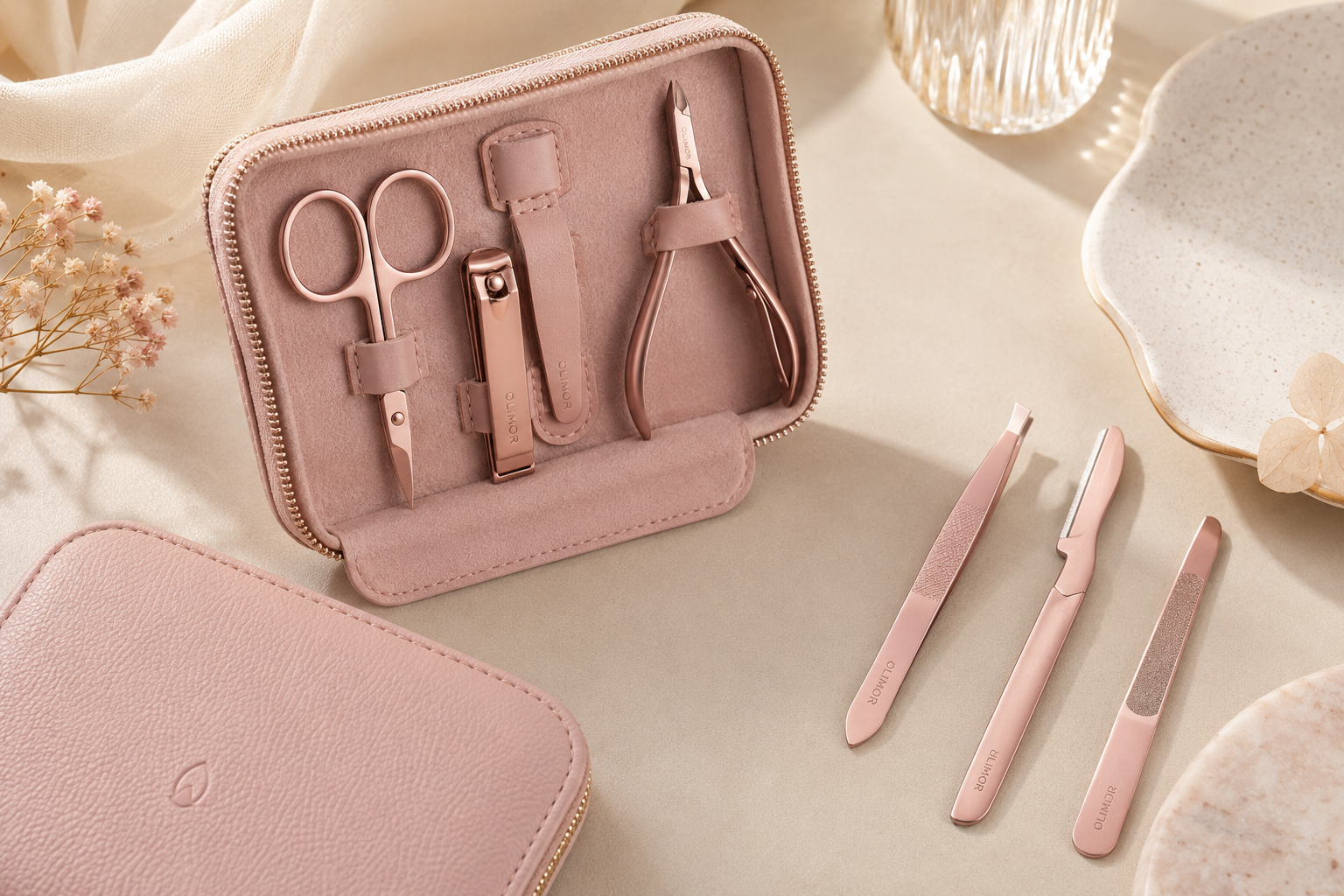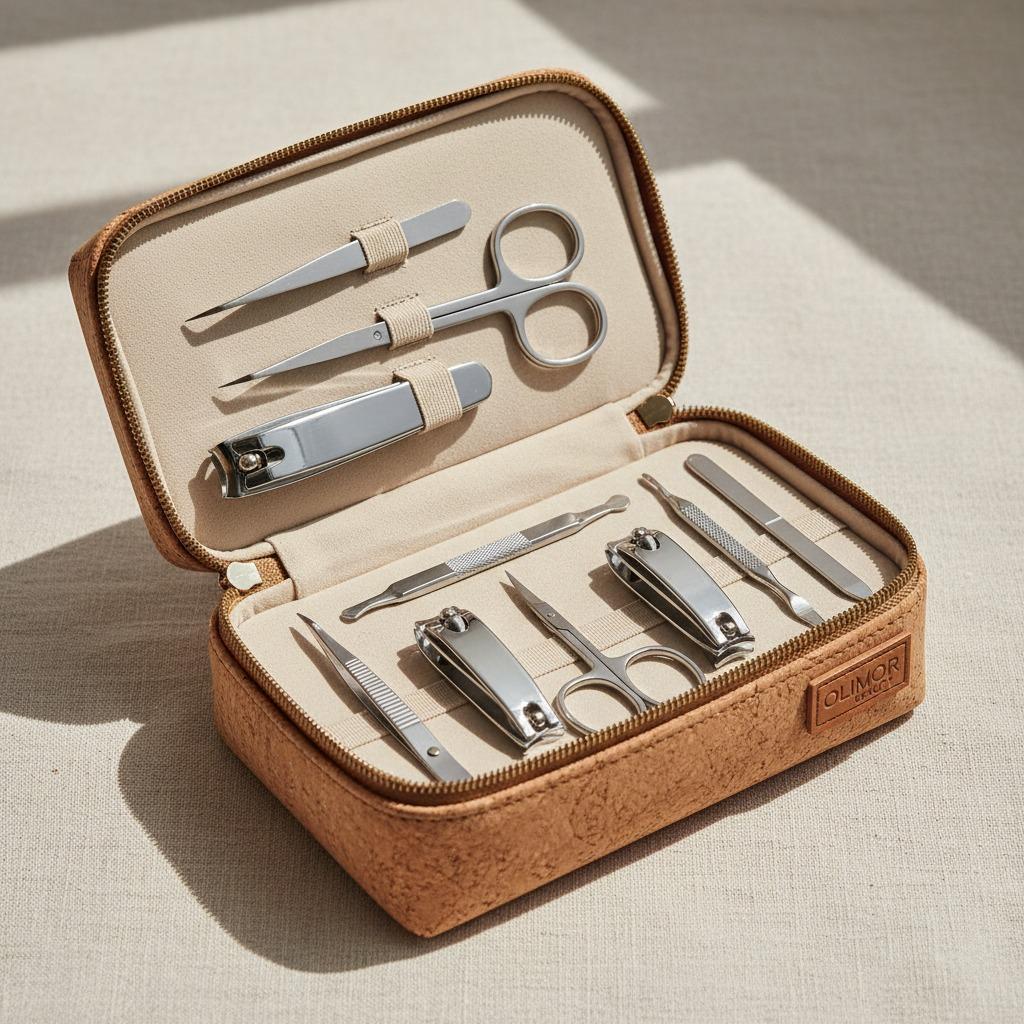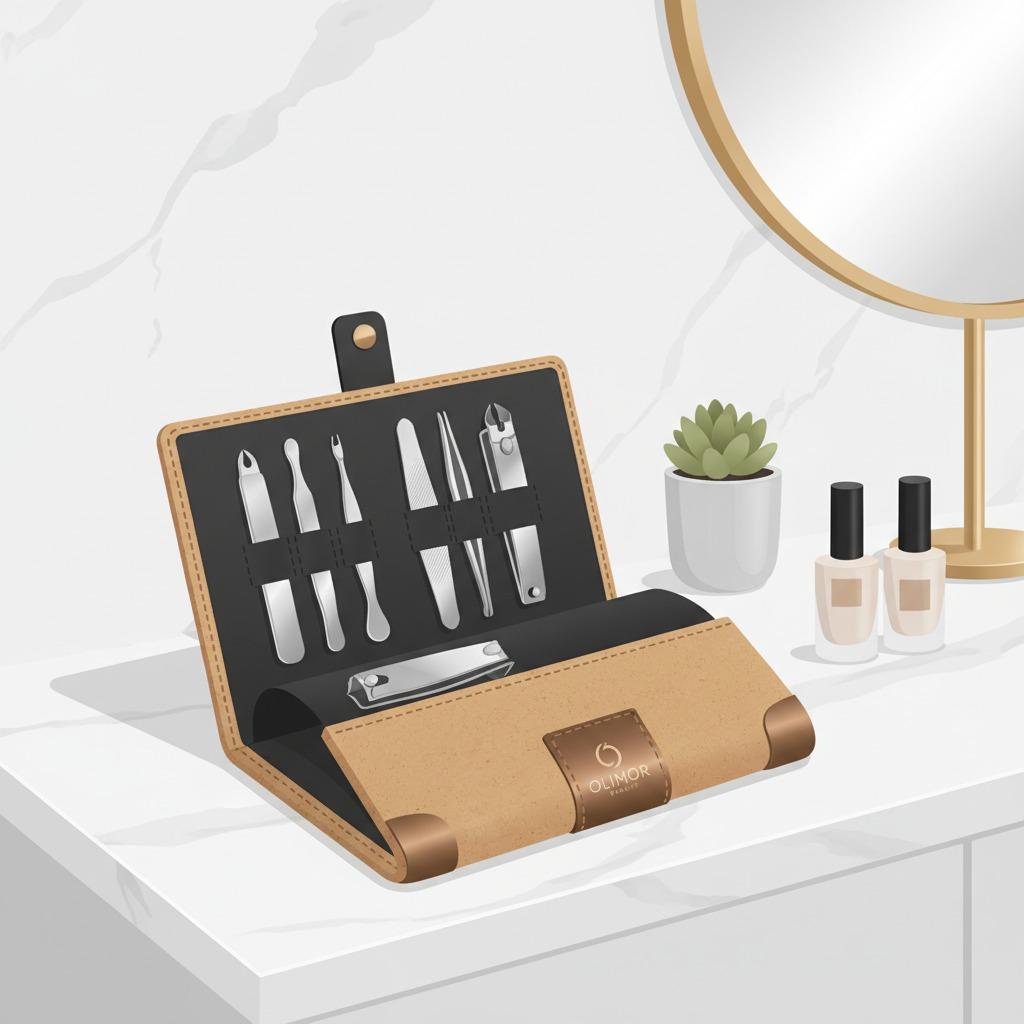











Precision tweezers are small tools, but they strongly affect the quality of everyday grooming. A well-made tweezer can grip a fine brow hair at the root, remove a single facial hair cleanly, and help manage a visible ingrown hair with less unnecessary skin pinching. A poorly aligned tweezer can slip, break hair at the surface, scratch skin, or make a simple task feel frustrating.
This guide focuses on stainless steel slanted tweezers for beauty care. It is written for consumers who want better results at home and for B2B buyers sourcing tweezers for salons, retailers, private-label kits or beauty tool assortments. Olimor Beauty tweezers are described with stainless steel construction, slanted tips and ergonomic handling, so the most important purchasing questions are practical: how the tips meet, how the tool feels in the hand, how it should be cleaned, how packaging protects it, and how a supplier supports consistent quality.
If you are comparing tweezers as part of a wider grooming range, review related beauty tool products and broader beauty tool collections while building your assortment.
What a Precision Tweezer Should Do
A precision tweezer should hold the hair securely without requiring excessive pressure. The working edge matters more than the overall appearance. When the two tips meet evenly, the user can grasp short, fine or coarse hairs with control. When the arms flex smoothly, the hand stays steadier during repeated use. When the surface is finished cleanly, the tool is less likely to feel rough against the skin.
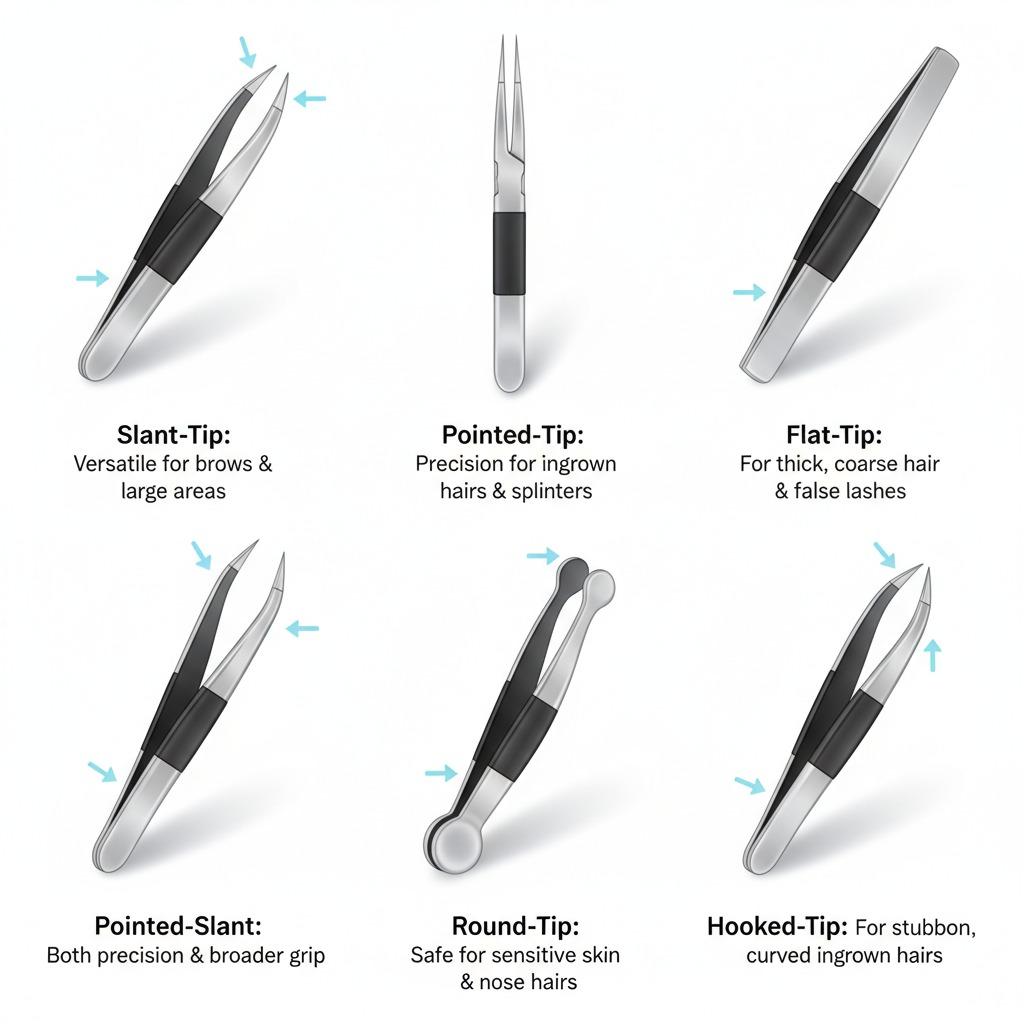
Slanted tips are widely used in beauty care because they offer both visibility and versatility. The angled edge can sit close to the skin for brow shaping, while the narrower end of the slant can help isolate a single hair. For a visible ingrown hair, the fine end may help lift an exposed loop or end without forcing the tool under the skin. That does not make tweezers a medical instrument; it simply means a precise slanted edge gives the user better control in careful grooming situations.
For commercial buyers, precision should be treated as a performance requirement, not a marketing word. Samples should be tested by gripping fine hair or a thin fiber near the tip, at the center of the edge, and across both sides of the slant. The tweezer should hold without obvious slipping, and the arms should return evenly after pressure is released. Visual inspection alone is not enough.
When to Use Tweezers for Ingrown Hair Care
An ingrown hair occurs when a hair grows back into the skin or becomes trapped under the surface instead of emerging normally. It may look like a small red bump, a tender spot, or a curved hair visible beneath thin skin. Tweezers should only be used when the hair is visible or partly accessible. If the hair is completely buried, digging with the tip can irritate the skin and increase the chance of marks or infection.
Start with clean hands, clean skin and good lighting. Warm water and a mild cleanser can remove oil, makeup and debris, making the hair easier to see and easier to grip. A magnifying mirror may help, but it should not encourage aggressive picking. The safest tweezer use is limited to hair that can be grasped without breaking the skin.
- Use tweezers when: the hair end or loop is visible, the area is only mildly irritated, and the tool can grip without puncturing skin.
- Do not tweeze when: the bump is very painful, swollen, spreading, filled with pus, bleeding, or located in a highly sensitive area.
- Stop immediately if: the skin breaks, strong pain occurs, or repeated attempts fail to free the hair.
- After care: keep the area clean and avoid heavy cosmetics or irritating products directly over the spot until it calms.
For persistent, infected or painful skin problems, consumers should seek professional advice. Salons and retailers should avoid positioning beauty tweezers as medical treatment tools. They are grooming tools for accessible hair removal and careful beauty maintenance.
How to Use Slanted Tweezers for Brows and Facial Hair
Technique determines whether a good tweezer performs well. For brows, brush hairs upward and outward first so the natural shape is visible. Remove only the hairs outside the intended line, one at a time. Hold the skin gently taut, place the slanted edge close to the root, and pull in the direction of hair growth with steady pressure. This helps reduce breakage and supports a cleaner result.
For fine facial hair, the main problem is slipping or snapping. Clean skin gives the tips a better chance to grip because oil, lotion and makeup residue can interfere with contact. Place the tips close to the skin, press firmly but not aggressively, and remove the hair in one controlled motion. If the tweezer repeatedly slides off the hair, clean the tips before blaming the tool.
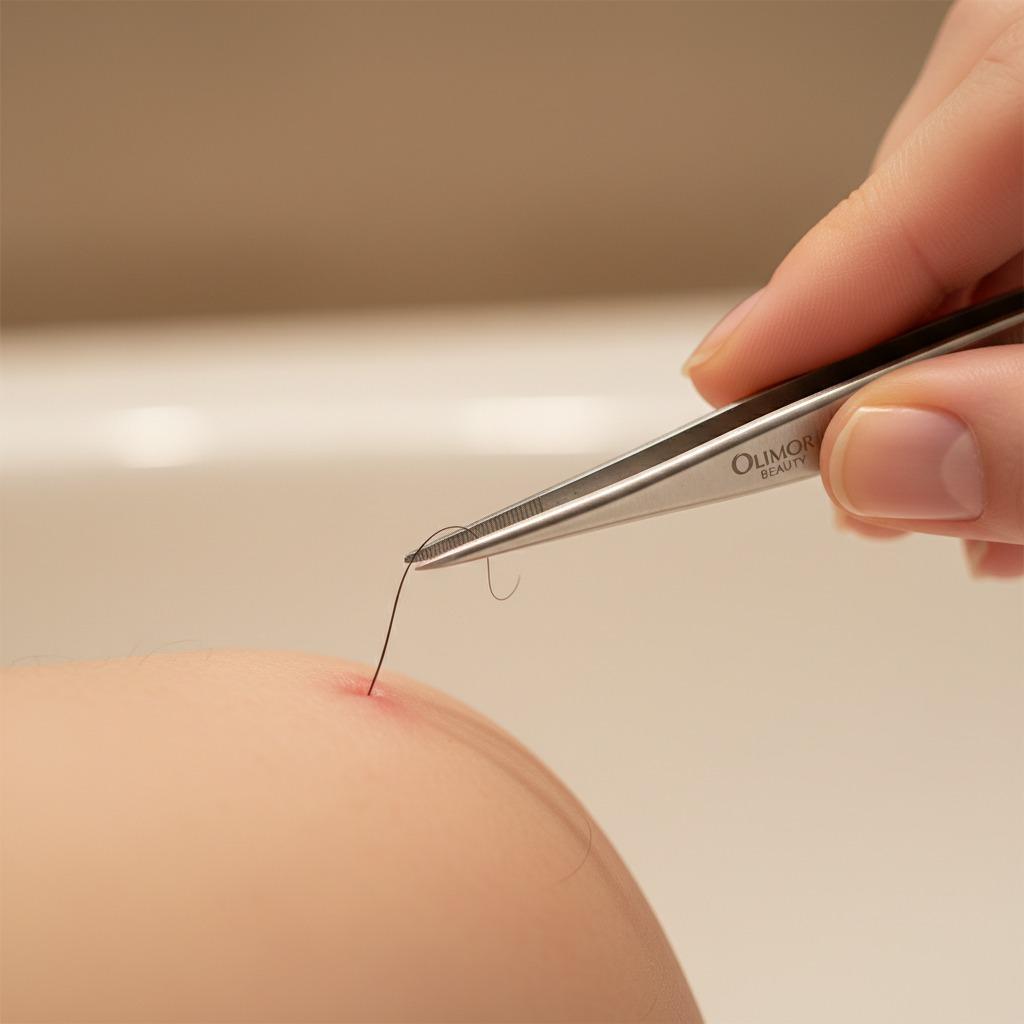
For a visible ingrown hair, use a slower approach. If a loop or hair end is already exposed, use the narrow end of the slant to lift it gently. Then grasp the exposed hair without pinching surrounding skin. In some cases, simply releasing the trapped end is enough; full root removal is not always necessary if it causes irritation. The goal is minimal disruption, not force.
- Wash hands and cleanse the target area.
- Clean or disinfect the tweezer tips before use.
- Work under bright, direct light.
- Grip close to the root or exposed hair end.
- Pull in the direction of hair growth.
- Clean the tips again and store the tweezer dry.
Selection Criteria for Salons, Retailers and Private-Label Buyers
B2B buyers should evaluate tweezers from the viewpoint of the end user. A salon user may value repeat cleaning, reliable grip and hand comfort during daily work. A retail buyer may also consider display appearance, packaging protection, instruction clarity and consistency across a product line. A private-label sourcing team may need customization options, stable finish quality and packaging that fits an existing brand system.
Stainless steel construction is a practical feature for beauty tweezers because it supports routine cleaning and a durable tool feel. However, buyers should still confirm the exact product specification, surface finish, packaging method and inspection process with the supplier. Do not assume that all stainless steel tweezers perform the same. Alignment, polishing, edge finishing and tension control can vary significantly.
| Evaluation point | Why it matters | What to check on samples |
|---|---|---|
| Tip alignment | Determines whether fine and short hairs can be gripped cleanly. | Close the tweezer under light and check for even contact with no obvious gap. |
| Slanted edge finish | Affects control near the skin and reduces rough contact. | Inspect for burrs, uneven polishing, sharp outer corners or damaged tips. |
| Grip tension | Influences comfort during repeated brow or facial hair work. | Press several times and confirm smooth flex and even return. |
| Ergonomic handling | Helps users work steadily in small areas. | Check the width, hand feel and control when gripping fine hairs. |
| Surface and cleaning suitability | Supports hygiene and long-term maintenance. | Confirm stainless steel construction and review cleaning guidance with the supplier. |
| Packaging protection | Prevents tip damage before sale or use. | Make sure the tips are protected from impact during shipping and display. |
| Assortment fit | Improves range consistency for retail or kits. | Compare finish, color direction, labeling area and instructions with other tools. |
Before committing to a purchase, request samples and test them under realistic conditions. If the product will be sold in a regulated retail market, verify current consumer product safety, labeling and packaging requirements. Public bodies such as the U.S. Consumer Product Safety Commission and the European Commission publish consumer product safety information, but buyers should always check the current versions and request supplier documents that apply to the target market.
Manufacturing and Inspection Details That Affect Performance
The usefulness of a tweezer depends on a sequence of small manufacturing and finishing decisions. The arms must be shaped so pressure travels evenly toward the tips. The gripping edges must meet consistently. The slanted tip should be fine enough for accuracy but finished smoothly enough for beauty use. Surface finishing should support a clean look and comfortable contact with the hand.
Inspection should combine visual checks and practical grip tests. A buyer or quality team can examine whether both arms are symmetrical, whether the tips close evenly, whether the edge has visible defects, and whether the tool returns to its original position after pressure. A simple functional test using fine hair or a comparable thin fiber is often more revealing than looking at the tool inside packaging.
For retail and private-label programs, packaging inspection is also important. Tweezers can lose performance if the tips are knocked during transit. Protective sleeves, inserts or packaging structures should prevent the working edge from striking hard surfaces. If the tweezer is sold with other tools, the arrangement should stop metal parts from rubbing against or bending the tips.
Buyers should ask suppliers how products are checked before shipment and what customization options are available without assuming unconfirmed claims. Relevant questions include whether tip protection is included, whether branding can be applied, how packaging artwork is handled, and what product information should appear on retail packaging. Olimor buyers can contact the team to discuss sourcing requirements before finalizing a specification.
Cleaning, Storage and Maintenance
Tweezers touch skin, hair, oil and sometimes irritated areas, so cleaning is essential. For personal use, wipe the tips before and after grooming. For professional or shared environments, follow local hygiene regulations and workplace procedures. If disinfectants are used, follow the disinfectant manufacturer’s instructions and confirm suitability for the tool surface.
After cleaning, dry the tweezer thoroughly before storage. Stainless steel is practical for beauty tools, but dry storage still helps preserve the finish and working edge. Avoid dropping tweezers loose into a crowded cosmetic bag with nail files, scissors, metal tools or hard containers. Small tip damage may not be obvious at first, but it can reduce grip and cause slipping.
If a tweezer begins to perform poorly, troubleshoot before replacing it. First, clean the tips to remove oil or residue. Next, inspect the edge under bright light. If the tips no longer meet evenly, the tool may have been dropped or used on inappropriate objects. Tweezers should not be used as package openers, craft pliers, nail tools or household repair tools because twisting and prying can affect alignment.
Cost Factors and Supplier Evaluation
Tweezer cost is influenced by more than the base tool. Material selection, finishing level, tip alignment control, packaging, branding, inspection requirements and order complexity can all affect the final quotation. A basic loose-packed tool and a retail-ready private-label item are not the same sourcing project. Buyers should compare quotations against the full specification rather than only the unit price.
When evaluating suppliers, ask for clear product descriptions, sample availability, packaging options and quality expectations. For a retail program, also clarify carton packing, barcode or labeling needs, artwork responsibilities and any documents required for the destination market. For salons, prioritize working performance, cleaning guidance and replacement planning. For beauty kits, confirm that the tweezer’s finish and dimensions fit the rest of the assortment visually and functionally.
A reliable supplier conversation should be specific. Instead of asking for the cheapest tweezer, describe the channel, target user, packaging style, desired finish direction and quality concerns. This helps the supplier recommend an option that fits the project. To start a purchasing discussion, submit details through the product inquiry form.
Practical Buying Checklist
- Confirm the intended use: brow shaping, facial hair removal, beauty kits, salon use or retail resale.
- Request samples before placing a bulk order.
- Test tip alignment with fine hair or a thin fiber.
- Check grip tension for comfort and repeat use.
- Inspect the slanted edge for burrs, gaps or rough corners.
- Verify stainless steel construction and review the surface finish.
- Confirm packaging protects the tips during transport and display.
- Review customization, artwork and labeling needs early.
- Check applicable consumer product safety and labeling rules for the destination market.
- Keep supplier documents and specifications on file for internal review.
FAQ: Samples, MOQ, Customization, Quality and Lead Time
Can buyers request samples before ordering?
Yes. Sample evaluation is recommended because tip alignment, tension and hand feel should be tested in real use conditions. Contact Olimor with the intended channel and product expectations so the team can advise on available options.
Is there an MOQ for precision tweezers?
MOQ depends on the product specification, packaging and customization requirements. Buyers should confirm the current requirement directly before planning a launch or promotion.
Can tweezers be customized for private-label retail?
Customization may involve packaging, branding presentation or assortment planning depending on the project. Share artwork needs, retail format and market requirements early so feasibility can be checked.
How should quality be confirmed before shipment?
Agree on the product specification, packaging requirements and inspection points in advance. Practical checks should include tip alignment, grip performance, surface finish, tension and packaging protection.
How is lead time determined?
Lead time can depend on order quantity, customization, packaging approval and production scheduling. Confirm timing with the supplier after the specification is clear.
Final Guidance
A precision slanted tweezer should make grooming more controlled, not more aggressive. For users, the best results come from clean skin, bright light, careful grip and proper aftercare. For professional buyers, the best results come from sample testing, clear specifications and attention to packaging protection.
Olimor Beauty’s stainless steel slanted tweezers are positioned for practical beauty care, including brow shaping, facial hair removal and careful management of visible ingrown hairs. Whether the product is sold individually, used in a salon or included in a grooming kit, focus on the details that determine real satisfaction: aligned tips, smooth tension, clean finishing, ergonomic handling and responsible maintenance guidance.