










Heat treatment is one of the main reasons one steel nail clipper cuts cleanly while another crushes, tears or dulls too quickly. The process changes the internal structure of steel so the blade can hold a sharp edge without becoming so brittle that it chips during repeated use.
For brands, distributors and product developers, heat treatment is not only a factory term. It affects cutting feel, edge retention, jaw stability, rejection rates and customer satisfaction. A polished clipper can look attractive in packaging, but if the steel has not been hardened, tempered, ground and inspected correctly, the product may not perform reliably in daily grooming use.
This guide explains the practical role of annealing, quenching, tempering and inspection in steel nail clipper manufacturing. It also provides sourcing questions and quality checkpoints that help B2B buyers compare suppliers more effectively when reviewing beauty tool products or developing a private label grooming line.
Why Heat Treatment Matters in a Nail Clipper
A nail clipper blade has a demanding job. It must be hard enough to cut keratin cleanly, tough enough to resist chipping, and stable enough to maintain alignment with the opposing blade. Heat treatment helps create that balance by controlling the microstructure of iron-carbon steel.
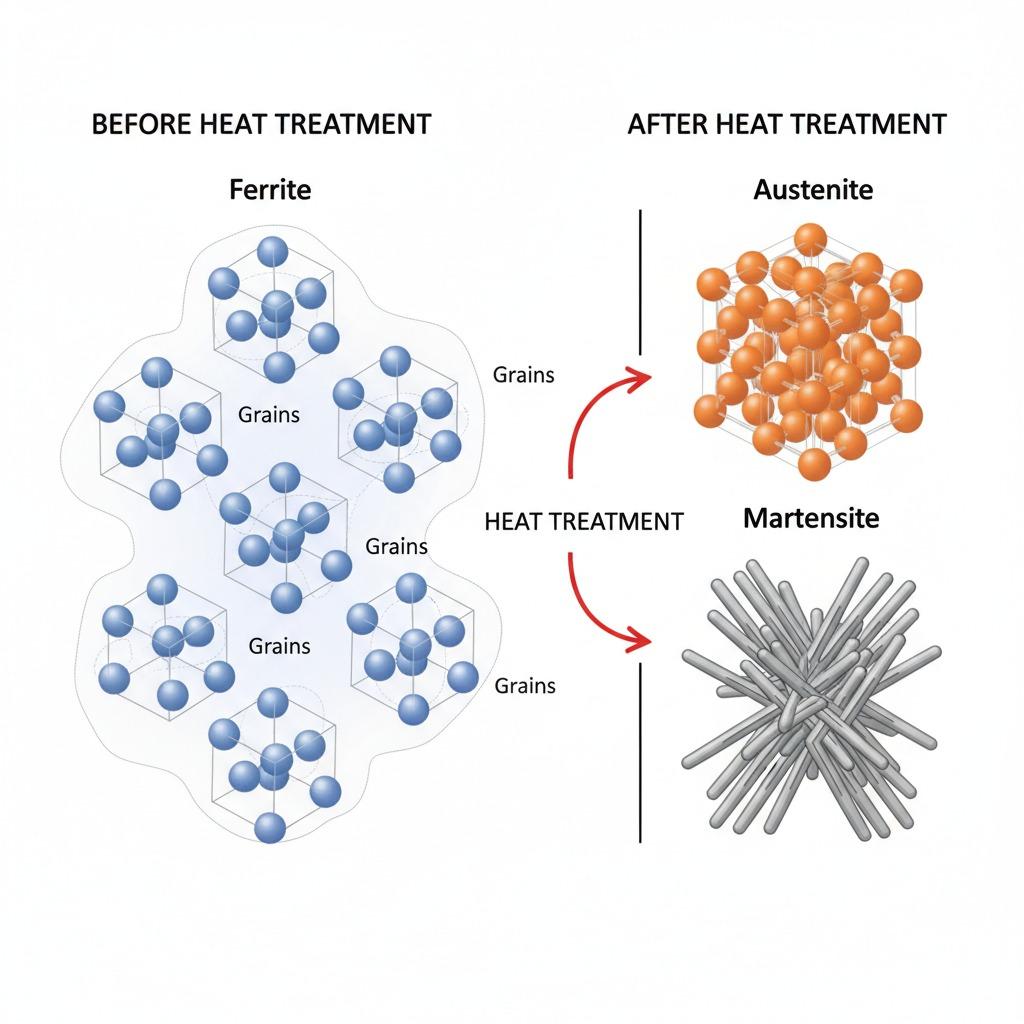
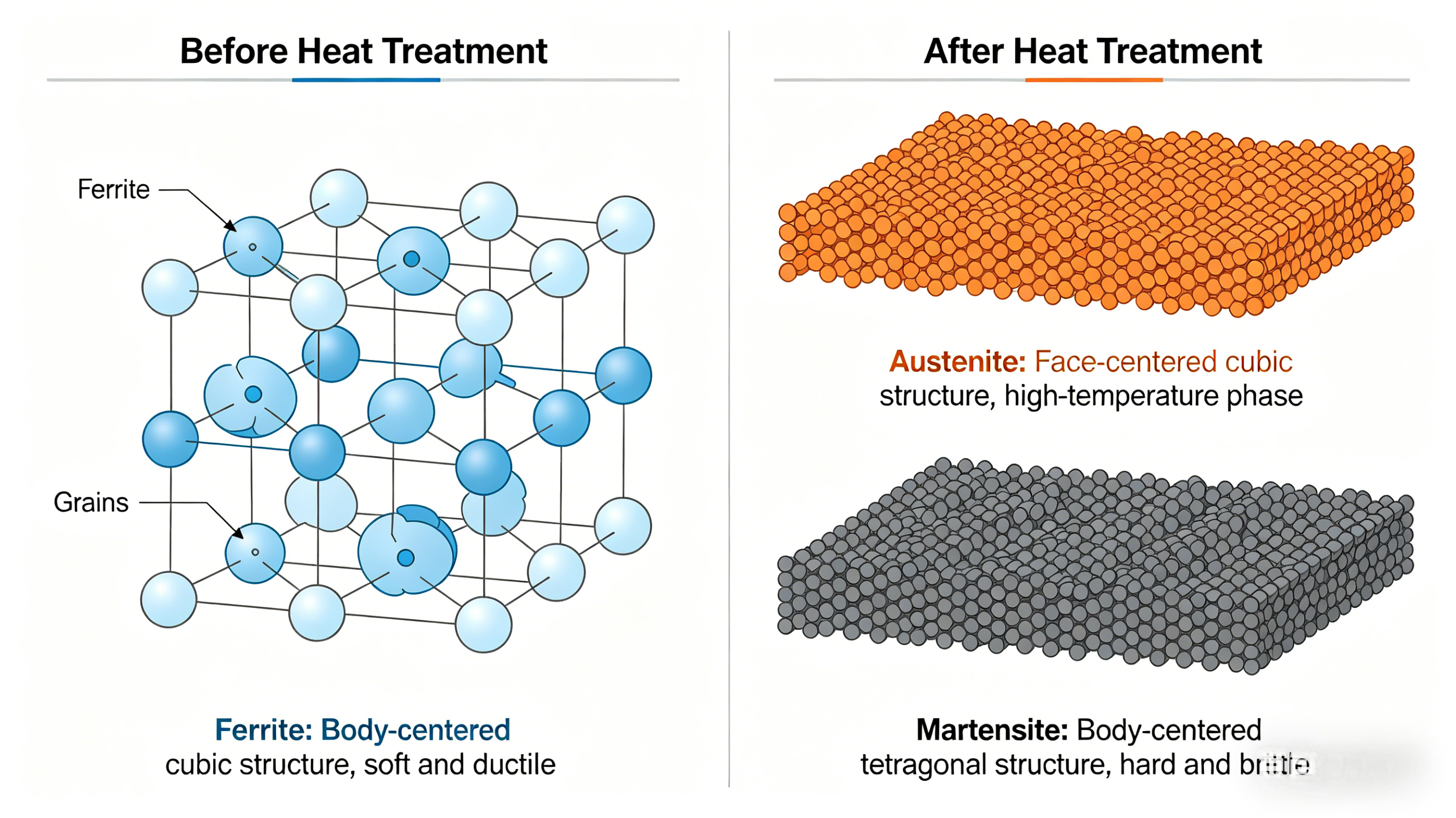
Steel is mainly iron with carbon dissolved in its structure. Depending on temperature and cooling speed, the atoms arrange into different forms. These structures influence hardness, ductility, toughness and machinability. In nail clippers, the most relevant structures are often described as ferrite, pearlite, austenite and martensite.
- Ferrite: relatively soft and ductile. It helps steel bend rather than break, but it is not enough for a durable cutting edge by itself.
- Pearlite: a layered structure that provides more strength than ferrite while retaining some workability.
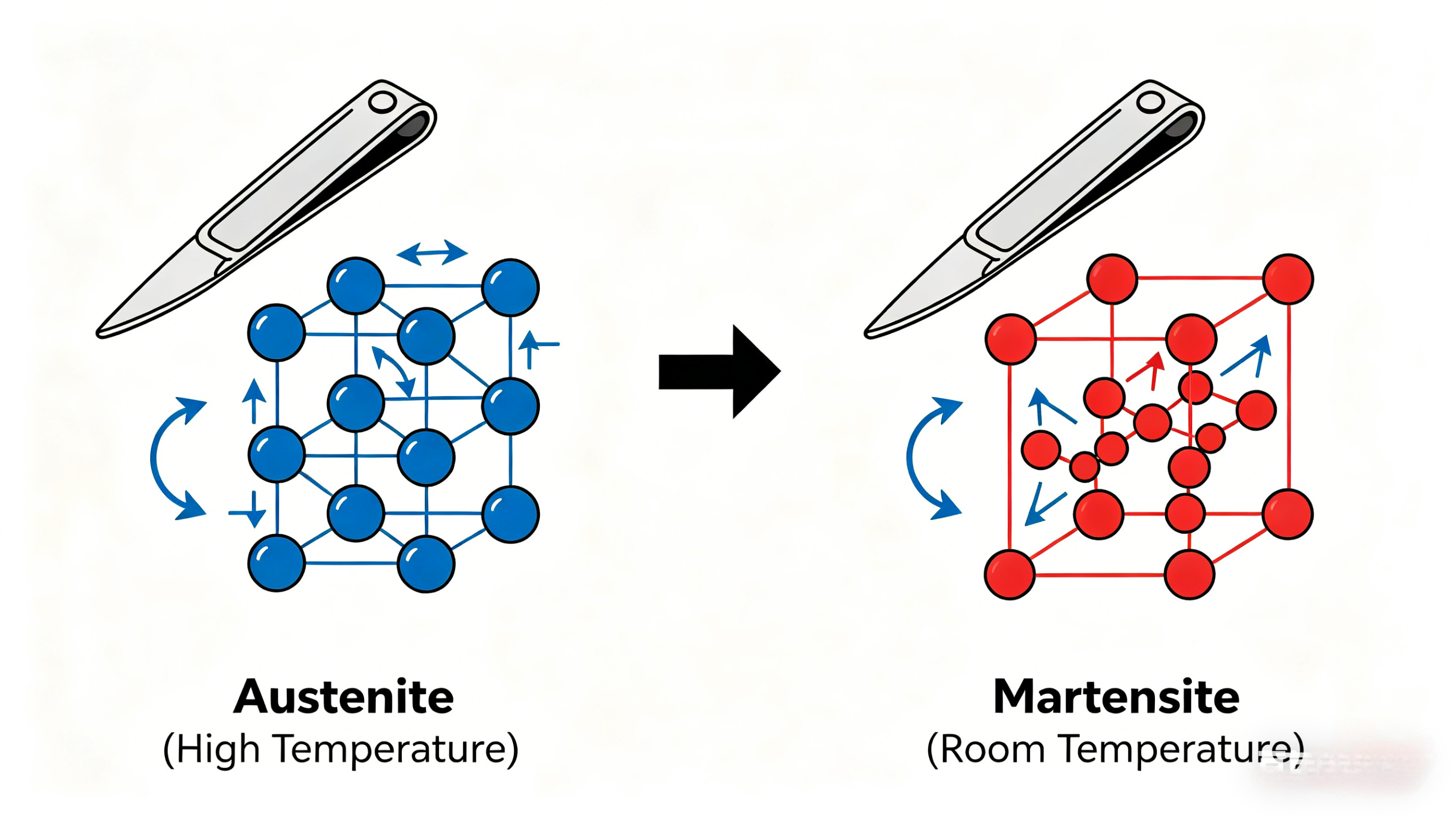
- Austenite: a high-temperature structure that allows carbon to dissolve more evenly before hardening.
- Martensite: a very hard structure formed by rapid cooling from the austenite region. It supports edge retention but can be brittle if not tempered.
If the steel remains too soft, the edge can roll, the jaws may lose crisp contact, and the clipper may feel blunt after limited use. If the steel is hardened without enough toughness, the blade corners may chip or crack, especially where stress concentrates during cutting. Heat treatment is the controlled route between these two failures.
The Main Heat Treatment Steps Used for Steel Nail Clippers
Not every heat treatment step creates the final blade condition. Some steps prepare the steel for forming or machining, while others establish final cutting performance. The appropriate route depends on the steel selected, clipper design and manufacturing sequence.
| Process | Main purpose | Typical cooling approach | Effect on steel behavior | Relevance to nail clippers |
|---|---|---|---|---|
| Annealing | Soften steel and reduce internal stress | Very slow cooling, often in a furnace | Improves formability and machinability | Useful before stamping, forming or machining; not usually the final blade condition |
| Normalizing | Refine and even out the structure | Air cooling after heating | Supports more uniform grain structure | Can help stabilize later processing where the steel and route call for it |
| Quenching | Increase hardness after austenitizing | Rapid cooling in a suitable medium such as oil, water or polymer | Forms hard martensite | Provides the primary hardening effect for the cutting edge |
| Tempering | Reduce brittleness after quenching | Reheating below hardening temperature, followed by controlled cooling | Relieves internal stress and improves toughness | Critical for reliable cutting and lower risk of brittle edge failure |
| Austempering | Create bainitic structures in suitable steels | Interrupted cooling in a controlled bath | Can combine strength and toughness | Relevant only when the selected steel and supplier process justify it |
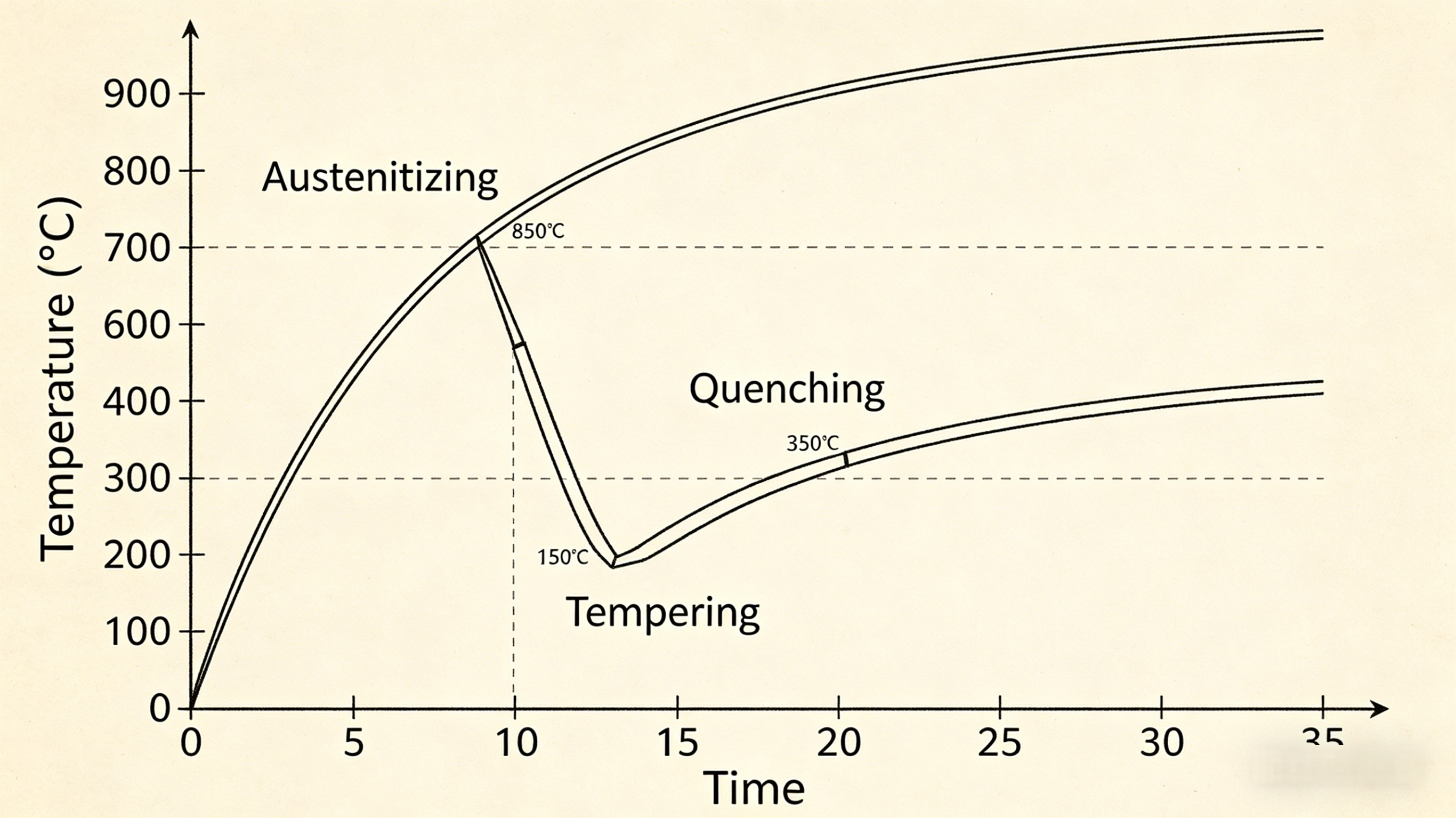
In a typical hardening route, steel is heated into the austenite region, where carbon can dissolve into the iron lattice. When the part is cooled quickly, the structure changes into martensite. This is the main source of high hardness. However, fresh martensite contains high internal stress, so tempering is needed to reduce brittleness while keeping useful hardness.
The technical range often cited for nail clipper blades is Rockwell C 50-60 after quenching and tempering. This should be treated as a target range to discuss with the supplier, not as a universal rule for every clipper. The right hardness depends on steel choice, blade geometry, grinding quality, jaw design and target product positioning.
How Heat Treatment Changes Cutting Feel and Durability
End users do not see microstructures, but they immediately feel their effect. A well-treated steel nail clipper should cut with controlled pressure, produce a cleaner edge on the nail and resist dulling under normal grooming use. A poorly treated clipper may pass a quick visual check yet still disappoint after repeated cuts.
Common problems linked to heat treatment, grinding or the interaction between the two include:
- Rolled cutting edges: the blade may be too soft, the edge may be too thin for the hardness level, or the sharpening process may not support the design.
- Chipped corners: the blade may be over-brittle, insufficiently tempered, damaged during grinding or stressed by poor jaw contact.
- Uneven cutting feel: hardness may vary between parts, the two jaws may not meet correctly, or edge geometry may be inconsistent.
- Jaw deformation: the steel and heat treatment may not provide enough strength for the lever force and body design.
- Rough or corroded edge areas: heat treatment is different from surface finishing, but scale, residue, burrs or poor cleaning after heating can affect appearance, comfort and perceived quality.
This is why performance evaluation should not stop at a hardness reading. Hardness helps describe the blade material, but cutting feel depends on heat treatment, sharpening, alignment, leverage, spring behavior and final inspection working together.
Inspection Points Buyers Can Use Before Approval
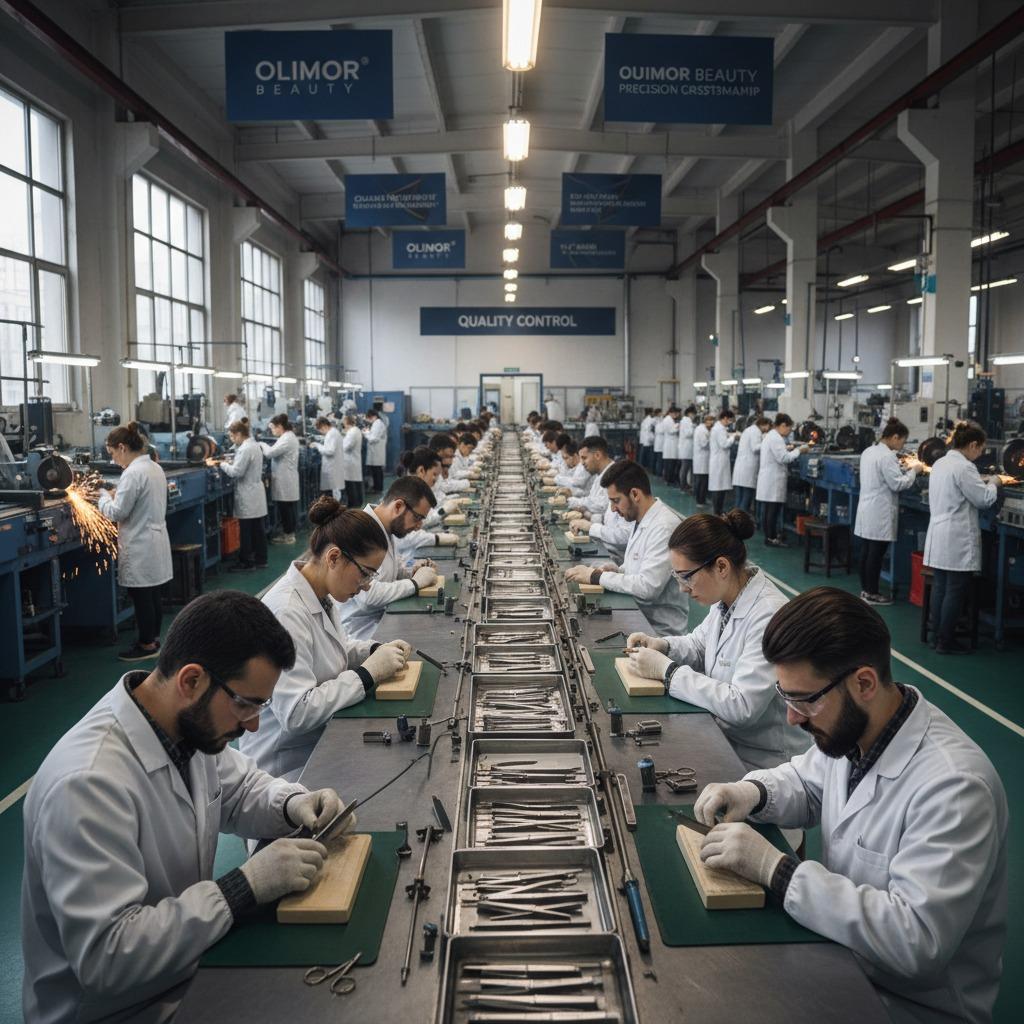
B2B buyers do not need to manage the furnace, but they should ask for evidence that the factory controls the process. The goal is not to collect a single impressive specification. The goal is to confirm that production parts remain consistent from batch to batch.
When reviewing nail clipper samples or developing a sourcing specification, use the following checklist:
- Confirm steel selection and process route. Ask what steel is used for the blade and body, which parts are heat treated, and when the treatment occurs in the manufacturing sequence.
- Review hardness control. Ask how hardness is checked, where readings are taken, and whether production records are maintained for the agreed range.
- Test actual cutting performance. Use real nails or representative samples to compare cutting force, edge cleanliness, jaw contact and noise.
- Inspect the edge under magnification. Look for micro-chips, burrs, uneven sharpening, burned areas from grinding or inconsistent contact lines.
- Check jaw alignment. The upper and lower cutting edges should meet properly without excessive offset or gaps that cause tearing.
- Compare multiple samples. Do not rely only on one approval sample. Review samples from different production lots where possible.
- Review finishing after heat treatment. Cleaning, polishing and surface finishing should remove scale and residue and leave comfortable contact surfaces.
- Confirm rejection criteria. Ask how warped, chipped, over-brittle, under-hardened or poorly polished parts are identified before packing.
For hardness testing, recognized references such as ISO 6508 for Rockwell hardness testing or ASTM E18 may be relevant. Buyers should verify the current version of any standard and ask suppliers for their own inspection method, calibration practice and records. A supplier should not be assumed certified to a standard unless it provides current supporting documents.
Heat Treatment Is Only One Part of Nail Clipper Design
Heat treatment cannot rescue a poor design. A very hard blade may still pinch if the jaws are misaligned. A carefully polished body may still perform poorly if the edge angle is inconsistent. A comfortable lever can improve user experience, but it cannot compensate for a soft edge that rolls quickly.
The strongest nail clipper designs combine material choice, heat treatment, grinding and assembly into one coherent plan. Important design factors include:
- Blade angle: affects sharpness, durability and the amount of pressure required to cut.
- Edge thickness: too thick may feel blunt; too thin may chip or deform depending on hardness and use.
- Jaw clearance: controls whether the two cutting edges meet cleanly along the intended contact line.
- Lever geometry: changes how user force is transferred to the jaws.
- Spring and pin quality: influence opening action, stability and repeatability.
- Surface finishing: affects comfort, corrosion resistance perception, cleanliness and retail appearance.
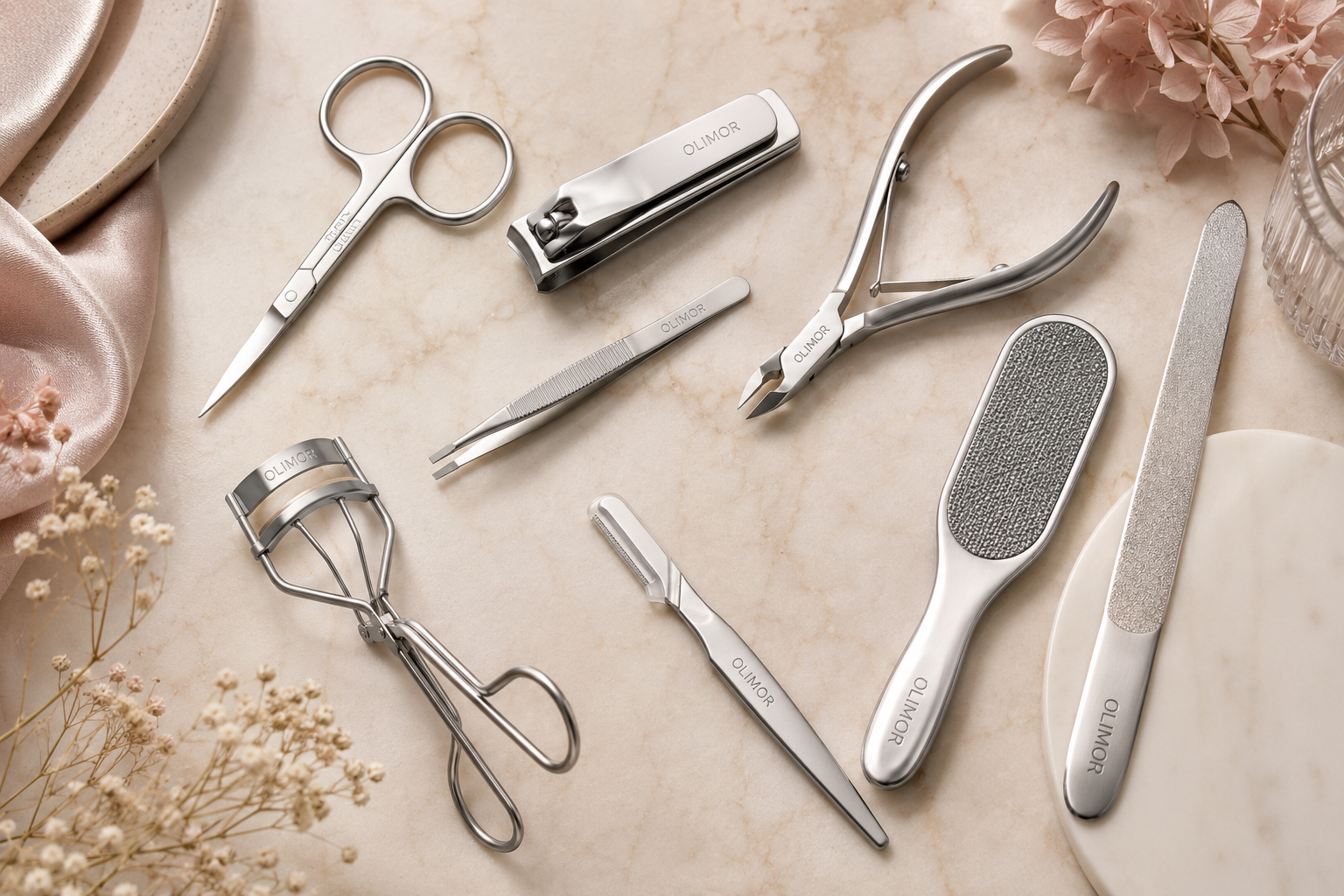
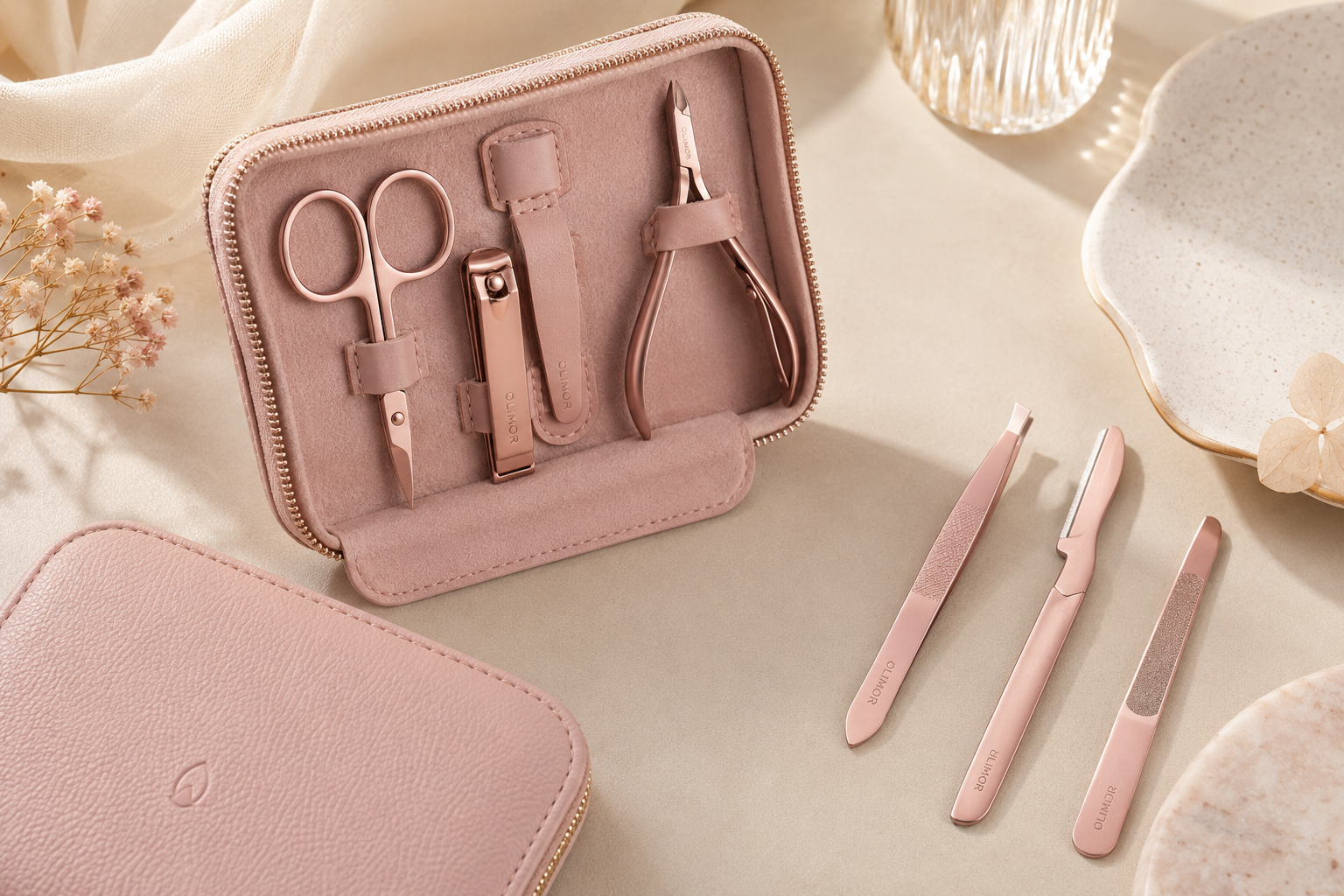
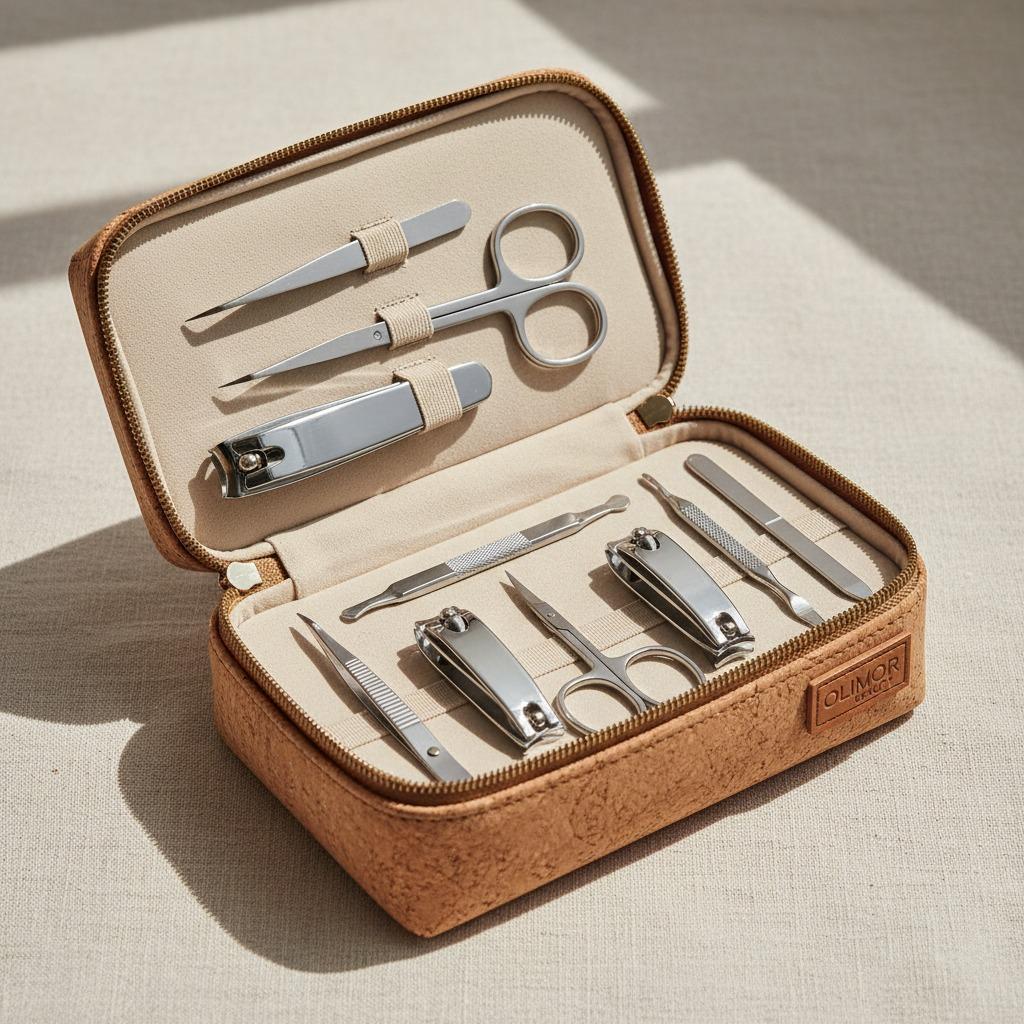
This interaction is especially important when building product families across different sizes or styles. A compact travel clipper, a toenail clipper and a premium retail gift set may require different design priorities even when they share similar materials or visual finishes. Buyers comparing options in a beauty tool collection should test each style instead of assuming that performance transfers automatically from one model to another.
Sourcing Questions for Nail Clipper Suppliers
Commercial sourcing decisions often begin with appearance, packaging and cost. Those factors matter, but they should be evaluated together with production controls. Two clippers may look similar, yet differ significantly in steel selection, heat treatment consistency, edge grinding and inspection discipline.
Before confirming a project, buyers can ask focused questions that reveal whether a supplier understands cutting performance:
- What steel is used for the blade and for the body? The supplier should be able to explain the material choice without overstating performance.
- Which components are heat treated? In some designs, the blade area is the main concern; in others, body strength and jaw stability also matter.
- What is the intended hardness range? Ask how the target relates to edge retention, toughness and the specific clipper design.
- How is quenching and tempering controlled? The supplier may not disclose proprietary settings, but should describe general process control and inspection.
- How are blades sharpened after heat treatment? Grinding can improve or damage the cutting edge depending on control.
- What cutting test is used before packing? Functional testing should support, not replace, hardness inspection.
- How are nonconforming parts handled? Ask about rejection for warping, chips, burrs, poor alignment, surface defects or unsatisfactory cutting feel.
- Can samples be reviewed before bulk production? Approval samples help align expectations for finish, cutting feel, packaging and inspection criteria.
These questions are useful for private label programs, distributor assortment planning and retail product development. If you are preparing specifications for a new grooming tool, you can submit a product inquiry with target use, finish preference and packaging expectations so the technical discussion begins with practical requirements.
Cost Factors Without Sacrificing Performance
Heat treatment is one of several cost drivers in steel nail clipper production. Buyers should be cautious about choosing only by the lowest unit cost, because small savings in material, processing or inspection can create larger downstream costs through returns, poor reviews or inconsistent repeat orders.
Important cost factors include:
- Steel selection: different steels vary in workability, heat treatment response, finishing behavior and sourcing cost.
- Process complexity: additional forming, heat treatment, polishing or assembly steps can affect production cost.
- Hardness and inspection requirements: tighter control usually requires more disciplined testing and rejection management.
- Blade geometry: precise grinding and consistent jaw contact may require more careful tooling and setup.
- Surface finish and packaging: mirror-like finishes, special coatings, custom branding and retail packaging can influence total project cost.
- Order structure: mixed styles, custom colors, packaging variations and sampling needs can affect planning and quotation.
A practical sourcing brief should describe the intended market position. A basic promotional clipper, a durable everyday grooming clipper and a premium gift-set component may not need the same finish, packaging or inspection plan. The best value usually comes from matching the specification to the real sales channel and use case rather than overspecifying one area while ignoring cutting performance.
Maintenance Guidance That Supports Long-Term Use
Even properly heat-treated steel can be damaged by misuse or poor storage. Including simple care guidance in packaging or product pages can reduce complaints and help users understand the intended use of the tool.
- Use nail clippers only for fingernails or toenails, not wire, plastic tags, staples or other hard materials.
- Wipe residue from the cutting area after use.
- Keep the clipper dry before storage.
- Avoid dropping the clipper onto hard surfaces, especially at the blade corners.
- Do not twist the clipper sideways while cutting, because lateral force can stress the jaws and edge.
Care guidance does not replace manufacturing quality, but it helps preserve the edge and reduces misuse-related failures. For brands, clear use and maintenance instructions also support a more professional retail presentation.
FAQ for B2B Nail Clipper Buyers
Can Olimor provide samples before a larger nail clipper order?
Sample availability depends on the product style, customization request and current production situation. Buyers can discuss sample needs through Olimor contact channels and confirm the sample scope before proceeding.
Is there a fixed MOQ for custom steel nail clippers?
MOQ can vary by model, material, finish, logo method, packaging and production plan. It should be confirmed during quotation rather than assumed from a general product description.
Can nail clippers be customized for private label retail?
Customization may include product style selection, surface finish, branding and packaging, depending on the chosen model and project requirements. The practical options should be confirmed against available production capabilities and the desired retail positioning.
How should buyers verify quality before shipment?
Buyers should agree on inspection criteria before production, including appearance, edge condition, cutting test, jaw alignment, packaging and any hardness checks required for the project. Supplier documents and inspection records should be reviewed where applicable.
What affects lead time for heat-treated steel nail clippers?
Lead time can be influenced by sample approval, material availability, tooling or customization needs, heat treatment scheduling, finishing, packaging and inspection. The supplier should confirm the current schedule for the specific order.
The Practical Takeaway
Heat treatment turns workable steel into a reliable cutting component by changing its internal structure. Annealing and normalizing can prepare steel for forming and machining. Quenching creates hard martensite. Tempering reduces brittleness so the blade has a better balance of hardness and toughness.
For nail clippers, the best performance comes from combining the right steel, controlled heat treatment, accurate grinding, good jaw alignment, clean finishing and consistent inspection. B2B buyers should look beyond surface shine and ask how the supplier controls the process behind the cutting edge. That is the difference between a clipper that merely looks ready for retail and one designed to cut reliably in everyday use.