










For lash technicians, brow artists, beauty academies, and retail distributors, tweezers are not a small accessory. They are the point of contact between the professional and the client’s result. A tweezer that does not close evenly, feels unstable in the hand, or loses precision too quickly can slow down service, create inconsistent placement, and increase replacement costs. That is why choosing a dependable tweezers wholesaler requires more than comparing unit prices.
The best sourcing decision starts with the job the tool must perform. False lash tweezers, brow tweezers, isolation tweezers, and volume lash tweezers may look similar to a non-specialist, but professionals judge them by tension, tip alignment, grip comfort, control, and consistency across a batch. When buying wholesale tweezers, the question is not simply whether one sample works well. The more important question is whether every unit in the shipment can support the same professional standard.
Start With the Exact Application: Lash, Brow, Salon, Academy, or Retail
Before comparing suppliers, define the target user and service environment. A lash studio may need fine tips for isolation and placement, while a brow-focused business may prioritize clean hair removal and a tip shape that supports fast, accurate work. A beauty academy may need tools that are consistent enough for training groups, while a retail distributor may care about packaging, product explanation, and visual presentation.
For false lash application, technicians often evaluate how easily the tweezer grips individual lashes or premade fans without crushing them. For brow work, users may focus on alignment and the ability to remove shorter hairs cleanly. In both cases, the tool should feel stable, predictable, and comfortable during repeated use. If you are building a wider assortment, review related beauty tool products so the tweezer selection fits your broader professional or retail line.
What Makes a Wholesale Tweezer Worth Buying in Bulk?
Bulk sourcing magnifies both strengths and weaknesses. A single poor tweezer in a retail package may cause a product return; inconsistent bulk tools for a salon chain or academy can affect many users at once. A reliable tweezers bulk supplier should help buyers evaluate not only the finished appearance but also the functional details that matter during daily use.
- Tip alignment: The two tips should meet cleanly and evenly. Misalignment affects grip and can make detailed lash work frustrating.
- Closing tension: Tension should be neither too stiff nor too loose. Excessive tension can cause hand fatigue, while weak tension can reduce control.
- Surface finish: The finish should be smooth enough for comfortable handling and easy cleaning, with no rough edges that distract the user.
- Grip security: The tweezer should remain stable in the hand, especially during long appointments or high-volume training sessions.
- Batch consistency: Samples should be compared with production units so buyers can check whether the same feel and precision continue at scale.
- Packaging suitability: Wholesale orders for retail need packaging that protects the tips and presents the tool clearly to the end customer.
Price matters, but a low purchase price can be expensive if many units require replacement, adjustment, or customer service follow-up. The more professional the buyer’s audience, the more important consistent feel becomes.
Evaluating a Tweezers China Manufacturer and OEM Partner
Working with a specialized tweezers China manufacturer such as Olimor Beauty can be useful for businesses that need more than a generic stock purchase. OEM sourcing may involve decisions about shape, finish, packaging, branding presentation, and the intended product position. The value of an OEM partner is not only the ability to place a logo on an item; it is the ability to help translate a buyer’s preferred tool experience into a consistent product.
When reviewing tweezers OEM services, prepare a practical brief. Include the target user, the service type, the preferred shape, any packaging requirements, and whether the product will be sold to professionals, students, or retail customers. If you have an existing benchmark tool, describe what users like about it and what should be improved. This makes discussions more precise and avoids vague feedback such as “make it better” or “make it premium.”
Useful OEM questions include:
- Which tweezer shapes are suitable for the intended lash or brow application?
- How are tip alignment and closing tension checked during production?
- What packaging options protect the tweezer tips during storage and shipping?
- Can samples be reviewed before confirming a larger order?
- How should the buyer communicate approved sample standards for repeat orders?
These questions help create a shared quality reference before bulk production begins. For buyers who want to compare different categories or plan a complete beauty tool assortment, Olimor’s product collections can help frame the sourcing discussion.
Design Details Professionals Notice Immediately
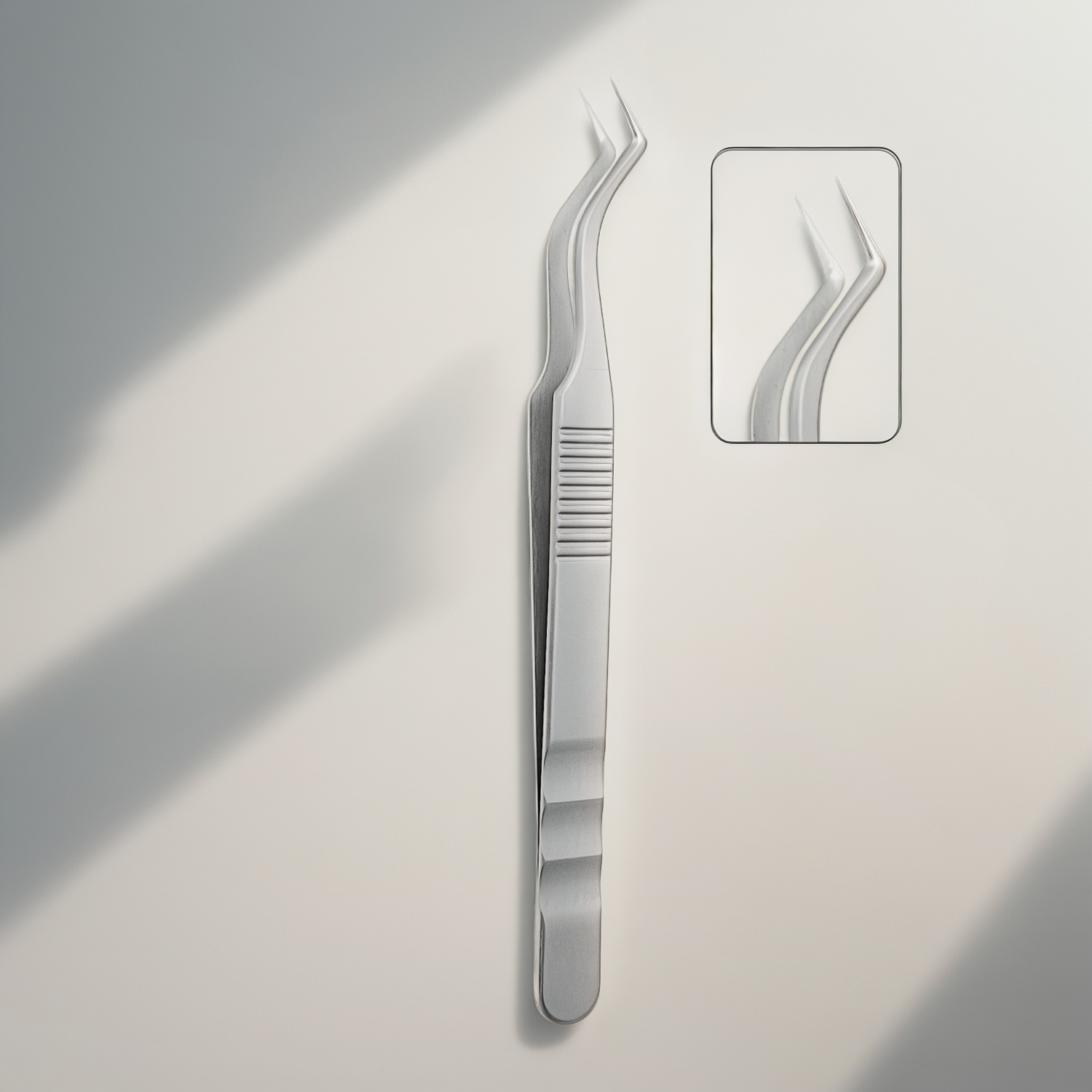
A professional can often judge a tweezer within minutes. The tool either supports the hand or fights against it. The False Lash Tweezer mentioned for Olimor Beauty is an example of a tool category where design details are especially important because the work is close to the delicate eye area and requires careful placement. Sharpness, control, and safe handling must be balanced rather than treated as separate features.
Tip precision is only one part of the experience. A tweezer may have fine points but still perform poorly if the arms flex unevenly or the closing point feels unpredictable. The grip area also affects fatigue. Technicians who work through multiple appointments need a tool that feels controlled without requiring constant squeezing force. This is why ergonomic feel should be evaluated during repeated pick-up and placement motions, not only by looking at product photos.
Buyers should also consider the user’s skill level. Experienced lash artists may prefer a very specific curve or angle, while students may need tools that are easier to handle and more forgiving. Retail customers may need clearer packaging and usage guidance. Matching the tool to the buyer’s audience reduces complaints and improves reorder potential.
Quality Control Points to Check Before Reordering
A sensible quality review does not need to be complicated. It needs to be repeatable. The buyer should know what to inspect in samples, what to confirm in bulk goods, and what information to keep for future orders. This is especially important when sourcing wholesale tweezers for multiple locations, training kits, or distribution channels.
| Inspection point | Why it matters | How to review it |
|---|---|---|
| Tip meeting point | Controls grip accuracy for lashes or brow hairs | Close the tweezer slowly and check whether both tips meet evenly |
| Tension feel | Affects comfort and hand fatigue | Open and close repeatedly as a technician would during service |
| Edge smoothness | Improves user comfort and safer handling | Inspect contact areas and grip surfaces for roughness |
| Protective packaging | Helps prevent tip damage before use | Check whether the tip area is secure during storage and shipment |
| Consistency across units | Determines whether bulk supply can support professional use | Test several units from different parts of the shipment |
Keeping approved samples is a practical step. When reordering, compare new goods with the approved reference. This helps protect consistency over time and gives both buyer and supplier a clearer basis for discussion.
Maintenance Guidance for Salons, Schools, and Retail Customers
Even a well-made tweezer can be damaged by poor handling. For salons and academies, maintenance instructions should be part of the training process. For retail brands, simple care guidance can reduce avoidable complaints. The most common issues are bent tips, residue buildup, and storage damage.
Users should clean tweezers according to the hygiene practices required in their service environment and store them with the tips protected. Dropping a tweezer onto a hard surface can alter alignment, especially on fine-tip lash tools. Tools should not be mixed loosely in a drawer with heavier metal items. If a tweezer begins to feel different, it should be checked before continued professional use.
For businesses buying in bulk, consider whether each unit needs a protective sleeve, box, or insert. Packaging is not only a branding decision. It can protect the functional part of the tool, especially during shipping, storage, retail display, or student kit assembly.
Building a Better Wholesale Buying Process
A strong sourcing process is clear, documented, and based on actual use. Start with the application, test samples with the intended users, define the acceptable feel and appearance, and confirm packaging needs before scaling. If several technicians or trainers will use the product, collect structured feedback rather than relying on one opinion. Ask testers about grip, tension, accuracy, fatigue, and whether they would continue using the tool in paid service or training.
For retail distributors, add another layer of review: how the tweezer looks in packaging, whether the product description is easy to understand, and whether the tool fits the price position of the assortment. For salons and academies, focus more heavily on durability in repeated use and consistency across units.
Olimor Beauty supports buyers looking for professional tweezers, wholesale beauty tools, and OEM development conversations. If you are planning a new tweezer order, comparing sample options, or preparing a private-label beauty tool line, you can send an inquiry with your intended application and sourcing requirements. For broader questions about product selection or cooperation details, you may also contact Olimor.
Final Checklist for Choosing a Tweezers Wholesaler
The right tweezers wholesaler should make it easier to buy tools that perform consistently, fit your audience, and protect your business reputation. Instead of choosing only by catalog image or lowest unit cost, compare suppliers by how well they support professional application, bulk consistency, packaging protection, and repeat ordering.
A good tweezer should feel precise in the hand, protect the user from unnecessary fatigue, and arrive in a condition suitable for its intended market. Whether you are sourcing for a lash studio, beauty academy, retail shelf, or distribution program, careful evaluation before bulk purchase is the most reliable way to secure tools that professionals can trust appointment after appointment.