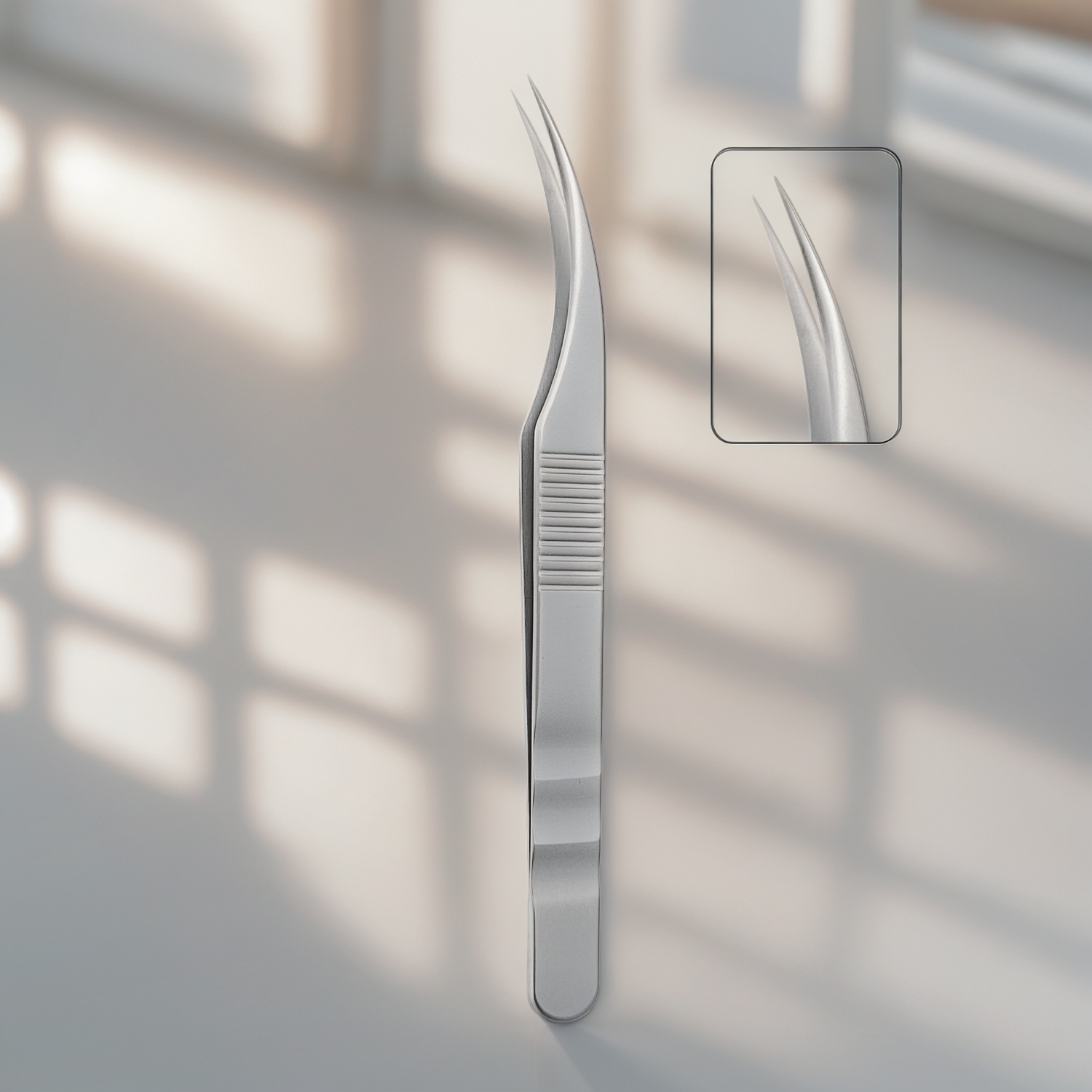
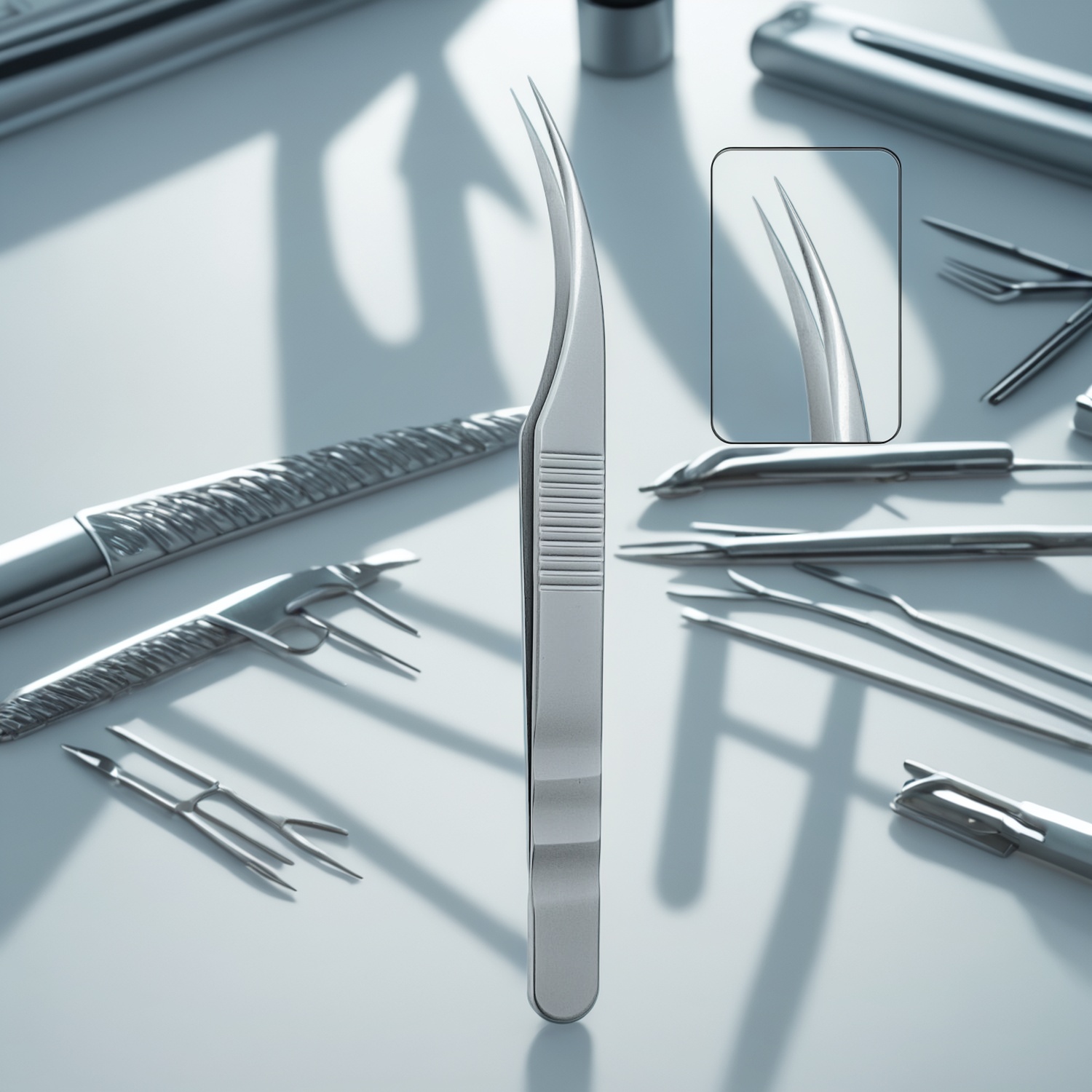
Curved precision tweezers for eyelash extension work are designed to help lash technicians isolate, pick up, position and release fine lash fibers with controlled hand movement. For salons, lash studios, training schools and B2B beauty tool buyers, the key buying question is not whether the tweezer looks professional, but whether it supports accurate tip contact, comfortable repeated use, practical cleaning and consistent supply.
Olimor Beauty curved stainless steel tweezers are positioned for professional beauty settings where detailed lash work is performed repeatedly throughout the day. The curved tip helps the technician approach the lash line at a workable angle, while stainless steel construction supports durability and resistance to rust and corrosion when the tool is properly maintained. Buyers comparing professional lash tools can review related options through the Olimor beauty tool range when building a complete salon purchasing plan.
Why Curved Tweezers Matter in Eyelash Extension Services
Eyelash extension application is built on small, repeated movements. A technician isolates a natural lash, picks up an extension fiber, controls placement near the lash line and releases without pulling, twisting or disturbing neighboring lashes. A tweezer that slips, blocks visibility or requires too much closing pressure can slow the service and increase hand strain.
The curved profile is useful because it can help the user work around the natural shape of the eyelid and lashes. Compared with a straight tweezer, a curved tweezer may allow a more comfortable angle when working near inner corners, shorter natural lashes or dense lash lines. The benefit depends on the technician’s method, but the practical goal is the same: better access with less awkward wrist rotation.
For clients, the advantage is indirect but important. A technician using a predictable tweezer can work more steadily and avoid unnecessary repeated attempts at the same area. For the business, the advantage is operational. Better tool control can support smoother appointment flow, more consistent technician experience and clearer training standards.
What Makes a Good Stainless Steel Lash Tweezer
A professional lash tweezer should be evaluated as a precision instrument. Stainless steel is commonly used for beauty tools because it is durable, practical for routine handling and resistant to rust and corrosion under proper care. However, material alone is not enough. Tip alignment, closing feel, surface finish and grip comfort all affect the way the tool performs in a treatment room.
Tip Alignment and Contact
The tips should meet evenly so the technician can hold fine lash extensions without slipping or crushing them. If the tips do not close cleanly, the extension may rotate, fall or require a second pickup attempt. This interrupts rhythm and can make detailed work near the inner and outer corners more difficult.
Curve Shape and Working Angle
The curve should improve access to the lash line without blocking the user’s view. A useful curved tweezer gives the technician room to approach the natural lash at a controlled angle. It should support fine movement instead of forcing the hand into a strained position.
Grip Comfort and Closing Tension
During a full appointment schedule, small discomforts become noticeable. A grooved or ergonomic grip can help the fingers maintain secure contact without excessive squeezing. Closing tension should feel predictable: firm enough to grip, but not so stiff that the user tires quickly, and not so loose that the extension slips.
Surface Finish and Daily Handling
A smooth, clean finish helps with professional presentation and comfortable handling. Matte stainless steel can feel practical in the hand and may be less visually reflective than a highly polished surface. Edges should be suitable for close beauty work and should not snag during normal use.
Curved Tweezers vs. Straight Tweezers for Lash Work
Professional salons often keep several tweezer styles available. A straight tweezer may suit some isolation or placement techniques, while a curved tweezer can be helpful when the technician needs angled access and clear visibility around the lash line. The right choice depends on the service type, technician habit and client eye shape.
| Selection Point | Curved Precision Tweezers | Straight Tweezers | Buyer Consideration |
|---|---|---|---|
| Working angle | Helps approach the lash line from a controlled angle | Works well where direct access is preferred | Match the angle to technician hand position and service method |
| Visibility | Can reduce obstruction around curved eyelid areas | May be simpler for users who prefer a direct line of sight | Test in realistic lash placement positions, not only on a counter |
| Common use cases | Pickup, placement, separation and difficult-angle adjustment | Isolation, general handling or technician-specific methods | Many salons stock more than one tweezer profile |
| Training value | Useful for teaching controlled approach angles | Useful for basic tweezer control and isolation practice | Standardized tools help instructors explain pressure and position |
| B2B purchasing | Good for professional lash extension categories | Good as part of a broader tweezer assortment | Position each product by service use rather than appearance alone |
How to Choose Curved Eyelash Extension Tweezers for Salon Teams
When buying one pair for personal use, a lash artist may focus mainly on feel. When buying for a salon, training academy, distributor or beauty supply business, the decision needs a more structured checklist. Consistency, protective packaging, cleaning workflow and replacement planning all matter when tools are used across multiple hands.
- Define the service use: Decide whether the tweezer is mainly for eyelash extension placement, isolation, fine adjustment or mixed detailed beauty tasks.
- Check tip alignment: The tips should meet cleanly and grip fine materials with controlled pressure.
- Assess the curve: The curved tip should support visibility and access, not block the technician’s working view.
- Evaluate hand comfort: Test grip stability and closing tension during realistic working positions, not only during a quick inspection.
- Review material suitability: Stainless steel is a practical choice for salon tools because it supports repeated handling and routine care.
- Consider surface finish: A clean, smooth finish supports professional presentation and comfortable use.
- Check packaging needs: Protective packaging helps reduce the risk of tip damage during transport, storage and distribution.
- Plan station stock: Salons may need clean, ready-to-use tools for each technician, backup kits and training stations.
Buyers comparing lash tweezers with other salon instruments can browse the Olimor professional beauty collection to plan a more complete tool assortment rather than sourcing each item in isolation.
B2B Sourcing Questions for Distributors, Salons and Training Schools
Bulk purchasing requires more than checking a product image. A tweezer may look suitable but feel inconsistent during repeated appointment use. For B2B beauty supplies, a clear supplier-evaluation process helps reduce returns, technician complaints and mismatched inventory.
Questions to Ask Before Ordering
- Is the product clearly positioned for eyelash extension work? Curved precision tweezers should not be treated as generic cosmetic tweezers if the intended category is professional lash application.
- Can samples be reviewed before larger purchasing? Samples allow technicians to check tip feel, grip response and curve angle in realistic handling conditions.
- Is customization available for your channel? B2B buyers may need to discuss branding, packaging or assortment requirements with the supplier rather than assuming a standard retail format.
- How are quality checks handled? Ask how tip contact, surface appearance, packaging and basic consistency are reviewed before shipment.
- How should the product be stored after arrival? Precision tips should be protected from impact with heavier tools or loose drawer storage.
Cost factors for curved eyelash extension tweezers usually include material, finish, packaging, customization requirements, order size, inspection expectations and shipping arrangement. Buyers should avoid choosing only by the lowest unit cost if the tool must support daily salon work. A slightly poor fit can lead to slower services, damaged tips, more frequent replacement or technician frustration.
Using Curved Tweezers in a Professional Lash Workflow
A curved tweezer can support several steps in a lash appointment. It may be used to pick up individual extensions, approach the natural lash from an angle, separate small areas or make careful finishing adjustments. Some technicians prefer curved tweezers for specific service stages and use another style for isolation. Others rely on them for broader detailed handling.
The most effective setup depends on the technician’s training and hand position. Salons should allow experienced users to test the tweezer during normal appointment motions. A tool that feels balanced for one minute may feel different after repeated pickup and placement movements. Training schools can benefit from standardizing core tweezer styles because instructors can more easily teach working angle, pressure and release control.
Curved tweezers should also be assigned clearly within the salon. Some businesses separate tools by service type, technician, cleaning status or workstation. Clear organization saves setup time and helps prevent clean instruments from being mixed with used tools. For professional purchasing support, B2B buyers can contact Olimor through Olimor customer support to discuss product fit, sample review and ordering requirements.
Cleaning, Inspection and Storage for Longer Tool Life
Even a well-made stainless steel tweezer can lose performance if it is dropped, bent, stored loosely or cleaned carelessly. The tips are the most critical part of the tool. Once tip alignment is damaged, lash pickup and placement become less predictable.
Salons should follow their established hygiene procedures and local requirements for tools used near the eye area. Relevant public references may include local health authorities and the U.S. Food and Drug Administration for general cosmetic and hygiene-related information, where applicable. Buyers should verify the current applicable version of any requirement and request supplier documentation appropriate to their market. No certification or test result should be assumed unless the supplier provides it for the specific product and order.
- Inspect before service: Check that the tips close evenly and are free from visible bends, residue or surface damage.
- Clean according to salon procedure: Follow the salon’s tool-cleaning and disinfection process for beauty instruments used around the eye area.
- Dry before storage: Moisture left on tools can affect appearance and long-term handling.
- Protect the tips: Avoid storing precision tweezers loose with scissors, nippers or heavier metal tools.
- Remove damaged tools from use: If alignment is compromised, the tweezer may no longer be suitable for fine lash work.
Olimor Curved Tweezers for Professional Beauty Buyers
Olimor Beauty curved stainless steel tweezers are designed for detailed lash extension tasks in salons, lash studios, training environments and professional beauty supply channels. Their practical value comes from the combination of curved tip access, stainless steel durability, rust and corrosion resistance under proper care, ergonomic handling and a grip design intended to support control during repeated use.
For B2B buyers, these tweezers fit best when positioned as professional lash extension tools rather than general-purpose grooming accessories. They are relevant for salon workstations, technician kits, training kits, distributor assortments and replacement stock planning. Buyers should still evaluate samples, confirm packaging expectations and check how the tool fits their own cleaning and storage workflow before scaling an order.
If you are sourcing curved lash tweezers for a salon team, training program or resale channel, Olimor can provide a restrained starting point for product discussion. Use the Olimor inquiry form to ask about samples, customization options, order requirements and documentation available for your purchasing process.
Professional Buyer Checklist
| Checklist Item | What to Look For | Why It Matters |
|---|---|---|
| Primary use | Eyelash extension pickup, placement, isolation or adjustment | Prevents buying a tool that does not match the service workflow |
| Tip contact | Even closure without visible misalignment | Supports controlled grip on fine lash fibers |
| Curve angle | Access to lash line without blocking view | Improves working position around delicate areas |
| Grip and tension | Stable feel without excessive pressure | Helps reduce unnecessary hand strain during repeated movements |
| Material and finish | Stainless steel with clean surface finish | Supports durability, handling and routine salon care |
| Packaging | Protection for precision tips during transport and storage | Reduces damage risk before the tool reaches the workstation |
| Supplier communication | Clear answers on samples, customization, quality checks and documentation | Supports a more reliable B2B purchasing decision |
FAQ
Can salons request samples before placing a larger order?
Sample availability should be confirmed with Olimor before purchasing. Samples are useful because technicians can test the curve angle, tip contact and hand comfort in realistic lash extension movements.
Is there a fixed MOQ for curved eyelash extension tweezers?
MOQ can depend on the order type, packaging needs and customization requirements. Buyers should request current order terms directly through Olimor rather than relying on assumed quantities.
Can the tweezers be customized for B2B resale or salon branding?
Customization may be possible depending on the request and order details. Discuss branding, packaging and assortment needs with Olimor before confirming artwork or purchasing plans.
What quality checks should buyers ask about?
Ask how tip alignment, surface appearance, grip feel, packaging condition and order consistency are checked. Buyers should also request any product documentation required for their own market or internal approval process.
How long is the lead time for bulk orders?
Lead time depends on order quantity, customization, packaging and production schedule. Olimor should confirm timing during the quotation or inquiry stage so buyers can plan salon stock or distributor inventory responsibly.