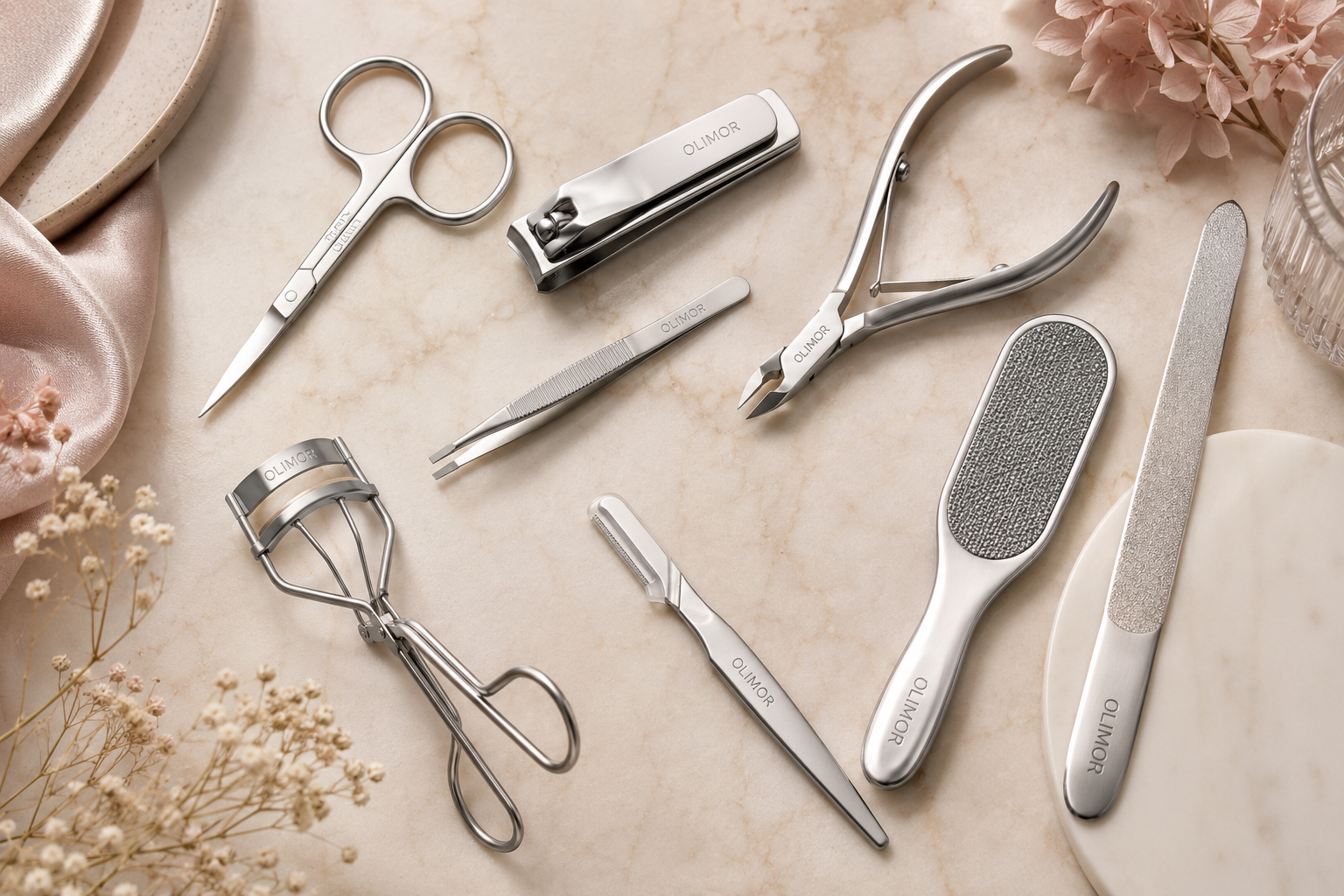












Eyebrow maintenance works best when it protects the brow’s natural density while removing only the length or stray growth that makes the shape look untidy. Precision grooming scissors are designed for that kind of controlled work. With compact size, sharp pointed blades and stainless steel construction, they help users trim selected brow hairs without pulling them from the root or changing the brow line too aggressively.
For consumers, salon professionals, retailers and beauty-tool buyers, the main question is not simply whether a pair of scissors looks attractive. The better question is whether the tool gives enough visibility, control and clean cutting action for a small area near the eye. A dependable eyebrow scissor should trim fine hairs cleanly, feel stable in the hand, be practical to clean and be easy to explain in a retail or grooming-kit context.
Olimor Beauty focuses on beauty tools for controlled, delicate grooming. For eyebrow trimming, stainless steel precision scissors are especially useful because they resist rust when cared for correctly and can be cleaned repeatedly after contact with skin oils, brow makeup and skincare residue. This guide explains how eyebrow scissors fit into a maintenance routine, how to select them for retail or professional use, and what sourcing teams should check before adding them to a product range.
What Eyebrow Scissors Are Meant to Do
Eyebrow scissors are length-control tools. They shorten individual hairs or small sections of hair that extend beyond the desired brow outline. They do not remove hair from the root, and they should not be used as a substitute for tweezing, waxing or threading when the goal is to remove hairs outside the brow area.
This distinction matters because many brow problems are caused by excessive trimming rather than insufficient grooming. Inner brow hairs often grow upward or outward. When brushed straight up, they may look too long, but those same hairs can create natural fullness once brushed back into place. Cutting too much from the front of the brow can create gaps, blunt edges or a thin appearance that takes time to grow out.
A good eyebrow maintenance result should achieve three things: remove obvious disorder, preserve natural fullness and keep both brows balanced from a normal viewing distance. Precision scissors support that result because they allow very small corrections. The user can trim only the longest tips, reassess the brow, and stop before the shape becomes overworked.
For B2B buyers comparing beauty tool products, eyebrow scissors should be positioned as a finishing and maintenance item. They work well alongside brow brushes, tweezers and grooming kits, but their role is specific: controlled trimming of length, especially for bushy, curling or uneven brow hairs.
Why Stainless Steel Precision Scissors Suit Brow Work
The supplied precision grooming scissors are described with stainless steel construction, sharp pointed blades and ergonomic control. Each feature has practical value for eyebrow maintenance.
Stainless steel is a sensible material for beauty scissors because brow tools are cleaned often. During normal use, the blades may pick up skin oils, foundation, brow gel, powder or skincare residue. A rust-resistant metal helps the tool remain serviceable when it is wiped, dried and stored properly. Stainless steel does not make a tool maintenance-free, but it supports hygienic routines better than materials that are difficult to clean or more vulnerable to moisture.
Sharp blades matter because brow hair is fine and can bend away from a dull edge. A clean cutting action reduces tugging and helps the user remove only the intended tips. If a blade pushes hairs aside, crushes them or requires repeated cutting motions, the user may trim more than planned or move too close to the skin and eye area.
Pointed blades are useful for isolating a single long hair at the tail, upper edge or inner brow. The trade-off is that pointed tools require careful handling. Users should work in steady lighting, keep the scissor tips angled away from the eye, and avoid trimming when rushed. In retail packaging, online product descriptions and instruction inserts, clear safety and use guidance is important because it helps customers understand that eyebrow scissors are precision tools, not general household scissors.
Eyebrow Scissors vs Tweezers, Razors and Brow Trimmers
Many buyers ask whether eyebrow scissors are still needed when tweezers, razors or electric trimmers are available. The answer depends on the grooming task. Scissors are not the fastest way to remove many hairs, but they are one of the most controlled ways to reduce length while preserving the brow line.
| Tool | Best Use | Main Advantage | Watch-Out |
|---|---|---|---|
| Precision eyebrow scissors | Shortening long, curling or uneven brow hairs | Controls length without removing hair from the root | Over-trimming can create gaps or blunt sections |
| Tweezers | Removing isolated stray hairs outside the brow line | Precise root-level removal for single hairs | Over-plucking can thin the brow shape |
| Brow razor | Cleaning fine surface hair around the brow area | Fast touch-up for visible fuzz | Less selective than scissors for individual brow hairs |
| Electric brow trimmer | Quick maintenance for users comfortable with powered tools | Efficient for repeat grooming routines | May remove more length than intended if used without care |
| Brow brush or spoolie | Revealing growth direction before trimming | Improves visibility and reduces mistakes | Does not cut or remove hair by itself |
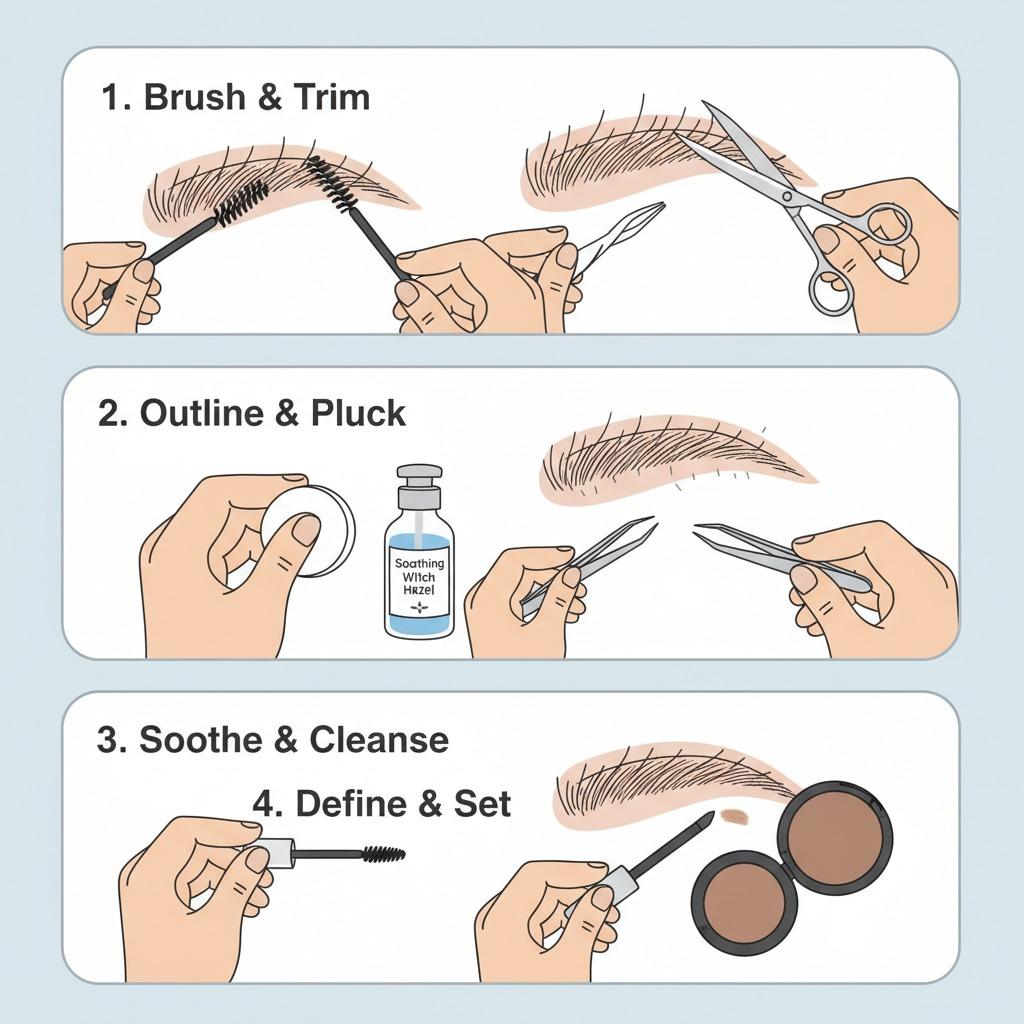
For most grooming kits, scissors and tweezers complement each other. The recommended sequence is to brush first, trim only the longest hairs, then tweeze a few clear strays if needed. This keeps the brow looking natural and avoids using one tool for every task.
How to Trim Eyebrows Safely and Naturally
The most reliable trimming routine is slow, conservative and repeatable. The goal is not to force both brows into identical shapes. It is to keep the natural brow clean and balanced while avoiding unnecessary thinning.
- Clean the brow area. Remove heavy makeup, brow gel and skincare residue. Dry hairs are easier to assess because they sit closer to their normal position.
- Brush upward with a clean spoolie. This shows which hairs extend beyond the natural top edge. Do not assume every visible tip needs cutting.
- Trim only the longest ends. Hold the scissors steadily and cut tiny amounts. Avoid cutting a straight horizontal line across the brow, which can create a harsh edge.
- Brush the hairs back into place. Many hairs that looked long when lifted will settle naturally into the brow once brushed back.
- Check from a normal distance. A magnifying mirror can exaggerate minor differences. Step back and look at both brows together before trimming more.
- Repeat only where necessary. Focus on disruptive hairs at the front, tail or top line. Stop as soon as the brow looks tidy.
Users should never trim toward the eye or attempt brow trimming in poor lighting. If the scissors feel loose, stiff, misaligned or rough during cutting, they should not be used near the eye area until the issue is addressed. For professional or retail settings, this type of instruction is useful because it reduces misuse and helps customers understand realistic results.
Selection Checklist for Retailers, Salons and Brand Buyers
When sourcing eyebrow scissors for a beauty assortment, private-label program, salon kit or travel grooming set, buyers should evaluate practical performance before packaging style. A visually appealing tool may sell once, but a tool that cuts cleanly and feels controlled is more likely to earn repeat orders and positive customer feedback.
Key product factors to inspect
- Blade alignment: The tips and cutting edges should meet evenly when the scissors close. Poor alignment can bend hair instead of cutting it.
- Cutting feel: The scissors should snip fine brow hairs cleanly without tugging, crushing or requiring excessive pressure.
- Tip precision: Pointed blades should allow controlled access to individual hairs while still being smooth enough for careful handling.
- Handle comfort: The grip should support stable finger placement. Ergonomic control matters because brow trimming involves small movements.
- Material suitability: Stainless steel is appropriate for repeated cleaning and rust resistance when dried and stored correctly.
- Pivot action: Opening and closing should feel smooth. A stiff pivot makes fine work harder; an overly loose pivot can reduce control.
- Surface finish: Blade and handle surfaces should be clean and free from rough areas that may catch on packaging, cloth or skin.
- Tip protection: Retail packaging or a protective sleeve should help prevent damage to pointed tips during transport, storage and display.
- Instruction clarity: User guidance should explain trimming, cleaning and safe storage in simple language.
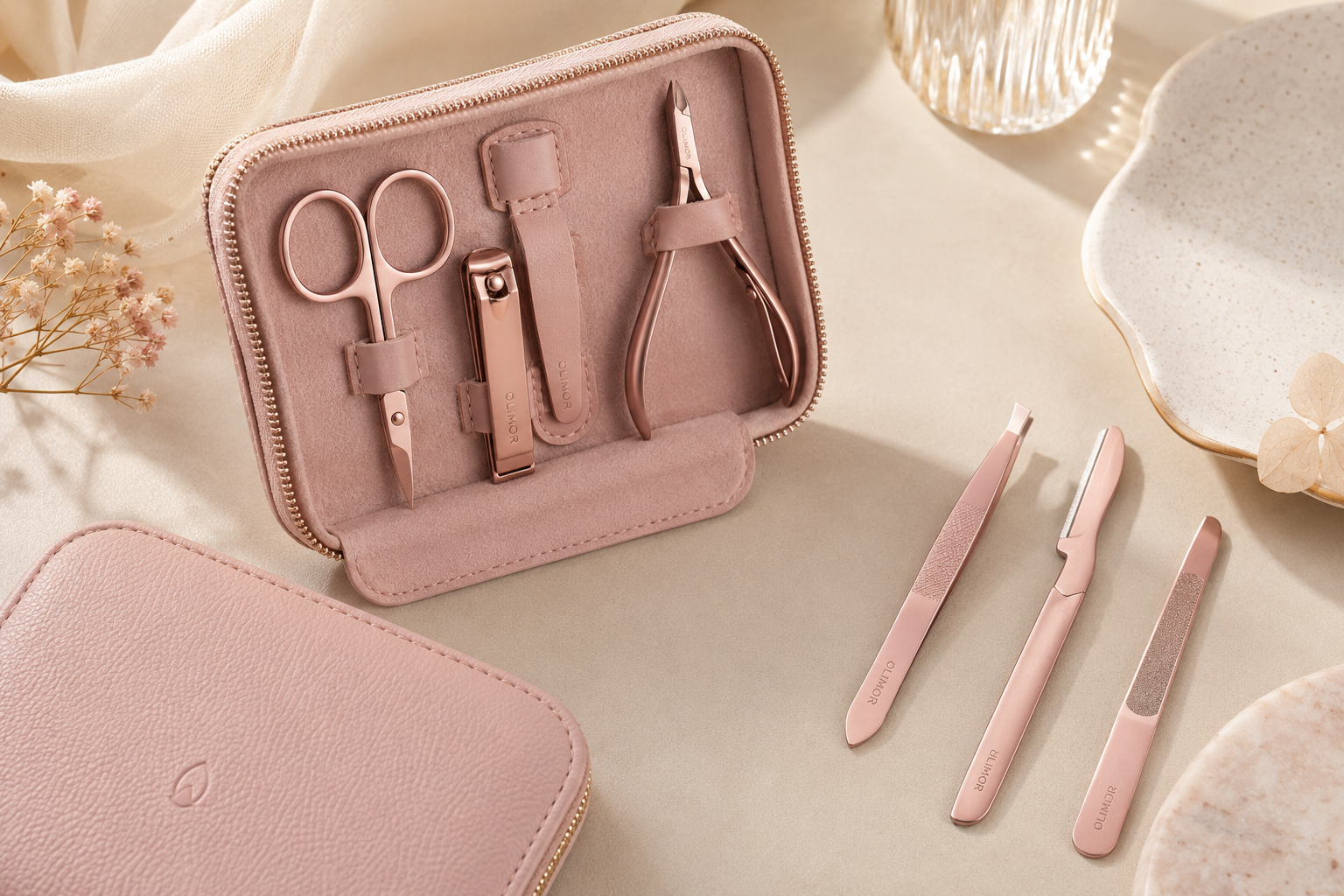
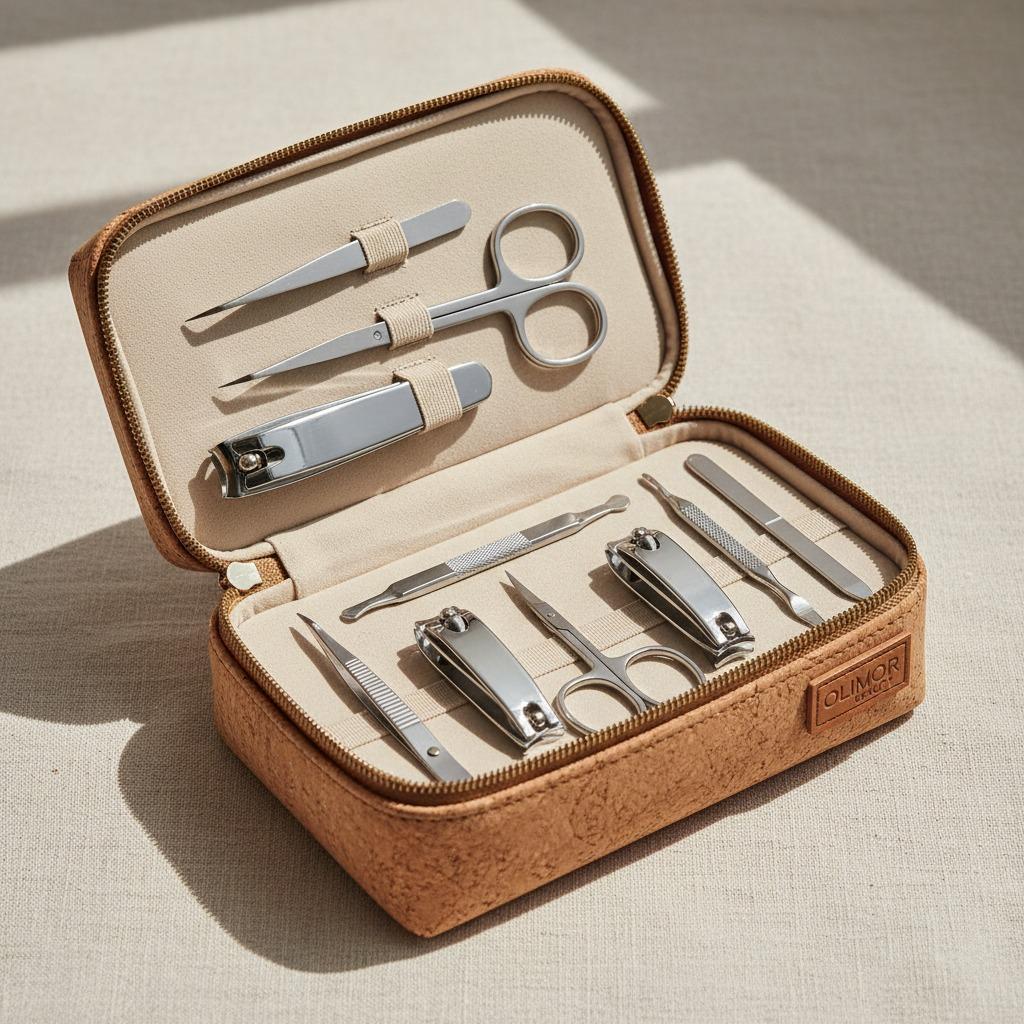
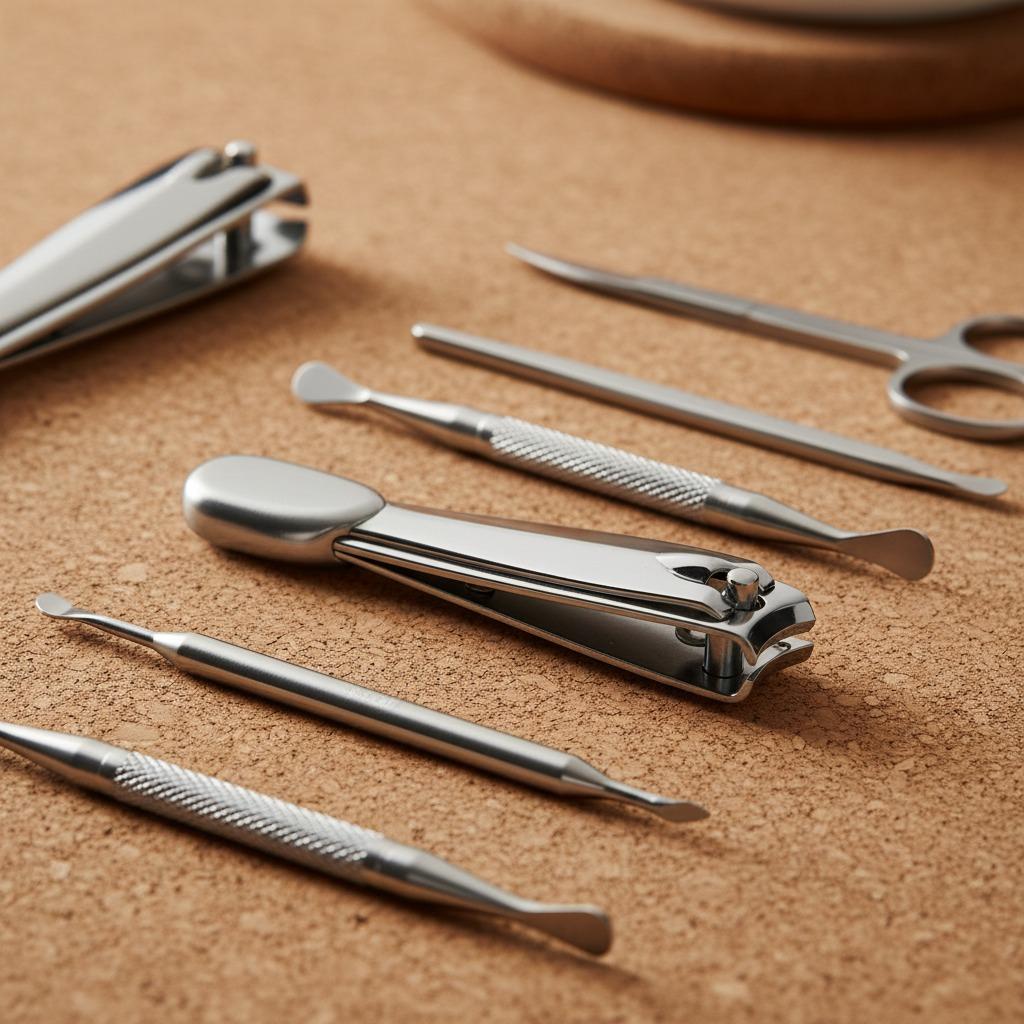
For assortment planning, eyebrow scissors can be sold as a single precision tool, included in a brow kit, or combined with tweezers and a spoolie for a more complete maintenance set. Buyers can review related beauty scissors and broader beauty tool collections when comparing product positioning.
Cost Factors Without Guesswork
Exact pricing depends on specification, order details, packaging, customization and supplier terms, so responsible sourcing should avoid assumptions. However, buyers can still identify the factors that normally influence cost and commercial suitability.
Material and construction are important. Stainless steel scissors with consistent blade alignment, controlled pivot action and clean finishing require more careful production and inspection than basic general-purpose scissors. The complexity of handle shape, surface finish and packaging can also affect cost.
Customization may add value for retailers or beauty brands, but it should be planned clearly. Logo placement, finish preference, packaging format, instruction inserts and bundle configuration all need to be confirmed with the supplier. If the scissors will be part of a travel kit or retail display, packaging should protect the pointed blades and present the tool’s purpose clearly.
Quality expectations also influence sourcing decisions. For a precision item used near the eye, the lowest unit cost should not be the only criterion. Buyers should ask how samples are checked, how blade alignment is inspected, how surface defects are handled and how packaging protects the tool during shipping. These questions are commercially relevant because returns, complaints and inconsistent user experience can be more expensive than choosing a more suitable specification from the start.
Manufacturing and Inspection Points to Discuss With a Supplier
Beauty scissors are small tools, but their usefulness depends on details that are easy to overlook. During supplier evaluation, buyers should ask about the production and inspection process in practical terms. The supplier should be able to explain how cutting edges are formed, how alignment is checked and how finished tools are protected before shipment.
Useful supplier questions
- How are blade sharpness and cutting consistency checked during inspection?
- How is tip alignment reviewed before packing?
- What cleaning or surface inspection steps are used before the scissors are packaged?
- What packaging options protect the pointed blades during transport and retail handling?
- Can the scissors be supplied as part of a brow-care kit with compatible accessories?
- What customization options are available for branding or packaging, and what approval steps are required?
For consumer beauty tools, buyers should also consider market-specific safety and labeling obligations. Depending on the destination market and sales channel, frameworks such as the EU General Product Safety Regulation or guidance from the U.S. Consumer Product Safety Commission may be relevant to product safety expectations, warnings and consumer information. Requirements can change, so buyers should verify current versions, local obligations and supplier documents before placing orders. This does not imply any specific certification unless a supplier provides valid documents for the exact product and market.
Cleaning, Storage and Maintenance
Eyebrow scissors should be cleaned after use because they can contact skin, oil and cosmetics. A simple maintenance routine helps preserve cutting performance and keeps the tool more suitable for repeated grooming.
- Wipe after each use: Use a clean, dry cloth to remove visible residue from the blades and handle.
- Clean more thoroughly when needed: Use a tool-safe cleaning method suitable for the material and intended use.
- Dry completely: Moisture left near the pivot or blade surface can shorten the working life of any metal tool.
- Protect the tips: Store pointed scissors in a sleeve, pouch or protected compartment.
- Avoid loose storage: Do not leave precision scissors loose in a makeup bag where they can rub against hard containers or other metal tools.
- Check before use: If the scissors feel rough, misaligned or unstable, avoid using them near the eye area.
Retailers and brand owners should include care guidance in product pages, inserts or packaging copy. Clear instructions reduce confusion, especially for customers who are used to general scissors and may not understand why a precision grooming tool needs more careful storage.
How to Position Eyebrow Scissors in a Beauty Range
Precision eyebrow scissors are a strong evergreen item because brow maintenance is not tied to a single trend. Natural, full, softly shaped and defined brows all require some level of length control. The tool’s value is easy to communicate: it helps users trim long hairs carefully while keeping the brow’s natural shape.
For retailers, the most effective product messaging is specific rather than exaggerated. Explain that the scissors are intended for small brow corrections, not dramatic reshaping. Show that stainless steel supports repeated cleaning when properly maintained. Highlight sharp pointed blades for precise trimming, while also including safe-use reminders.
For salons and professional kits, eyebrow scissors are useful for finishing work between more comprehensive brow services. For travel or personal grooming kits, compact precision scissors add practical value because users can maintain brows between appointments without relying on larger tools. For brand programs, they pair naturally with tweezers, brow brushes, cosmetic pouches and instruction cards.
If you are building or updating a brow-care assortment, share the intended market, packaging needs and product application with Olimor Beauty. You can contact the Olimor team for product discussion or send a sourcing inquiry for beauty scissors and related grooming tools.
FAQ
Can I request samples before placing an order?
Sample availability depends on the product specification, customization request and current supplier arrangement. Ask for a sample that matches the intended material, finish, packaging and function as closely as possible so you can evaluate cutting feel, alignment and handling.
Is there a fixed MOQ for eyebrow scissors?
MOQ can vary by product type, packaging, customization and production plan. Buyers should confirm the current MOQ with Olimor Beauty for the exact scissors, branding requirements and destination market.
Can eyebrow scissors be customized for a retail brand?
Customization may include branding or packaging options depending on the selected product and order details. Confirm logo placement, packaging format, instruction copy and approval samples before production.
How should quality be checked before shipment?
Useful checks include blade alignment, cutting action, pivot smoothness, surface finish, tip protection and packaging condition. Buyers should agree on inspection expectations and required documents with the supplier before confirming an order.
How long does production or delivery take?
Lead time depends on order quantity, customization, packaging and production scheduling. Request the current timeline during inquiry and confirm whether sample approval, packaging artwork or documentation will affect the schedule.