










Ergonomic nail clippers are designed for one clear purpose: helping users trim fingernails and toenails with better grip, steadier pressure and more predictable blade control. For consumers, that means fewer slips and cleaner edges. For retailers, distributors and grooming-kit buyers, it means selecting a small beauty tool that feels reliable in repeated everyday use, not only attractive in packaging.
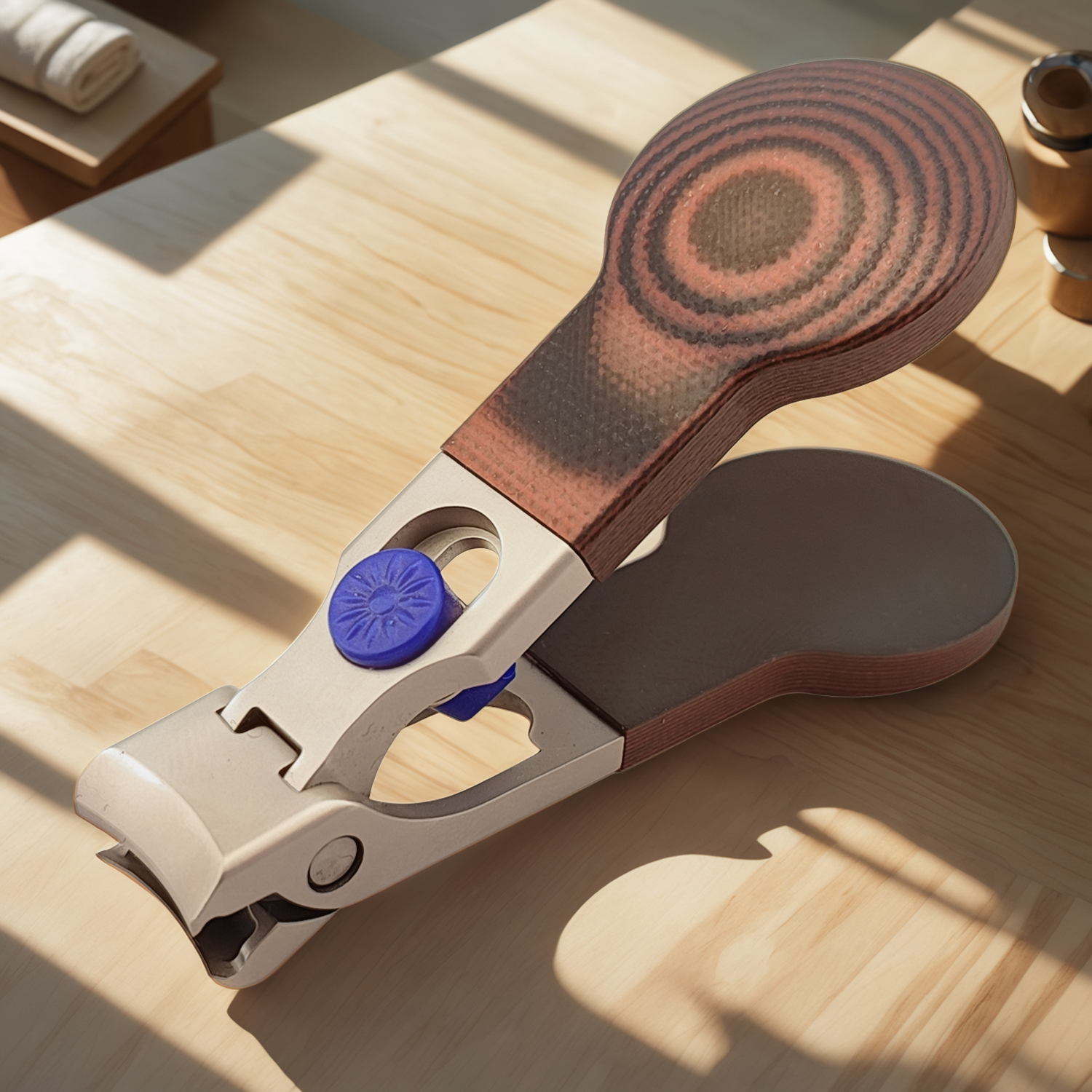
Olimor Beauty ergonomic nail clippers are presented as a compact stainless steel grooming tool with a curved blade, contoured handle, matte finish, smooth pivoting mechanism and a decorative blue floral pivot screw. These details create a product positioned for routine nail care at home, in travel kits or as part of a personal care assortment. The most useful way to evaluate this type of clipper is to look at how the design supports grip, leverage, blade alignment, cleaning and long-term user satisfaction.
What Makes a Nail Clipper Ergonomic?
An ergonomic nail clipper is shaped around the way people actually hold and press a grooming tool. Standard flat clippers can be effective, but they may feel awkward for users who need more leverage, have larger hands, prefer a steadier pinch point or want better control around nail corners. Ergonomic design focuses on reducing unnecessary hand strain while improving accuracy.
The contoured handle is the main comfort feature. Instead of forcing the fingers to press against a narrow, flat surface, the handle gives the user a more natural area to hold. This matters most when trimming toenails, which often require firmer pressure than fingernails. A stable handle can also help users make several small cuts rather than one forceful cut across the whole nail.
The matte finish adds a practical benefit: grip security. Hands are often washed before grooming, and a highly polished surface can feel slippery if the tool or fingers are slightly damp. A matte surface helps the fingers stay positioned on the clipper during pressing. It is a small detail, but it affects how confidently the blade meets the nail edge.
- Grip: A contoured handle helps fingers stay in place during trimming.
- Leverage: A smooth pivoting mechanism supports easier pressure on thicker nails.
- Control: A curved blade helps users follow the natural nail shape in small sections.
- Portability: A compact, lightweight form suits home drawers, toiletry bags and travel kits.
- Appearance: A decorative blue floral pivot screw adds visual distinction without changing the core function.
Curved Stainless Steel Blades and Cutting Control
The blade is the most important functional part of any nail clipper. A curved blade is intended to follow the natural arc of fingernails and many toenails, making it easier to create a neat rounded edge. Users who prefer a softer nail shape usually find curved clippers more intuitive than straight-edge clippers, especially for fingernails.
Stainless steel is a practical material choice for everyday grooming tools because it is strong, suitable for repeated cleaning and commonly expected in personal care accessories. The supplied product information identifies the Olimor clipper as stainless steel, but buyers should still confirm exact material specifications, finish requirements and inspection criteria before placing commercial orders. For B2B sourcing, “stainless steel” should not be treated as a complete technical specification unless the supplier documents the grade, finish and production requirements.
Cleaner trimming also depends on how the clipper is used. The best technique is to trim in controlled sections, beginning from one side of the nail and working toward the center, then repeating from the other side. This reduces stress on the nail plate and gives the user more control over the final shape. For thicker toenails, trimming after washing, showering or soaking may make the nail easier to cut, as long as the foot and tool are dried enough to prevent slipping.
For buyers comparing beauty tool products, blade alignment should be inspected closely. The cutting edges should meet cleanly, the lever should press smoothly, and the pivot should not feel loose or unstable. A sharp-looking clipper is not enough; the cutting action should feel consistent across repeated presses.
Fingernail Clippers vs Toenail Clippers: How to Match the Use Case
Many compact ergonomic clippers are suitable for both fingernails and routine toenail trimming, but the intended user and nail type should guide selection. Fingernails usually require precision and small adjustments. Toenails often require more leverage and a stable hold. A single tool can serve both purposes when the blade curve, handle shape and pivot action are well balanced.
For fingernails, users typically want a neat edge that does not catch on fabric, hair or gloves. A curved blade supports this by helping the user follow the natural nail outline. For toenails, users should avoid cutting too deeply into corners, especially if they are prone to discomfort or ingrown nail issues. The clipper can help with control, but the user’s technique remains important.
| Use case | Main need | What to look for | Practical note |
|---|---|---|---|
| Fingernail trimming | Precision and smooth shape | Curved blade, comfortable thumb pressure, clean edge alignment | Trim in small sections and finish with a nail file if needed. |
| Routine toenail trimming | Leverage and stability | Contoured handle, smooth pivot action, secure matte grip | Avoid cutting too deep into nail corners. |
| Travel grooming | Compact storage and durability | Lightweight body, stainless steel construction, simple cleaning | Store dry and away from items that may damage the blade. |
| Retail gift or kit item | Function plus appearance | Distinct finish, decorative detail, easy-to-explain benefits | The blue floral pivot screw can support a more refined presentation. |
| B2B assortment planning | Repeatable quality | Documented specifications, inspection samples, packaging options | Confirm requirements before bulk production. |
How to Select Ergonomic Nail Clippers for Retail, Kits or Sourcing
Commercial buyers should evaluate nail clippers as functional tools first and visual products second. A decorative finish can help a product stand out, but repeat purchases and positive reviews depend on how well the tool cuts, how comfortable it feels and whether it remains easy to clean.
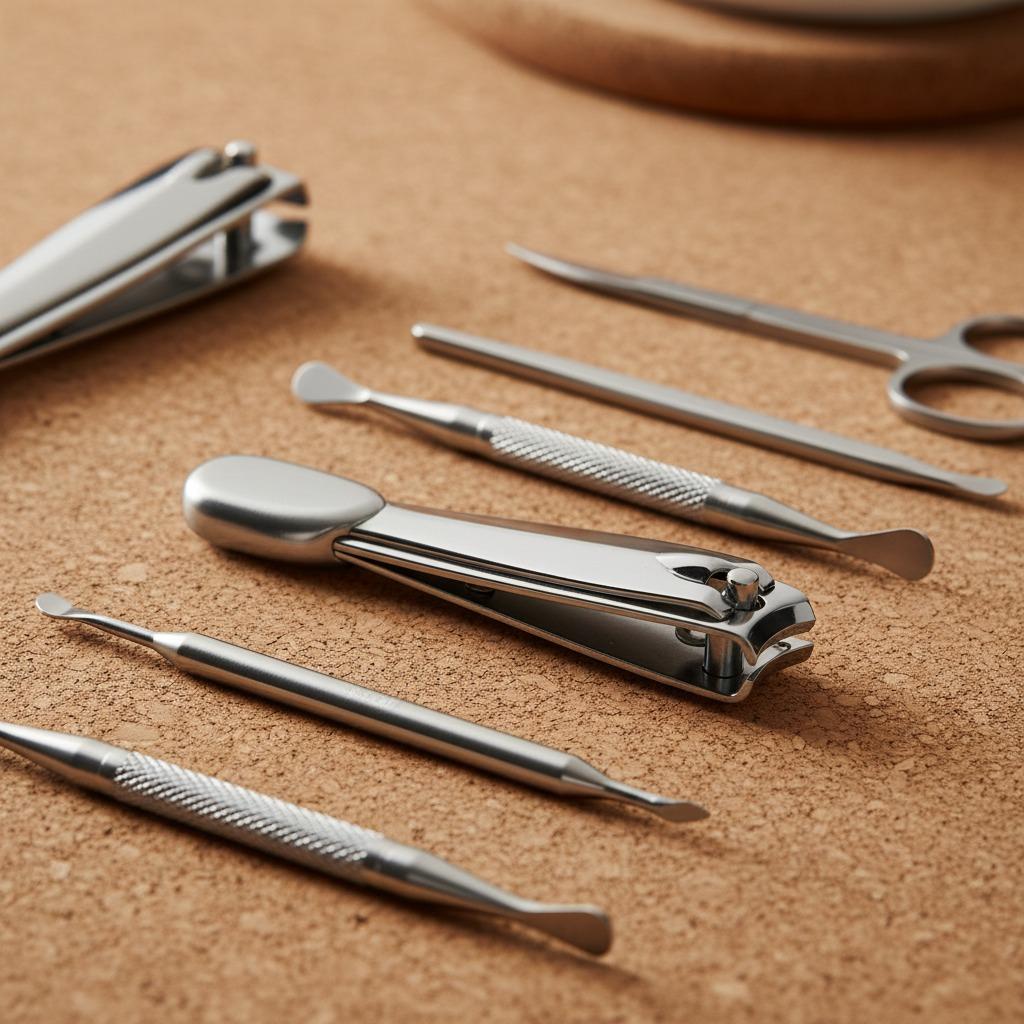
Start with the target customer. A travel kit may prioritize compact size and secure storage. A personal care retailer may want a design that looks premium on shelf while remaining easy to explain. A manicure set may need a clipper that pairs well with a file, scissors, tweezers or cuticle tool. A salon or professional grooming environment may place greater emphasis on cleaning procedures and tool separation.
Then review the production and inspection details. For stainless steel nail clippers, useful sourcing questions include how the blade edge is formed, how alignment is checked, whether the pivot action is inspected, what surface finish is applied, and how finished pieces are protected during packing. Do not rely only on catalog images. Samples should be handled, opened, pressed and tested for feel before confirming an order.
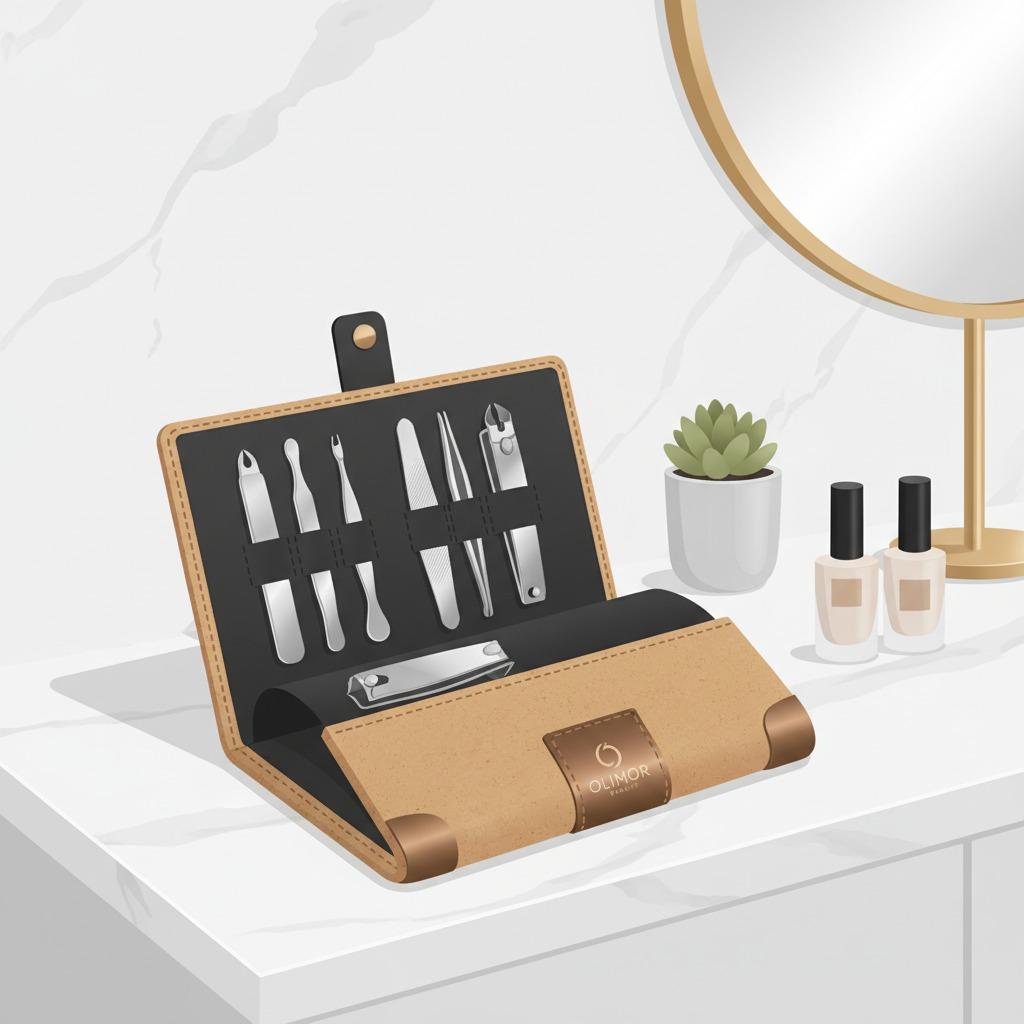
For assortment planning, it can help to compare related items across Olimor’s beauty tool collection. A clipper sold alone may need stronger visual packaging and clearer instructions. A clipper included in a set should match the finish, size and quality level of the other tools. In both cases, the product story should remain simple: ergonomic grip, stainless steel construction, curved blade control and practical daily use.
B2B selection checklist
- Confirm the product role: single retail item, travel accessory, manicure set component or promotional personal care tool.
- Check hand feel: the handle should feel stable when pressed, without sharp or uncomfortable pressure points.
- Inspect blade contact: cutting edges should align evenly and meet without visible twisting.
- Evaluate pivot movement: the lever should move smoothly and return reliably.
- Review finish quality: matte surface and decorative pivot detail should appear consistent across samples.
- Ask about packaging: confirm whether the product needs individual packaging, set packaging or protective storage.
- Request supplier documents: verify material, finish, inspection method and any market-specific compliance documentation.
Cost Factors Without Guesswork
The cost of ergonomic nail clippers is influenced by design complexity, material specification, finish, inspection requirements, packaging and order structure. Exact pricing depends on the confirmed product configuration and commercial terms, so buyers should avoid comparing quotes unless the specifications are the same.
A contoured handle may require different tooling or finishing considerations than a very basic flat clipper. A matte finish adds a tactile feature that should be produced consistently. A decorative blue floral pivot screw adds visual value, but it also needs to be checked for appearance, fit and durability during handling. Packaging can also change the landed cost significantly, especially when retail-ready presentation, multilingual instructions, barcode labels or set assembly are required.
Quality expectations also affect cost. If a buyer requires tighter inspection, additional packaging protection or market-specific documentation, those requirements should be communicated before quotation. This helps prevent misunderstandings and reduces the risk of receiving a low price based on incomplete assumptions. A practical supplier conversation should include product use, target market, packaging format, expected quality level and any documentation needed for import or retail approval.
Safe Use: Trimming Technique for Better Results
A well-designed clipper improves control, but safe trimming still depends on careful use. The goal is to shorten the nail without cutting into surrounding skin or leaving sharp corners that snag. Users should work slowly, especially on thick toenails, brittle nails or nails with uneven edges.
- Clean before trimming. Wash hands or feet and remove visible dirt around the nail edge.
- Dry enough for grip. Nails may be easier to trim after washing, but the tool and fingers should not be slippery.
- Use small cuts. Do not force the entire nail into one deep cut.
- Follow the natural shape. Use the curved blade as a guide, but avoid cutting deeply into corners.
- Smooth the edge. Use a nail file if the clipped edge feels rough.
- Stop if there is pain. Painful, infected, unusually thick or medically sensitive nails may require professional care.
This type of grooming tool is intended for routine nail trimming. It should not be presented as a treatment for nail disease or a substitute for medical or podiatry advice. Retail instructions should be written clearly so consumers understand both the benefit and the limits of the product.
Cleaning, Storage and Maintenance
Cleaning is part of product performance. Nail fragments, moisture and residue can collect around the blade and pivot area if the clipper is put away immediately after use. After trimming, open the clipper, remove debris with a dry cloth or brush, and dry the tool before storage. Good storage habits help protect the cutting edge and reduce avoidable wear.
Stainless steel is suitable for repeated cleaning when handled correctly, but it should not be treated carelessly. Avoid leaving the clipper wet in a closed pouch. Do not use it to cut wire, plastic tags, packaging straps or craft materials. Misuse can affect blade alignment and make future nail trimming less clean.
In shared grooming environments, hygiene procedures should follow local rules and the setting’s sanitation policy. In the United States, for example, salon sanitation requirements are commonly overseen by state boards or local health authorities, while disinfectant claims may involve products regulated by the U.S. Environmental Protection Agency. Requirements vary by market, so buyers and operators should verify current rules, current product labels and supplier documents before use in professional settings.
Quality, Compliance and Supplier Evaluation
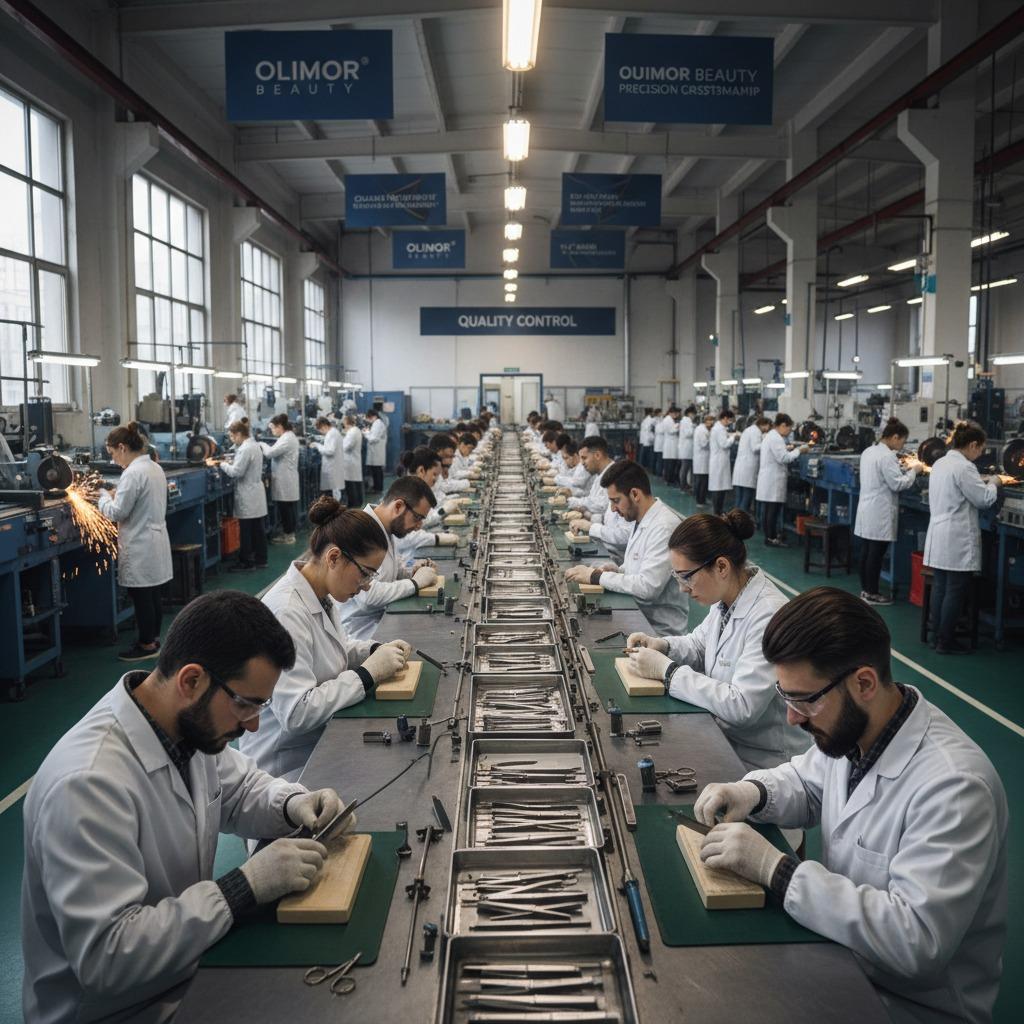
For B2B buyers, supplier evaluation should be based on repeatability, communication and documentation. A sample that feels good is important, but a commercial order also needs consistent finish, stable pivot assembly, reliable blade alignment and packaging that protects the product during transport.
Ask the supplier how incoming materials are checked, how in-process assembly is controlled and how final inspection is performed. If your company requires a quality management framework, ISO 9001 is a widely recognized standard to discuss during supplier review; however, buyers should verify current certificates directly and should not assume certification unless the supplier provides valid documents. For chemical or market access requirements, regulations such as EU REACH may be relevant depending on destination, materials and packaging. Always confirm the current version and applicability with the supplier and your compliance adviser.
Useful commercial questions include whether samples are available, what customization options can be discussed, what packaging formats are possible and what information is needed for quotation. Buyers can send a product inquiry with target market, application and packaging expectations so the discussion is based on real requirements rather than assumptions.
When This Ergonomic Nail Clipper Is the Right Choice
This ergonomic stainless steel nail clipper is a strong fit when the product brief calls for a compact, practical grooming tool with improved handling. The curved blade supports controlled trimming, the contoured handle improves grip comfort, the matte finish helps reduce slipping, and the smooth pivoting mechanism supports steadier pressure. The blue floral pivot screw gives the clipper a distinctive visual detail for retail display, gift sets or personal grooming kits.
It is especially suitable for buyers who need a nail care item that can be explained clearly: everyday fingernail and toenail trimming, compact travel use, stainless steel construction and comfortable ergonomic handling. It is not the right product to position as a medical device or a treatment tool. Its value is in making a common grooming routine easier, cleaner and more controlled.
For a restrained next step, review related tools on the Olimor products page or contact the team with your intended use, packaging needs and market requirements. Clear product expectations will help determine whether this ergonomic clipper should be supplied as a standalone item or as part of a wider grooming assortment.
FAQ
Can I request samples before placing a bulk order?
Sample availability should be confirmed directly with Olimor. For ergonomic nail clippers, samples are useful for checking hand feel, pivot smoothness, blade alignment, finish consistency and packaging suitability before commercial ordering.
Is there a minimum order quantity for customized nail clippers?
MOQ depends on the product configuration, packaging, customization and production arrangement. Buyers should provide the intended market, order purpose and customization requirements so the supplier can respond accurately without assumptions.
What customization options may be discussed?
Customization may involve packaging, set arrangement or appearance details, depending on feasibility. Any changes to finish, decoration or packaging should be confirmed with samples and written specifications before production.
How should buyers check quality before shipment?
Buyers should agree on inspection points such as blade alignment, pivot action, surface finish, appearance of the decorative screw, cleanliness and packaging condition. If specific standards or documents are required for your market, verify current versions and supplier paperwork before shipment.