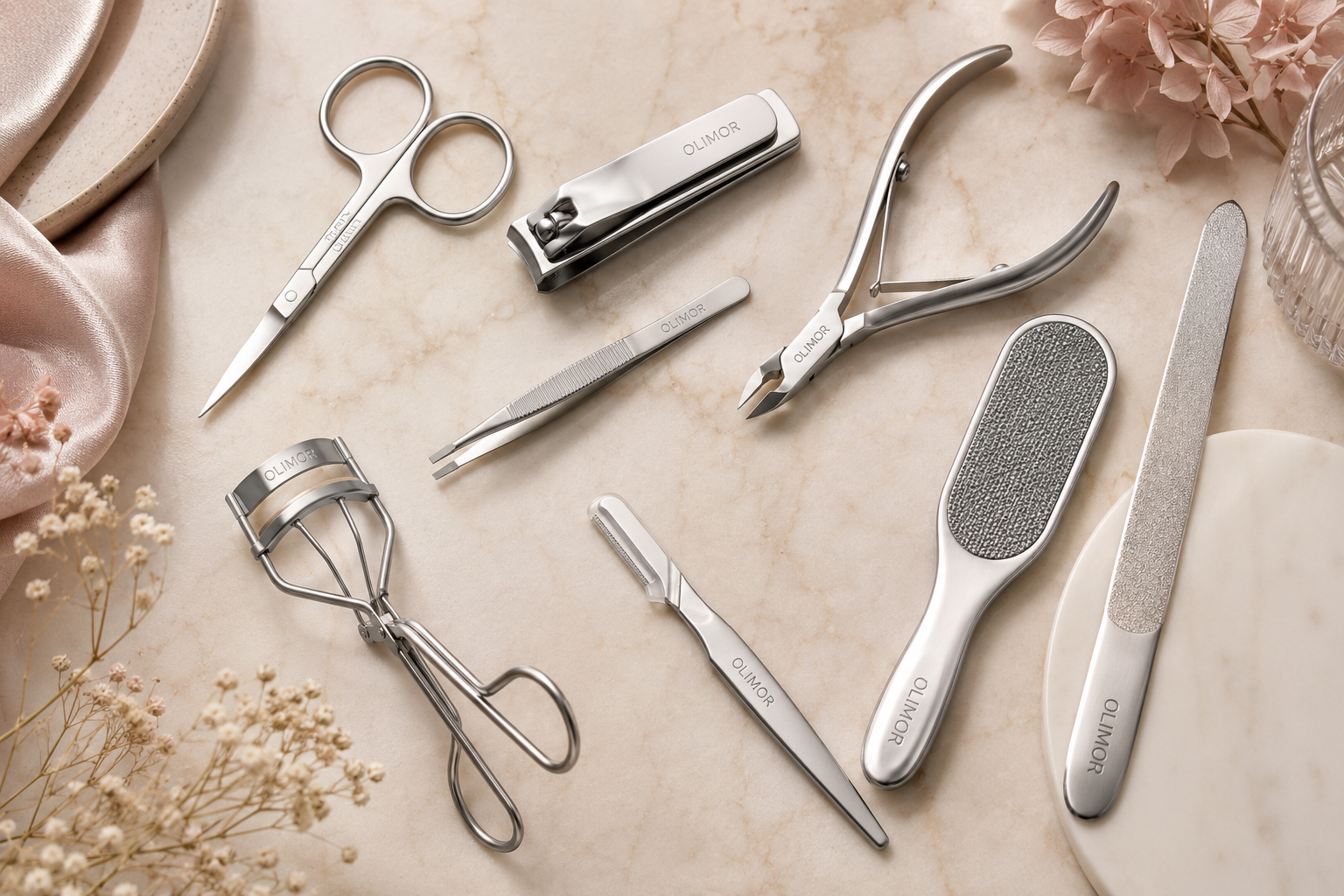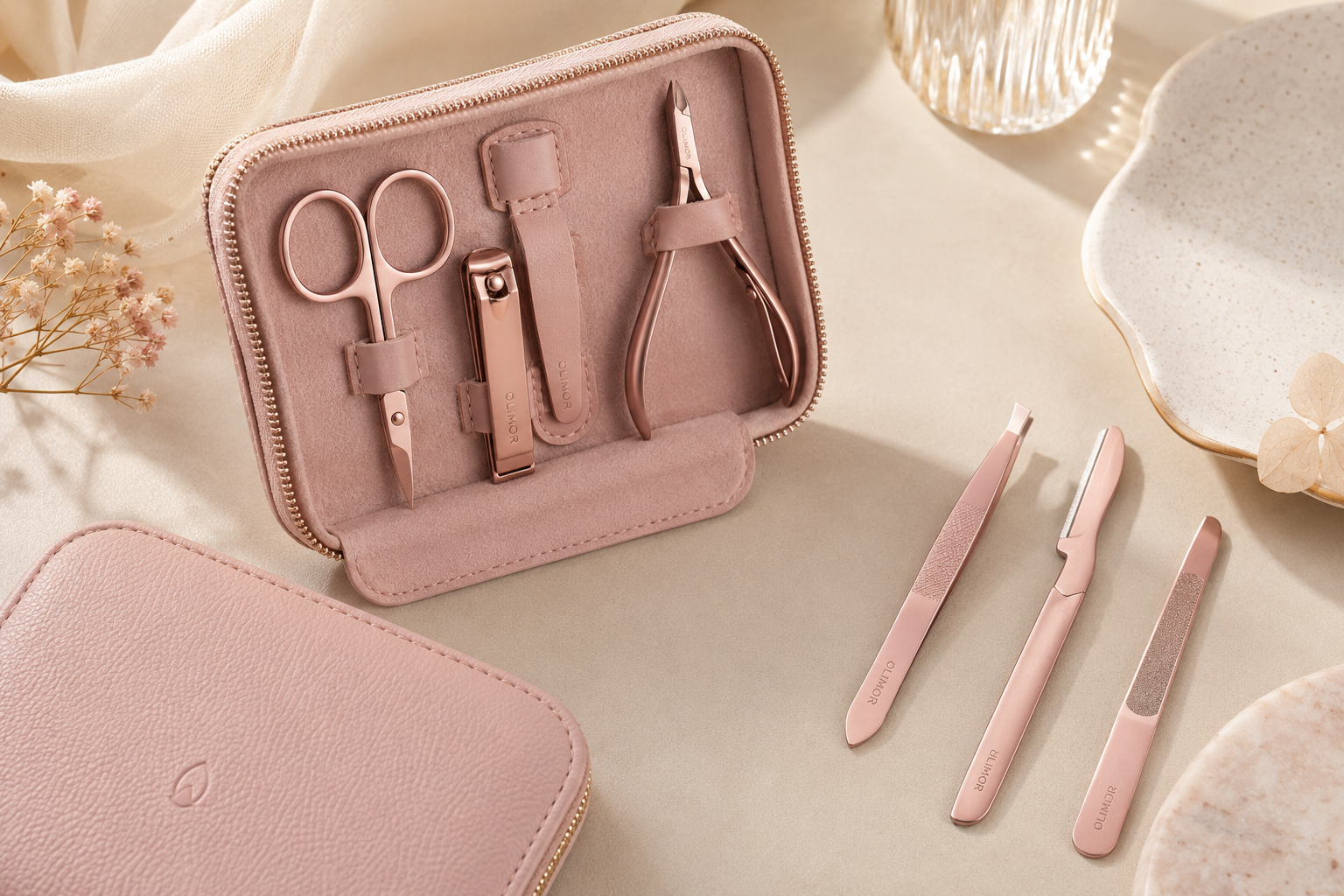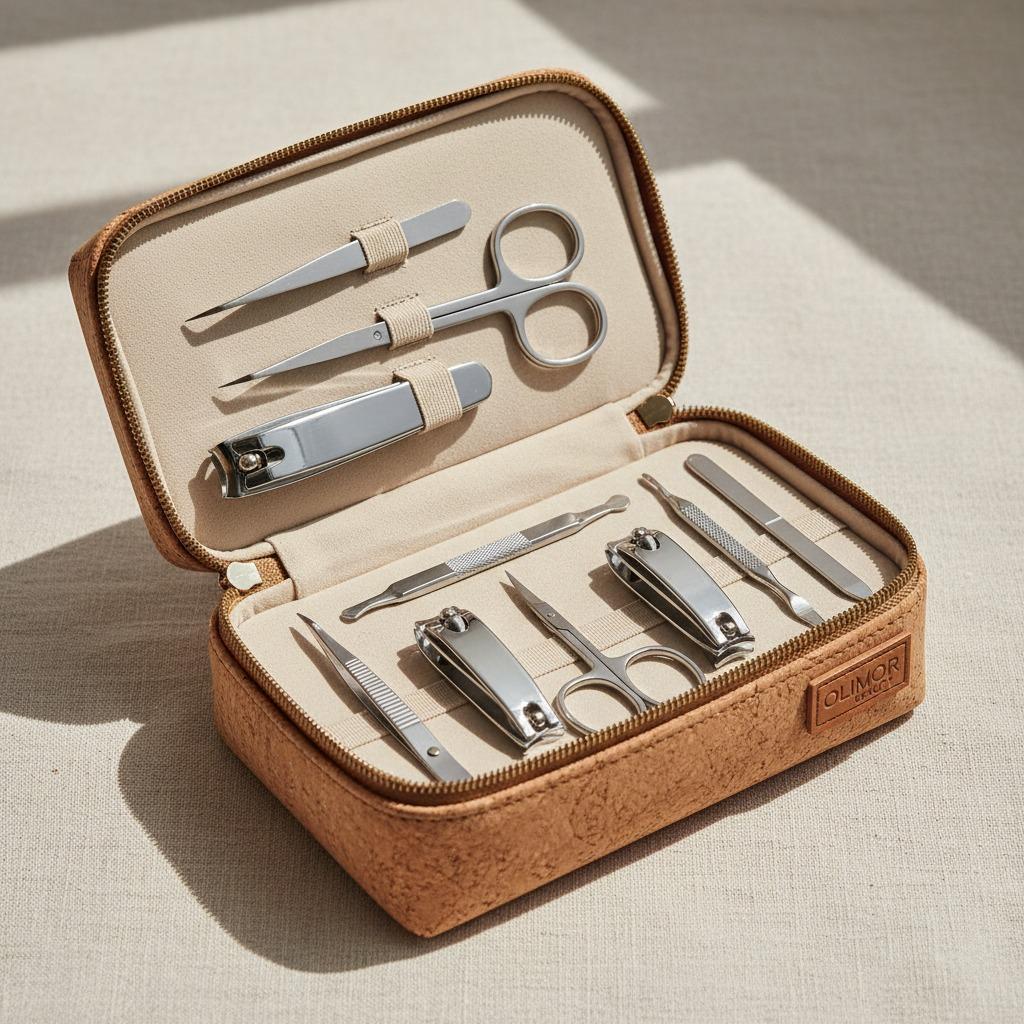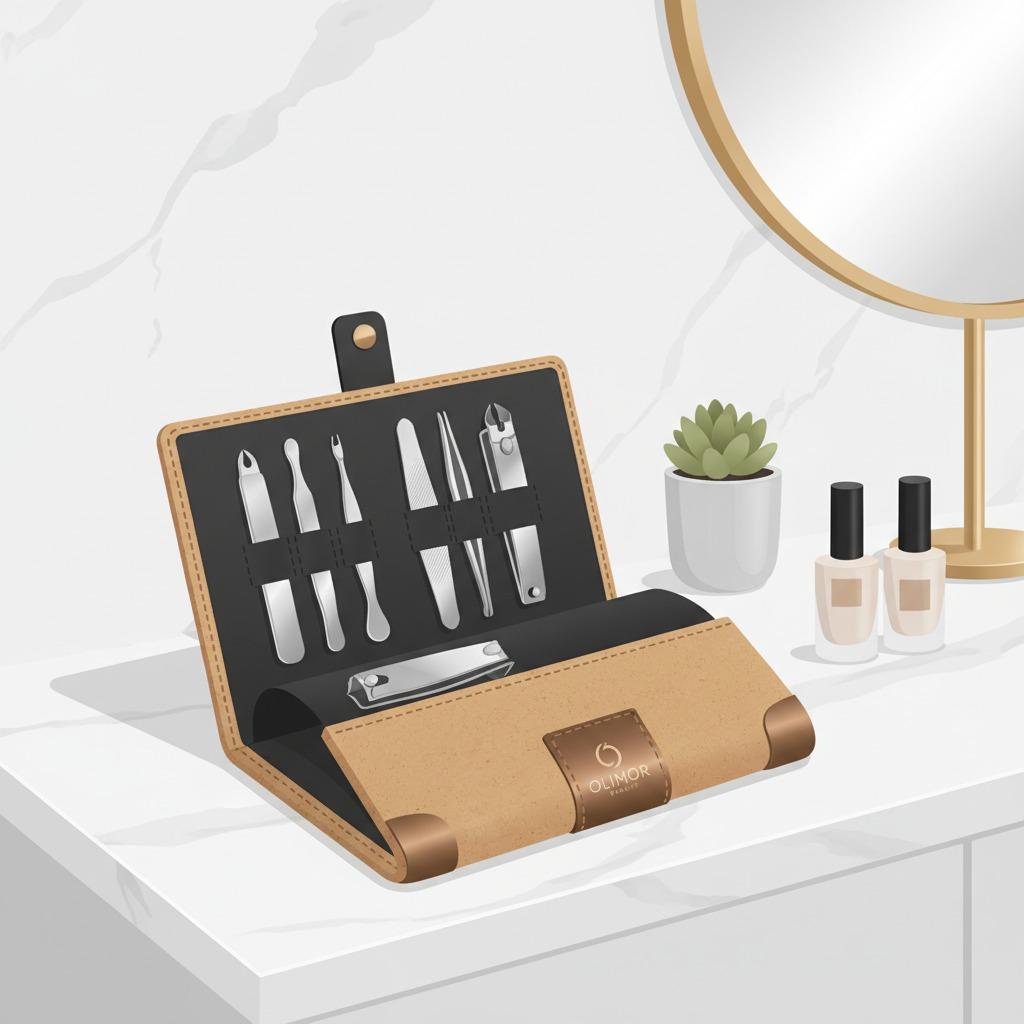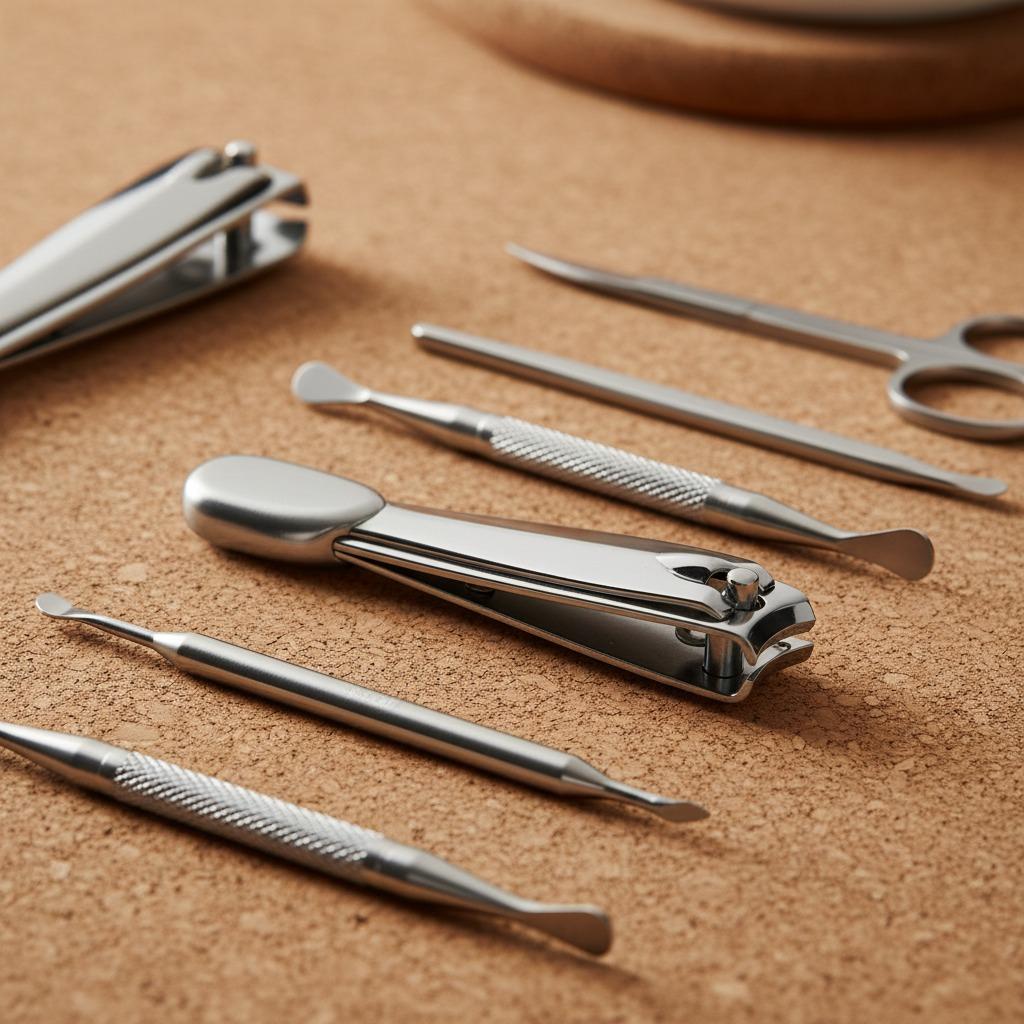
An ergonomic nail clipper set should make routine trimming cleaner, more controlled, and easier to repeat. The most useful sets include a smaller fingernail clipper for curved hand nails and a larger toenail clipper for thicker, flatter nails. For home users, that means fewer awkward cuts and better organization. For salons, spas, hotels, retailers, and personal care brands, it becomes a sourcing decision where comfort, cutting consistency, hygiene, packaging, and supplier reliability all matter.
Olimor Beauty focuses on practical stainless steel beauty tools, including nail tools designed for dependable construction and comfortable handling. This guide explains how to evaluate a nail clipper set from both the user and buyer perspective: what the set should include, how ergonomics affect performance, what to inspect in samples, how to maintain the tools, and which commercial questions to ask before placing an order.
What a Nail Clipper Set Should Solve
The main job of a nail clipper set is simple: trim fingernails and toenails cleanly without excessive force, slipping, tearing, or leaving rough edges. A single clipper can work in an emergency, but it is rarely ideal for both hands and feet. Fingernails are usually thinner and more curved, so a compact clipper gives better control. Toenails are thicker and often flatter, so a wider and stronger clipper is easier to position for a straighter cut.
A two-piece set also improves hygiene and product clarity. Users can keep one clipper for hands and one for feet, reducing cross-use. Retailers and brands can present a complete grooming solution instead of selling a single tool that may not match every nail type. For hospitality or travel kits, the set format helps users understand the purpose of each tool immediately.
- Fingernail clipper: smaller, more controlled, and suitable for curved nail edges.
- Toenail clipper: larger, stronger in feel, and better for thicker nails and straighter trimming.
- Set format: useful for bathrooms, travel pouches, salon stations, gift kits, retail bundles, and private-label nail care ranges.
Why Stainless Steel Is Commonly Chosen for Nail Tools
Stainless steel is a practical material for nail clipper sets because it is strong, easy to wipe clean, and suitable for repeated personal care use. It also gives the tool a solid hand feel, which matters because users judge clippers quickly by how stable the lever feels and whether the jaws cut cleanly.
Material alone does not guarantee quality. A polished clipper can still perform poorly if the jaws do not meet evenly, the lever is loose, or the cutting edge crushes instead of cutting. The manufacturing details are what turn stainless steel into a reliable grooming tool: accurate forming, aligned cutting edges, smooth lever movement, finished surfaces, and packaging that protects the jaws during handling and transport.
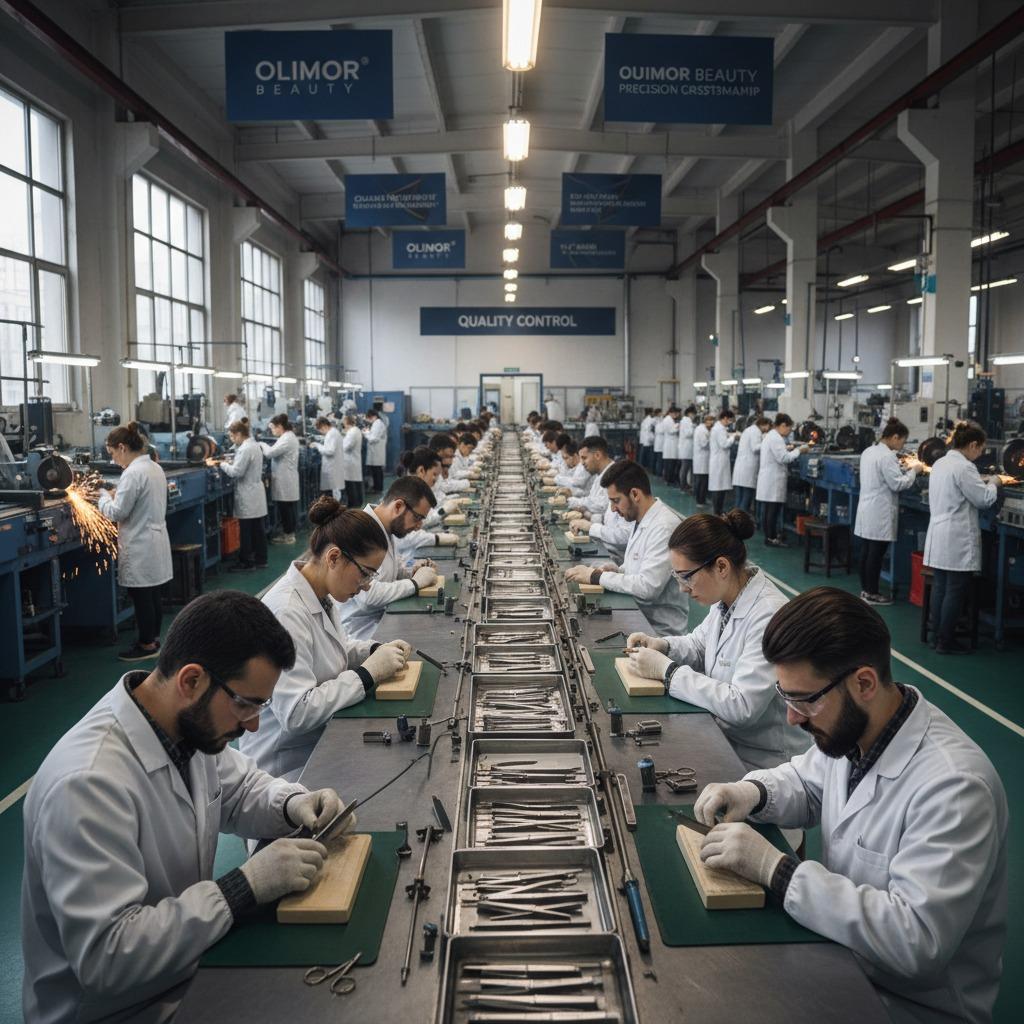
For B2B buyers, this is why sample review is essential. Product photos can show shape and finish, but they cannot fully show pressure required, edge alignment, grip comfort, or cutting feel. Olimor Beauty emphasizes practical construction and internal control from raw material sourcing through final packaging, which is especially important for small tools where minor defects are immediately noticeable to end users.
Ergonomic Features That Make a Real Difference
Ergonomics in a nail clipper set should not be treated as a decorative claim. It should describe how easily the user can hold, position, press, and control the tool. A well-designed clipper reduces hand strain, helps prevent slipping, and makes it easier to trim in small controlled cuts.
When comparing ergonomic nail clipper sets, look at the details below rather than relying only on appearance.
Lever Length and Pressing Angle
The lever should allow natural pressure from the thumb or finger. If the lever is too short, the user may need more force, especially on toenails. If it is too long or unstable, the clipper may feel awkward and less precise. The best option is a balanced lever that moves smoothly and gives the user predictable control.
Grip Surface and Body Shape
Smooth stainless steel looks clean but can feel slippery if the hand is damp. A slightly contoured body, practical grip texture, or comfortable lever surface can improve control. This is relevant for personal users and even more important for professionals who repeat nail care tasks throughout the day.
Jaw Width and Cutting Curve
The smaller clipper should match the curved shape of fingernails and allow gradual trimming. The larger clipper should give enough jaw width for toenails without forcing the user to make too many repeated cuts. Buyers should check whether the two clippers in a set truly serve different purposes or are simply different sizes without thoughtful geometry.
Edge Alignment and Stability
The upper and lower cutting edges should meet evenly across the jaw. Poor alignment can leave jagged edges, partial cuts, or crushed nail sections. The lever should feel stable when opened and pressed, with no obvious wobble that makes the tool difficult to control.
How to Select Nail Clipper Sets for Different Sales Channels
The right set depends on how it will be used and sold. A family bathroom set, salon backbar tool, hotel amenity, and retail private-label product may all include a fingernail clipper and toenail clipper, but the buying priorities differ.
| Use case | Selection priority | What to inspect | Commercial note |
|---|---|---|---|
| Home grooming | Comfort, clean trimming, simple storage | Grip, jaw alignment, easy cleaning | Clear packaging should explain hand and foot use |
| Salon or spa use | Durability, hygiene workflow, consistent feel | Lever stability, surface finish, repeat cutting feel | Check that tools suit the salon’s cleaning practices and local rules |
| Travel or hospitality kits | Compact format and safe packaging | Size, pouch or tray fit, protected cutting edges | Packaging must prevent damage during handling |
| Retail private-label range | Product positioning and repeatable quality | Multiple samples, finish consistency, user instructions | Confirm customization options before finalizing artwork |
| Distributor assortment | Reliable supply and practical SKU planning | Set composition, carton protection, supplier communication | Ask about order requirements without assuming fixed MOQ or lead time |
Brands planning a coordinated beauty tool line can review Olimor Beauty’s broader beauty tool products to see how nail clippers may fit with other grooming items. For merchandising ideas across related tools, browse the product collection and consider whether a two-piece clipper set should be sold alone or bundled with files, tweezers, or manicure accessories where appropriate.
Sample Inspection Checklist for B2B Buyers
A nail clipper set should be tested like a real user would use it. Do not evaluate only one sample or only the visual finish. Check several sets when possible so you can understand consistency. Small variations in cutting edge, lever action, or surface finishing can affect customer satisfaction.
Practical Inspection Checklist
- Set composition: Confirm the package includes a dedicated fingernail clipper and a dedicated toenail clipper if the product is positioned as a set.
- Material confirmation: Verify stainless steel construction with the supplier and review any material statements provided in supplier documents.
- Surface finish: Look for burrs, sharp non-cutting edges, discoloration, rough polishing, or visible defects.
- Jaw alignment: Close the clipper slowly and check whether the upper and lower cutting edges meet evenly.
- Cutting feel: Test controlled small cuts on suitable nail samples or approved test materials used in your evaluation process; avoid judging only by opening and closing the tool in air.
- Lever movement: The lever should rotate and press smoothly without unstable wobbling.
- Grip comfort: Hold the clipper from different angles, especially for toenail trimming, to check whether the body feels secure.
- Cleaning access: Confirm that nail fragments can be removed easily from the jaw area.
- Packaging protection: Ensure the jaws and lever are protected during transport, storage, and retail handling.
- User instructions: Include simple guidance for separate hand and foot use, cleaning, dry storage, and safe trimming.
For regulated retail markets, buyers should verify current product safety, labeling, and documentation requirements with qualified advisors. In the European Union, the General Product Safety Regulation is relevant to many consumer products; in professional nail care environments, local health departments or public health guidance may affect cleaning and sanitation procedures. Always check current versions and supplier documents rather than relying on assumptions.
Cost Factors Without Reducing the Tool to Price Alone
Nail clipper sets are often small-ticket products, but cost should be evaluated against usability and consistency. A set that looks inexpensive can become costly if it creates complaints, returns, poor reviews, or weak repeat orders. The more commercially useful question is not simply “What is the lowest price?” but “What specification gives our customers a reliable trimming experience at the right market position?”
Several factors can influence the final commercial offer without requiring invented numbers. Stainless steel construction, finishing quality, edge alignment, packaging format, customization needs, inspection requirements, and order quantity can all affect cost. A simple bulk set for functional use will not have the same cost structure as a retail-ready private-label set with customized packaging and a more refined finish.
When requesting a quotation, provide enough detail for the supplier to respond accurately. Include the intended use, target channel, preferred set composition, packaging expectation, customization needs, destination market, and any document requirements. If you need to compare options, ask the supplier to explain the difference between available finishes, packaging styles, and customization approaches rather than choosing only from product photos.
Safe Use for Fingernails and Toenails
Even a well-made clipper performs best with correct technique. Nails should be trimmed in controlled small cuts rather than one aggressive cut across the entire nail. This reduces stress on the nail edge and makes it easier to avoid tearing or cutting too close to the skin.
For fingernails, follow the natural curve gradually, then smooth the edge if needed with a suitable nail file. For toenails, a straighter trim is often easier to manage, especially near the corners. Users should avoid digging deeply into the sides of the nail. If a nail is unusually thick, painful, brittle, discolored, or affected by a medical condition, forceful clipping is not the answer; the user should consider appropriate professional advice.
- Clean the clipper before use, especially if it has been shared.
- Use the smaller clipper for fingernails and the larger clipper for toenails.
- Trim gradually with several small cuts.
- Do not cut too close to the skin or force the tool through painful nails.
- Stop if trimming causes bleeding, cracking, or significant discomfort.
- Wipe and dry the tool before storing it.
Cleaning, Maintenance, and Storage
Maintenance is simple but important. After each use, remove nail fragments from the jaw area. Wipe the clipper clean and dry before storing it, especially if it has been used in a bathroom or spa setting where moisture is common. Dry storage helps keep the tool pleasant to handle and reduces unnecessary exposure to residue.
For personal use, regular wiping and dry storage may be sufficient for routine care. Shared tools require more careful cleaning between users. Professional salons and spas should follow their local hygiene rules and workplace procedures. Public health bodies such as the CDC provide general infection control principles, but nail tool sanitation requirements can vary by location and service type, so businesses should verify current local requirements.
Storage also affects tool life. Avoid throwing clippers into a drawer with other metal items where the cutting edges can be damaged. A pouch, tray, retail insert, or dedicated grooming kit compartment helps protect the jaw and keeps the fingernail and toenail clippers together. If a clipper begins bending the nail instead of cutting, leaves repeated jagged sections, or feels loose at the lever, it should be reviewed for replacement.
How to Evaluate a Nail Clipper Supplier
A reliable nail clipper supplier should help you make practical decisions, not just provide a low quotation. For retailers, distributors, and private-label brands, supplier evaluation should include communication, sample consistency, packaging support, quality control practices, and willingness to clarify product details.
Start by explaining your market and use case. A salon-focused set may need a different presentation from a travel grooming set. A retail private-label project may require packaging discussion and clear product instructions. A distributor may prioritize repeatable quality and stable supply. Olimor Beauty’s internal control approach from raw material sourcing through packaging is relevant because nail clippers are small tools where small differences can be felt immediately.
Ask clear questions before ordering. What stainless steel construction is being offered? What customization options are available? How are samples reviewed before production? How is final packaging checked? What information can be provided for your destination market? Avoid assuming certification, lead time, minimum order quantity, or test results unless the supplier confirms them in current documents.
If you are developing a nail care line, you can send a product inquiry with your required set format, packaging concept, and sales channel. For broader sourcing discussion, contact Olimor Beauty to review suitable beauty tool options.
FAQ
Can I request samples before placing a nail clipper set order?
Sample requests are commonly used to evaluate cutting feel, lever movement, finish, packaging, and set composition. Ask Olimor Beauty about current sample availability and the information needed to match your intended market.
Is there a fixed MOQ for ergonomic nail clipper sets?
Minimum order quantity can depend on the product specification, packaging, customization, and current production plan. Confirm MOQ directly with the supplier for the exact set you want to source.
Can the nail clipper set be customized for private label or retail packaging?
Customization may be possible depending on the tool style, packaging format, and branding requirements. Provide artwork expectations, sales channel, and destination market so the supplier can advise on practical options.
How should buyers check quality before bulk purchasing?
Review multiple samples, inspect jaw alignment and surface finish, test cutting control, check packaging protection, and request current supplier documents relevant to your market. Do not rely only on photographs.
What affects lead time for nail clipper set orders?
Lead time can be influenced by product availability, customization, packaging, order quantity, inspection requirements, and logistics. Confirm the current schedule with the supplier before planning a launch.
Choosing a Set That Users Will Keep Using
A good nail clipper set is not defined by decoration alone. It should give users the right tool for hands and the right tool for feet, with clean cutting, stable handling, easy cleaning, and packaging that supports the product’s purpose. For businesses, the same details influence customer satisfaction, repeat orders, and brand trust.
Focus on stainless steel construction, ergonomic control, aligned cutting edges, sample testing, and clear supplier communication. When these basics are handled well, a fingernail and toenail clipper set becomes a dependable everyday grooming product rather than a disposable accessory.