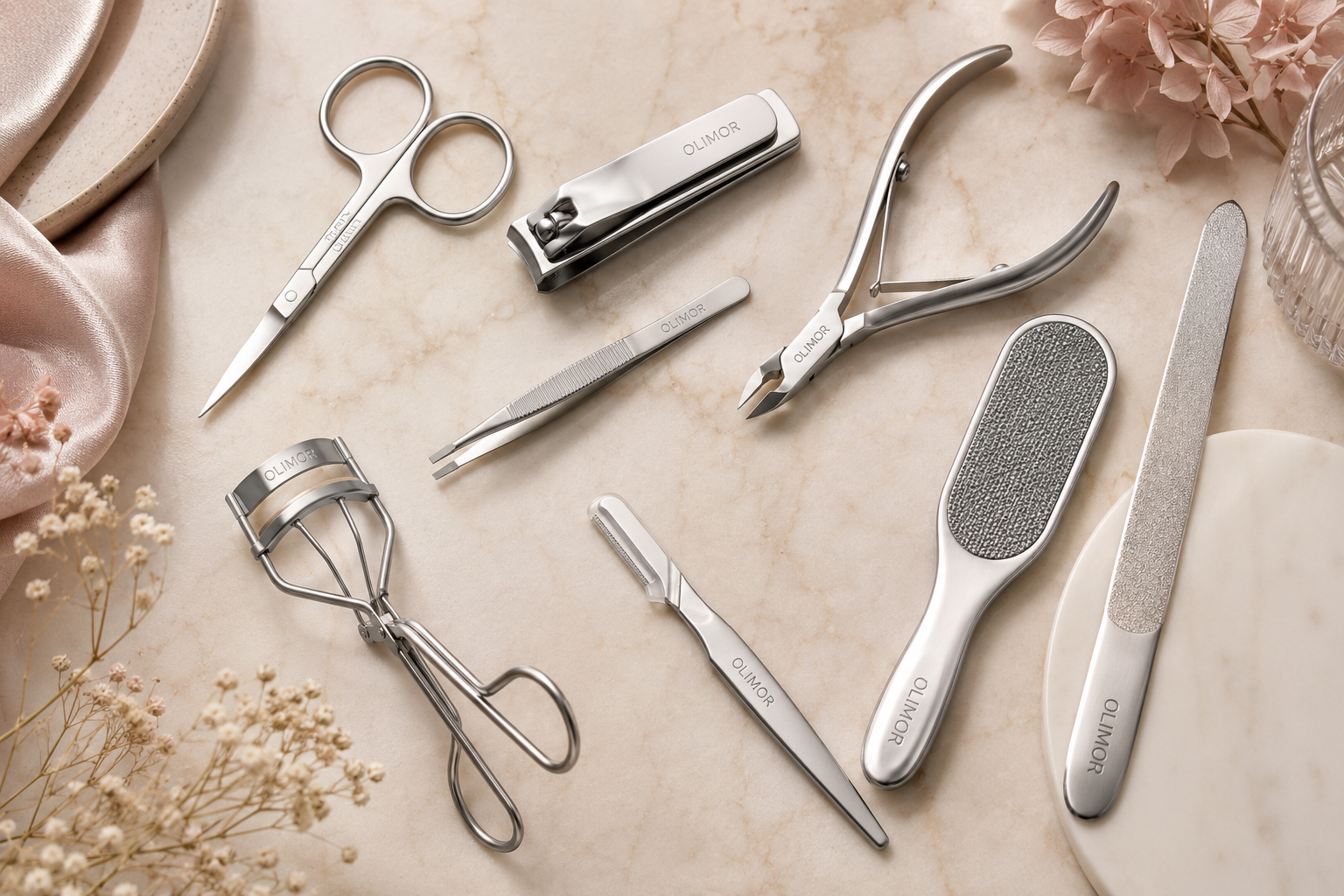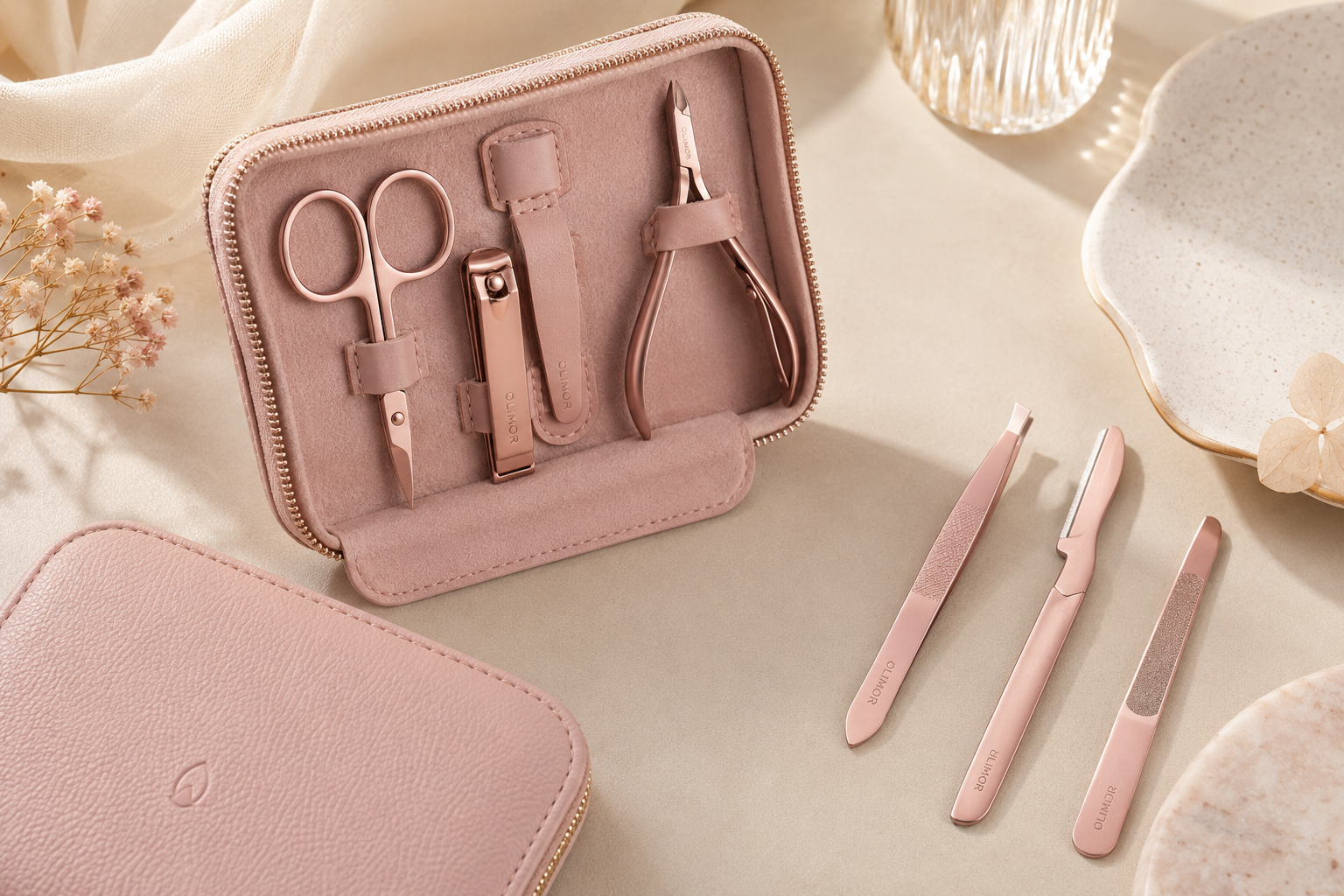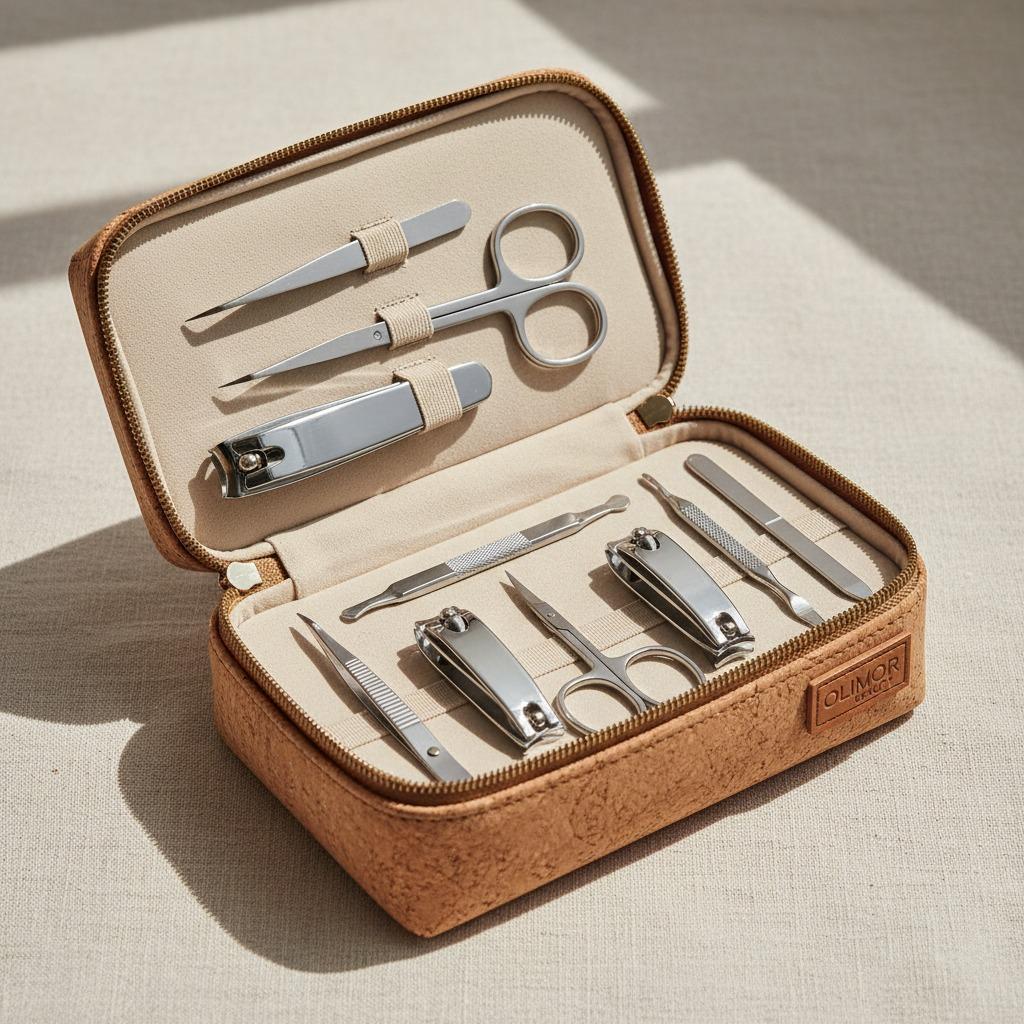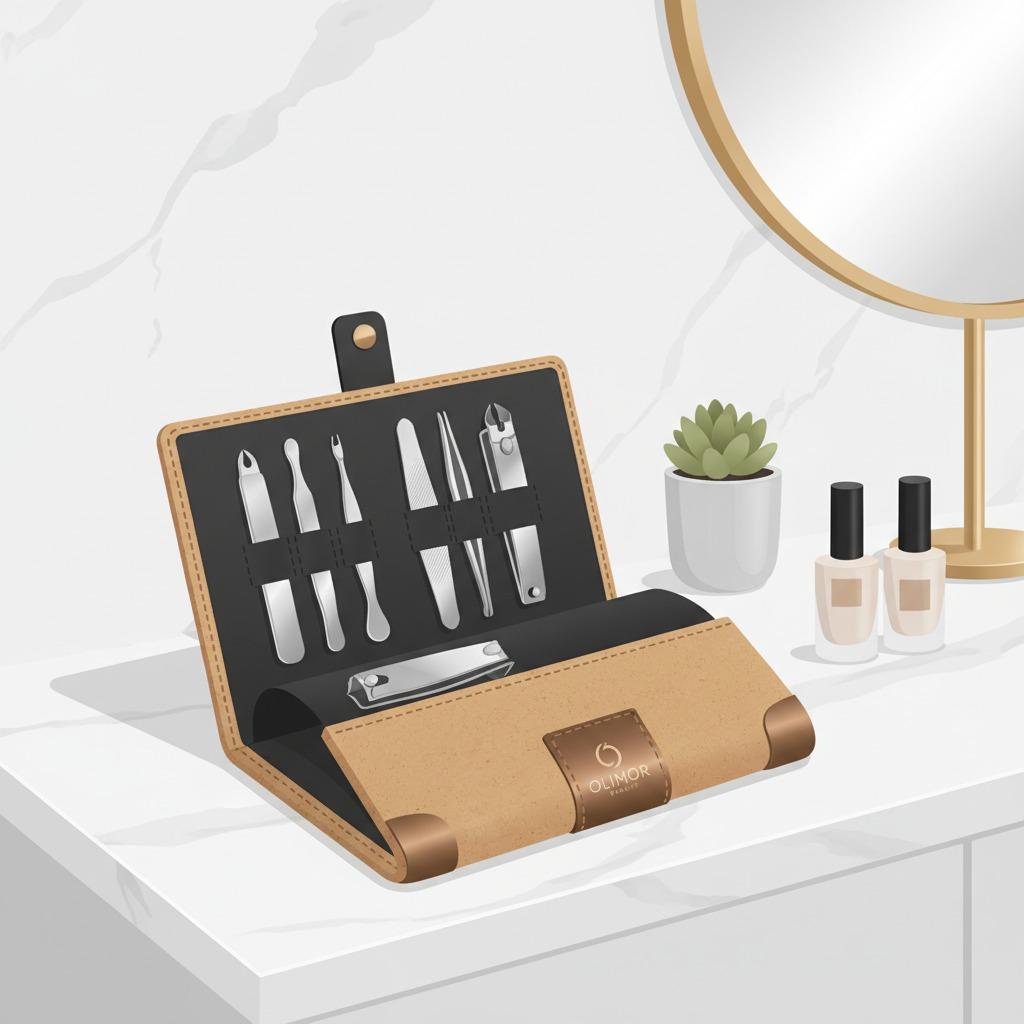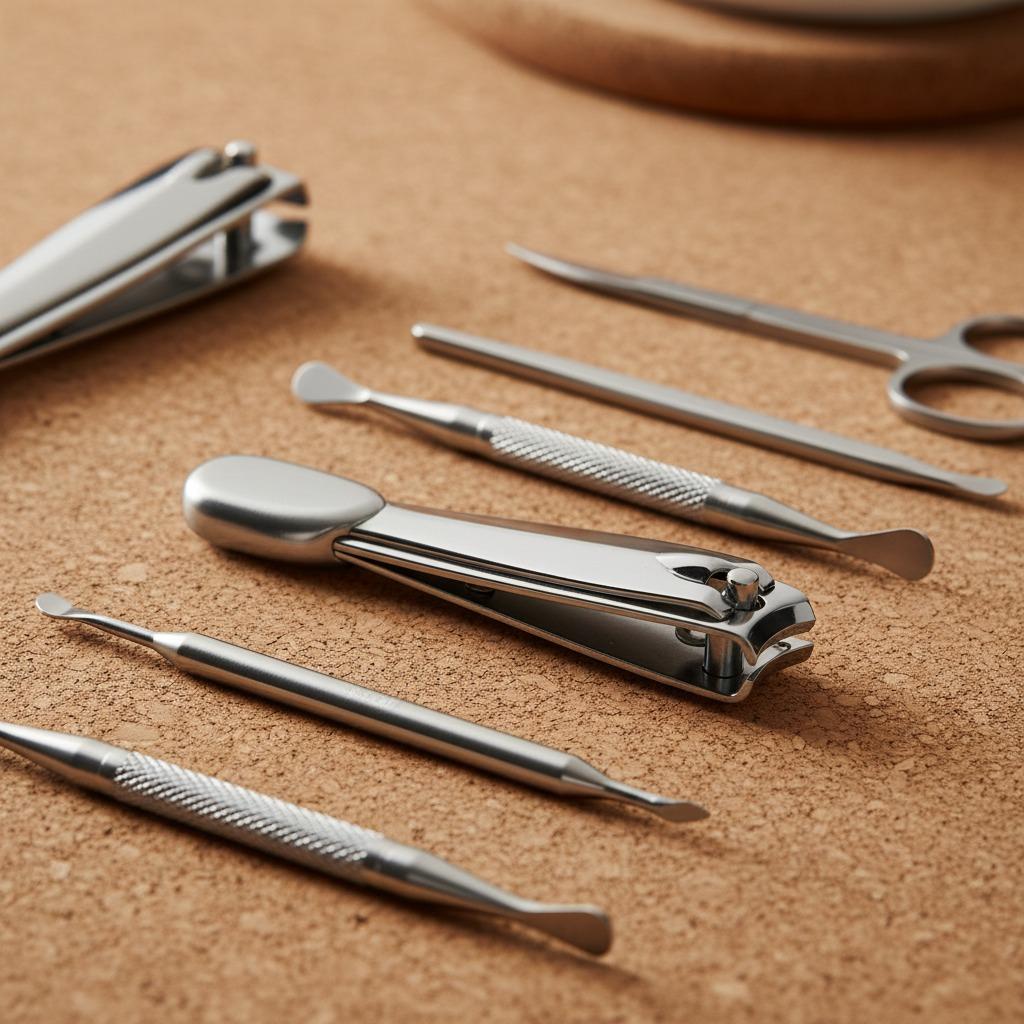











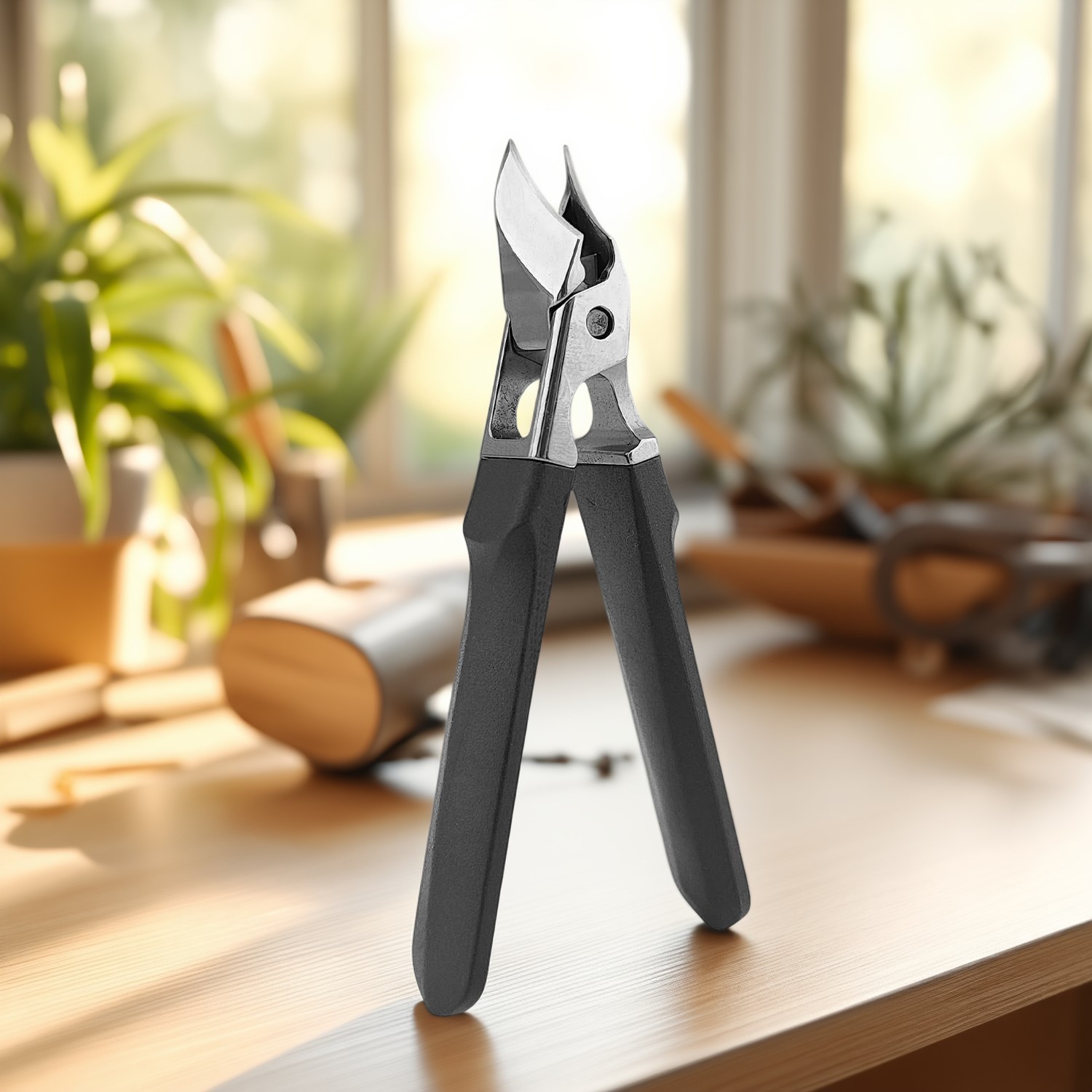
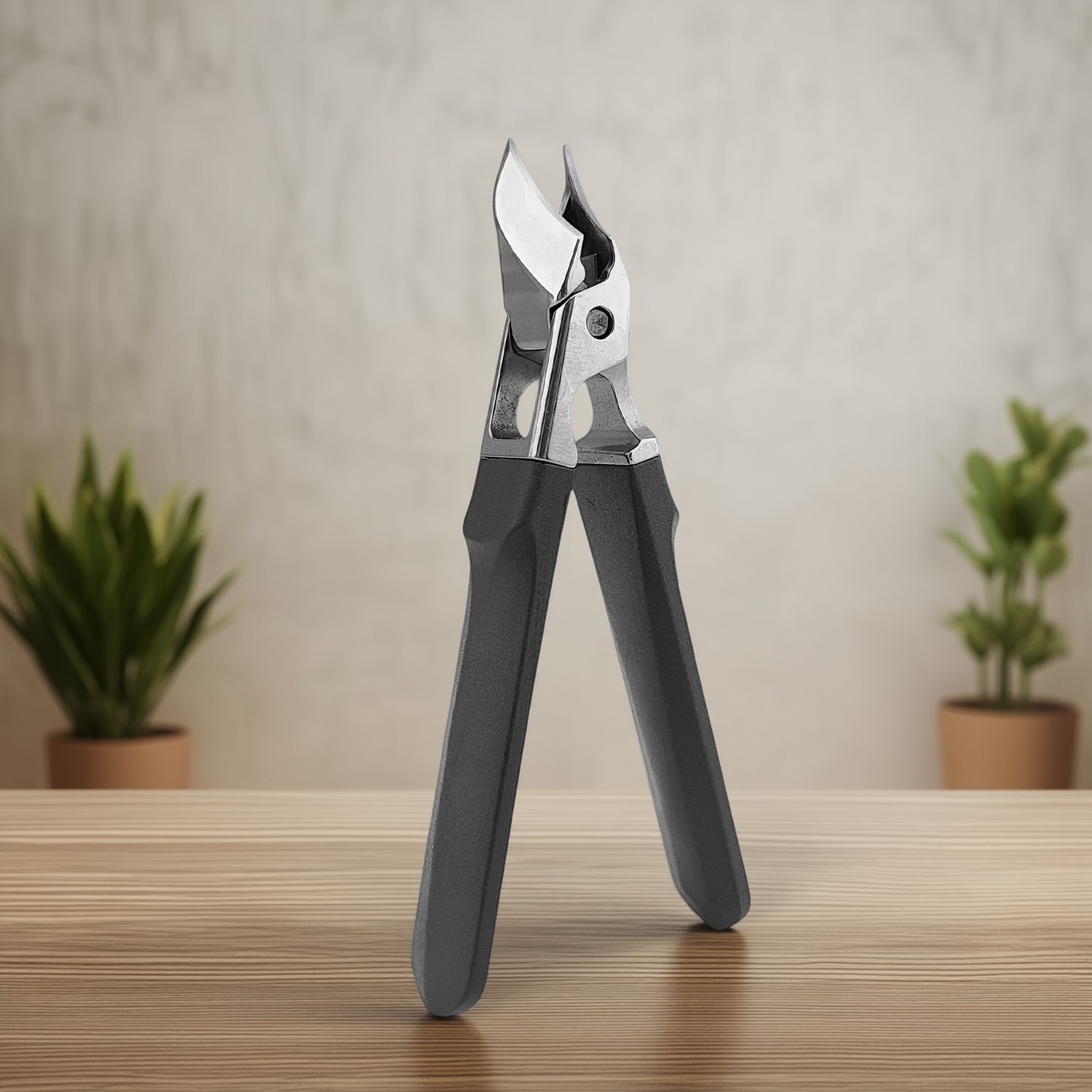
A professional nail clipper should do one main job well: trim fingernails or toenails cleanly with controlled pressure and minimal rough edges. For personal users, that means easier grooming and less filing. For salons, retailers, distributors and private-label buyers, it means a small tool that must feel reliable, look consistent and hold up to repeated handling.
Olimor Beauty presents this nail clipper as a stainless steel, ergonomic and travel-friendly grooming tool designed for precise trimming. Those details matter because nail clippers are often judged in seconds. A buyer or end user will notice whether the lever feels stable, whether the blades meet evenly, whether the surface is smooth and whether the tool is simple to clean after use.
This guide explains how to evaluate a professional stainless steel nail clipper from both user and sourcing perspectives. It covers construction, blade inspection, ergonomics, use technique, hygiene, retail positioning, cost factors and supplier questions without relying on unsupported performance claims.
What a Professional Nail Clipper Should Deliver
The term professional should describe function, not just appearance. A useful professional nail clipper gives the user a clean, predictable cut. It should not crush the nail plate, twist in the hand or require excessive force for a normal trim. The tool should also be easy to wipe clean and compact enough to fit into a grooming pouch, salon station or retail set.
For B2B buyers, the professional value is broader. A clipper may be sold individually, added to a nail-care kit, paired with other personal-care tools or positioned as a travel grooming item. In each case, the buyer needs repeatable construction and a design that matches the target user. A salon-oriented tool may emphasize control and cleaning workflow. A retail travel item may prioritize compact size, smooth finish and simple packaging. A men’s grooming kit may need a sturdy look and comfortable leverage.
When comparing Olimor beauty tool products, evaluate the nail clipper as a working instrument. Open and close the jaw, inspect the cutting edge under good light and test how confidently the lever transfers pressure. A clipper can look polished but still perform poorly if the blades are misaligned or the lever feels loose.
Stainless Steel Construction: Why It Matters
The product information identifies the clipper as made from premium-grade stainless steel. Stainless steel is commonly used for nail-care tools because it offers strength, corrosion resistance and a surface that can be kept clean with routine care. It is not maintenance-free, but it is well suited to tools that contact nails, moisture and cosmetic environments.
For a nail clipper, material quality affects more than durability. The body needs enough rigidity so the jaws do not flex under pressure. The cutting edges need to meet accurately. The surface should be smooth enough that it does not scrape the hand or collect residue in rough areas. A well-finished stainless steel clipper also supports a better retail impression because buyers associate clean edges, smooth polishing and consistent assembly with dependable grooming tools.
When inspecting stainless steel nail clippers, focus on visible and tactile details rather than vague labels. Check whether the lever sits correctly when closed. Look for burrs around the blade, rivet area and handle edges. Confirm that the jaw opens smoothly and closes without side-to-side shifting. If the product will be sold in humid regions, travel kits or bathroom-storage environments, care instructions should tell users to clean and dry the clipper after use to help preserve the finish.
Blade Alignment, Cutting Feel and Nail Type
Blade performance is the main difference between a satisfying clipper and a frustrating one. A sharp, well-aligned clipper cuts through the nail with a crisp motion. A dull or uneven clipper may squeeze, bend or split the nail before completing the cut. This is why visual inspection and simple functional testing are important before sourcing or retail approval.
Blade alignment can be checked by closing the clipper slowly and watching whether the two cutting edges meet evenly from one side to the other. The cutting edge should not show obvious gaps, offsets or rough chips. The jaw opening should be appropriate for the intended use. A compact clipper can work well for regular fingernail grooming, while thicker toenails may require careful positioning and sometimes a different tool style. Users should not force any clipper through painful, diseased or unusually thick nails.
The cutting curve also affects results. A curved edge is common for fingernails because it follows the natural nail shape. Some users prefer a straighter cutting approach for toenails, trimming across and then gently filing corners. The right choice depends on the assortment strategy. Retailers may offer one compact daily-use clipper, while salon and distributor buyers may consider a broader range of nail tools through related beauty tool collections.
Ergonomic Control and Travel-Friendly Use
The product is described as ergonomic and travel-friendly. In practice, ergonomics means the user can hold the clipper securely, see the nail edge clearly and apply pressure without the tool slipping or feeling unstable. A comfortable lever matters because nail clipping is a sequence of small controlled cuts, not one heavy squeeze.
A good clipper should allow the user to trim gradually along the nail edge. This is especially important for shaping before filing, maintaining shorter nails and working near corners. If the lever is too difficult to press, users may apply sudden force and remove too much nail. If the tool is too slippery, the cut can become angled or uneven. A balanced design helps improve confidence, especially for travel use where people may be grooming in less ideal lighting or smaller spaces.
Compact size is useful for toiletry bags, manicure pouches, desk drawers and retail travel sets. Travelers should still check current airline, railway or local security rules before packing grooming tools in carry-on luggage. For retailers, travel-friendly does not only mean small. It also means easy to package, easy to explain and durable enough for repeated opening, closing and storage.
How to Inspect a Nail Clipper Before Buying or Sourcing
A structured inspection process helps avoid relying only on appearance. This is useful for purchasing teams, salon owners and retailers evaluating samples. The following checklist can be used during product review, incoming inspection or assortment comparison.
| Inspection Point | What to Check | Why It Matters |
|---|---|---|
| Blade contact | Close the jaws slowly and confirm even contact across the cutting edge. | Uneven contact can leave jagged nail edges or require repeated cuts. |
| Lever stability | Press the lever several times and check for wobble, looseness or rough movement. | Stable leverage improves control and user confidence. |
| Surface finish | Run a finger carefully over non-cutting areas to identify burrs or sharp handle edges. | Smooth finishing improves comfort and perceived quality. |
| Jaw opening | Check whether the opening suits the intended nail type and user group. | A poor fit can make trimming awkward or unsafe. |
| Cleaning access | Look at the blade area, rivet and underside for debris traps. | Accessible surfaces are easier to wipe after use. |
| Packaging fit | Confirm whether the size and finish match the planned retail kit, salon set or travel assortment. | Product positioning affects perceived value and customer satisfaction. |
For B2B projects, sample review should include both handling and practical trimming checks on appropriate nail samples or normal-use scenarios. Avoid judging only by catalog images. Ask the supplier what customization, packaging and quality-control documentation can be discussed for the intended market, without assuming that every option applies to every order.
Correct Use for Cleaner Nail Trimming
Even a well-made professional nail clipper performs best when used carefully. The goal is to reduce nail length in small steps and then refine the shape with a file. This approach gives cleaner results than trying to remove a large section at once.
- Start with a clean, dry tool. Wipe the clipper before use and remove any old nail debris around the blades.
- Soften nails if helpful. Many users trim after washing hands or bathing, when nails may be less brittle.
- Position the blade before pressing. Make sure the nail edge is visible and the cutting curve follows the intended shape.
- Trim in small sections. Work from one side toward the center, then repeat from the other side if needed.
- Do not cut too short. Leave a small free edge to help protect the nail bed and reduce discomfort.
- File after clipping. Smooth corners and refine the shape with a nail file rather than over-clipping.
- Clean and dry the clipper. Remove fragments, wipe the surface and store it in a dry place.
For toenails, many users prefer a straighter trim with gentle filing at the corners. Cutting deeply into side edges can create discomfort for some people. Anyone with diabetes, circulation problems, nail infection, painful thickened nails or recurring ingrown nails should seek appropriate professional care instead of forcing a clipper through difficult nails.
Hygiene, Maintenance and Shared-Use Considerations
Stainless steel supports practical cleaning, but every grooming tool still needs care. After use, remove nail fragments and wipe the clipper dry. Avoid leaving the tool in standing water or constantly damp bathroom conditions. Moisture, cosmetic residue and debris can affect appearance and long-term usability even when the base material is corrosion resistant.
For personal use, do not share nail clippers unless they have been properly cleaned. For salons or other shared-use environments, follow current local hygiene rules, salon regulations and the business’s written tool-care procedures. Public bodies such as local health departments, state cosmetology or barber boards, and the U.S. Centers for Disease Control and Prevention publish hygiene-related information that may be relevant to cleaning and infection-prevention practices. Requirements vary by location and can change, so buyers and operators should verify current rules and supplier documents before setting procedures.
Inspection is part of maintenance. Replace a clipper if it becomes loose, damaged, visibly corroded, difficult to clean or unable to cut cleanly. A professional nail clipper should feel crisp and stable. Once the blade edge or lever action declines, the user may press harder, which can reduce trimming control.
Retail, Salon and Distributor Selection Factors
Commercial buyers often need to balance product function, appearance and assortment fit. A professional stainless steel nail clipper can serve several channels, but the selection criteria may differ.
For beauty retailers
Retail buyers should consider shelf presentation, packaging clarity and user education. Packaging can highlight stainless steel construction, ergonomic handling, compact storage and everyday grooming use. Care instructions are important because customers often expect metal tools to last, but may not know that drying and proper storage help preserve performance.
For salons and nail-care services
Salon buyers should focus on control, cleanability and replacement planning. A clipper used in a professional environment may be handled frequently, so the lever should feel steady and the body should be easy to wipe according to the salon’s hygiene protocol. The tool should also fit the workflow: clipping, shaping, filing, buffing or preparation before polish.
For distributors and private-label planners
Distributors should review consistency across samples, packaging options, branding requirements, carton presentation and documentation needed for the sales market. If selling into regulated regions, confirm applicable product safety obligations with qualified compliance support. For example, general consumer product safety rules such as the EU General Product Safety Regulation may be relevant to market access, labeling or documentation depending on where and how the tool is sold. Always verify the current regulation text and the supplier’s available documents.
Cost Factors Without Guesswork
Nail clipper cost can vary for practical reasons, but exact pricing should come from a current supplier quotation. Common cost drivers include stainless steel material selection, tooling, blade finishing, polishing consistency, assembly requirements, packaging, branding, order quantity, inspection needs and shipping method. A plain bulk-packed tool will not be costed the same way as a retail-ready item with customized packaging.
Buyers should be cautious about choosing only the lowest unit price. If a clipper has inconsistent blade alignment, rough finishing or weak packaging, the downstream costs can include returns, poor reviews or repacking work. A better evaluation compares total commercial fit: tool performance, visual quality, packaging, supplier communication and after-sales support.
When requesting a quotation, include the intended sales channel, target user, packaging concept, destination market and any compliance documents the market may require. If the project involves customized branding or kit assembly, state that early so the supplier can respond to the real purchasing scenario.
Supplier Evaluation Questions for B2B Buyers
A good supplier discussion is specific. Instead of asking only for a price, ask questions that reveal whether the tool fits the project and whether expectations can be documented. For Olimor Beauty business communication, buyers can contact the team or submit project details through the inquiry page.
- Can samples be reviewed for blade alignment, lever feel, surface finish and packaging direction?
- What customization options can be discussed for branding, packaging or kit use?
- What information is available about material, care guidance and product handling?
- How should buyers communicate quality expectations for surface finish, blade contact and assembly consistency?
- What documents are available for the intended destination market, and what must the buyer verify independently?
Clear communication helps both sides. Provide photos, reference packaging, target channel information and any market-specific requirements. Avoid assuming that one nail clipper specification is suitable for every country, retailer or professional environment.
FAQ
Can I request samples before placing a business order?
Sample availability should be confirmed directly with Olimor based on the product, customization needs and current business arrangement. When requesting samples, specify whether you want to inspect blade alignment, finish, packaging or kit compatibility.
Is there a fixed MOQ for this professional nail clipper?
MOQ can depend on the order type, packaging, customization and current production planning. Ask for the applicable MOQ during quotation rather than relying on assumptions.
Can the nail clipper be customized for retail or private-label projects?
Customization may be discussed for suitable business projects, including packaging direction or branding requirements. Available options should be confirmed with the supplier and reviewed through samples or production documentation.
How should quality expectations be communicated?
Share a checklist covering blade alignment, lever stability, stainless steel finish, burr control, packaging condition and cleaning instructions. For regulated markets, verify current requirements and supplier documents before purchase.
Final Selection Advice
A professional nail clipper is worth evaluating through use, not just appearance. The best choice for a buyer or end user is a stainless steel tool that feels stable, cuts cleanly, stores easily and can be maintained with simple cleaning and drying. For commercial sourcing, the right clipper should also match the channel: salon use, travel kits, retail beauty walls, personal grooming sets or distributor assortments.
Olimor Beauty’s professional nail clipper is positioned around stainless steel construction, ergonomic handling, compact travel-friendly use and precise trimming. Buyers who review samples carefully, ask clear sourcing questions and prepare realistic care instructions will be better placed to choose a tool that remains useful beyond the first sale.