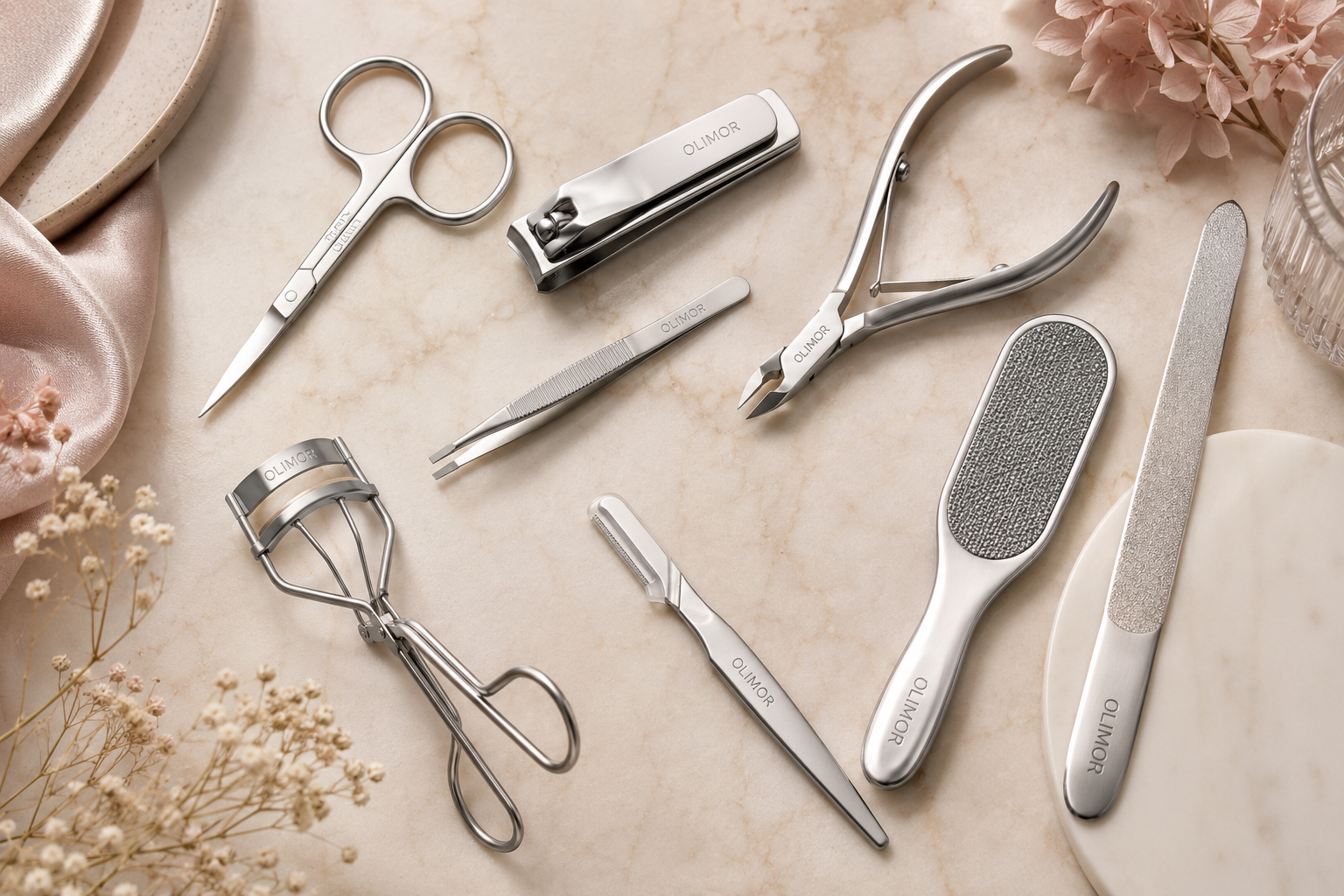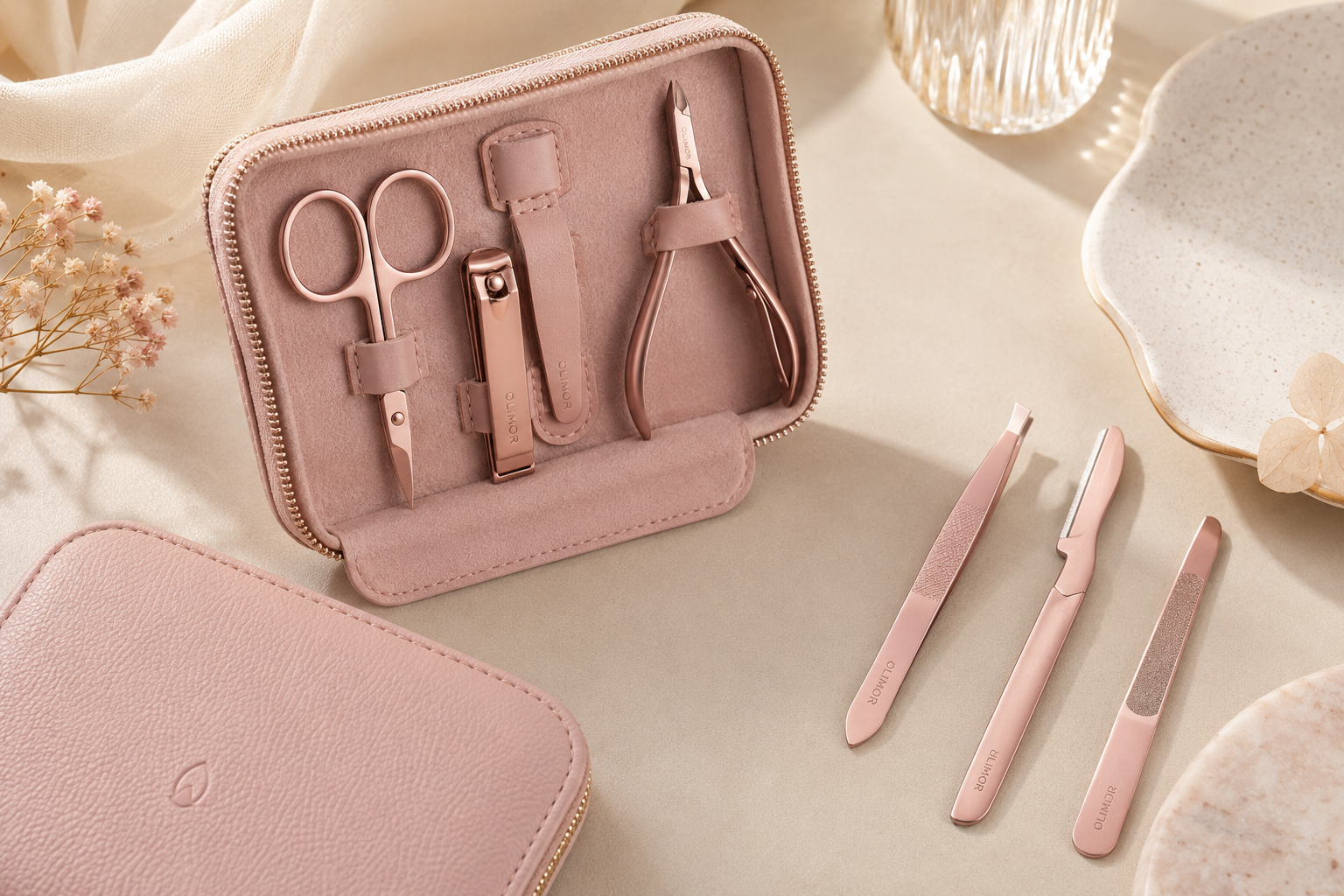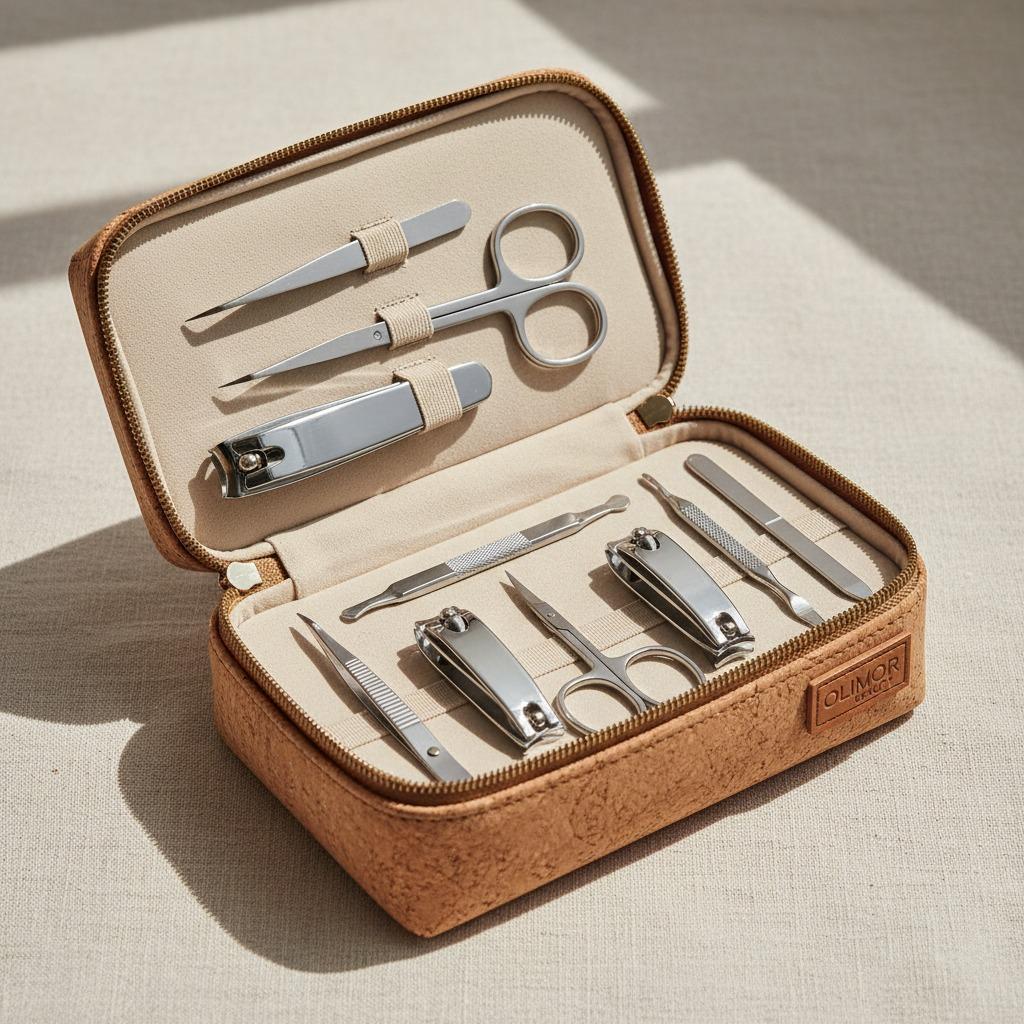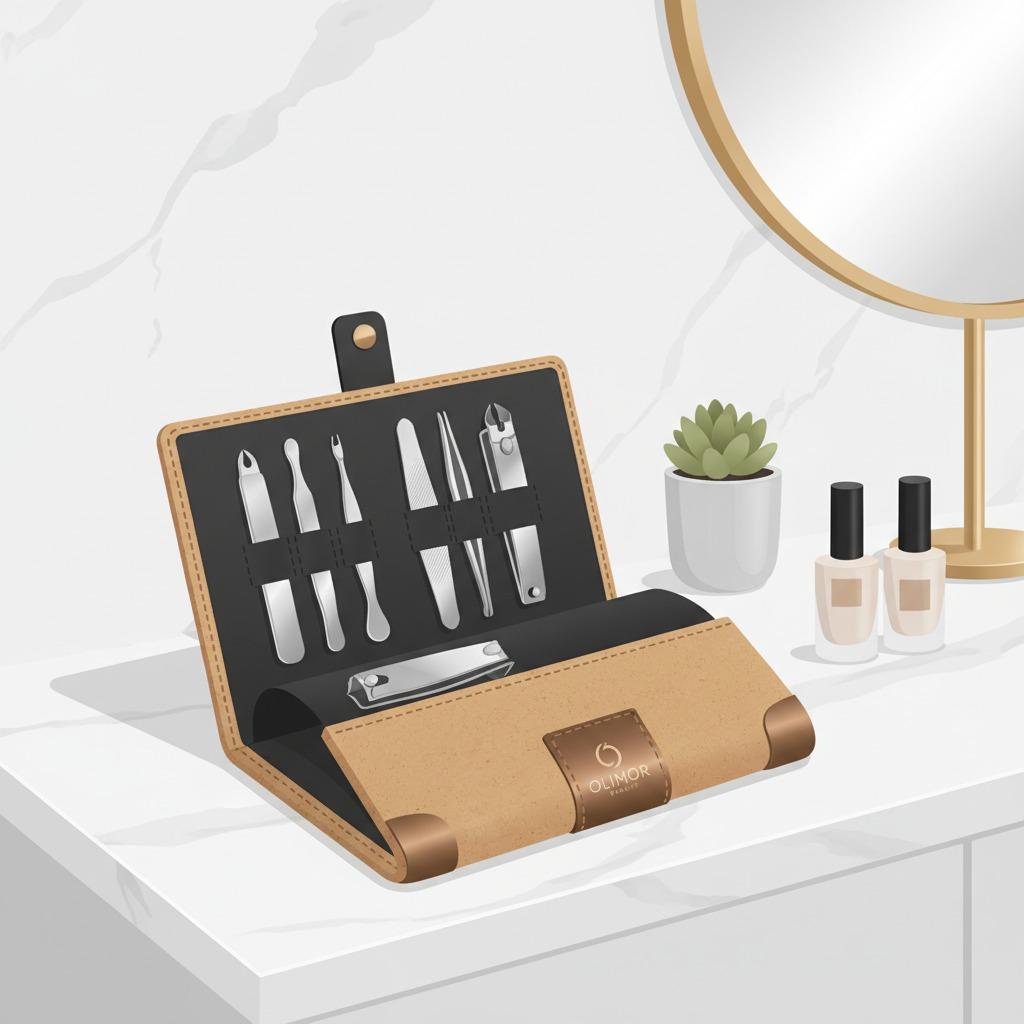
Nail trimmers should be chosen for control first, not appearance alone. A useful trimmer cuts with predictable pressure, sits securely in the hand, follows the curve of the nail, stores safely and can be cleaned after use. For beauty brands, grooming-kit suppliers, salons, retailers and pet-care buyers, those details affect customer satisfaction as much as the visible finish.
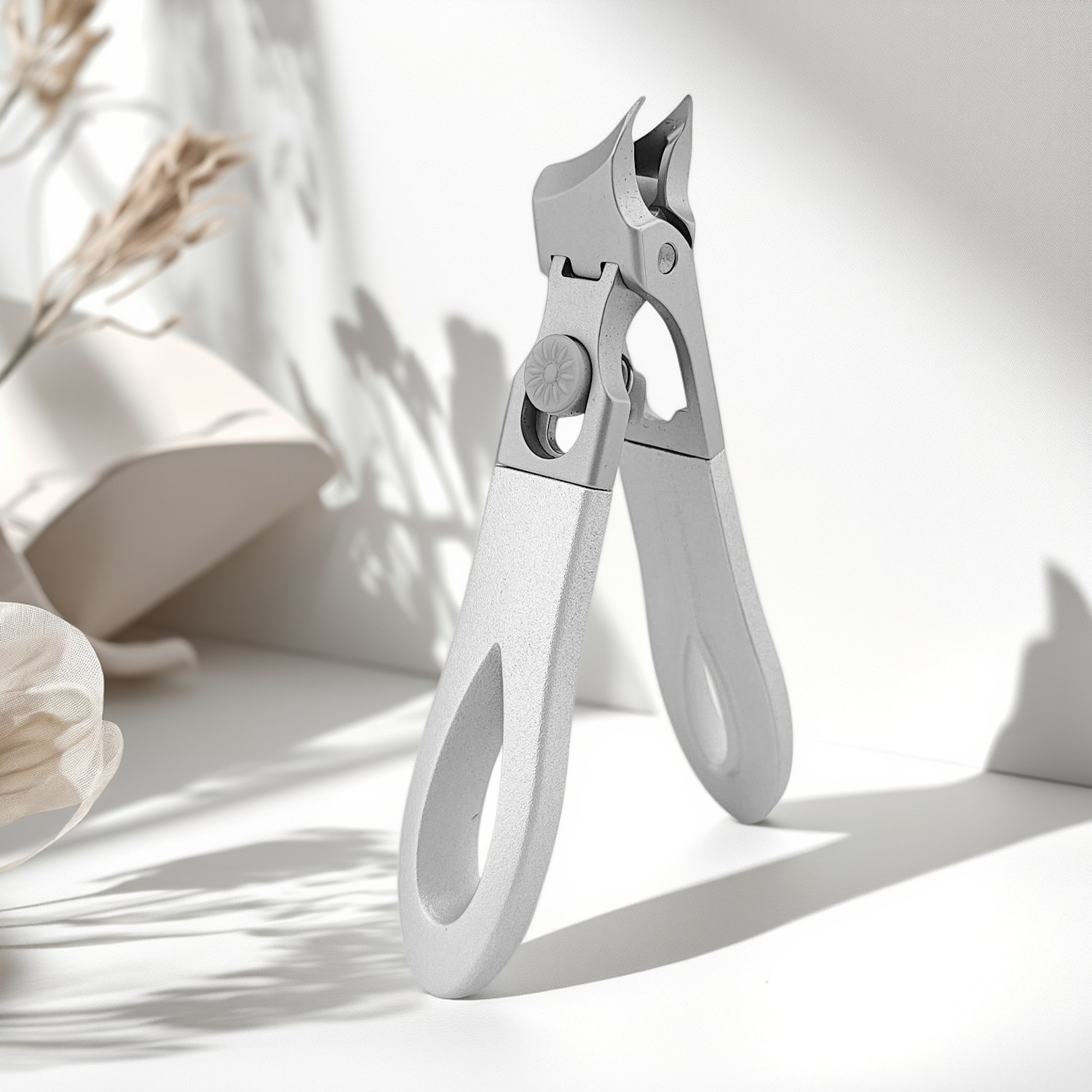
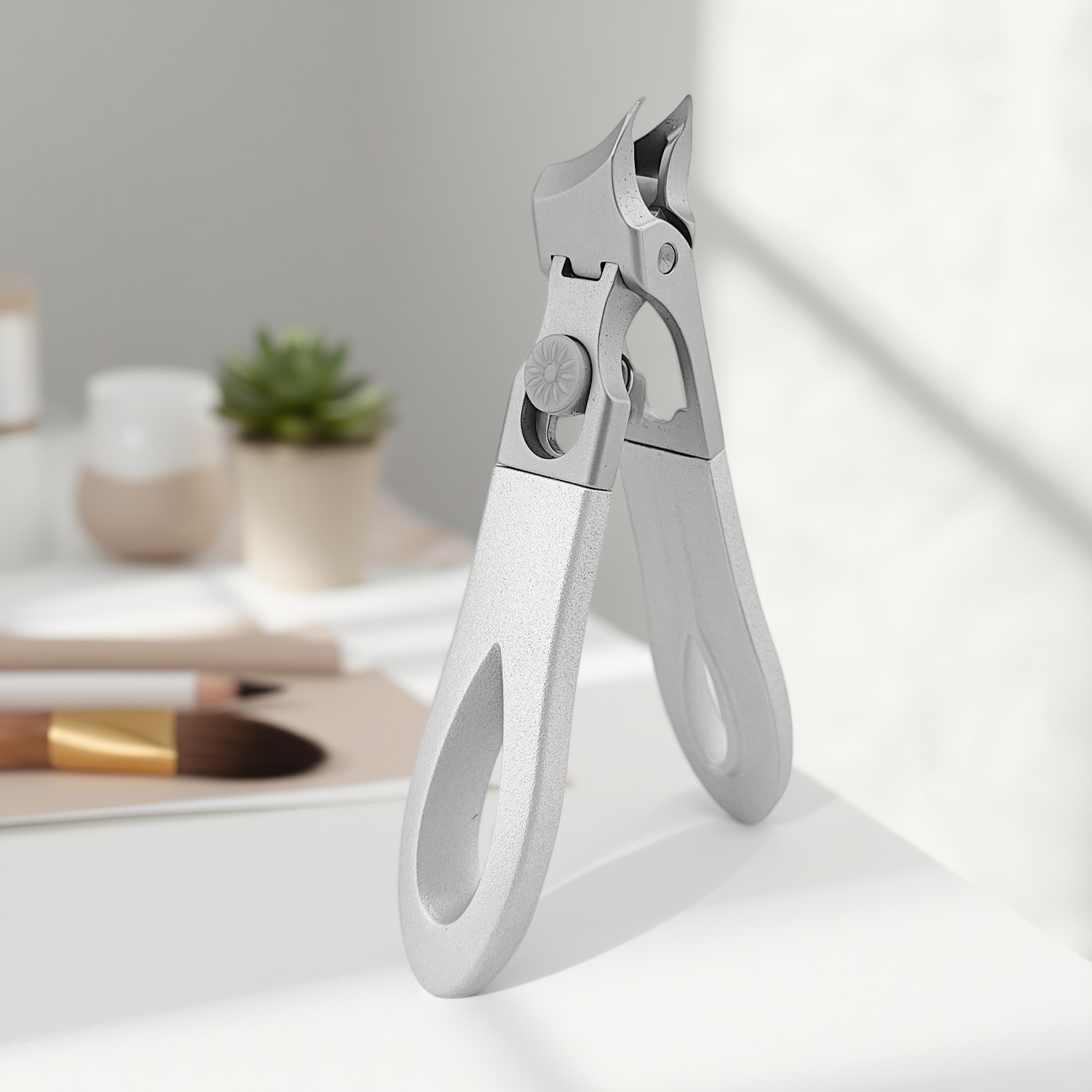
Olimor Beauty nail trimmers are designed for human and pet grooming needs. The design includes stainless steel construction, a matte metallic finish, ergonomically sculpted handles, an open grip, curved blade geometry and a locking slider with a floral motif. These features make the tool relevant for personal grooming sets, pet grooming assortments and retail beauty tool programs where cutting control, hygiene and storage safety are important.
This guide explains how to evaluate nail trimmers before purchasing, how to inspect samples, how to use the tool correctly and what B2B buyers should ask when comparing suppliers. It avoids broad claims and focuses on practical details that can be checked by hand, in packaging and during normal grooming use.
What a Good Nail Trimmer Must Do
A nail trimmer has one main job: remove nail length cleanly while giving the user enough control to avoid over-cutting. Nails are layered keratin. When a cutter is dull, misaligned or poorly supported, it can squeeze the nail before it cuts. That can leave a jagged edge, cause splitting or make the trimming process uncomfortable.
The best nail trimmer for a program is not always the largest or most decorative model. The right choice depends on the intended user, the nail type and the sales channel. A salon accessory may need a polished retail presentation and easy cleaning. A pet grooming kit may need controlled leverage and a secure grip. A household grooming set may prioritize simple handling, compact storage and safe closure in a drawer or pouch.
For commercially relevant buying decisions, evaluate three areas together: cutting function, handling comfort and after-use care. A trimmer that looks good but feels unstable in the hand may generate complaints. A trimmer that cuts well but has a weak storage lock may be unsuitable for travel kits or retail bundles. A trimmer that is hard to clean may not be the best choice for shared or professional environments.
Key Design Features to Evaluate
Olimor Beauty nail trimmers combine several features that are useful to assess during sourcing and product selection. Each feature should be reviewed as part of the complete tool, because nail trimming depends on how the blade, handles and lock work together.
Stainless Steel Construction
Stainless steel is commonly used for grooming tools because it resists corrosion better than many basic metals and can be wiped clean after use. Nail debris, skin oils and moisture often collect near cutting edges and joints, so material choice matters for maintenance. Stainless steel does not remove the need for cleaning or drying, but it supports normal hygiene routines better than materials that stain, flake or degrade quickly.
Curved Blade Geometry
Nails are naturally curved, whether on fingers, toes or pet claws. A curved cutting edge can help the user follow that shape more easily than forcing a straight cut across a rounded surface. This is especially useful when trimming in small sections. For pets, the curved profile can help position the blade around the claw while the user trims cautiously and avoids the sensitive inner area.
Ergonomically Sculpted Handles and Open Grip
Grip comfort is a practical performance feature. When users trim multiple nails in one session, an awkward handle can cause finger strain or reduce accuracy. The sculpted handles and open grip design on Olimor Beauty nail trimmers are intended to support a steadier hold. For B2B buyers, this is important because end users may include salon staff, pet owners, older users, mobile groomers or customers assembling compact home grooming kits.
Locking Slider for Storage
A locking slider helps keep the trimmer closed when not in use. That is useful in drawers, pouches, grooming bags and retail kits. It also helps protect the cutting edge from unnecessary contact with other accessories. The floral motif on the slider adds a decorative detail while keeping the lock function visible to the user.
Matte Metallic Finish
The matte metallic finish gives the tool a clean, modern appearance. Finish matters for retail presentation, but it should not be evaluated only visually. Buyers should also check whether the surface feels smooth, whether edges are comfortable to touch and whether the finish looks consistent across samples.
Human Grooming vs Pet Grooming: How Requirements Differ
A nail trimmer that may be used for both people and pets should emphasize control over force. Human fingernails, toenails and pet claws vary in shape, thickness and visibility. The user should be able to make small, deliberate cuts rather than feeling forced into one deep cut.
| Use case | What matters most | What to check before buying |
|---|---|---|
| Personal fingernail care | Clean edge, easy handling, good visibility | Blade alignment, comfortable grip and smooth closing action |
| Toenail trimming | Control on thicker nails and stable hand position | Handle leverage, opening size and ability to trim in small sections |
| Pet claw trimming | Cautious cutting, secure hold and safe stopping point | Curved blade shape, grip security and user visibility around the claw |
| Salon or grooming kit use | Repeat handling, cleaning and consistent appearance | Surface finish, lock function, packaging protection and sample consistency |
| Retail beauty assortment | Presentation, durability perception and customer confidence | Finish quality, product instructions, safe storage and compatibility with related tools |
For human grooming, the best practice is to trim after cleaning the nail area, then cut gradually along the natural curve. For pet grooming, patience is more important than speed. Animals may move suddenly, so the user should hold the paw gently, trim a small amount and stop if the pet becomes stressed. A curved blade can support control, but it does not replace careful technique.
Sample Inspection Checklist for B2B Buyers
Before placing a nail trimmer into a product line, inspect physical samples under normal handling conditions. A photo can show shape and finish, but it cannot confirm how the blade closes, how the lock feels or whether the handle suits the intended user. If you are building a broader grooming range, compare the trimmer with other beauty tool products so the assortment feels consistent in quality and presentation.
- Blade alignment: Close the trimmer slowly and check whether the cutting edges meet evenly without visible offset.
- Cutting feel: The closing action should feel controlled, not loose, sticky or excessively harsh.
- Grip comfort: Hold the trimmer in several hand positions and check whether the sculpted handles support stable pressure.
- Opening size: Confirm the tool suits the intended nail type without forcing the nail into the blade area.
- Lock function: Engage and release the locking slider several times. It should feel secure enough for storage and simple enough for everyday use.
- Surface finish: Check for rough edges, uneven coating appearance, sharp non-cutting areas or obvious marks.
- Joint area: Inspect the pivot and blade area for debris traps, rough motion or poor assembly appearance.
- Packaging fit: Make sure packaging protects the blade and lock during transport while still presenting the product clearly.
- Instruction clarity: For pet or household use, basic trimming and cleaning guidance can reduce misuse and returns.
- Batch consistency: Review more than one sample when possible so you are not judging a program from a single piece.
Supplier evaluation should also include communication quality. Ask whether customization is available, what packaging options can be discussed and what documents the supplier can provide for the specific order. Do not rely on general statements; review documents connected to the actual product and market.
Cost Factors Without Reducing Quality to Price
Nail trimmer cost is shaped by more than the base tool. Material selection, blade finishing, handle forming, decorative details, lock construction, packaging, inspection requirements, customization and order scope can all influence the final commercial offer. A lower initial price may not be the best value if the tool feels weak, has inconsistent alignment or needs upgraded packaging later.
For B2B programs, compare total product fit rather than only unit cost. A premium retail kit may justify a more refined finish and stronger presentation. A practical household set may prioritize reliable cutting and simple packaging. A pet-care kit may need clearer use instructions and packaging that communicates control and safety. These choices affect sourcing conversations and should be defined before requesting quotations.
When discussing cost with a supplier, share the intended sales channel, target user, packaging expectations, customization needs and inspection concerns. This helps avoid mismatched quotes. If the project includes several grooming accessories, reviewing Olimor product collections can help align the nail trimmer with related beauty tools in the same range.
Safe Use: Technique Matters as Much as Tool Design
A well-designed nail trimmer improves control, but user technique still determines the grooming result. The safest approach is to trim gradually, keep the blade visible and avoid twisting the tool during the cut. Twisting can stress the nail and leave rough edges.
- Clean the nail or claw area before trimming so the edge is visible.
- Make sure the trimmer is dry and the locking slider is fully released.
- Hold the handle firmly and place the curved blade only where the cut is intended.
- Trim a small section first instead of removing a large piece in one motion.
- Check the nail shape after each cut and adjust the angle as needed.
- For pets, trim conservatively and avoid the sensitive inner area of the claw.
- Pause if the person or pet becomes uncomfortable, then continue only when control is restored.
- Wipe the blade after use and engage the locking slider before storage.
For shared or professional settings, users should follow the hygiene process required by their workplace or local rules. Consumer product and safety obligations vary by market. Buyers selling into the United States may need to review applicable expectations from the U.S. Consumer Product Safety Commission, while buyers selling into the European Union should check current requirements under the EU General Product Safety Regulation. Always verify current versions and request supplier documents for the actual product being purchased.
Cleaning, Maintenance and Storage
Maintenance keeps a nail trimmer easier to use over time. Stainless steel construction helps resist corrosion during normal use, but the tool should still be cleaned and dried. Moisture, nail dust and skin oils can collect around the blade and locking mechanism. If buildup remains, the closing action may feel less smooth and the tool may become less pleasant to handle.
After each grooming session, wipe the cutting area with a clean dry cloth. If the trimmer has been used on pets, remove nail debris from the blade area before storing it. If the tool is used in a salon, grooming service or shared environment, follow the appropriate sanitation routine for that setting and make sure the trimmer is fully dry afterward.
Storage is part of maintenance. Engage the locking slider before placing the tool in a drawer, pouch or kit. This reduces accidental opening and helps protect the blade edge from contact with other accessories. Avoid leaving grooming tools in damp bathrooms or wet bags for long periods. Even corrosion-resistant materials perform best when stored clean and dry.
How to Choose a Nail Trimmer Supplier
For a one-time household purchase, the user may focus on comfort and cutting feel. For a brand, distributor or retailer, supplier evaluation is broader. The supplier should be able to discuss product details, packaging direction, customization possibilities and inspection expectations clearly. The goal is not only to receive a good sample, but to build a repeatable product program.
Ask practical questions early. Can the supplier provide samples for evaluation? Can packaging be discussed for retail, kit or private-label use? What product details are fixed and what features may be customizable? What quality checks are used before shipment? What information is needed to estimate timing? These questions do not require invented numbers; they require transparent communication and documents tied to the actual order.
It is also helpful to define the end user before selecting the tool. A nail trimmer for a pet grooming kit should not be evaluated only like a fashion accessory. A beauty retail item should not be selected only for blade strength if the finish, lock and packaging do not match the assortment. Buyers can send a project inquiry with intended use, packaging needs and target channel so the discussion starts with the right requirements.
When Olimor Beauty Nail Trimmers Are a Good Fit
Olimor Beauty nail trimmers are suited to programs that need a controlled stainless steel nail cutting tool with a matte metallic look, curved blade geometry, ergonomic sculpted handles, an open grip and a locking slider. These features support everyday personal grooming, pet-care use and retail beauty tool assortments where comfort and safe storage matter.
The strongest reason to choose this type of trimmer is user control. The curved blade helps follow the nail shape, while the handle design supports a steadier grip. The locking slider adds value after use because safe storage is part of the overall grooming experience. For buyers, these are practical details that can be shown in product pages, packaging copy and customer instructions without relying on unsupported claims.
If you are planning a grooming accessory program, compare the nail trimmer with related tools, confirm sample performance and review packaging requirements before finalizing the order. For product selection support or sourcing discussion, you can contact Olimor Beauty with your application, sales channel and customization questions.
FAQ
Can I request samples before ordering nail trimmers?
Yes, sample discussion is recommended for B2B buyers. Samples help you evaluate blade alignment, grip comfort, lock function, finish consistency and packaging fit before making a sourcing decision.
Is there an MOQ for customized nail trimmers?
MOQ depends on the project scope, customization type, packaging requirements and production arrangement. Ask for the current requirement based on your exact nail trimmer specification rather than assuming a standard quantity.
What customization options can be discussed?
Common discussion points may include packaging direction, assortment planning and product presentation. Any customization should be confirmed with supplier drawings, samples or written specifications before approval.
How should quality be checked before shipment?
Quality checks should focus on blade alignment, cutting action, handle comfort, locking slider function, surface finish, packaging protection and consistency across units. Request documents and inspection details for the actual order.
How long does production or delivery take?
Timing depends on order details, customization, packaging, confirmation process and shipping arrangement. Share your target schedule early and ask the supplier to confirm the current lead time for your specific project.