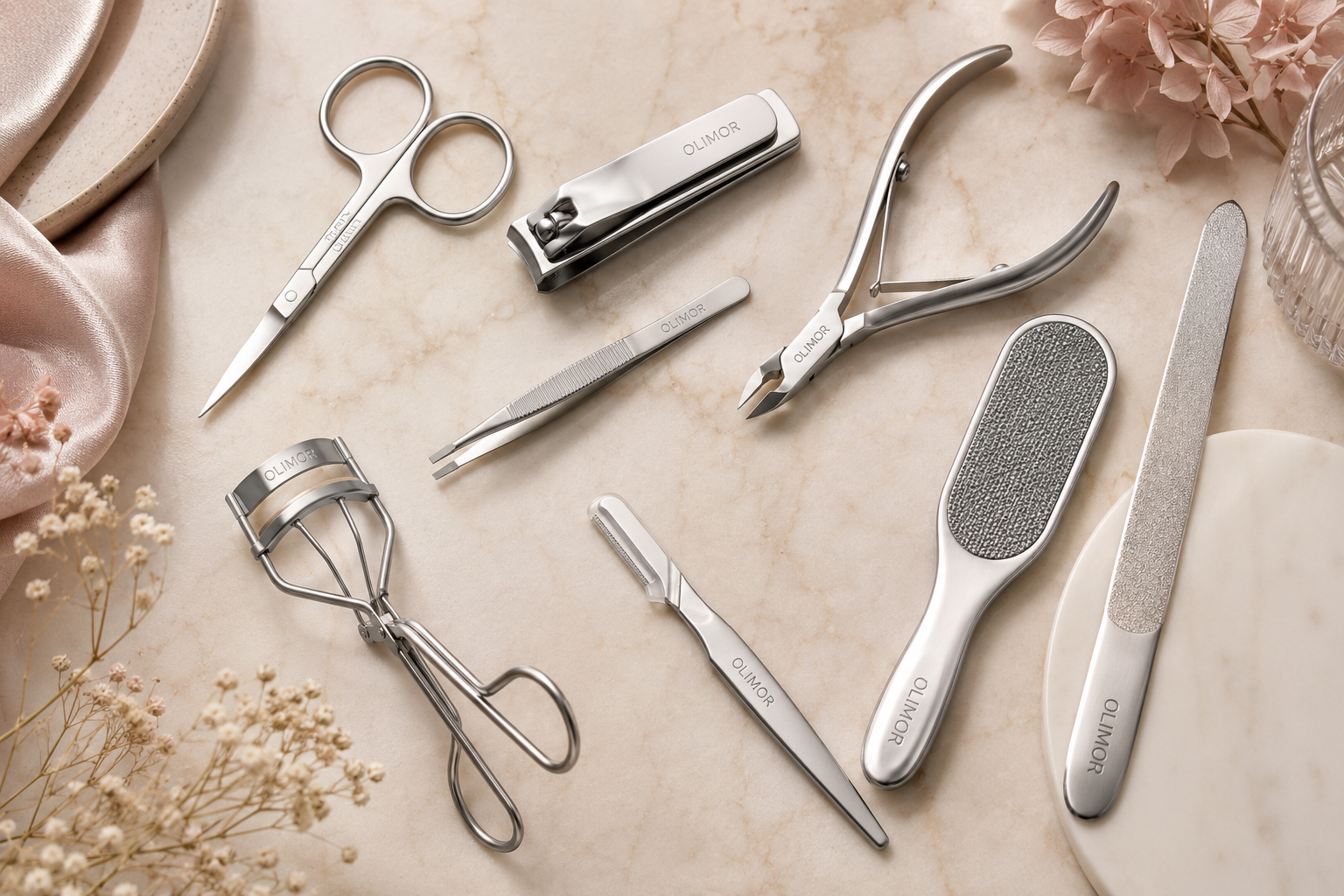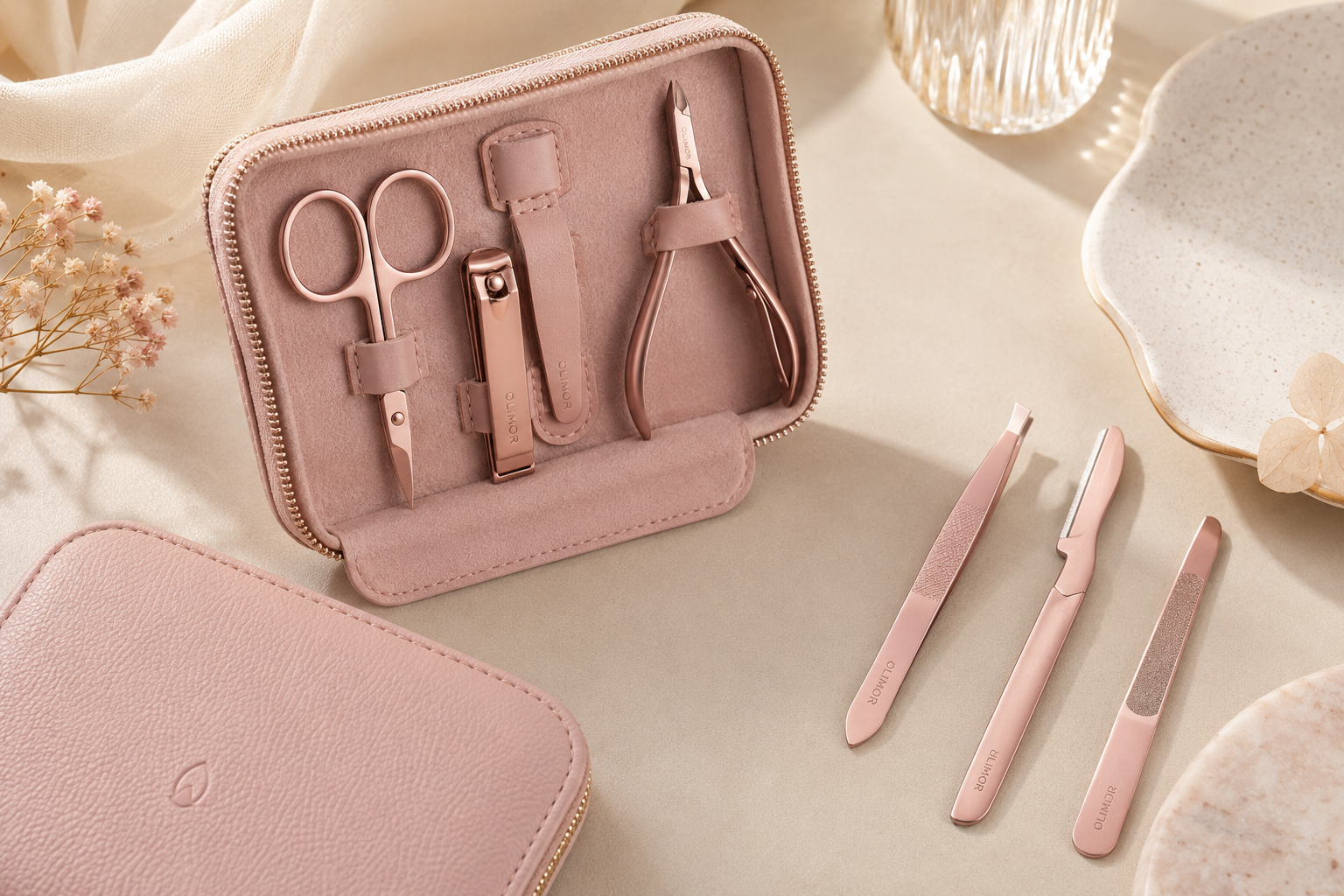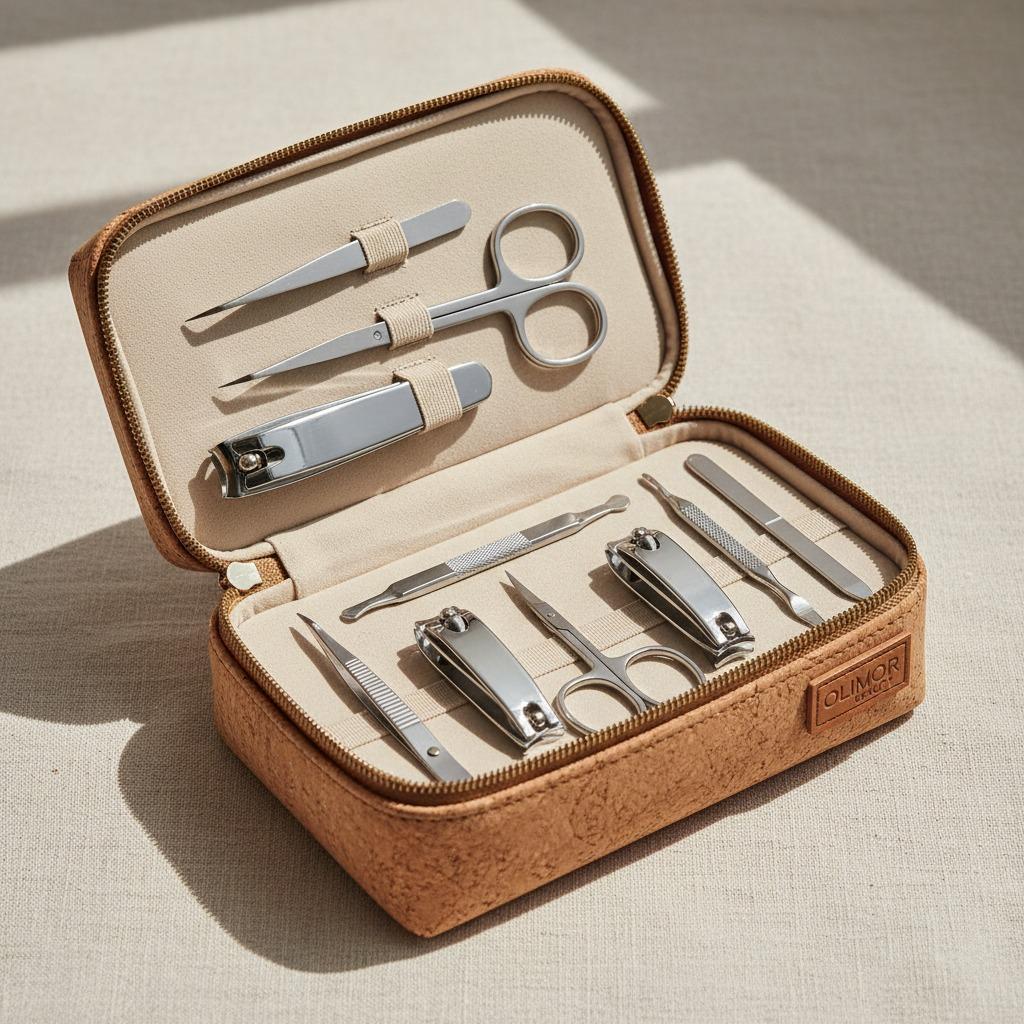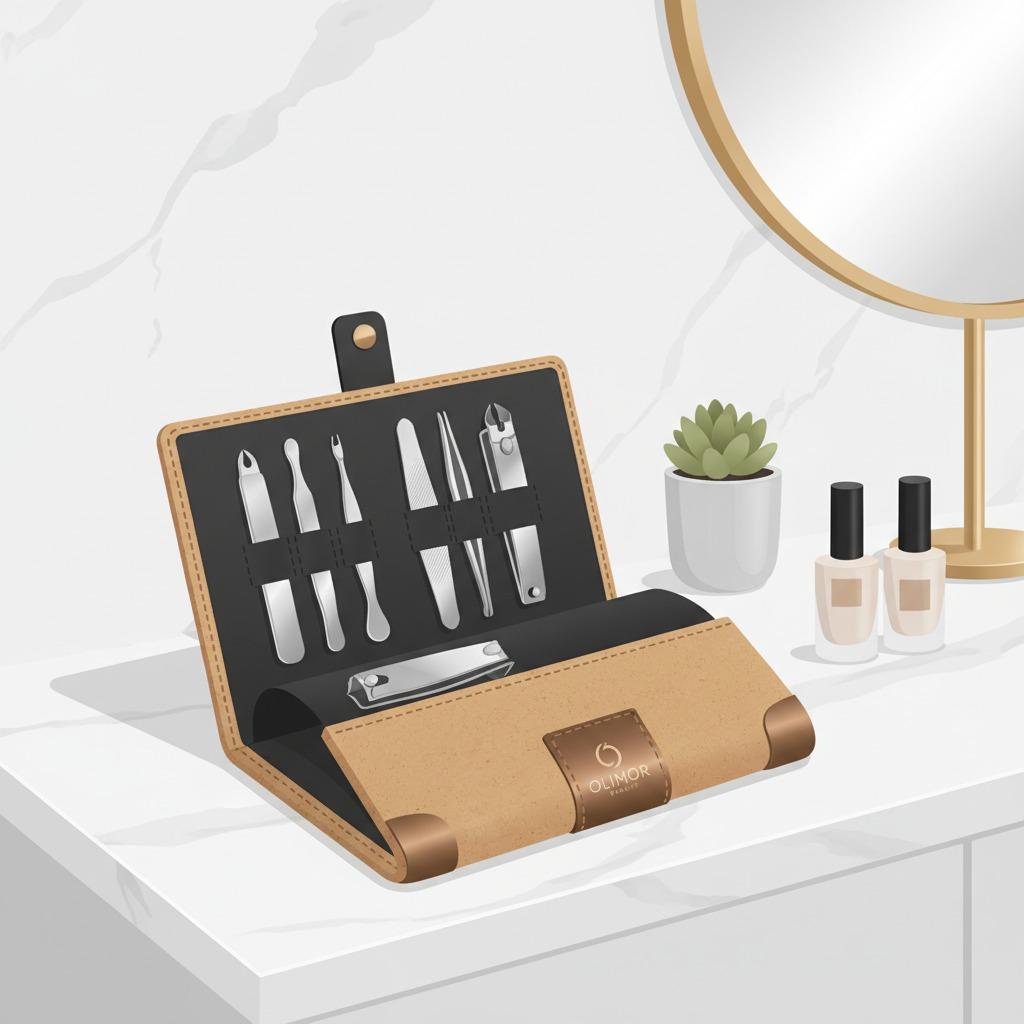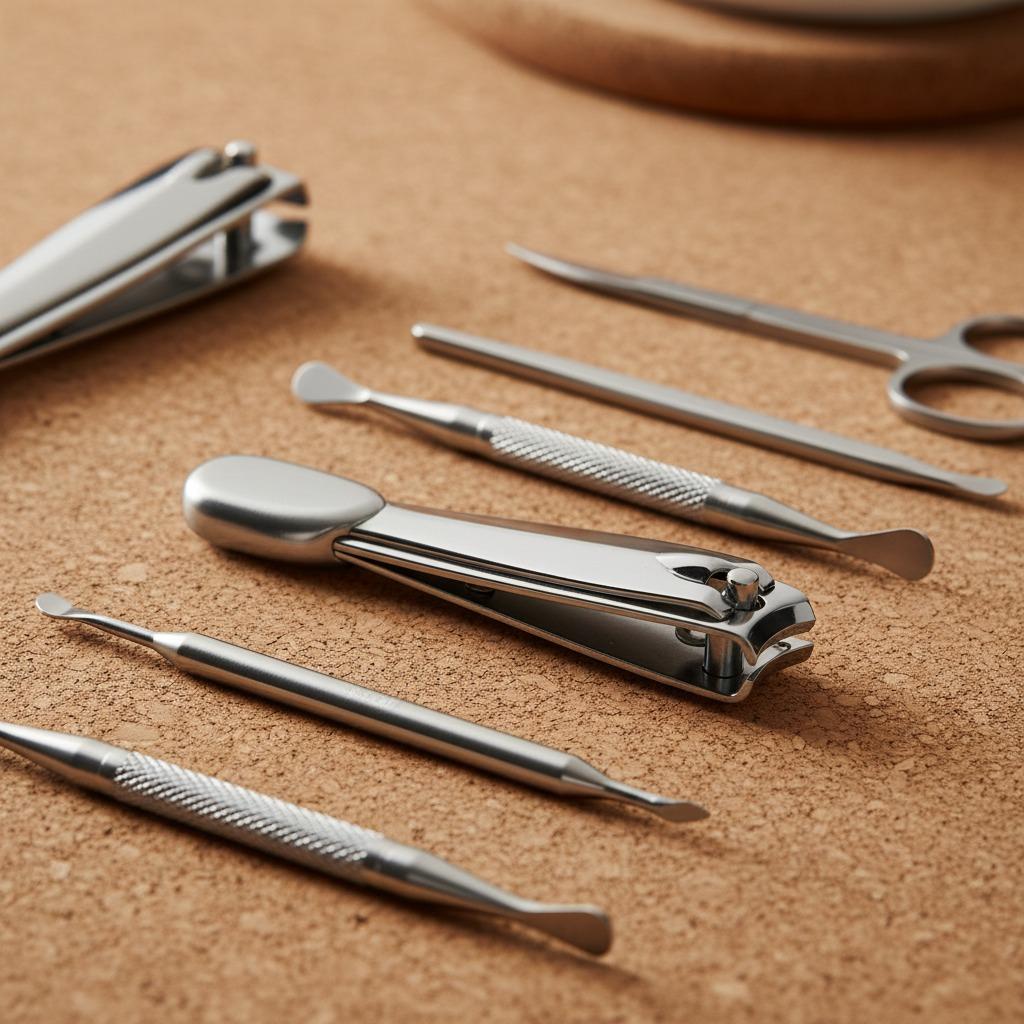












A good nail clipper looks simple, but small differences in blade alignment, handle control, steel quality, and finishing can change the entire grooming experience. For salons, beauty retailers, grooming kit brands, and buyers building a dependable personal care assortment, the goal is not only to find a clipper that cuts. The goal is to select a tool that makes clean trimming easier, reduces the chance of nail splitting, feels stable in the hand, and remains presentable after repeated use.
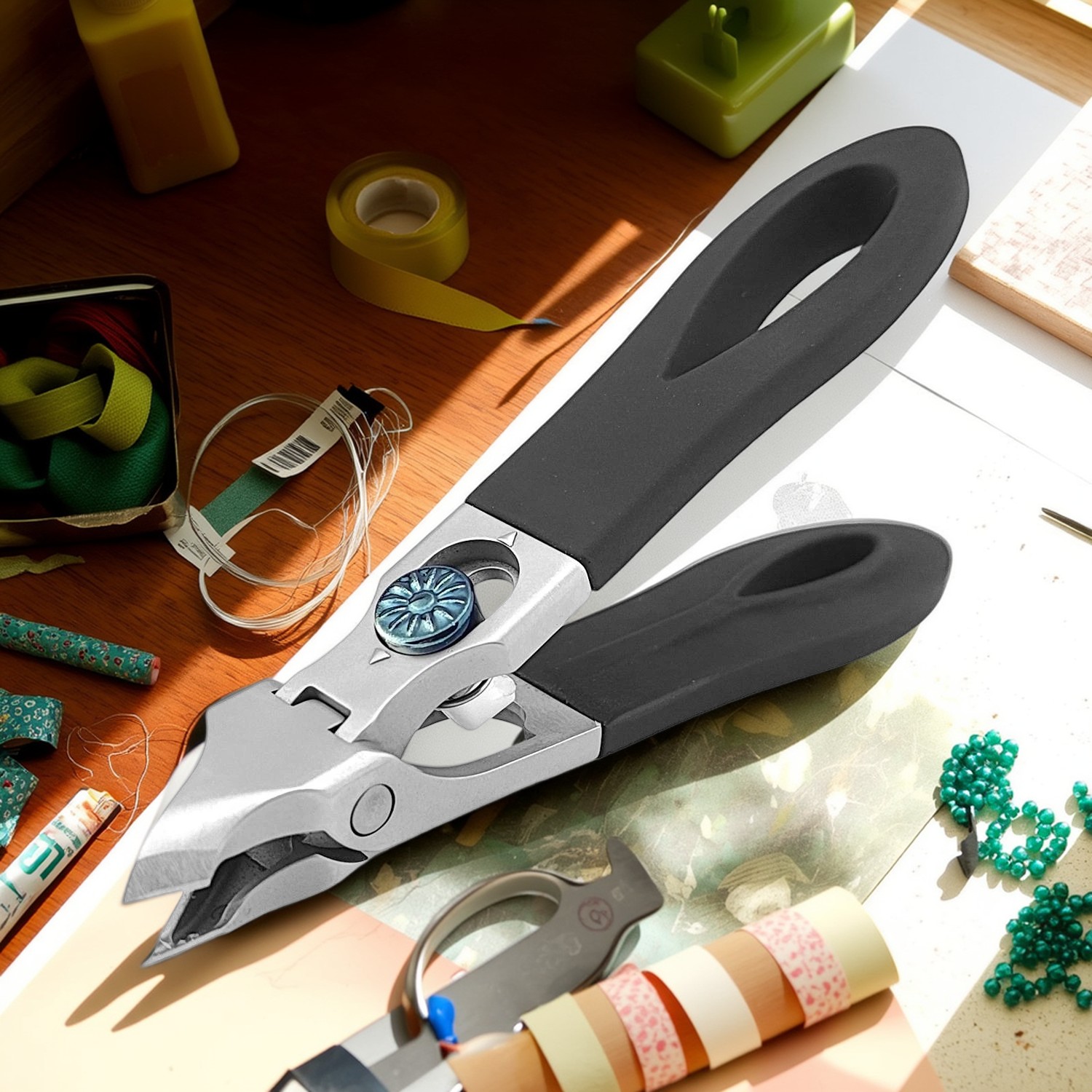
Olimor Beauty focuses on beauty tools where practical construction and user comfort matter. The professional nail clipper shown here combines a stainless steel cutting body with an ergonomic matte black handle and turquoise decorative detail. Its purpose is straightforward: controlled nail trimming with a clean, balanced feel. Whether you are comparing products for a retail range, salon supply list, travel grooming kit, or personal care line, the criteria below will help you judge nail clippers more accurately.
Why Blade Precision Matters More Than Force
Many people press harder when a nail clipper does not cut cleanly. That is usually a sign of poor edge sharpness, weak alignment, or an uncomfortable lever design. A precision nail clipper should close smoothly and cut through the nail with controlled pressure. When the upper and lower blades meet evenly, the user can trim in small sections without crushing or tearing the nail edge.
Clean cutting is especially important for thicker nails, brittle nails, and frequent grooming services. A dull clipper can leave rough edges that need more filing, while a misaligned clipper may create uneven pressure across the nail. For professional environments, this affects both efficiency and customer comfort. For retail buyers, it affects repeat satisfaction because customers quickly notice whether a clipper feels sharp and steady.
When evaluating a sample, look closely at the cutting edge under bright light. The blades should appear even, without obvious gaps when closed. Open and close the lever several times to feel whether the movement is smooth or loose. A sharp edge is valuable only when the whole mechanism supports accurate control.
Stainless Steel Construction and Daily Durability
The original product description highlights surgical-grade stainless steel and durable stainless steel construction. Stainless steel is widely preferred in nail grooming tools because it offers strength, a clean appearance, and practical resistance to everyday moisture when properly cared for. In a bathroom, salon station, or travel pouch, nail tools are often exposed to humidity and residue, so the material choice affects both performance and presentation.
Durability is not only about the metal itself. Buyers should also consider the pivot area, the lever connection, the finish, and how the edges are polished. A nail clipper may feel acceptable during the first few uses but become unreliable if the lever loosens quickly or the blade edge dulls prematurely. For retailers and distributors comparing suppliers, sample testing should include repeated opening and closing, trimming on different nail thicknesses, and checking whether the surface finish shows scratches too easily.
For a broader view of related grooming items, you can compare nail tools with other beauty tool products in the Olimor range. This helps buyers plan a consistent assortment rather than choosing a nail clipper in isolation.
Ergonomic Handling: Comfort, Grip, and Control
A nail clipper does not need an oversized handle to be comfortable, but it does need a stable grip. The matte black handle and turquoise decoration described for this professional clipper are not only visual features; they also contribute to how the tool is held and recognized in a grooming set. A well-shaped handle gives the thumb a secure pressing point and helps the user maintain control during short, repeated cuts.
Ergonomic design is particularly relevant for salon technicians, older users, and anyone trimming nails frequently. If the lever is too narrow, too slippery, or positioned awkwardly, the user may apply uneven pressure. That can increase fatigue and reduce cutting accuracy. A balanced clipper should allow the hand to remain relaxed while the blade does the work.
When selecting clippers for professional or retail use, consider these practical handling checks:
- Grip stability: The handle should not feel slippery when held with dry hands.
- Lever resistance: Pressure should feel firm but not stiff.
- Cutting visibility: The user should be able to see the nail edge clearly while trimming.
- Hand comfort: The tool should not pinch, wobble, or require excessive force.
- Finish quality: Edges around the handle and body should feel smooth, not sharp or rough.
Matching Nail Clippers to the Right Use Case
The best nail clipper for one buyer may not be the best choice for another. A salon may prioritize long-term handling comfort and easy cleaning. A retail buyer may focus on visual appeal, packaging compatibility, and broad consumer usability. A grooming kit brand may need a compact clipper that pairs well with files, scissors, tweezers, or cuticle tools. Before choosing a product, define where and how the clipper will be used.
| Use Case | What to Prioritize | Why It Matters |
|---|---|---|
| Salon or professional station | Sharp alignment, comfortable lever, easy cleaning | Supports repeated use and consistent client service |
| Retail personal grooming aisle | Clear value, durable appearance, simple instructions | Helps shoppers understand quality quickly |
| Travel grooming kit | Compact form, protected edge, coordinated finish | Keeps the kit practical and organized |
| Men’s grooming set | Strong grip, clean matte styling, dependable cut | Matches everyday trimming expectations |
| Gift or beauty accessory set | Consistent finish, attractive color detail, smooth feel | Improves perceived quality when the set is opened |
How to Test a Nail Clipper Sample Before Ordering
Product photos are useful, but nail clippers should always be judged by hand feel and cutting behavior. A quick inspection can miss issues that appear only after repeated use. Buyers comparing professional nail clippers should create a simple sample test process that checks performance, comfort, and finishing consistency.
- Inspect the closed blades. Look for even contact between the upper and lower cutting edges.
- Open and close the lever repeatedly. Movement should feel stable, without rattling or uneven resistance.
- Trim in small sections. The clipper should cut cleanly rather than crush or tear the nail.
- Check the cut edge. A good cut leaves less roughness and requires less filing.
- Evaluate grip comfort. Test with different hand sizes if the product is intended for broad consumer use.
- Review surface finish. Look for scratches, burrs, uneven coating, or sharp non-cutting edges.
- Clean after testing. Confirm that nail residue can be removed easily from the cutting area.
This type of structured evaluation is more useful than relying on a single claim such as “sharp” or “professional.” It gives sourcing teams and product managers a repeatable way to compare samples.
Cleaning, Storage, and Maintenance for Better Performance
Even a well-made stainless steel nail clipper benefits from basic care. After use, remove nail debris from the cutting area with a clean, dry brush or cloth. If the clipper has been exposed to moisture, dry it thoroughly before storage. Avoid leaving grooming tools in standing water or sealed wet pouches, as moisture can affect appearance and smooth operation over time.
For shared professional environments, cleaning routines should follow the hygiene procedures required by the salon or local regulations. For personal use, it is still wise to keep clippers separate from makeup residue, liquids, and abrasive objects that can scratch the finish. Storage in a pouch, grooming case, or organized drawer helps protect the cutting edge and keeps the tool easy to find.
If a clipper begins to feel dull, misaligned, or unstable, it should be replaced rather than forced through the nail. Excess pressure can lead to uncomfortable trimming and uneven results. For retailers, including simple care guidance on packaging or product pages can reduce misuse and improve customer satisfaction.
Sourcing Questions for Retailers and Beauty Brands
When sourcing nail clippers, it is tempting to compare only appearance and unit price. A more reliable approach is to confirm whether the tool fits the intended market, packaging plan, and quality expectation. Because exact specifications can vary by order and product configuration, buyers should prepare a checklist before discussing details.
- What material and finish are used for the cutting body and handle?
- How is blade alignment checked during production?
- Can samples be provided for cutting, grip, and finish evaluation?
- What packaging formats are suitable for retail, travel kits, or multi-tool sets?
- Are matching nail files, scissors, tweezers, or other grooming tools available for a coordinated range?
- What visual details, such as color accents or handle finishes, can be kept consistent across an assortment?
Buyers can also review Olimor product collections to consider how nail clippers may fit with broader manicure and beauty tool selections. If you are preparing a sourcing brief or comparing sample options, you can send an inquiry with your target use case, packaging needs, and preferred assortment direction.
Choosing a Nail Clipper That Feels Reliable
A precision nail clipper should make grooming feel controlled, not forceful. The strongest signs of quality are not complicated: sharp and aligned blades, durable stainless steel construction, a comfortable ergonomic handle, smooth lever action, and a finish that suits the intended customer. The matte black handle with turquoise detail gives this professional nail clipper a distinctive look, while the stainless steel cutting structure supports the clean trimming performance buyers expect from a daily grooming tool.
For salons, retailers, and personal care brands, the smartest buying decision comes from matching the clipper to real use: who will hold it, how often it will be used, how it will be cleaned, and how it will sit within a wider beauty tool range. To discuss suitable nail grooming options for your market, contact Olimor with your product requirements.